South Carolina BROADCASTING OBSCENE LANGUAGE
About this form
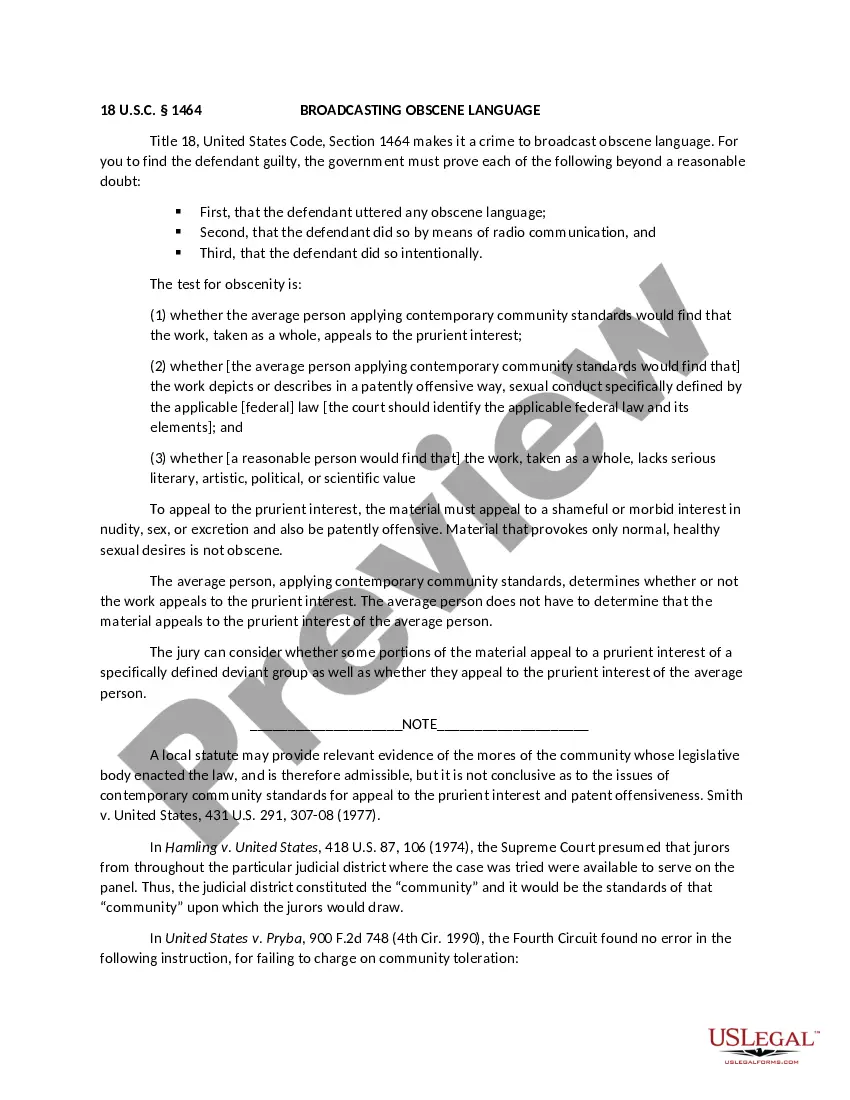
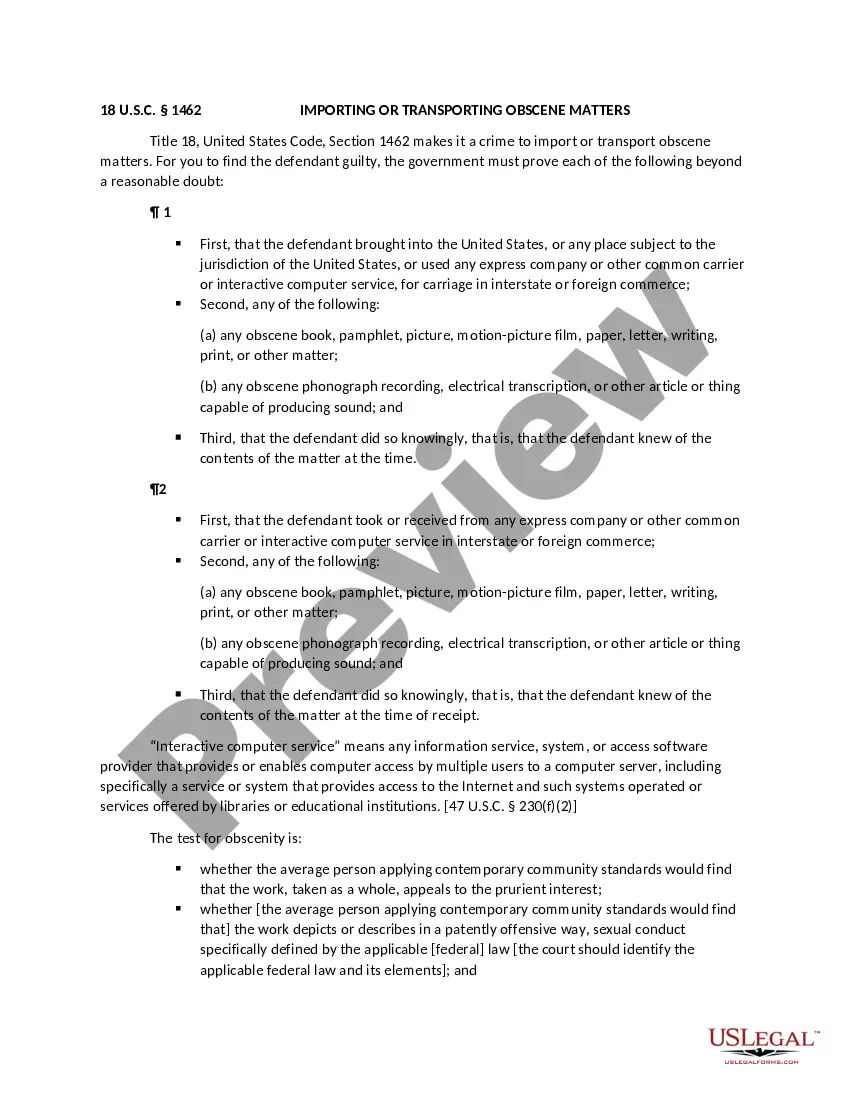
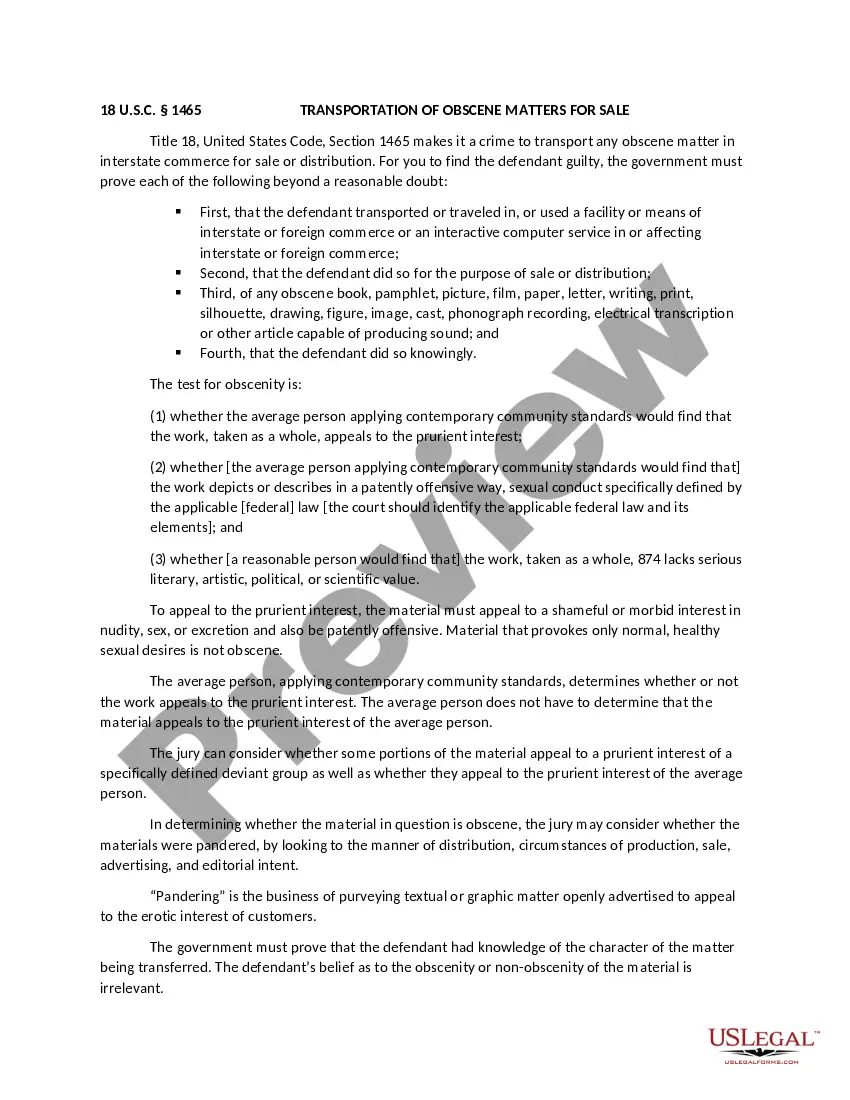
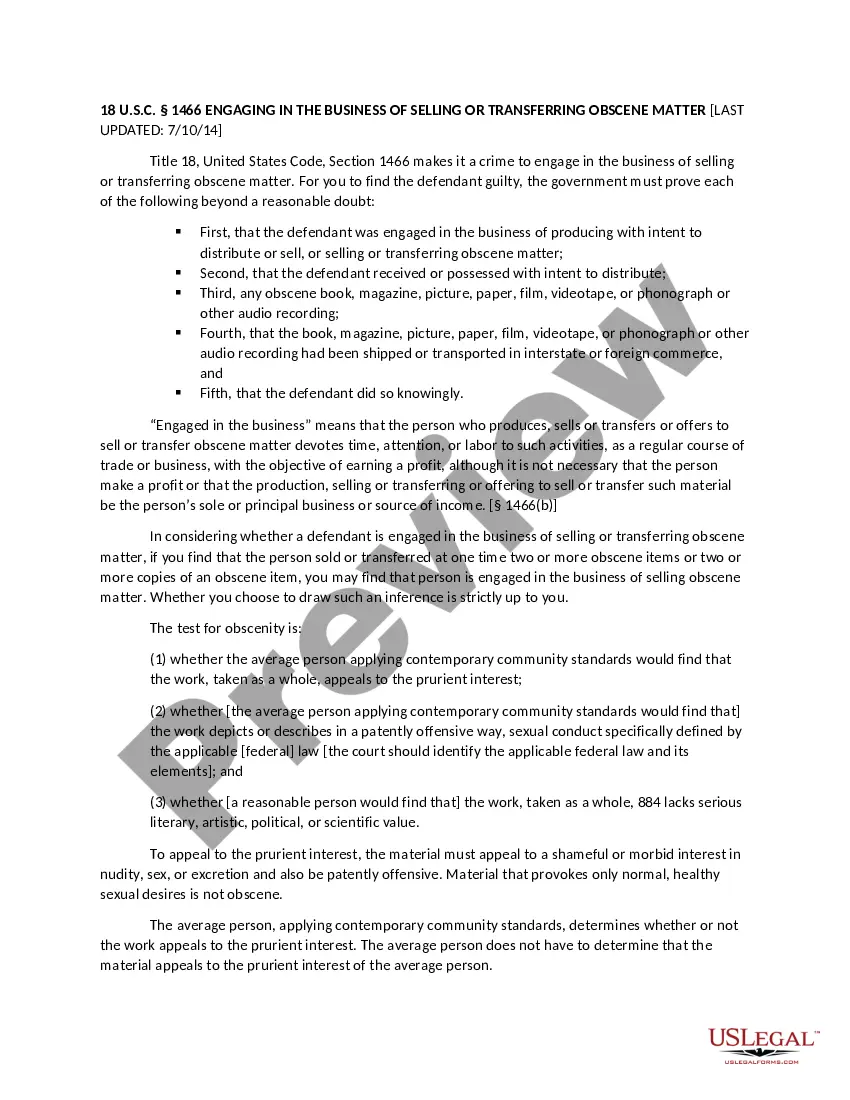
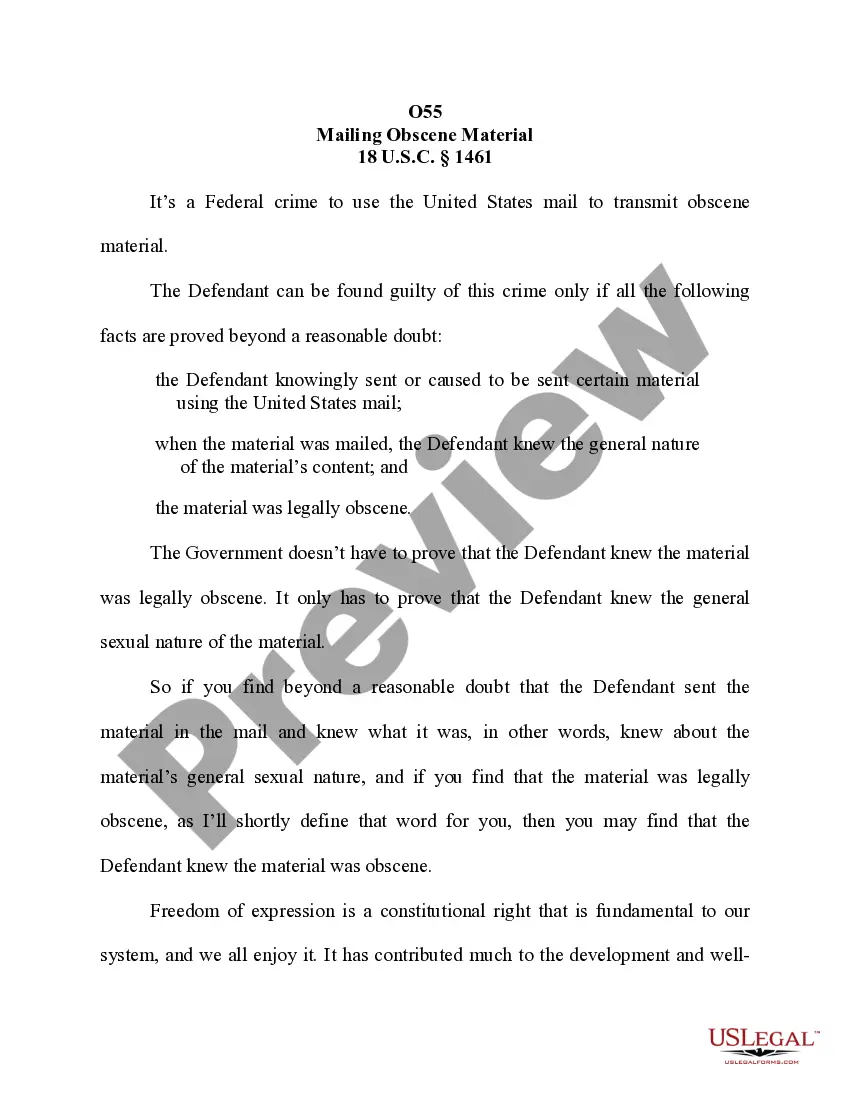
The Broadcasting Obscene Language form consists of official jury instructions specifically designed for criminal cases in the Federal District Court of South Carolina. This form provides guidance on how to evaluate and instruct jurors regarding the legal standards for determining whether language broadcasted over the airwaves is considered obscene under Title 18, United States Code, Section 1464. It is essential for cases involving allegations of broadcasting obscene language.
Main sections of this form
- Definition of obscene language and its legal implications.
- Criteria for evaluating obscenity based on community standards.
- Requirements for proving intent in the use of obscene language.
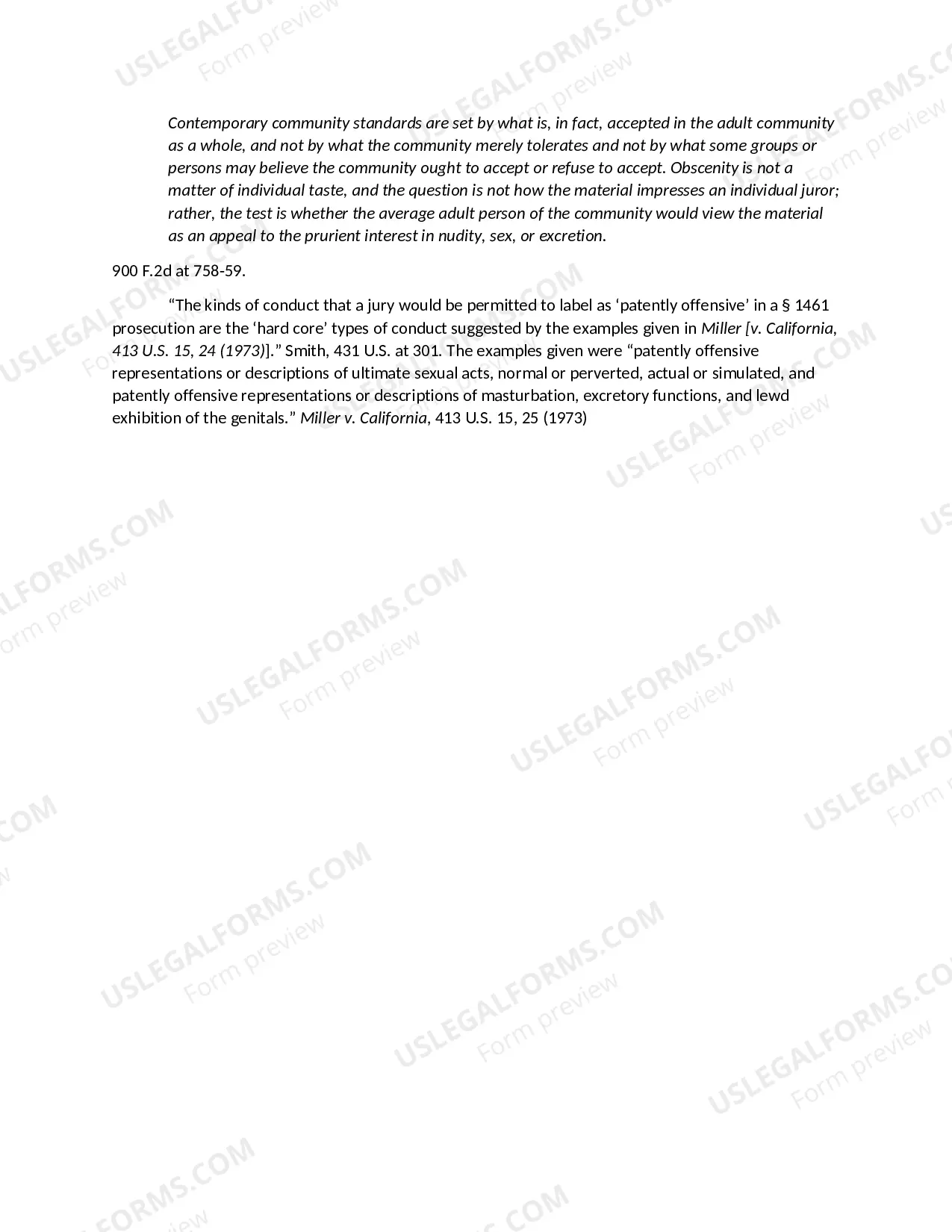
- Guidelines for jurors on interpreting materials against community standards.
- References to relevant case law impacting obscenity verdicts.
Common use cases
This form is used in criminal trials where the prosecution must prove beyond a reasonable doubt that the defendant has intentionally broadcasted obscene language. Legal representatives will refer to these jury instructions to elucidate the standards that jurors must apply when assessing the evidence of the case.
Who should use this form
- Prosecutors presenting a case against an individual accused of broadcasting obscene language.
- Defense attorneys who wish to understand the jury instruction guidelines relevant to such accusations.
- Judges presiding over cases involving allegations of obscenity in broadcasting.
Instructions for completing this form
- Identify the specific obscene language uttered by the defendant.
- Ensure the language was broadcasted through radio communication.
- Document the intent behind the utterance of the obscene language.
- Gather evidence related to community standards and definitions of obscenity.
- Prepare to present this information in the appropriate legal context during trial.
Is notarization required?
This form usually doesn’t need to be notarized. However, local laws or specific transactions may require it. Our online notarization service, powered by Notarize, lets you complete it remotely through a secure video session, available 24/7.
Get your form ready online
Our built-in tools help you complete, sign, share, and store your documents in one place.
Make edits, fill in missing information, and update formatting in US Legal Forms—just like you would in MS Word.
Download a copy, print it, send it by email, or mail it via USPS—whatever works best for your next step.
Sign and collect signatures with our SignNow integration. Send to multiple recipients, set reminders, and more. Go Premium to unlock E-Sign.
If this form requires notarization, complete it online through a secure video call—no need to meet a notary in person or wait for an appointment.
We protect your documents and personal data by following strict security and privacy standards.

Make edits, fill in missing information, and update formatting in US Legal Forms—just like you would in MS Word.

Download a copy, print it, send it by email, or mail it via USPS—whatever works best for your next step.

Sign and collect signatures with our SignNow integration. Send to multiple recipients, set reminders, and more. Go Premium to unlock E-Sign.

If this form requires notarization, complete it online through a secure video call—no need to meet a notary in person or wait for an appointment.

We protect your documents and personal data by following strict security and privacy standards.
Common mistakes to avoid
- Failing to prove intent behind the broadcast of obscene language.
- Not adequately defining what constitutes obscene language based on community standards.
- Ignoring relevant case law that may influence jury perceptions of obscenity.
Benefits of completing this form online
- Immediate access to legally sound, pre-drafted jury instructions.
- Easy editing capabilities to customize instructions as needed.
- Peace of mind knowing that the form is created by licensed attorneys.
Looking for another form?
Form popularity
FAQ
Federal law prohibits obscene, indecent and profane content from being broadcast on the radio or TV.
The Federal Communications Commission (FCC) defines indecency in the broadcast industries as ?language or material that, in context, depicts or describes, in terms patently offensive as measured by contemporary community standards for the broadcast medium, sexual or excretory organs or activities.? Once established by
The FCC is the legal authority empowered to determine whether broadcast material depicts or describes something patently offensive or meets contemporary community standards.
Congress has given the FCC the responsibility for administratively enforcing the law that governs these types of broadcasts. The FCC has authority to issue civil monetary penalties, revoke a license or deny a renewal application. The FCC vigorously enforces this law where we find violations.
Federal law prohibits obscene, indecent and profane content from being broadcast on the radio or TV.
Broadcasting obscene content is prohibited by law at all times of the day. Indecent and profane content are prohibited on broadcast TV and radio between 6 a.m. and 10 p.m., when there is a reasonable risk that children may be in the audience.
Whoever utters any obscene, indecent, or profane language by means of radio communication shall be fined under this title or imprisoned not more than two years, or both. (June 25, 1948, ch. 645, 62 Stat.