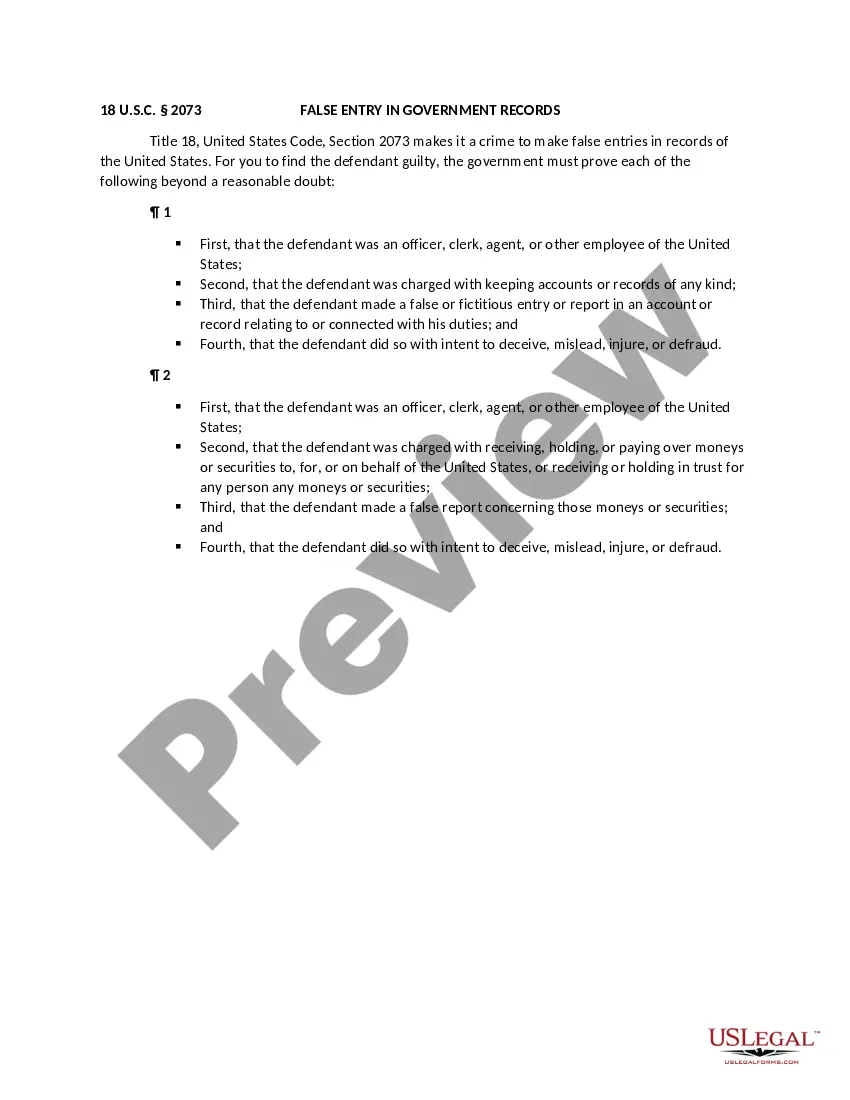
South Carolina FALSE ENTRY IN GOVERNMENT RECORDS
What this document covers
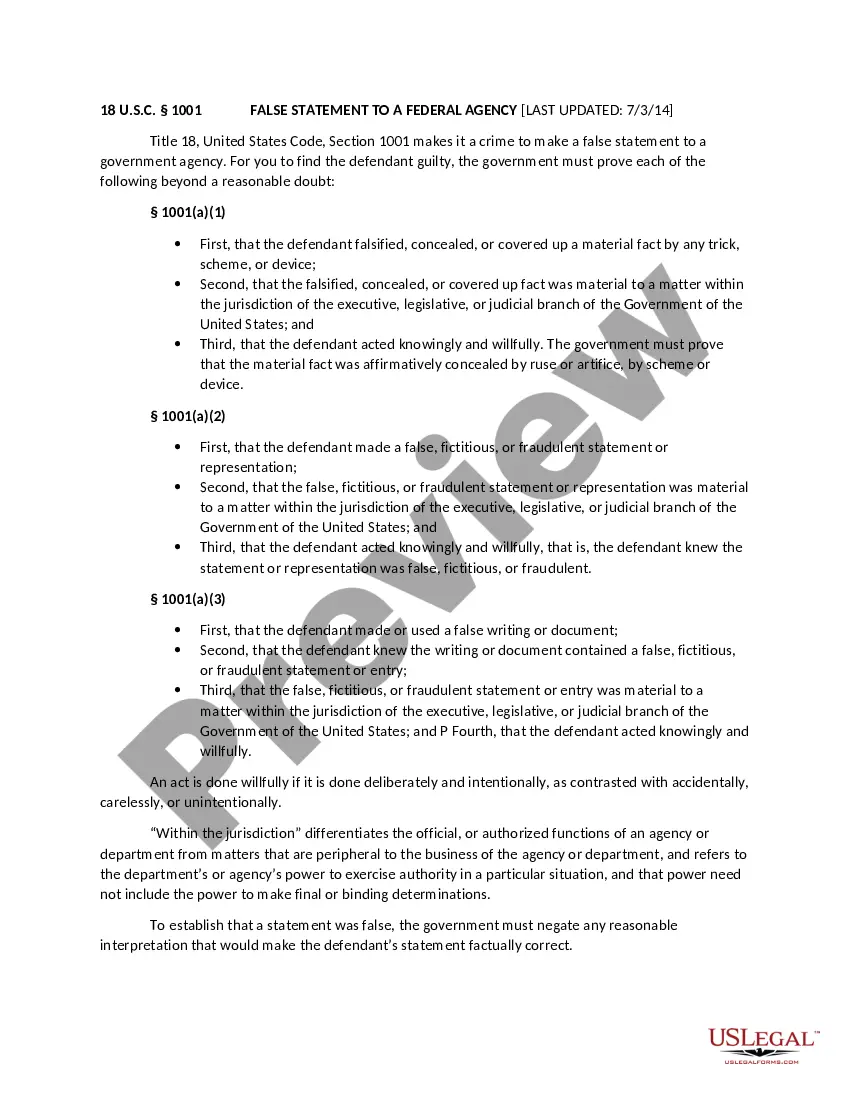
The False Entry in Government Records form is a legal document that outlines the criteria for prosecuting individuals accused of making false entries in U.S. government records. It helps clarify the legal definitions and elements required to establish guilt under Title 18, United States Code, Section 2073. This form is essential for federal cases in South Carolina, distinguishing it from other forms related to financial misconduct or fraud, by specifically addressing false documentation in government operations.
Form components explained
- Definition of the roles: Identifies individuals covered under the law, including officers, clerks, agents, and employees of the United States.
- Criteria for false reporting: Specifies what constitutes making a false entry or report in government records or accounts.
- Intent requirement: Describes the necessity of proving intent to deceive, mislead, injure, or defraud.
- Types of records: Clarifies the records involved, whether accounting records or reports concerning financial transactions.
When to use this form
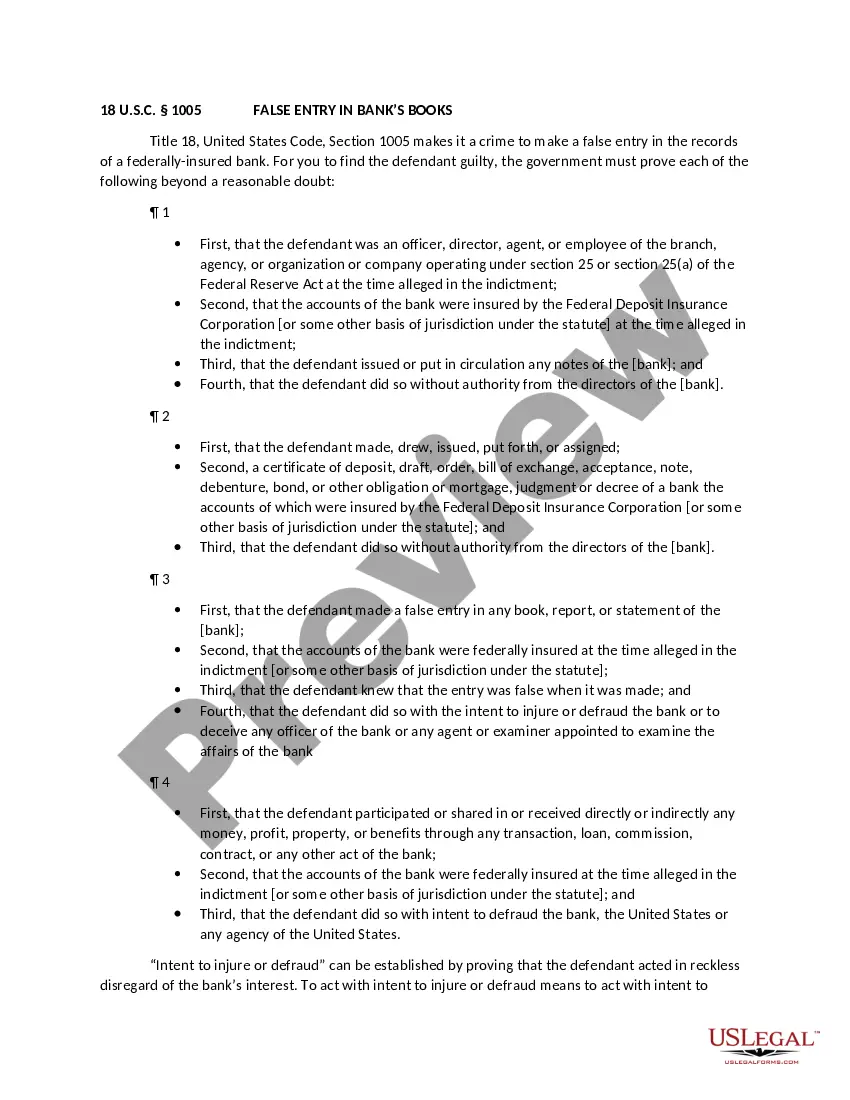
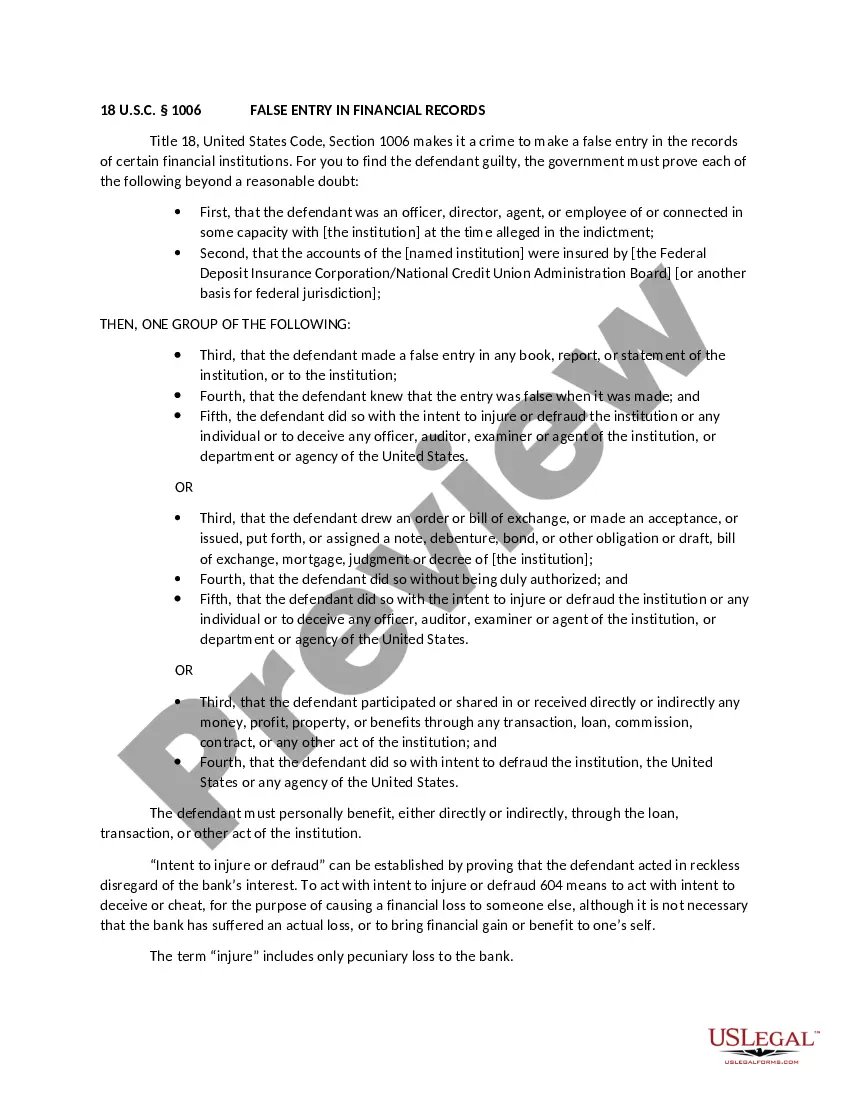
This form should be utilized in situations where there are allegations or charges of making false entries in government records. It can be used in criminal cases where the prosecution needs to demonstrate that a defendant committed this specific offense. Typical scenarios include government audits, financial reviews, or investigations of corruption where documentation has been falsified.
Who needs this form
- Prosecutors who are building cases related to false entries in government records.
- Defense attorneys representing clients accused of committing such offenses.
- Judges and legal professionals needing to interpret and apply the law concerning false entries.
Steps to complete this form
- Identify the defendant: Clearly state the name and role of the individual accused of making false entries.
- Document the records: Specify the government accounts or records that have been falsely entered or reported.
- Establish intent: Provide evidence or examples demonstrating the defendant's intent to deceive or mislead.
- Detail the false entry: Clearly describe the nature of the false entry made in the records.
- Compile supporting evidence: Gather any additional documentation that supports the prosecution or defense of the case.
Does this form need to be notarized?
Notarization is not commonly needed for this form. However, certain documents or local rules may make it necessary. Our notarization service, powered by Notarize, allows you to finalize it securely online anytime, day or night.
Get your form ready online
Our built-in tools help you complete, sign, share, and store your documents in one place.
Make edits, fill in missing information, and update formatting in US Legal Forms—just like you would in MS Word.
Download a copy, print it, send it by email, or mail it via USPS—whatever works best for your next step.
Sign and collect signatures with our SignNow integration. Send to multiple recipients, set reminders, and more. Go Premium to unlock E-Sign.
If this form requires notarization, complete it online through a secure video call—no need to meet a notary in person or wait for an appointment.
We protect your documents and personal data by following strict security and privacy standards.

Make edits, fill in missing information, and update formatting in US Legal Forms—just like you would in MS Word.

Download a copy, print it, send it by email, or mail it via USPS—whatever works best for your next step.

Sign and collect signatures with our SignNow integration. Send to multiple recipients, set reminders, and more. Go Premium to unlock E-Sign.

If this form requires notarization, complete it online through a secure video call—no need to meet a notary in person or wait for an appointment.

We protect your documents and personal data by following strict security and privacy standards.
Typical mistakes to avoid
- Failing to establish the defendant's role as an officer, clerk, agent, or employee of the United States.
- Neglecting to clearly define what constitutes the false entry or report.
- Insufficient evidence of intent to deceive, which is critical for prosecution.
Advantages of online completion
- Convenience: Easily download and complete the form from any location.
- Editability: Make necessary modifications quickly without the hassle of traditional paperwork.
- Reliability: Access professionally drafted forms that comply with current legal standards.
Legal use & context
- This form is used in federal criminal proceedings under Title 18, United States Code.
- It plays a crucial role in prosecuting cases of governmental fraud or misconduct.
- Understanding the legal implications of false entries helps uphold accountability within government operations.
Looking for another form?
Form popularity
FAQ
In South Carolina, assault and battery in the first degree is a felony offense. This crime involves one person injuring or threatening to injure another person without a lawful reason. Sometimes assault and battery is referred to as A&B or AB.
As laid out in South Carolina General Code Section 16-13-240, it is a crime to obtain a signature, money, or property from someone under false pretenses or misrepresentation of a fact with ?intent to cheat and defraud a person of that property.? Simply put, if you obtain money, property, or the title to property from
SECTION 16-3-600. Assault and battery; definitions; degrees of offenses. (A) For purposes of this section: (1) "Great bodily injury" means bodily injury which causes a substantial risk of death or which causes serious, permanent disfigurement or protracted loss or impairment of the function of a bodily member or organ.
South Carolina Code Section 16-3-652 makes criminal sexual conduct in the first-degree a felony. A person may commit this offense if they engage in sexual battery with someone in any one of the following circumstances: Using aggravated force. Forcibly confining or kidnapping someone.
Criminal sexual conduct; assaults with intent to commit. Assault with intent to commit criminal sexual conduct described in the above sections shall be punishable as if the criminal sexual conduct was committed.
(A)(1) It is unlawful for a person to wilfully give false, misleading, or incomplete testimony under oath in any court of record, judicial, administrative, or regulatory proceeding in this State.
South Carolina Code Section 16-3-652 makes criminal sexual conduct in the first-degree a felony. A person may commit this offense if they engage in sexual battery with someone in any one of the following circumstances: Using aggravated force. Forcibly confining or kidnapping someone.
South Carolina's FOIA starts with the presumption that all public body records and meetings are open and available to the public. A record cannot be withheld and a meeting cannot be closed unless a specific exemption or some other state law applies.