South Carolina INCITING A RIOT
What is this form?
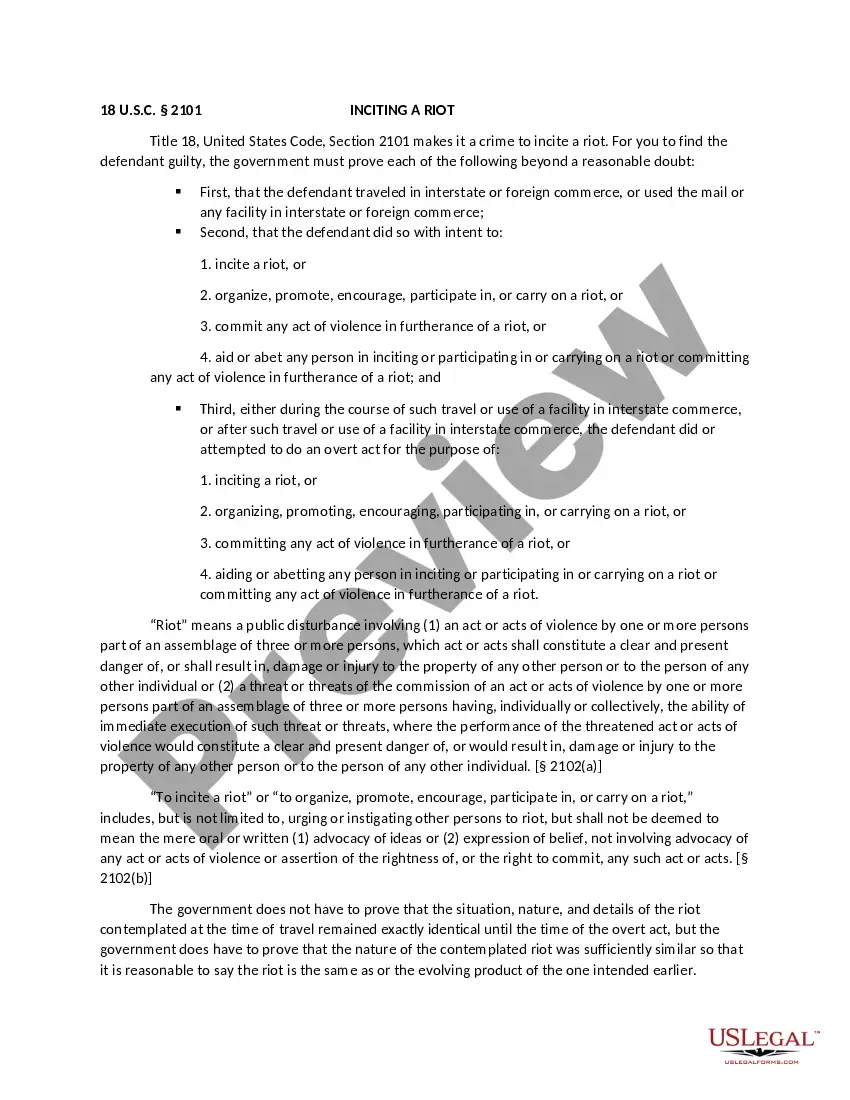
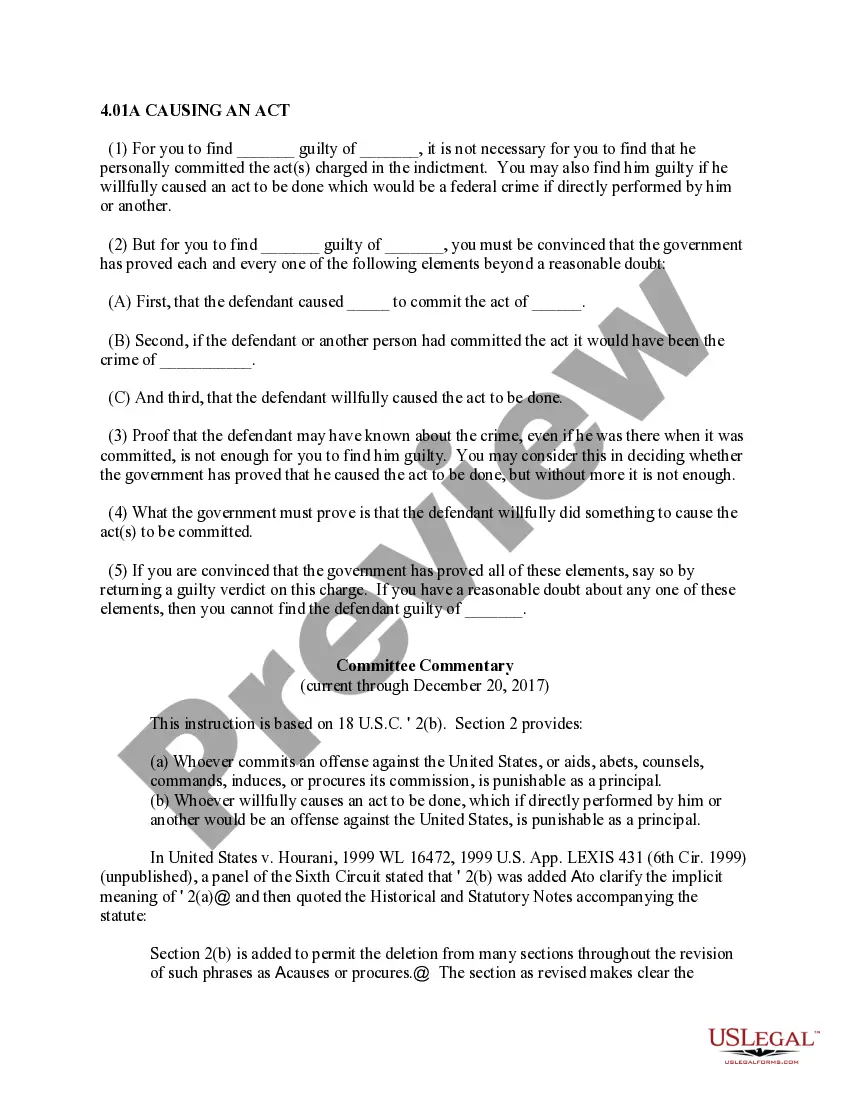
The Inciting a Riot form is a legal document based on Title 18, United States Code, Section 2101, establishing the parameters for what constitutes inciting a riot. It details the elements that must be proven in court to find someone guilty of this offense, distinguishing it from similar charges. This form serves as a guideline for both prosecutors and defendants in federal criminal cases in South Carolina and is useful for understanding the legal framework surrounding riot-related offenses.
Main sections of this form
- Definition of inciting a riot, including the required intent and actions.
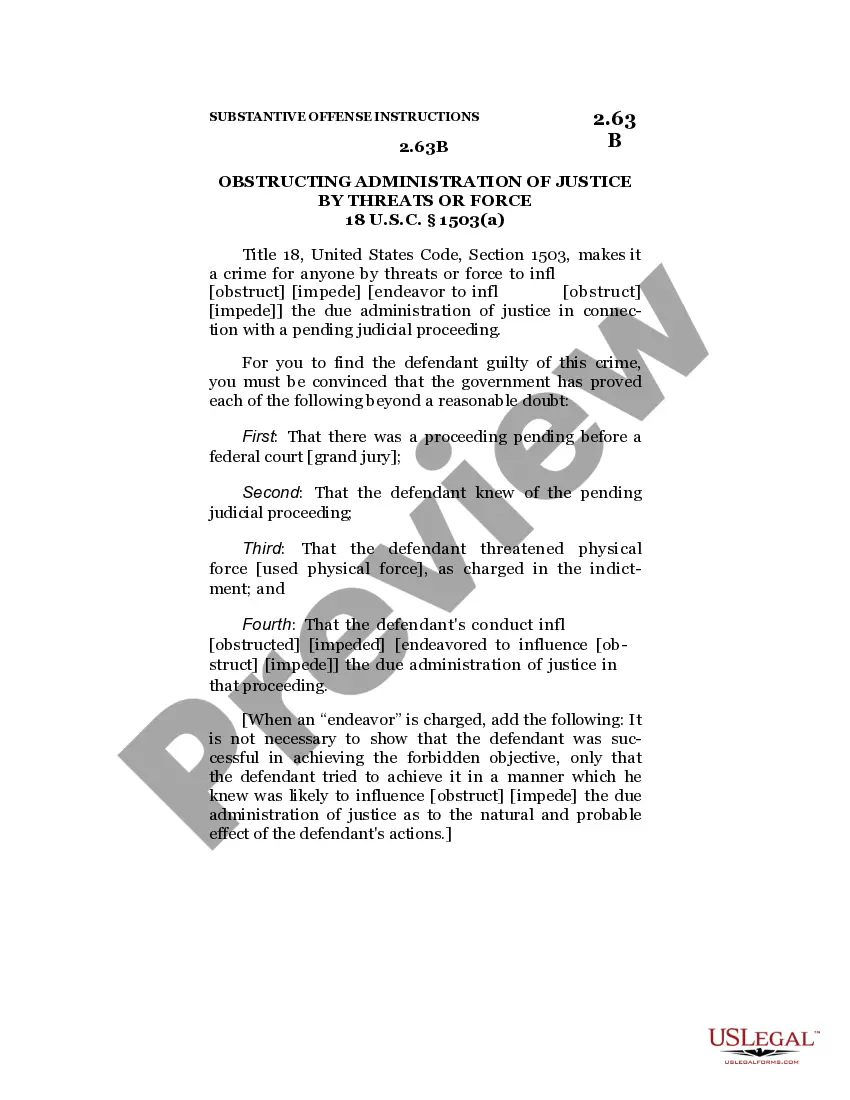
- Elements the government must prove beyond a reasonable doubt.
- Clarification of what constitutes a riot under the law.
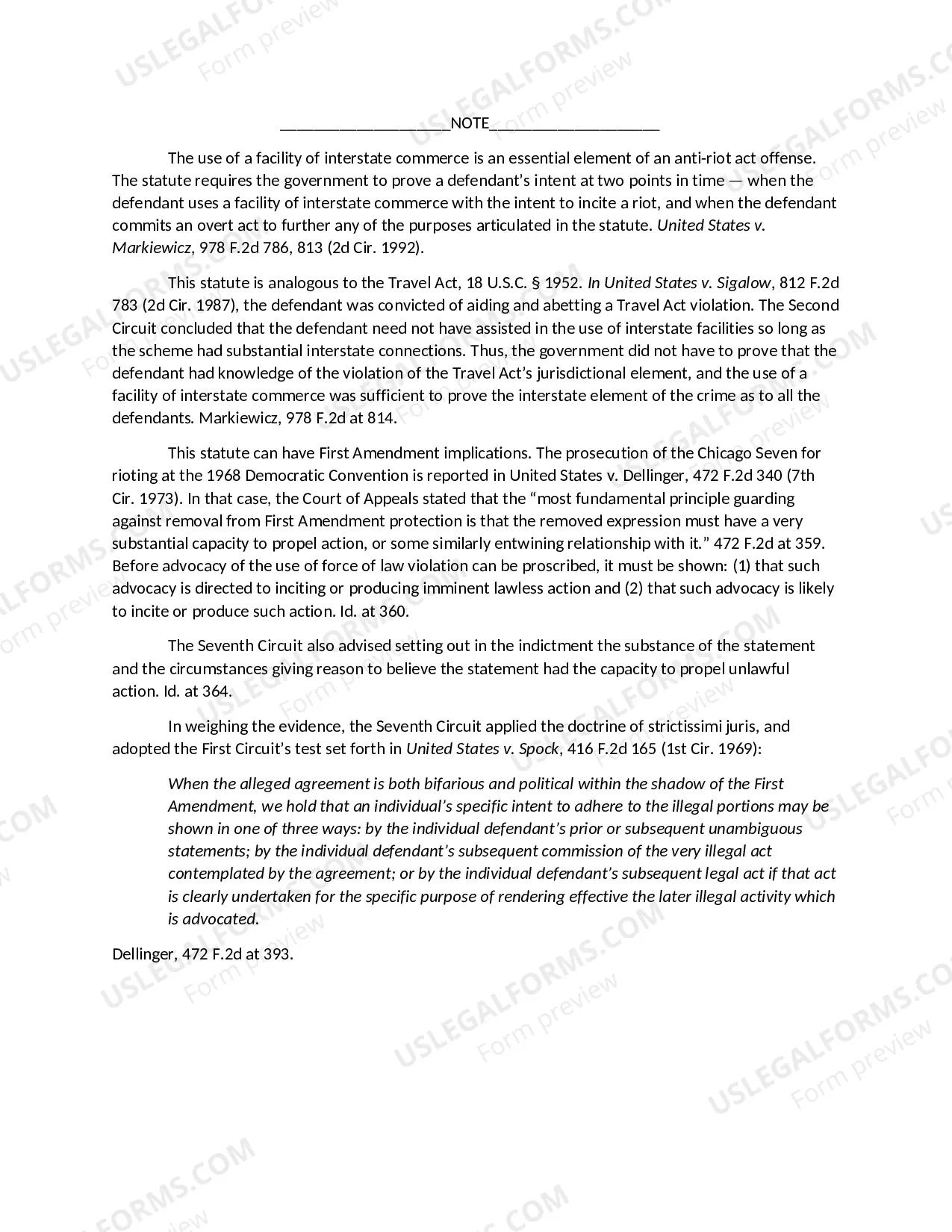
- Guidelines regarding First Amendment protections related to advocacy and expression.
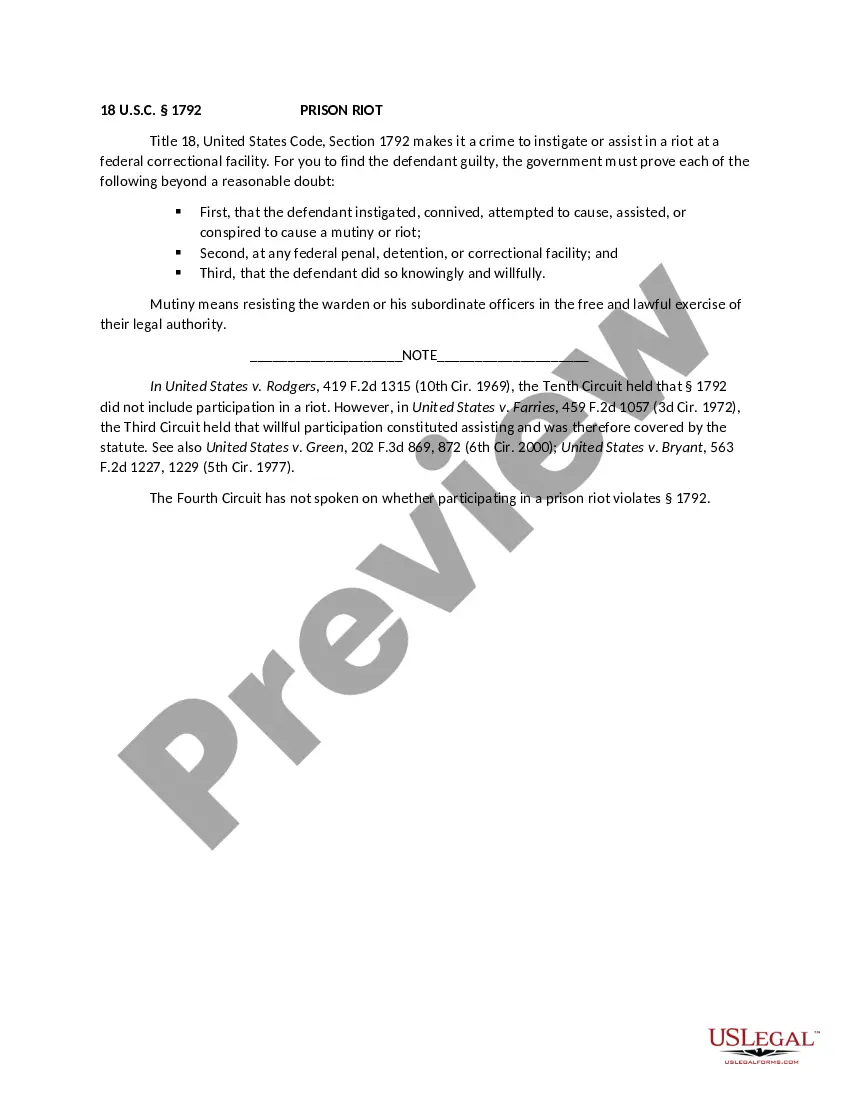
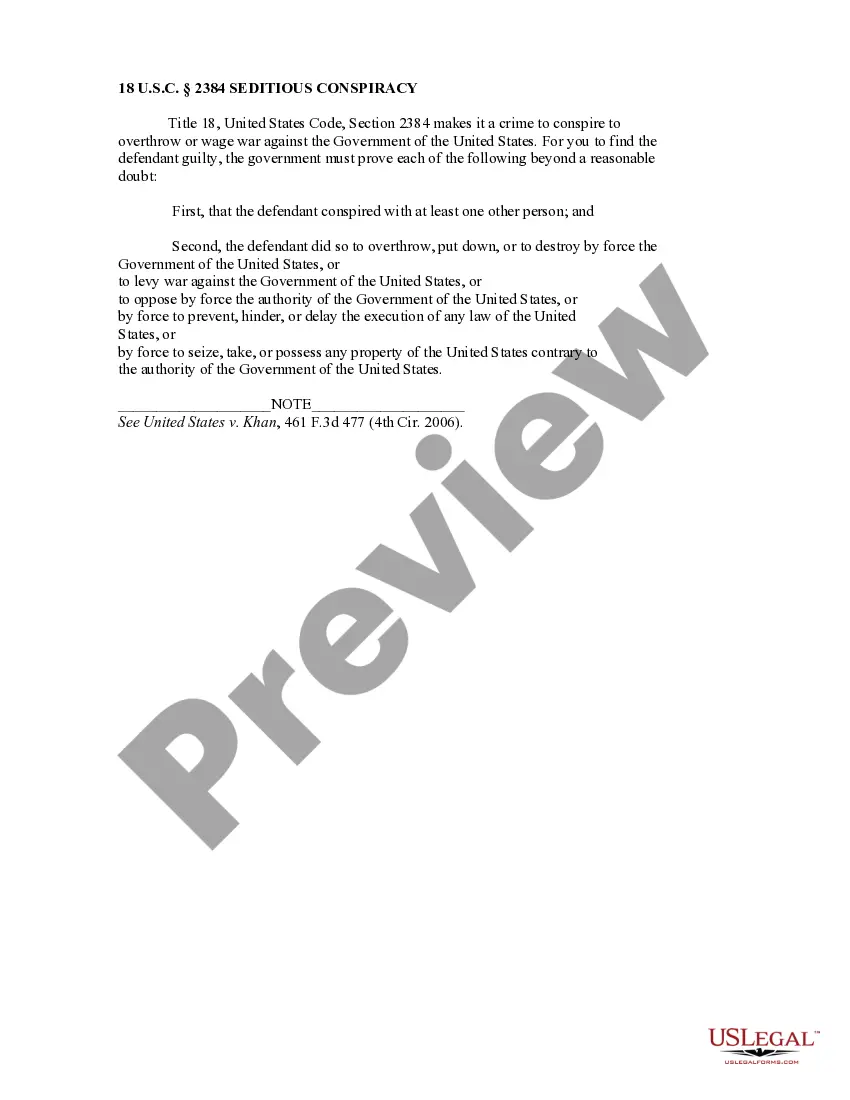
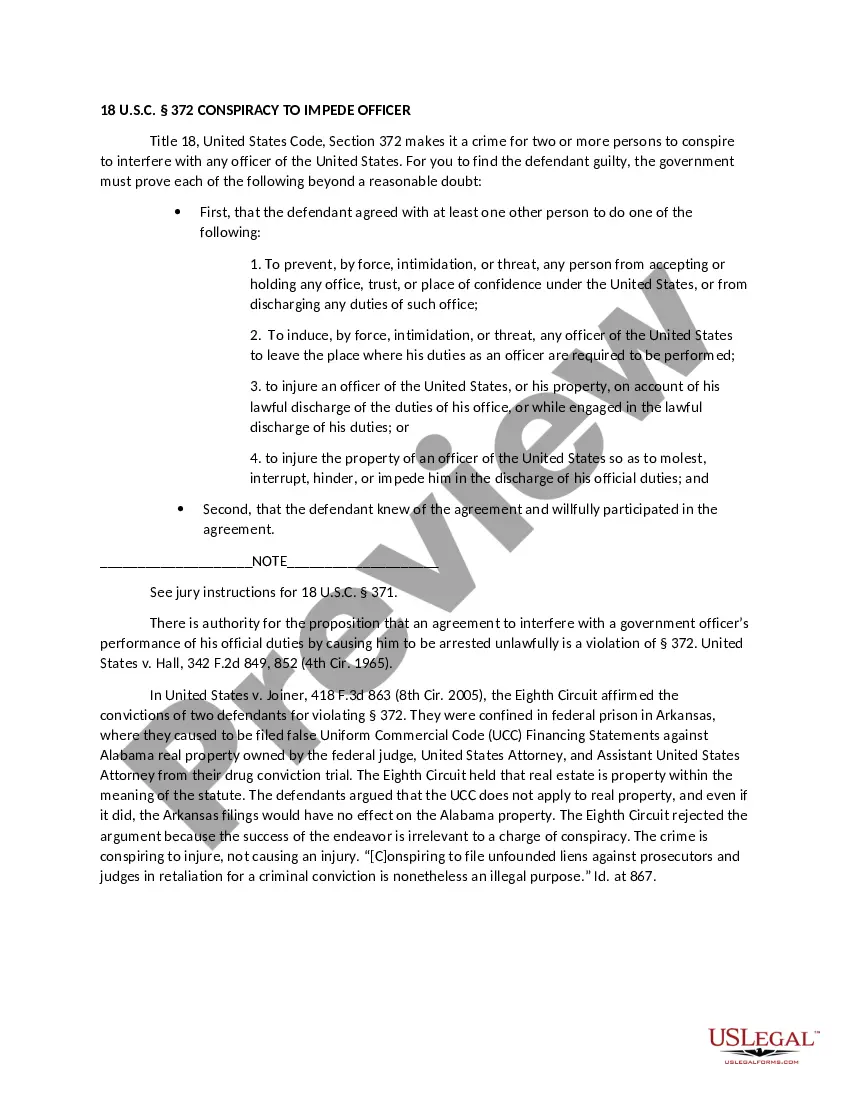
- Legal precedents and cases that influence the application of this statute.
Common use cases
This form is used in legal proceedings when a person is charged with inciting a riot, typically in connection with acts of violence or public disturbances. Prosecutors may refer to this form to ensure they meet the necessary legal criteria when pursuing charges, while defendants may use it to understand the charges against them and prepare their defense.
Who can use this document
- Prosecutors looking to build a case for inciting a riot.
- Defendants facing charges of inciting a riot.
- Legal professionals seeking to understand the nuances of federal riot legislation.
- Individuals interested in the legal implications of advocacy and free speech during riots.
Completing this form step by step
- Review the legal definition of inciting a riot included in the form.
- Identify the intent and actions required for prosecution or defense.
- Gather evidence and documentation related to the case.
- Fill in any specific details pertinent to the charges or defenses involved.
- Submit the completed form as part of the legal filings in the case.
Notarization guidance
Notarization is generally not required for this form. However, certain states or situations might demand it. You can complete notarization online through US Legal Forms, powered by Notarize, using a verified video call available anytime.
Get your form ready online
Our built-in tools help you complete, sign, share, and store your documents in one place.
Make edits, fill in missing information, and update formatting in US Legal Forms—just like you would in MS Word.
Download a copy, print it, send it by email, or mail it via USPS—whatever works best for your next step.
Sign and collect signatures with our SignNow integration. Send to multiple recipients, set reminders, and more. Go Premium to unlock E-Sign.
If this form requires notarization, complete it online through a secure video call—no need to meet a notary in person or wait for an appointment.
We protect your documents and personal data by following strict security and privacy standards.

Make edits, fill in missing information, and update formatting in US Legal Forms—just like you would in MS Word.

Download a copy, print it, send it by email, or mail it via USPS—whatever works best for your next step.

Sign and collect signatures with our SignNow integration. Send to multiple recipients, set reminders, and more. Go Premium to unlock E-Sign.

If this form requires notarization, complete it online through a secure video call—no need to meet a notary in person or wait for an appointment.

We protect your documents and personal data by following strict security and privacy standards.
Mistakes to watch out for
- Failing to accurately demonstrate intent in the legal argument.
- Not understanding the definition of a riot as outlined in the statute.
- Overlooking First Amendment protections when formulating a defense.
- Neglecting to cite relevant case law that impacts the interpretation of the statute.
Why complete this form online
- Easy access to legal documentation from anywhere.
- Forms are drafted by licensed attorneys ensuring accuracy.
- Ability to download and customize forms for specific cases.
- Convenience of editing and saving documents as needed.
Legal use & context
- This form reflects federal law as established under Title 18, Section 2101.
- Understand the challenges in proving intent and overt actions in court.
- The form provides critical context regarding First Amendment protections.
- Legal outcomes may vary based on jurisdiction and specific case details.
Looking for another form?
Form popularity
FAQ
Section 24-13-430 - Rioting or inciting to riot; penalty (A) An inmate of the Department of Corrections or of a local detention facility who conspires with another inmate to incite the inmate to riot or commit any other acts of violence is guilty of a felony and, upon conviction, must be sentenced in the discretion of
Under 18 U.S. Code section 2101, a defendant can be charged with inciting a riot, organizing, encouraging, promoting or participating in a riot, committing acts of violence in furtherance of a riot, or aiding and abetting others to participate in a riot.
This means that a person commits the crime of incitement to riot if, intending to cause a riot, he or she urges other people to: engage in rioting, commit acts of force or violence, OR. burn or destroy property.
To be charged with incitement to riot under California Penal Code 404.6, you must only urge others to commit violent, forceful, or destructive acts while there is immediate danger of a riot. The punishments for this misdemeanor offense include hefty fines and a lengthy jail sentence.
Inciting a riot is a misdemeanor offense under Penal Code 404.6 PC. If you're convicted of this crime, you could face up to a year in county jail, a $1,000 fine, or both jail and a fine. It's a crime to incite other people to riot, commit acts of violence, or destroy property.
Inciting a riot is a misdemeanor offense under Penal Code 404.6 PC. If you're convicted of this crime, you could face up to a year in county jail, a $1,000 fine, or both jail and a fine.
The punishments for rioting or inciting to riot under federal law include fines, imprisonment for up to five years, or both. State punishments vary by jurisdiction and may be more or less severe than the federal punishments. Consult with a local criminal defense lawyer regarding local criminal charges and punishment.
Inciting a riot means to cause (or to attempt to cause) a riot by way of urging other people: to engage in rioting, to commit acts of force or violence, or. to burn or destroy property.