South Carolina UTTERING FORGED SECURITIES
What this document covers
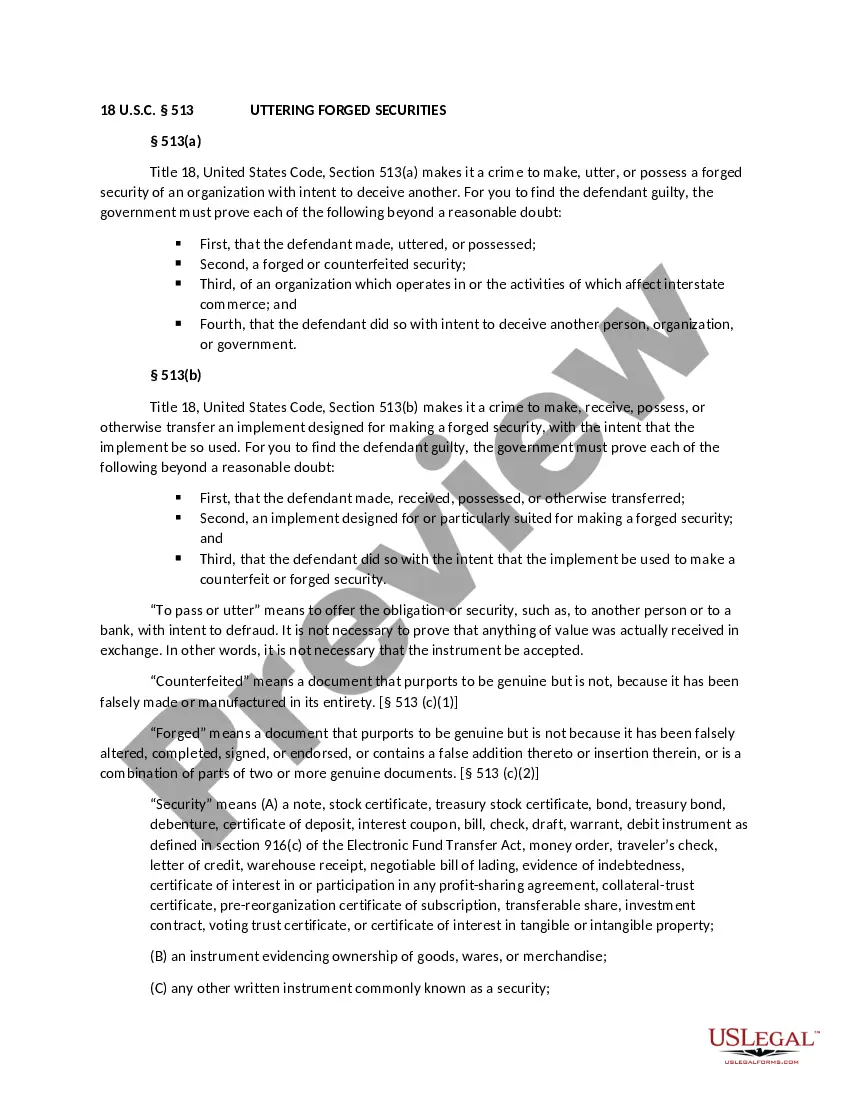
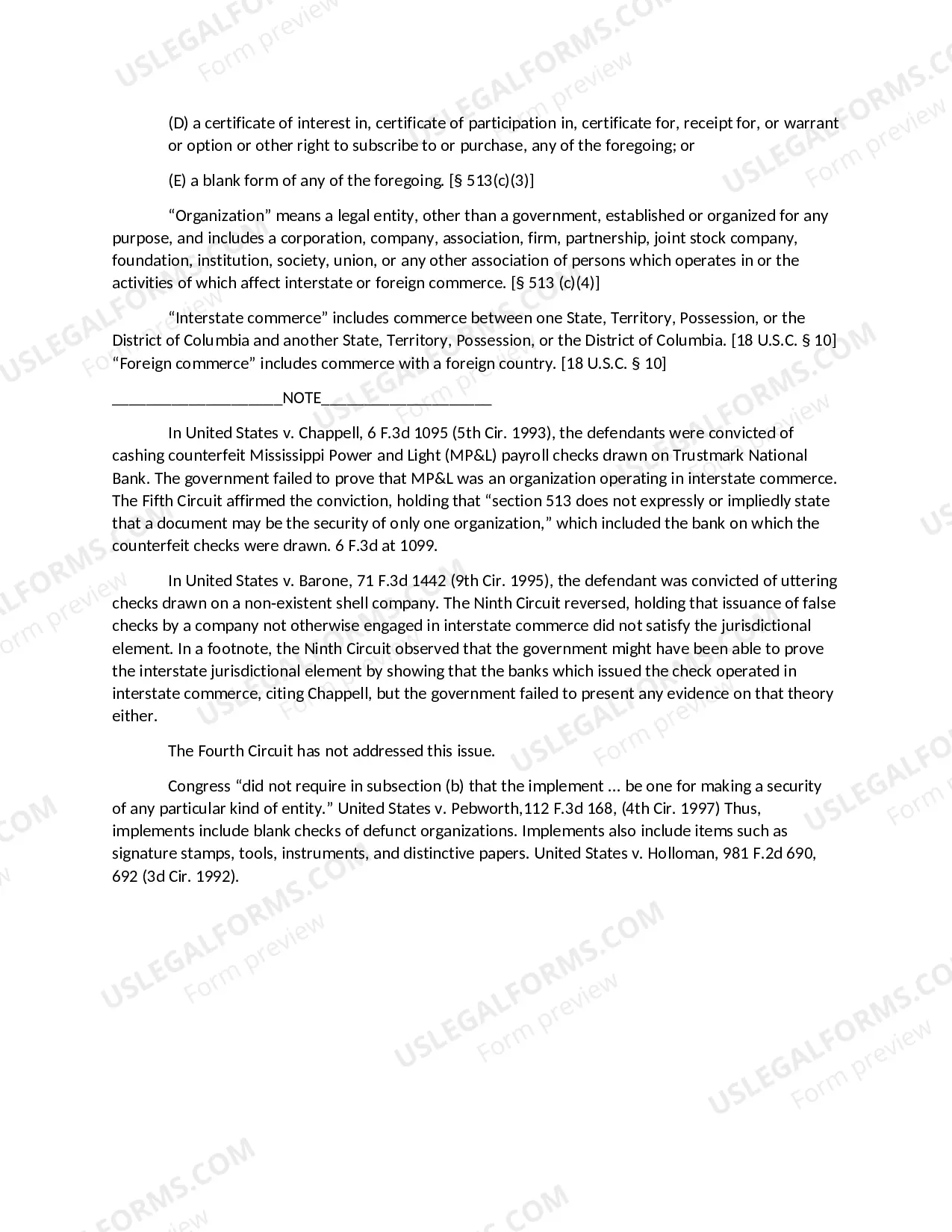
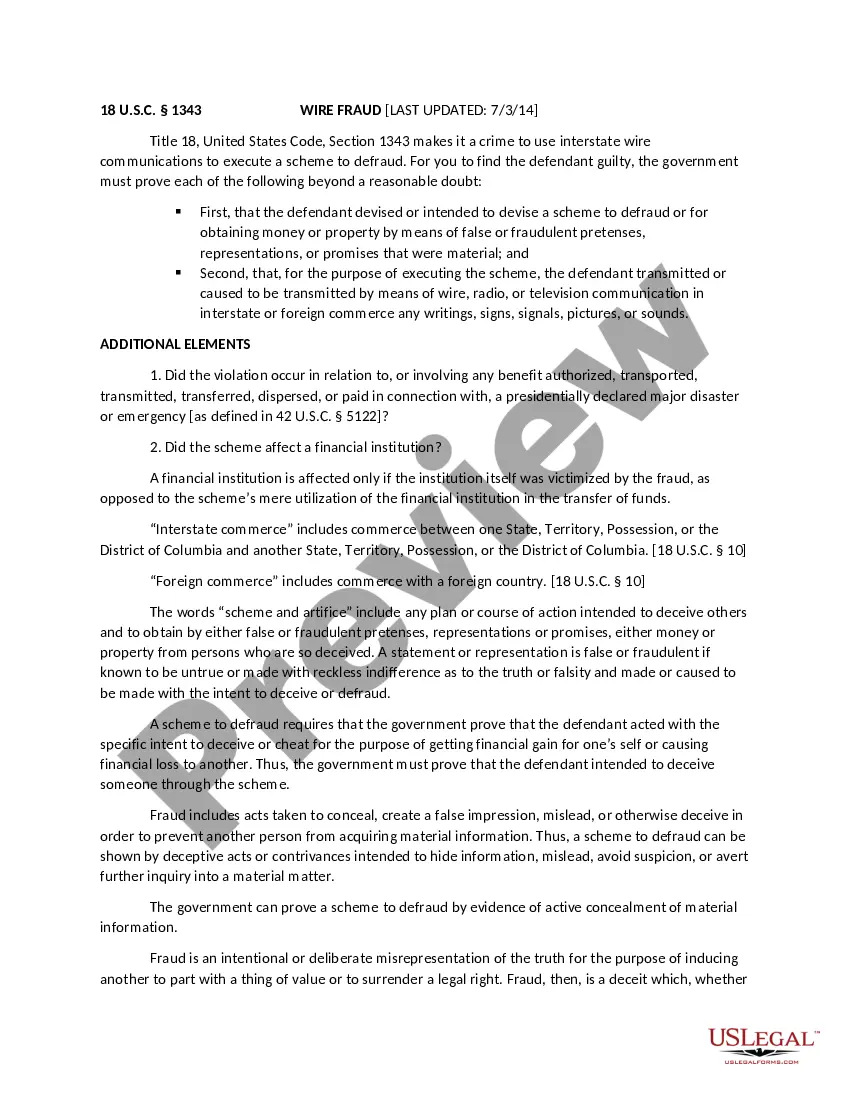
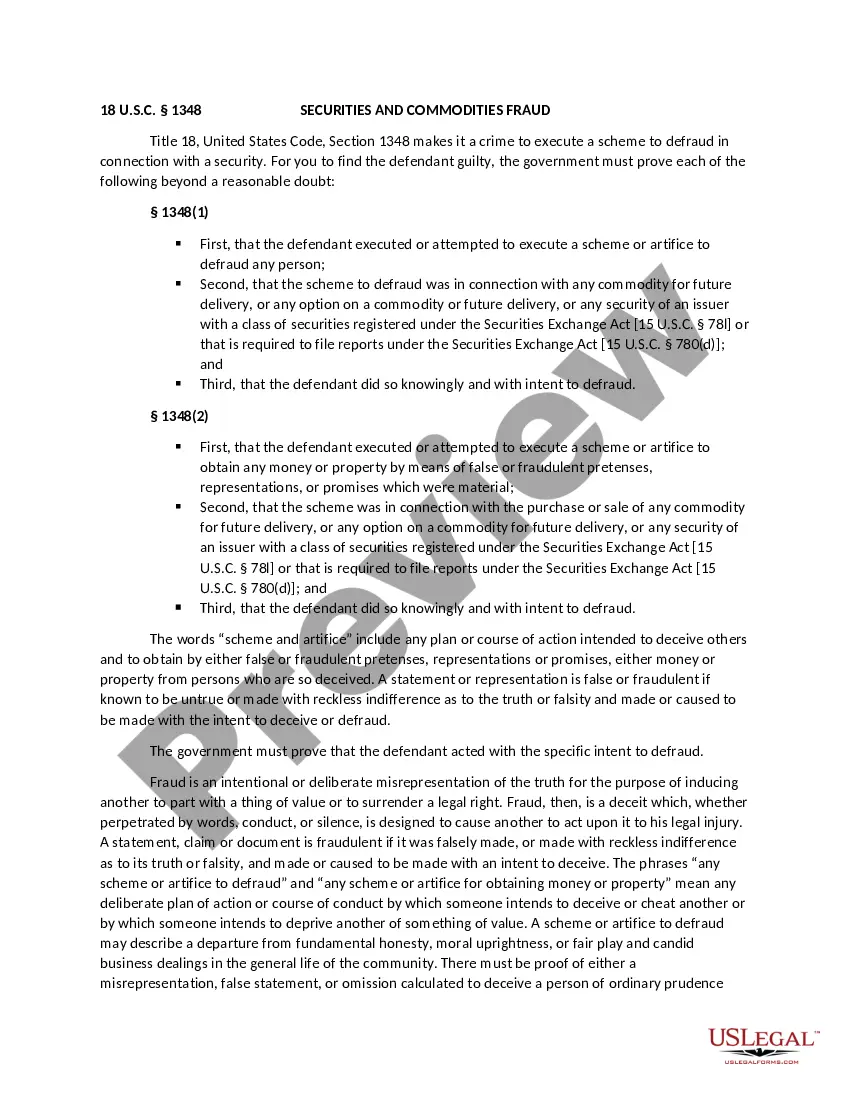
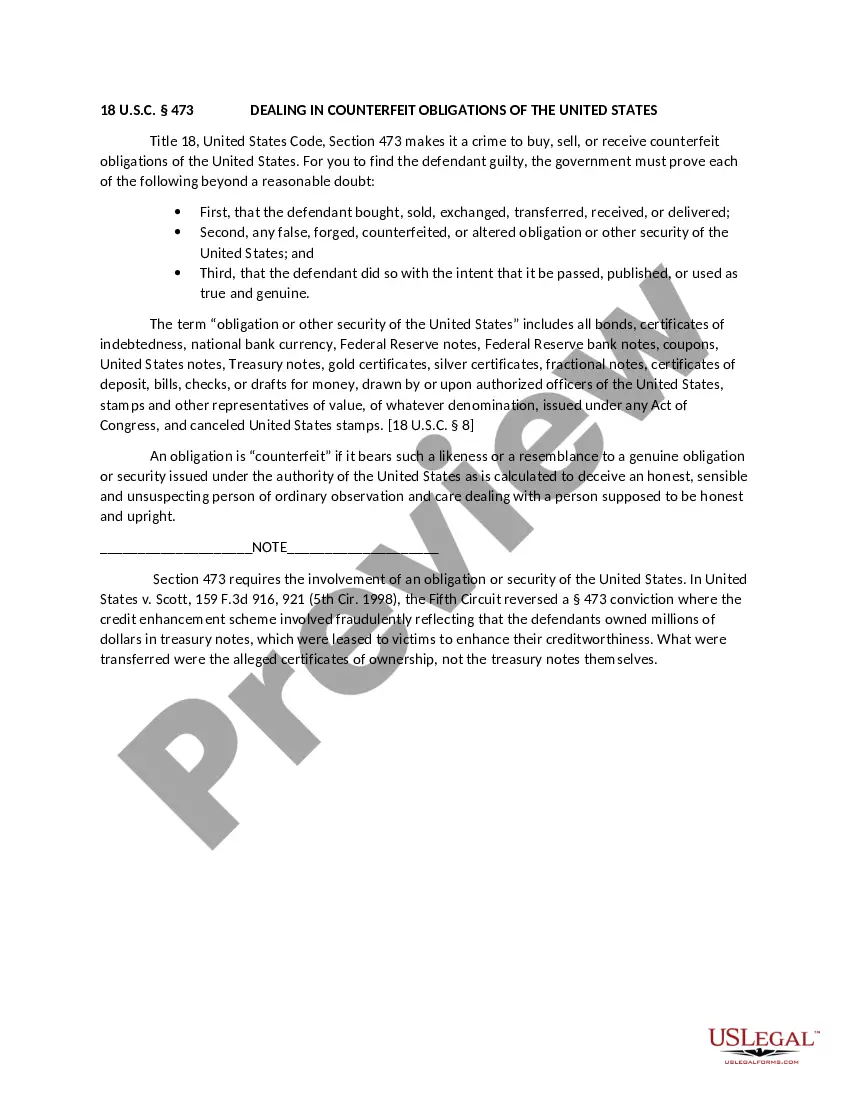
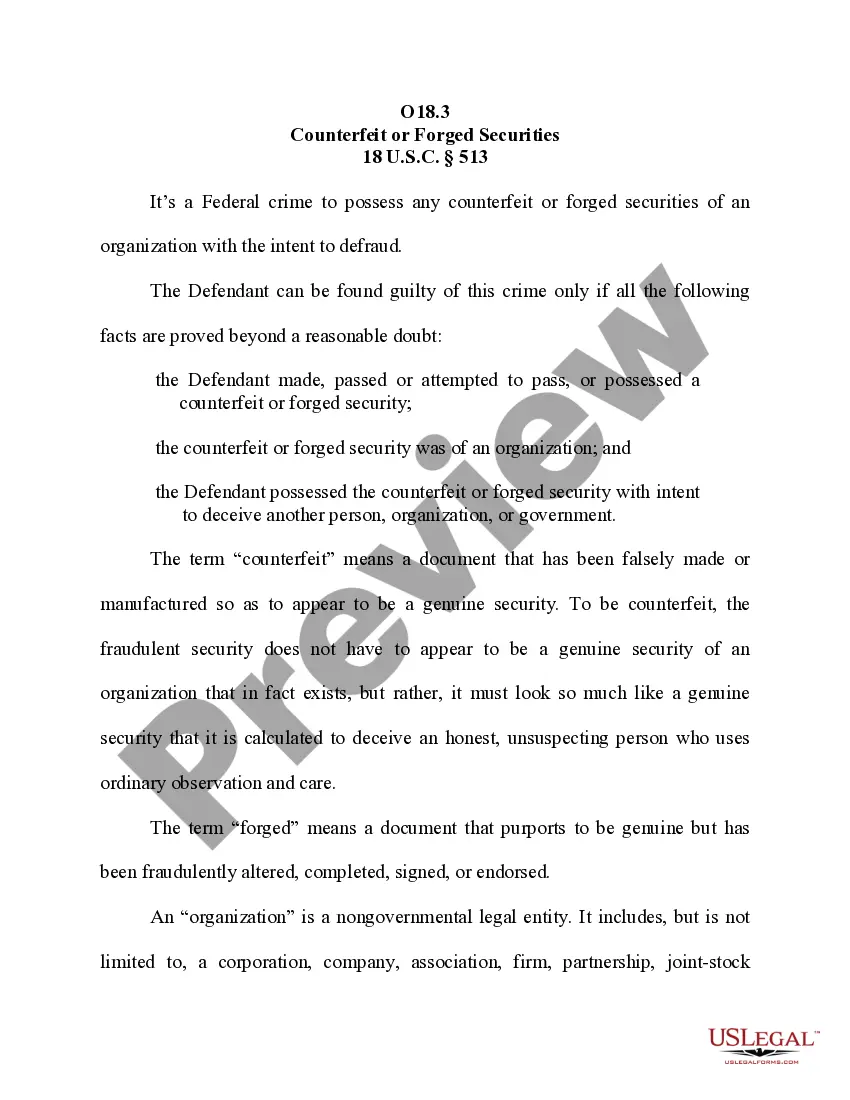
The Uttering Forged Securities form provides the official jury instructions related to criminal cases involving the making, passing, or possession of forged securities. These securities can include various financial instruments such as checks, stock certificates, and bonds. This form outlines the legal requirements and definitions necessary to establish guilt under Title 18, United States Code, in cases concerning forgery, which can differ from other criminal forms in its specific focus on securities and the intent to deceive.
Main sections of this form
- Definition of 'forged security' and what constitutes forgery.
- Criteria for establishing guilt, including intent to deceive and the nature of the security involved.
- Explanation of what factors the jury must consider, such as the impact on interstate commerce.
- Details concerning implements used for making forged securities.
- Legal definitions relevant to organizations and their operational jurisdiction.
When to use this form
This form is essential when someone is facing charges related to uttering forged securities, which may involve offering said securities to another party or institution. If you suspect that forged securities are being circulated or if you are a victim of fraud involving such securities, this form can clarify the legal implications and processes involved in prosecution.
Who should use this form
- Prosecutors involved in federal criminal cases regarding forgery.
- Defense attorneys representing clients accused of uttering forged securities.
- Judges presiding over cases that require jury instructions on forgery laws.
- Legal educators and students reviewing criminal law related to forgery and securities.
Instructions for completing this form
- Identify the relevant parties involved in the case, including the defendant and the organization impacted.
- Establish the specific type of forged or counterfeited security involved in the case.
- Detail the intent to deceive that the defendant must be shown to possess.
- Clarify whether interstate commerce is affected by the actions related to the forged security.
- Ensure that all legal definitions are referenced accurately as outlined in the jury instructions.
Is notarization required?
This form usually doesn’t need to be notarized. However, local laws or specific transactions may require it. Our online notarization service, powered by Notarize, lets you complete it remotely through a secure video session, available 24/7.
Get your form ready online
Our built-in tools help you complete, sign, share, and store your documents in one place.
Make edits, fill in missing information, and update formatting in US Legal Forms—just like you would in MS Word.
Download a copy, print it, send it by email, or mail it via USPS—whatever works best for your next step.
Sign and collect signatures with our SignNow integration. Send to multiple recipients, set reminders, and more. Go Premium to unlock E-Sign.
If this form requires notarization, complete it online through a secure video call—no need to meet a notary in person or wait for an appointment.
We protect your documents and personal data by following strict security and privacy standards.

Make edits, fill in missing information, and update formatting in US Legal Forms—just like you would in MS Word.

Download a copy, print it, send it by email, or mail it via USPS—whatever works best for your next step.

Sign and collect signatures with our SignNow integration. Send to multiple recipients, set reminders, and more. Go Premium to unlock E-Sign.

If this form requires notarization, complete it online through a secure video call—no need to meet a notary in person or wait for an appointment.

We protect your documents and personal data by following strict security and privacy standards.
Mistakes to watch out for
- Failing to establish a clear link to interstate commerce, which is crucial for jurisdiction.
- Not accurately defining what constitutes a forged security per legal standards.
- Misunderstanding the intent requirement, which can lead to insufficient evidence for prosecution.
- Confusing forged securities with altered documents that may not meet the legal criteria for forgery.
Why complete this form online
- Immediate access to legally vetted jury instructions, ensuring compliance with current laws.
- Easy editing capabilities to tailor the form to specific case needs.
- Cost-effective as it eliminates the need for extensive legal consultations.
Legal use & context
- The form is used in federal court settings, where the laws apply uniformly across states.
- Understanding these jury instructions is critical to the judicial process regarding forgery-related crimes.
- Jurors must comprehend the definitions and criteria to deliver justified verdicts under federal law.
Looking for another form?
Form popularity
FAQ
Financial identity fraud or identity fraud; penalty. (A) It is unlawful for a person to commit the offense of financial identity fraud or identity fraud.
(A) It is unlawful for a person to buy, receive, or possess stolen goods, chattels, or other property if the person knows or has reason to believe the goods, chattels, or property is stolen. A person is guilty of this offense whether or not anyone is convicted of the property theft.
Forgeries involving $10,000 or more are felonies, and a judge may be able to sentence the person to up to 10 years of incarceration, expensive fine, or both. A forgery crime that involves less than $10,000 is also a felony but can result in five years' incarceration, fine, or both.
The act of shoplifting is codified in SC Code § 16-13-110. This statute defines the act of shoplifting and breaks it into three general categories. The first is what typically comes to mind when one thinks about shoplifting and that is simply removing the item or items from the retail store.
Title 16 - Crimes and Offenses. Chapter 13 - FORGERY, LARCENY, EMBEZZLEMENT, FALSE PRETENSES AND CHEATS. Section 16-13-140 - Defense to action for delay to investigate ownership of merchandise.
SECTION 16-1-57. Classification of third or subsequent conviction of certain property crimes. A person convicted of an offense for which the term of imprisonment is contingent upon the value of the property involved must, upon conviction for a third or subsequent offense, be punished as prescribed for a Class E felony.
It is unlawful for a person to maliciously tamper with a human drug product or food item with the intent to do bodily harm to a person. A person who violates the provisions of this section is guilty of a felony and, upon conviction, must be imprisoned not more than twenty years.
As laid out in South Carolina General Code Section 16-13-240, it is a crime to obtain a signature, money, or property from someone under false pretenses or misrepresentation of a fact with ?intent to cheat and defraud a person of that property.? Simply put, if you obtain money, property, or the title to property from