South Carolina TRANSPORTING OR RECEIVING AN EXPLOSIVE
Understanding this form
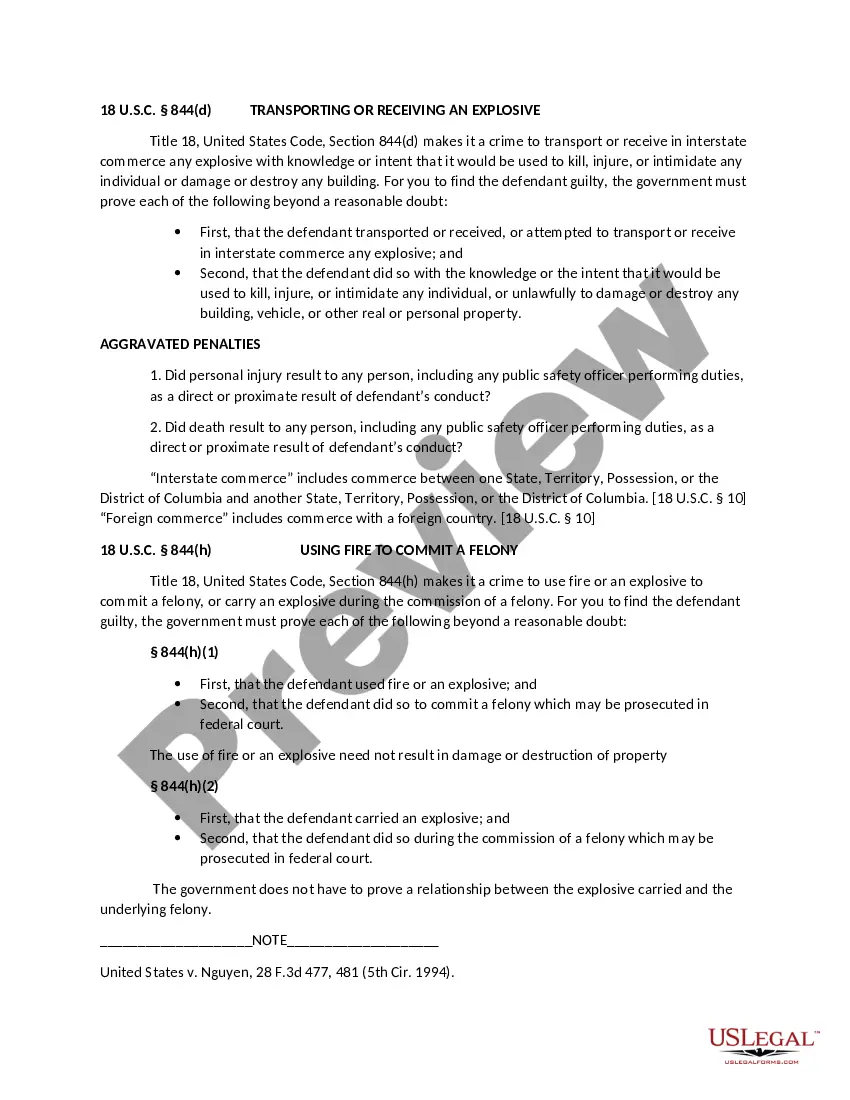
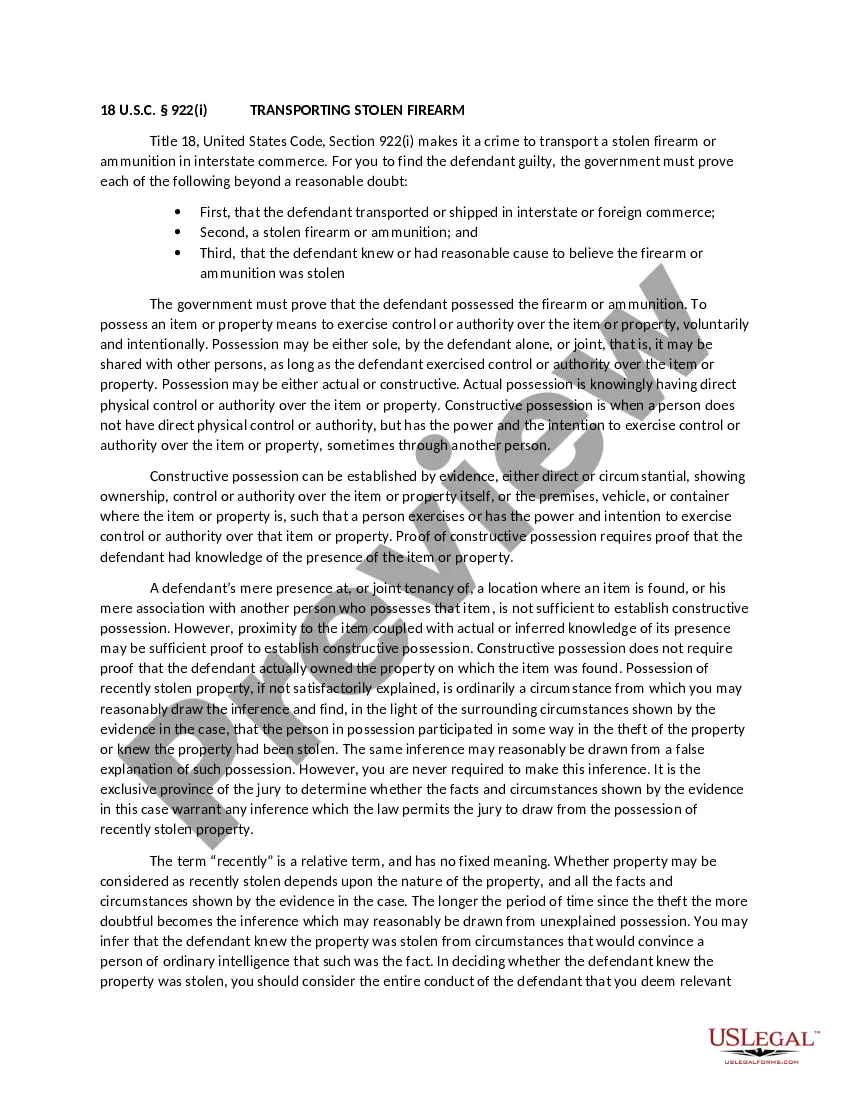
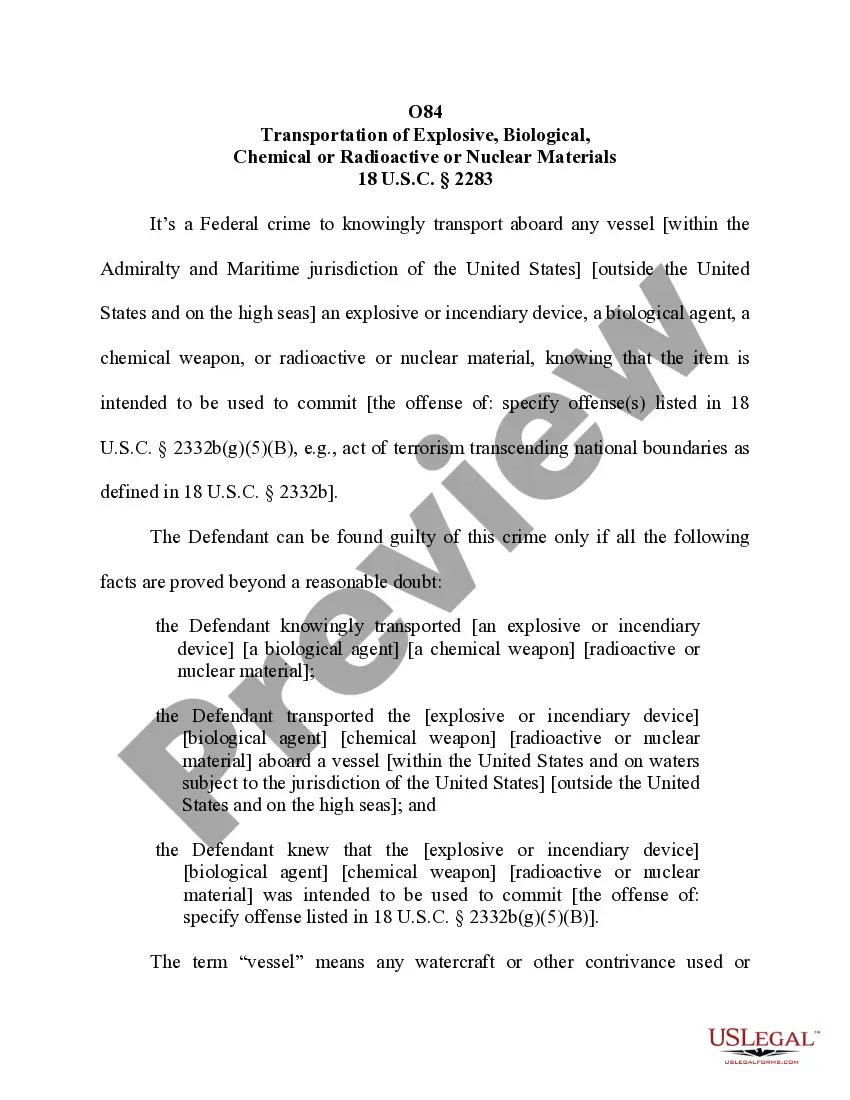
The Transporting or Receiving an Explosive form is a legal template used in federal criminal cases related to the illegal transportation or receipt of explosives. Under Title 18, United States Code, Section 844(d), this form outlines the charges and legal definitions associated with such criminal acts. It provides clarity on the necessary elements that the government must prove to secure a conviction, setting it apart from other legal forms concerning explosives or related crimes.
Form components explained
- Definition of interstate commerce in relation to explosives.
- Requirements for proving knowledge or intent to harm or intimidate.
- Details about aggravated penalties resulting from personal injury or death.
- Explanation of using fire to commit a felony under Section 844(h).
- Provisions regarding malicious damage to property used in interstate commerce.
When to use this document
This form is utilized in situations where there are allegations of transporting or receiving explosives with the intent to harm individuals or damage property. It is crucial for defendants facing criminal charges related to such activities, particularly in federal jurisdictions, to understand the implications of this law and the necessary legal standards that must be met for prosecution.
Who should use this form
- Individuals accused of transporting or receiving explosives illegally.
- Legal representatives defending clients in federal criminal cases.
- Those seeking to understand the legal framework surrounding explosives and related offenses.
- Public safety officers involved in investigations of explosive-related crimes.
How to prepare this document
- Identify the defendant and their alleged actions related to transporting or receiving explosives.
- Specify the evidence supporting the allegation of knowledge or intent to cause harm.
- Detail any aggravated circumstances such as personal injuries or fatalities linked to the actions.
- Include any supplemental information relevant to the use of fire or explosives during the commission of a felony.
- Ensure all information is accurate and aligns with the legal definitions provided in the form.
Does this form need to be notarized?
This form does not typically require notarization to be legally valid. However, some jurisdictions or document types may still require it. US Legal Forms provides secure online notarization powered by Notarize, available 24/7 for added convenience.
Get your form ready online
Our built-in tools help you complete, sign, share, and store your documents in one place.
Make edits, fill in missing information, and update formatting in US Legal Forms—just like you would in MS Word.
Download a copy, print it, send it by email, or mail it via USPS—whatever works best for your next step.
Sign and collect signatures with our SignNow integration. Send to multiple recipients, set reminders, and more. Go Premium to unlock E-Sign.
If this form requires notarization, complete it online through a secure video call—no need to meet a notary in person or wait for an appointment.
We protect your documents and personal data by following strict security and privacy standards.

Make edits, fill in missing information, and update formatting in US Legal Forms—just like you would in MS Word.

Download a copy, print it, send it by email, or mail it via USPS—whatever works best for your next step.

Sign and collect signatures with our SignNow integration. Send to multiple recipients, set reminders, and more. Go Premium to unlock E-Sign.

If this form requires notarization, complete it online through a secure video call—no need to meet a notary in person or wait for an appointment.

We protect your documents and personal data by following strict security and privacy standards.
Common mistakes
- Failing to clearly establish the defendant's knowledge or intent.
- Not providing sufficient evidence or examples of how the actions affected interstate commerce.
- Overlooking the necessary aggravated circumstances that could enhance penalties.
- Neglecting to consult legal counsel to ensure all elements of the offense are addressed.
Why use this form online
- Immediate access to official legal formats prepared by licensed attorneys.
- Convenience of downloading and customizing the form directly from your device.
- Ability to save and edit the form as needed, ensuring all information is accurate.
- Access to legal resources and guidance while completing the form.
Looking for another form?
Form popularity
FAQ
Transport vehicles will not exceed the posted speed limits, nor will they exceed 15 MPH on the flight line ramp, or more than 5 MPH when in the immediate vicinity of a parked aircraft. 4.12. Private motor vehicles will not be used to transport hazardous materials.
All vehicles used for the transportation of explosives shall have tight floors and any exposed spark-producing metal on the inside of the body shall be covered with wood, or other nonsparking material, to prevent contact with containers of explosives.
(1) When open body vehicles are used to transport explosive materials, the explosive materials shall be carried in a Type 3 magazine or original manufacturer's container that has been securely retained or mounted on the bed of the vehicle to prevent movement.
All vehicles used for the transportation of explosives shall have tight floors and any exposed spark-producing metal on the inside of the body shall be covered with wood, or other nonsparking material, to prevent contact with containers of explosives.
Explosives and blasting agents shall be hoisted, lowered, or conveyed in a powder car.
The safety, security and management of explosive storages must comply with the requirements of AS 2187.1. Explosives must be kept in a locked magazine or receptacle of appropriate security and should be kept in a locked detached building not permanently occupied by people.