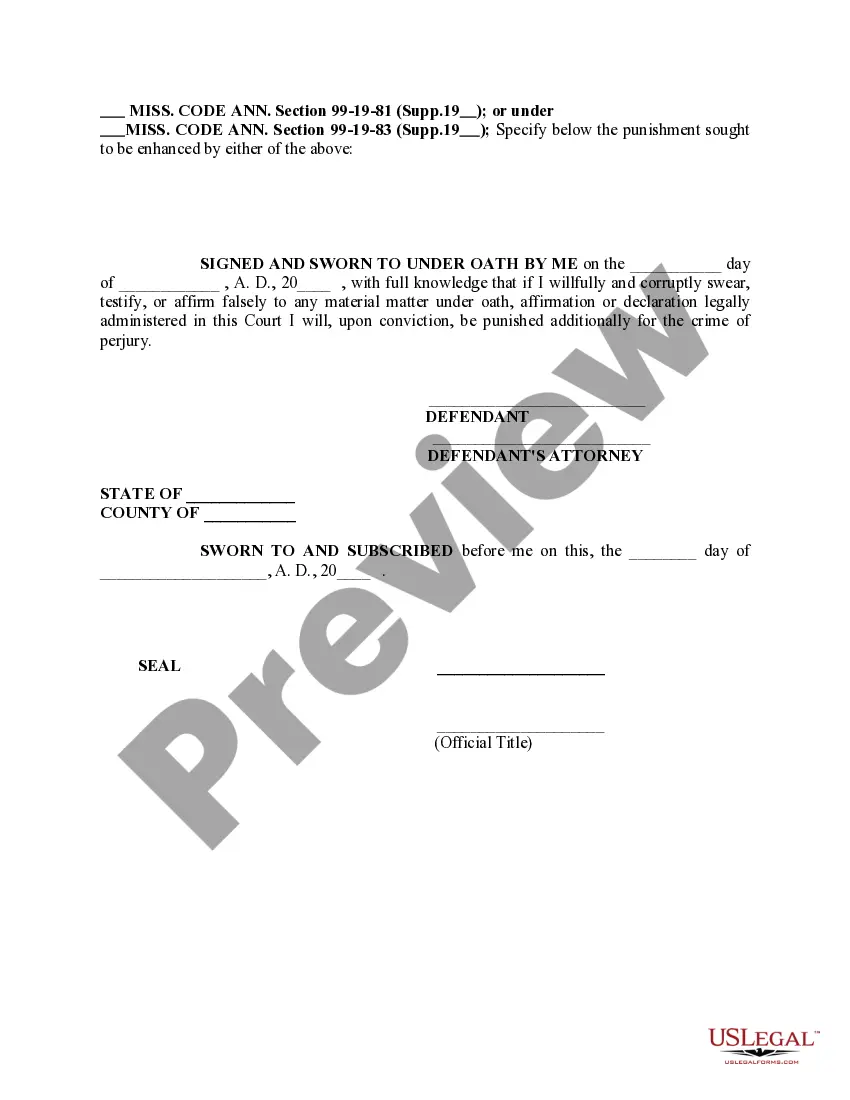
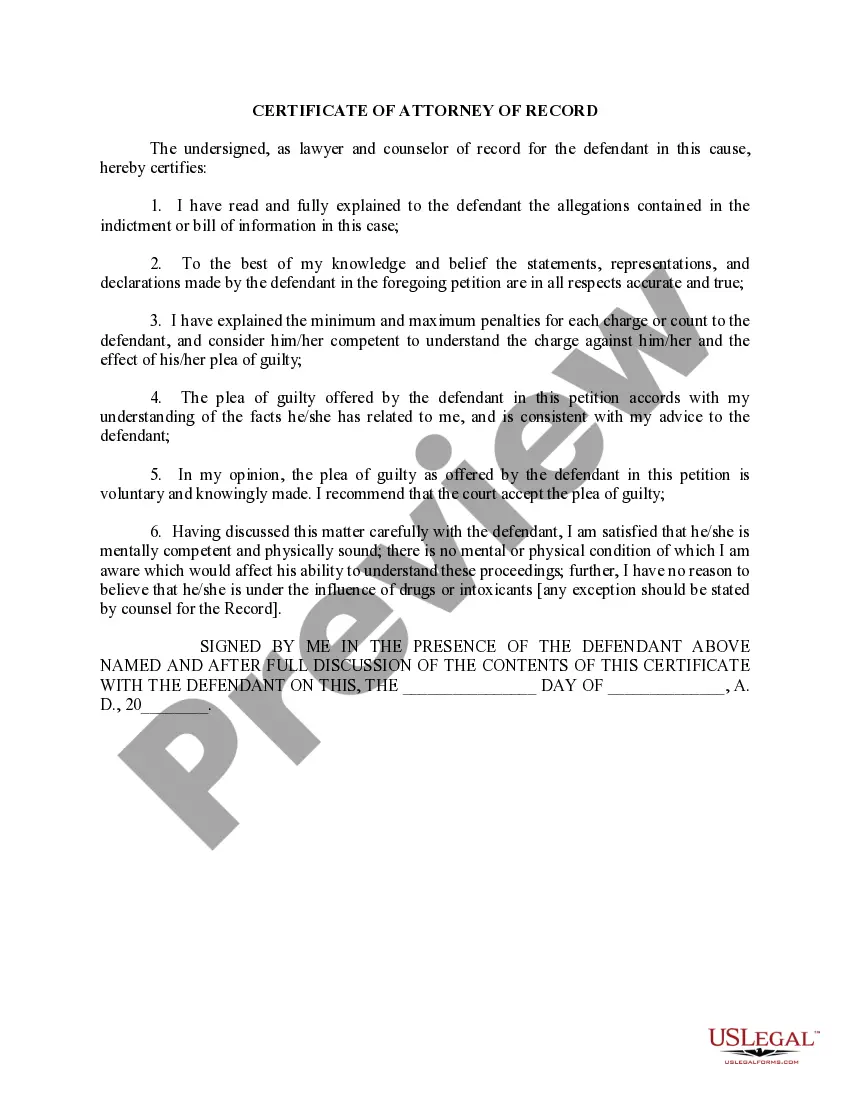
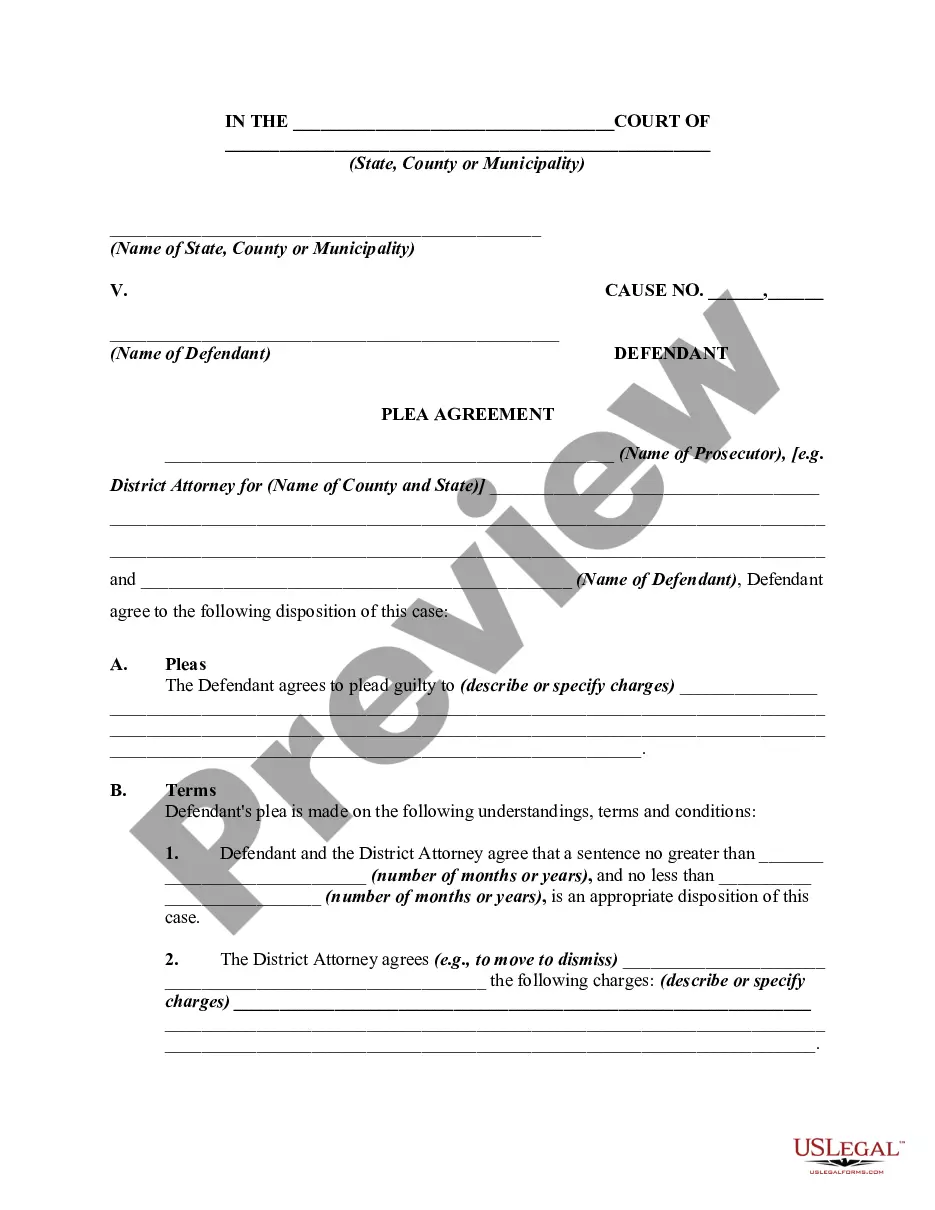
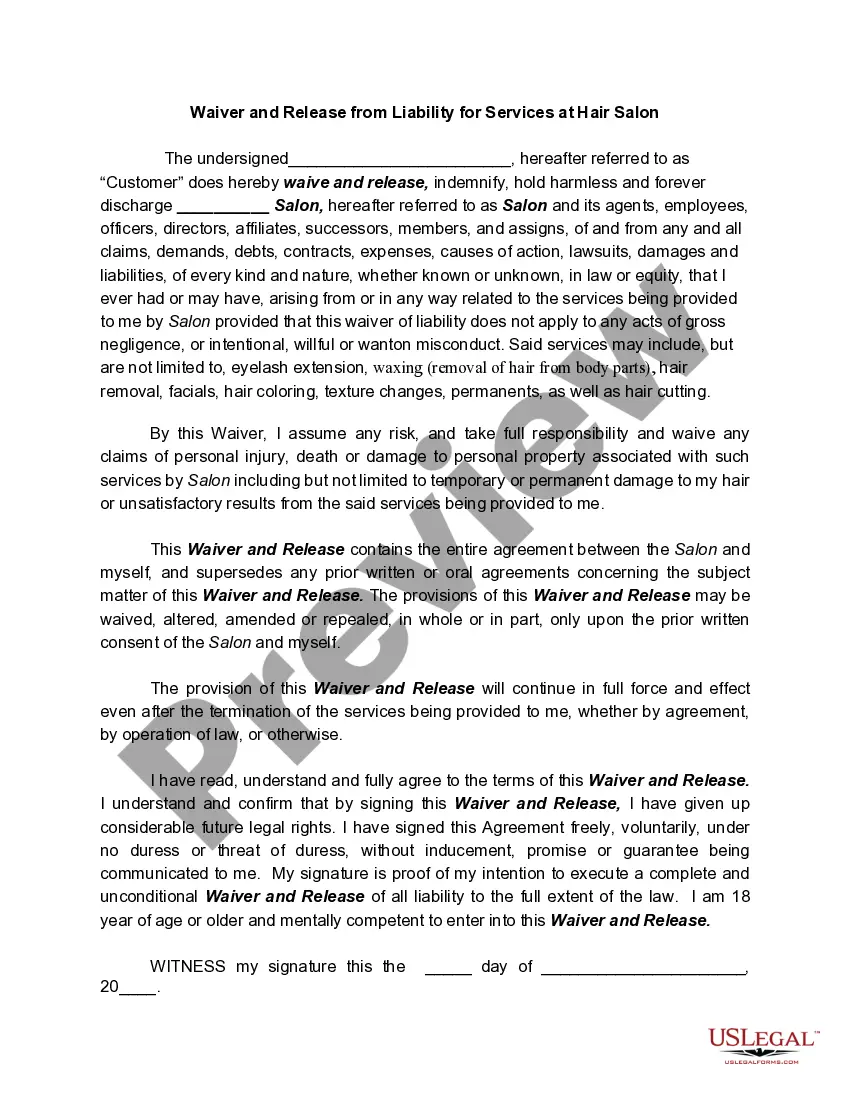
South Carolina Petition to Enter Plea of Guilty
Description
Get your form ready online
Our built-in tools help you complete, sign, share, and store your documents in one place.
Make edits, fill in missing information, and update formatting in US Legal Forms—just like you would in MS Word.
Download a copy, print it, send it by email, or mail it via USPS—whatever works best for your next step.
Sign and collect signatures with our SignNow integration. Send to multiple recipients, set reminders, and more. Go Premium to unlock E-Sign.
If this form requires notarization, complete it online through a secure video call—no need to meet a notary in person or wait for an appointment.
We protect your documents and personal data by following strict security and privacy standards.

Make edits, fill in missing information, and update formatting in US Legal Forms—just like you would in MS Word.

Download a copy, print it, send it by email, or mail it via USPS—whatever works best for your next step.

Sign and collect signatures with our SignNow integration. Send to multiple recipients, set reminders, and more. Go Premium to unlock E-Sign.

If this form requires notarization, complete it online through a secure video call—no need to meet a notary in person or wait for an appointment.

We protect your documents and personal data by following strict security and privacy standards.
Looking for another form?
How to fill out Petition To Enter Plea Of Guilty?
Are you currently in the situation where you require documentation for various business or personal purposes almost all the time.
There are numerous authentic document templates available online, but locating ones you can trust isn’t easy.
US Legal Forms offers thousands of form templates, such as the South Carolina Petition to Enter Plea of Guilty, which are designed to meet state and federal standards.
Once you have the correct form, click Get now.
Choose a convenient document format and download your copy.
- If you are already familiar with the US Legal Forms website and have an account, simply Log In.
- After that, you can download the South Carolina Petition to Enter Plea of Guilty template.
- If you do not have an account and want to start using US Legal Forms, follow these actions.
- Select the form you need and ensure it is for the correct city/region.
- Use the Review button to check the form.
- Read the information to confirm that you have selected the correct form.
- If the form isn’t what you are looking for, utilize the Lookup field to find the form that meets your needs.
Form popularity
FAQ
If a defendant pleads guilty, there is no trial, but the next step is to prepare for a sentencing hearing.
In a criminal proceeding, a defendant may enter a plea of nolo contendere, in which the defendant does not accept or deny responsibility for the charges but waives the right to a trial and agrees to accept the penalty.
(a valid guilty plea requires an accused to admit his guilt and articulate those facts that objectively establish his guilt; an accused must be convinced of, and able to describe all the facts necessary to establish guilt; if an accused is personally convinced of his guilt based upon an assessment of the government's ...
Plea bargains are agreements between defendants and prosecutors in which defendants agree to plead guilty to some or all of the charges against them in exchange for concessions from the prosecutors.
A plea of guilty means that the act with which you are charged is prohibited by law, that you committed the act, and that you have no defense or excuse for the act. Before you enter a plea of guilty, consider the following: 1. The State has the burden of proving that you violated the law.
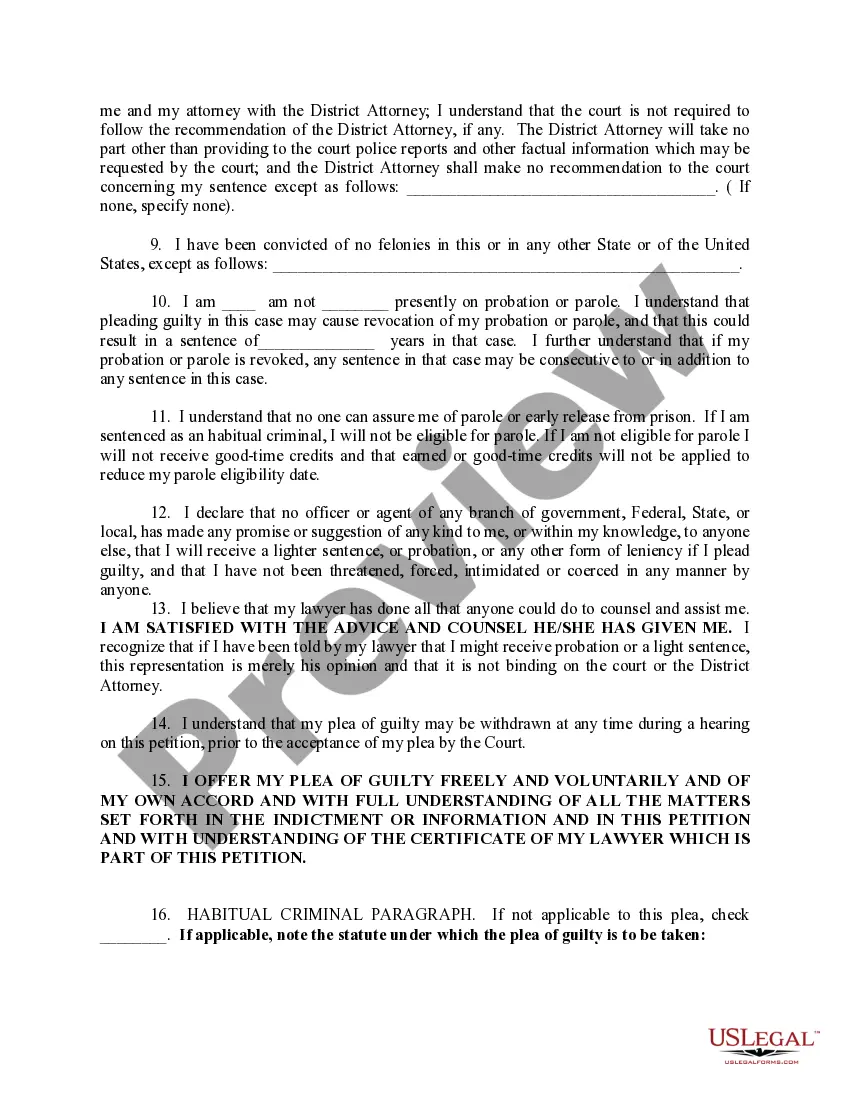
It must be expressly clear that the defendant understands the ramifications of the plea. They must understand that they are waiving their 5th and 6th constitutional rights (the right to not incriminate themselves, the right to a trial and the right to confront their accusers).
The Arraignment is the formal accusation of the defendant where a plea of guilty or not guilty is entered. The defendant does not need to be present if a written arraignment is filed on their behalf by their Attorney.
Usually, a plea bargain will include a plea down to a lesser charge (sometimes much lesser) in exchange for a guilty plea. Plea bargains can also include an agreement regarding the sentence of the case, but this is always subject to approval by the judge.