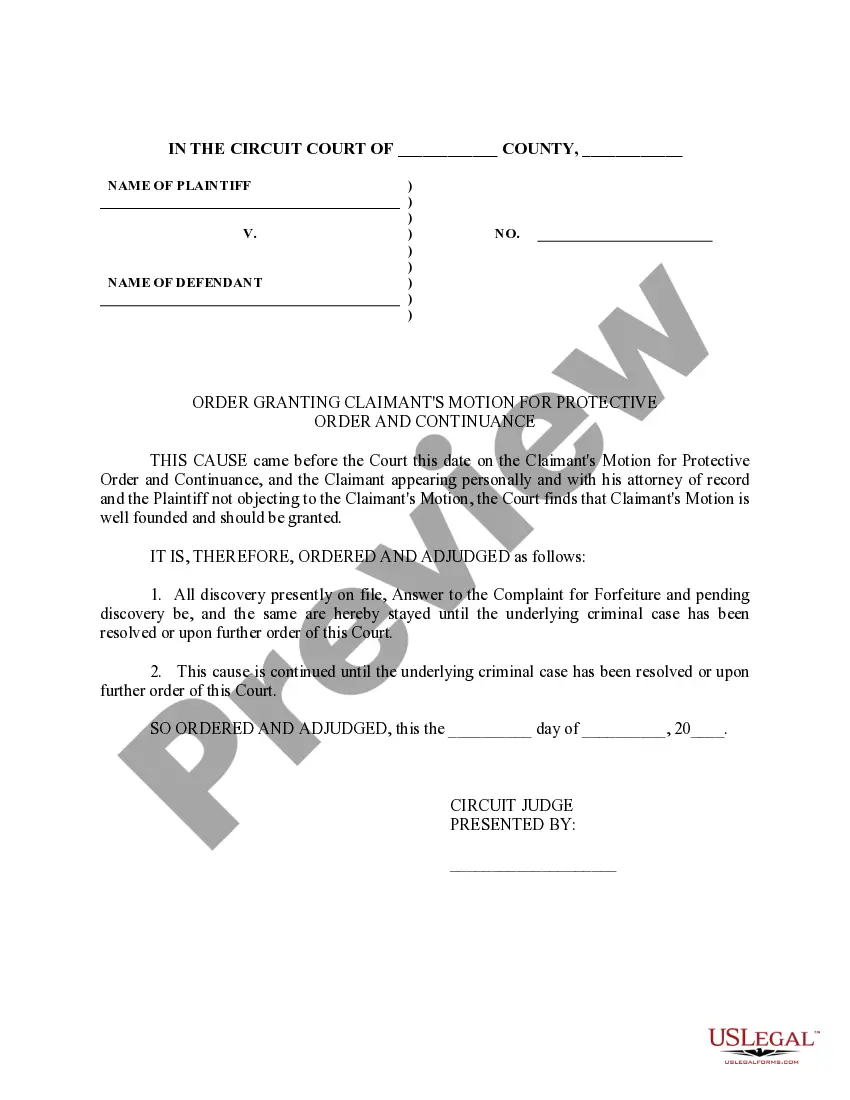
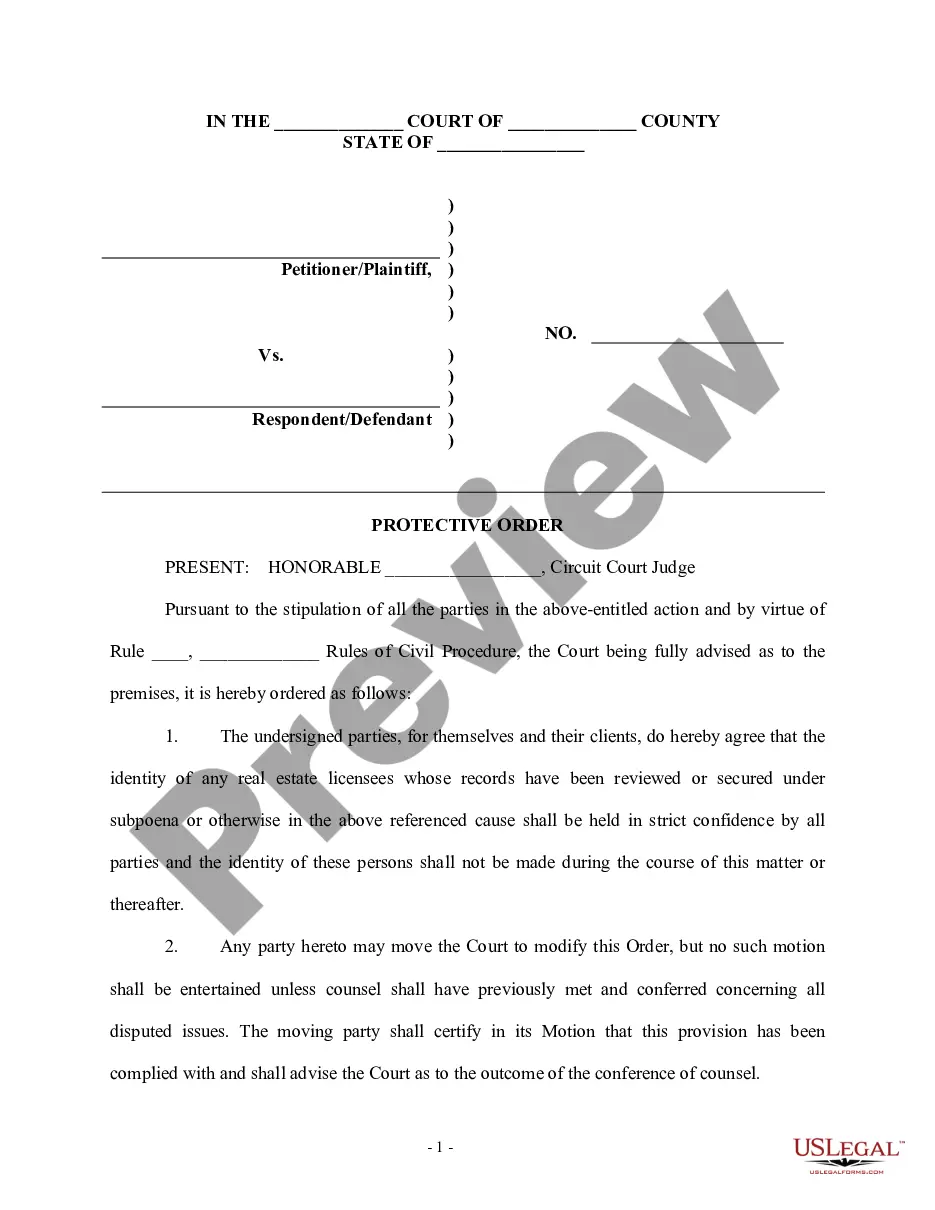
South Carolina Order Granting Protective Order
Description
Get your form ready online
Our built-in tools help you complete, sign, share, and store your documents in one place.
Make edits, fill in missing information, and update formatting in US Legal Forms—just like you would in MS Word.
Download a copy, print it, send it by email, or mail it via USPS—whatever works best for your next step.
Sign and collect signatures with our SignNow integration. Send to multiple recipients, set reminders, and more. Go Premium to unlock E-Sign.
If this form requires notarization, complete it online through a secure video call—no need to meet a notary in person or wait for an appointment.
We protect your documents and personal data by following strict security and privacy standards.

Make edits, fill in missing information, and update formatting in US Legal Forms—just like you would in MS Word.

Download a copy, print it, send it by email, or mail it via USPS—whatever works best for your next step.

Sign and collect signatures with our SignNow integration. Send to multiple recipients, set reminders, and more. Go Premium to unlock E-Sign.

If this form requires notarization, complete it online through a secure video call—no need to meet a notary in person or wait for an appointment.

We protect your documents and personal data by following strict security and privacy standards.
Looking for another form?
How to fill out Order Granting Protective Order?
US Legal Forms - one of the largest collections of legal documents in the USA - provides a range of legal paperwork templates that you can download or print. By utilizing the website, you can access thousands of forms for business and personal use, organized by categories, states, or keywords. You can find the latest versions of forms such as the South Carolina Order Granting Protective Order in moments.
If you already have a subscription, Log In and download the South Carolina Order Granting Protective Order from the US Legal Forms library. The Download button will appear on each form you view. You have access to all previously downloaded forms in the My documents section of your account.
If you are using US Legal Forms for the first time, here are simple steps to get started: Make sure you have selected the correct form for your city/state. Click the Review button to check the form's content. Read the form summary to confirm that you have chosen the right form. If the form does not meet your requirements, use the Search field at the top of the screen to find one that does. When you are content with the form, validate your choice by clicking the Buy now button. Then, choose the pricing plan you prefer and provide your details to register for an account. Process the payment. Use a credit card or PayPal account to complete the transaction. Select the format and download the form to your device. Make modifications. Fill out, edit, and print and sign the downloaded South Carolina Order Granting Protective Order. Every template you add to your account has no expiration date and belongs to you indefinitely. Therefore, if you wish to download or print another version, simply go to the My documents section and click on the form you need.
- Access the South Carolina Order Granting Protective Order with US Legal Forms, the most extensive collection of legal document templates.
- Utilize thousands of professional and state-specific templates that meet your business or personal needs.
Form popularity
FAQ
Pursuant to S.C. Code Ann. § 16-3-1910, notwithstanding any other provision of law, the terms of this Order are enforceable throughout this State. Law enforcement officers shall arrest a respondent who acts in violation of this Order after service and notice of the Order have been provided.
SC code § 16-13-1700 defines harassment first degree, harassment second degree, and stalking ? to get a temporary restraining order from a SC magistrate, you must prove that the defendant is committing one of these crimes and that you are entitled to protection from them.
If you prove your case to the family court, SC Code § 20-4-60 says that the judge can issue an Order of Protection that: Temporarily enjoins the abuser ?from abusing, threatening to abuse, or molesting the petitioner or the person or persons on whose behalf the petition was filed,?
You can file an opposition to the application or a motion asking the court to dissolve or modify the order, or you can appeal from the court's grant of an extended protection order.
One of the most common conditions is that there be no contact from you with the alleged victim in the case either verbally or electronically. Yes, this means that you will have to move out of the home where you were living and cannot return until the bond condition has been modified or the case has been resolved.
SC Code § 16-3-1700(B) defines harassment in the second degree as ?a pattern of intentional, substantial, and unreasonable intrusion into the private life of a targeted person that serves no legitimate purpose and causes the person and would cause a reasonable person in his position to suffer mental or emotional ...
§ 16-3-1750(B) provides that an action for a restraining order must be filed in the county in which (1) the defendant resides when the action commences; (2) the harassment in the first or second degree or stalking occurred; or (3) the plaintiff resides if the defendant is a non-resident of the State or cannot be found.
Violating a Temporary Restraining Order ? If you violate a temporary restraining order in South Carolina, you can face a $500 fine and up to 30 days in jail. Violating a Permanent Restraining Order ? If you violate a permanent restraining order in South Carolina, you can face up to a $1,500 fine and 12 months in jail.