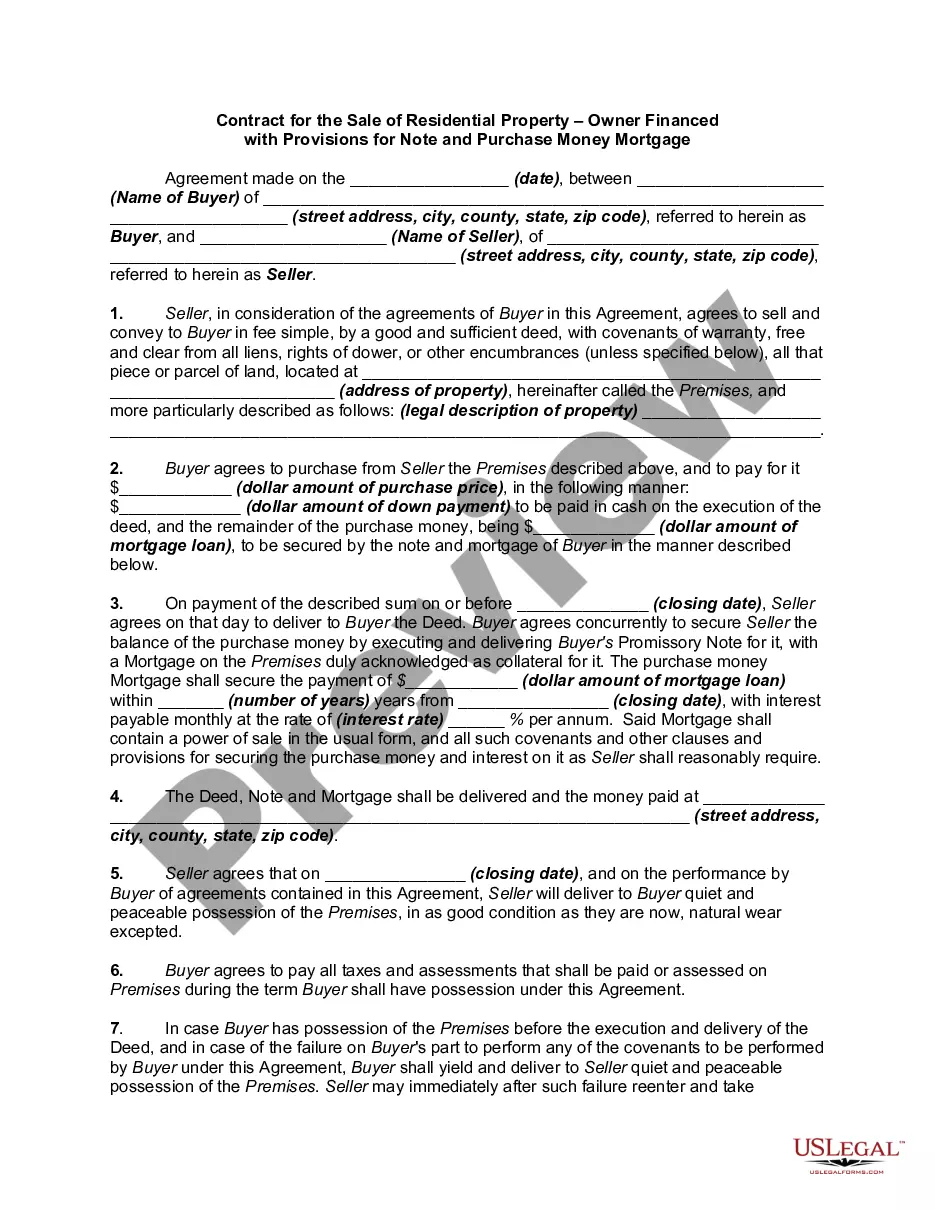
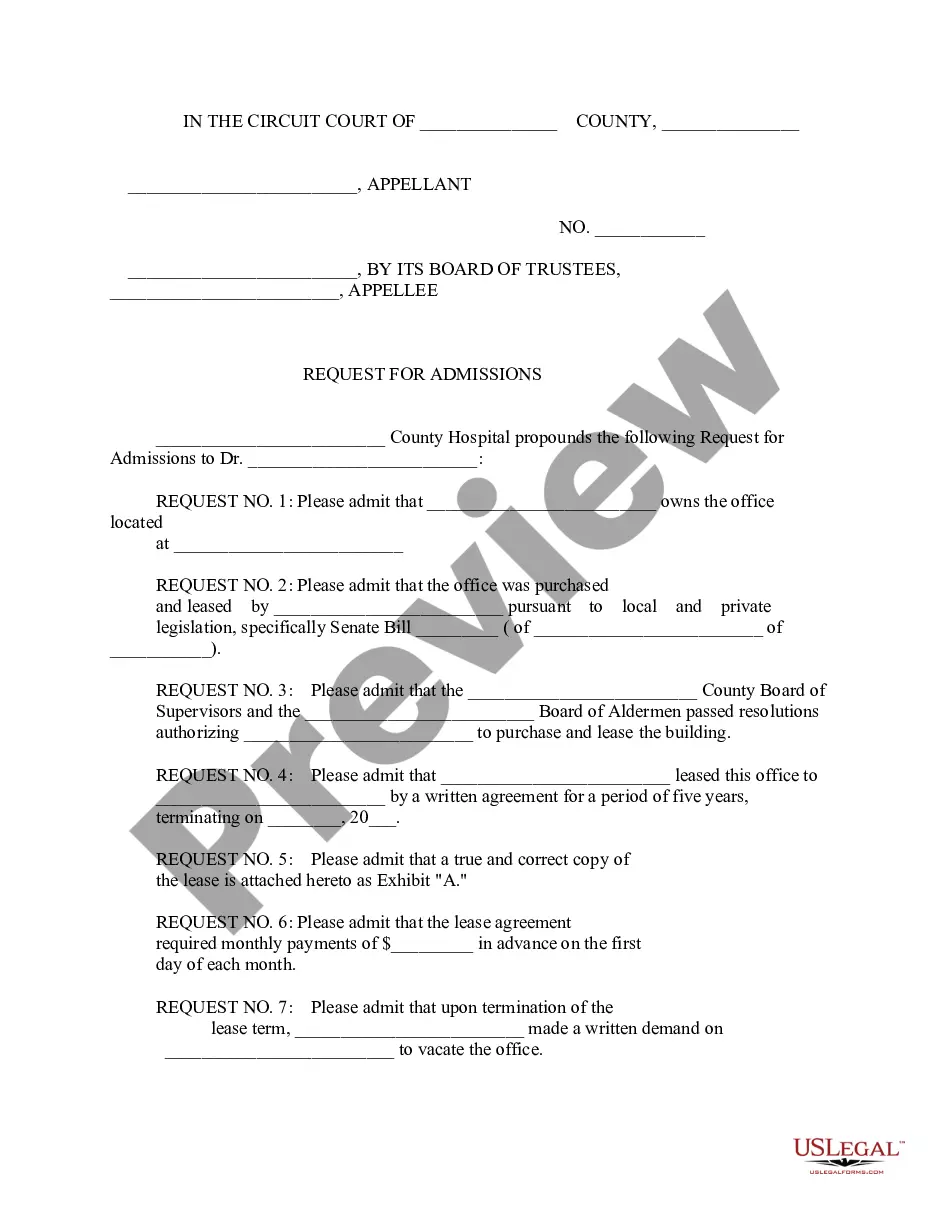
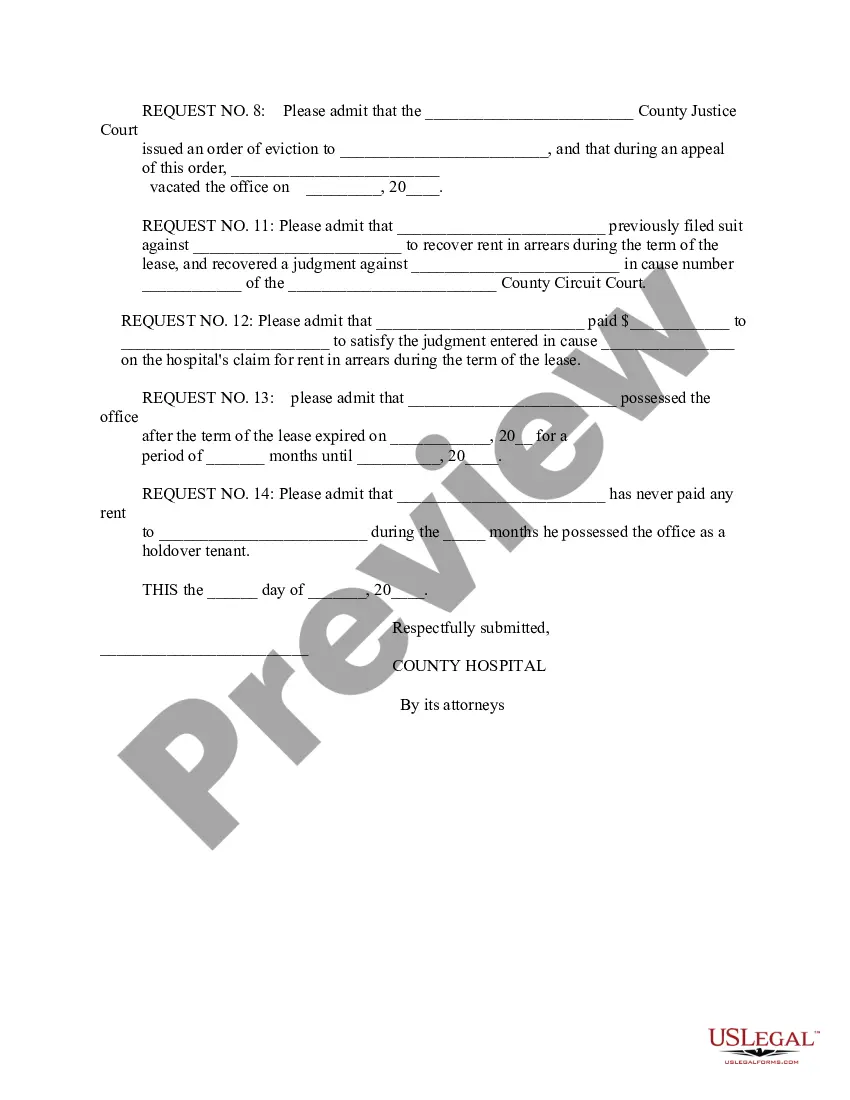
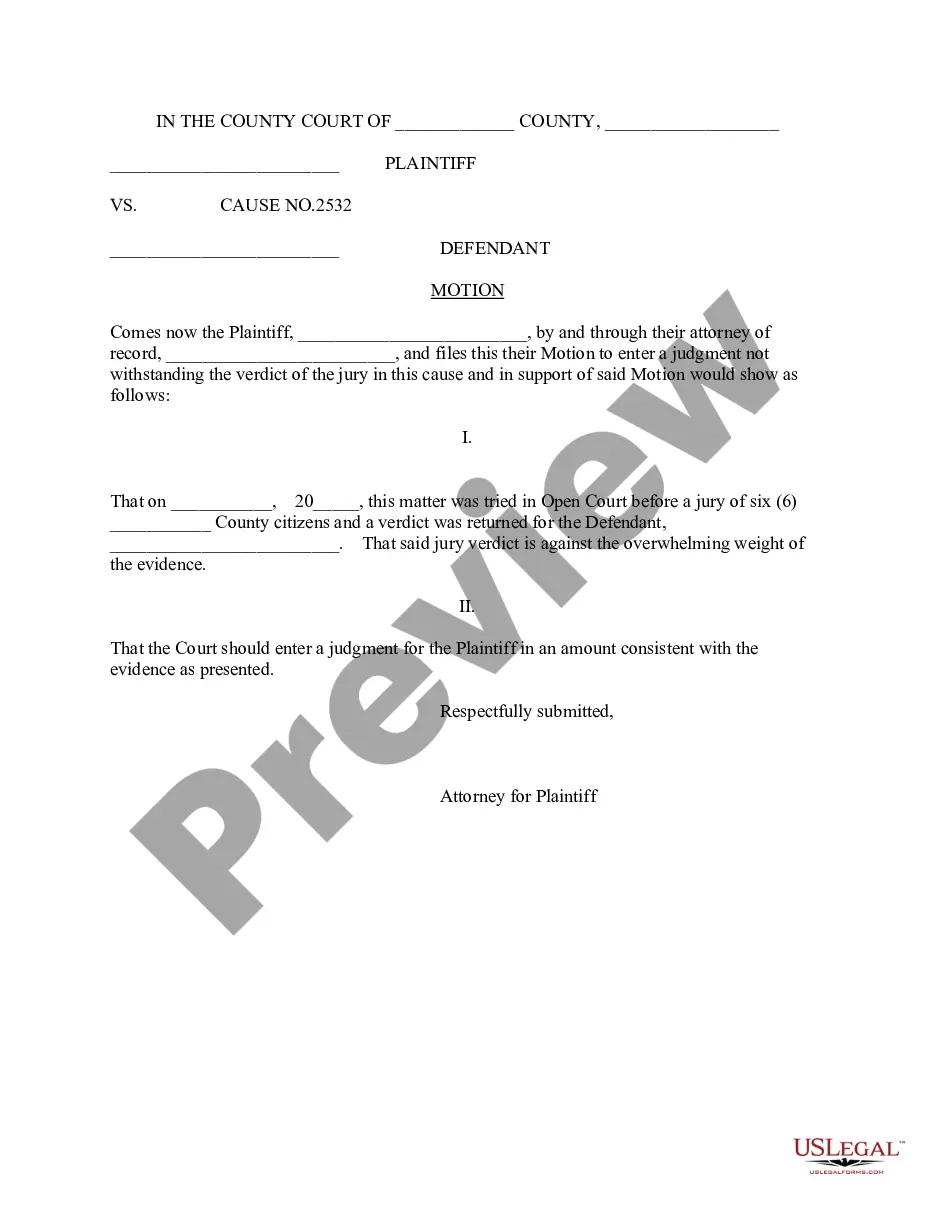
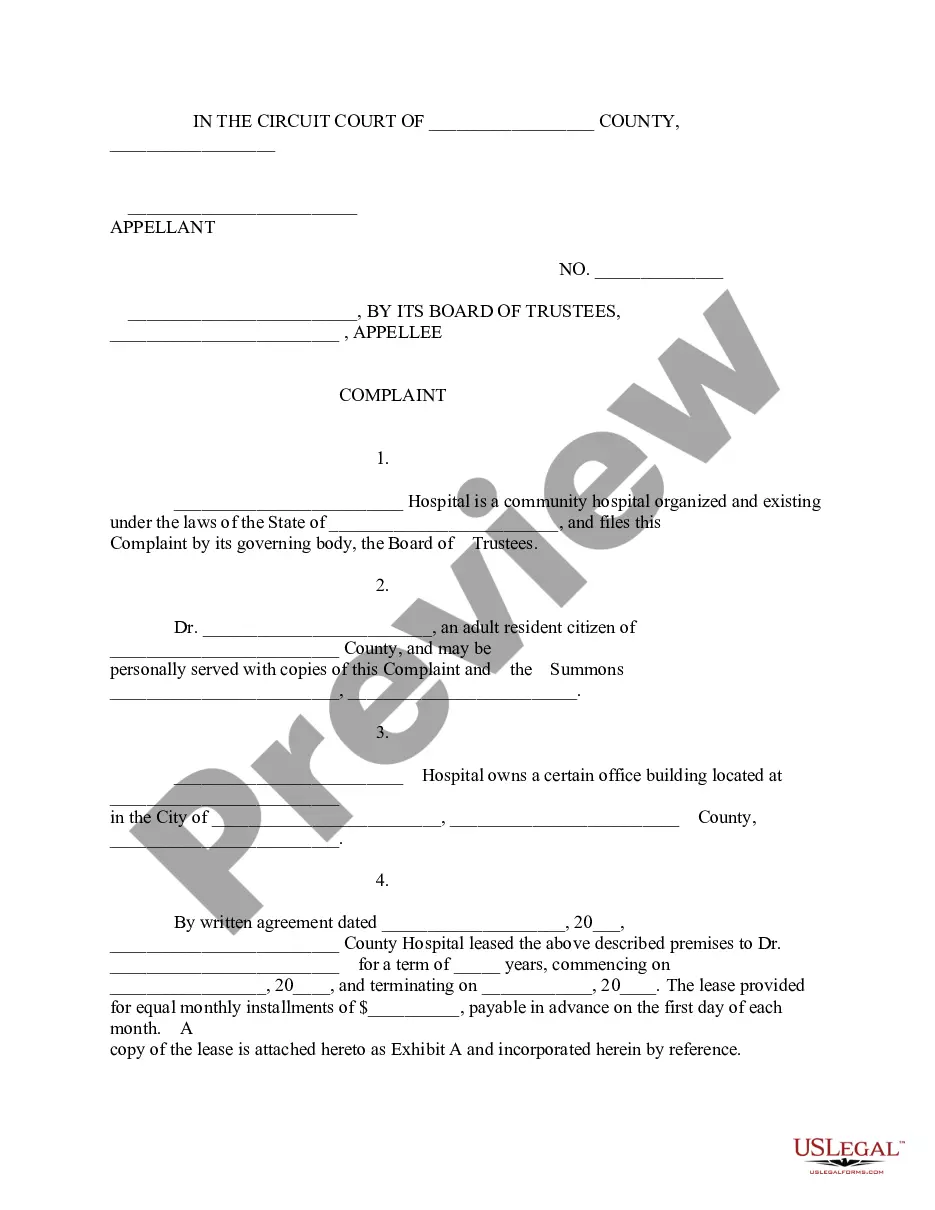
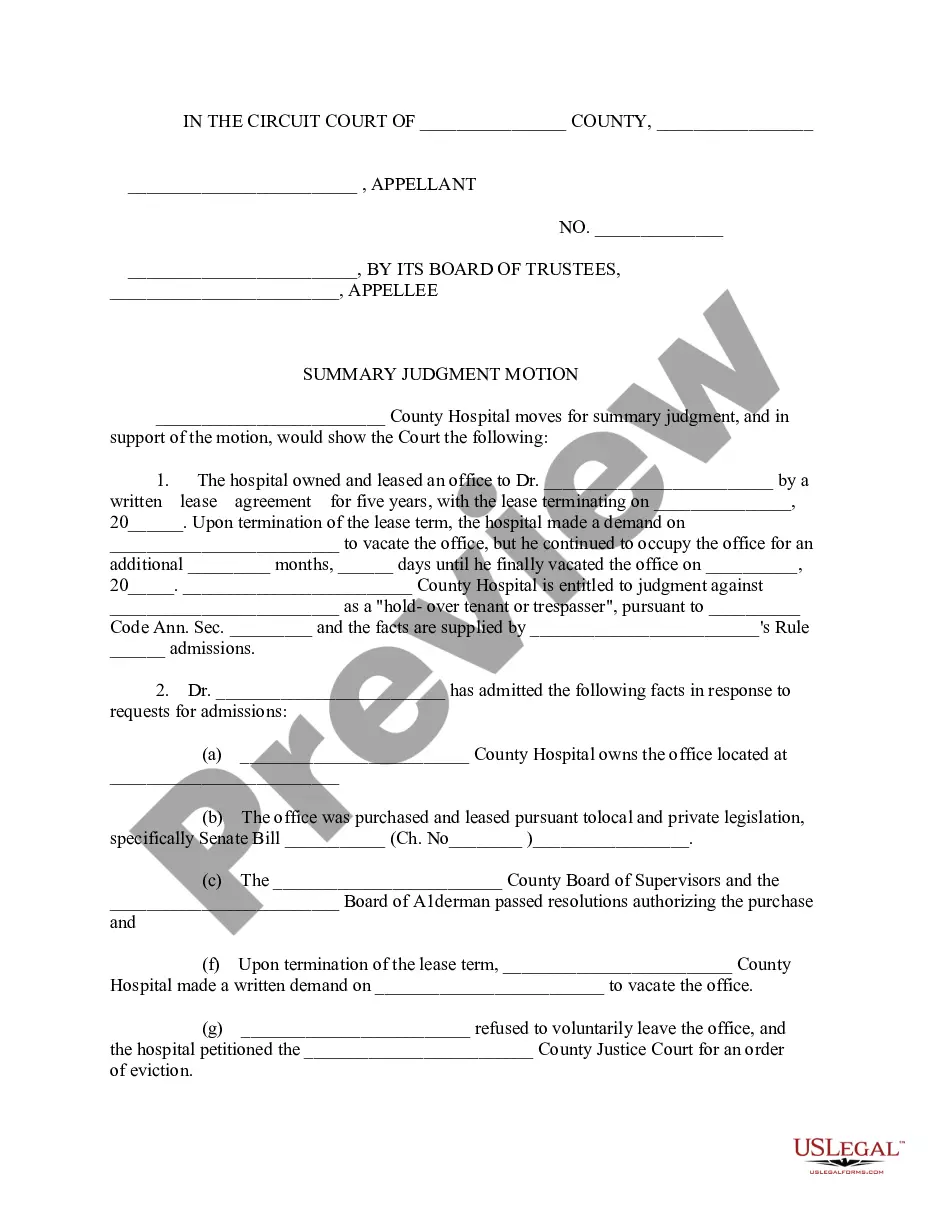
This form is a request for admissions. Plaintiff requests certain admissions from defendant concerning an office building and the terms of a leasing agreement between the parties.
South Carolina Request for Admissions
Category:
State:
Multi-State
Control #:
US-60927
Format:
Word;
Rich Text
Instant download
Description
Free preview
Get your form ready online
Our built-in tools help you complete, sign, share, and store your documents in one place.
Built-in online Word editor
Make edits, fill in missing information, and update formatting in US Legal Forms—just like you would in MS Word.
Export easily
Download a copy, print it, send it by email, or mail it via USPS—whatever works best for your next step.
E-sign your document
Sign and collect signatures with our SignNow integration. Send to multiple recipients, set reminders, and more. Go Premium to unlock E-Sign.
Notarize online 24/7
If this form requires notarization, complete it online through a secure video call—no need to meet a notary in person or wait for an appointment.
Store your document securely
We protect your documents and personal data by following strict security and privacy standards.

Make edits, fill in missing information, and update formatting in US Legal Forms—just like you would in MS Word.

Download a copy, print it, send it by email, or mail it via USPS—whatever works best for your next step.

Sign and collect signatures with our SignNow integration. Send to multiple recipients, set reminders, and more. Go Premium to unlock E-Sign.

If this form requires notarization, complete it online through a secure video call—no need to meet a notary in person or wait for an appointment.

We protect your documents and personal data by following strict security and privacy standards.
Looking for another form?
How to fill out Request For Admissions?
Locating the appropriate official document template can be challenging.
It goes without saying that there are numerous templates accessible on the internet, but how do you locate the official form you require.
Visit the US Legal Forms website.
First, confirm that you have selected the correct form for your locality. You can review the form using the Preview option and read the form details to ensure it is suitable for you.
- This service offers a vast array of templates, including the South Carolina Request for Admissions, suitable for both business and personal needs.
- All forms are reviewed by experts and comply with federal and state regulations.
- If you are already registered, Log In to your account and click the Download button to obtain the South Carolina Request for Admissions.
- Use your account to browse through the legal forms you may have previously purchased.
- Visit the My documents tab in your account and download another copy of the document you need.
- If you are a new user of US Legal Forms, follow these simple steps.
Form popularity
FAQ
(1) Admit so much of the matter involved in the request as is true, either as expressed in the request itself or as reasonably and clearly qualified by the responding party. (2) Deny so much of the matter involved in the request as is untrue.
In a civil action, a request for admission is a discovery device that allows one party to request that another party admit or deny the truth of a statement under oath. If admitted, the statement is considered to be true for all purposes of the current trial.
Failure of United States to Participate in Good Faith in Discovery. Rule 37 authorizes the court to direct that parties or attorneys who fail to participate in good faith in the discovery process pay the expenses, including attorney's fees, incurred by other parties as a result of that failure.
What happens once you receive an interrogatory? All of the questions must be responded to in writing and it must be done under oath. Often, once you answer the questions, the other side will use the answers to gather more information.
The rule is clarified to permit up to fifty general interrogatories in addition to the seven standard interrogatories. Note to 1988 Amendment: Rule 33(b)(8) is amended to make clear that the court has the discretion to permit additional interrogatories in any case for good cause shown.
If you admit the request, write admit for your response. If you deny the request, write deny. If you have to qualify an answer or deny only a part, you must specify the part that is true and deny the rest.
Proper Objections A responding party has four options: (1) admit; (2) deny; (3) admit in part and deny in part; or (4) explain why the party is unable to answer. It is possible to object to all or part of a request as well, but courts do not like parties who play word games to avoid responding. Further, Civ.
The purpose of requests for admission is to help narrow the scope of the case and determine what facts or aspects of the case are not in dispute between the parties.
Interrogatory subparts are counted as one interrogatory if they are logically or factually subsumed within and necessarily related to the primary question. Safeco of America v. Rawstron, 181 F.R.D. 441, 445 (C.D.
"A party should not be compelled to admit matters of fact already admitted by his pleading and concerning which there is no issue (Sherr vs. East, 71 A2d, 752, Terry 260, cited in 27 C.J.S. 91), nor should he be required to make a second denial of those already denied in his answer to the complaint.