South Carolina Commercial Lease Agreement for Land
Description
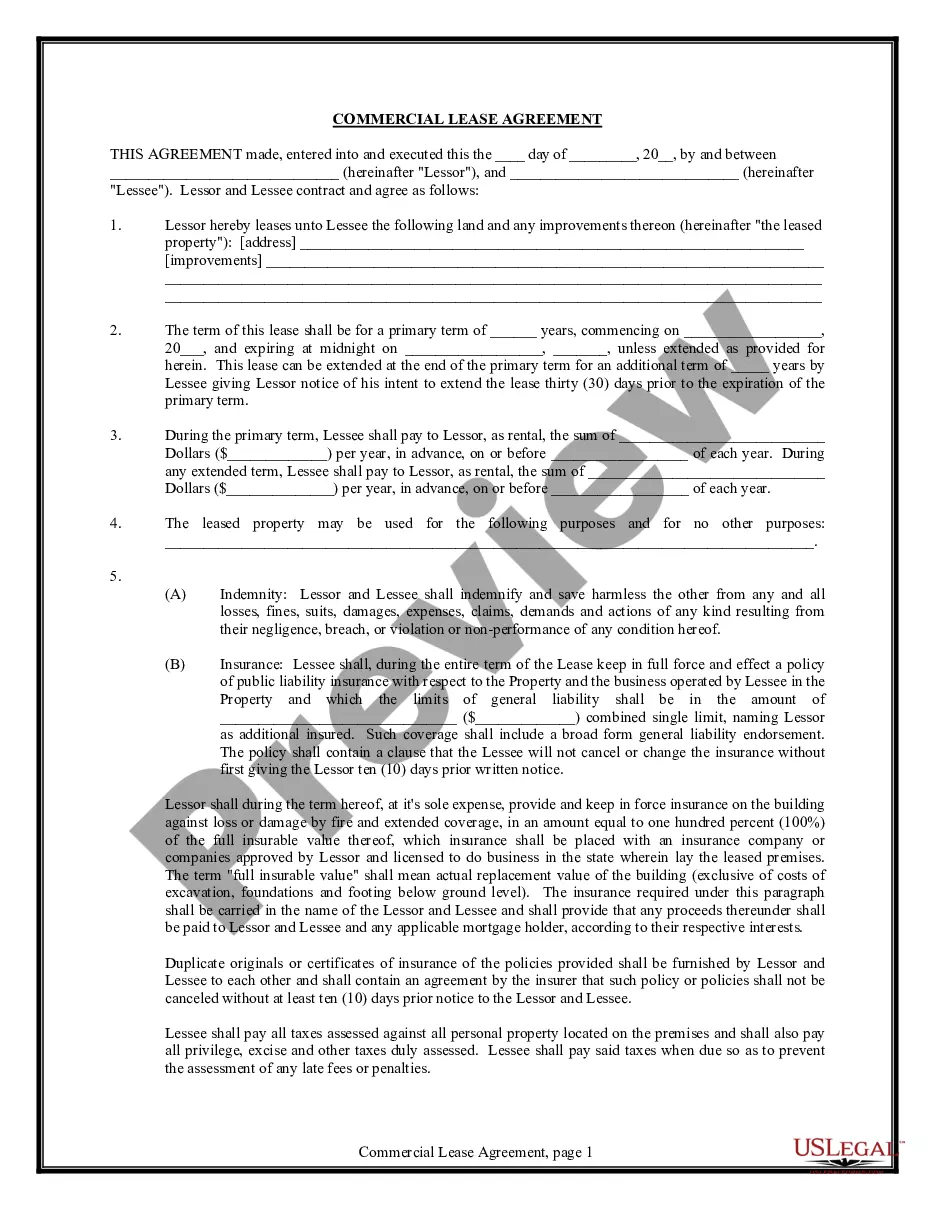
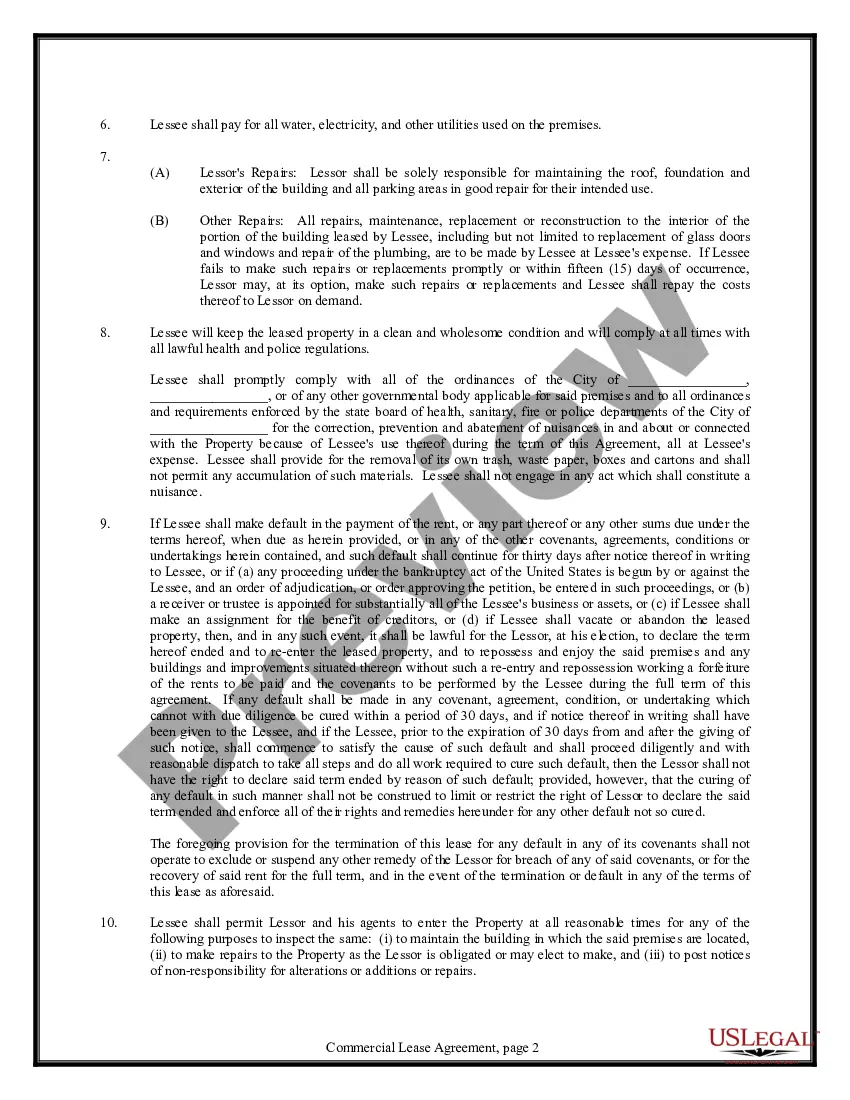
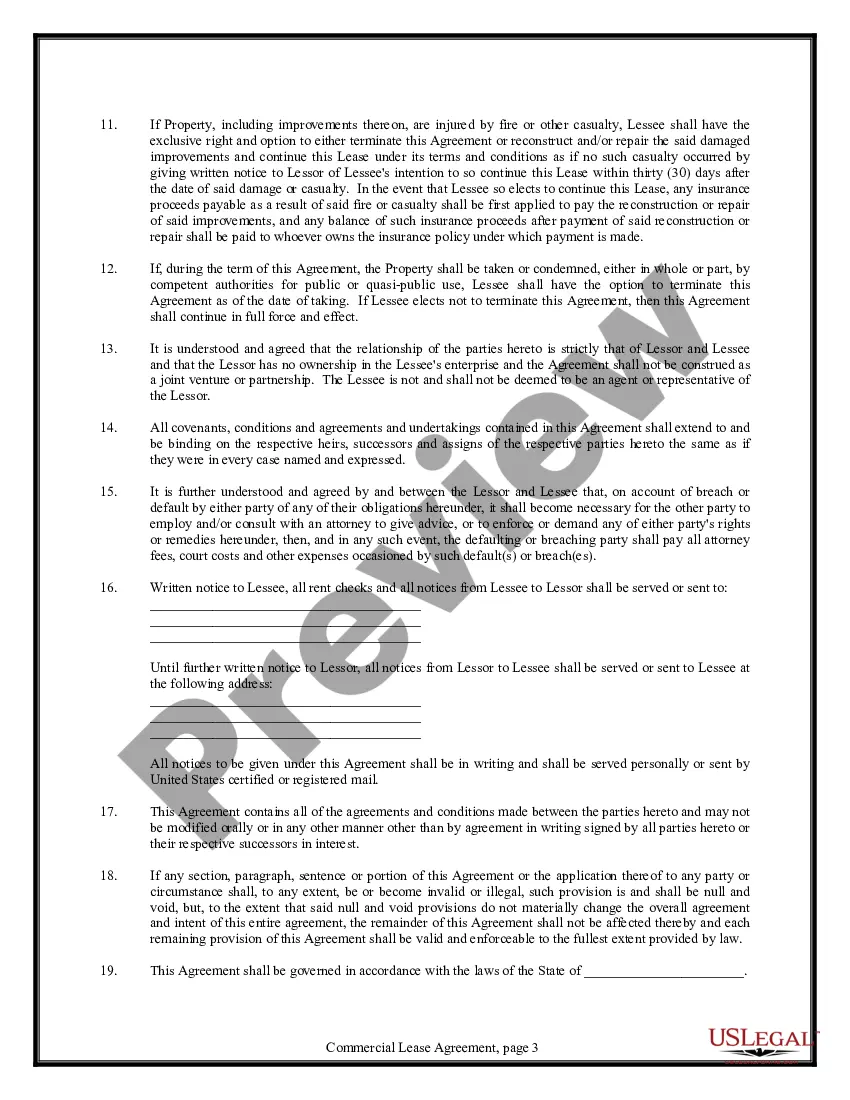

How to fill out Commercial Lease Agreement For Land?
US Legal Forms - one of the largest collections of legal documents in the United States - provides a range of legal template documents that you can download or print.
By utilizing the website, you can access thousands of documents for business and personal purposes, categorized by topics, states, or keywords. You can quickly find the latest documents like the South Carolina Commercial Lease Agreement for Land.
If you already possess a monthly membership, Log In and retrieve the South Carolina Commercial Lease Agreement for Land from your US Legal Forms library. The Download button will appear on every form you view. You have access to all previously saved forms in the My documents section of your account.
Proceed with the payment. Use a credit card or PayPal account to complete the transaction.
Choose the format and download the document to your device. Edit. Fill out, modify, and print as well as sign the downloaded South Carolina Commercial Lease Agreement for Land. Every template you add to your account does not expire and is yours permanently. Therefore, if you wish to download or print another copy, just navigate to the My documents section and click on the form you require.
- Make sure you have chosen the correct form for your city/area.
- Click on the Preview button to review the content of the form.
- Read the form description to confirm that you have selected the correct document.
- If the form does not meet your needs, utilize the Search field at the top of the screen to find the one that does.
- If you are satisfied with the form, confirm your selection by clicking the Buy now button.
- Then, select the pricing plan you prefer and provide your details to register for an account.
Form popularity
FAQ
Acknowledgments. A valid and enforceable lease in South Carolina does not need to be acknowledged if it is not recorded. However, if the parties intend to record a lease or memorandum of lease in South Carolina, the lease must comply with the URAA, and the signatures must be acknowledged (see Question 3).
No, lease agreements do not need to be notarized in South Carolina. Having the lease notarized in optional the landlord and tenant can agree to have the contract notarized, but it is not necessary.
The short answer is No a witness does not need to sign But, there are some exceptions and things to consider. Most agreements do not need witnesses to sign them. Most agreements do not even need to be signed by the parties entering into the agreement. Most agreements do not even need to be in writing.
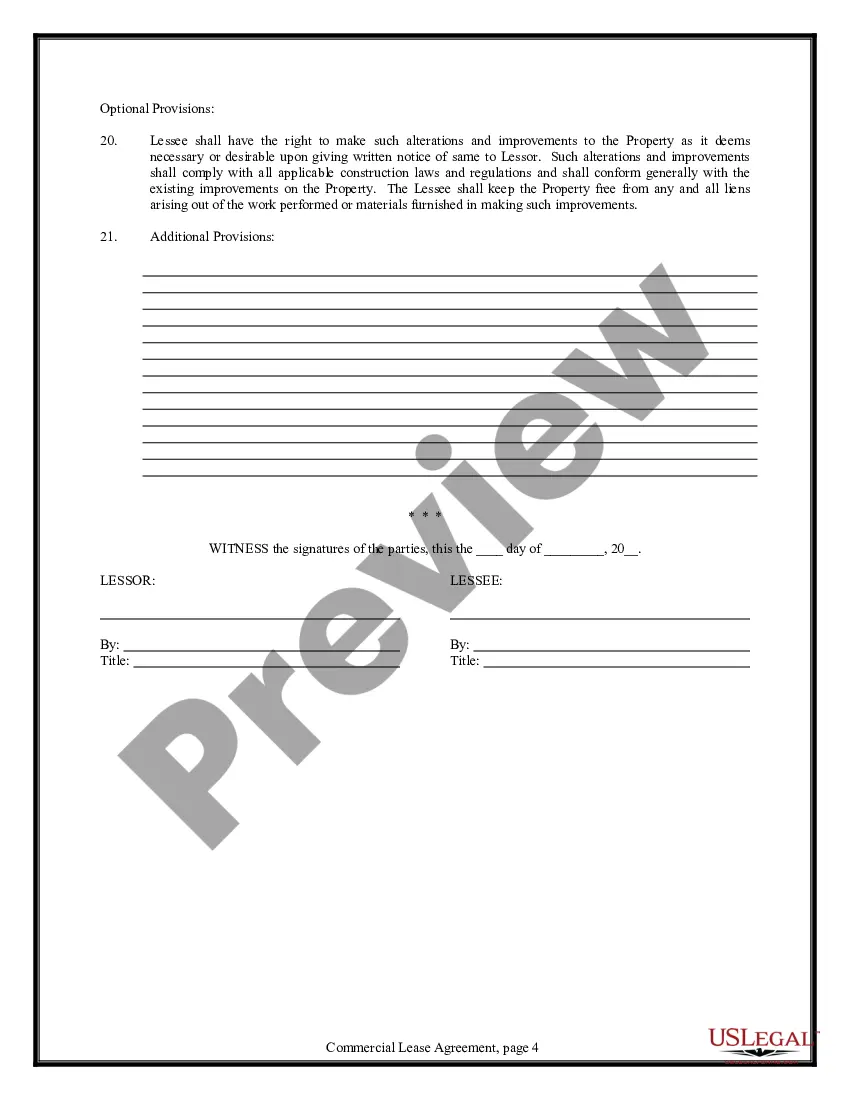
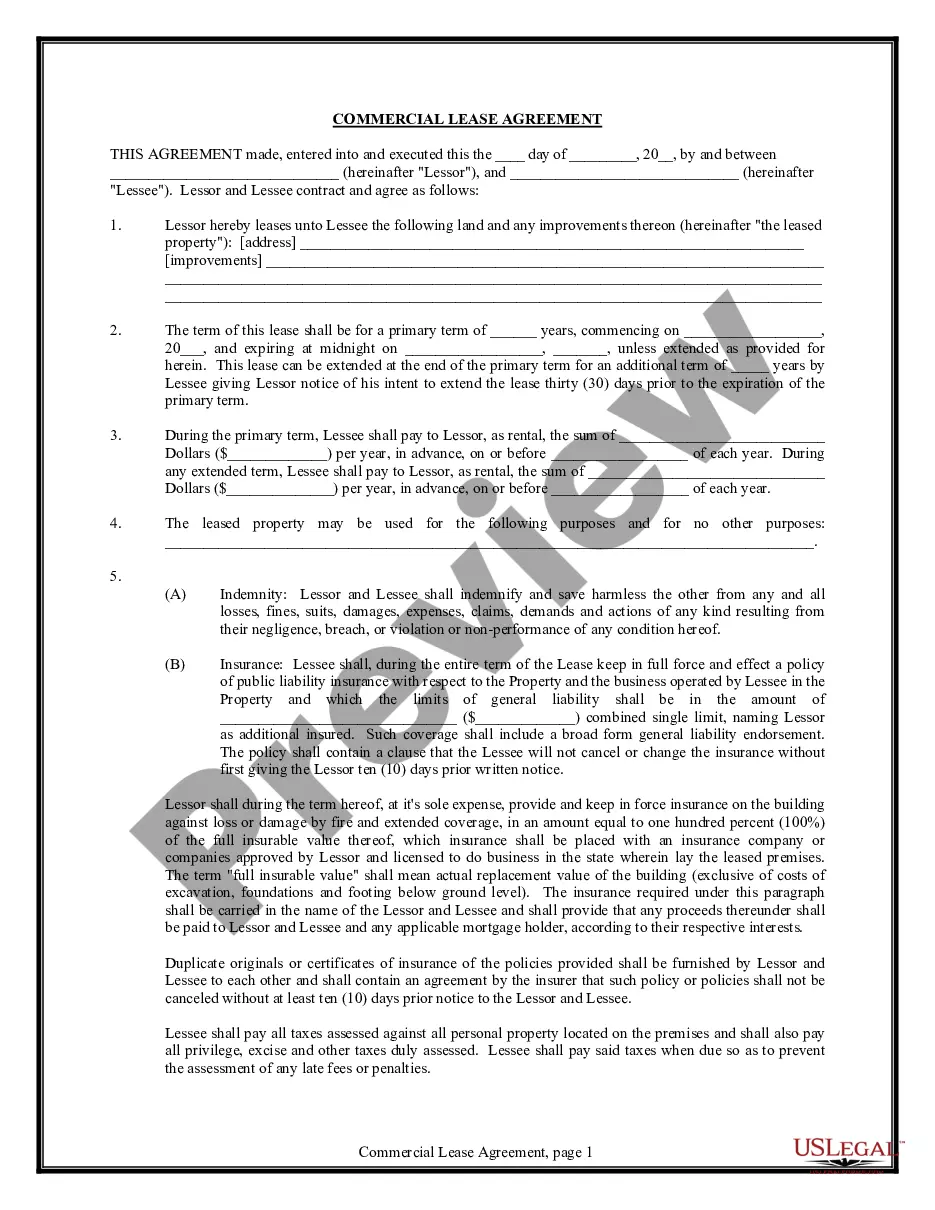
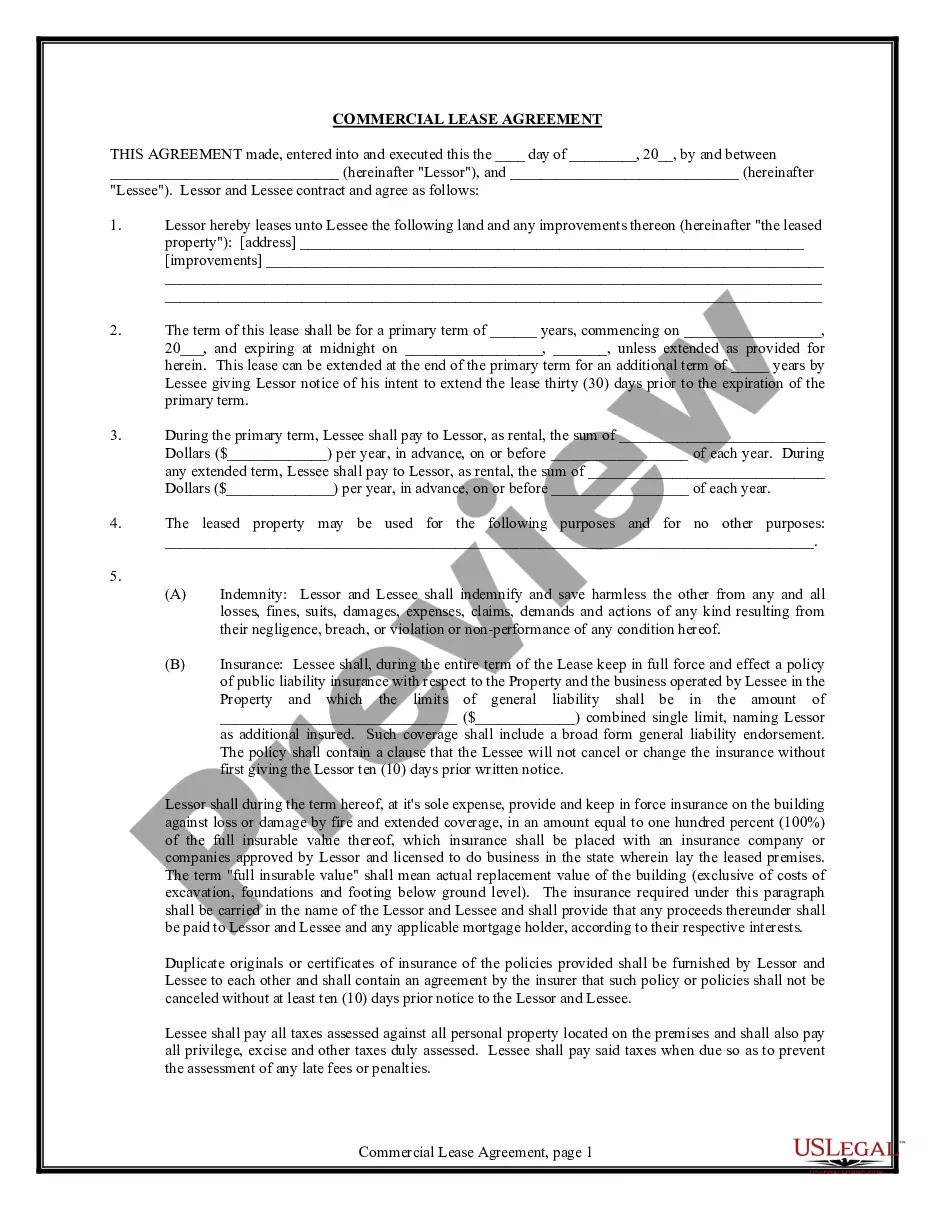
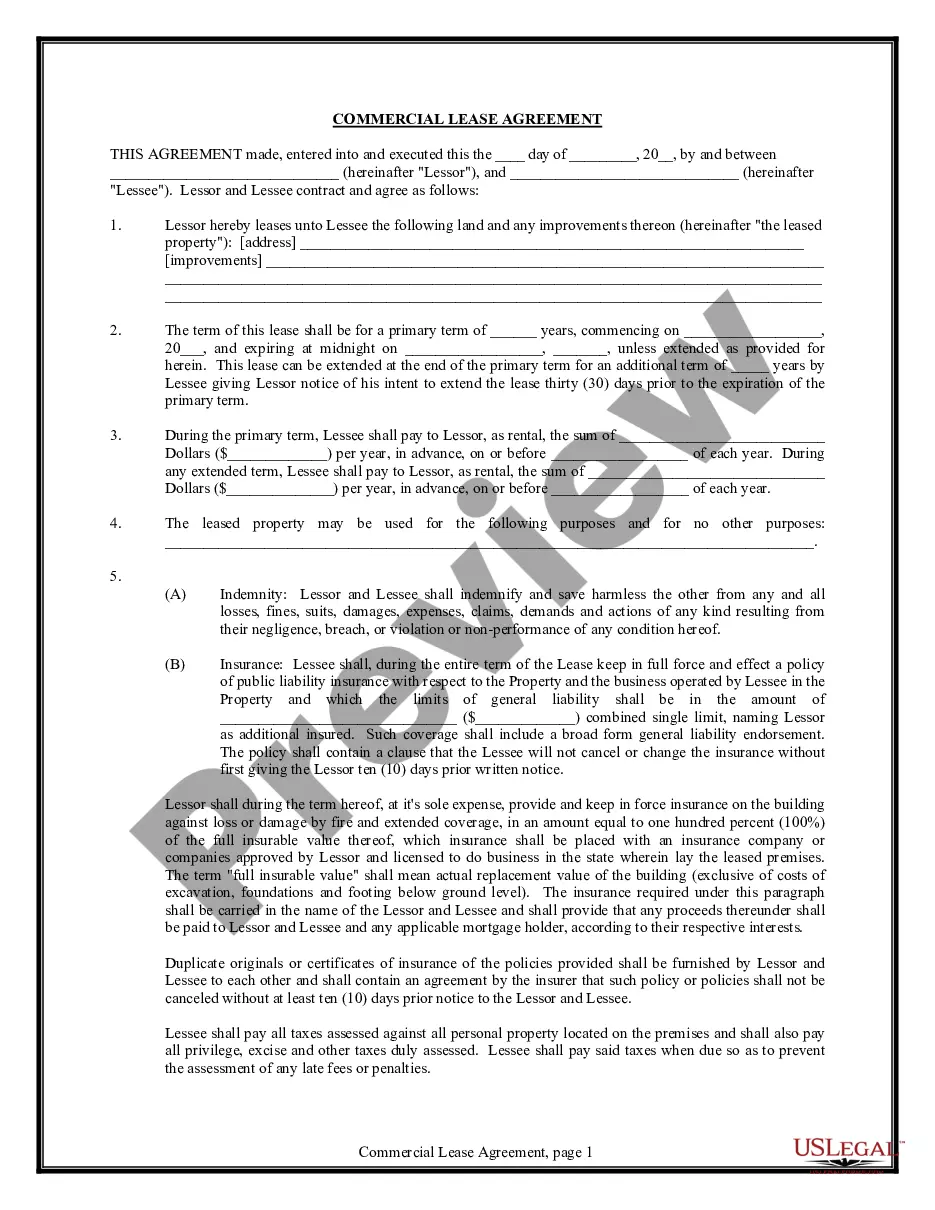
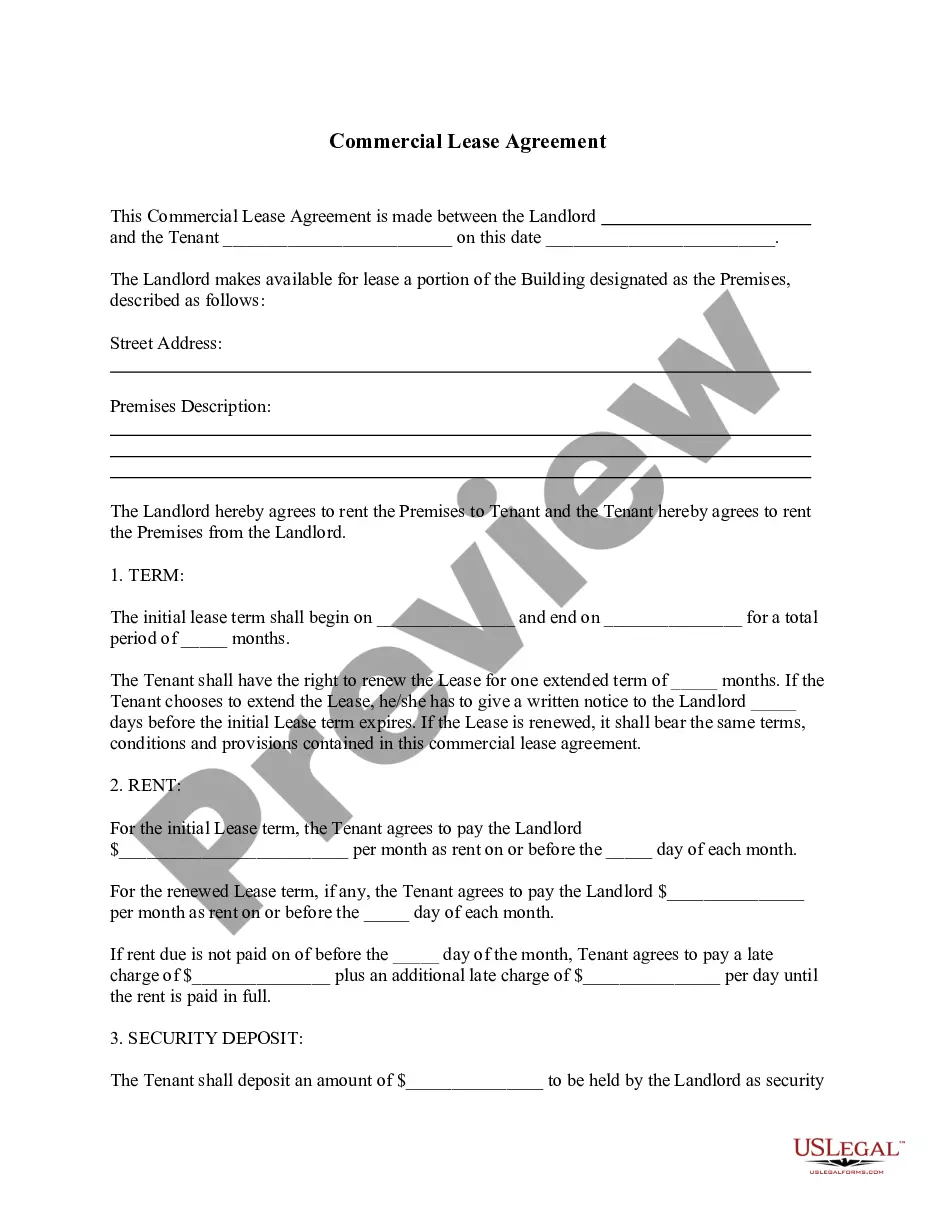
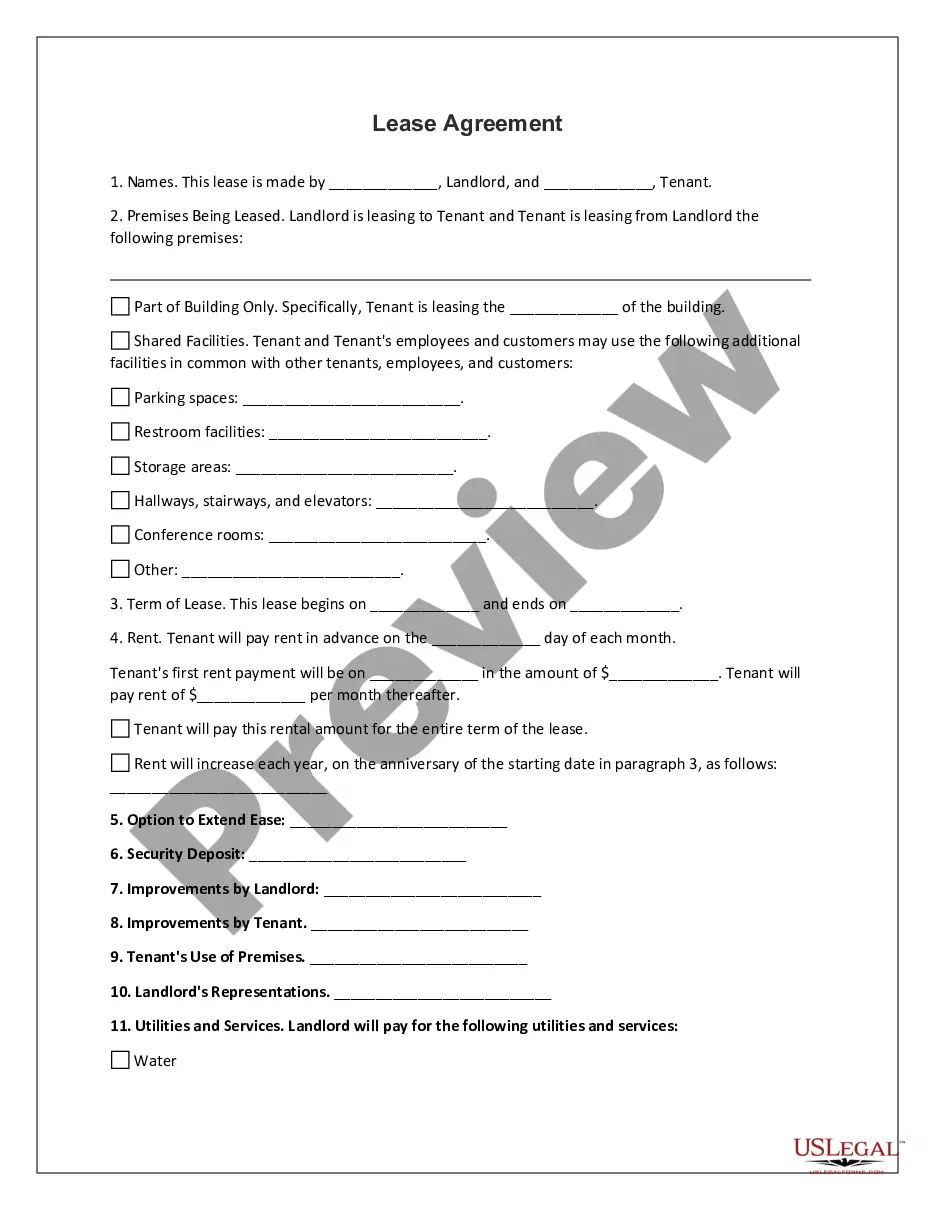
Commercial leases are legally binding contracts between landlords and commercial tenants. They give tenants the right to use the premises in a particular way for a set period for an agreed rent. Your lease will establish your rights and responsibilities as a tenant, as well as those of your landlord.
Your offer letter should always include the following information:The Person Liable for the Lease.Your Business Structure.How Long You Have Been in Business.The Nature of Your Business.Contact Information.Your Proposed Terms (or, Counter Offer)The Length of the Lease.Condition of the Property.More items...?08-May-2019
A Triple Net Lease (NNN Lease) is the most common type of lease in commercial buildings. In a NNN lease, the rent does not include operating expenses. Operating expenses include utilities, maintenance, property taxes, insurance and property management.
Currently, lease agreements must be witnessed if they are executed in Connecticut, Florida, Georgia, Louisiana, or South Carolina. The bill removes the subscribing witness requirement for instruments conveying a lease of real property.
However, it is usually the tenant who covers the cost regarding the lease document and requests the terms. Having said that, both parties should have legal representation and the particularities of the contract can be negotiated by their legal teams.
This lease structure makes the tenant responsible for the majority of costs. Specifically, the tenant pays the base rent, property but also taxes, insurance, utilities, and maintenance. This even includes standard property repairs associated with the commercial space being occupied.
Commercial leases are typically three to five years. That guarantees enough rental income for the landlords to recoup their investment. Leases are often negotiable, but for a commercial lease, landlords frequently allow customization of the space for the sake of the renting business.