South Dakota Living Trust for Husband and Wife with Minor and or Adult Children

What is this form?
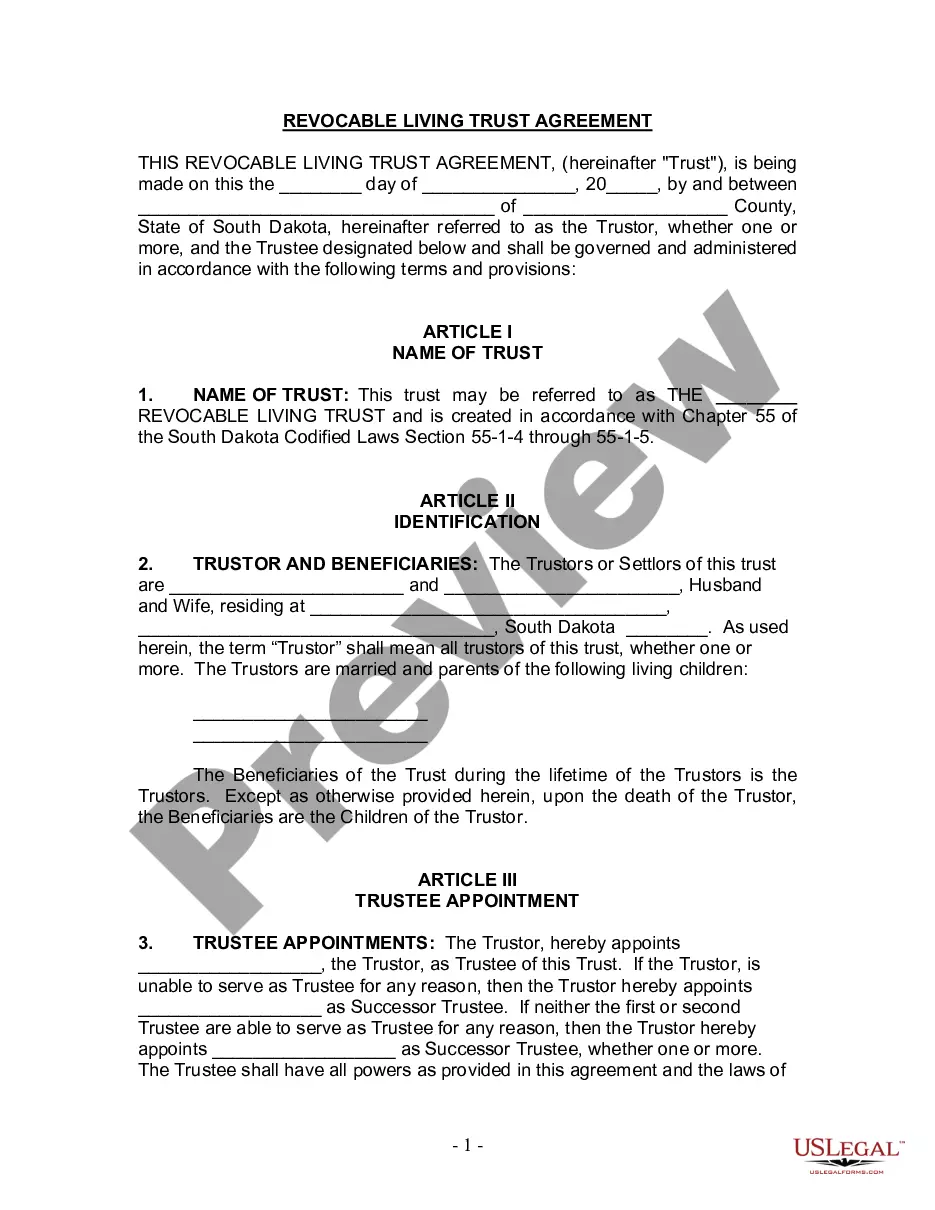
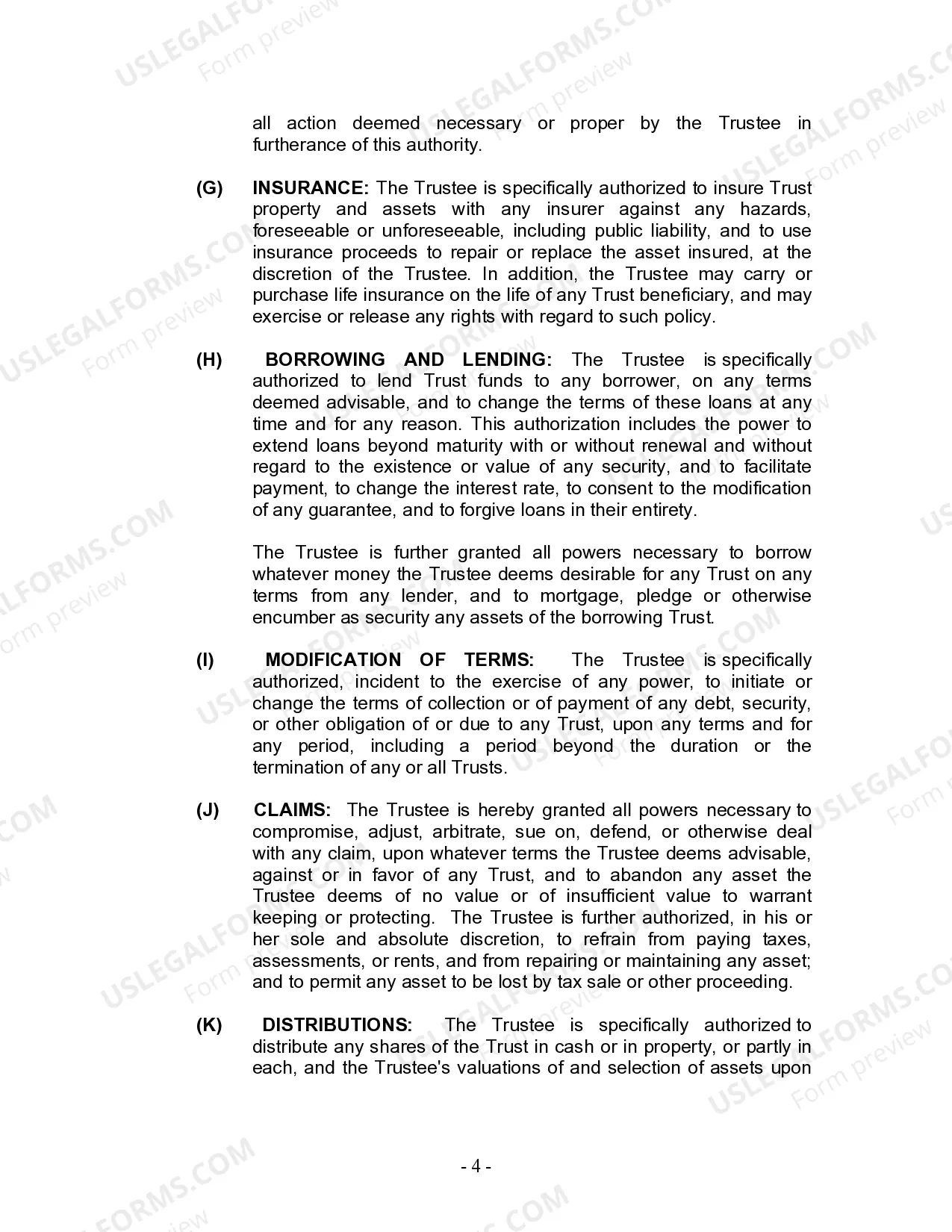
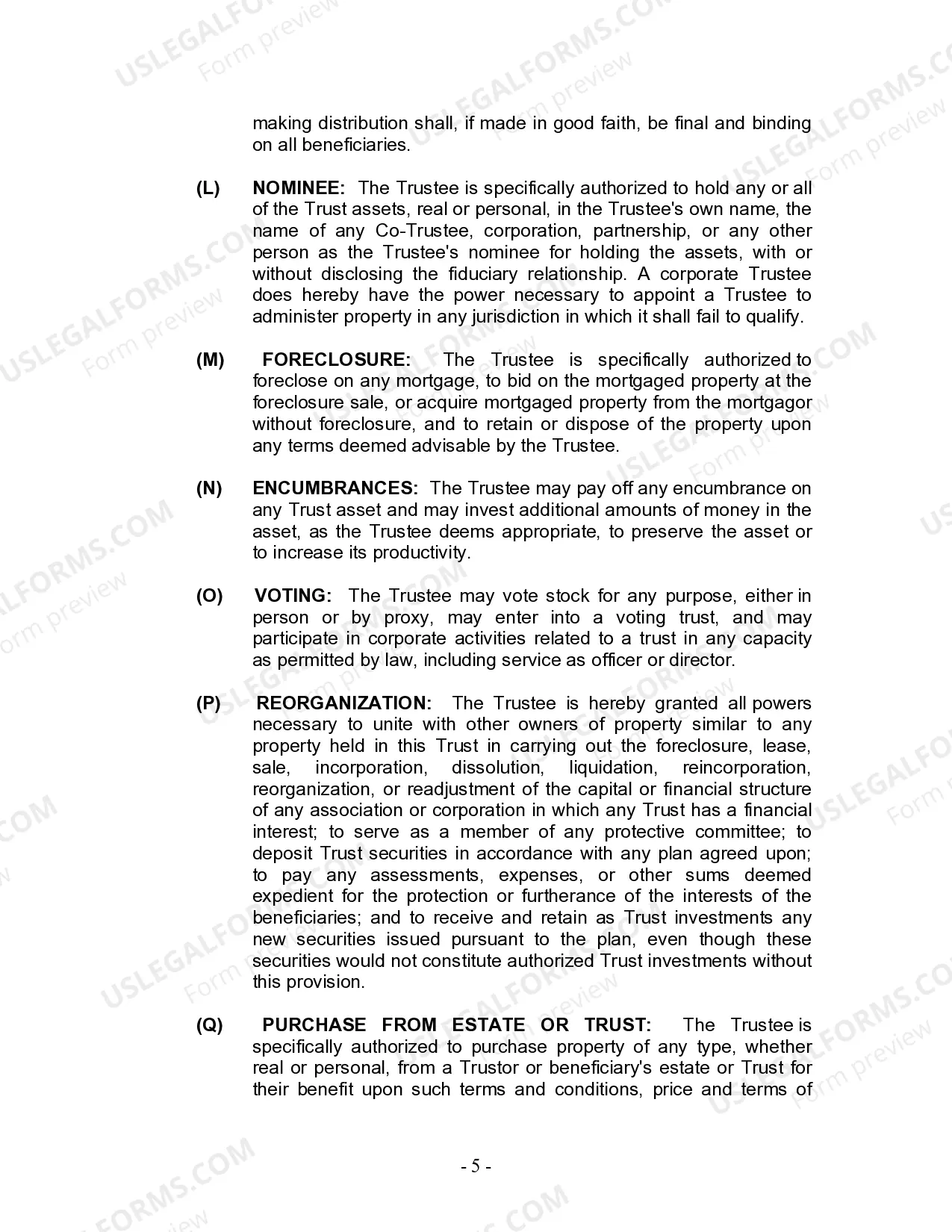
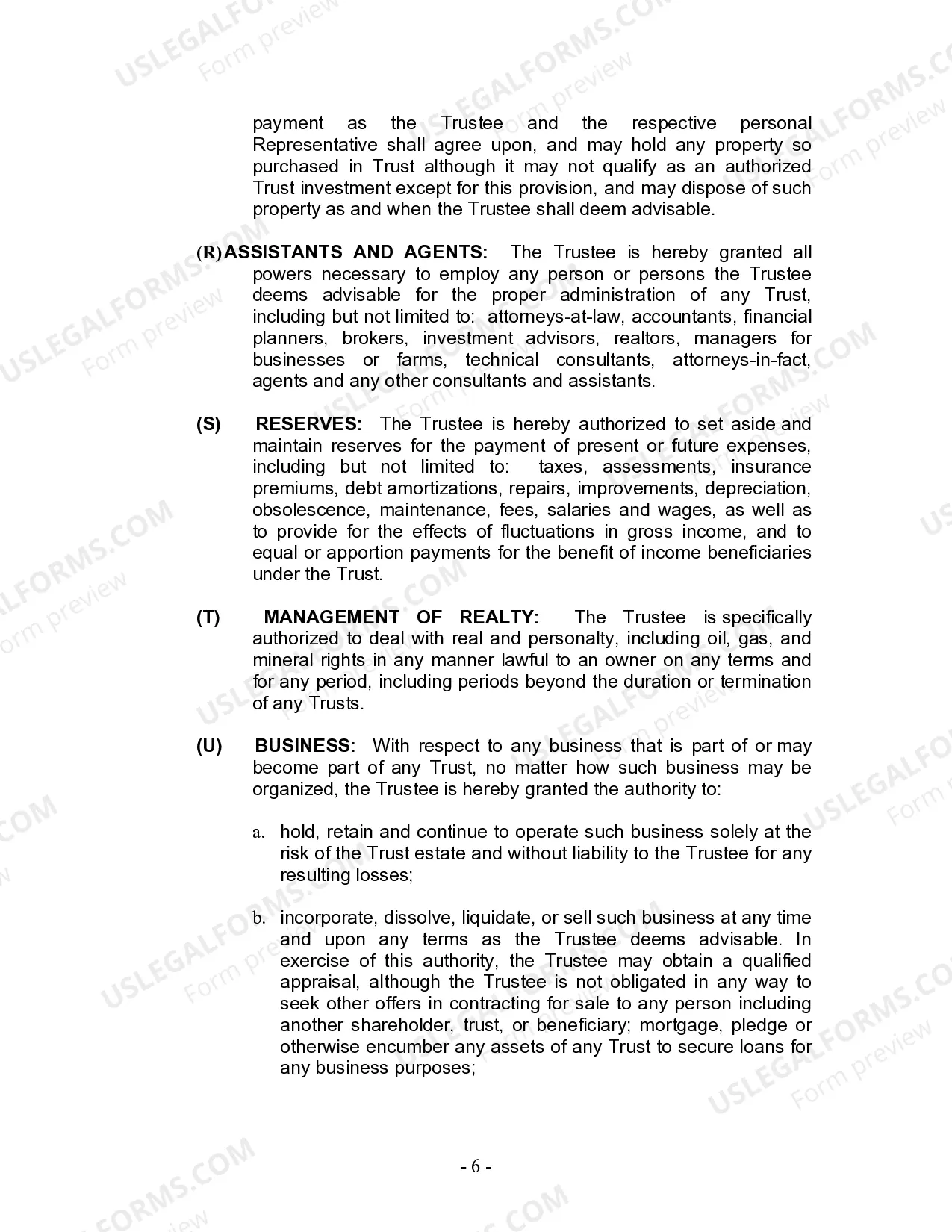
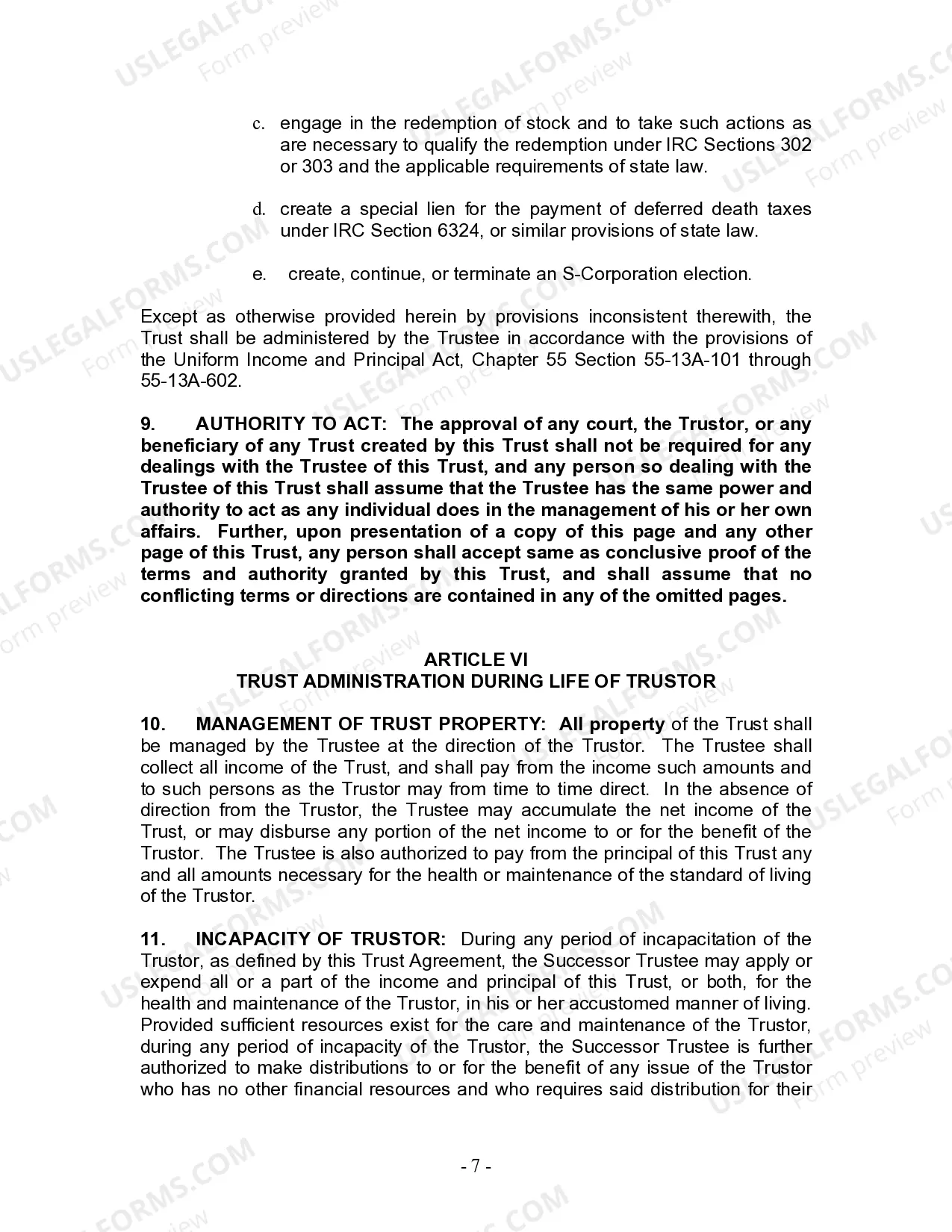
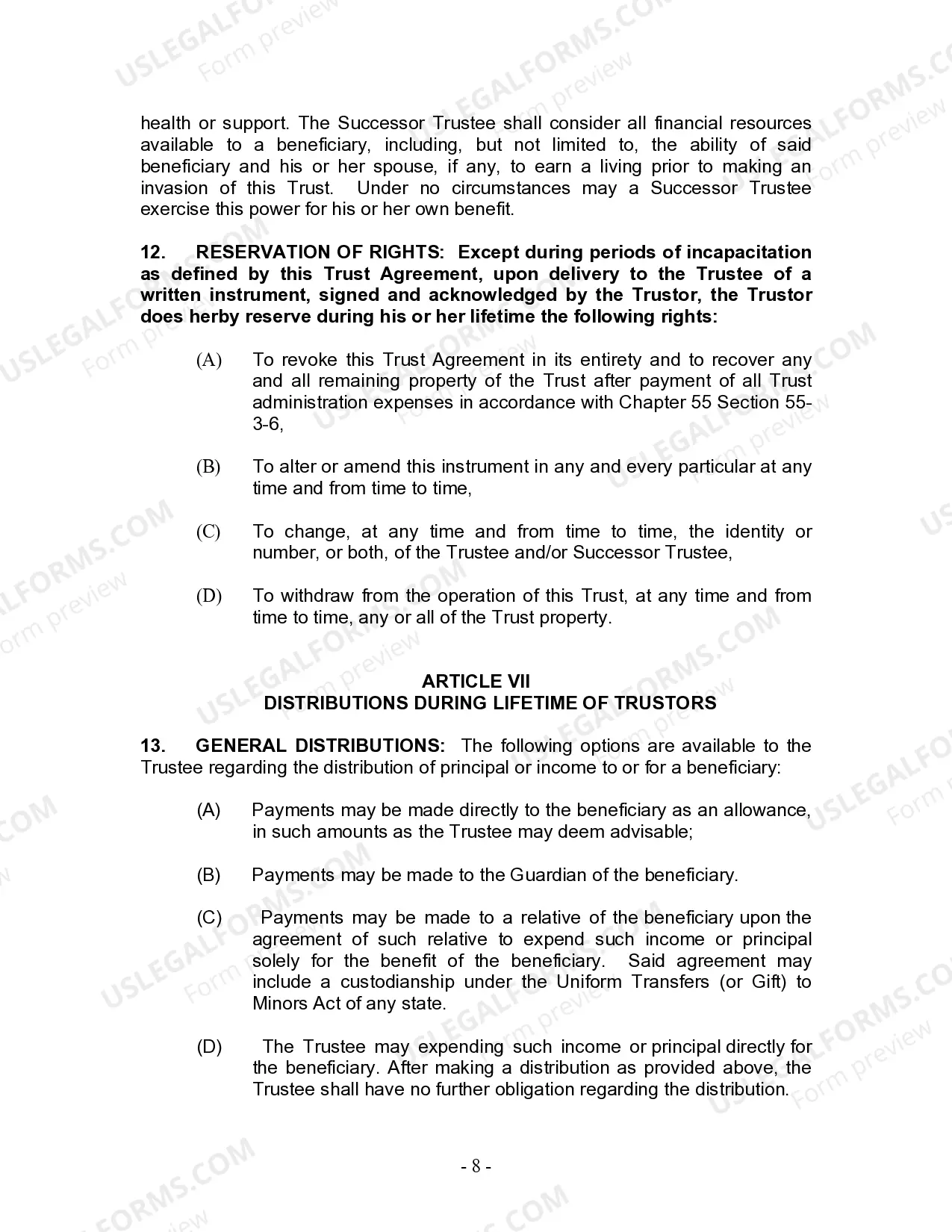
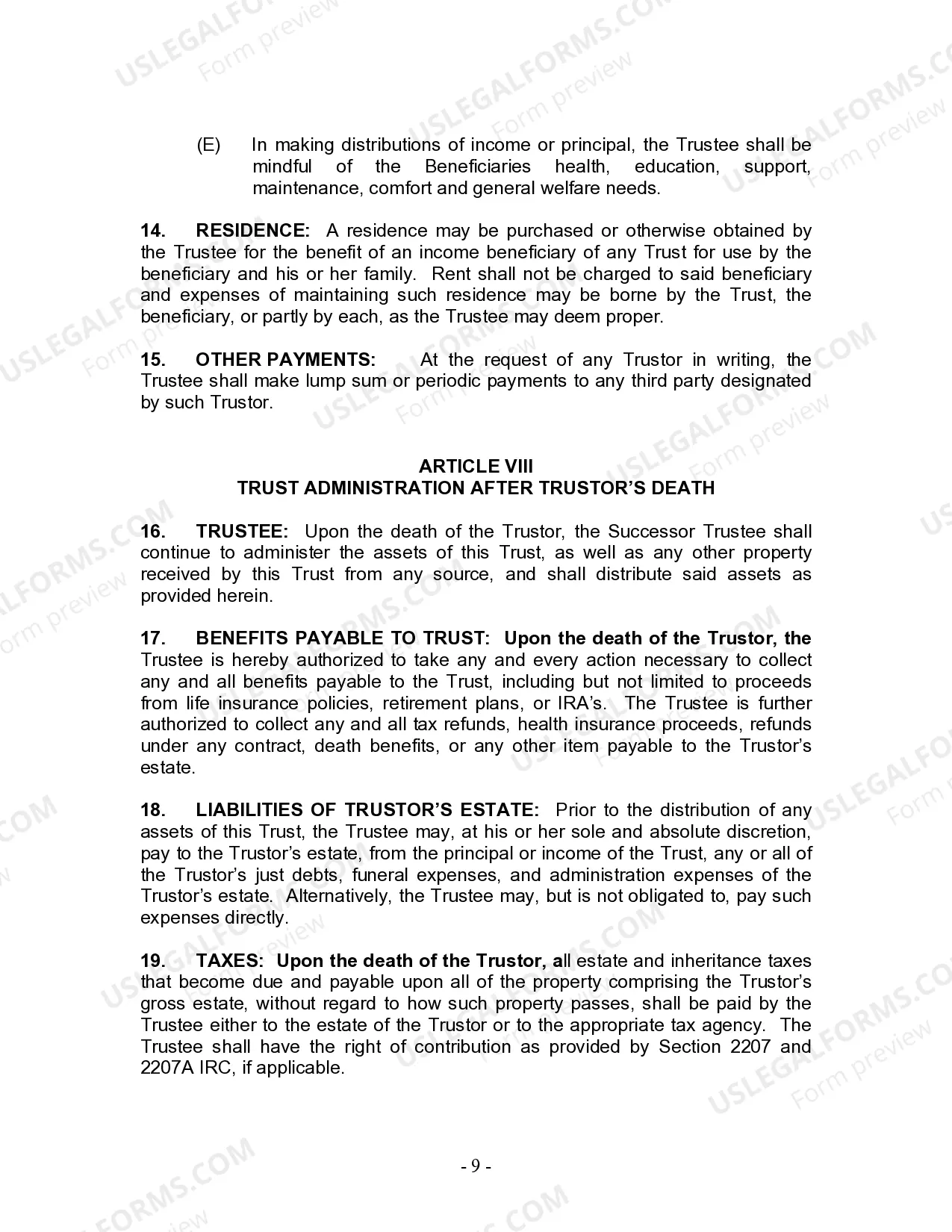
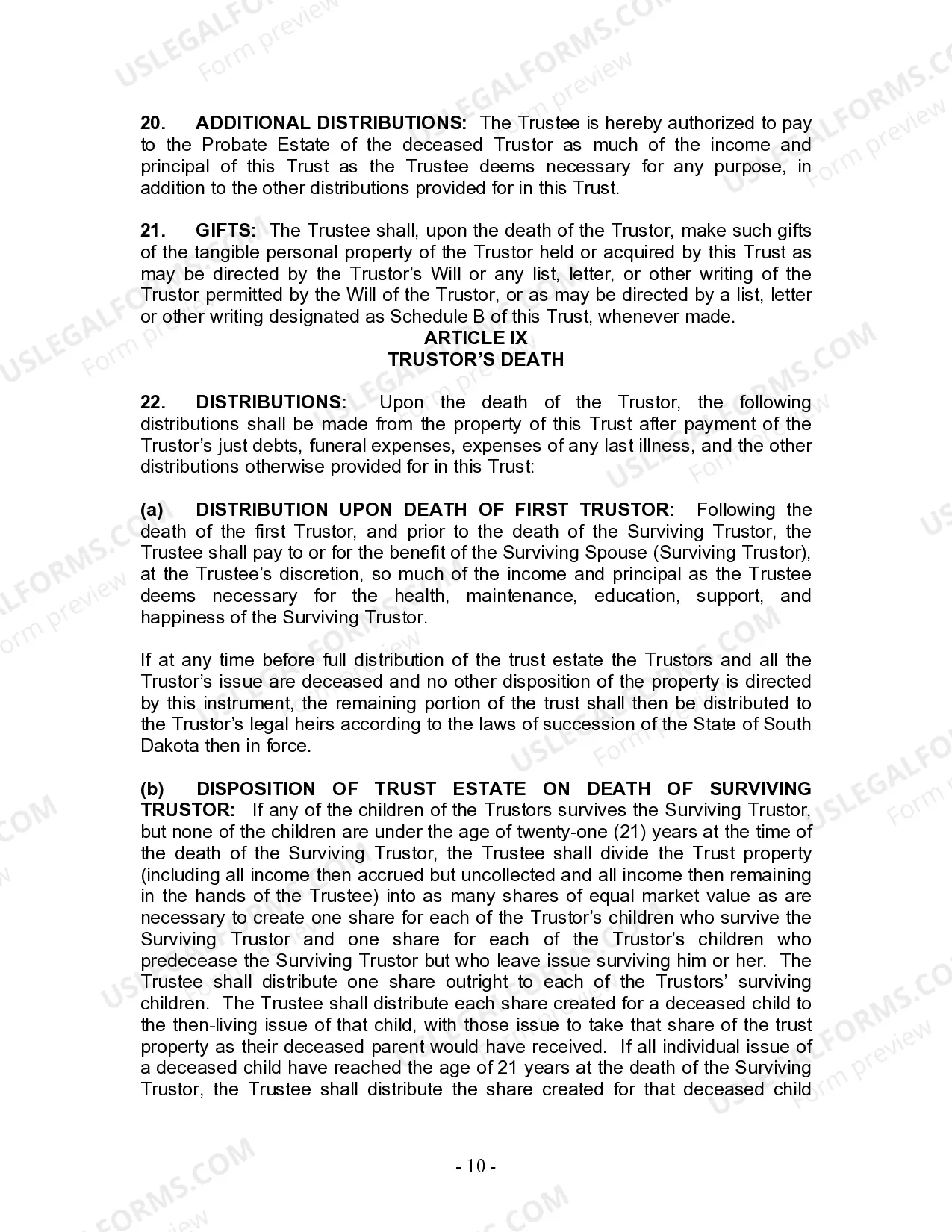
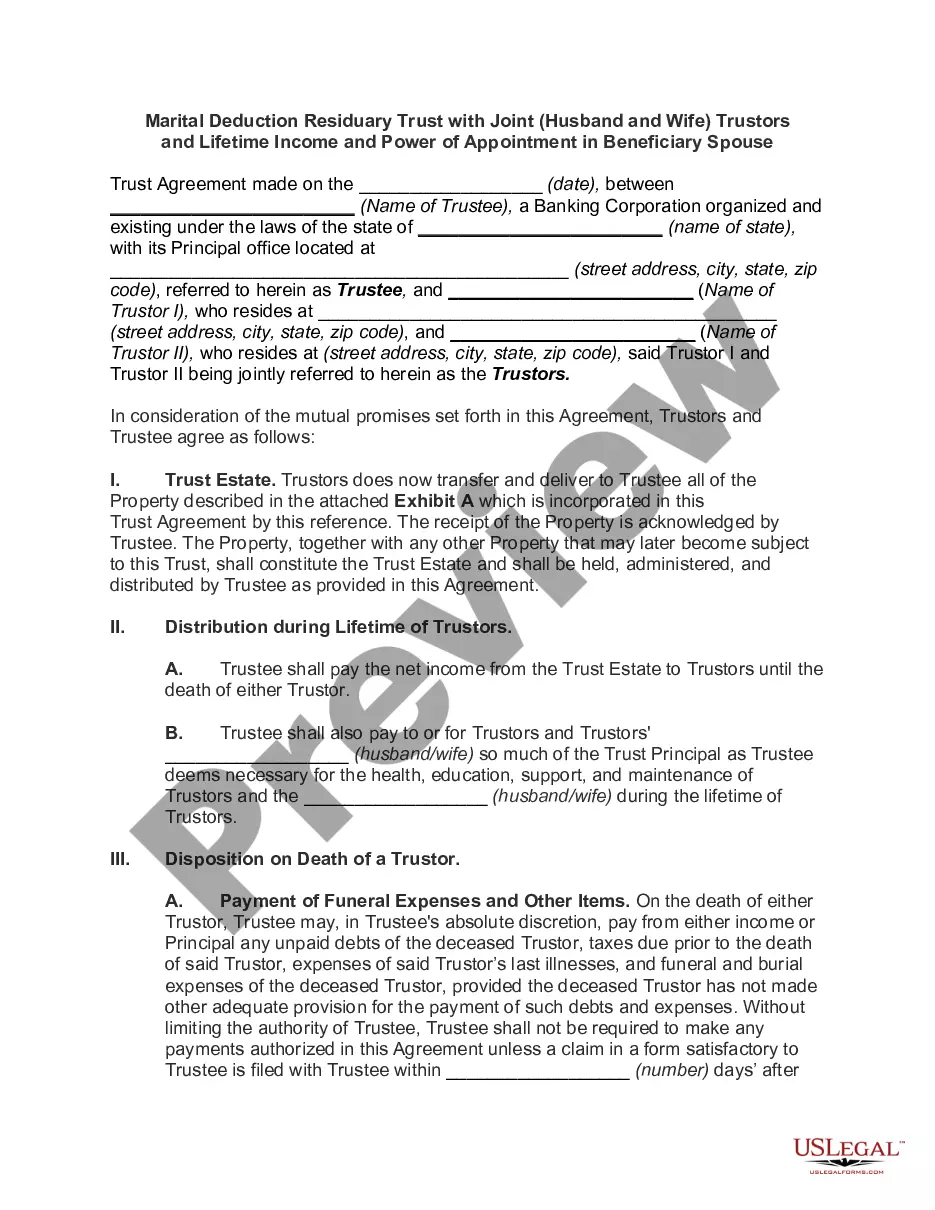
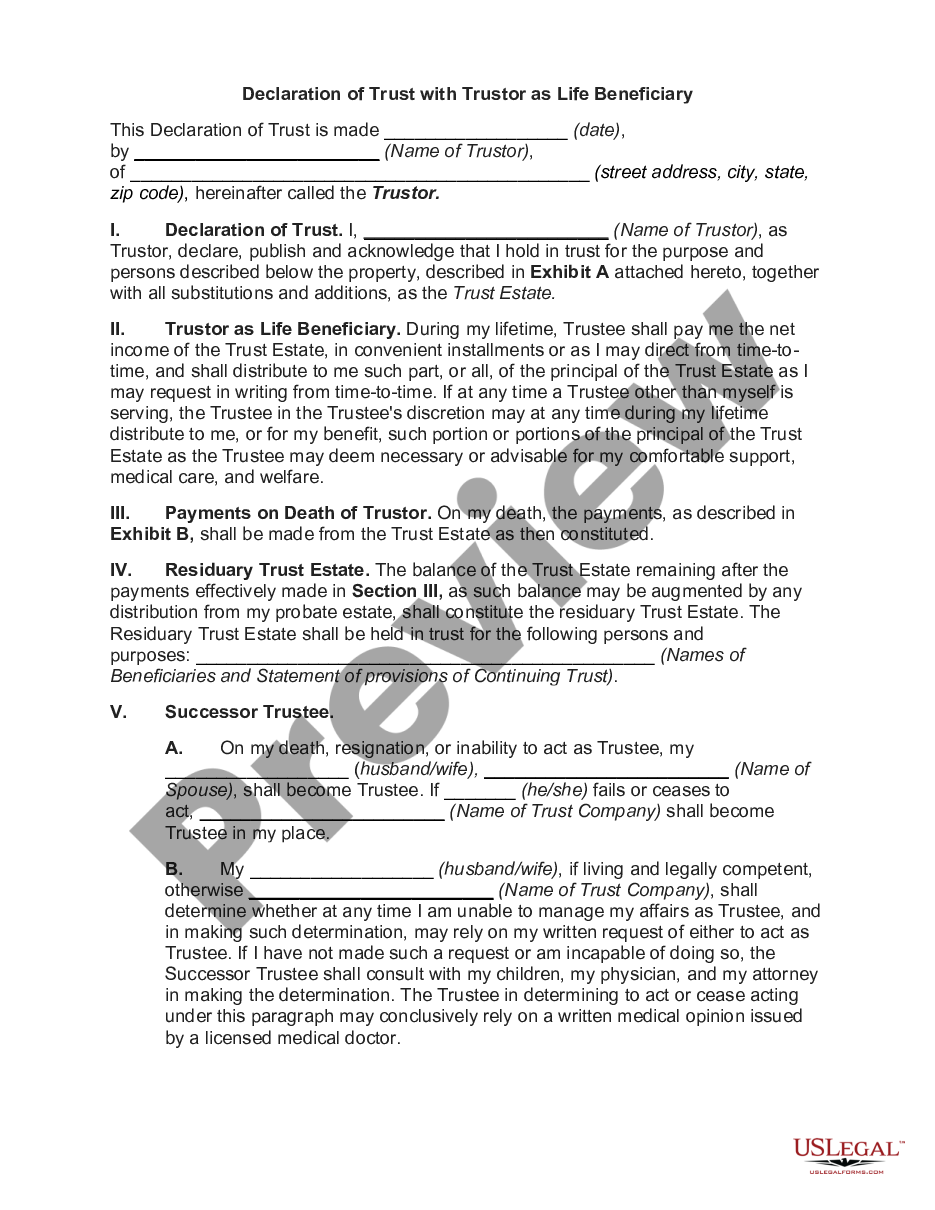
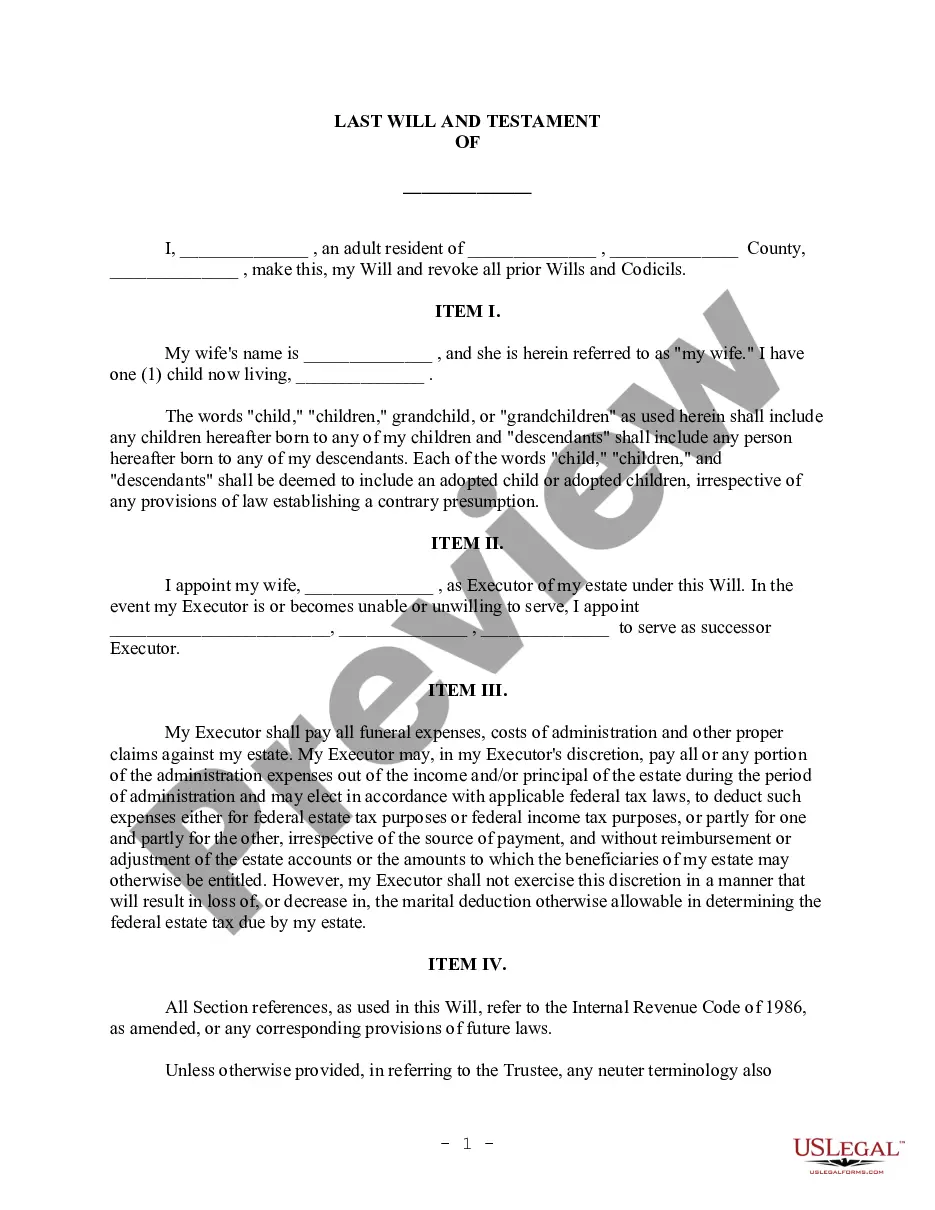
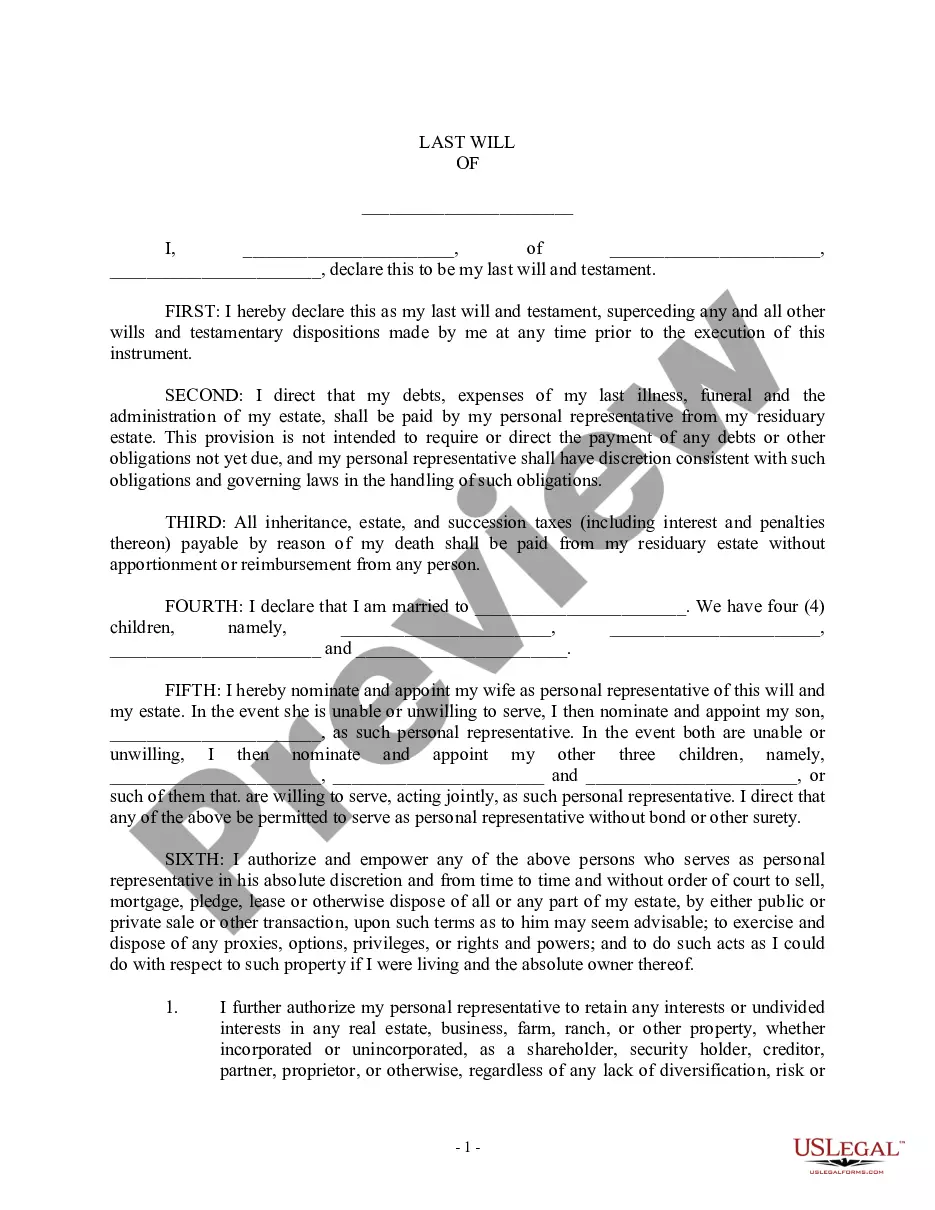
The Living Trust for Husband and Wife with Minor and/or Adult Children is a legal document that establishes a revocable living trust. This trust allows couples to manage their assets during their lifetimes and ensures a smoother transition of these assets to their beneficiaries after their passing. Unlike a will, a living trust typically avoids the probate process, facilitating quicker and more private asset distribution. This form is tailored for couples with children and is designed to protect their familyâs financial future.
Key parts of this document
- Identification of Trustors (husband and wife) and their childrenâs details.
- Appointment of a Trustee, typically the Trustors, allowing them to manage the trust during their lifetimes.
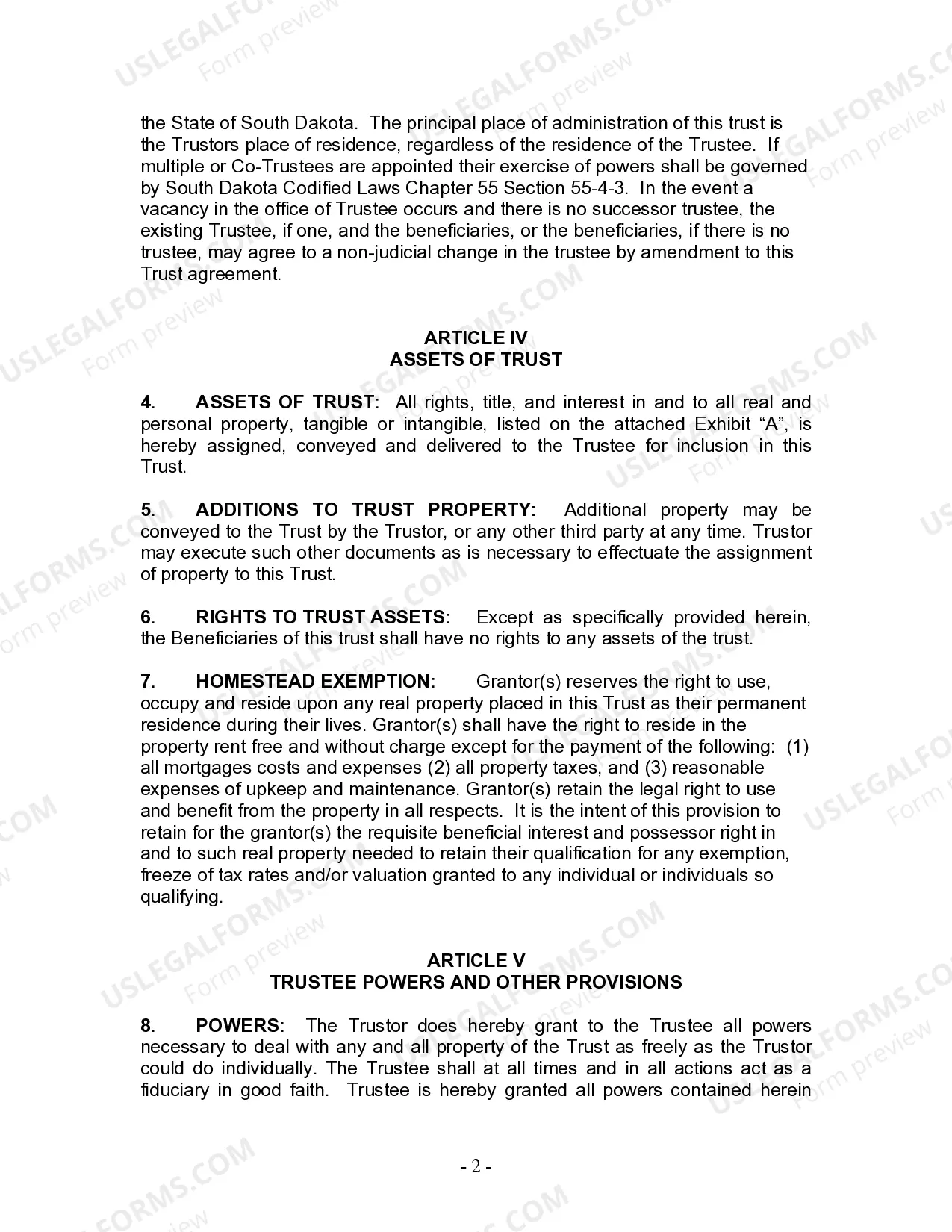
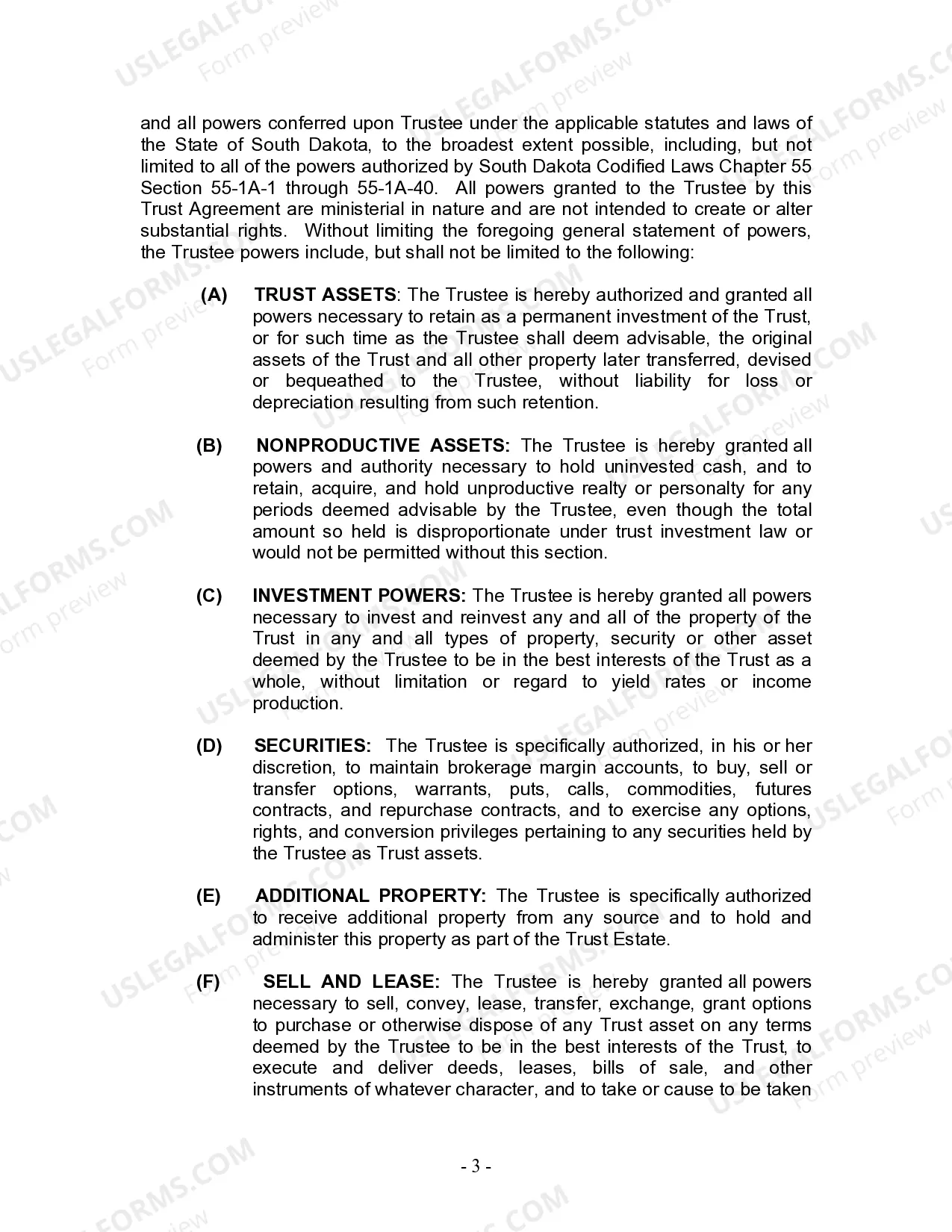
- Specification of trust assets and how they will be managed and distributed.
- Provisions for successor trustees in case the original trustee becomes unable to act.
- Guidelines for distributions during the Trustors' lifetimes and after their death.

When this form is needed
This form is essential for couples who wish to organize their estate planning effectively. It should be utilized when establishing a trust to manage and protect family assets, particularly for those with minor children or adult children, to ensure that the assets are distributed according to their wishes without going through probate. Additionally, this form is suitable for spouses who want to retain control over their assets during their lifetimes while providing for their children after their death.
Who can use this document
- Married couples looking to create a comprehensive estate plan.
- Parents who want to manage their assets and provide for their children.
- Individuals wishing to avoid the probate process after death.
- Couples with joint assets who require clear guidelines for asset management.
Completing this form step by step
- Identify the Trustors by entering the names and addresses of both husband and wife.
- Designate the name of the trust and the trustee who will oversee the trust assets.
- List all assets to be included in the trust, including real estate and personal property.
- Specify any provisions regarding the distribution of assets during and after the Trustorsâ lifetimes.
- Sign and date the document in the presence of a notary to finalize the trust.
Notarization guidance
Yes, this form must be notarized to be legally valid. Having a notary public witness the signing provides an extra layer of authenticity and can help prevent future disputes regarding the trust's validity. US Legal Forms offers integrated online notarization services, allowing you to easily obtain notarization through secure video calls, ensuring both convenience and legality.
Get your form ready online
Our built-in tools help you complete, sign, share, and store your documents in one place.
Make edits, fill in missing information, and update formatting in US Legal Forms—just like you would in MS Word.
Download a copy, print it, send it by email, or mail it via USPS—whatever works best for your next step.
Sign and collect signatures with our SignNow integration. Send to multiple recipients, set reminders, and more. Go Premium to unlock E-Sign.
If this form requires notarization, complete it online through a secure video call—no need to meet a notary in person or wait for an appointment.
We protect your documents and personal data by following strict security and privacy standards.

Make edits, fill in missing information, and update formatting in US Legal Forms—just like you would in MS Word.

Download a copy, print it, send it by email, or mail it via USPS—whatever works best for your next step.

Sign and collect signatures with our SignNow integration. Send to multiple recipients, set reminders, and more. Go Premium to unlock E-Sign.

If this form requires notarization, complete it online through a secure video call—no need to meet a notary in person or wait for an appointment.

We protect your documents and personal data by following strict security and privacy standards.
Common mistakes
- Not fully listing all assets intended to be included in the trust.
- Failing to name a successor trustee, which can lead to issues if the primary trustee becomes unavailable.
- Not understanding the implications of how assets will be managed during incapacity.
- Overlooking state-specific requirements that could invalidate the trust.
Benefits of using this form online
- Accessibility: Download the form anytime and anywhere without needing to visit a lawyerâs office.
- Editability: Make changes to the form as necessary to fit your personal situation.
- Cost-effective: Obtain professionally drafted legal documents at a lower cost than traditional legal services.
- Time-saving: Complete your estate planning quickly and efficiently from home.
This living trust is designed to comply with state laws and can help you avoid probate, ensuring that your wishes are respected regarding the management and distribution of your assets. However, consider consulting with a legal professional for personalized advice.
Main things to remember
- The Living Trust is a powerful estate planning tool for married couples with children.
- Assets placed in the trust avoid probate, ensuring beneficiaries receive their inheritance quickly.
- Clear provisions help prevent confusion and disputes among heirs after the trustorsâ deaths.
Looking for another form?
Form popularity
FAQ
Revocable trusts are very flexible, and can own all or some of your property. You can even have more than one revocable living trust to own different types of property, such as your separate property and your community property. There are many benefits of having a trust.
Under California law, a marriage automatically invalidates any pre-existing will or trust as to the new spouse's inheritance rights, unless the documents provide for a new spouse, or clearly indicate a new spouse will receive nothing.
Livings Trusts. A living trust is usually created by the grantor, during the grantor's lifetime, through a transfer of property to a trustee. Testamentary Trusts. Irrevocable Life Insurance Trust. Charitable Remainder Trust.
Q: Can a person have more than one trust? A: Yes, it is not that uncommon for a person to be the beneficiary of multiple trusts. However, caution should be used. Trusts come in many shapes and sizes and can serve multiple purposes and can be established by you or by someone else for your benefit.
To be clear, yes, you may have one, two, or more living trusts. As with all estate planning questions, though, whether or not multiple trusts make sense for you depends on your circumstances.
Revocable Trusts. Irrevocable Trusts. Testamentary Trusts.
Another key difference is family trusts are only applicable for one family while unit trusts are suitable for multiple families, partnerships, joint ventures and businesses as a means of managing assets.Taylor & Scott is one of the most experienced and respected specialist law firms in New South Wales.
It is certainly possible to have more than one trust, particularly for the reason you have stated: you may want the assets in one trust distributed one way, and the assets in another trust distributed another way.
Can I disinherit a spouse from a will or trust, legally? Yes, and no. Yes, a spouse can be disinherited. As set forth above, if a spouse legally, contractually agrees to be disinherited they can and likely will be.