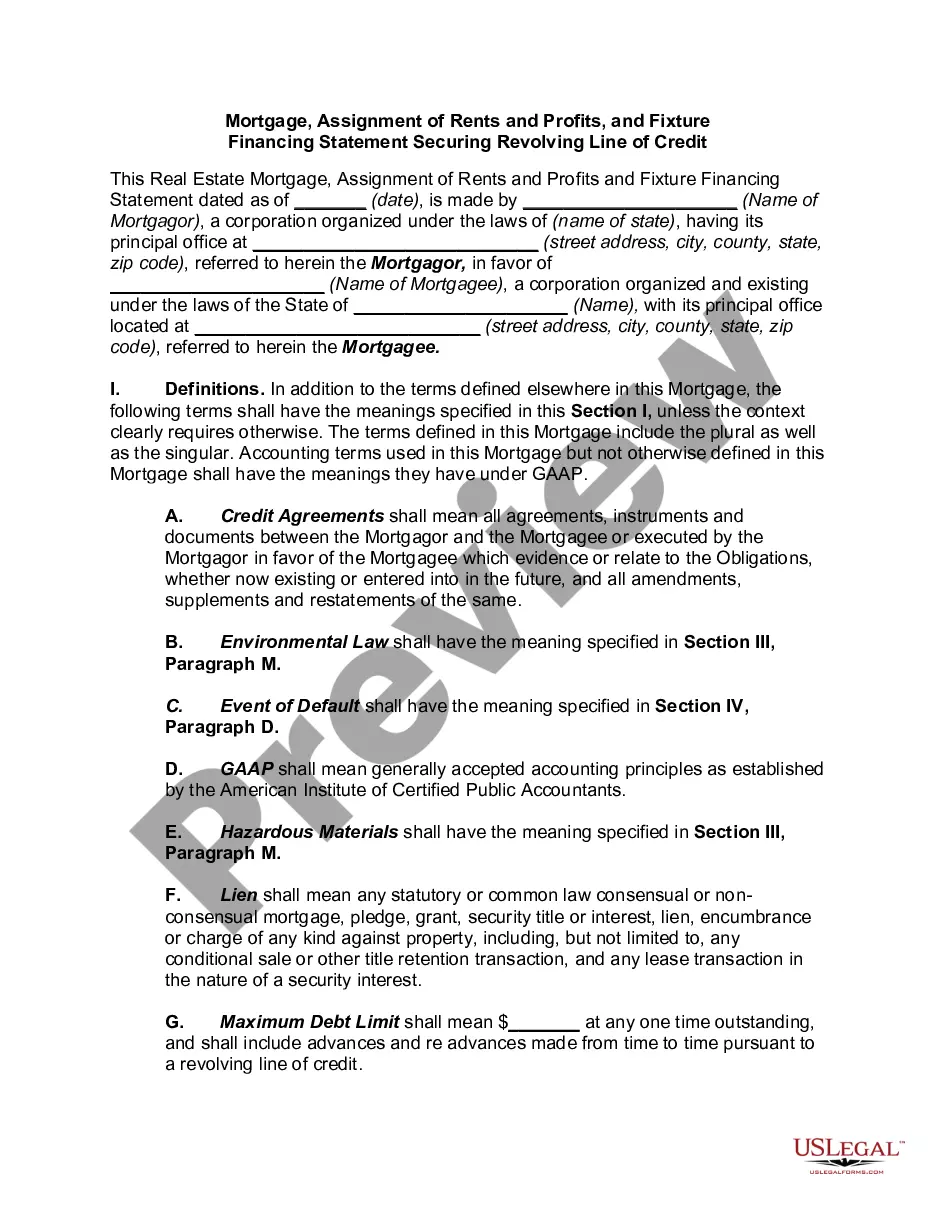
This form is a sample letter in Word format covering the subject matter of the title of the form.
South Dakota Sample Letter to Bank concerning Accounts of Decedent
Category:
State:
Multi-State
Control #:
US-0034LTR
Format:
Word;
Rich Text
Instant download
Description
Free preview

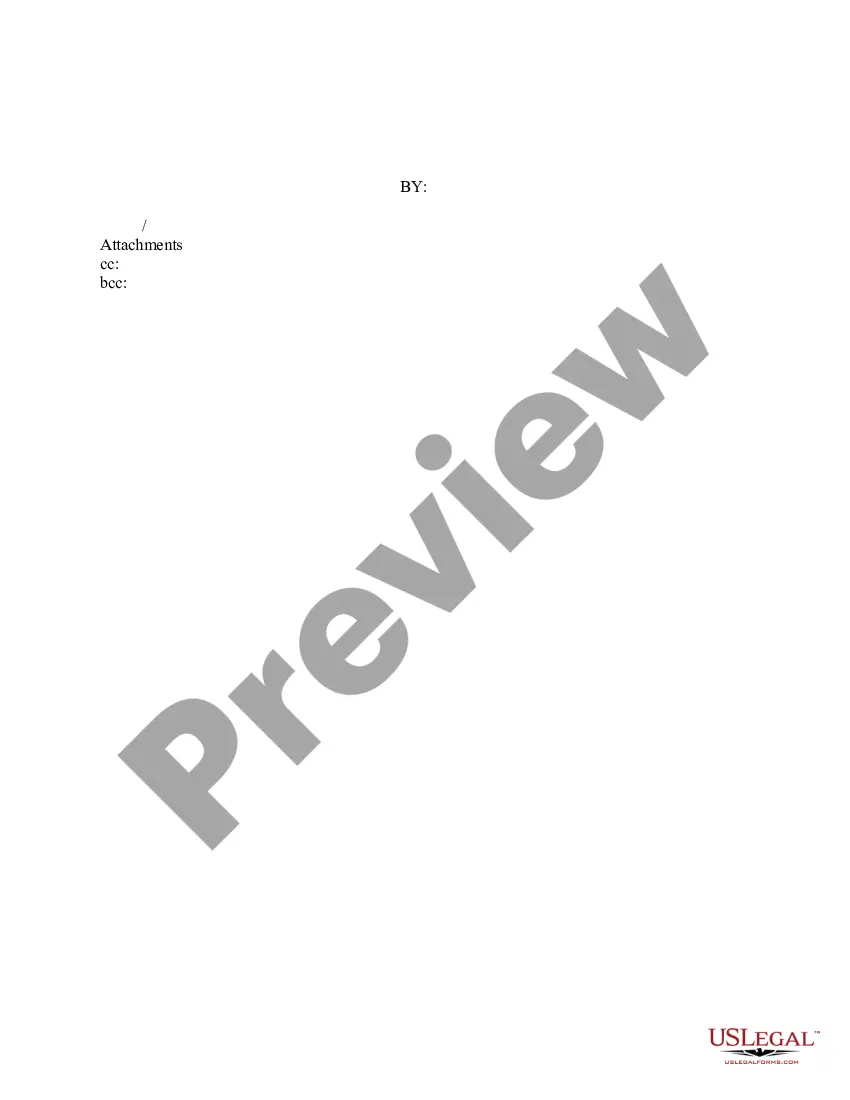


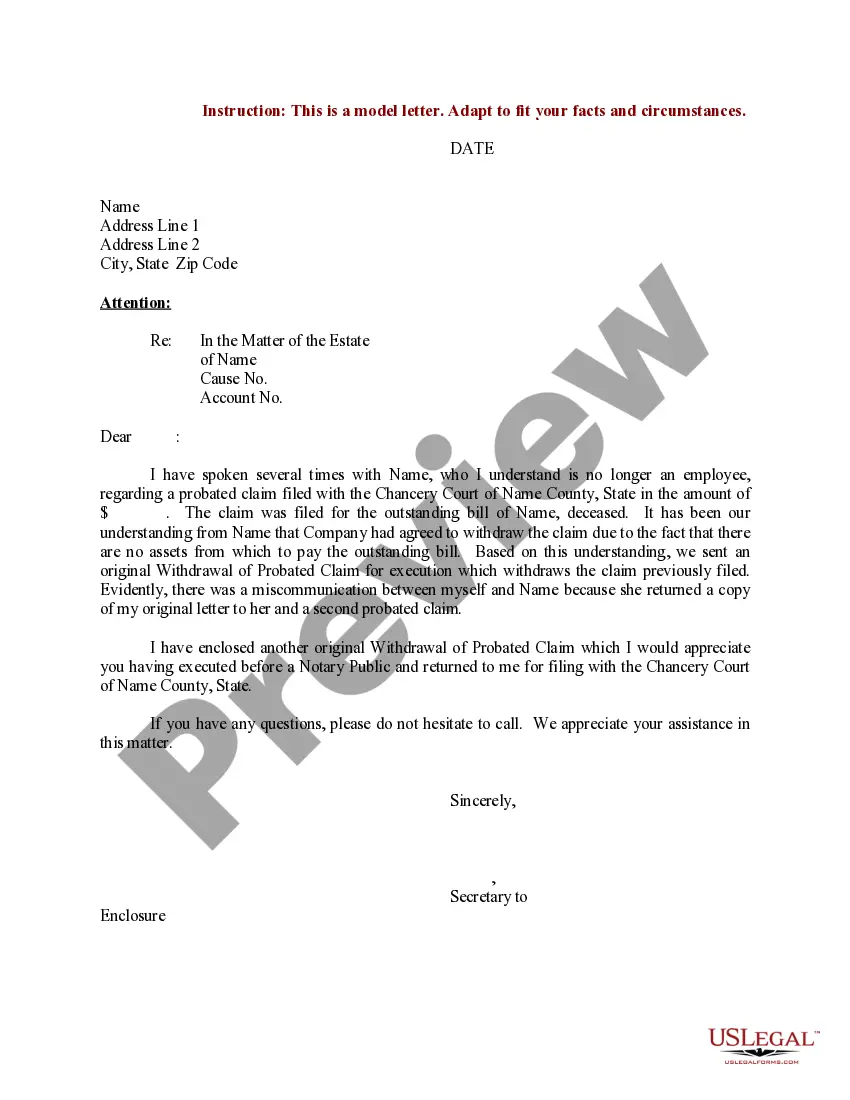



How to fill out Sample Letter To Bank Concerning Accounts Of Decedent?
If you need to acquire, obtain, or create valid document templates, utilize US Legal Forms, the most extensive collection of legal forms available online. Take advantage of the site's straightforward and user-friendly search to locate the documents you need.
Various templates for business and personal purposes are organized by categories and states, or keywords. Use US Legal Forms to find the South Dakota Sample Letter to Bank regarding Accounts of Decedent with just a few clicks.
If you are already a US Legal Forms member, Log In to your account and then click the Download button to retrieve the South Dakota Sample Letter to Bank concerning Accounts of Decedent. You can also access forms you previously downloaded in the My documents section of your account.
Every legal document template you purchase is yours permanently. You have access to every form you downloaded within your account. Click the My documents section and choose a form to print or download again.
Compete and obtain, and print the South Dakota Sample Letter to Bank concerning Accounts of Decedent with US Legal Forms. There are millions of professional and state-specific forms you can use for your business or personal needs.
- Step 1. Ensure you have selected the form for the correct city/state.
- Step 2. Use the Preview feature to review the form's details. Be sure to read through the description.
- Step 3. If you are not satisfied with the form, use the Search box at the top of the screen to find alternative versions of the legal form template.
- Step 4. Once you have found the form you need, click on the Get now button. Choose the pricing option you prefer and input your credentials to register for the account.
- Step 5. Complete the transaction. You can utilize your Visa or MasterCard or PayPal account to finalize the payment.
- Step 6. Select the format of the legal form and download it to your device.
- Step 7. Complete, modify, and print or sign the South Dakota Sample Letter to Bank concerning Accounts of Decedent.
Form popularity
FAQ
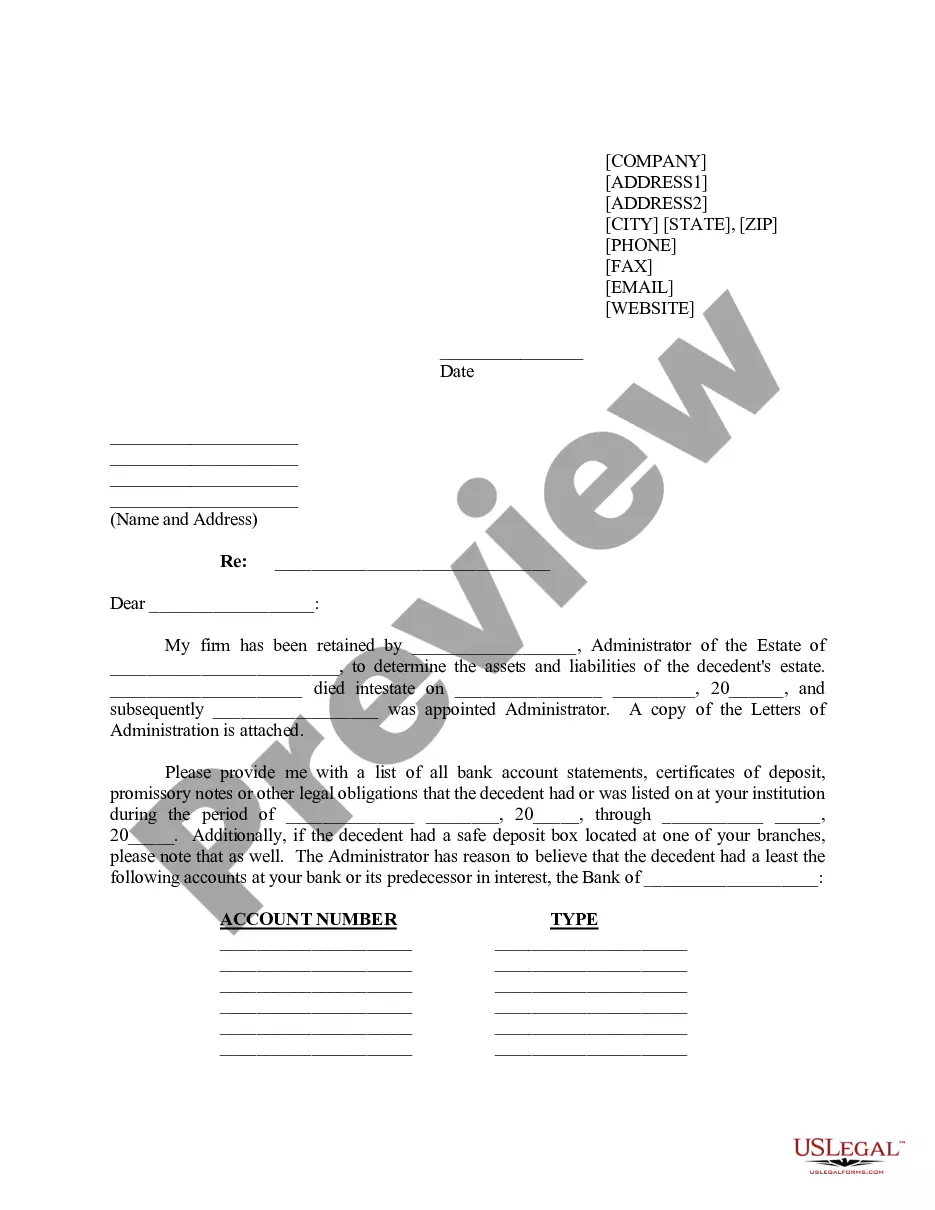
A letter of instruction to the bank after death serves as a formal communication to manage the accounts of a decedent. This letter provides essential details about the deceased's accounts and outlines the necessary steps for the bank to follow. Utilizing a South Dakota Sample Letter to Bank concerning Accounts of Decedent can simplify this process. By using our US Legal Forms platform, you can access a tailored template that ensures all critical information is included.
When writing a letter to the bank regarding a deceased account holder, start by clearly stating the account holder’s name, account number, and the date of death. Include a copy of the death certificate and any other relevant documentation. A well-crafted South Dakota Sample Letter to Bank concerning Accounts of Decedent can guide you in structuring this letter effectively. By providing clear information, you help the bank handle the account with respect and efficiency.
To inform a bank about the death of an account holder, you should first gather necessary documents, including the death certificate. Then, visit the bank's branch or reach out via phone to notify them. It is helpful to have a South Dakota Sample Letter to Bank concerning Accounts of Decedent ready, as this formalizes your communication and provides essential details about the account. This approach ensures the bank processes the account appropriately and addresses any immediate concerns.
Accessing a deceased person's bank account typically requires specific documentation. In South Dakota, you will need to provide a South Dakota Sample Letter to Bank concerning Accounts of Decedent. This letter informs the bank of the account holder's passing and requests information regarding the account. Additionally, you may need to present a death certificate and proof of your relationship to the deceased. Using a platform like US Legal Forms can help you create this letter easily and ensure you include all necessary details.
Property that is jointly owned with a survivorship right will avoid probate. If one owner dies, title passes automatically to the remaining owner.
You may be able to avoid probate in South Dakota using any of the following strategies: Establish a Revocable Living Trust. Title property in Joint Tenancy. Create assets/accounts that are TOD or POD (Transfer on Death; Payable on Death)
The beneficiary is not entitled to money in the account while the owner is alive, but automatically becomes the owner of the account upon the original owner's death. In these cases, simply visit the bank with a valid ID and a certified copy of the death certificate.
In South Dakota, not all your property may have to go through probate. The assets that do go through probate make up your probate estate. These are usually assets that are titled solely in your name and come under the control of your personal representative (formerly known as an executor).
A formal probate requires additional court intervention and is required if the decedent passed away more than three years before the filing of the probate. An informal probate in South Dakota is often handled by the clerk of courts rather than a judge. A probate can also be testate or intestate.
However, it is possible to skip probate in South Dakota if the entire value of an estate is less than $50,000. In that case, the estate would pass through what's called a simplified probate process.