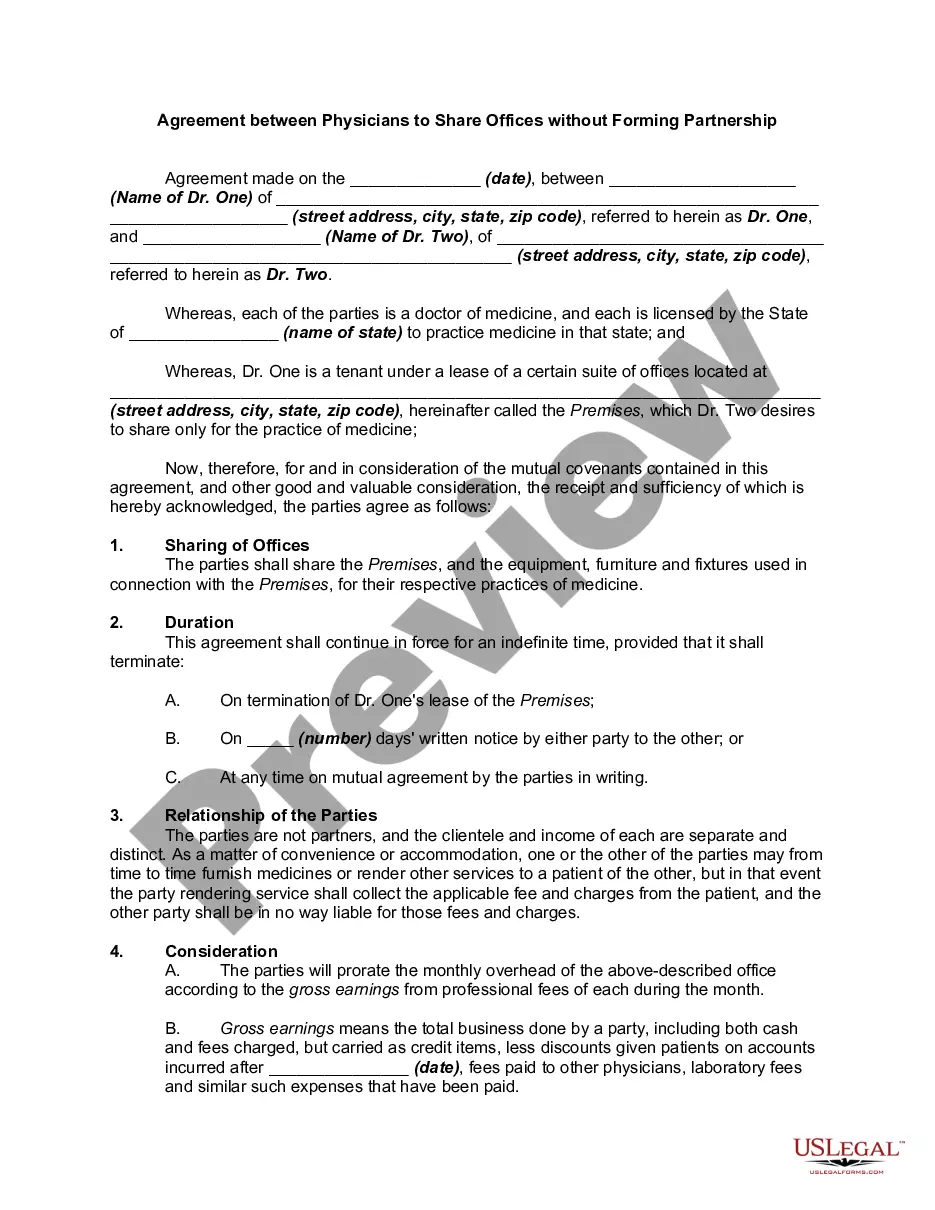
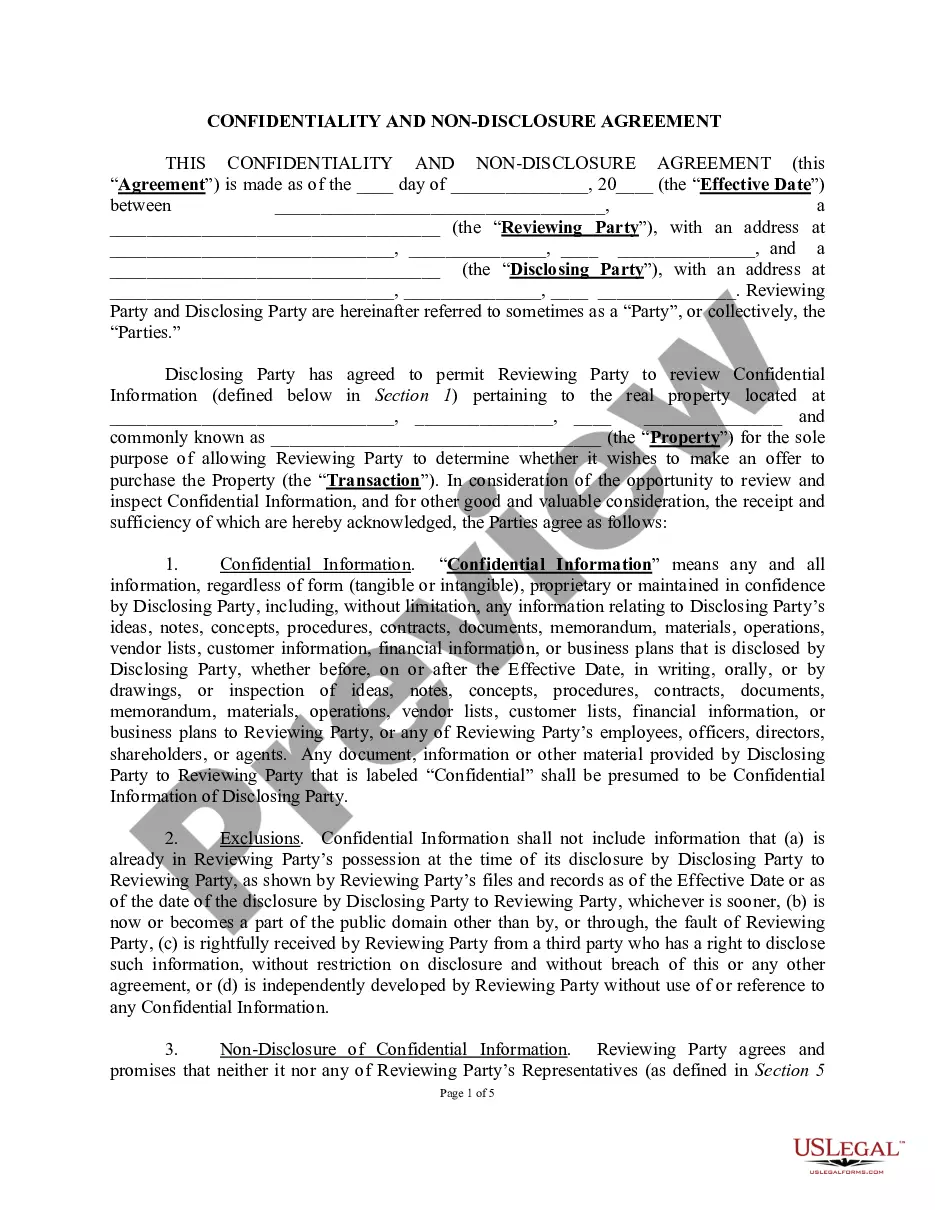
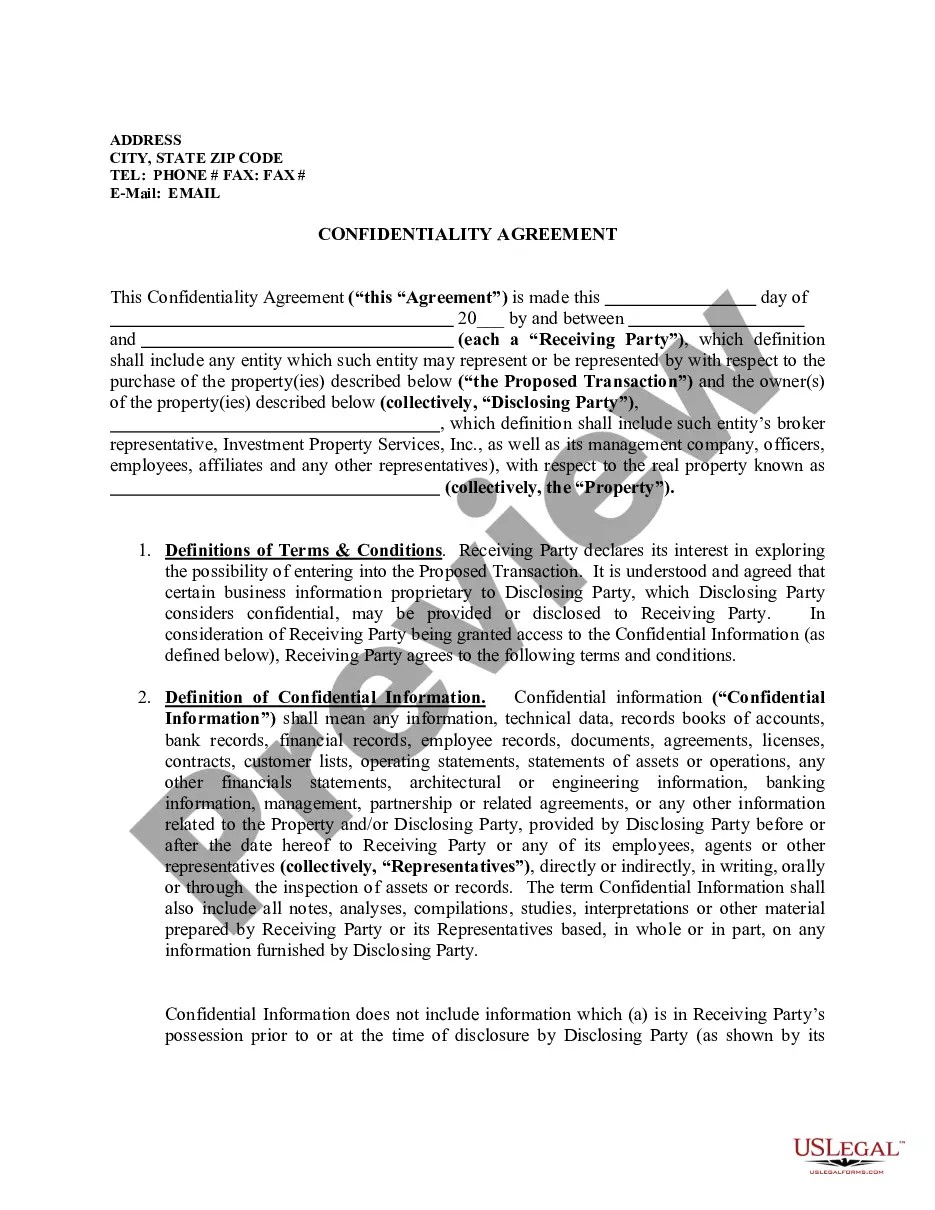
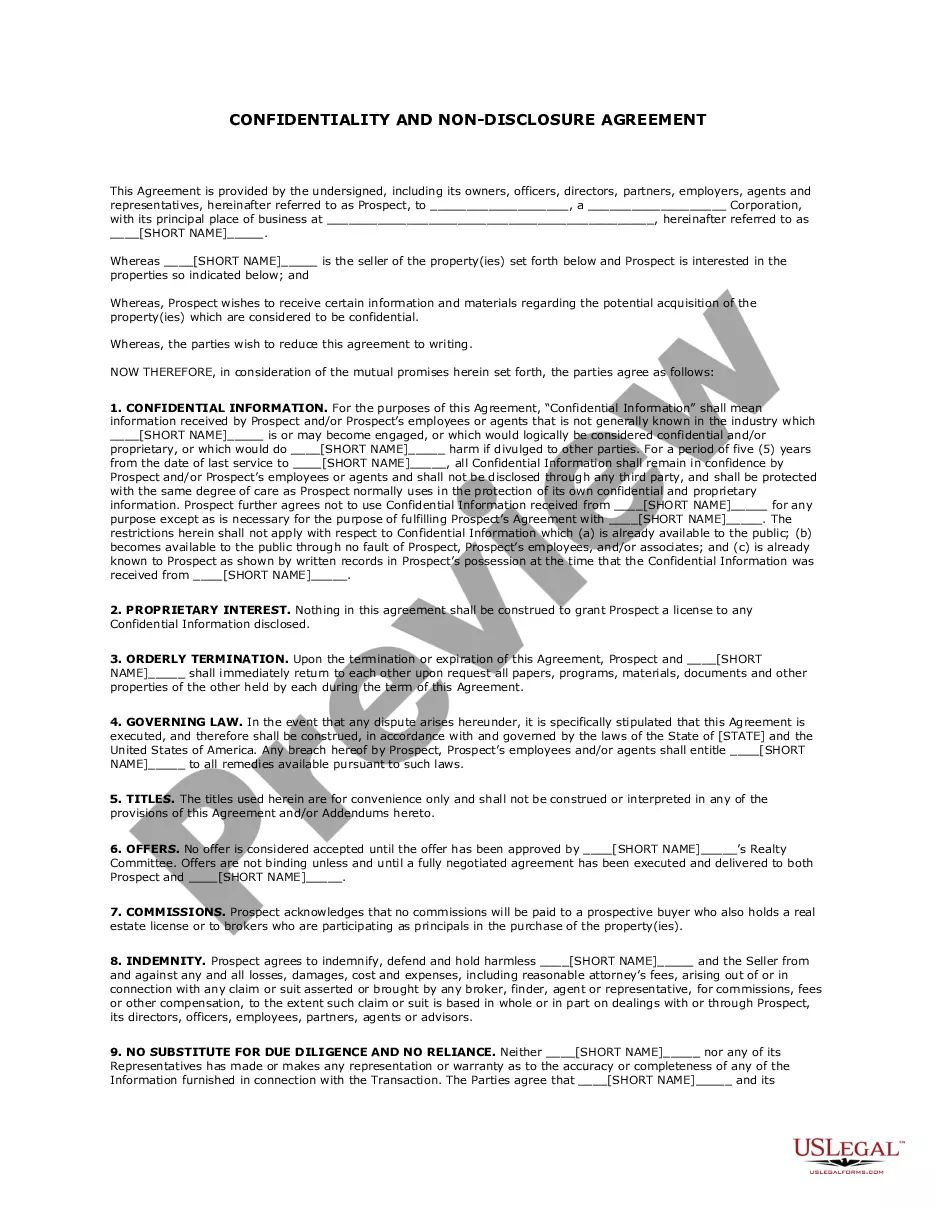
The parties desire to enter into discussions and negotiations regarding the purchase of material described in the agreement. The parties agree that any information obtained in the discussions will remain confidential and proprietary. All the terms and conditions of the agreement will be binding upon the successors and assigns of the parties and will survive the execution of the agreement and the termination of the discussions and negotiations between the parties.
South Dakota Nondisclosure and Confidentiality Agreement - Potential Purchase
State:
Multi-State
Control #:
US-00456
Format:
Word;
Rich Text
Instant download
Description
Free preview

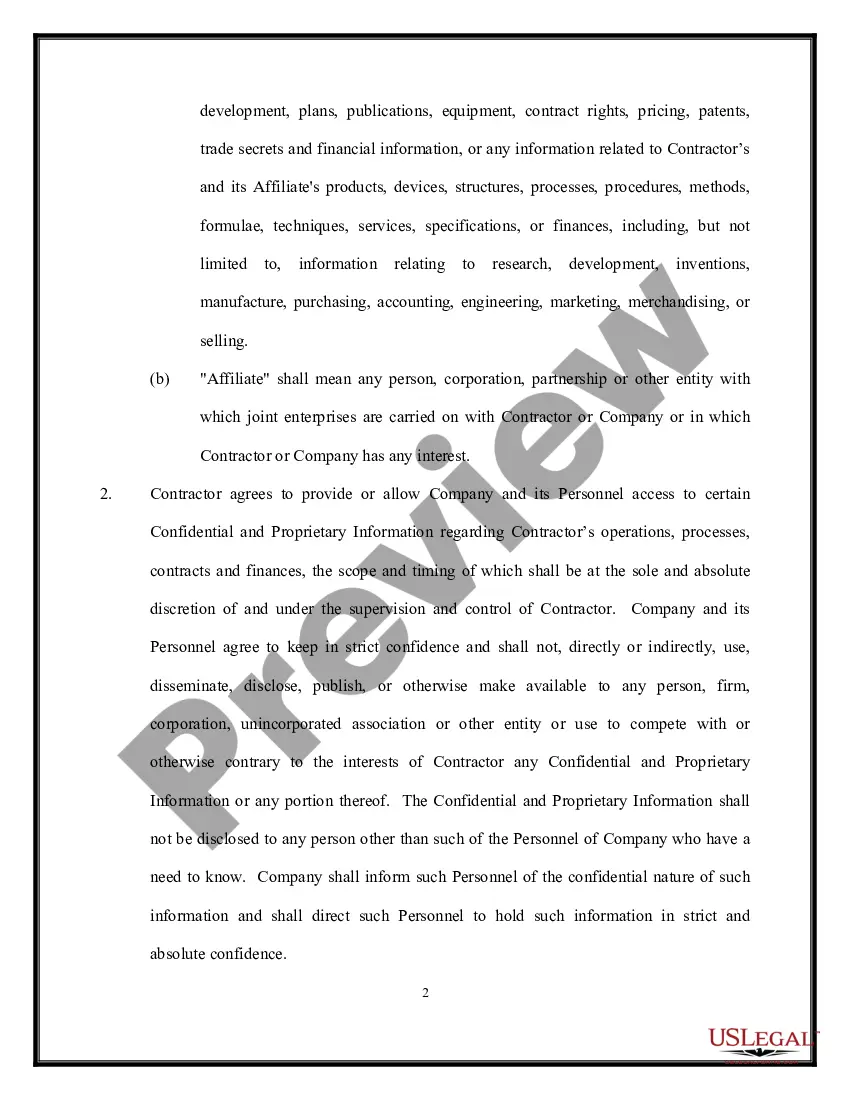
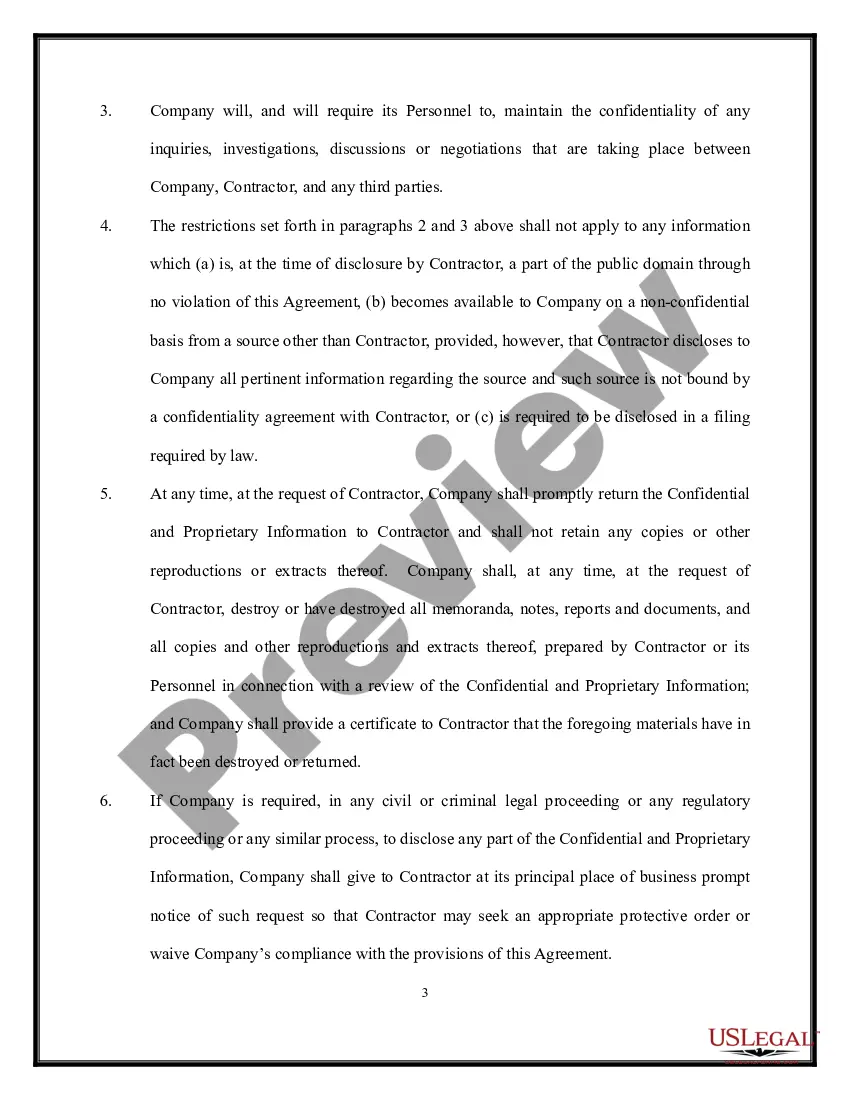
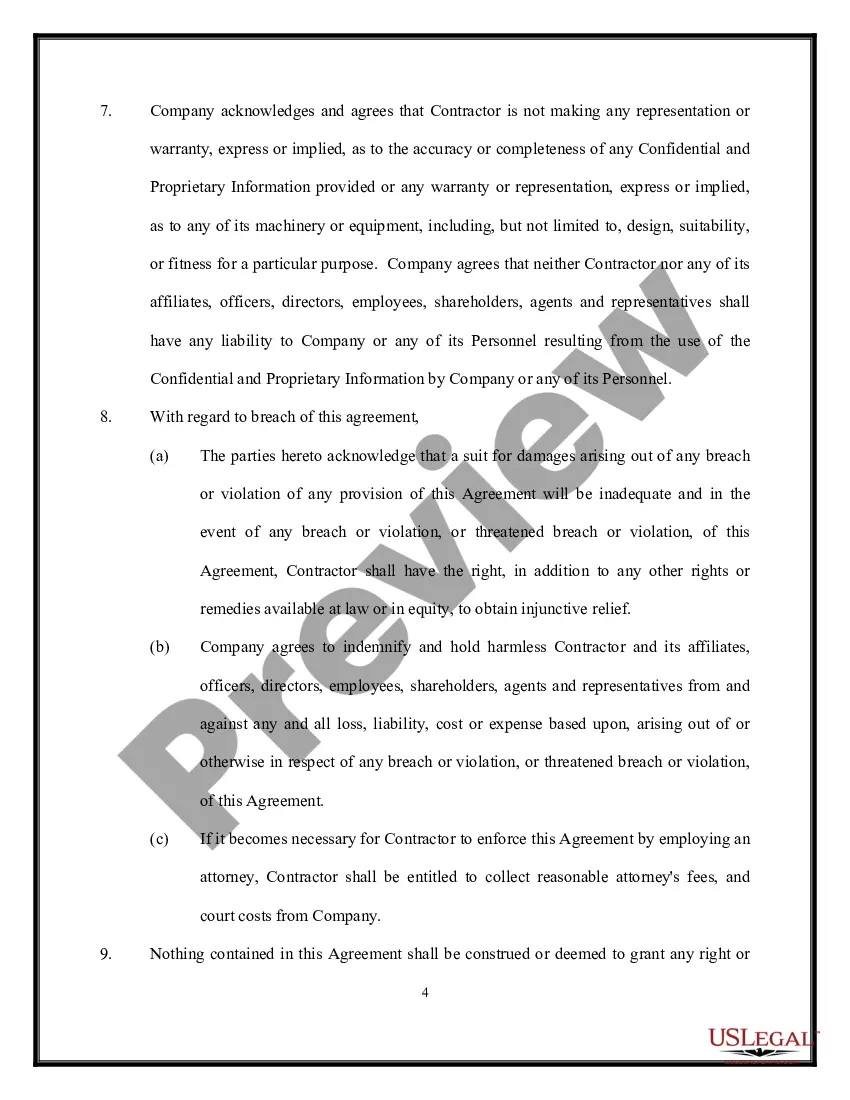
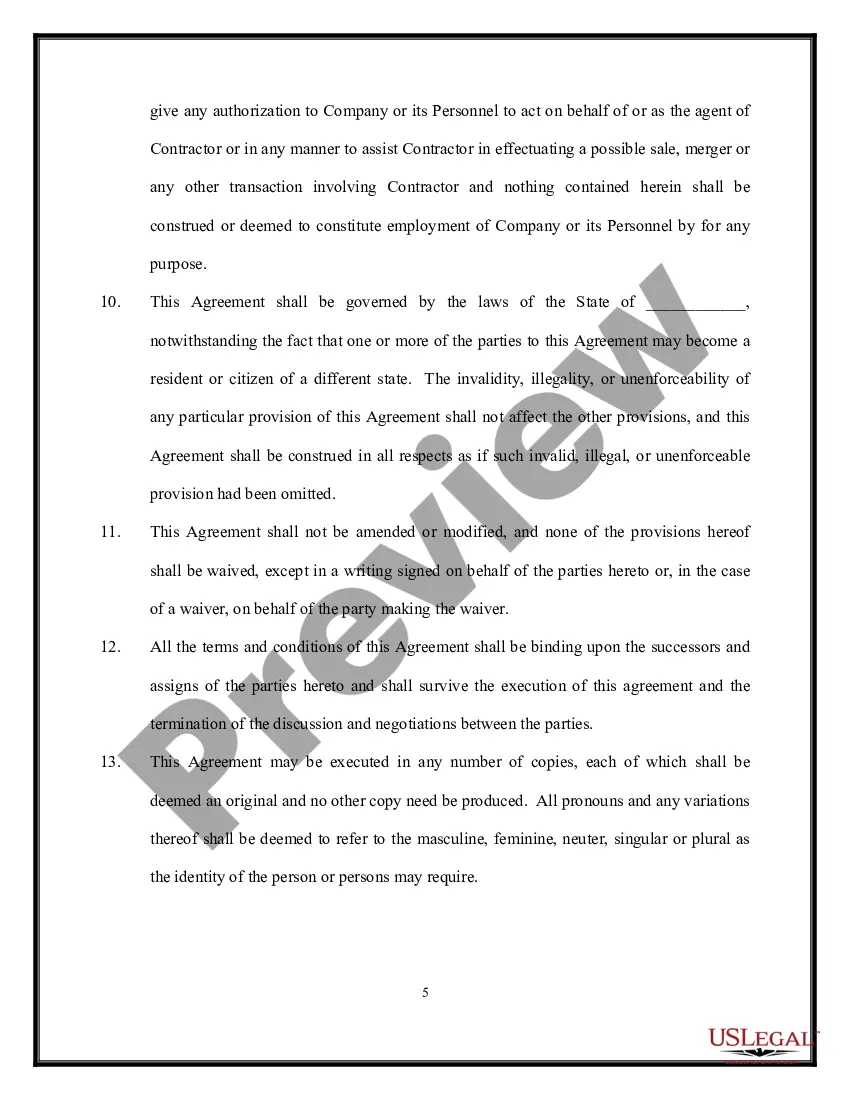
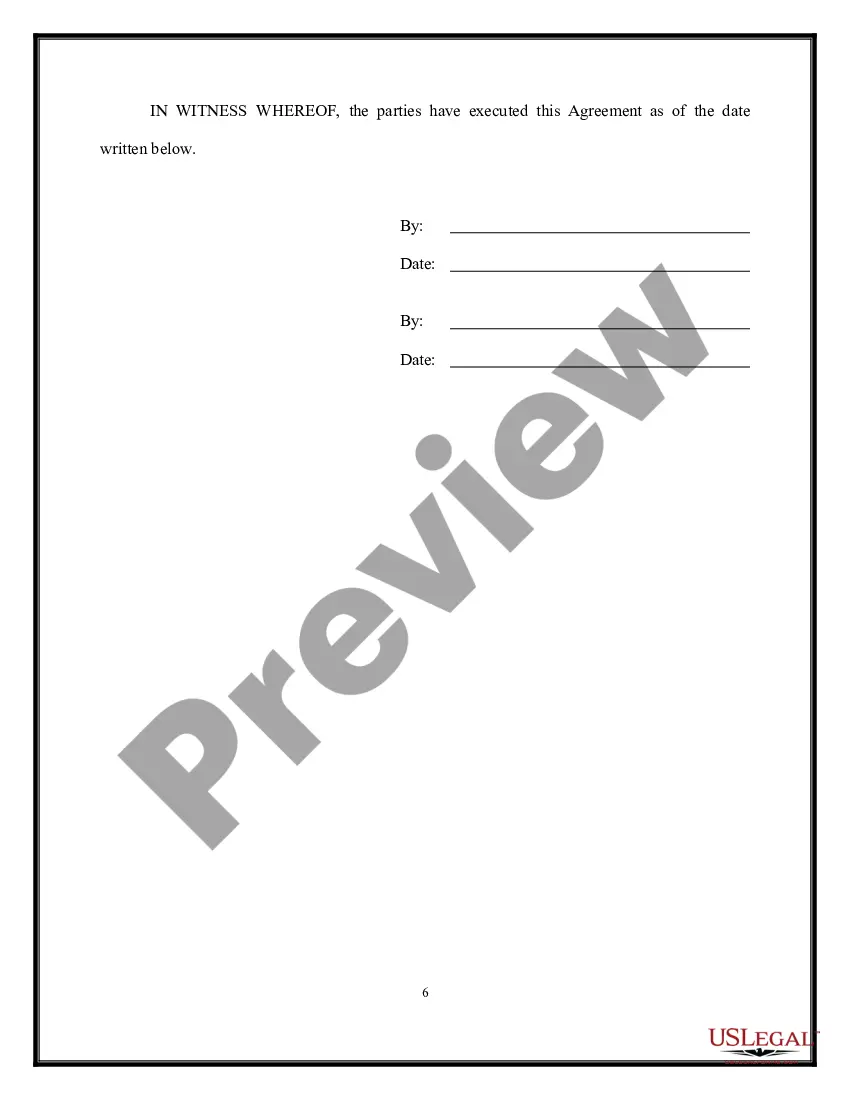
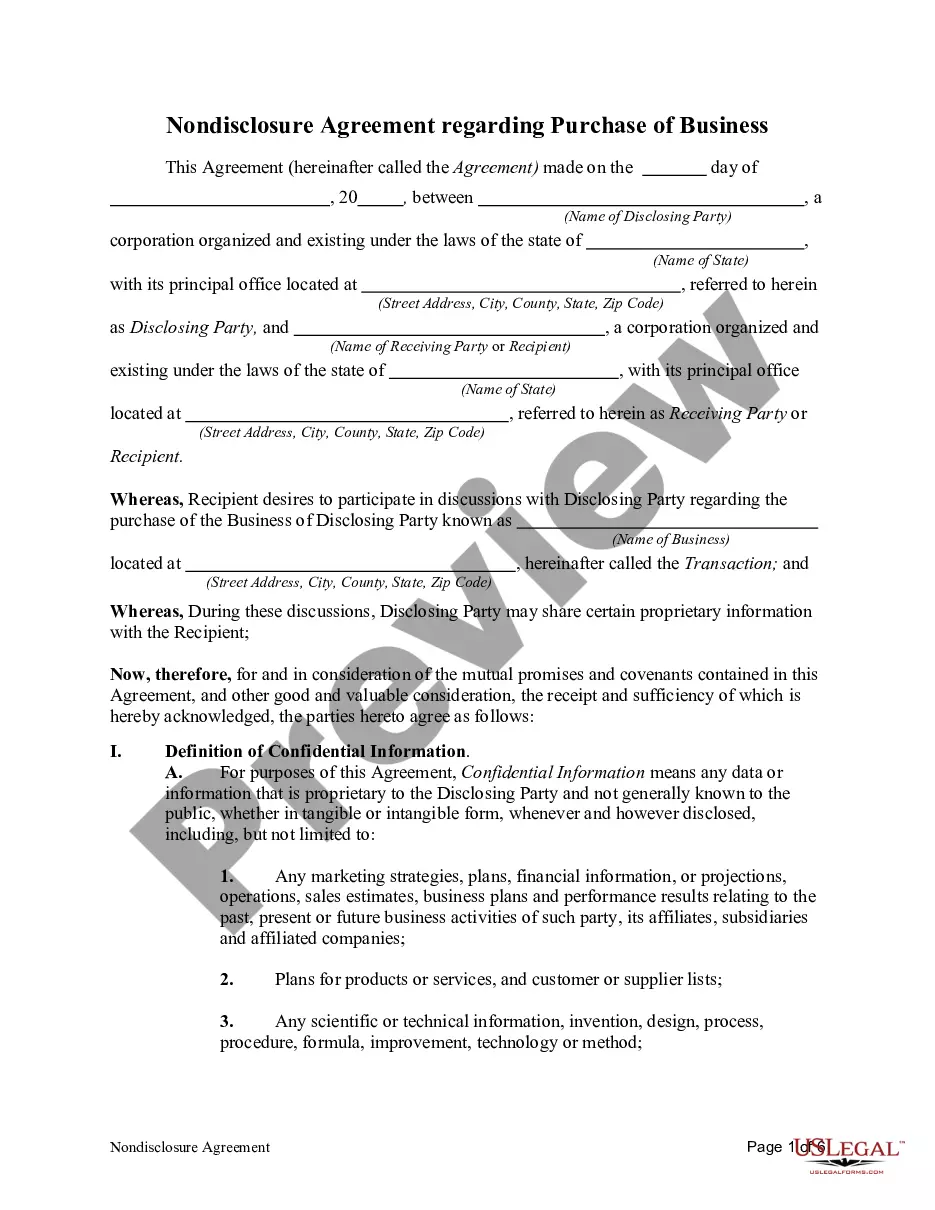
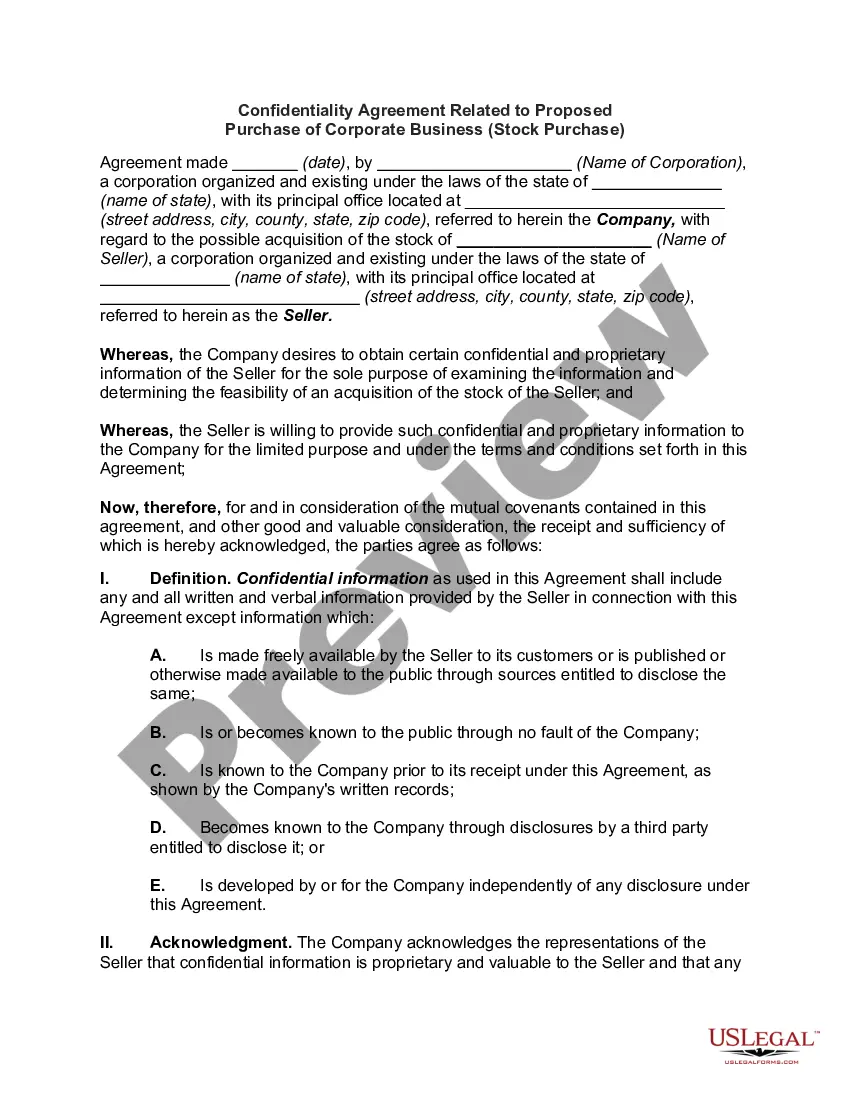
Get your form ready online
Our built-in tools help you complete, sign, share, and store your documents in one place.
Built-in online Word editor
Make edits, fill in missing information, and update formatting in US Legal Forms—just like you would in MS Word.
Export easily
Download a copy, print it, send it by email, or mail it via USPS—whatever works best for your next step.
E-sign your document
Sign and collect signatures with our SignNow integration. Send to multiple recipients, set reminders, and more. Go Premium to unlock E-Sign.
Notarize online 24/7
If this form requires notarization, complete it online through a secure video call—no need to meet a notary in person or wait for an appointment.
Store your document securely
We protect your documents and personal data by following strict security and privacy standards.

Make edits, fill in missing information, and update formatting in US Legal Forms—just like you would in MS Word.

Download a copy, print it, send it by email, or mail it via USPS—whatever works best for your next step.

Sign and collect signatures with our SignNow integration. Send to multiple recipients, set reminders, and more. Go Premium to unlock E-Sign.

If this form requires notarization, complete it online through a secure video call—no need to meet a notary in person or wait for an appointment.

We protect your documents and personal data by following strict security and privacy standards.
Looking for another form?
How to fill out Nondisclosure And Confidentiality Agreement - Potential Purchase?
Selecting the appropriate legal document template can be rather challenging.
Naturally, there are multiple formats accessible online, but how will you find the legal document you require.
Utilize the US Legal Forms website.
If you are already registered, Log In to your account and click the Download button to obtain the South Dakota Nondisclosure and Confidentiality Agreement - Potential Purchase. Use your account to browse through the legal forms you have previously acquired. Visit the My documents section of your account and download another copy of the document you require.
- The service provides thousands of templates, including the South Dakota Nondisclosure and Confidentiality Agreement - Potential Purchase, which you can utilize for both business and personal purposes.
- All of the documents are verified by professionals and comply with federal and state regulations.
Form popularity
FAQ
Key elements of Non-disclosure AgreementIdentification of the parties that are signing the agreement. A precise definition of what is considered confidential under the agreement. The clear reason as to why the information is shared and for what purpose.
Non-disclosure agreements are used when the obligation to keep information secret is unilateral, while confidentiality agreements are used when multiple parties have to keep the multilateral exchange of secrets confidential.
Non-disclosure agreements, or NDAs as they are sometimes called, are legally enforceable agreements between parties that are used to ensure that certain information will remain confidential.
In those situations, you should refrain from disclosing that you have entered into an NDA or are even in negotiations with the other party (i.e., the first rule of this NDA is we don't talk about this NDA). NDAs may have time limits that provide that they no longer apply after some fixed period.
Most NDAs include a confidentiality clause or non-disparagement provision. This clause or provision prohibits current or former employees from speaking negatively about the company and disclosing their experience. Those who violate them risk facing hundreds of thousands of dollars in fines or retaliation.
The Key Elements of Non-Disclosure AgreementsIdentification of the parties.Definition of what is deemed to be confidential.The scope of the confidentiality obligation by the receiving party.The exclusions from confidential treatment.The term of the agreement.
A confidentiality agreement is a legally binding contract that states two parties will not share or profit from confidential information. A business usually gives a confidentiality agreement to an employee or contractor to make sure its trade secrets or proprietary information remains private.
A confidentiality agreement is a legal document that binds one or more parties to keep secret or proprietary information confidential or proprietary. An NDA is a kind of a contract that upholds secrecy; it does so by defining a confidential partnership and legally binding any parties who sign the NDA to that
Typical exceptions to the definition of confidential information include (i) information publicly known or in the public domain prior to the time of disclosure, (ii) information publicly known and made generally available after disclosure through no action or inaction of the recipient, (ii) information already in the
Some NDAs will bind a person to secrecy for an indefinite period of time so that at no point in time can the signer divulge the confidential information contained in the agreement. Without such a signed agreement, any information disclosed in trust can be used for malicious purposes or be made public accidentally.