Covenants not to compete made by former employees are held valid when they are reasonable and necessary to protect the interests of the employer.
South Dakota Employment Agreement Between Esthetician and Cosmetologist with Noncompetition and Confidentiality Provisions
Category:
State:
Multi-State
Control #:
US-00613BG
Format:
Word;
Rich Text
Instant download
Description
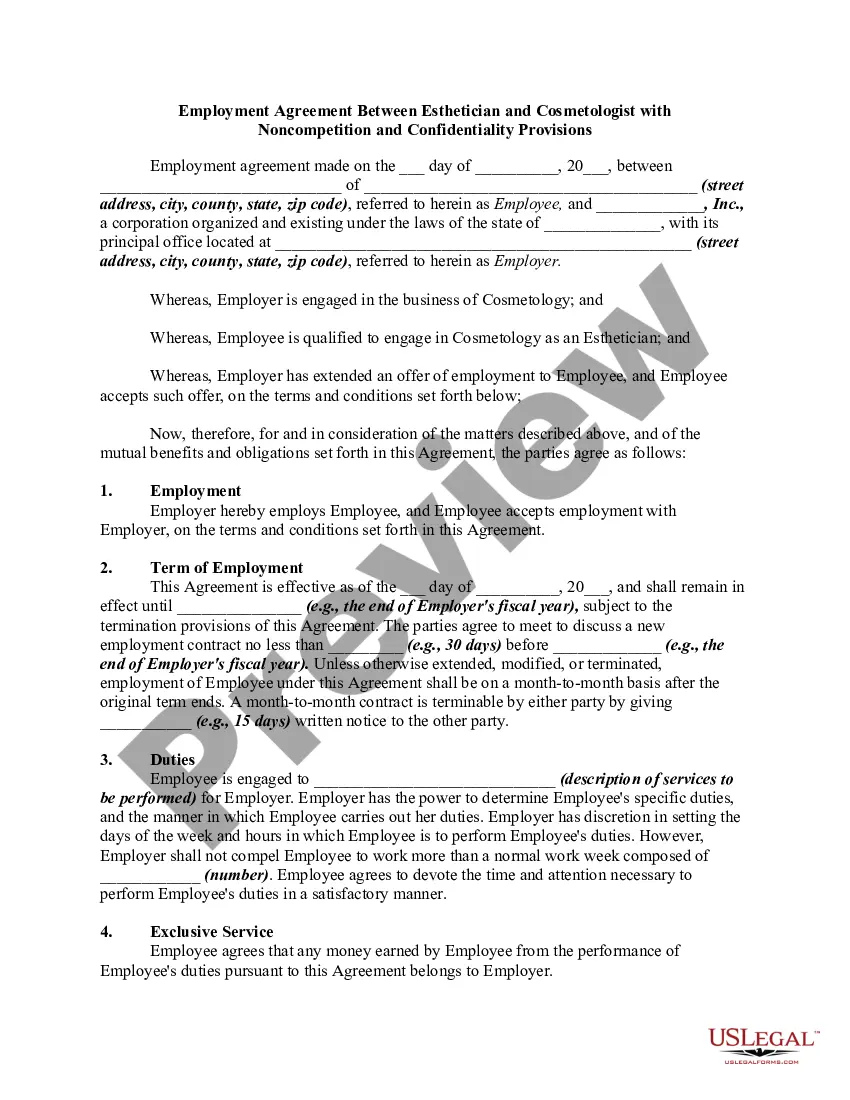
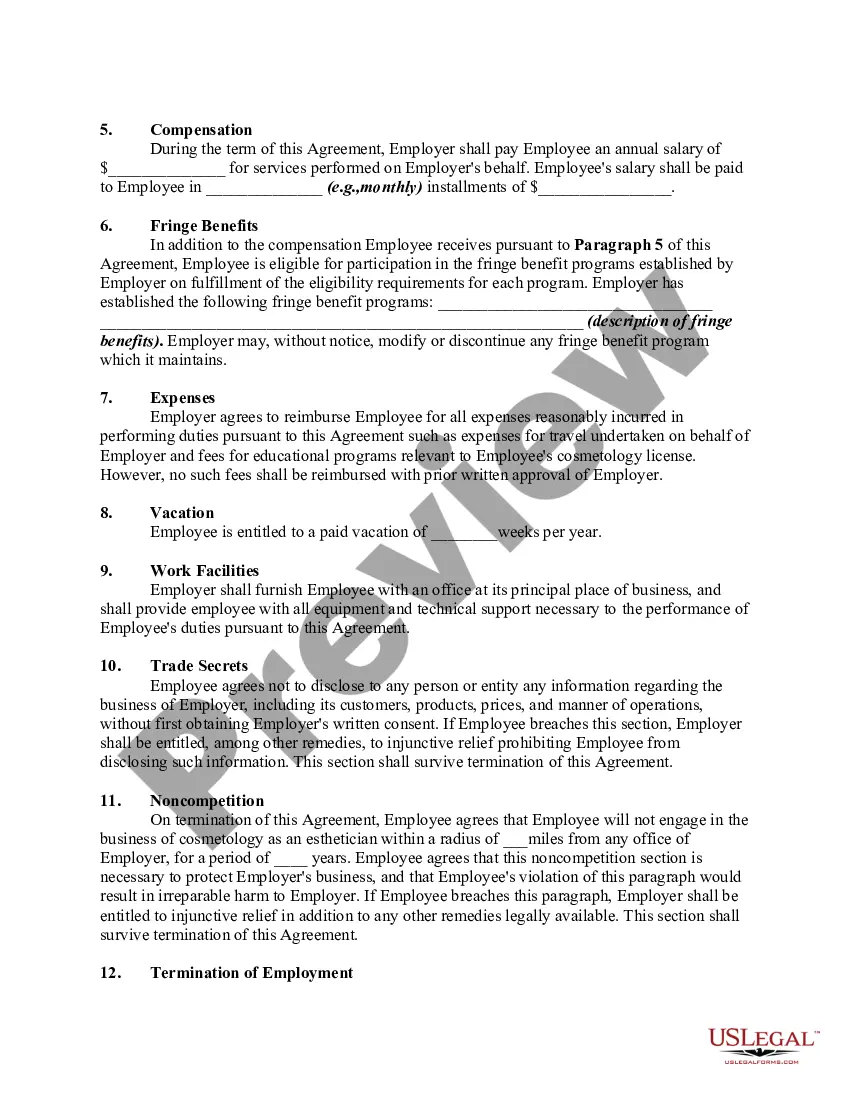
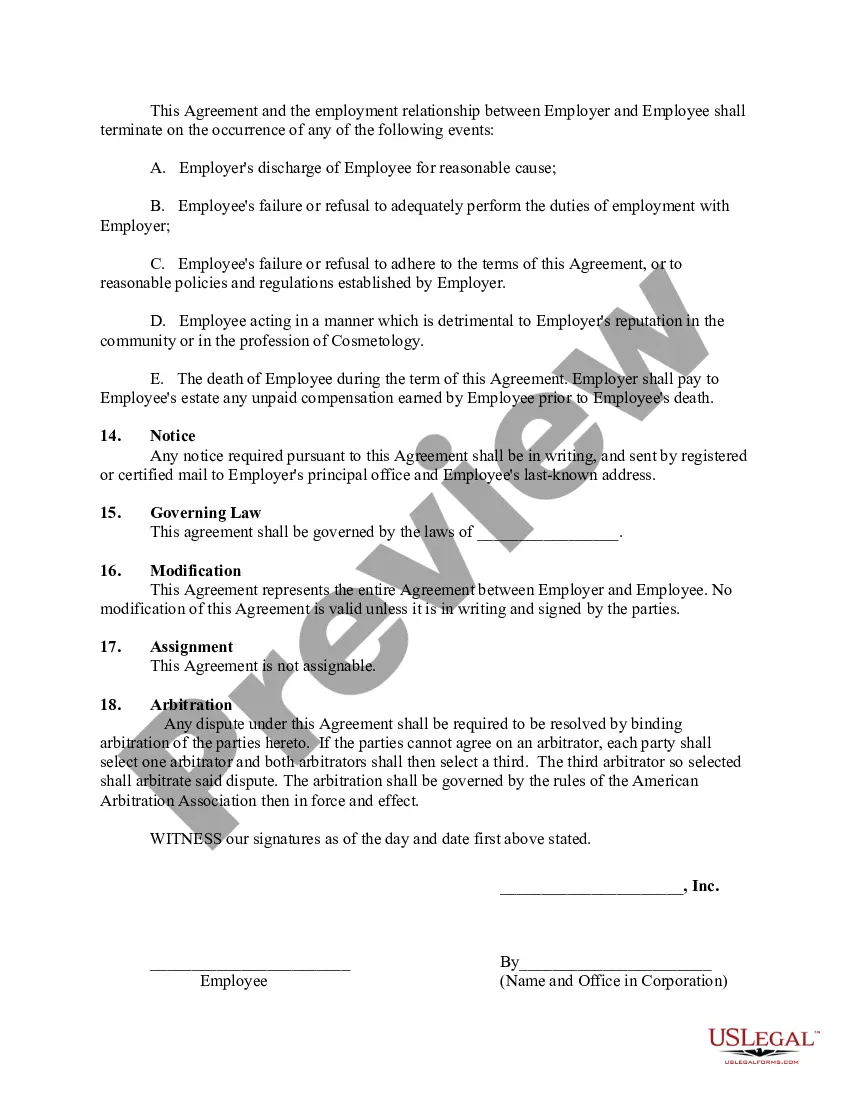
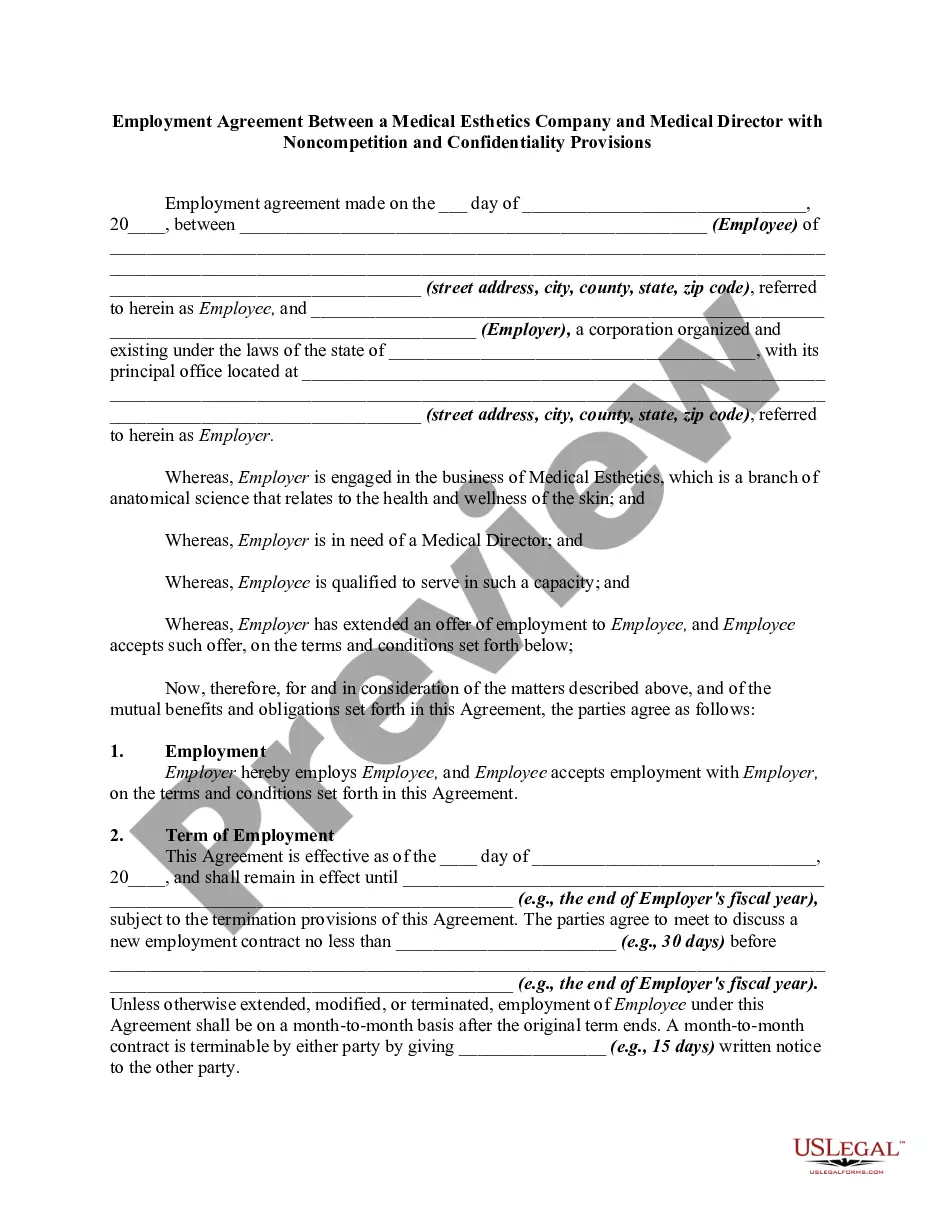
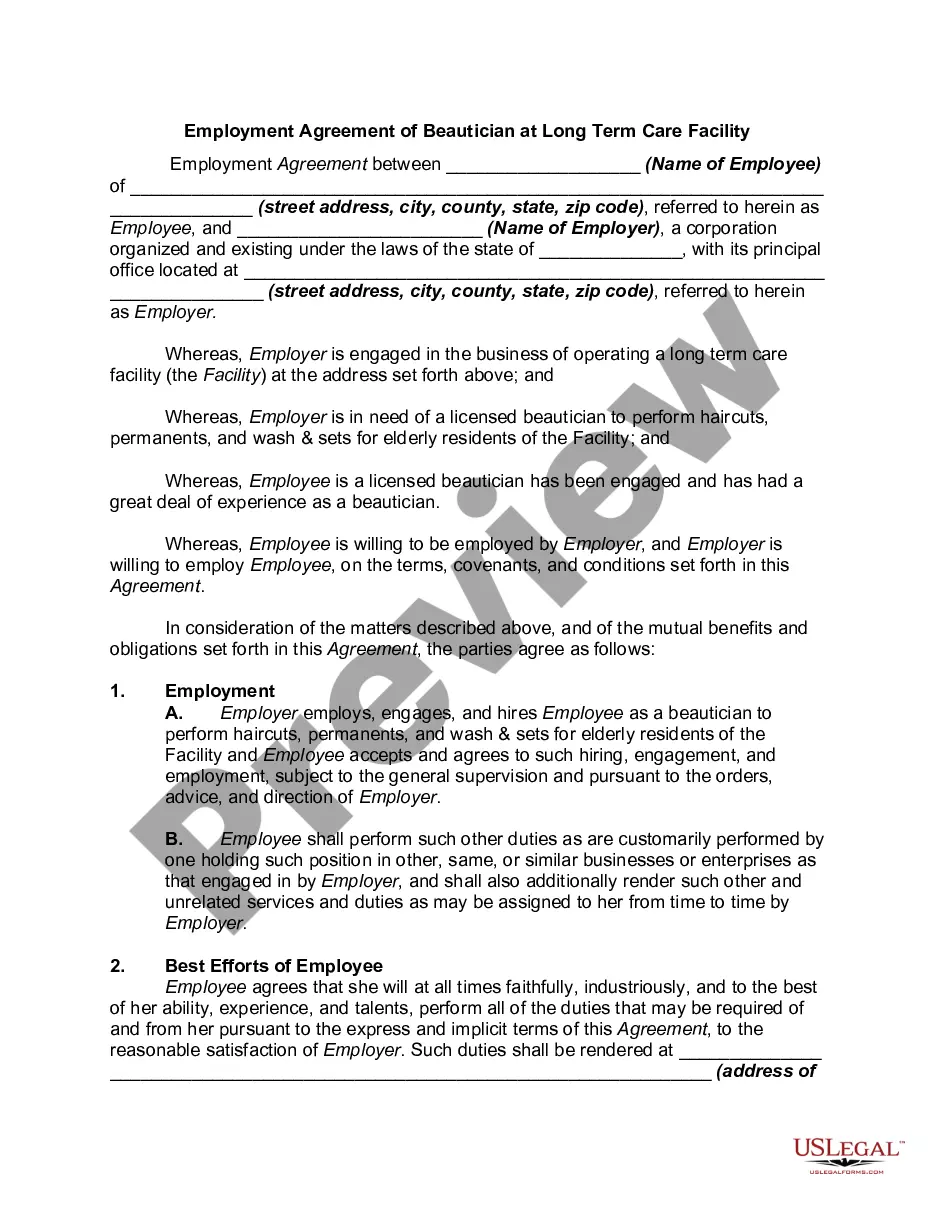
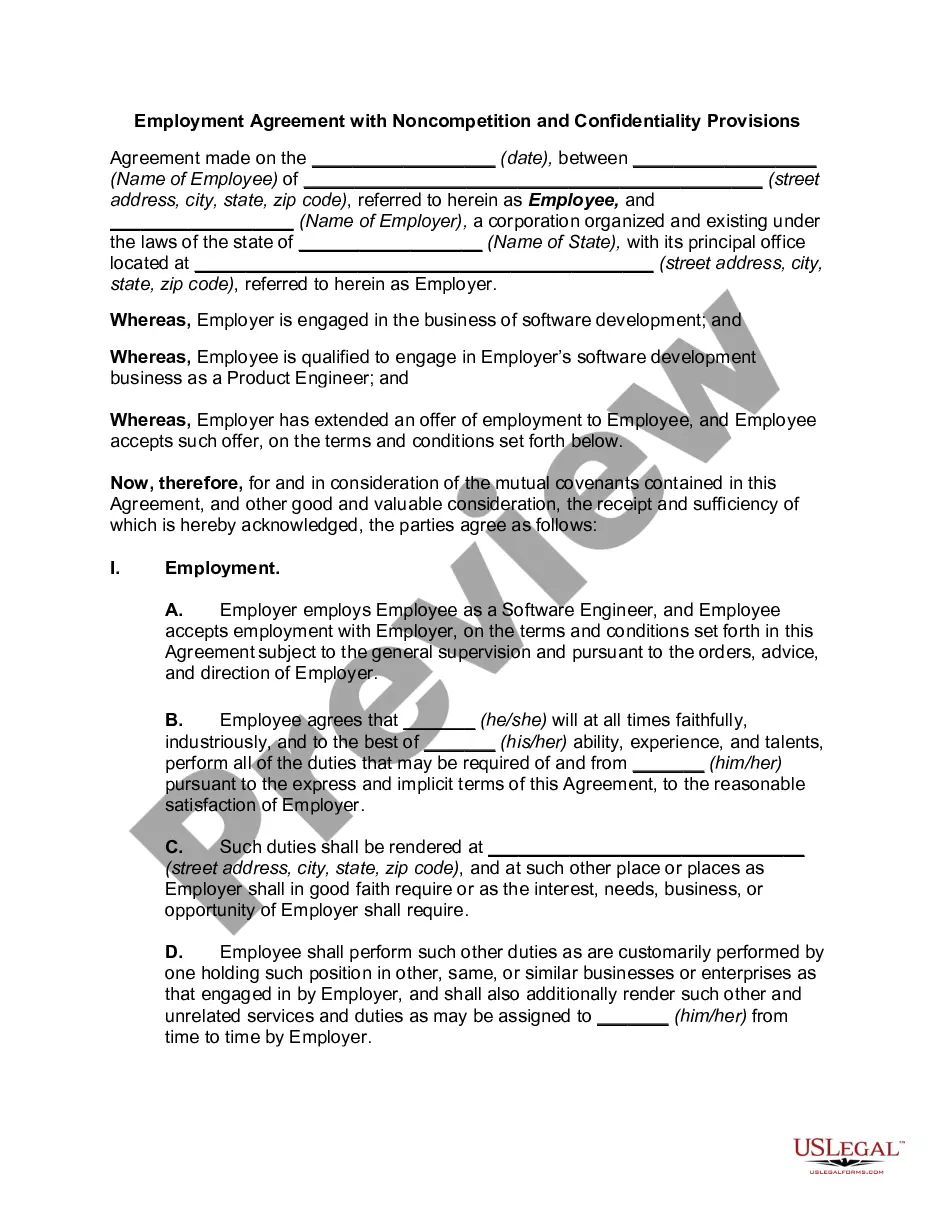
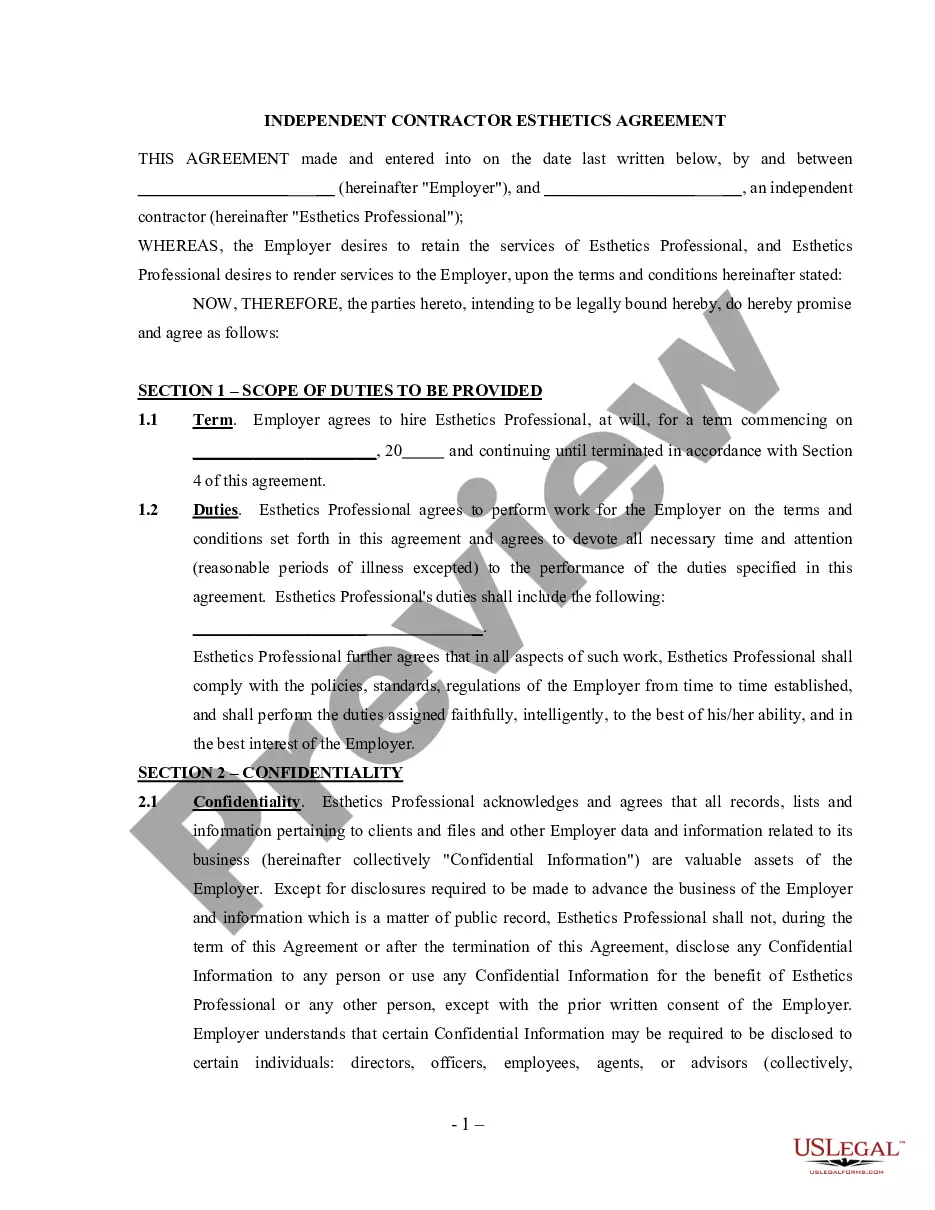
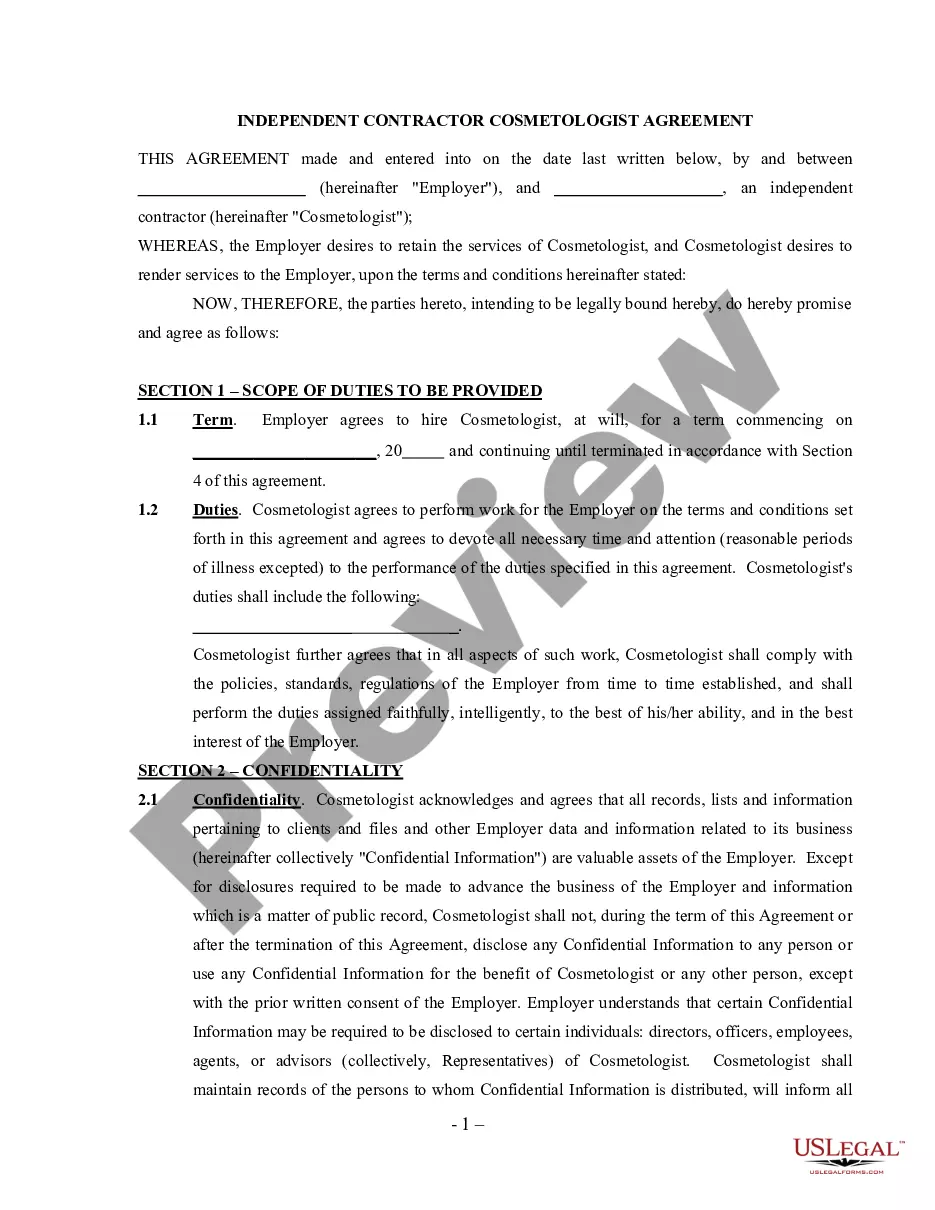
The following form is an employment agreement between a cosmetolotist and an esthetician. This agreement also contains a provision to prevent competition by the employee and confidential information acquired by the employee during her employment.
Free preview
How to fill out Employment Agreement Between Esthetician And Cosmetologist With Noncompetition And Confidentiality Provisions?
US Legal Forms - one of the largest collections of legal forms in the United States - offers a wide range of legal document templates that you can download or create.
By using the website, you can access thousands of forms for business and personal purposes, organized by categories, states, or keywords.
You can quickly obtain the latest versions of forms such as the South Dakota Employment Agreement Between Esthetician and Cosmetologist with Noncompetition and Confidentiality Provisions.
Review the form's content by clicking the button.
Read the form description to confirm that you have selected the right form.
- If you already have a subscription, Log In and download the South Dakota Employment Agreement Between Esthetician and Cosmetologist with Noncompetition and Confidentiality Provisions from the US Legal Forms catalog.
- The Download button will appear on every document you view.
- You can access all previously obtained forms in the My documents section of your account.
- To use US Legal Forms for the first time, here are some simple steps to help you get started.
- Make sure you have selected the correct form for your city/state.
Form popularity
FAQ
NCA stands for Non-Compete Agreement, while NSA stands for Non-Disclosure Agreement. An NCA restricts an individual's ability to engage in similar business activities post-employment, serving to protect business interests. In contrast, an NSA focuses on preventing the sharing of confidential information. Understanding these differences is essential, especially when drafting a South Dakota Employment Agreement Between Esthetician and Cosmetologist with Noncompetition and Confidentiality Provisions. Utilizing resources from US Legal Forms can assist you in drafting clear and effective agreements.
A confidentiality agreement is a legal contract that establishes a confidential relationship between parties, ensuring sensitive information remains private. Within a South Dakota Employment Agreement Between Esthetician and Cosmetologist with Noncompetition and Confidentiality Provisions, this agreement protects trade secrets and client information from unauthorized disclosure. It helps maintain trust and integrity in professional relationships. At US Legal Forms, you can find customizable templates to create an effective confidentiality agreement tailored to your needs.
compete is a legal agreement that prevents an individual from engaging in business activities that compete with their employer after leaving their job. This is often included in a South Dakota Employment Agreement Between Esthetician and Cosmetologist with Noncompetition and Confidentiality Provisions to protect business interests. The purpose of a noncompete is to safeguard confidential information and the market advantages of the employer. Having a welldrafted agreement from US Legal Forms can clarify your rights and obligations under noncompete clauses.
A noncompete agreement may be voided if it is overly broad in its terms, lacks consideration, or violates public policy. In the context of a South Dakota Employment Agreement Between Esthetician and Cosmetologist with Noncompetition and Confidentiality Provisions, ensuring the agreement is reasonable in scope and duration is crucial. If the agreement restricts an individual excessively or lacks a legitimate business interest, a court might choose to invalidate it. At US Legal Forms, we provide templates to help you create a compliant agreement.
As of now, states like California, North Dakota, and Montana have banned non-compete agreements outright. Other states may have restrictions or limitations on their enforcement. For professionals in South Dakota, understanding these regulations can aid in negotiating South Dakota Employment Agreements Between Esthetician and Cosmetologist with Noncompetition and Confidentiality Provisions that best serve their interests.
In South Dakota, the statute of limitations on most debts is six years, meaning creditors have up to six years to pursue legal action. This timeframe is important for both employers and employees in the beauty sector to understand, particularly when drafting employment agreements that may involve financial obligations. By knowing these limits, parties can better navigate their South Dakota Employment Agreement Between Esthetician and Cosmetologist with Noncompetition and Confidentiality Provisions.
compete agreement prevents employees from working with competitors for a specific time after leaving a job. An employment confidentiality agreement protects sensitive company information from being disclosed. Both agreements are important for creating robust South Dakota Employment Agreements, especially for estheticians and cosmetologists who handle proprietary techniques and customer information.
Codified law 26-8A-8 pertains to the protection of minors in South Dakota. While it primarily focuses on youth matters, understanding this law can be beneficial for professionals in the beauty industry who may work with young clients. Integrating knowledge of laws like this can enhance the South Dakota Employment Agreement Between Esthetician and Cosmetologist with Noncompetition and Confidentiality Provisions.
Codified law 53-9-8 in South Dakota contains provisions regarding non-compete agreements in employment situations. This law sets limits on how long and in what geographical areas such agreements can be enforced. For estheticians and cosmetologists, it is important to craft South Dakota Employment Agreements that respect this law while protecting their professional interests.
Senate Bill 189 in South Dakota is legislation that impacts employment agreements, particularly around non-compete and confidentiality clauses. This bill plays a crucial role in defining the rights and limitations of such agreements in the workplace. For professionals including estheticians and cosmetologists, understanding this bill is vital for creating compliant South Dakota Employment Agreements.