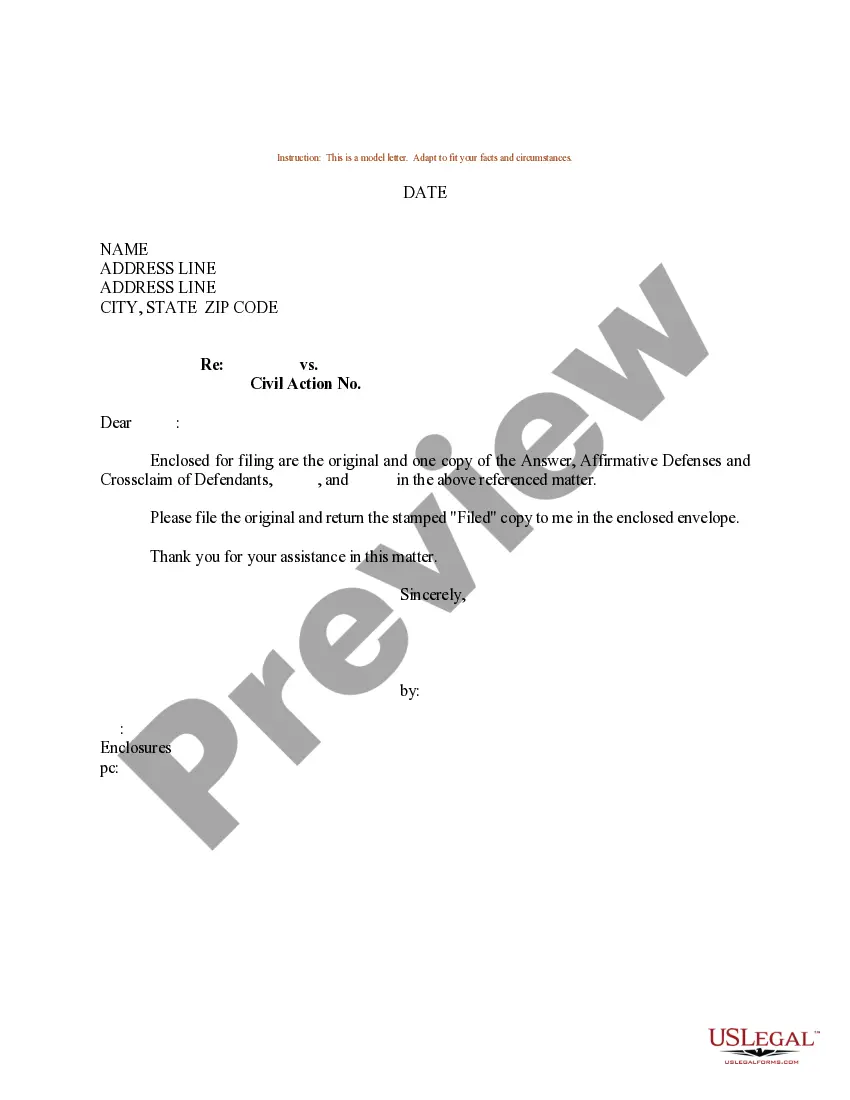
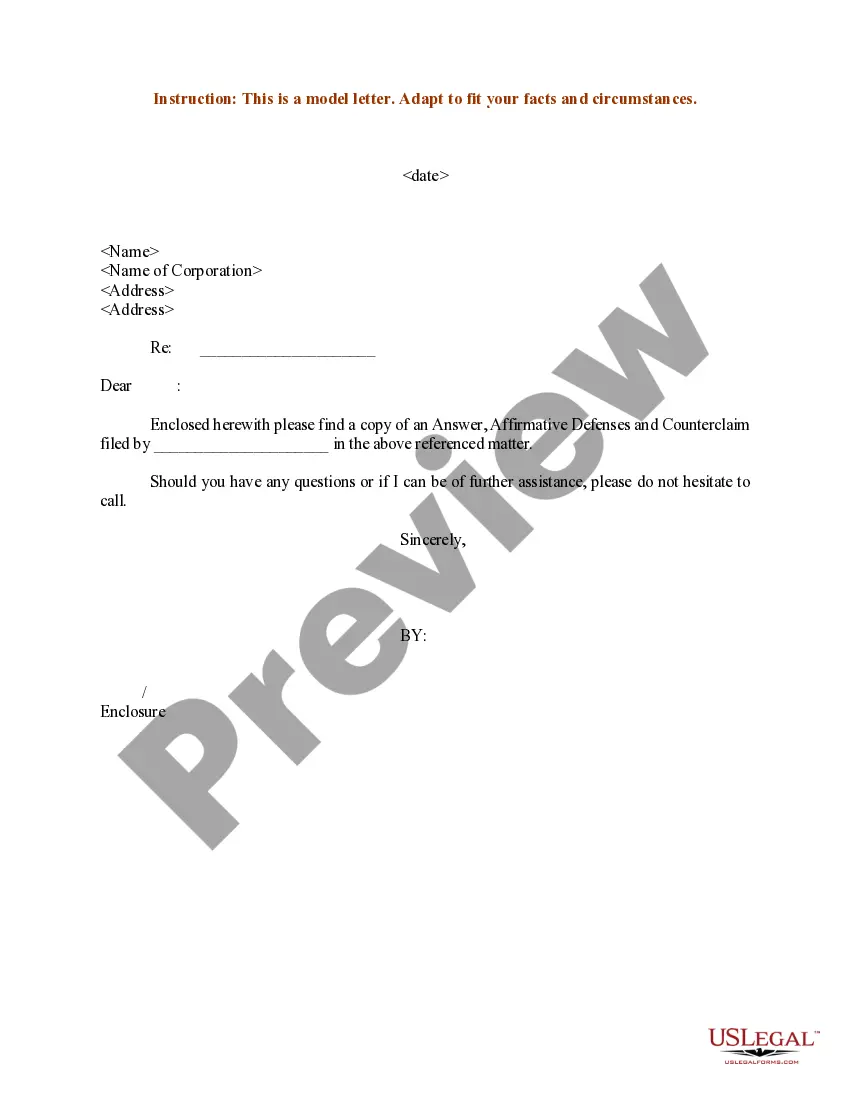
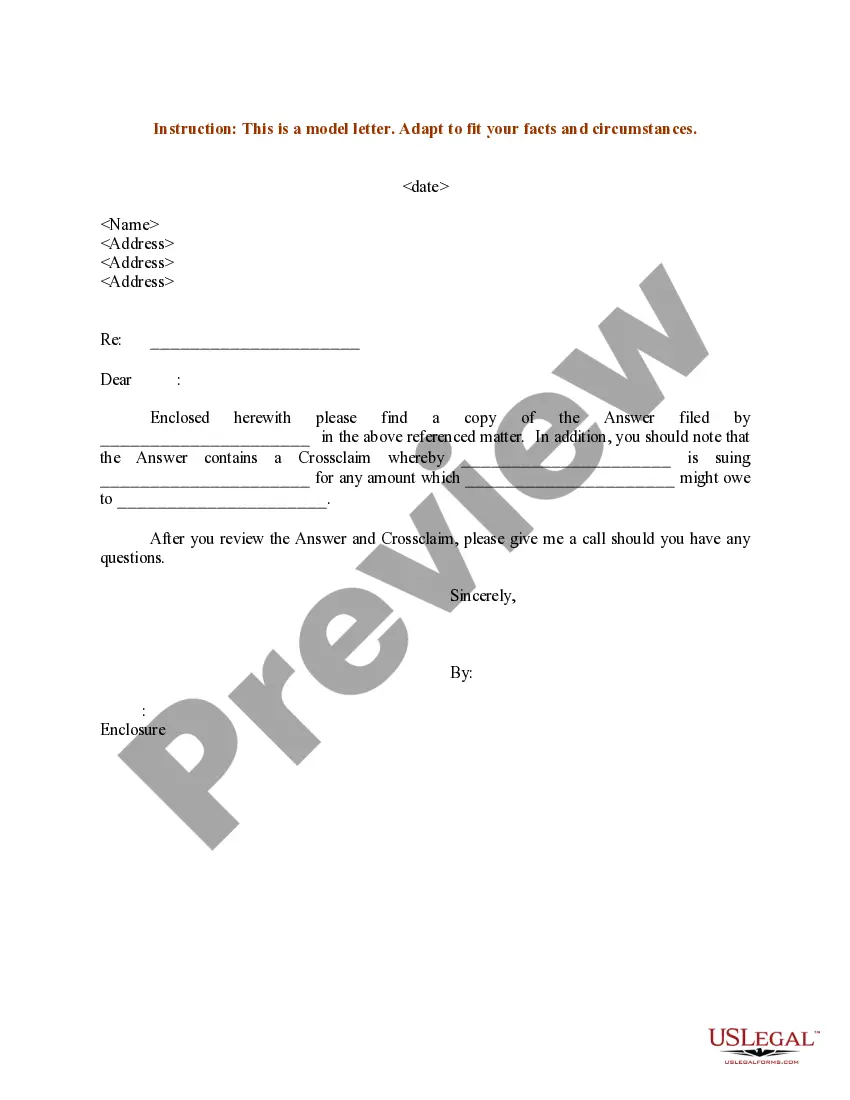
South Dakota Sample Letter for Copy of Answer, Affirmative Defenses, and Crossclaim
Description
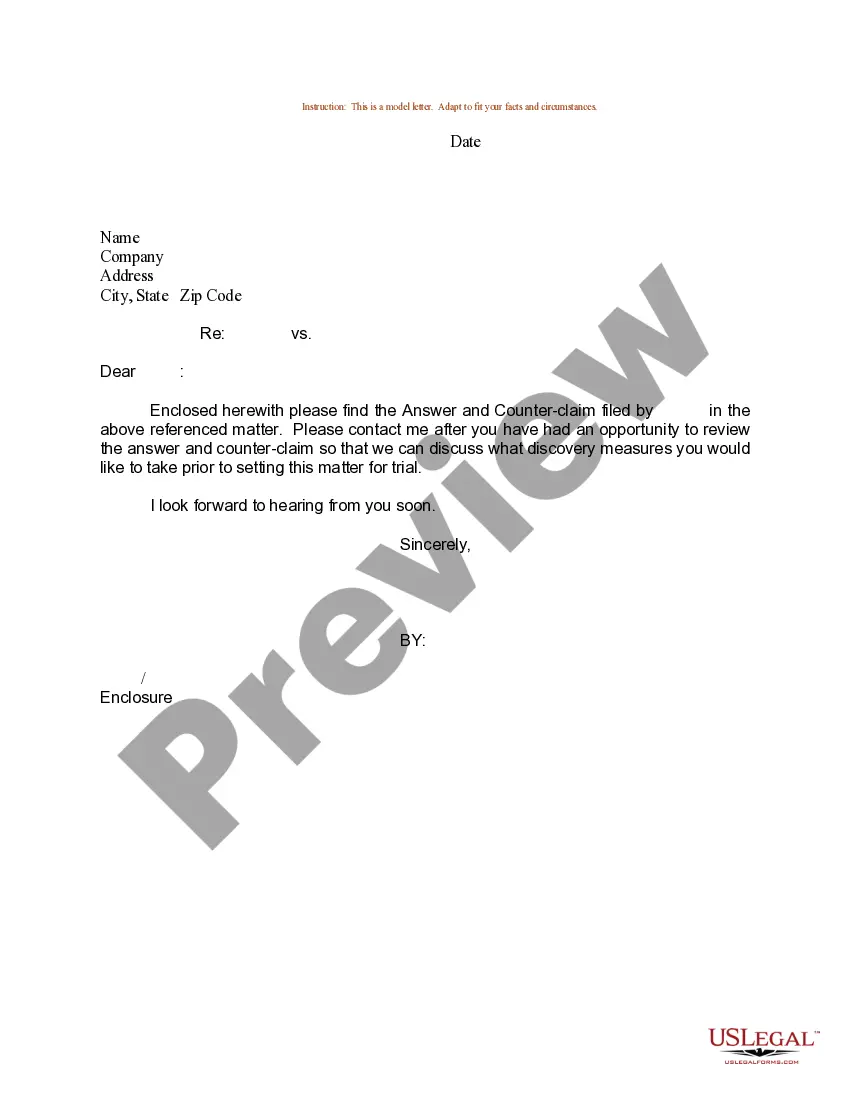
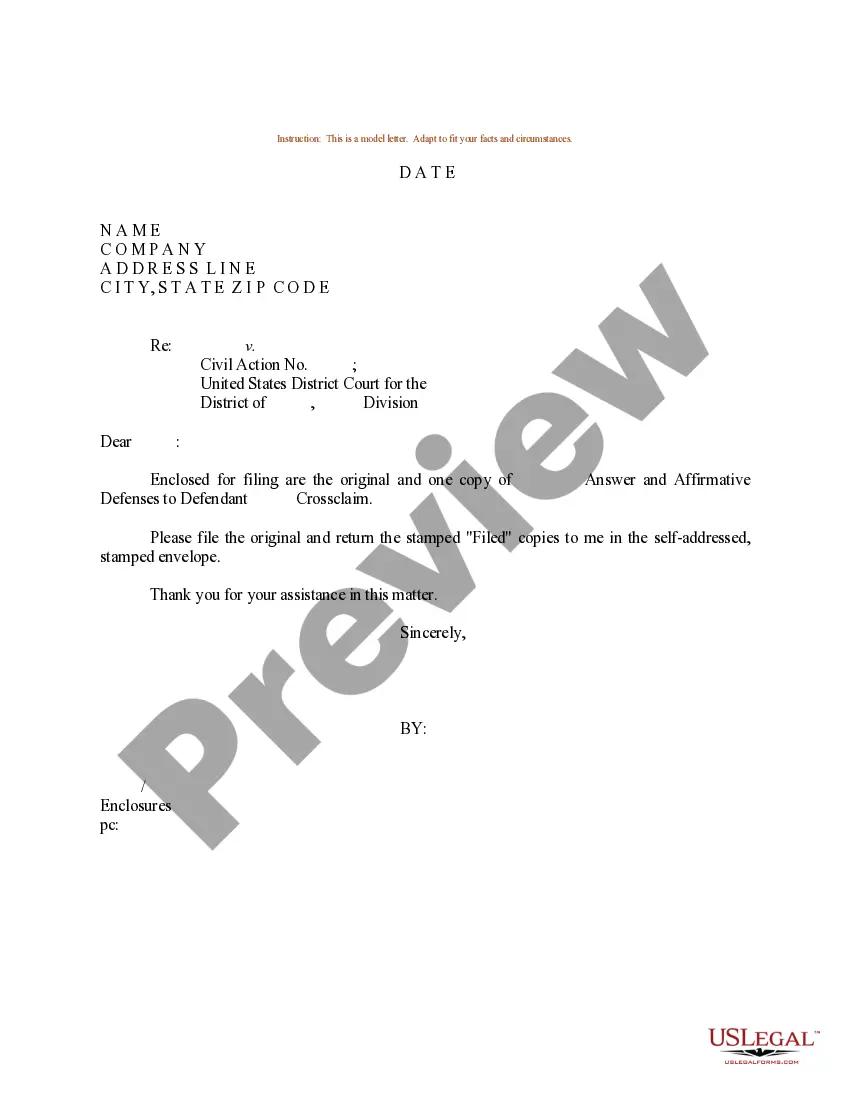
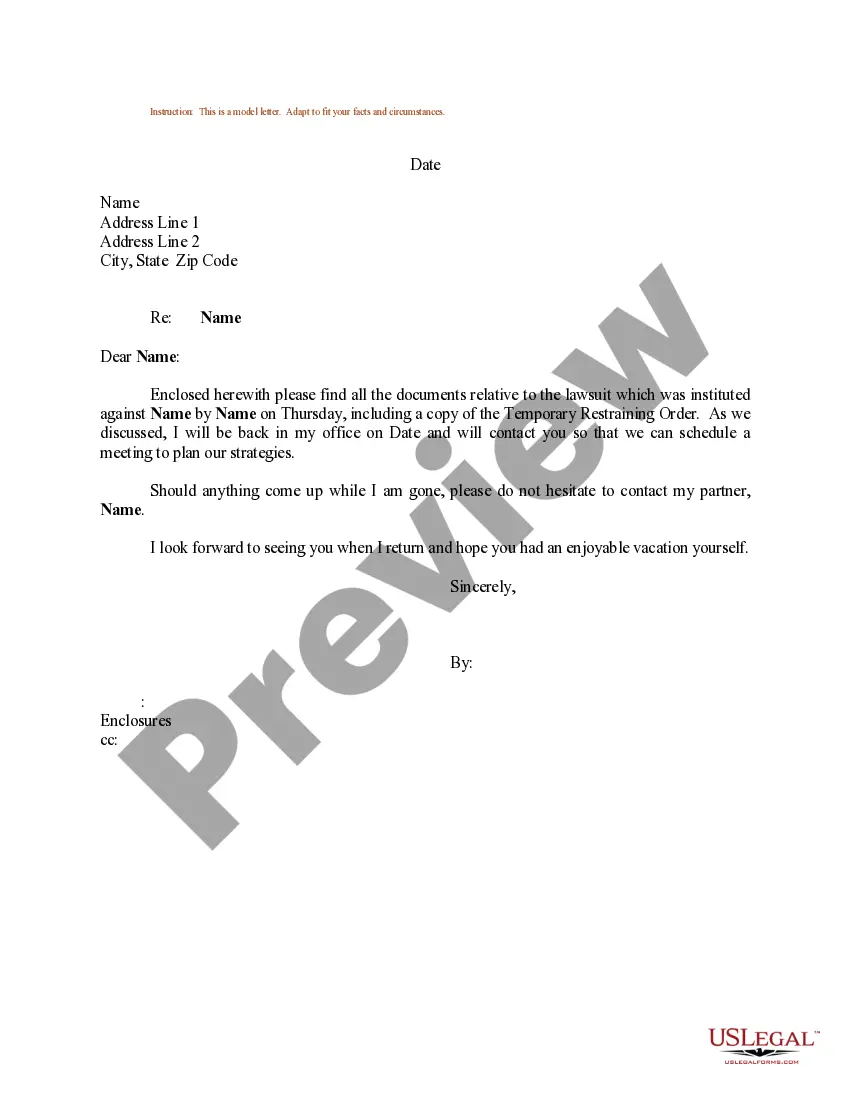
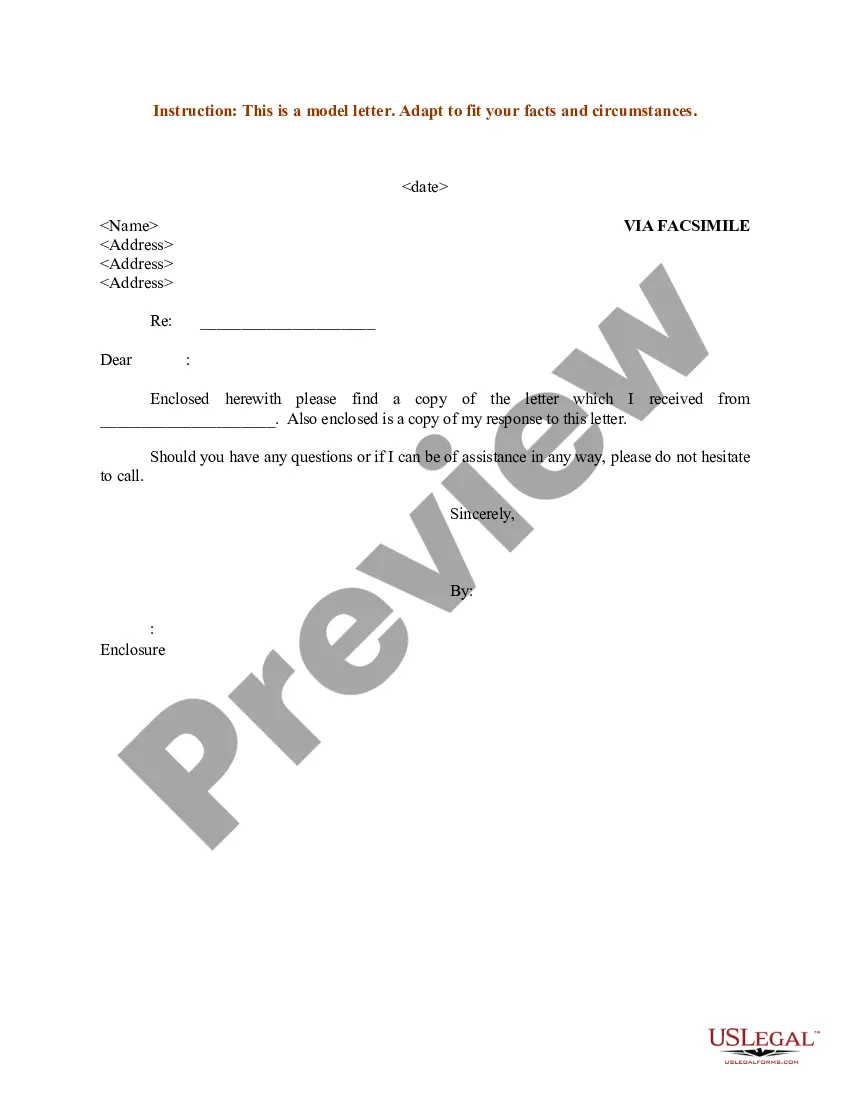



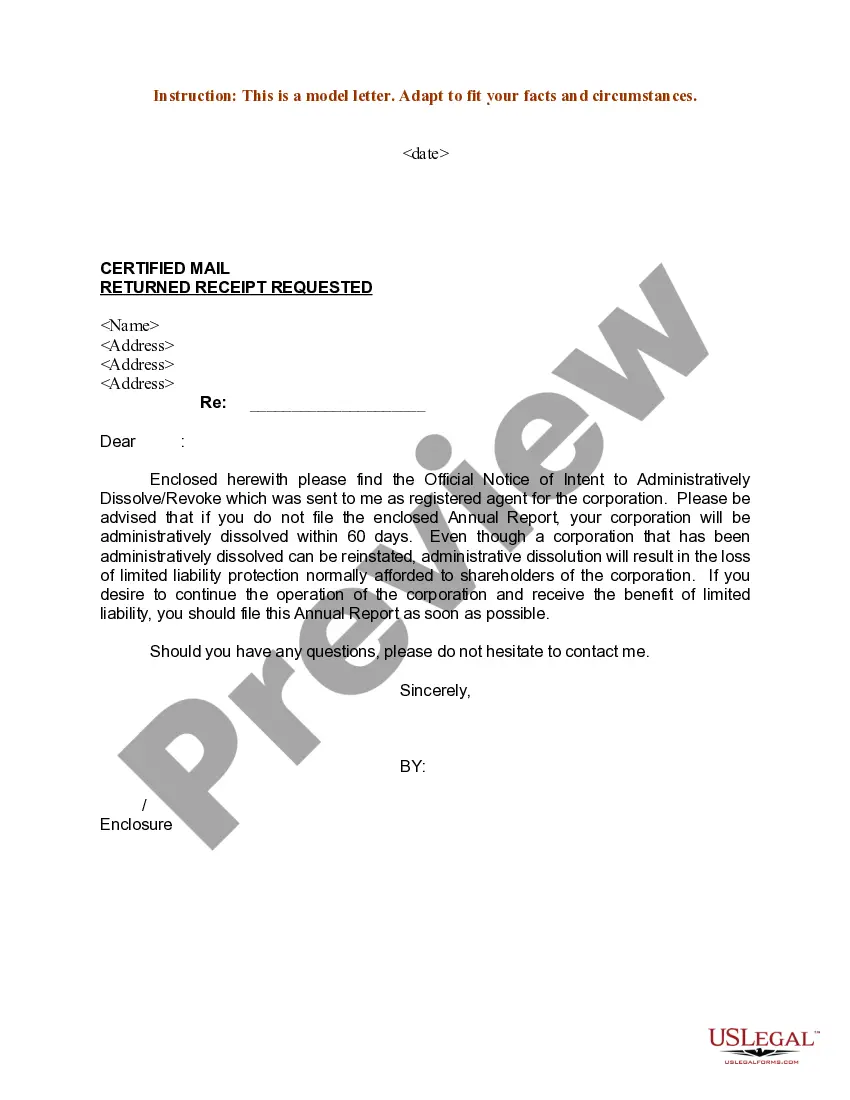

How to fill out Sample Letter For Copy Of Answer, Affirmative Defenses, And Crossclaim?
US Legal Forms - one of the largest collections of legal documents in the United States - offers a variety of legal form templates that you can download or print. Through the website, you can find thousands of forms for business and personal purposes, organized by categories, states, or keywords.
You can discover the latest forms such as the South Dakota Sample Letter for Copy of Answer, Affirmative Defenses, and Crossclaim in just a few minutes. If you have a monthly subscription, Log In and download the South Dakota Sample Letter for Copy of Answer, Affirmative Defenses, and Crossclaim from the US Legal Forms library. The Download option will appear on each form you view. You have access to all previously acquired forms in the My documents section of your account.
If you are using US Legal Forms for the first time, here are straightforward instructions to help you get started: Make sure you have selected the correct form for your city/region. Click on the Review option to verify the form's content. Check the form description to ensure that you have chosen the right form. If the form does not meet your needs, use the Search area at the top of the screen to find one that does. If you are satisfied with the form, confirm your selection by clicking on the Purchase now button. Then, choose the pricing plan you prefer and provide your information to register for the account. Process the transaction. Use your credit card or PayPal account to complete the transaction. Select the format and download the form to your device. Make changes. Fill out, edit, print, and sign the downloaded South Dakota Sample Letter for Copy of Answer, Affirmative Defenses, and Crossclaim.
- Every template you added to your account has no expiration date and belongs to you permanently.
- So, if you want to download or print another copy, just go to the My documents section and click on the form you need.
- Access the South Dakota Sample Letter for Copy of Answer, Affirmative Defenses, and Crossclaim with US Legal Forms, the most extensive library of legal document templates.
- Utilize a vast array of professional and state-specific templates that meet your business or personal needs and requirements.
- Take advantage of the resources available to streamline your legal documentation process.
- Ensure you stay compliant with the latest legal standards and practices.
Form popularity
FAQ
So, unlike a negative defense, an ?affirmative defense is one that admits the allegations in the complaint, but seeks to avoid liability, in whole or in part, by new allegations of excuse, justification, or other negating matter.?
What is an affirmative defense. An affirmative defense is a defense that brings up new facts or issues not in the Complaint that, if true, would be a legal reason why the plaintiff should not win, or should win less than they're asking for. It is not a denial that you did what the plaintiff says you did.
Affirmative defense?Examples On [Date], after making the contract and the alleged breach, and before this action was commenced, defendant paid to the plaintiff the sum of [specify amount], which was accepted by the plaintiff in full satisfaction and discharge of the damages claimed in the petition.
In the vast majority of cases, the defendant/respondent bears the burden of proof regarding the claimed affirmative defense.
When writing a customer complaint response, consider following these steps: Read the entire complaint. ... Apologize for any inconvenience. ... Explain what may have caused the issue. ... Propose an actionable, detailed solution. ... Explain how you can improve the customer's experience in the future. ... Offer an incentive.
A good faith defense is an affirmative defense to Section 1983 liability that turns on whether the defendant knew or should have known of a statute's constitutional infirmity.
A crossclaim seeks affirmative relief against a co-party in the lawsuit such as a co- defendant. Crossclaims are generally permissive in that they may be brought in the same suit if they arise out of the same transaction or occurrence, but some state courts allow cross claims to be brought in a sep- arate suit.
A common example is a breach of contract action, where a prospective plaintiff was damaged by another party's failure to fulfill its contractual obligation(s). In such a circumstance, a prospective plaintiff has six years from the breach of contract to timely bring his or her action.
Self-defense, entrapment, insanity, necessity, and respondeat superior are some examples of affirmative defenses. Under the Federal Rules of Civil Procedure Rule 56, any party may make a motion for summary judgment on an affirmative defense.
Self-defense, entrapment, insanity, necessity, and respondeat superior are some examples of affirmative defenses. Under the Federal Rules of Civil Procedure Rule 56, any party may make a motion for summary judgment on an affirmative defense.