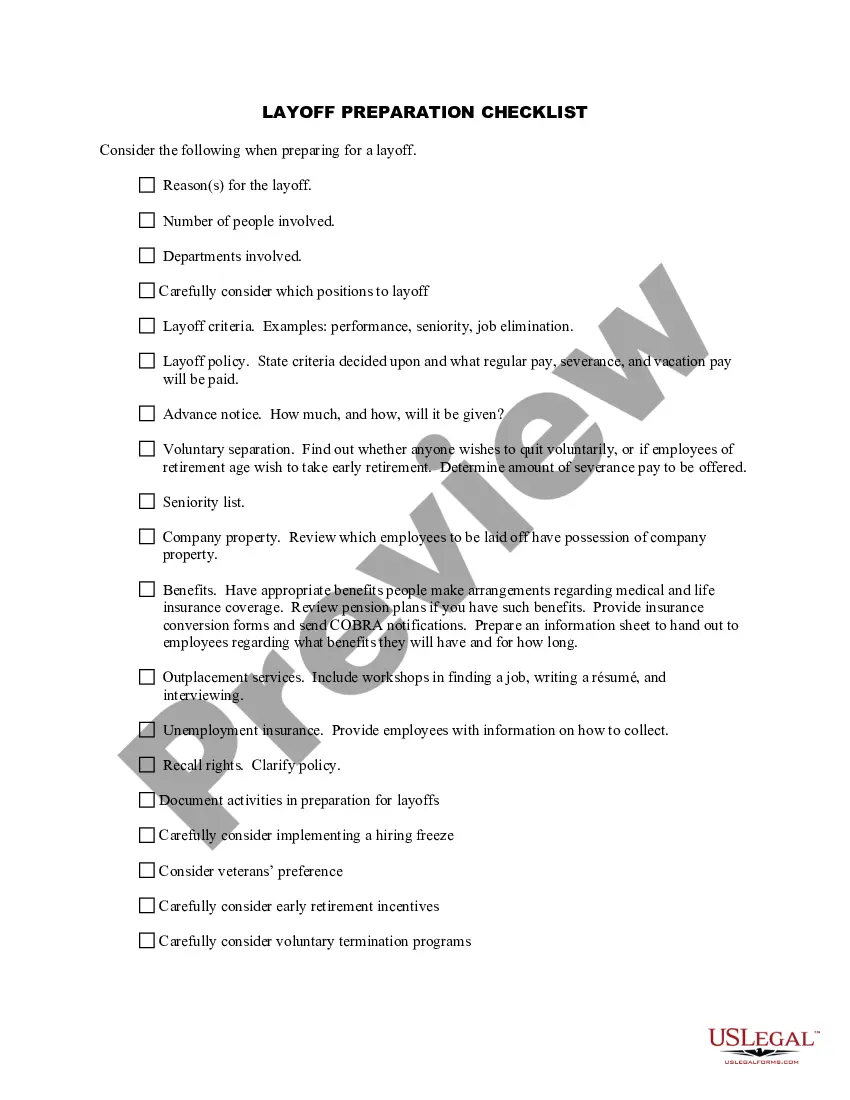
South Dakota Layoff Preparation Checklist
Description
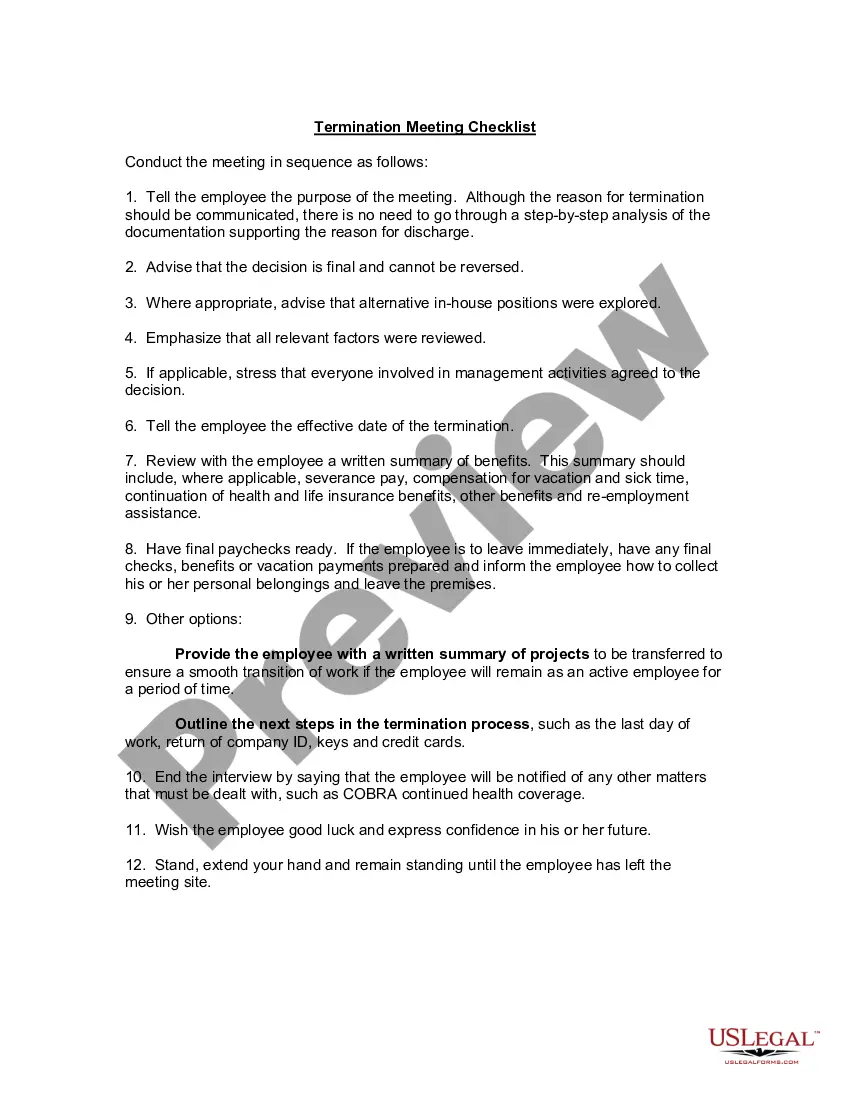
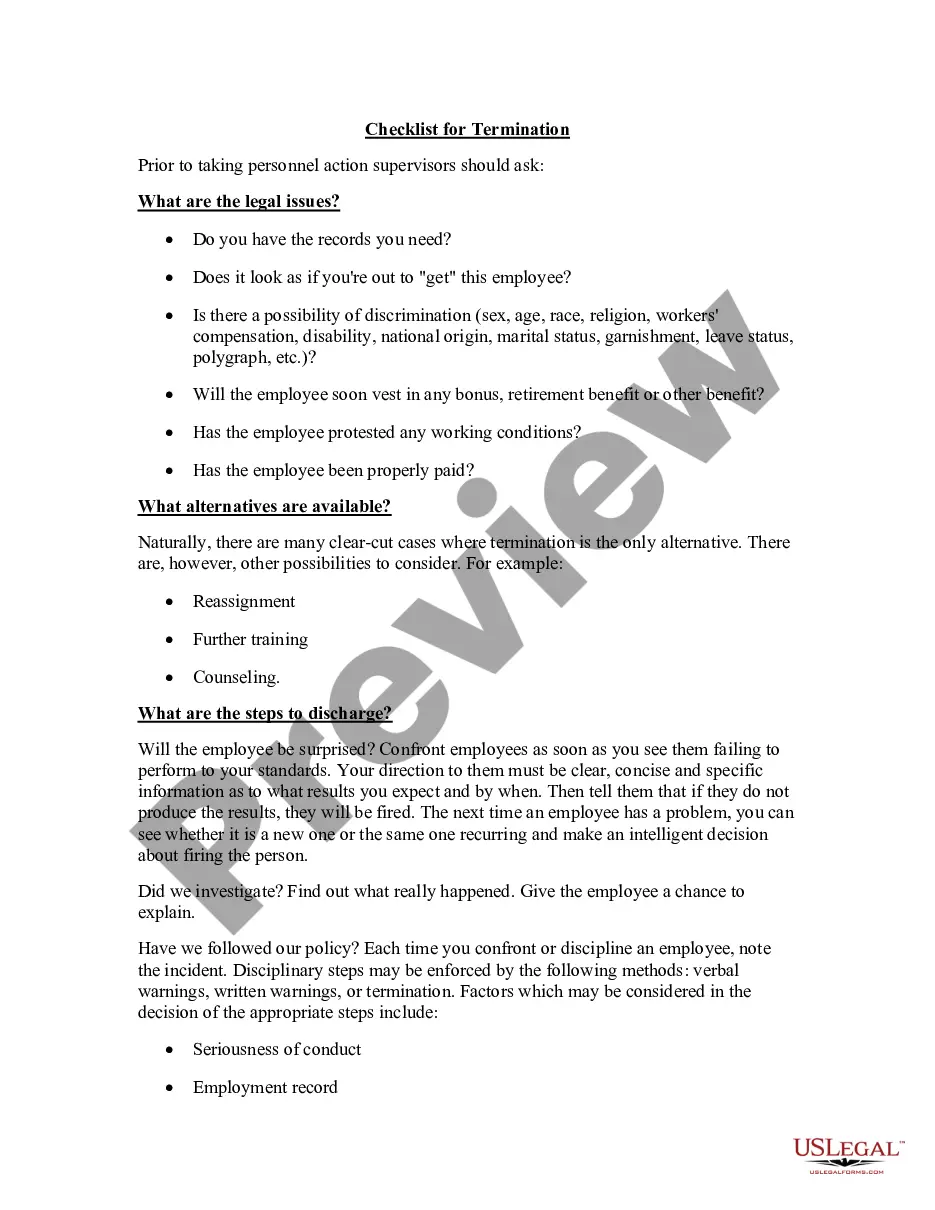
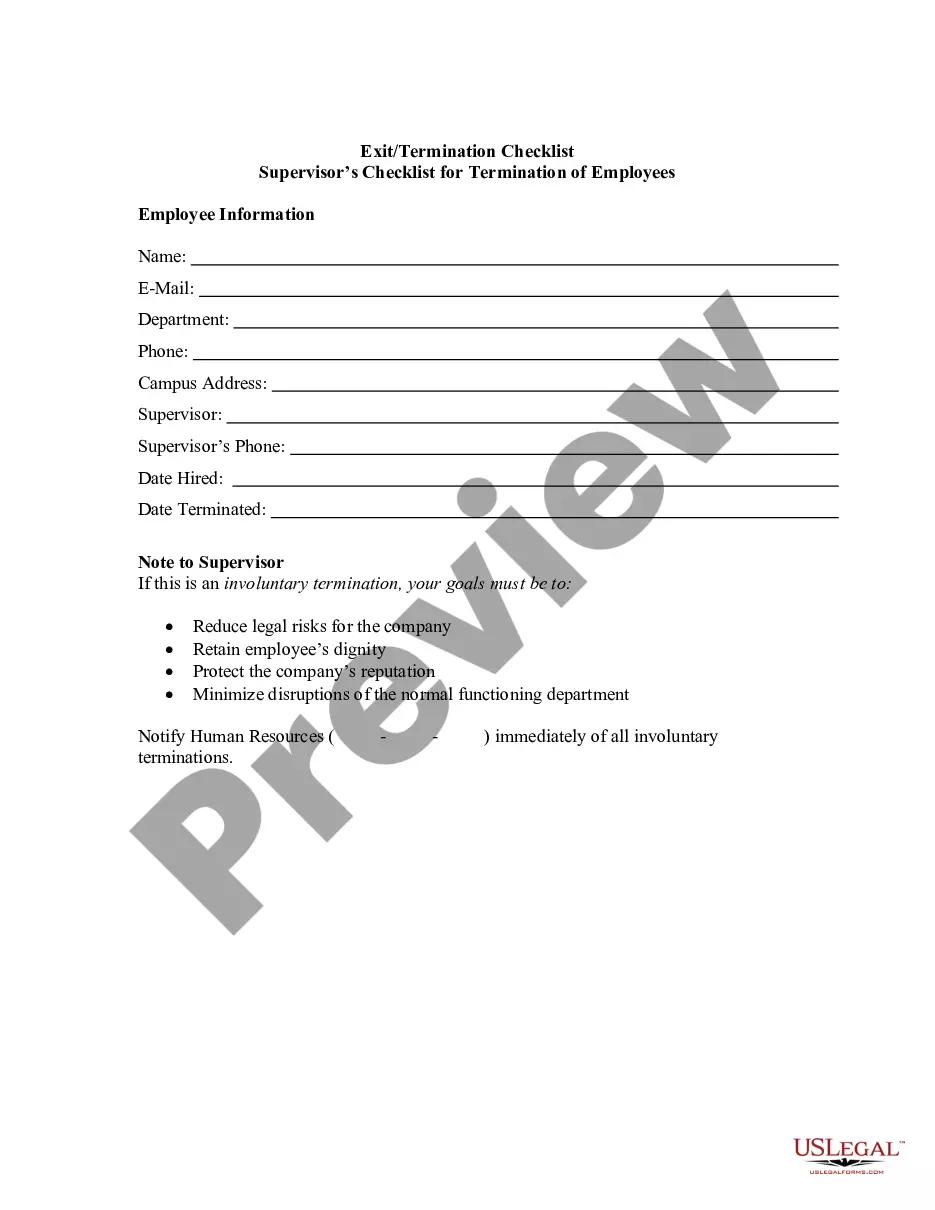
Get your form ready online
Our built-in tools help you complete, sign, share, and store your documents in one place.
Make edits, fill in missing information, and update formatting in US Legal Forms—just like you would in MS Word.
Download a copy, print it, send it by email, or mail it via USPS—whatever works best for your next step.
Sign and collect signatures with our SignNow integration. Send to multiple recipients, set reminders, and more. Go Premium to unlock E-Sign.
If this form requires notarization, complete it online through a secure video call—no need to meet a notary in person or wait for an appointment.
We protect your documents and personal data by following strict security and privacy standards.

Make edits, fill in missing information, and update formatting in US Legal Forms—just like you would in MS Word.

Download a copy, print it, send it by email, or mail it via USPS—whatever works best for your next step.

Sign and collect signatures with our SignNow integration. Send to multiple recipients, set reminders, and more. Go Premium to unlock E-Sign.

If this form requires notarization, complete it online through a secure video call—no need to meet a notary in person or wait for an appointment.

We protect your documents and personal data by following strict security and privacy standards.
Looking for another form?




How to fill out Layoff Preparation Checklist?
Are you currently in a circumstance where you frequently require documents for either business or personal purposes.
There are numerous legal document templates available online, but finding reliable ones is challenging.
US Legal Forms provides a vast array of document templates, including the South Dakota Layoff Preparation Checklist, designed to comply with state and federal regulations.
Once you find the correct form, click on Buy now.
Choose your preferred pricing plan, fill in the necessary information to create your account, and pay for the order using your PayPal or credit card.
- If you are already familiar with the US Legal Forms website and possess an account, simply Log In.
- Then, you can download the South Dakota Layoff Preparation Checklist template.
- If you do not have an account and wish to start using US Legal Forms, follow these steps.
- Select the form you need and ensure it is for the correct city/county.
- Utilize the Review button to examine the form.
- Check the summary to confirm that you have chosen the right form.
- If the form does not meet your needs, use the Research field to find the document that fits your requirements.
Form popularity
FAQ
Laying off employees: 6 ways to ease the transitionEstablish your game plan.Handle layoff conversations with care.Identify employees needed for a transitional period.Establish incentives for transitional staff.Give flexibility to transitional staff.Provide outplacement assistance and support.
8 hours of work per day, 40 hours per week are permitted when school is off. During a school week, 4 hours of work are permitted per day and up to 20 hours per week. For Minors Ages 16 and 17: South Dakota has no restrictions on maximum working hours for minors aged 16 and 17.
Laying off employees: 6 ways to ease the transitionEstablish your game plan.Handle layoff conversations with care.Identify employees needed for a transitional period.Establish incentives for transitional staff.Give flexibility to transitional staff.Provide outplacement assistance and support.
Full Time in California According to the California Department of Industrial Relations, working 40 hours per week qualifies employees as full-time workers.
Being laid off means you have lost your job due to changes that the company has decided to make on its end. The difference between being laid off and being fired is that if you are fired, the company considers that your actions have caused the termination. If you are laid off, you didn't necessarily do anything wrong.
The most common reason for being laid off is the company needing to cut costs in some way. This need could stem from debts that have to be paid off or lack of profits, as a result of a drop in sales, or loss of a line of credit.
A layoff describes the act of an employer suspending or terminating a worker, either temporarily or permanently, for reasons other than an employee's actual performance. A layoff is not the same thing as an outright firing, which may result from worker inefficiency, malfeasance, or breach of duty.
Short answer: Full-time employment is usually considered between 30-40 hours a week, while part-time employment is usually less than 30 hours a week.
A layoff describes the act of an employer suspending or terminating a worker, either temporarily or permanently, for reasons other than an employee's actual performance. A layoff is not the same thing as an outright firing, which may result from worker inefficiency, malfeasance, or breach of duty.
South Dakota does not have any required number of hours to be full-time. So, it is up to each company to set how many hours an employee must work to be part-time or full-time. Employees should contact their supervisor to find out if they are considered full-time or part-time at their job.