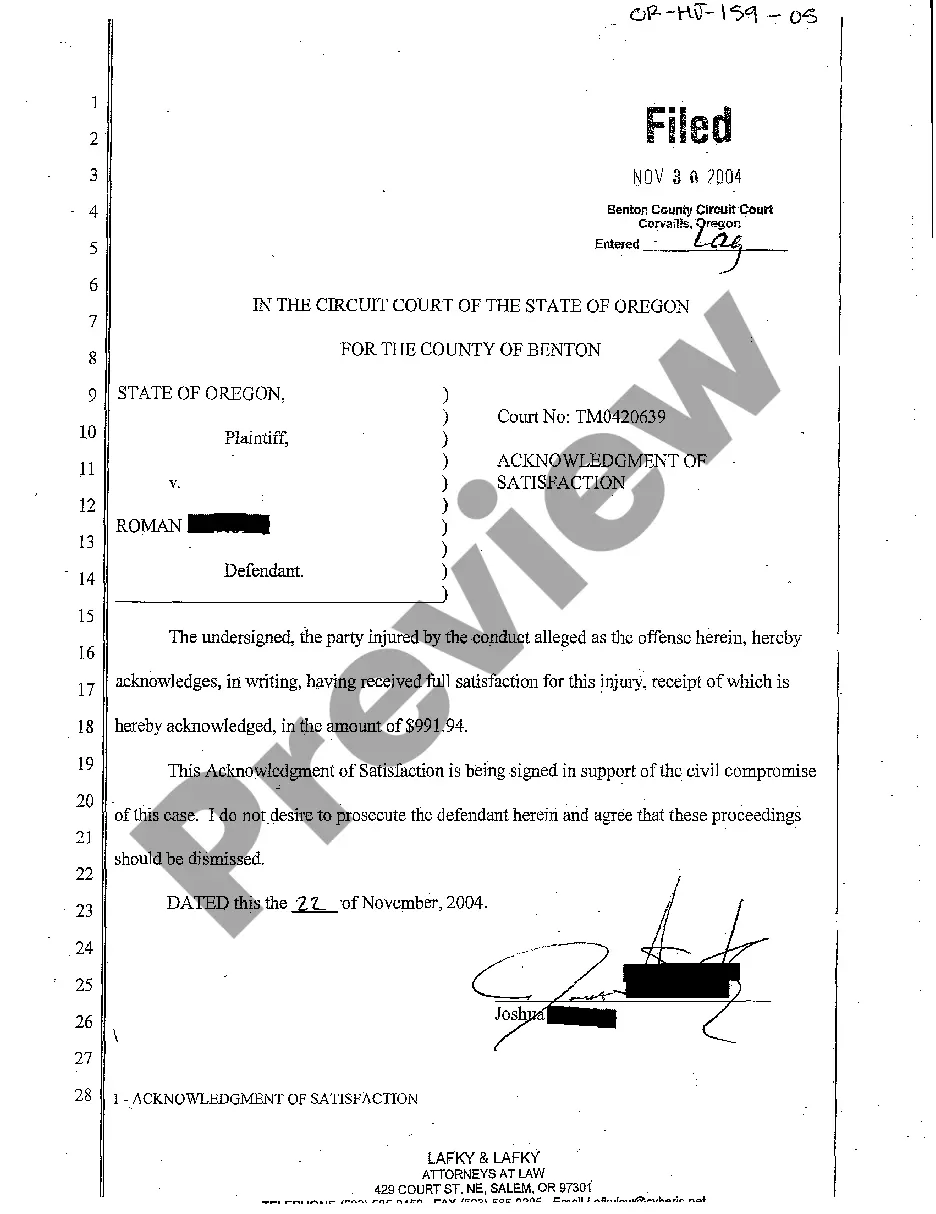
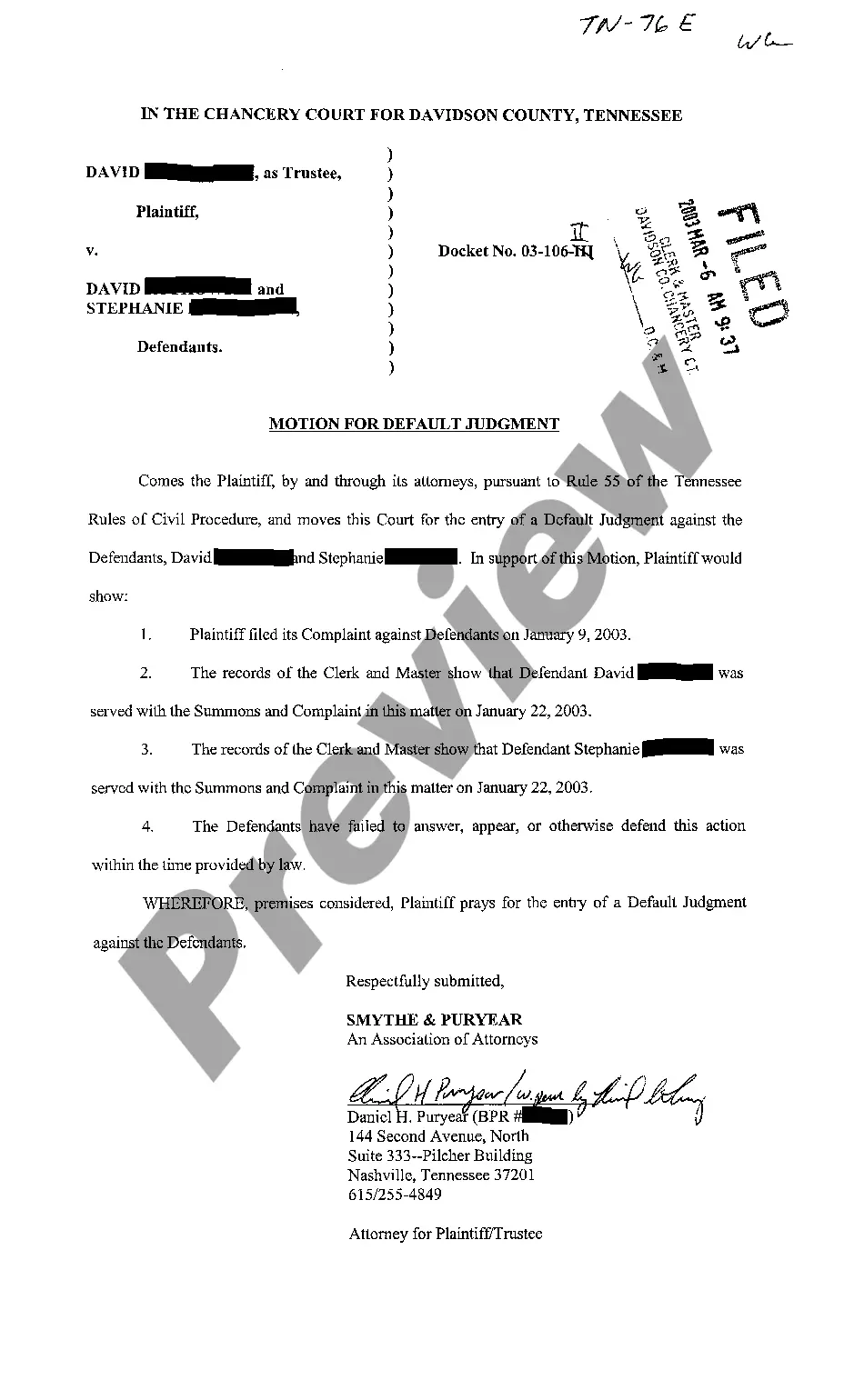
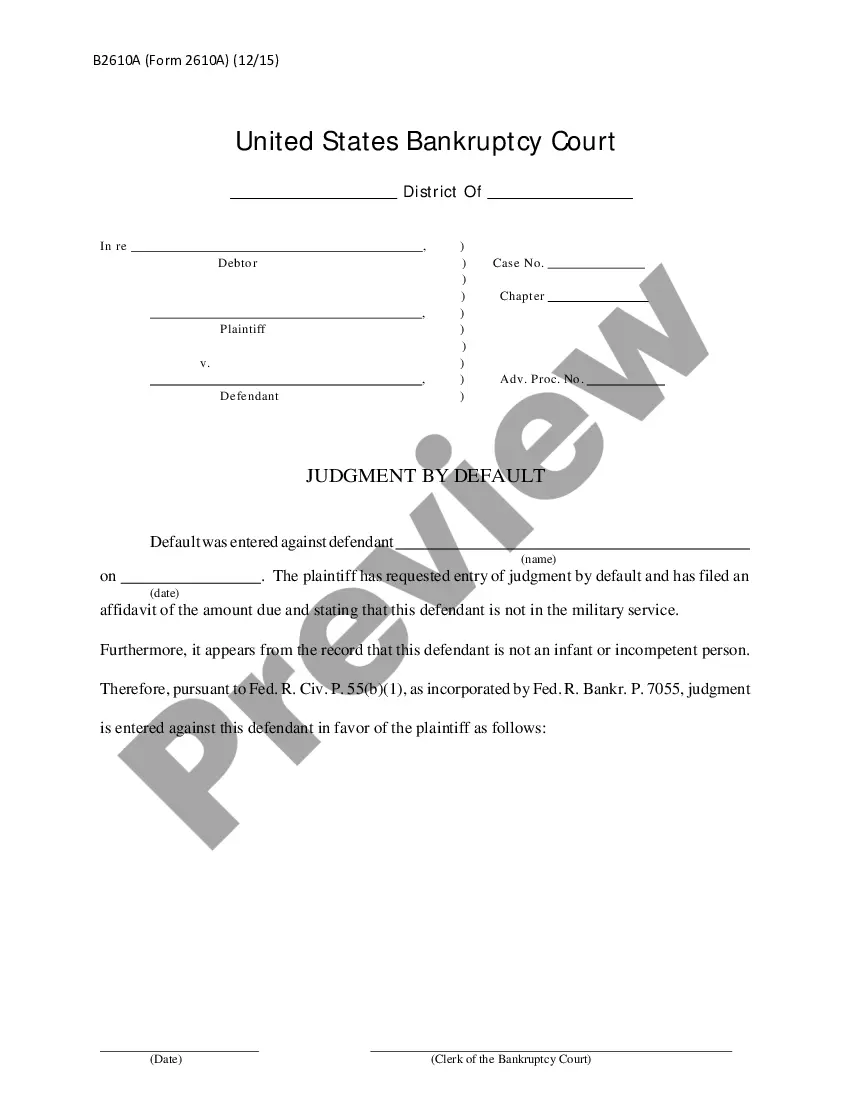
Tennessee Corrected Order of Judgment By Default
Description
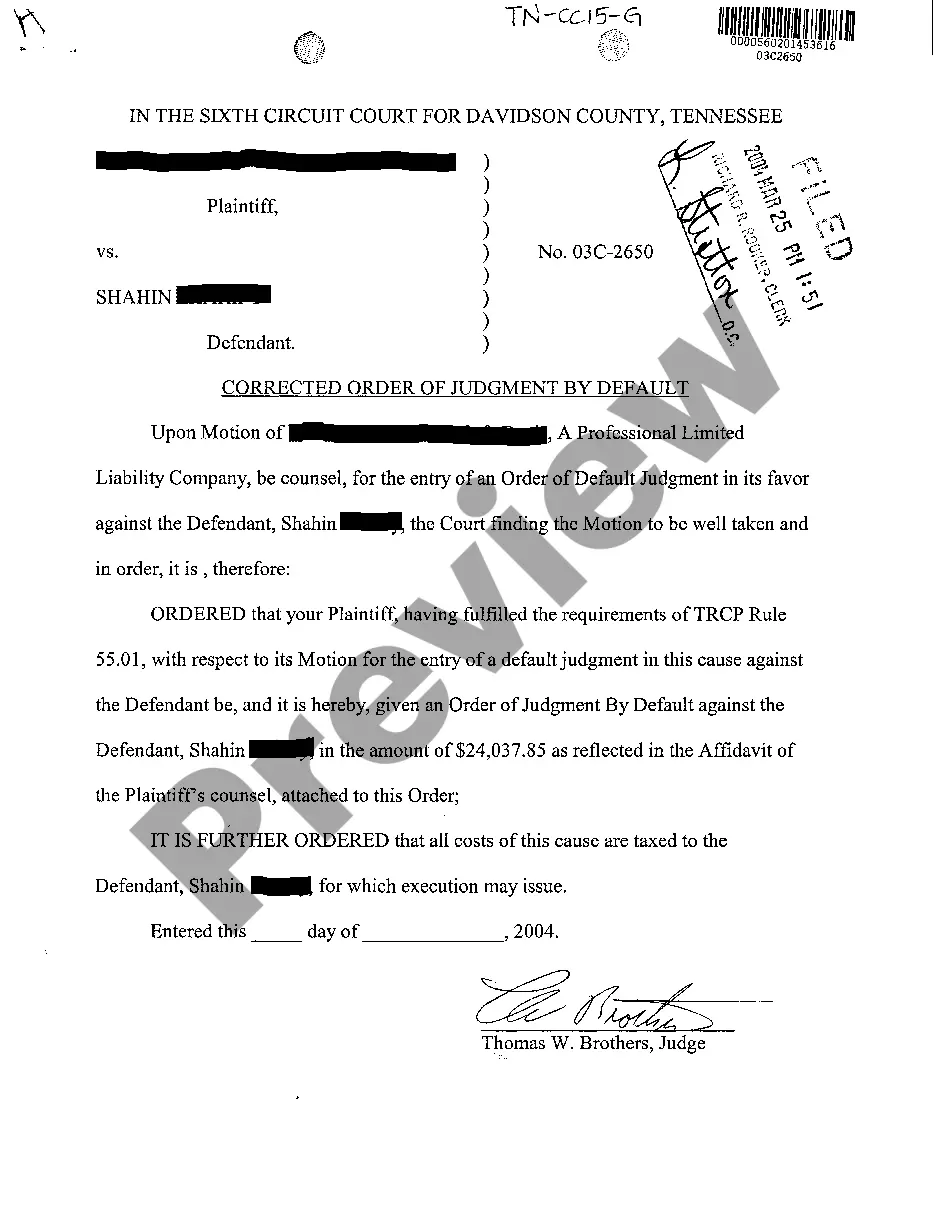
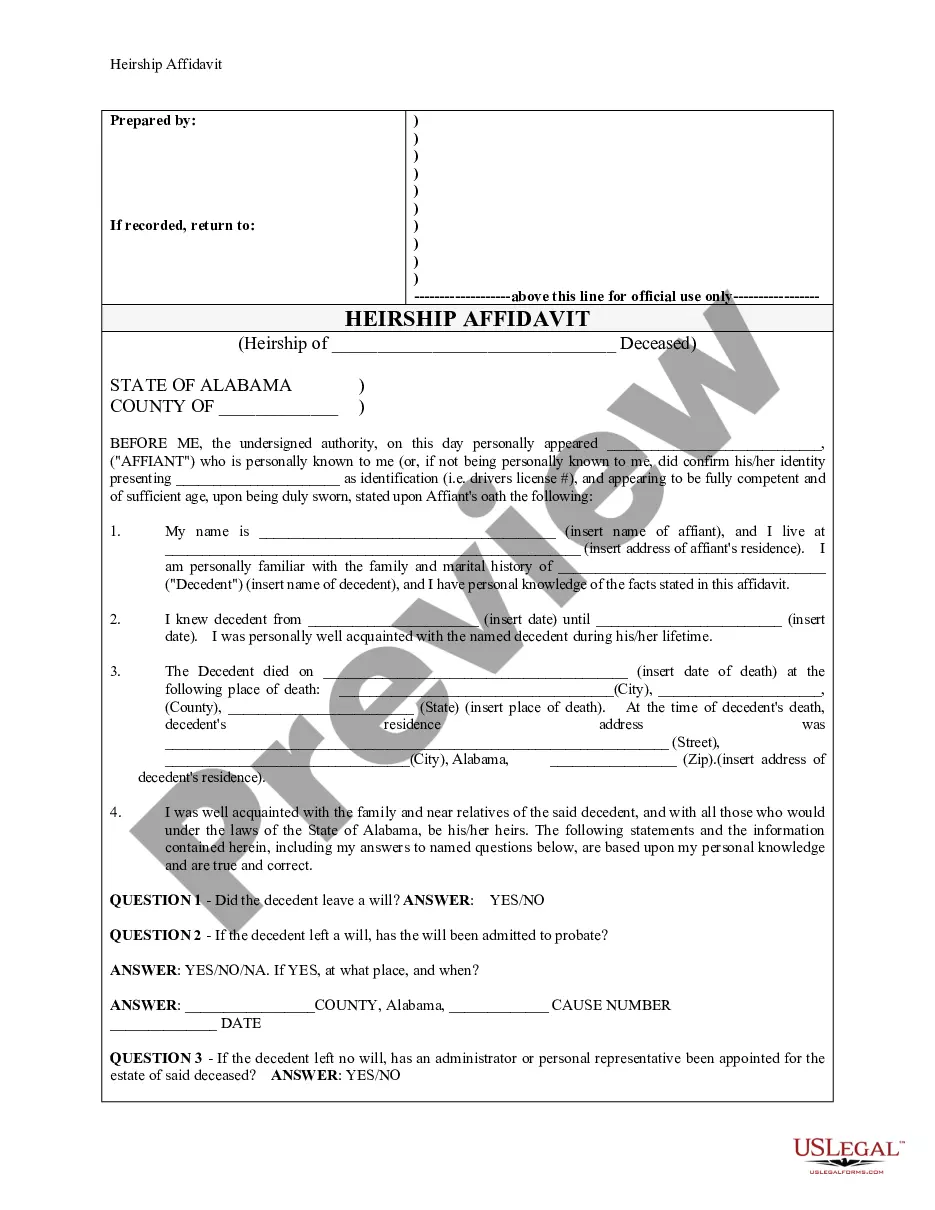
How to fill out Tennessee Corrected Order Of Judgment By Default?
Get access to quality Tennessee Corrected Order of Judgment By Default templates online with US Legal Forms. Steer clear of days of wasted time searching the internet and lost money on forms that aren’t updated. US Legal Forms gives you a solution to exactly that. Get over 85,000 state-specific legal and tax forms that you could download and complete in clicks in the Forms library.
To get the example, log in to your account and click Download. The file is going to be stored in two places: on your device and in the My Forms folder.
For individuals who don’t have a subscription yet, check out our how-guide below to make getting started simpler:
- See if the Tennessee Corrected Order of Judgment By Default you’re considering is appropriate for your state.
- Look at the form utilizing the Preview option and read its description.
- Visit the subscription page by simply clicking Buy Now.
- Choose the subscription plan to continue on to register.
- Pay out by credit card or PayPal to complete making an account.
- Select a favored file format to save the document (.pdf or .docx).
You can now open the Tennessee Corrected Order of Judgment By Default sample and fill it out online or print it and get it done by hand. Consider mailing the papers to your legal counsel to be certain things are completed appropriately. If you make a mistake, print out and fill application again (once you’ve registered an account every document you save is reusable). Create your US Legal Forms account now and get access to a lot more templates.
Form popularity
FAQ
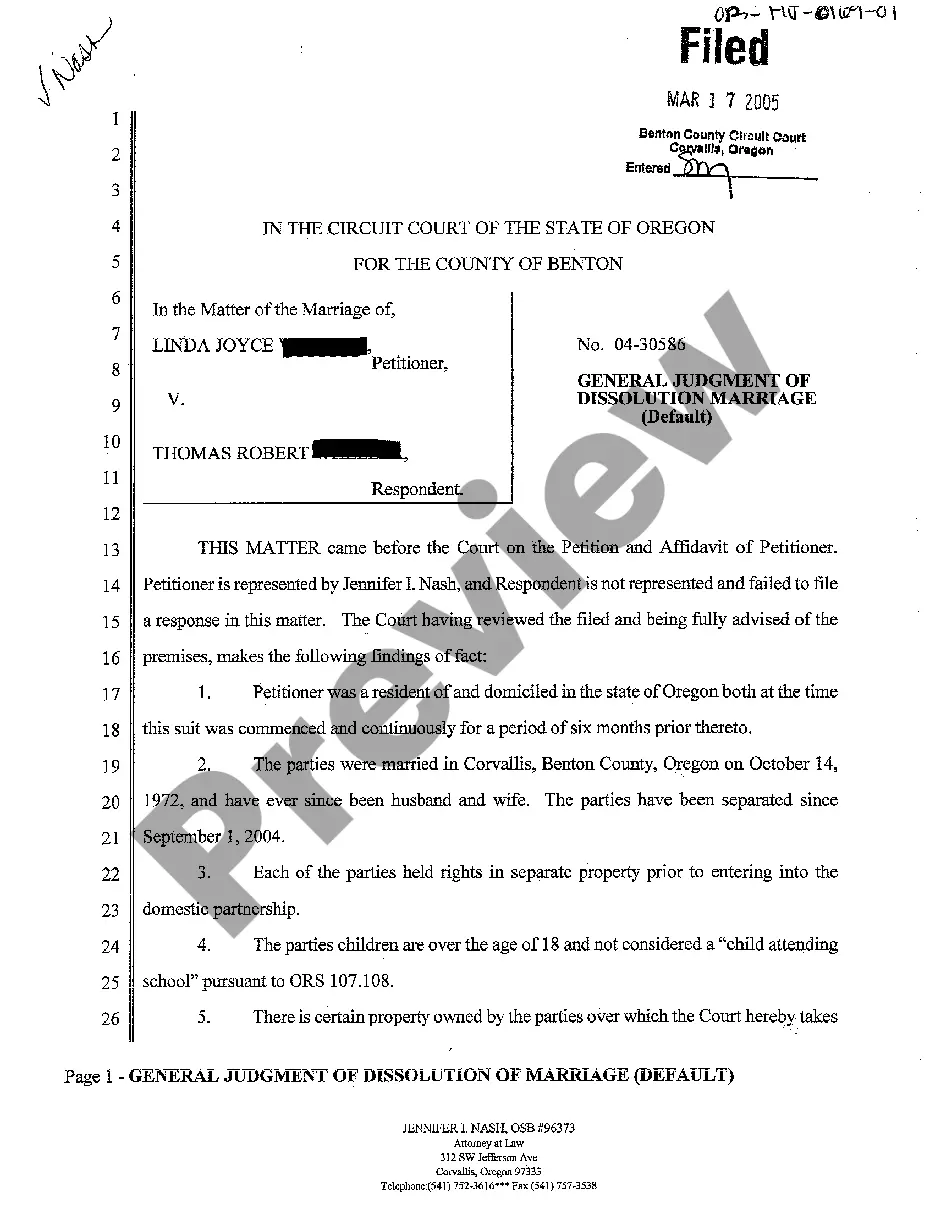
Default judgments happen when you don't respond to a lawsuit often from a debt collector and a judge resolves the case without hearing your side.Next up could be wage garnishment or a bank account levy, which allows a creditor to remove money from your bank accounts to repay the debt.
Typically, a court's rules governing enforcement of default judgments include procedures for wage garnishments, attachment of bank accounts and seizure of assets. The plaintiff can usually pursue more than one of these enforcement mechanisms simultaneously.
If a notice of motion for setting aside or variation of a judgment or order is filed within 14 days after the judgment or order is entered, the court may set aside or vary the judgment or order under r 36.16(1) as if the judgment or order had not been entered: r 36.16(3A).
If you do not think the default judgment was appropriately entered against you, you must file a motion with the court asking the judge to set aside (void or nullify) the judgment. If the judge grants your motion, the case starts back up again.
First, you can ask the court to set aside the default judgment and give you an opportunity to contest it. Next, you can settle the debt with the debt buyer for an amount less than what the default judgment is for. And finally you can eliminate the default judgment completely by filing for bankruptcy.
In Tennessee, a judgment entered by a court is generally enforceable for a period of ten years. Tenn. Code Ann. § 28-3-110.
A simple default doesn't mean you legally owe a certain amount of money. A default judgment identifies the amount you owe the plaintiff. You don't want this to happen because a default judgment makes you a judgment debtor. Plaintiff may use all sorts of legal procedures to legally take your money and property.