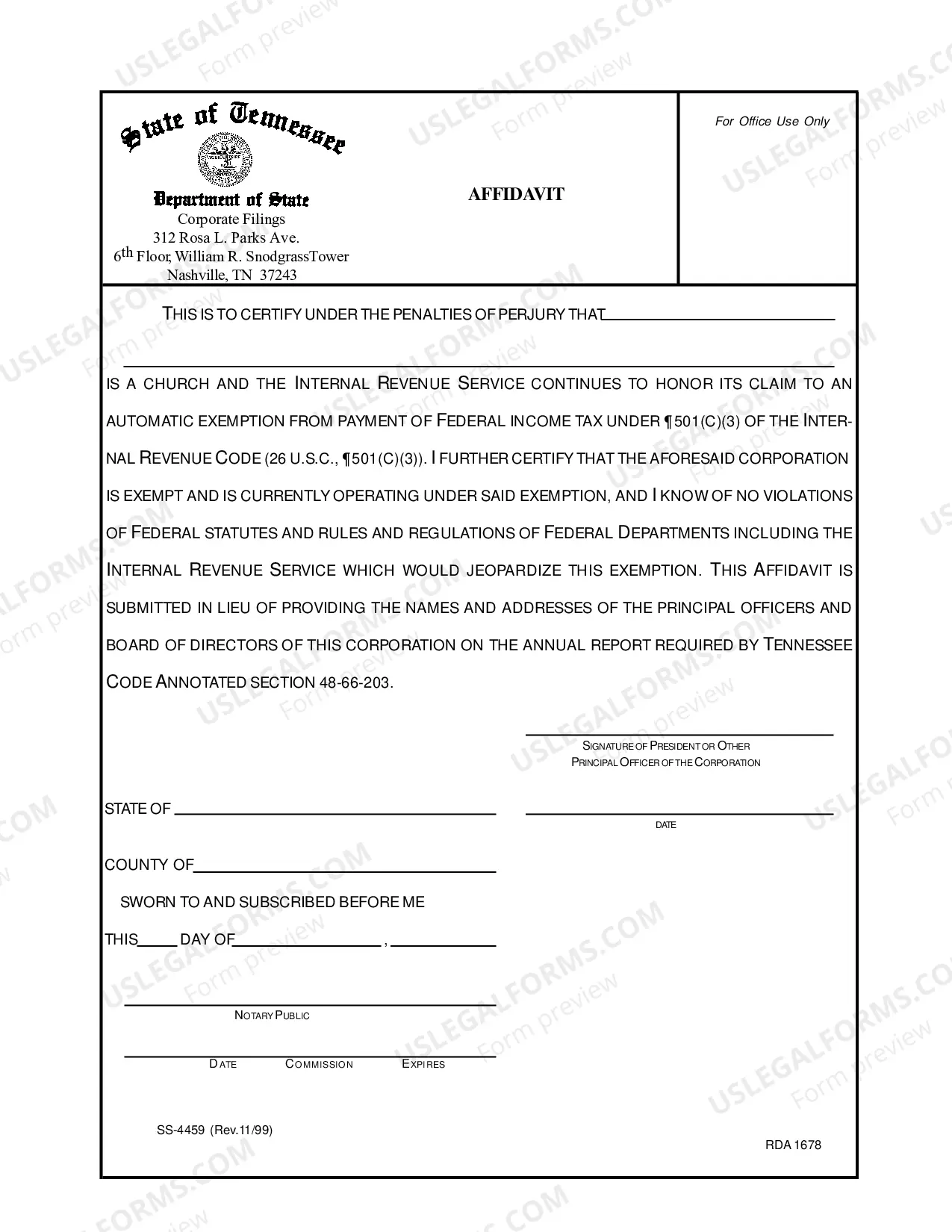
Tennessee Affidavit (Church Tax Exemption) is a legal document used by churches in Tennessee seeking to be exempt from paying sales tax. The affidavit is submitted to the Tennessee Department of Revenue and must be completed and signed by the church's authorized representative or member. It must include the church’s name, address, federal employer identification number, and a description of the church's activities. Depending on the type of exemption being sought, there are two different types of Tennessee Affidavit (Church Tax Exemption): the Religious Exemption Affidavit and the Charitable Exemption Affidavit. The Religious Exemption Affidavit is used to exempt the church from collecting and remitting Tennessee sales tax on sales of tangible personal property and services used in religious activities. The Charitable Exemption Affidavit is used to exempt the church from collecting and remitting Tennessee sales tax on sales of tangible personal property and services used exclusively for charitable purposes.
Tennessee Affidavit (Church Tax Exemption)
Description
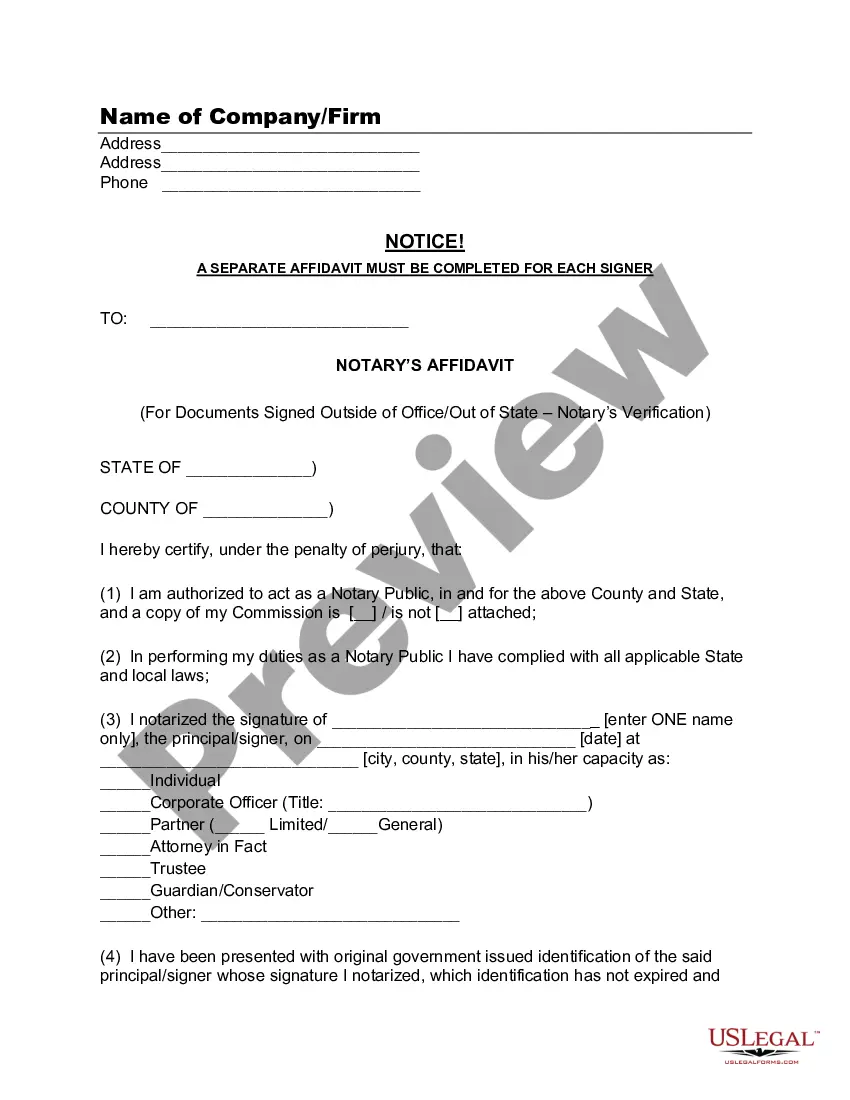
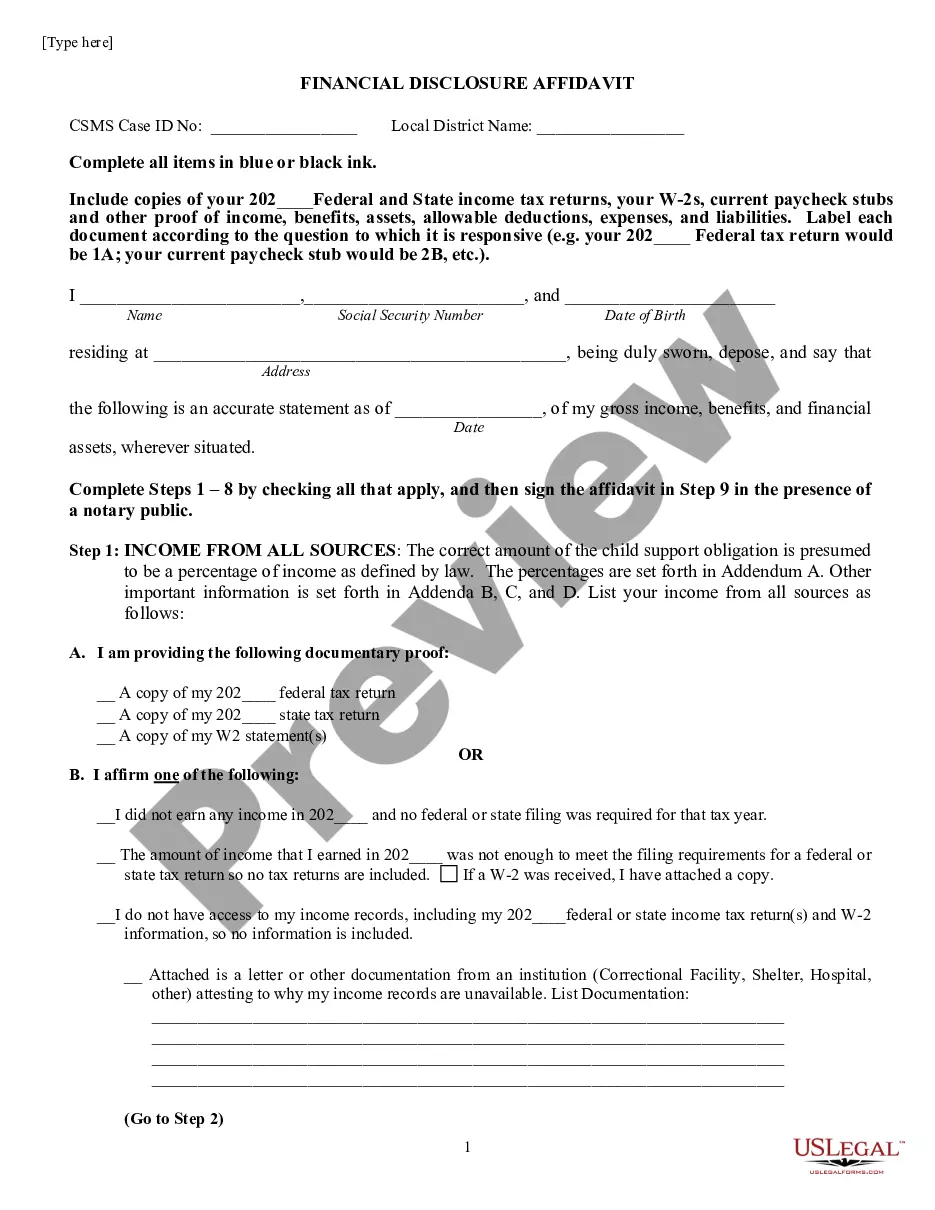
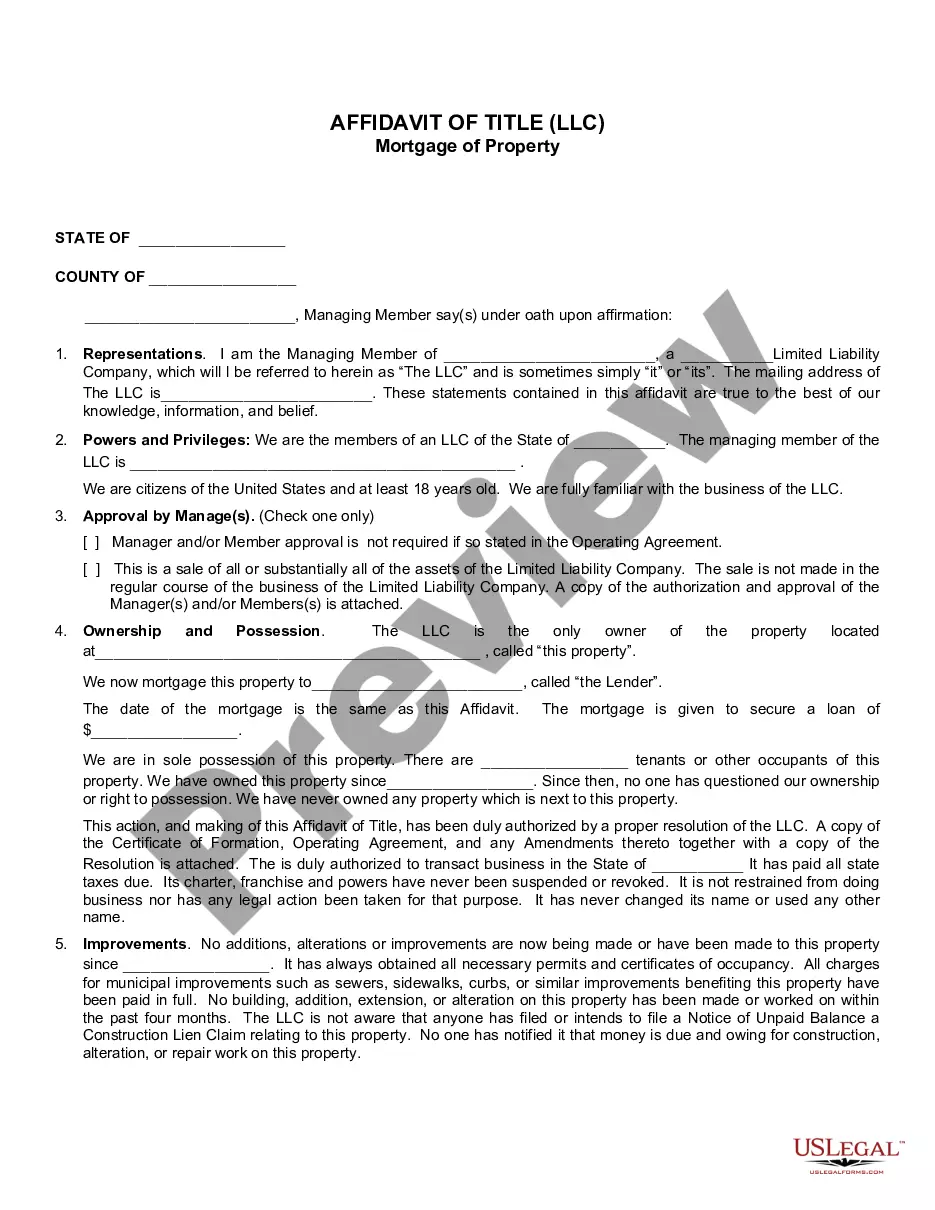
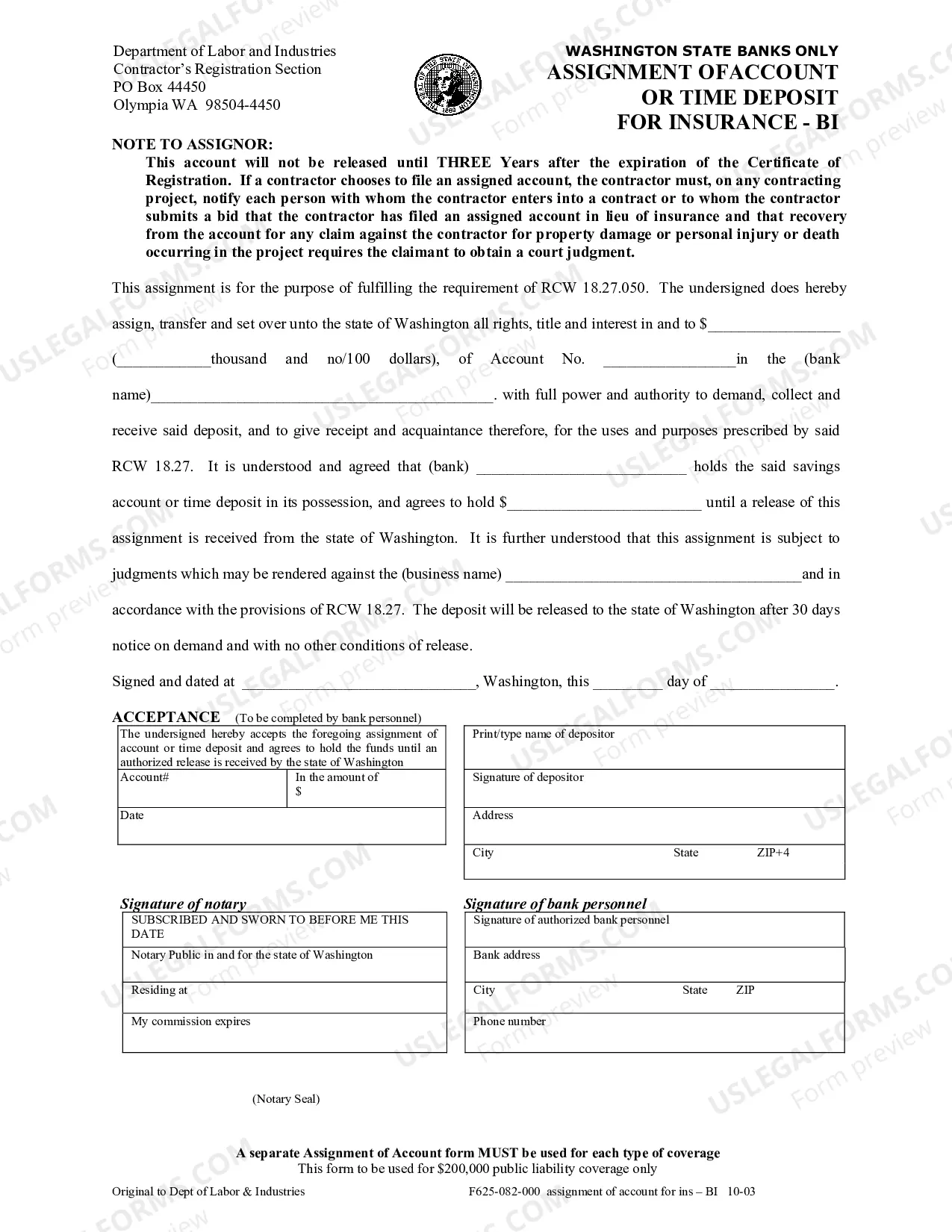
Get your form ready online
Our built-in tools help you complete, sign, share, and store your documents in one place.
Make edits, fill in missing information, and update formatting in US Legal Forms—just like you would in MS Word.
Download a copy, print it, send it by email, or mail it via USPS—whatever works best for your next step.
Sign and collect signatures with our SignNow integration. Send to multiple recipients, set reminders, and more. Go Premium to unlock E-Sign.
If this form requires notarization, complete it online through a secure video call—no need to meet a notary in person or wait for an appointment.
We protect your documents and personal data by following strict security and privacy standards.

Make edits, fill in missing information, and update formatting in US Legal Forms—just like you would in MS Word.

Download a copy, print it, send it by email, or mail it via USPS—whatever works best for your next step.

Sign and collect signatures with our SignNow integration. Send to multiple recipients, set reminders, and more. Go Premium to unlock E-Sign.

If this form requires notarization, complete it online through a secure video call—no need to meet a notary in person or wait for an appointment.

We protect your documents and personal data by following strict security and privacy standards.
Looking for another form?
Key Concepts & Definitions
Affidavit Church Tax Exemption refers to a document used by religious organizations in the United States to declare their eligibility for tax exemption under federal law. This exemption is primarily under the section 501(c)(3) of the Internal Revenue Code, which covers not only churches but other charitable organizations as well. Tax Exempt Status is a designation that allows an organization to avoid paying certain state and federal taxes, reflecting on income tax exemption, state local taxes, and potential federal tax refund scenarios.
Step-by-Step Guide to Applying for 501(c)(3) Status for Churches
- Establish Eligibility: Ensure your church or religious organization meets the charities nonprofits requirements which include being organized and operated exclusively for religious, educational, scientific, or other charitable purposes.
- Prepare an Affidavit: Draft an affidavit asserting the religious nature and charitable activities of the organization.
- Complete Form 1023: This form is used by the IRS to apply for the official recognition of exemption. The online application process can expedite submissions.
- File Form 1023: Submit the form along with required documents, including your affidavit, to the IRS.
- IRS Review: The application will be reviewed by the IRS. This may involve additional questions about your organization's activities and finances.
- Receive Determination Letter: Upon approval, you will receive a letter confirming your tax-exempt status.
Risk Analysis in Applying for Tax Exemption
- Documentation Risks: Incomplete or inaccurate documentation can delay or result in denial of the exemption status.
- Compliance Risks: Failure to comply with ongoing federal requirements can lead to revocation of tax-exempt status.
- Financial Risks: Incorrectly claiming exemptions could lead to financial penalties or audits by tax authorities.
Best Practices for Maintaining Tax Exempt Status
- Maintain accurate and complete records of all financial transactions and charitable activities.
- Ensure that the church engages primarily in activities that justify its tax-exempt status as per IRS guidelines.
- Regularly review state and federal laws related to religious organizations taxation to stay compliant.
Common Mistakes & How to Avoid Them
- Failing to File Required Annual Returns: Religious organizations, even those exempt under 501(c)(3), may still need to file tax returns annually depending on their size and income sources.
- Engaging in Non-exempt Activities: Engaging extensively in activities that are unrelated to their primary, exempt purposes can jeopardize tax-exempt status.
- Poor Record Keeping: Incompatibilities in the records can attract audits. Consistent, clear, and thorough documentation is crucial.
FAQ
- Does every church need to apply for 501(c)(3) status? No, churches are automatically considered tax-exempt but applying for 501(c)(3) status can offer additional benefits such as more tangible proofs for tax exemption and eligibility for certain grants and benefits.
- How long does the application process for tax exemption take? The timeline can vary widely, sometimes taking up to a year or more, depending on the specifics of the application and IRS workload.
How to fill out Tennessee Affidavit (Church Tax Exemption)?
Preparing legal paperwork can be a real stress unless you have ready-to-use fillable templates. With the US Legal Forms online library of formal documentation, you can be confident in the blanks you obtain, as all of them comply with federal and state regulations and are examined by our specialists. So if you need to fill out Tennessee Affidavit (Church Tax Exemption), our service is the best place to download it.
Getting your Tennessee Affidavit (Church Tax Exemption) from our service is as simple as ABC. Previously authorized users with a valid subscription need only sign in and click the Download button once they find the proper template. Afterwards, if they need to, users can take the same blank from the My Forms tab of their profile. However, even if you are unfamiliar with our service, signing up with a valid subscription will take only a few minutes. Here’s a brief guide for you:
- Document compliance verification. You should attentively review the content of the form you want and ensure whether it suits your needs and meets your state law regulations. Previewing your document and reviewing its general description will help you do just that.
- Alternative search (optional). Should there be any inconsistencies, browse the library through the Search tab above until you find a suitable template, and click Buy Now once you see the one you need.
- Account registration and form purchase. Create an account with US Legal Forms. After account verification, log in and choose your most suitable subscription plan. Make a payment to proceed (PayPal and credit card options are available).
- Template download and further usage. Select the file format for your Tennessee Affidavit (Church Tax Exemption) and click Download to save it on your device. Print it to fill out your papers manually, or take advantage of a multi-featured online editor to prepare an electronic version faster and more efficiently.
Haven’t you tried US Legal Forms yet? Subscribe to our service now to get any formal document quickly and easily any time you need to, and keep your paperwork in order!
Form popularity
FAQ
Generally, nonprofit entities are exempt from paying sales or use tax on their purchases of property and services. A nonprofit entity must apply for and receive the Sales and Use Tax Certificate of Exemption from the Department of Revenue before making tax-exempt purchases.
Operation in ance with the stated exempt purpose(s). Private Benefit / Private Inurement.Lobbying.Political Activity.Unrelated Business Income (UBI)Not Operating Within Your Exempt PURPOSE Endangers Your 501(c)(3) IRS Tax-Exempt Status.
Tennessee Sales Tax Exemption for a Nonprofit In some states, your organization is not automatically exempt from state sales tax, even after obtaining 501(c)(3) recognition from the IRS. You must file a separate application in order to receive state sales tax exemption.
Acting on constitutional authority, the Tennessee General Assembly authorized certain property tax exemptions for Tennessee's religious, charitable, scientific, literary and nonprofit educational organizations.
How do I become federally exempt? You can obtain federal tax-exempt status by applying with the IRS, by filing the detailed form 1023 and submitting it with the fee and the many required attachments. The review process will take several months and if you are successful, you will receive the Letter of Determination.
Some customers are exempt from paying sales tax under Tennessee law. Examples include government agencies, some nonprofit organizations, and merchants purchasing goods for resale. Sellers are required to collect a valid exemption or resale certificate from buyers to validate each exempt transaction.
Acting on constitutional authority, the Tennessee General Assembly authorized certain property tax exemptions for Tennessee's religious, charitable, scientific, literary and nonprofit educational organizations.
Many churches and other religious organizations believe they are automatically exempt from property taxation. However, Tennessee State law requires churches and other qualifying non-profit groups to file for property-tax exemption for each piece of property they acquire.