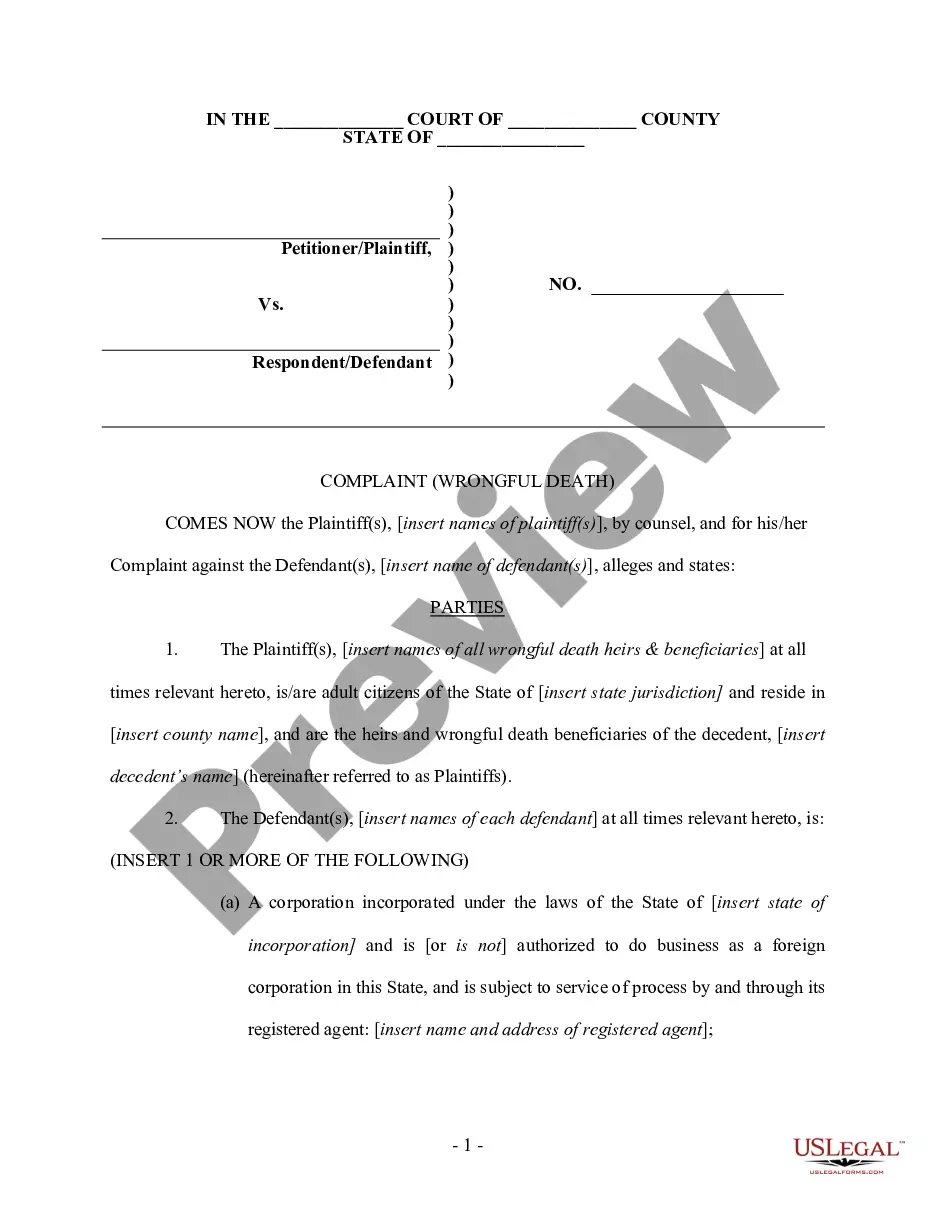
This is a Complaint pleading for use in litigation of the title matter. Adapt this form to comply with your facts and circumstances, and with your specific state law. Not recommended for use by non-attorneys.
Tennessee Complaint For Wrongful Interference With Right To Possession For Burial
Category:
State:
Multi-State
Control #:
US-000303
Format:
Word;
Rich Text
Instant download
Description
Free preview

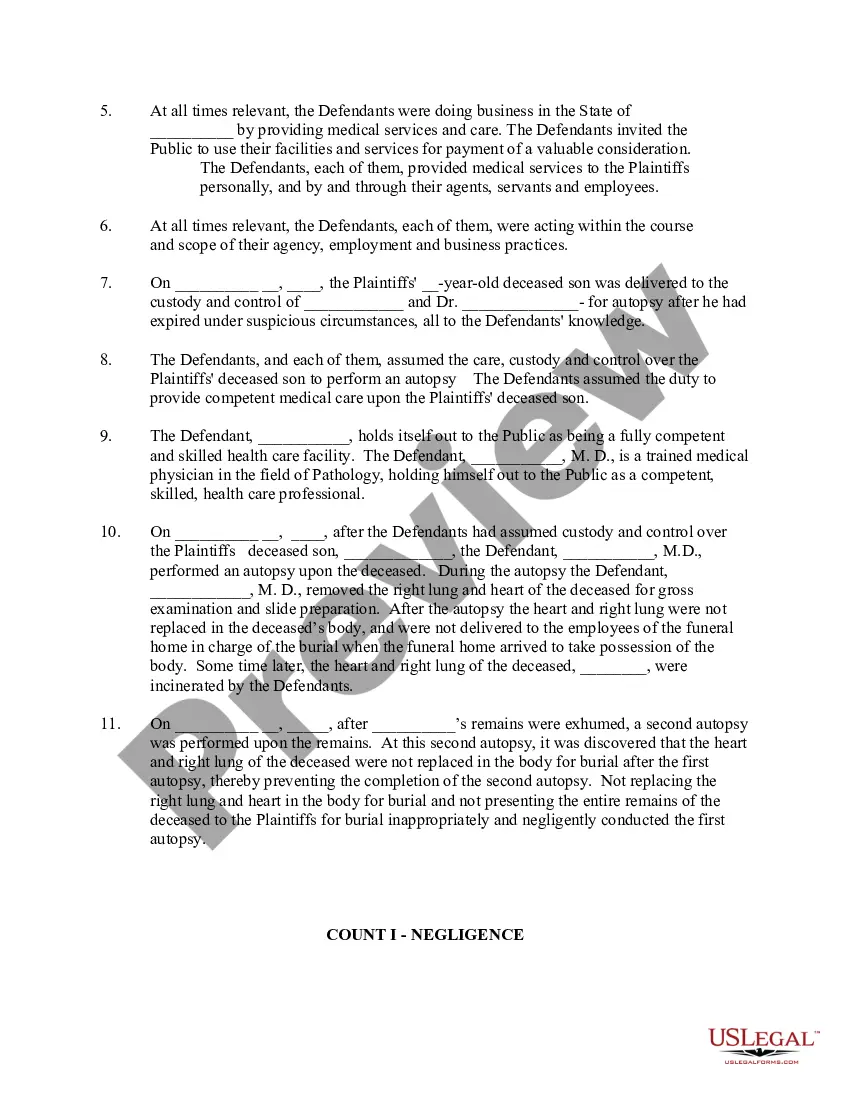
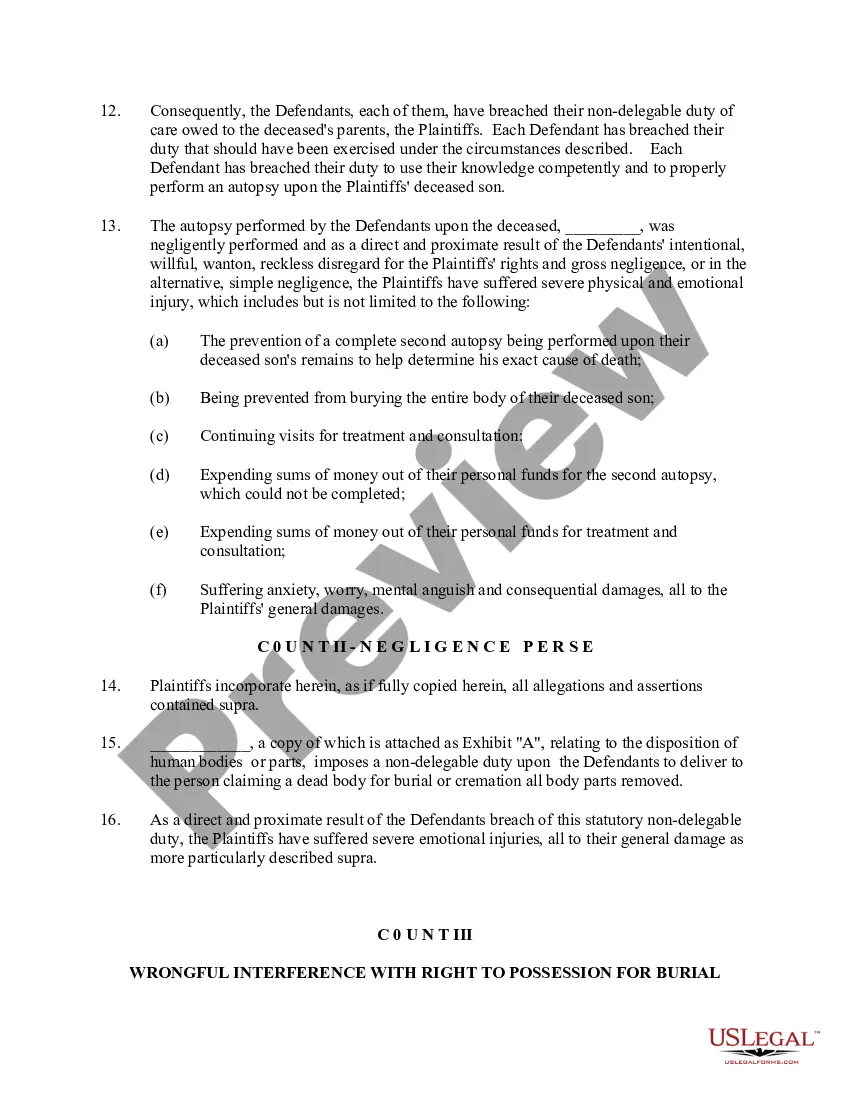
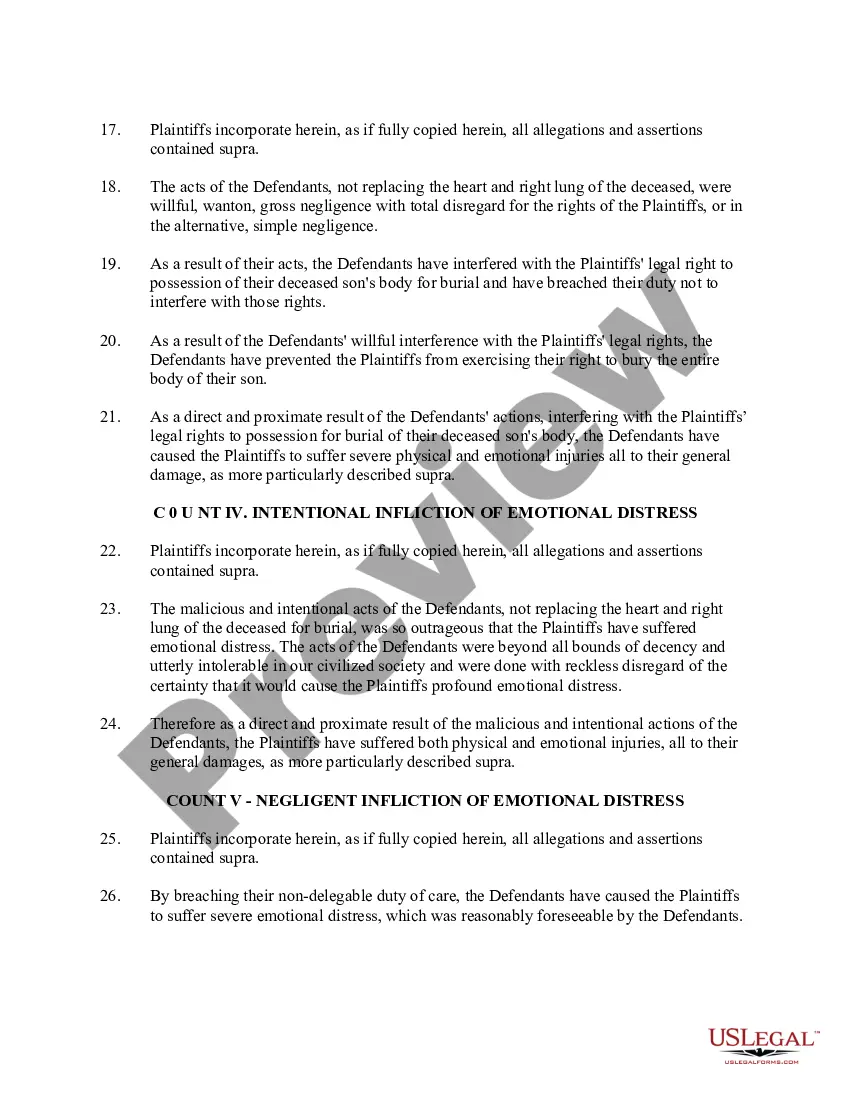

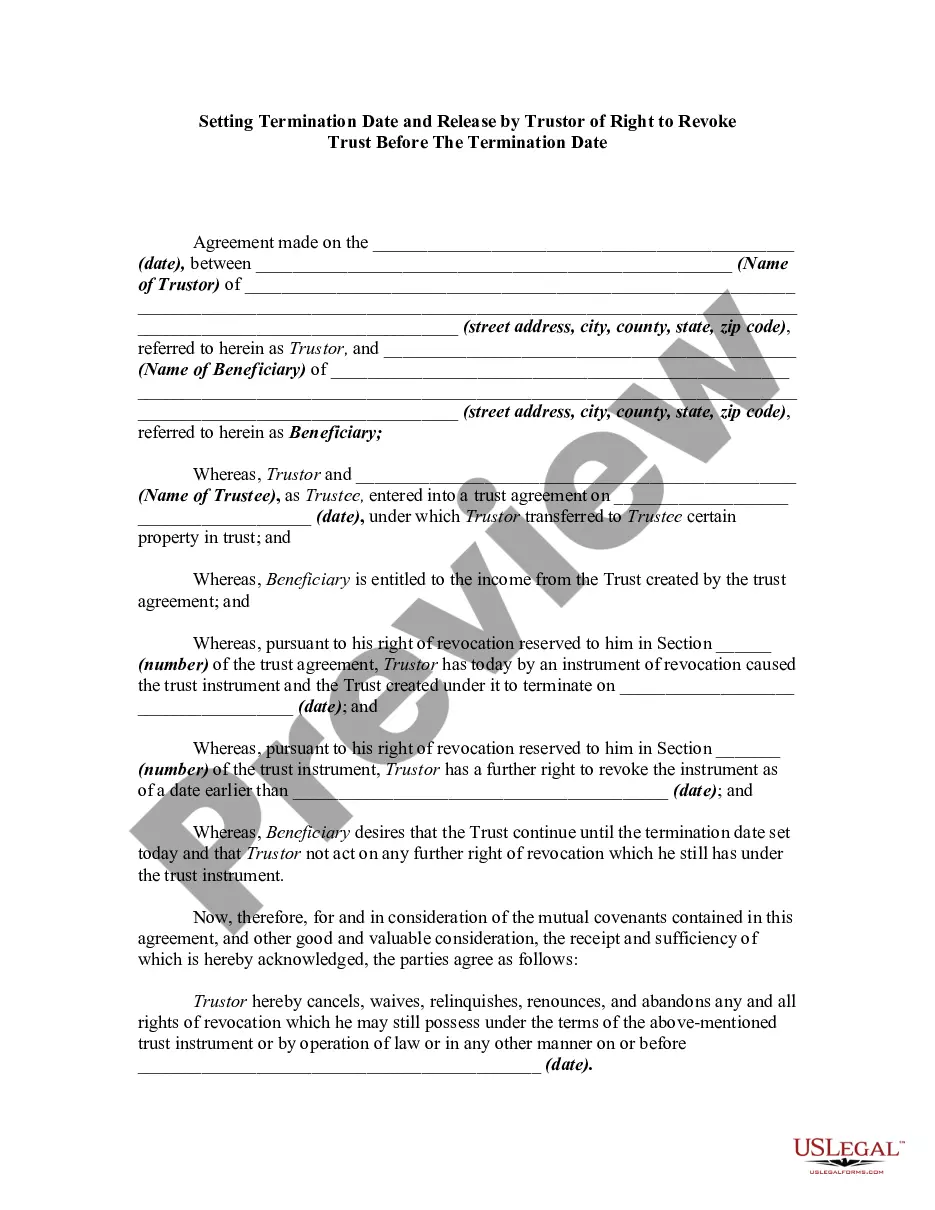
How to fill out Complaint For Wrongful Interference With Right To Possession For Burial?
US Legal Forms - one of the largest collections of legal documents in the United States - offers a range of legal document templates that you can download or print. Through the website, you can access thousands of forms for business and personal use, organized by categories, states, or keywords. You can obtain the latest versions of forms such as the Tennessee Complaint For Wrongful Interference With Right To Possession For Burial in just minutes.
If you already possess a subscription, Log In and download the Tennessee Complaint For Wrongful Interference With Right To Possession For Burial from the US Legal Forms library. The Download button will be visible on every form you view. You have access to all previously downloaded forms within the My documents section of your account.
To use US Legal Forms for the first time, here are simple instructions to help you get started: Make sure you have chosen the correct form for your specific city/county. Click on the Preview button to examine the form's content. Review the form description to confirm that you have selected the appropriate form. If the form does not meet your requirements, use the Search field at the top of the screen to locate the one that does. If you are satisfied with the form, confirm your selection by clicking the Purchase now button. Then, choose the pricing plan you prefer and provide your credentials to register for an account. Complete the transaction. Use your credit card or PayPal account to finalize the purchase. Select the format and download the form to your device. Make edits. Fill out, modify, and print and sign the downloaded Tennessee Complaint For Wrongful Interference With Right To Possession For Burial. Every template you added to your account does not have an expiration date and is yours indefinitely. Therefore, if you wish to download or print another version, simply go to the My documents section and click on the form you need.
- Access the Tennessee Complaint For Wrongful Interference With Right To Possession For Burial with US Legal Forms, one of the most comprehensive collections of legal document templates.
- Utilize a vast array of professional and state-specific templates that fulfill your business or personal requirements.
- Find forms for various legal needs.
- Easily manage your forms within your account.
- Quickly complete transactions using secure payment methods.
- Enjoy indefinite access to downloaded forms.
Form popularity
FAQ
Mishandling of human remains refers to any improper treatment or disrespectful handling of a deceased person's body. This can include neglect, unauthorized cremation, or failing to follow burial wishes. Such actions can lead to a Tennessee Complaint For Wrongful Interference With Right To Possession For Burial, as they violate the rights of the deceased's family. It is essential to seek legal guidance to address any grievances related to mishandling and ensure respectful treatment.
In Tennessee, the wrongful death cap limits the amount a plaintiff can recover in a wrongful death lawsuit. Generally, for non-economic damages, the cap is set at $750,000, but it can increase to $1 million in specific cases involving particularly egregious conduct. Understanding these limits is crucial when filing a Tennessee Complaint For Wrongful Interference With Right To Possession For Burial, as it affects potential compensation. Consulting with a knowledgeable attorney can help clarify how this cap impacts your case.
In Tennessee, the regulation of cemeteries falls under the jurisdiction of the Tennessee Department of Commerce and Insurance. They ensure that cemeteries comply with state laws and protect consumer rights. If you face challenges related to burial rights, you might find it useful to file a Tennessee Complaint For Wrongful Interference With Right To Possession For Burial for resolution through legal channels.
To file a complaint with the Attorney General of Tennessee, you can visit their official website to find the complaint forms and guidelines. It is important to provide clear details about your issue, especially if it relates to wrongful interference with burial rights. If your situation involves such interference, mentioning a Tennessee Complaint For Wrongful Interference With Right To Possession For Burial in your correspondence can strengthen your case.
Tennessee burial laws include regulations regarding the disposition of human remains and the rights of individuals concerning burial plots. These laws ensure that families can properly honor their loved ones while protecting their rights. If you believe your rights are being violated, you may want to explore a Tennessee Complaint For Wrongful Interference With Right To Possession For Burial as a potential remedy.
In Tennessee, cemetery maintenance is typically the responsibility of the cemetery owner or operator. They are tasked with ensuring that gravesites are well-kept and that the grounds are maintained. If you encounter issues regarding grave upkeep, you may consider filing a Tennessee Complaint For Wrongful Interference With Right To Possession For Burial to address any concerns effectively.
The tort of interference with a dead body applies to intentional acts, reckless acts, and negligent acts. An undertaker who negligently or recklessly embalms a deceased person's body is liable for the tort if he or she harms the body or if he or she prevents the body from being properly buried or cremated.
Under the common law, a person commits a tort when he or she intentionally, recklessly, or negligently removes, withholds, mutilates, or operates upon the body of a dead person or when he or she prevents the proper burial or cremation of the dead body.
The tort of interference with a dead body applies to intentional acts, reckless acts, and negligent acts. An undertaker who negligently or recklessly embalms a deceased person's body is liable for the tort if he or she harms the body or if he or she prevents the body from being properly buried or cremated.
You don't necessarily need to worry about what happens to your body if you can't afford a funeral. Signing a form at the county coroner can authorize the release of your body to the state or county for burial or cremation. It may be possible to pay a fee to recover your ashes if your family would like them.