Texas Contract for Deed Disclosure of Property Condition - Residential - Land Contract, Executory Contract
About this form
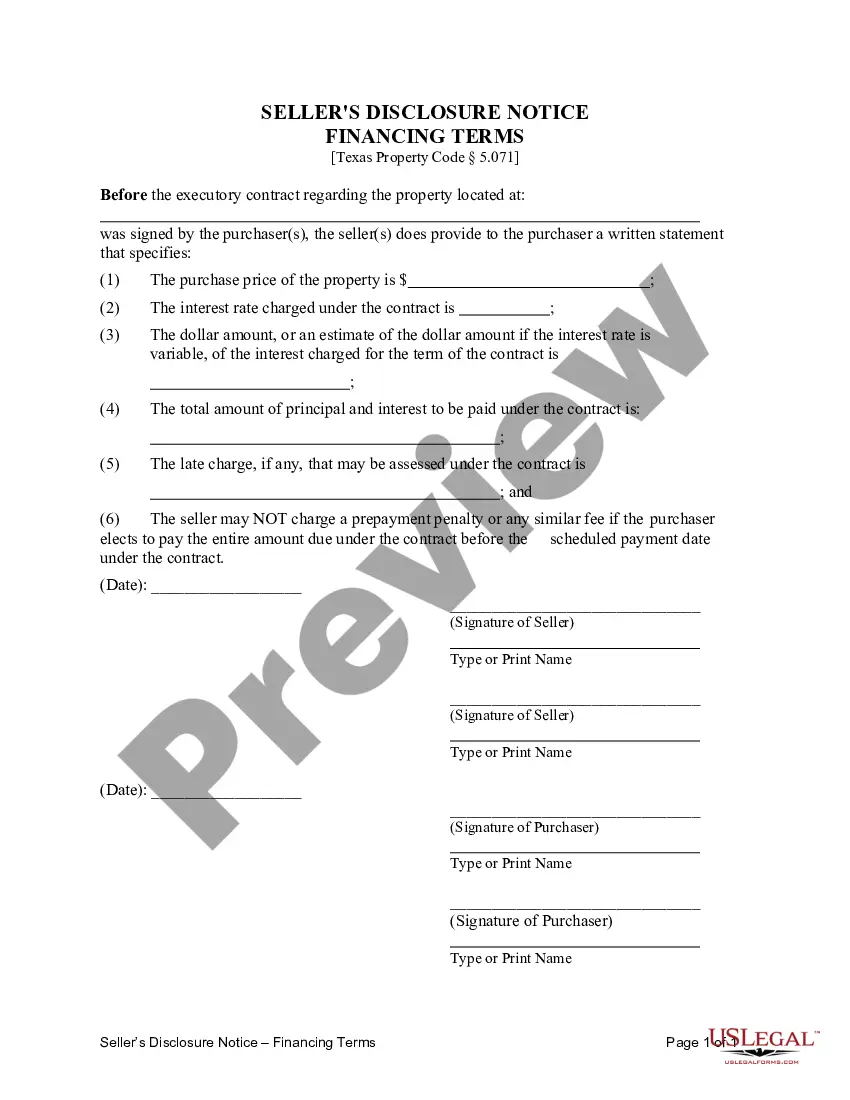
The Contract for Deed Disclosure of Property Condition is a legal document used in Texas that outlines the condition of a property being sold under a contract for deed arrangement. This form provides essential disclosures required by Texas law and differentiates itself from standard purchase agreements by focusing specifically on the property's condition and necessary disclosures affecting the transaction. It is critical for both sellers and purchasers to understand the obligations and rights defined within this contract.
What’s included in this form
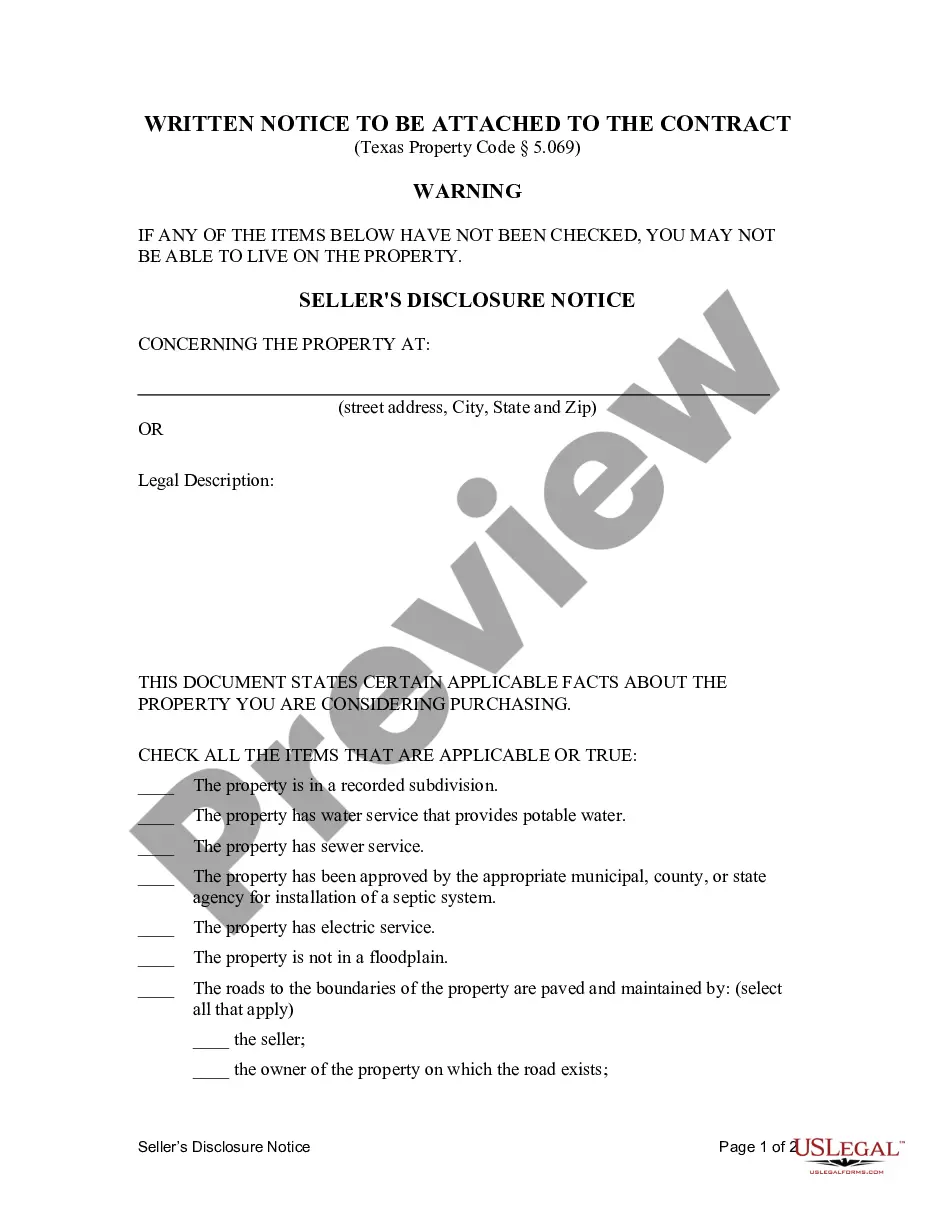
- Disclosure of water and sewer services availability.
- Confirmation of electric service to the property.
- Assessment of whether the property is located in a floodplain.
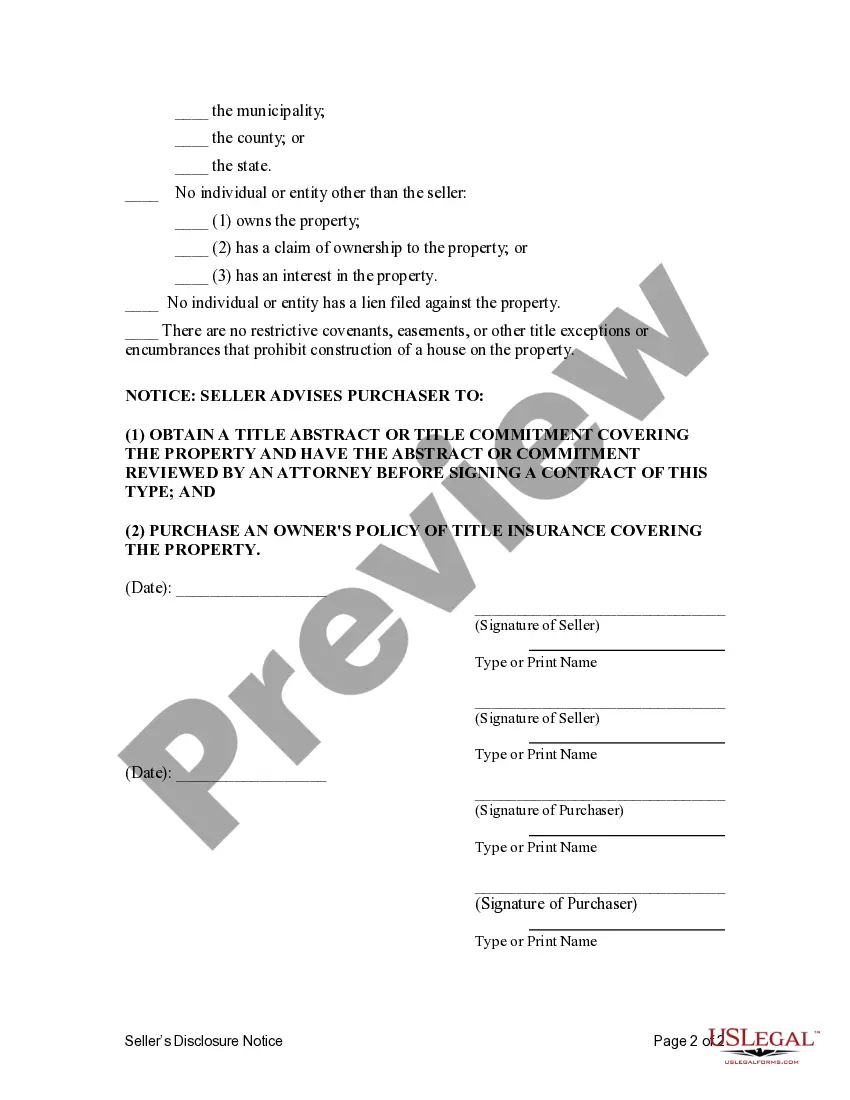
- Details about the maintenance of access roads to the property.
- Verification of ownership and liens on the property.
- Notice advising the purchaser to obtain a title review and policy.
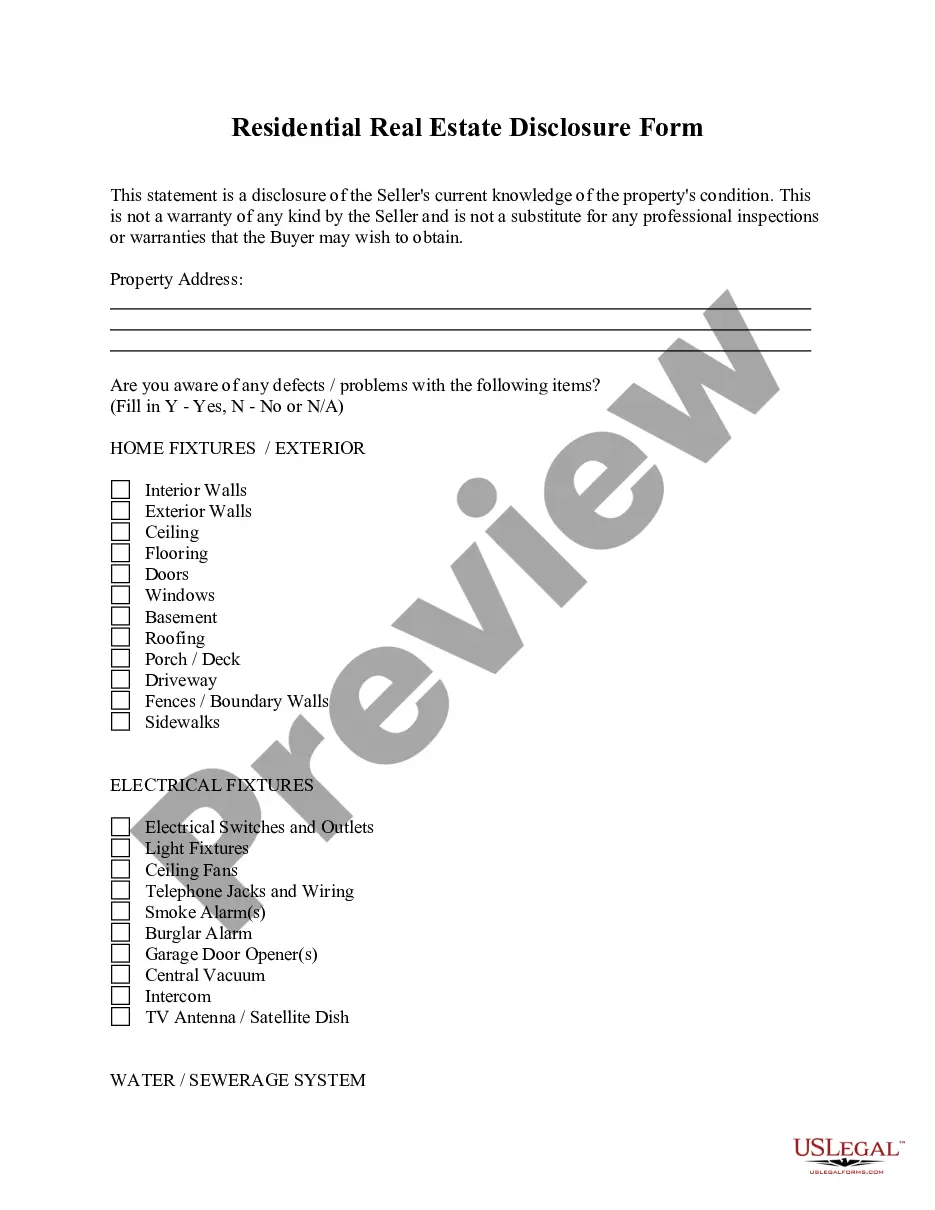
When this form is needed
This form should be used when a seller and purchaser agree to a contract for deed arrangement for a residential property in Texas. It is particularly important for situations where the buyer will take possession of the property before paying the full purchase price. The form ensures that both parties are aware of the property's current condition and any obligations they may have concerning utilities and access.
Who should use this form
- Home sellers who want to outline the condition of their property to potential buyers.
- Home buyers entering into a contract for deed and needing essential disclosures.
- Real estate professionals facilitating contracts for deed transactions.
- Investors purchasing residential properties under a contract for deed in Texas.
How to prepare this document
- Identify the property by entering its legal description.
- Mark checkboxes for the availability of utilities such as water and electricity.
- Indicate whether the property is in a floodplain.
- Specify who maintains the access roads to the property.
- Sign and date the form where indicated by the seller.
Does this document require notarization?
This form does not typically require notarization unless specified by local law. It is advisable to consult with a legal professional if there are any doubts about the requirements for your specific transaction.
Get your form ready online
Our built-in tools help you complete, sign, share, and store your documents in one place.
Make edits, fill in missing information, and update formatting in US Legal Forms—just like you would in MS Word.
Download a copy, print it, send it by email, or mail it via USPS—whatever works best for your next step.
Sign and collect signatures with our SignNow integration. Send to multiple recipients, set reminders, and more. Go Premium to unlock E-Sign.
If this form requires notarization, complete it online through a secure video call—no need to meet a notary in person or wait for an appointment.
We protect your documents and personal data by following strict security and privacy standards.

Make edits, fill in missing information, and update formatting in US Legal Forms—just like you would in MS Word.

Download a copy, print it, send it by email, or mail it via USPS—whatever works best for your next step.

Sign and collect signatures with our SignNow integration. Send to multiple recipients, set reminders, and more. Go Premium to unlock E-Sign.

If this form requires notarization, complete it online through a secure video call—no need to meet a notary in person or wait for an appointment.

We protect your documents and personal data by following strict security and privacy standards.
Typical mistakes to avoid
- Failing to disclose all existing liens or claims on the property.
- Not checking all applicable utility availability boxes.
- Neglecting to review the final form with legal assistance before signing.
- Forgetting to include the legal description of the property.
Why complete this form online
- Convenient download and immediate access to legally vetted templates.
- Edit the form easily to fit specific circumstances or property details.
- Reliability of professionally drafted forms ensures compliance with local laws.
Legal use & context
- This form outlines critical disclosures that can protect both buyers and sellers in real estate transactions.
- Proper completion is important to ensure enforceability.
- Buyers should understand the implications of a Contract for Deed, including limited legal recourse until the contract is fulfilled.
What to keep in mind
- The Contract for Deed Disclosure of Property Condition is essential for transparency in property transactions.
- It outlines critical information about a propertyâs condition and legally necessary disclosures.
- This form is specifically designed for Texas residents engaging in contracts for deed.
- Completing the form accurately protects both buyers and sellers in real estate transactions.
Looking for another form?
Form popularity
FAQ
An executory contract is a contract that has not yet been fully performed or fully executed. It is a contract in which both sides still have important performance remaining.
Executory contracts must be in writing and must be signed by the parties that enter into the agreement.
Relying on the language of section 365(g) of the Bankruptcy Code, the Supreme Court emphasized that a debtor's rejection of an executory contract has the same effect as a breach of that contract outside bankruptcy and that rejection cannot rescind rights that the contract previously granted.
An executory contract is when one or both parties have obligations still to be performed. For example, a sales contract is an executory contract until the buyer has obtained financing-there are still obligations remaining to be performed before the contract can be considered executed.
Although the terms of an executory contract won't be fulfilled for some time, it's still a legally binding agreement. Therefore, it's important to fulfill your contractual obligations. These types of contracts are especially beneficial for big-ticket purchase items, such as cars and homes.
There are two possible treatments of installment land contracts under the Code: (1) a court may find an installment land contract is an executory contract; or (2) a court may find that it creates a security interest on property similar to a mortgage.
An executory contract is when one or both parties have obligations still to be performed. For example, a sales contract is an executory contract until the buyer has obtained financing-there are still obligations remaining to be performed before the contract can be considered executed.
If the executory contract is terminated for any reason, the Property Code also requires that the seller record the instrument that terminates the contract. A recorded executory contract is considered to be the same as a deed with a vendor's lien for the amount of the unpaid contract price, less any lawful deductions.
Most courts use the definition created by the late Professor Vern Countryman of Harvard Law School, which defines an executory contract as an agreement, including leases, where performance is remaining on all parties to the agreementand can be enforced by a court.