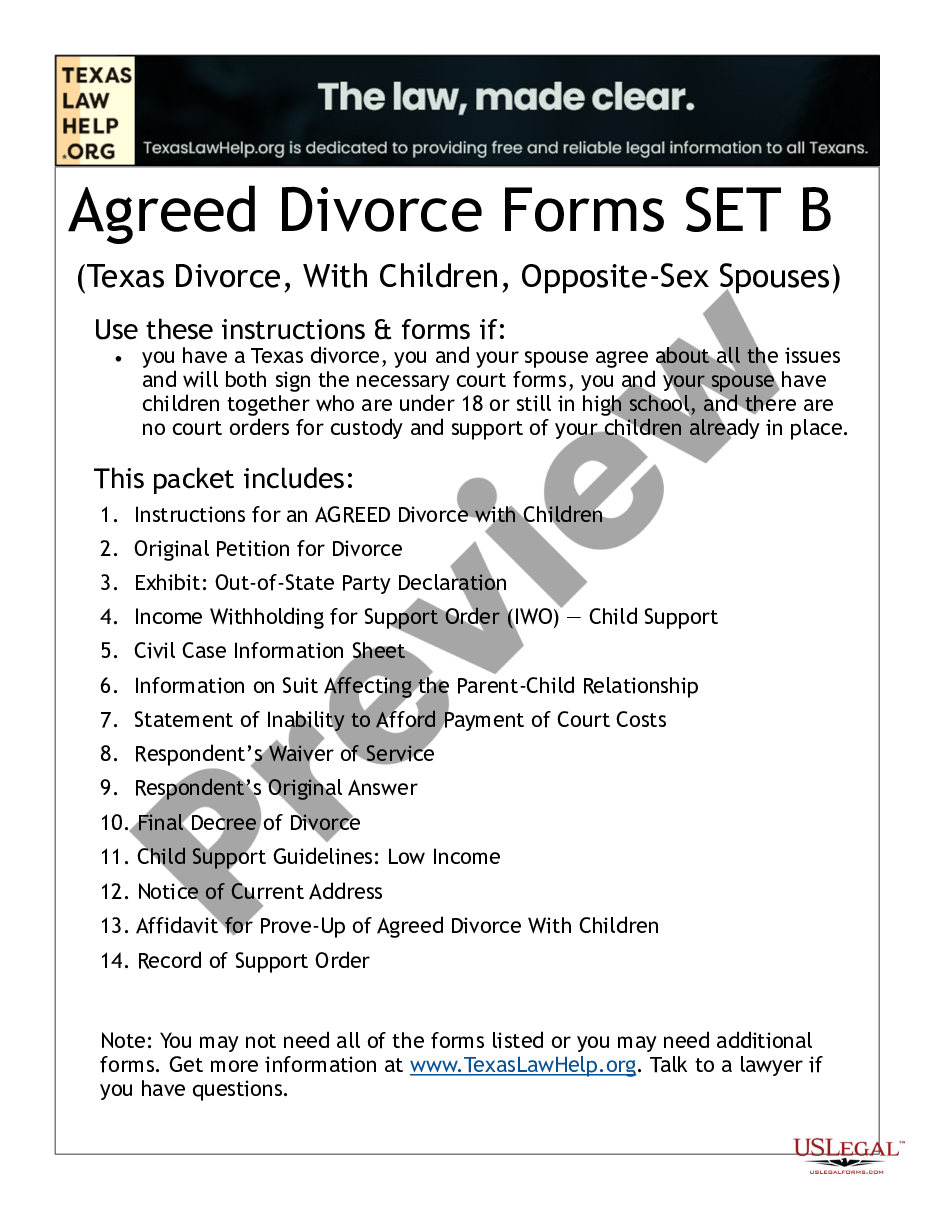
Texas Quitclaim Deed from Individual to Two Individuals in Joint Tenancy
About this form
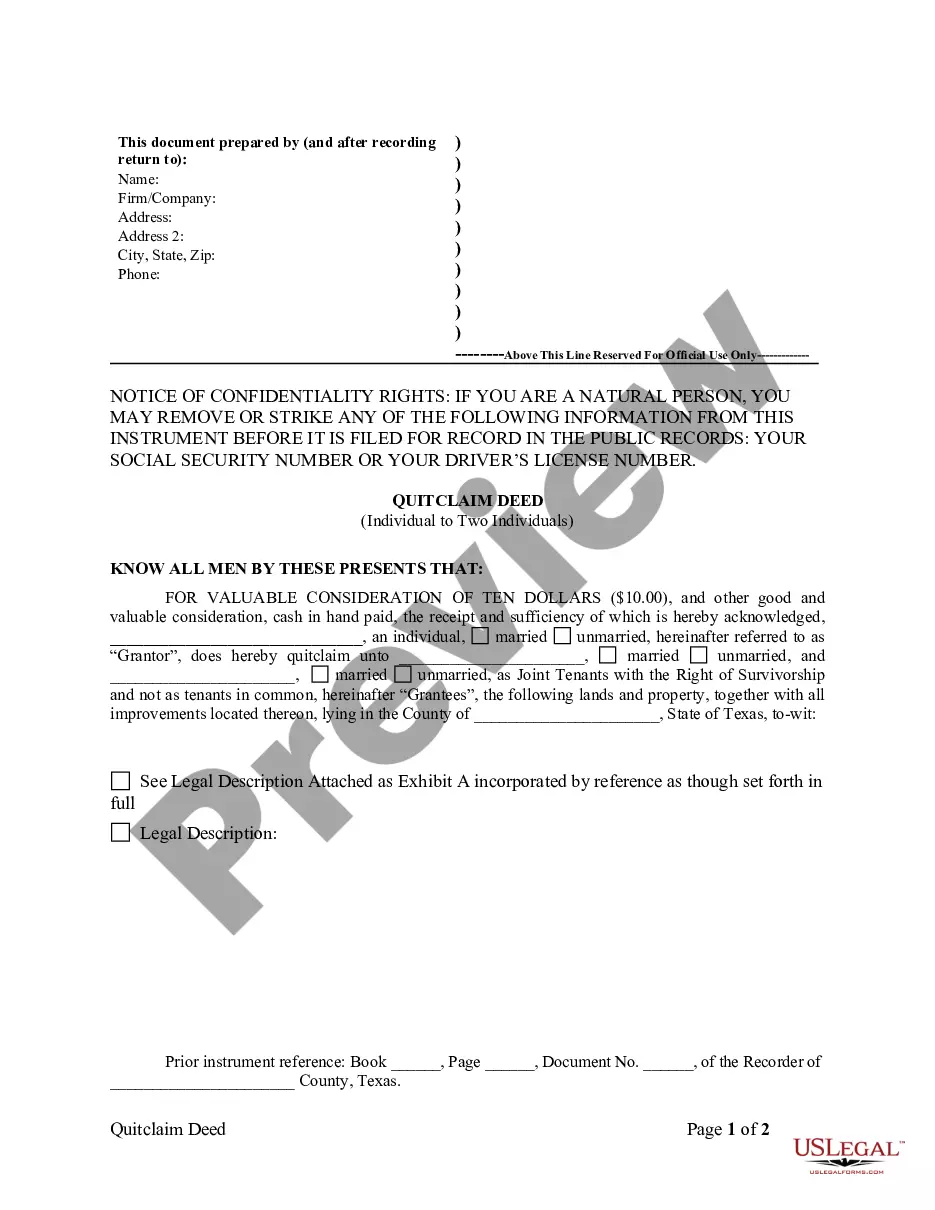
The Quitclaim Deed from Individual to Two Individuals in Joint Tenancy is a legal document used to transfer property ownership from one individual (the Grantor) to two individuals (the Grantees) as joint tenants. Unlike a warranty deed, this form does not guarantee that the Grantor holds clear title to the property, making it a simpler and quicker means of property transfer. This structure provides co-owners with rights of survivorship, meaning that if one owner passes away, their share automatically goes to the surviving owner.
Main sections of this form
- Identification of the Grantor and Grantees, including marital status.
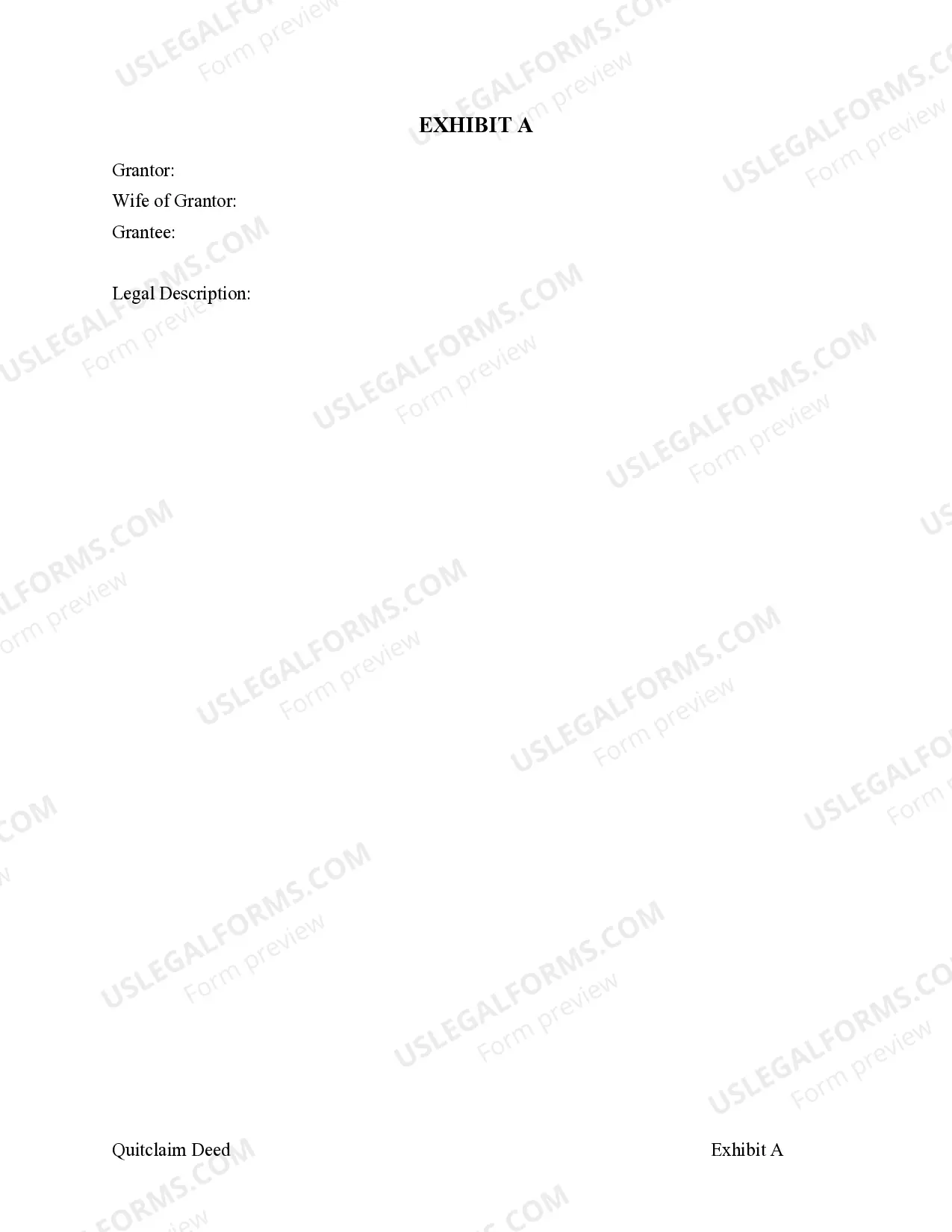
- Clear description of the property being transferred.
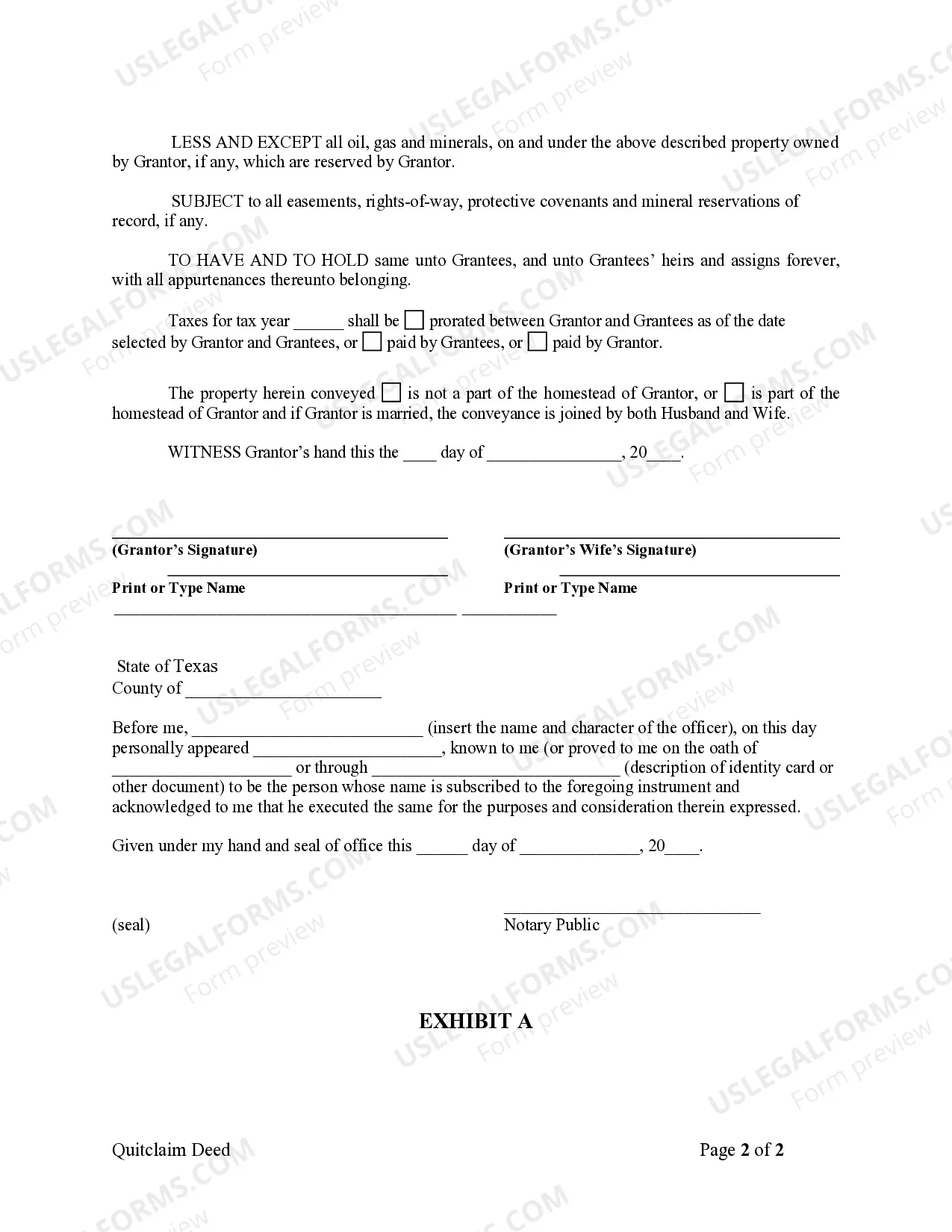
- Reservation clause for any oil, gas, and minerals on the property.
- Statement regarding taxes and their proration.
- Affirmation about the homestead status of the property.
- Notarization section for legal acknowledgment.




Common use cases
This form is appropriate when an individual wants to transfer property ownership to two individuals in a joint tenancy arrangement. Common scenarios may include transferring family property or when two friends wish to jointly own a piece of real estate. It is also suitable when the Grantor wishes to simplify ownership arrangements without transferring mineral rights.
Who needs this form
- Individuals looking to transfer property ownership to two other individuals.
- Individuals who want to create joint tenancy with rights of survivorship.
- Grantors who do not need extensive guarantees about property title.
- Persons transacting with family members or friends.
Completing this form step by step
- Identify the Grantor and state their marital status.
- List the names of the two Grantees and their marital statuses.
- Provide a detailed description of the property being conveyed.
- Specify any applicable tax arrangements for the property transfer.
- Ensure the form is signed in the presence of a notary public, if required.
Notarization requirements for this form
Notarization is required for this form to take effect. Our online notarization service, powered by Notarize, lets you verify and sign documents remotely through an encrypted video session, available 24/7.
Get your form ready online
Our built-in tools help you complete, sign, share, and store your documents in one place.
Make edits, fill in missing information, and update formatting in US Legal Forms—just like you would in MS Word.
Download a copy, print it, send it by email, or mail it via USPS—whatever works best for your next step.
Sign and collect signatures with our SignNow integration. Send to multiple recipients, set reminders, and more. Go Premium to unlock E-Sign.
If this form requires notarization, complete it online through a secure video call—no need to meet a notary in person or wait for an appointment.
We protect your documents and personal data by following strict security and privacy standards.

Make edits, fill in missing information, and update formatting in US Legal Forms—just like you would in MS Word.

Download a copy, print it, send it by email, or mail it via USPS—whatever works best for your next step.

Sign and collect signatures with our SignNow integration. Send to multiple recipients, set reminders, and more. Go Premium to unlock E-Sign.

If this form requires notarization, complete it online through a secure video call—no need to meet a notary in person or wait for an appointment.

We protect your documents and personal data by following strict security and privacy standards.
Common mistakes
- Failing to include clear identification of the property being transferred.
- Not specifying the marital status of the Grantor and Grantees.
- Neglecting to provide the necessary signatures and notarization.
Why complete this form online
- Convenience of downloading and completing the form from home.
- Editability allows for customization based on specific needs.
- Access to legal forms prepared by licensed attorneys, ensuring compliance and reliability.
Summary of main points
- The Quitclaim Deed effectively transfers property ownership without guarantees regarding the title.
- It's ideal for shared ownership situations, particularly among family or close associates.
- Ensure the form is completed accurately for valid legal transfer and that it is notarized.
Looking for another form?
Form popularity
FAQ
It is also crucial that a spouse know about the loan, even if he or she is not on the mortgage. In general, the spouse must sign a deed of trust, the Truth in Lending and Right to Cancel documents. By signing these documents, they are simply acknowledging the existence of the mortgage.
Unlike most states Texas does not automatically recognize joint tenancies as having a right of survivorship. Instead the parties must agree, in writing, to include a right of survivorship.
In order to transfer ownership of the marital home pursuant to a divorce, one spouse is going to need to sign a quitclaim deed, interspousal transfer deed, or a grant deed, in order to convey the title to the property.
The deed specifies that the joint tenants own an equal amount of interest in the purchased property and are thus equally liable for it financially.Instead of selling, a joint tenant can choose to transfer their interest to another party.
A quitclaim deed affects ownership and the name on the deed, not the mortgage. Because quitclaim deeds expose the grantee to certain risks, they are most often used between family members and where there is no exchange of money.Quitclaim deeds transfer title but do not affect mortgages.
A quitclaim deed transfers title but makes no promises at all about the owner's title.A person who signs a quitclaim deed to transfer property they do not own results in no title at all being transferred since there is no actual ownership interest. The quitclaim deed only transfers the type of title you own.
In states like California and Florida, the spouses may use a quitclaim deed to transfer the property without warranting title. Other stateslike Texasrecognize a similar type of deed called a deed without warranty.
If you sign a quitclaim deed to release yourself from ownership of the property or a claim to the title, then that doesn't mean you are no longer held accountable for the mortgage payment.Otherwise, you may be held responsible for unpaid payments despite no longer having a claim to the title.