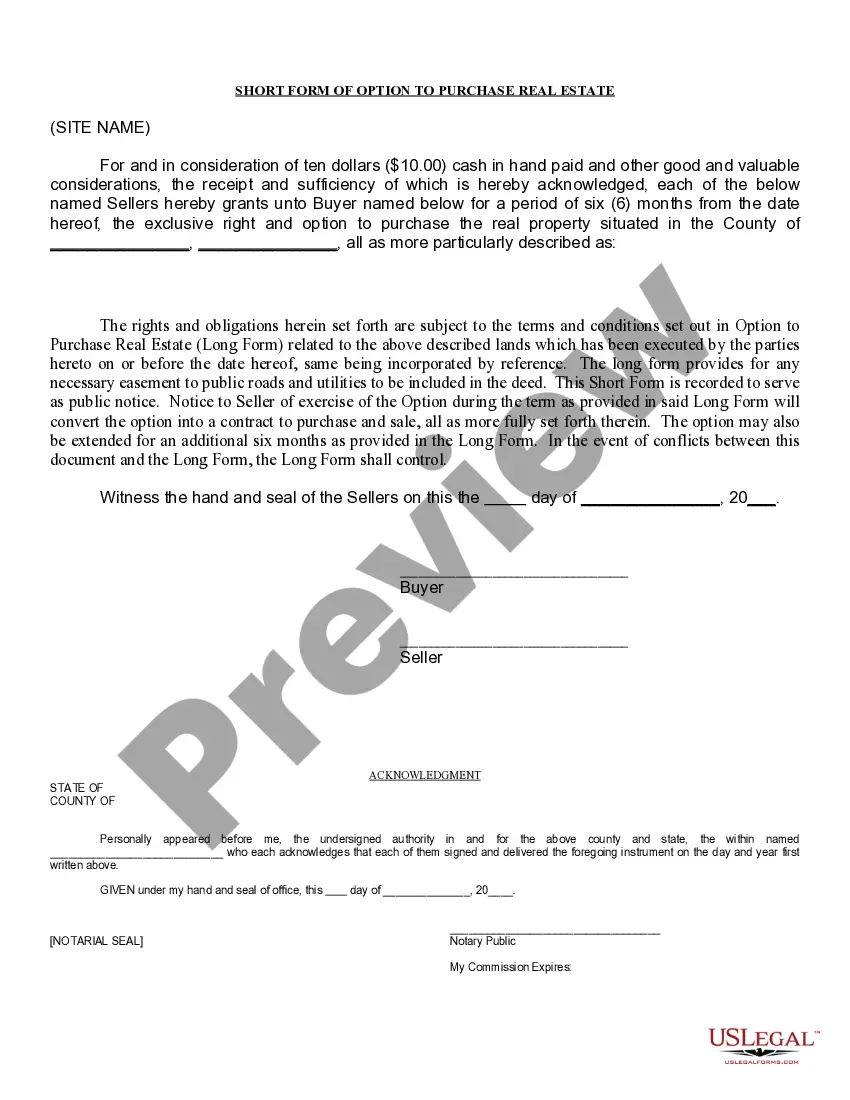
Texas Waiver, Release of Liability, and Hold Harmless Agreement of Lessee in Favor of Lessor
Overview of this form
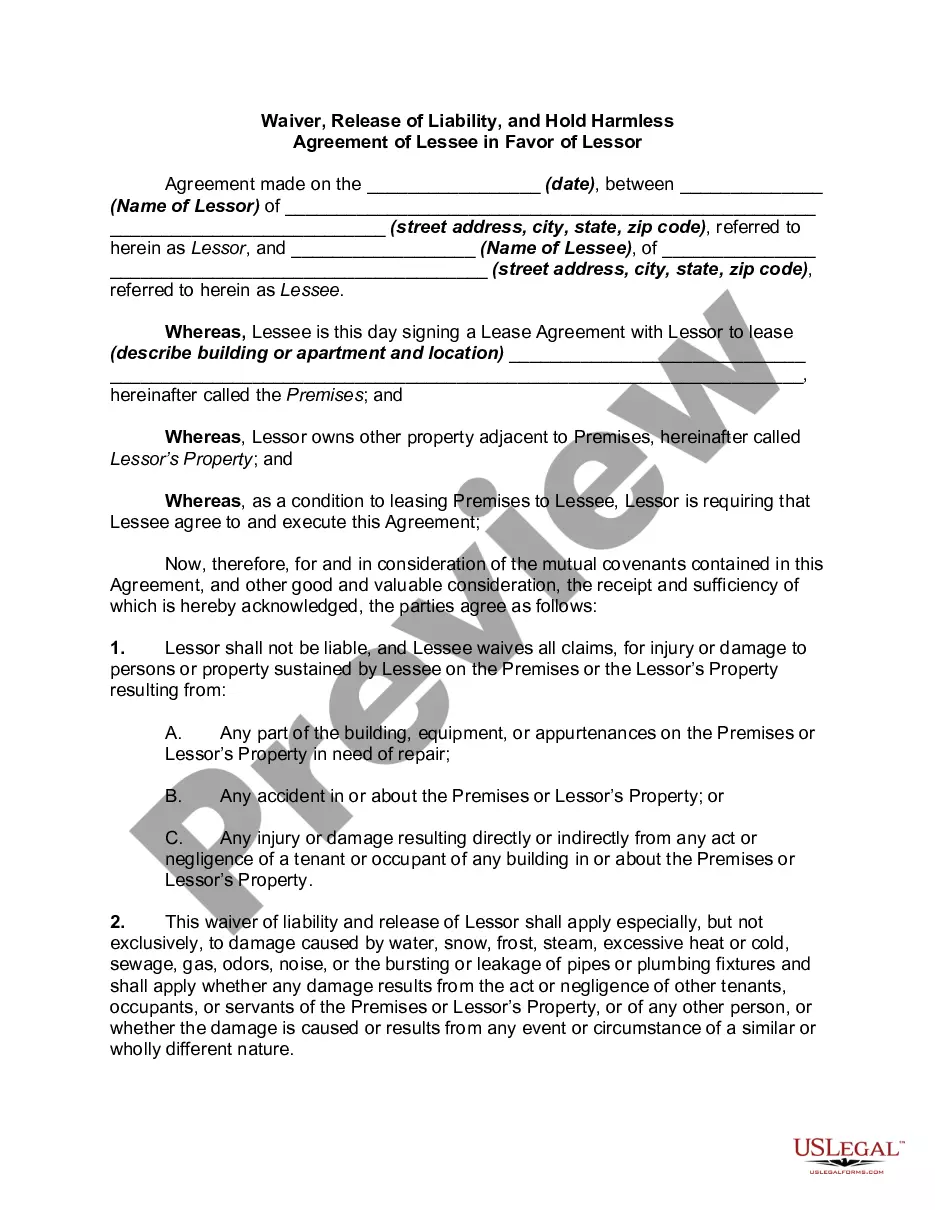
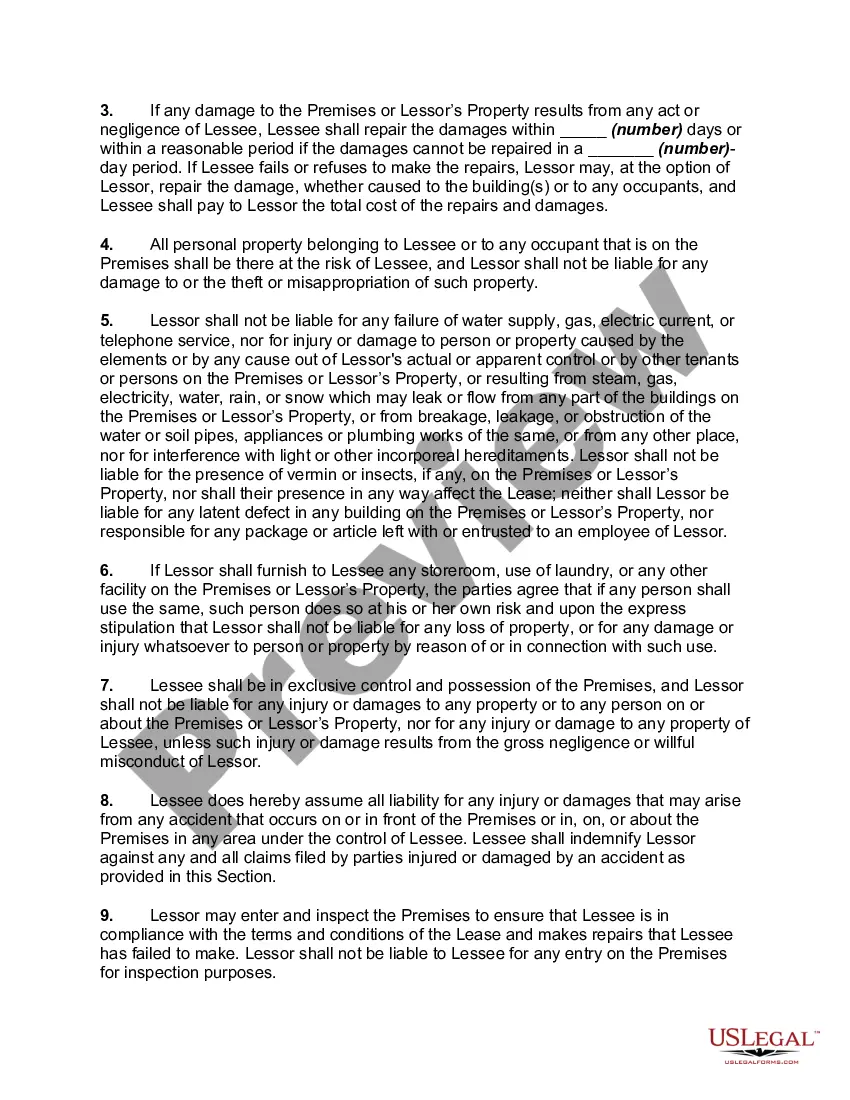
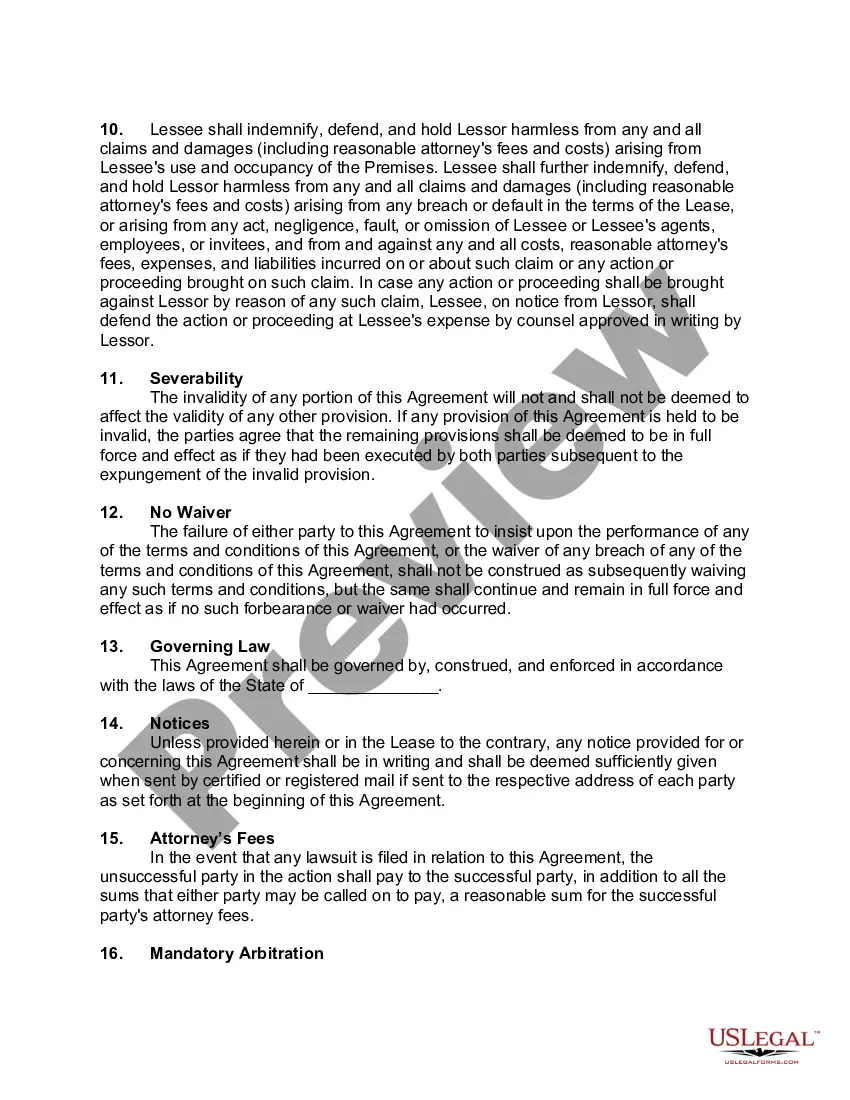
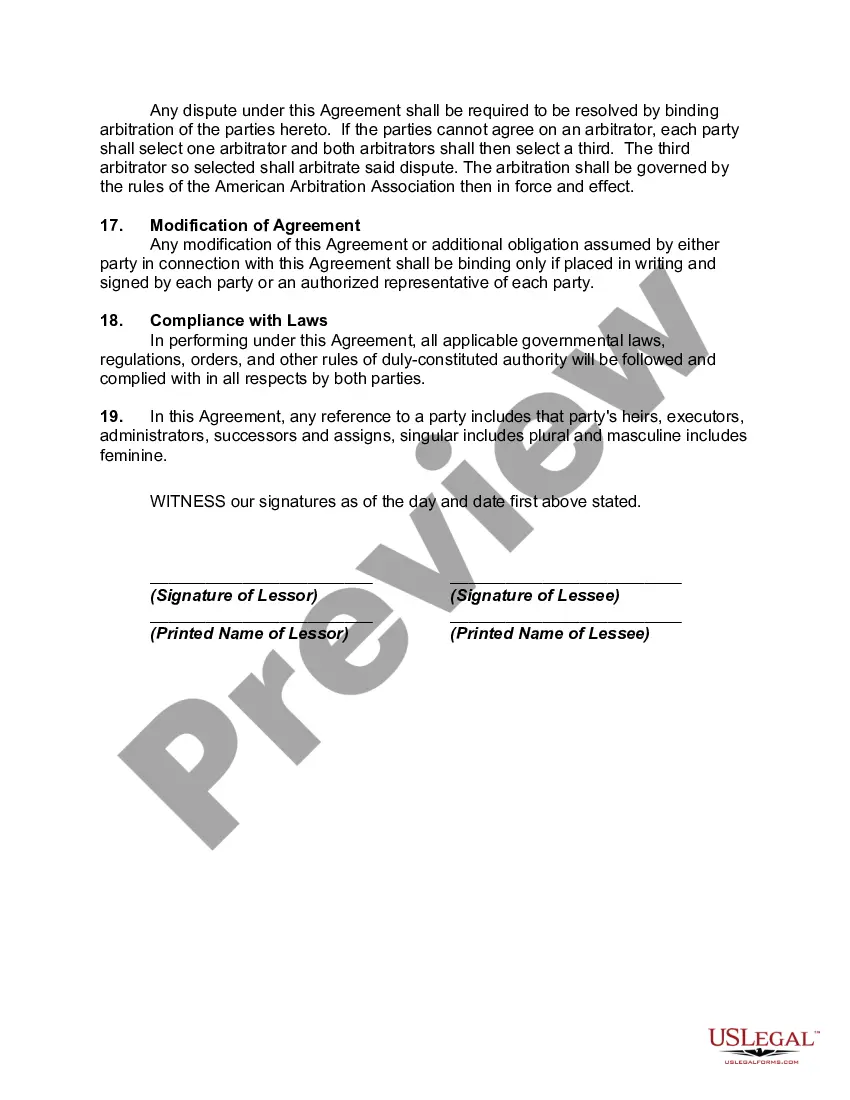
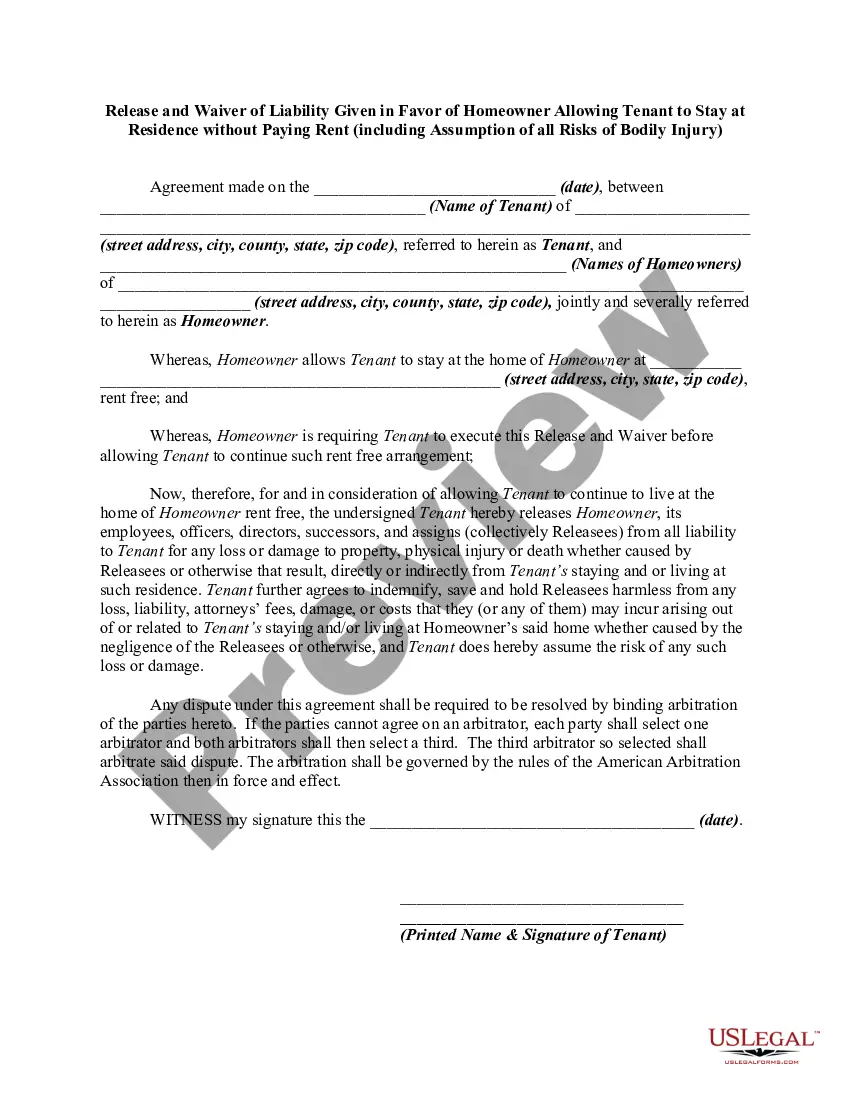
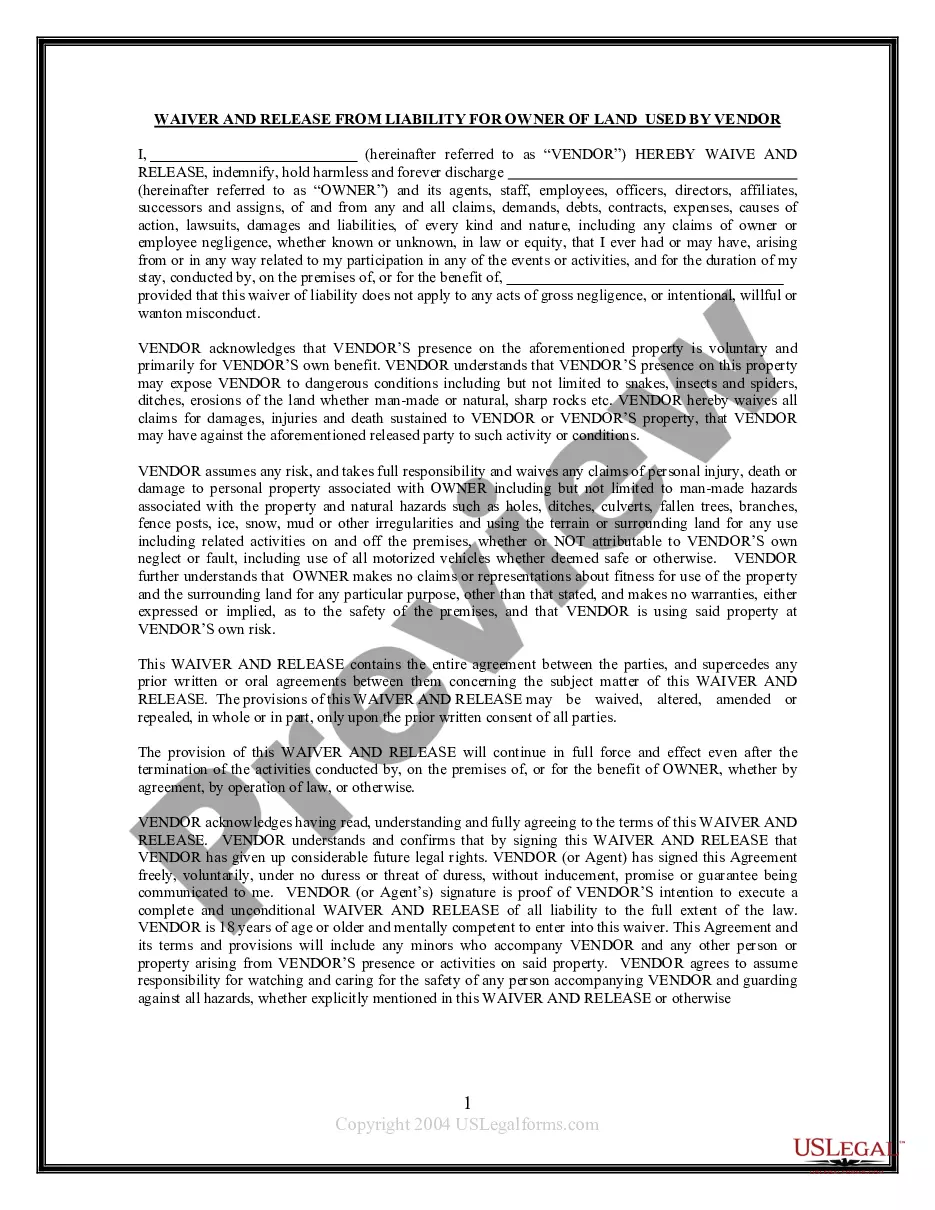
The Waiver, Release of Liability, and Hold Harmless Agreement of Lessee in Favor of Lessor is a legal document that protects a landlord from liability for injuries or damages that occur on the leased property. This form establishes that the lessee waives their right to hold the lessor accountable for certain incidents, which can include accidents caused by negligence. Unlike standard lease agreements, this form specifically outlines the extent of liability and responsibilities regarding maintenance and safety on the premises, helping both parties understand their rights and obligations related to the rental property.
What’s included in this form
- Identification of parties: Includes the names and addresses of both the lessor and lessee.
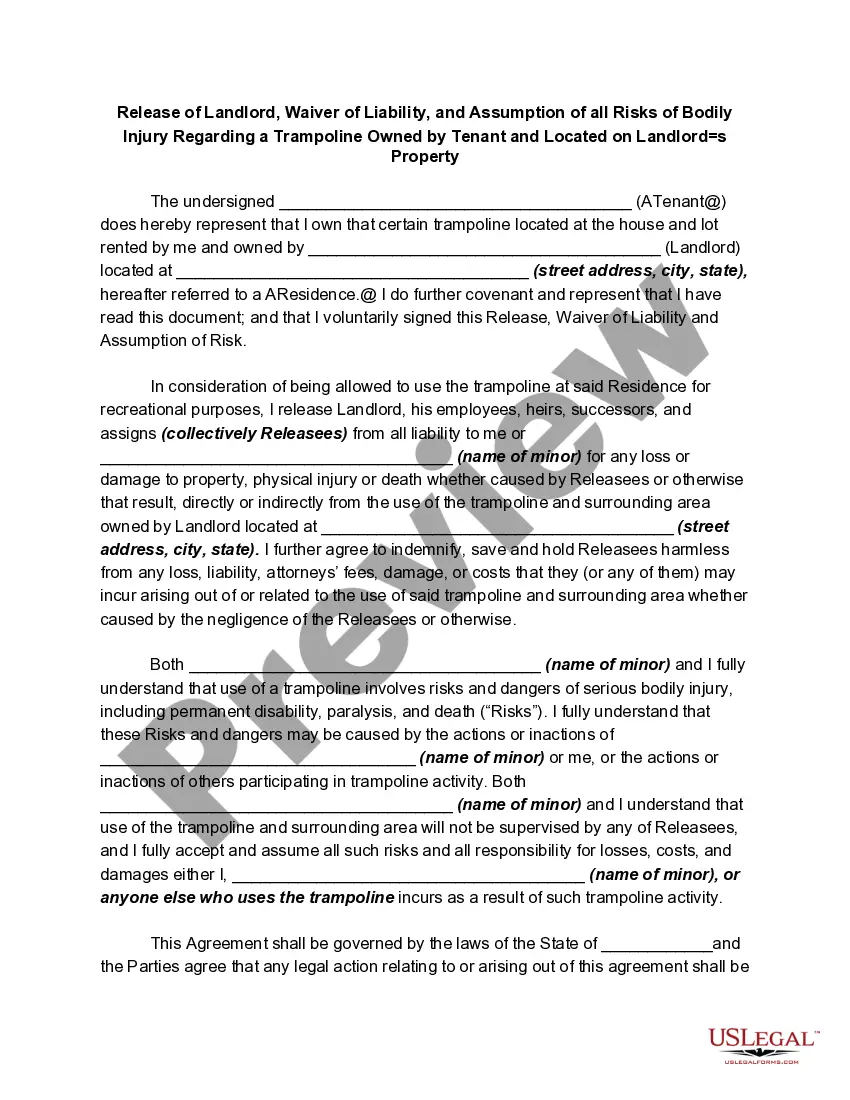
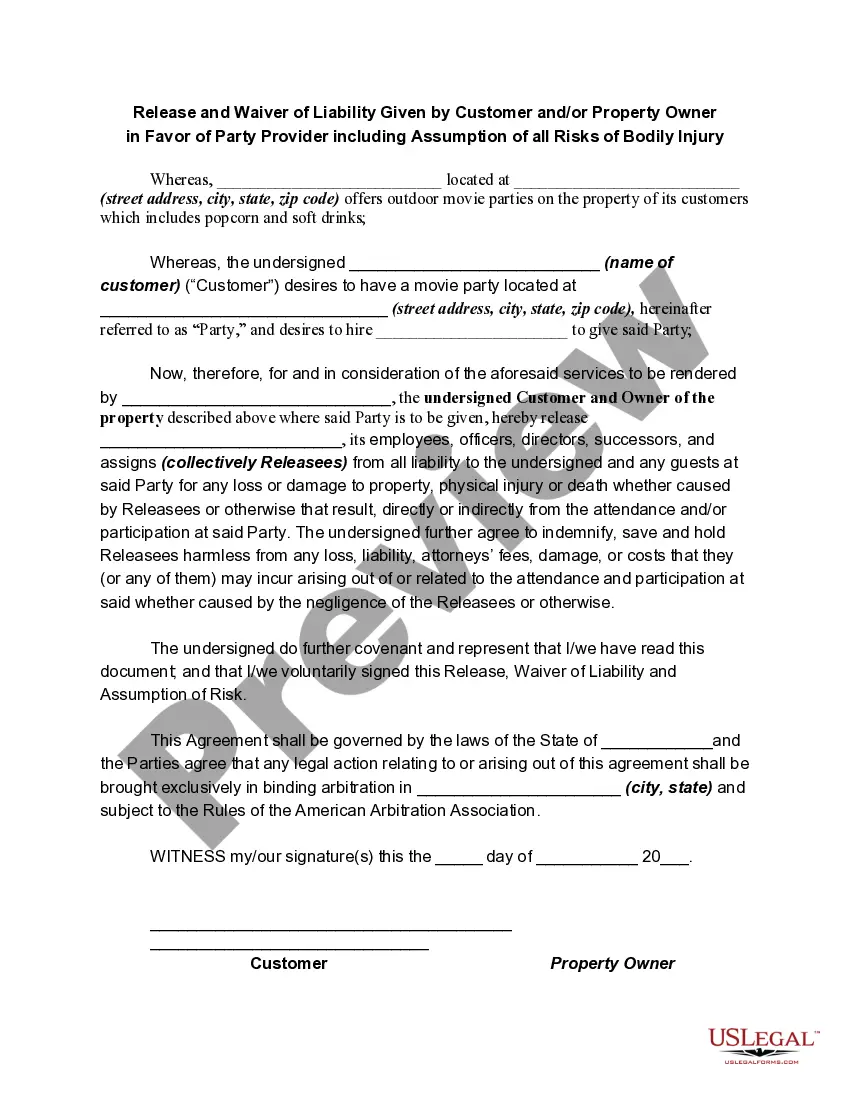
- Waiver of liability: Lessee waives claims for injury or damage sustained on the premises.
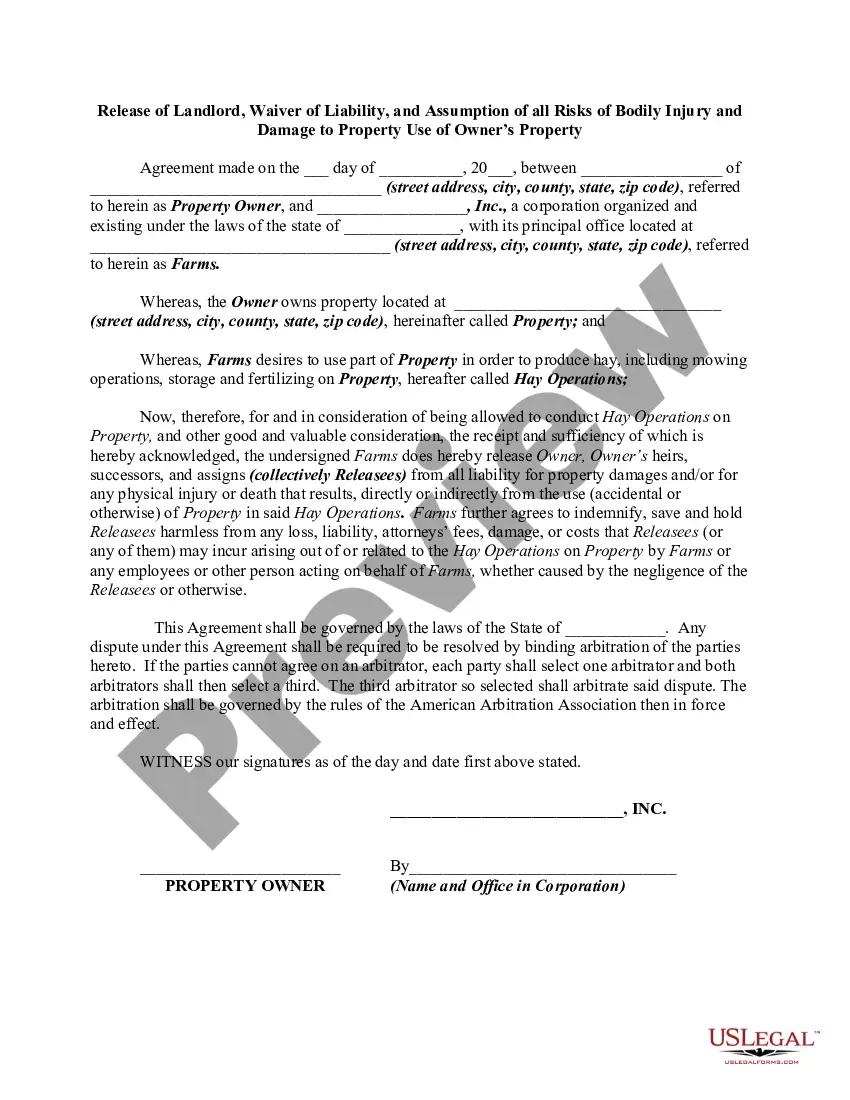
- Indemnification clause: Lessee agrees to indemnify the lessor for claims or damages arising from their use of the property.
- Repair responsibilities: Lessee is responsible for repairing any damage they cause to the premises.
- Exclusive control: Clarifies that the lessee has exclusive control over the premises and associated risks.
- Governing law: Specifies the laws that will govern the interpretation and enforcement of the agreement.
Situations where this form applies
This form is used primarily when entering into a lease agreement in which the landlord wishes to limit their liability for injuries or damages that occur on the rental property. It is particularly useful in residential leases where risks such as accidents or property damage may arise due to normal usage. If you are a landlord looking to protect yourself legally or a tenant wishing to understand your responsibilities concerning liability, this agreement is essential.
Intended users of this form
- Landlords seeking to limit their liability for accidents or damages on their property.
- Tenants who want to clearly understand their liabilities and responsibilities under a lease agreement.
- Real estate professionals who draft lease agreements and want to include liability waivers.
How to complete this form
- Identify the parties: Fill in the names and addresses of the lessor and lessee at the beginning of the document.
- Describe the premises: Clearly outline the property being leased, including its location and any relevant details.
- Specify the date: Enter the date on which this agreement is made.
- Review liability clauses: Ensure both parties understand the liability waivers and responsibilities outlined in the document.
- Sign and date: Both the lessor and lessee must sign and print their names at the end of the form.
Does this form need to be notarized?
This form does not typically require notarization to be legally valid. However, some jurisdictions or document types may still require it. US Legal Forms provides secure online notarization powered by Notarize, available 24/7 for added convenience.
Get your form ready online
Our built-in tools help you complete, sign, share, and store your documents in one place.
Make edits, fill in missing information, and update formatting in US Legal Forms—just like you would in MS Word.
Download a copy, print it, send it by email, or mail it via USPS—whatever works best for your next step.
Sign and collect signatures with our SignNow integration. Send to multiple recipients, set reminders, and more. Go Premium to unlock E-Sign.
If this form requires notarization, complete it online through a secure video call—no need to meet a notary in person or wait for an appointment.
We protect your documents and personal data by following strict security and privacy standards.

Make edits, fill in missing information, and update formatting in US Legal Forms—just like you would in MS Word.

Download a copy, print it, send it by email, or mail it via USPS—whatever works best for your next step.

Sign and collect signatures with our SignNow integration. Send to multiple recipients, set reminders, and more. Go Premium to unlock E-Sign.

If this form requires notarization, complete it online through a secure video call—no need to meet a notary in person or wait for an appointment.

We protect your documents and personal data by following strict security and privacy standards.
Common mistakes to avoid
- Failing to provide accurate names and addresses of the lessor and lessee, which can invalidate the agreement.
- Omitting important details about the premises being leased.
- Not clearly understanding the liability waivers before signing the agreement.
Benefits of completing this form online
- Easy access to download and print the agreement from anywhere at any time.
- Editable templates that can be customized to fit specific lease agreements.
- Legal reliability as the forms are drafted by licensed attorneys specializing in landlord-tenant law.
Legal use & context
- Landlords may use this form to defend against claims arising from injuries that occur on the property.
- The enforceability of liability waivers may vary based on specific state laws and judicial interpretations.
Summary of main points
- This agreement protects landlords from liability for certain injuries or damages on leased premises.
- Lessee accepts responsibility for maintaining safety and may indemnify the landlord against claims.
- Understanding specific state laws is crucial when using this form, especially in Texas.
Looking for another form?
Form popularity
FAQ
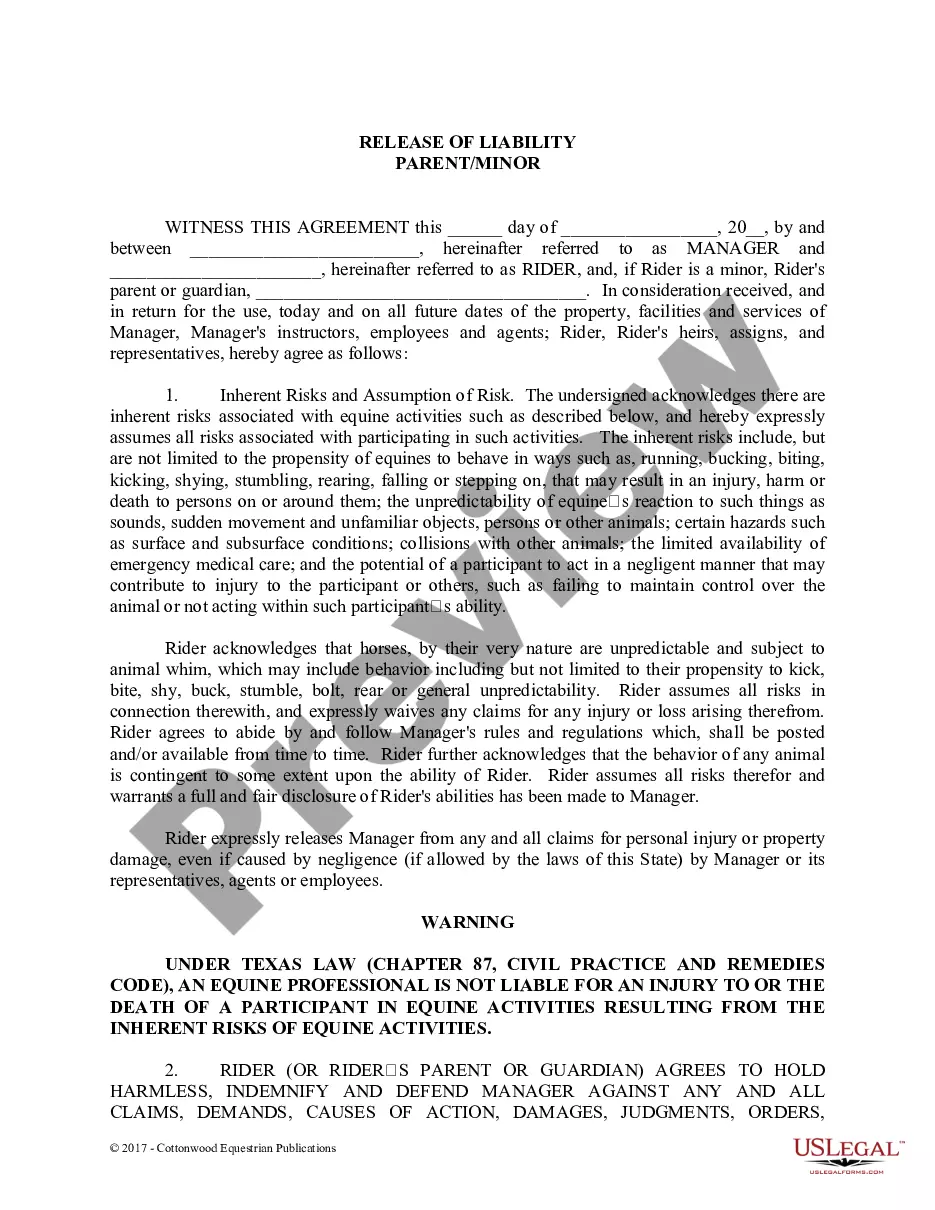
The date of the agreement. The name of the person held harmless or protected, with their address. The name of the other party to the agreement, with their address. Details about the activity or event the agreement is about, such as horseback riding or country club membership.
The main difference in this case is that hold harmless may require a party to protect against actual losses as well as potential losses while indemnification protects against actual losses only.
By signing a broad form hold harmless agreement you are possibly exposing your company to uninsurable risk. Contractual Liability Coverage for sole or gross negligent acts of your client is excluded is y most liability policies.As with all contracts, it is best to have legal counsel review prior to signing.
A waiver of subrogation provision prevents the insurance company (who steps into the shoes of the insured after it pays a loss) from suing the other party to the contract which likely caused the loss. Moreover, waiver of subrogation provisions found in contracts are generally upheld by Courts.
A hold harmless clause is used to protect a party in a contract from liability for damages or losses. In signing such a clause, the other party accepts responsibility for certain risks involved in contracting for the service.
Overview of Hold Harmless Agreements A hold harmless agreement (HHA) is a contract that prevents one party from being liable to the other if there are injuries or damages. Contracts are either unilateral, meaning the contract protects only one party, or reciprocal, where both parties waive liability against each other.
Executing Your Hold Harmless Agreement Once the hold harmless agreement has been completed, simply have all parties sign and date to complete the document. Although not required, it is always a good idea to have the document notarized for extra protection.
A hold harmless agreement included within a contract grants the party providing the service the right to be free from liability. A waiver of subrogation causes one to give up the right to allow an insurance company to step into the position of the contractual party to recover damages.
Get help. Writing a waiver should not be complicated. Use the correct structure. Proper formatting. Include a subject line. Include a caution! Talk about the activity risks. Do not forget an assumption of risk. Hold harmless.