Texas General Warranty Deed from Individual to Individual with Grantor Reserving a Life Estate
About this form
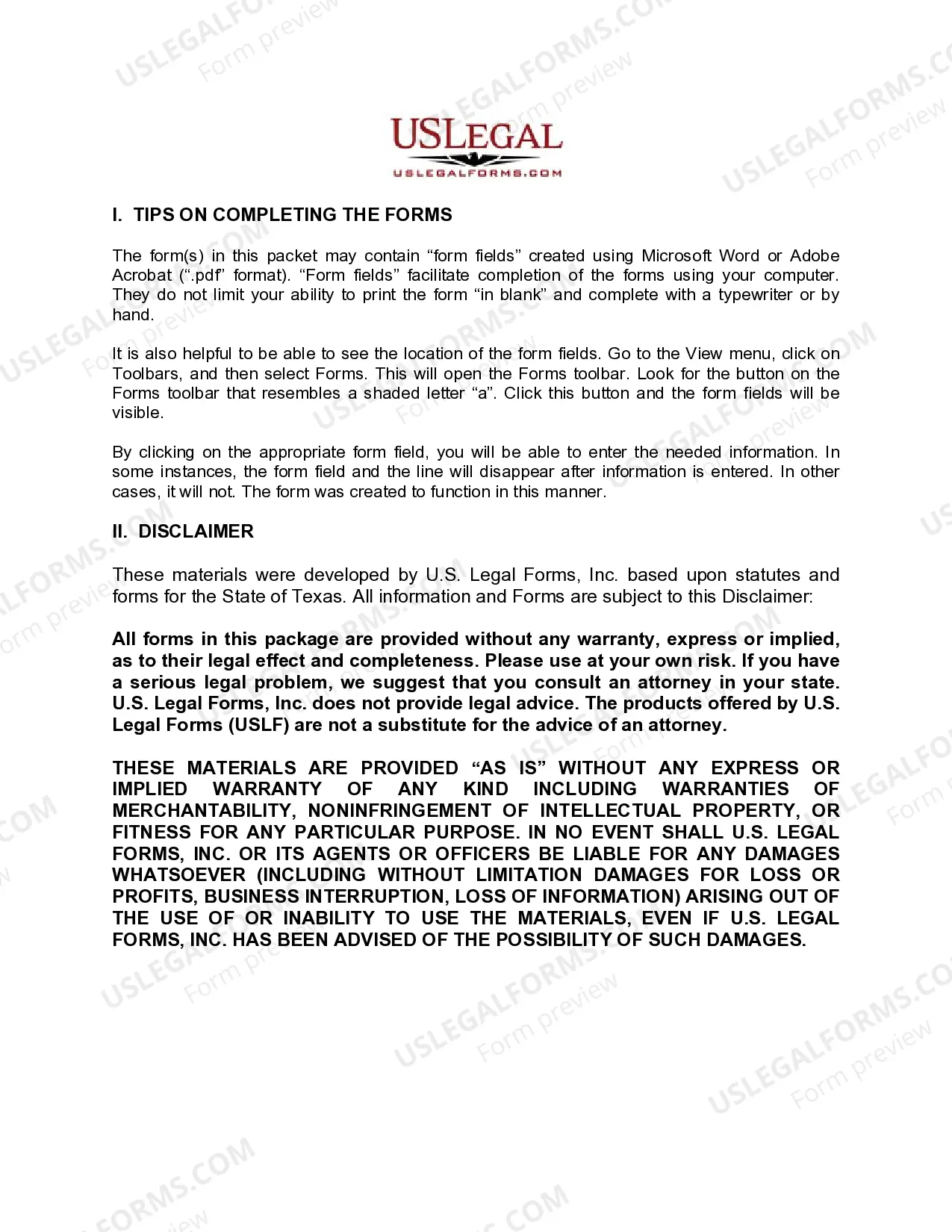
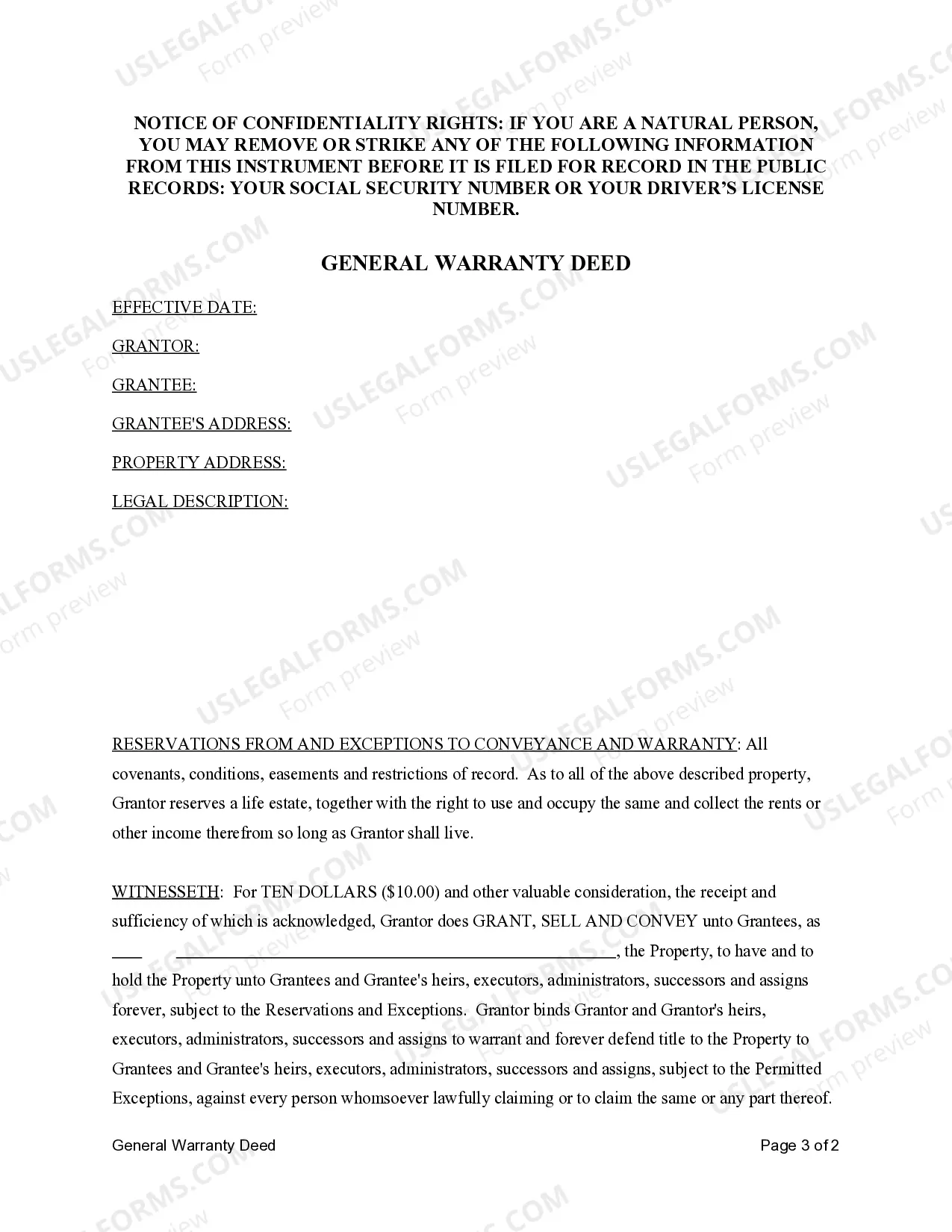
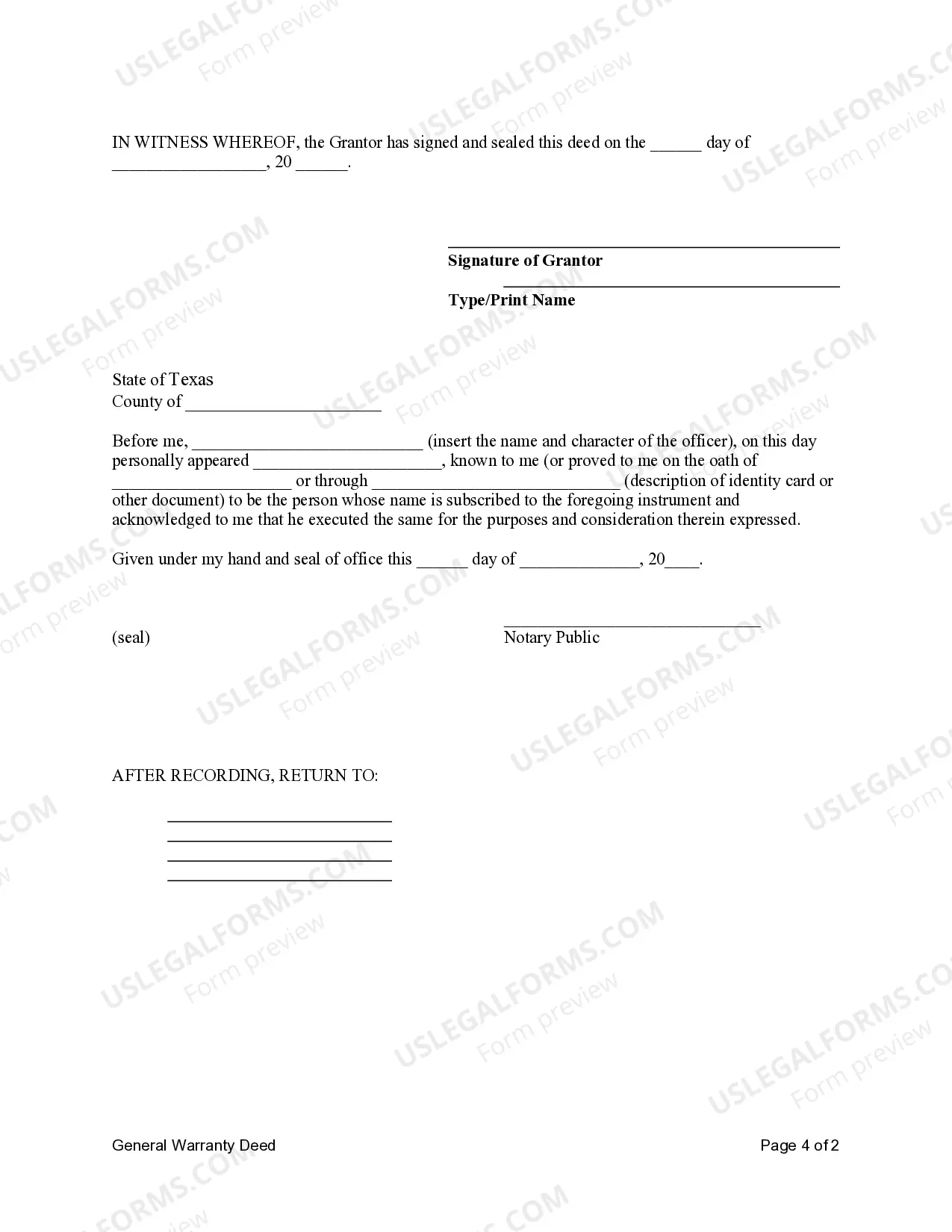
This General Warranty Deed is a legal document wherein an individual (the Grantor) conveys property to another individual (the Grantee) while reserving a life estate in the property for the Grantor. This means the Grantor retains the right to live on the property for the rest of their life. This form differs from standard property transfer deeds by including the life estate provision and providing full warranties concerning the title of the property.
Form components explained
- Identification of the Grantor and Grantee
- Description of the property being transferred
- Statement of consideration (payment for the property)
- Retention of life estate by the Grantor
- Signatures and date of execution


When to use this document
This form is suitable for individuals looking to transfer ownership of real estate to another person while still retaining the right to live in the property for their remaining lifetime. It is often used in family situations, such as between parents and children, where the parent wishes to ensure they can stay in their home without relinquishing ownership.
Who needs this form
- Individuals wanting to transfer property ownership while retaining a life estate
- Property owners looking to provide security to family members or loved ones
- Those needing to comply with specific estate planning strategies
How to prepare this document
- Identify the parties: Enter the full names of the Grantor and Grantee.
- Specify the property: Clearly describe the property being conveyed.
- Enter the consideration: Indicate the amount paid for the property, typically Ten Dollars.
- Complete the life estate clause: Ensure it states that the Grantor reserves a life estate.
- Sign and date the document: Both Grantor and witness signatures may be required.
Does this document require notarization?
Notarization is required for this form to take effect. Our online notarization service, powered by Notarize, lets you verify and sign documents remotely through an encrypted video session, available 24/7.
Get your form ready online
Our built-in tools help you complete, sign, share, and store your documents in one place.
Make edits, fill in missing information, and update formatting in US Legal Forms—just like you would in MS Word.
Download a copy, print it, send it by email, or mail it via USPS—whatever works best for your next step.
Sign and collect signatures with our SignNow integration. Send to multiple recipients, set reminders, and more. Go Premium to unlock E-Sign.
If this form requires notarization, complete it online through a secure video call—no need to meet a notary in person or wait for an appointment.
We protect your documents and personal data by following strict security and privacy standards.

Make edits, fill in missing information, and update formatting in US Legal Forms—just like you would in MS Word.

Download a copy, print it, send it by email, or mail it via USPS—whatever works best for your next step.

Sign and collect signatures with our SignNow integration. Send to multiple recipients, set reminders, and more. Go Premium to unlock E-Sign.

If this form requires notarization, complete it online through a secure video call—no need to meet a notary in person or wait for an appointment.

We protect your documents and personal data by following strict security and privacy standards.
Common mistakes
- Failing to provide accurate descriptions of the property
- Not including the life estate clause if intended
- Omitting necessary signatures or dates
- Not consulting local laws for specific requirements
Why complete this form online
- Convenient access to legal documents anytime
- Editable forms that can be customized to fit personal needs
- Reliability backed by templates drafted by licensed attorneys
Looking for another form?

Form popularity
FAQ
Fill out the "grantor" section of the warranty deed. The grantors are the givers, or current owners, of the property. Use the legal name of each grantor and insert current addresses after each grantor's name.
A quitclaim deed can be used to transfer property from a trust, but a Special Warranty Deed seems to be a more common way to do this.
Write the county where the property is located on line provided next to the words "County of" beneath the words "The State of Texas." Write the name and address of the grantor on the lines provided after the words "Know all men by these presents, That I."
The Texas warranty deed is a form of deed that provides an unlimited warranty of title.In Texas, warranty deeds are often used: When a buyer is purchasing residential property from a seller for full value; When the buyer does not intend to purchase title insurance; or.
When you purchase property, the previous owner will transfer the warranty deed to you. However, if you're paying for your home with a mortgage, as most people do, the warranty deed is not free and clear.You must deal with your mortgage appropriately if you move to sell your home.
It's important to note that a warranty deed does not actually prove the grantor has ownership (a title search is the best way to prove that), but it is a promise by the grantor that they are transferring ownership and if it turns out they don't actually own the property, the grantor will be responsible for compensating
The answer is yes. Parties to a transaction are always free to prepare their own deeds. If you do so, be sure your deed measures up to your state's legal regulations, to help avert any legal challenge to the deed later.
Locate the deed that's in trust. Use the proper deed. Check with your title insurance company and lender. Prepare a new deed. Sign in the presence of a notary. Record the deed in the county clerk's office.
To make the form legally binding, you must sign it in front of a notary public. You must then file your signed and notarized deed with the county office that's in charge of recording property documents. Once the grantee signs the warranty deed, he/she legally has ownership and claim to the property.