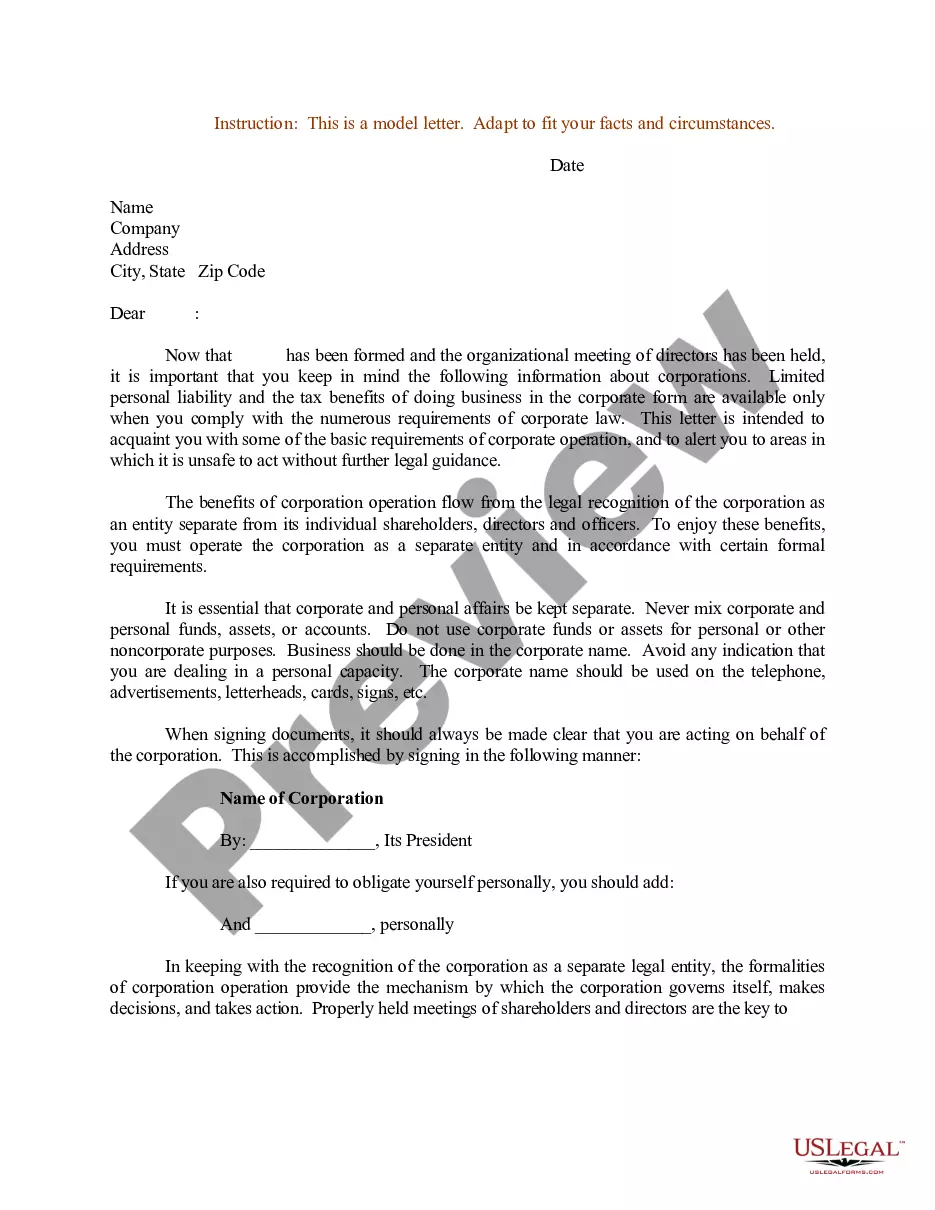
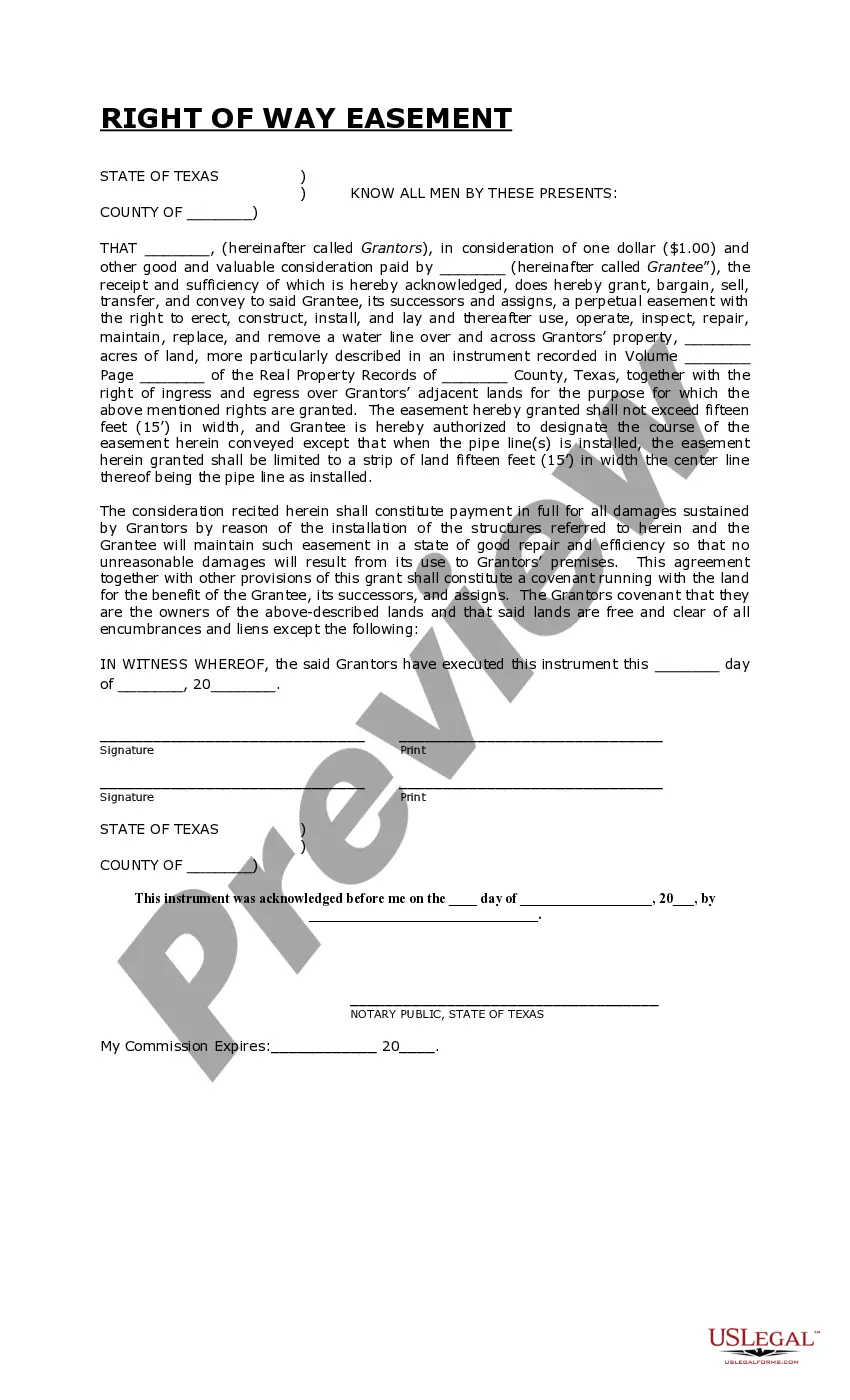
Texas Right of Way Easement
What is this form?
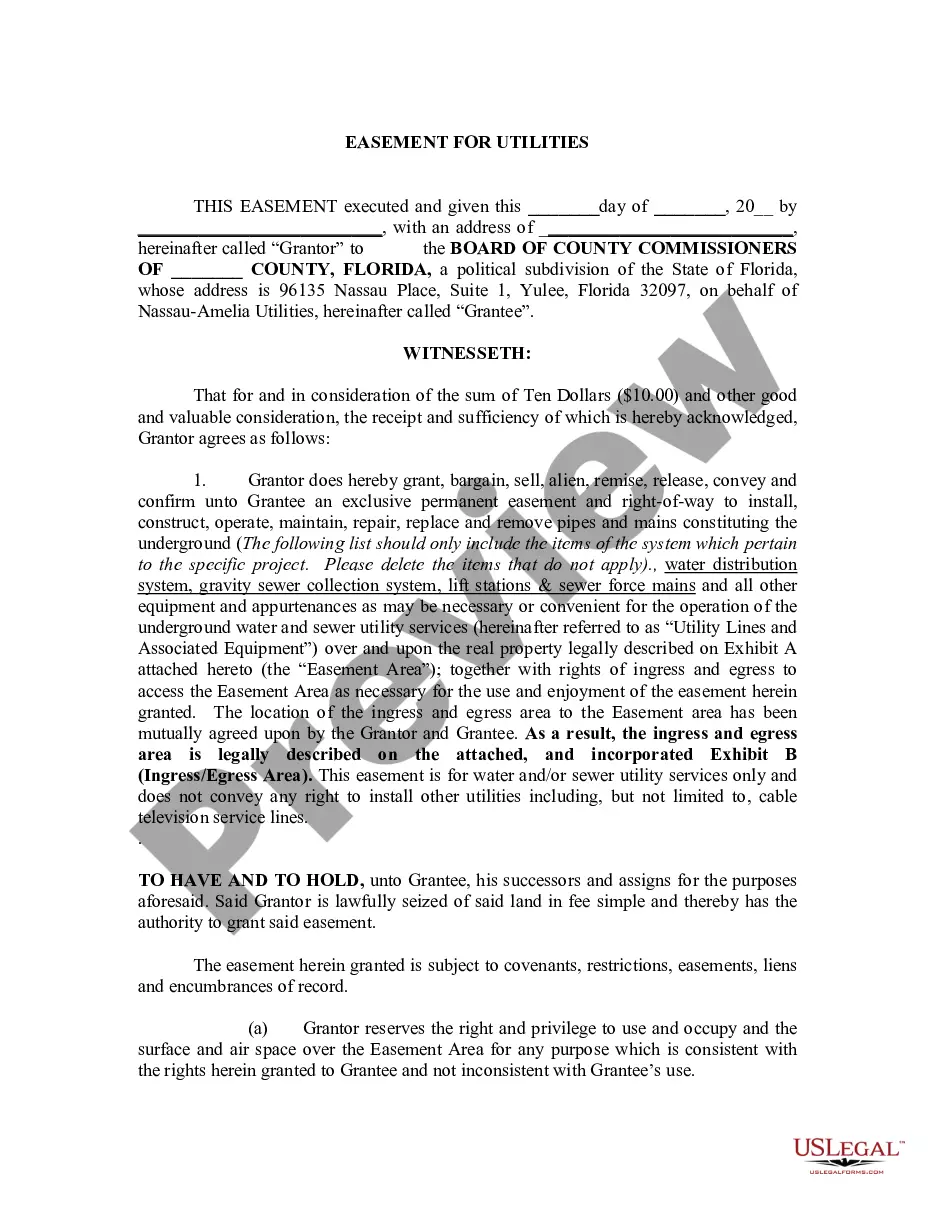
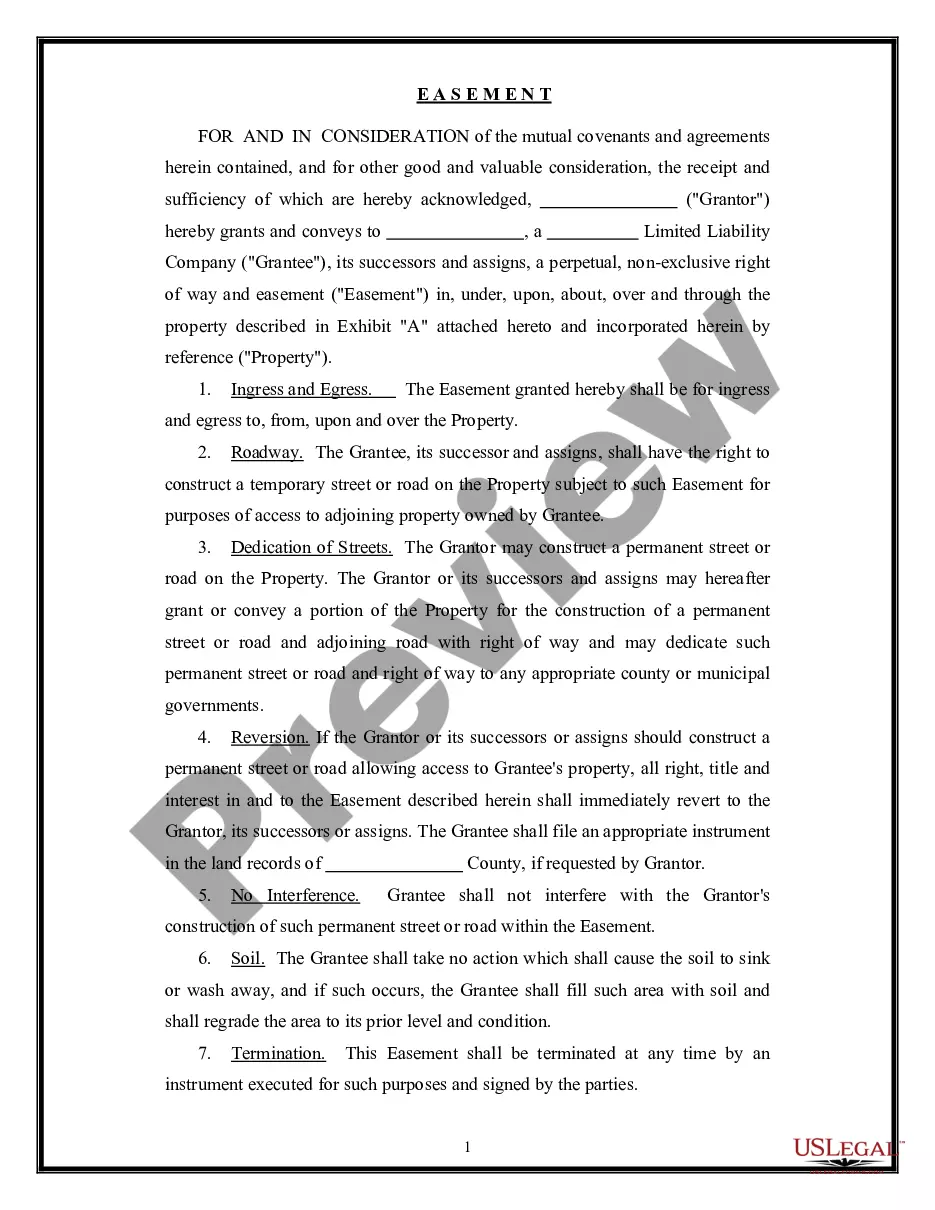
The Right of Way Easement form is a legal agreement that allows one party to use a specific tract of land owned by another party for a limited purpose. Unlike a lease, this form does not grant the grantee possession or ownership of the land. Instead, it provides the rights necessary to install and maintain infrastructure, such as water lines, over the specified property while ensuring that the landowner retains ownership and use of their property. This makes it a valuable tool for property owners and utility companies alike.
What’s included in this form
- Identification of the grantors (landowners) and grantee (party receiving the easement).
- Description of the specific property and the easement's purpose.
- Details about the scope and duration of the easement.
- Provisions for maintaining the easement and protecting the property from unreasonable damages.
- Signatures of the grantors and acknowledgment by a notary public.
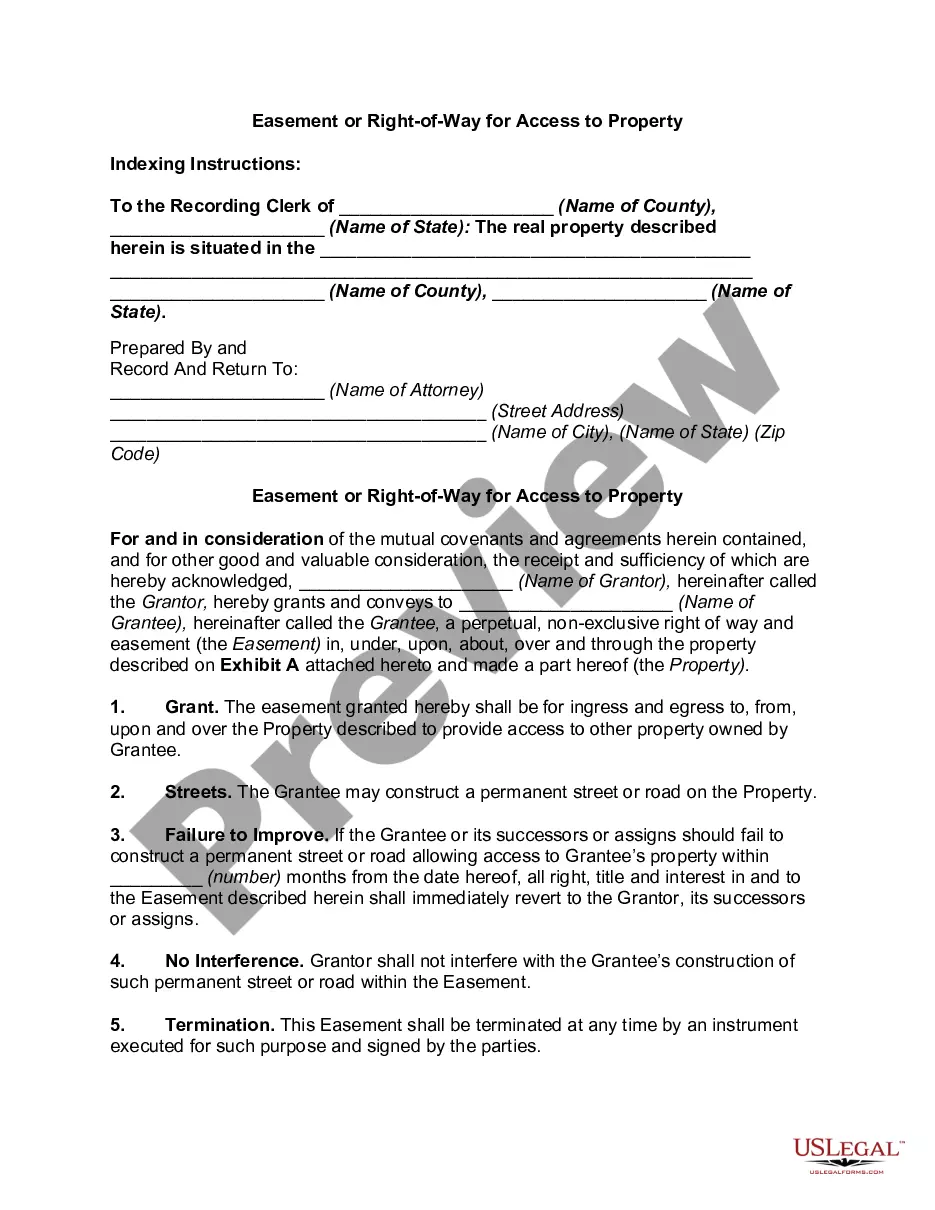
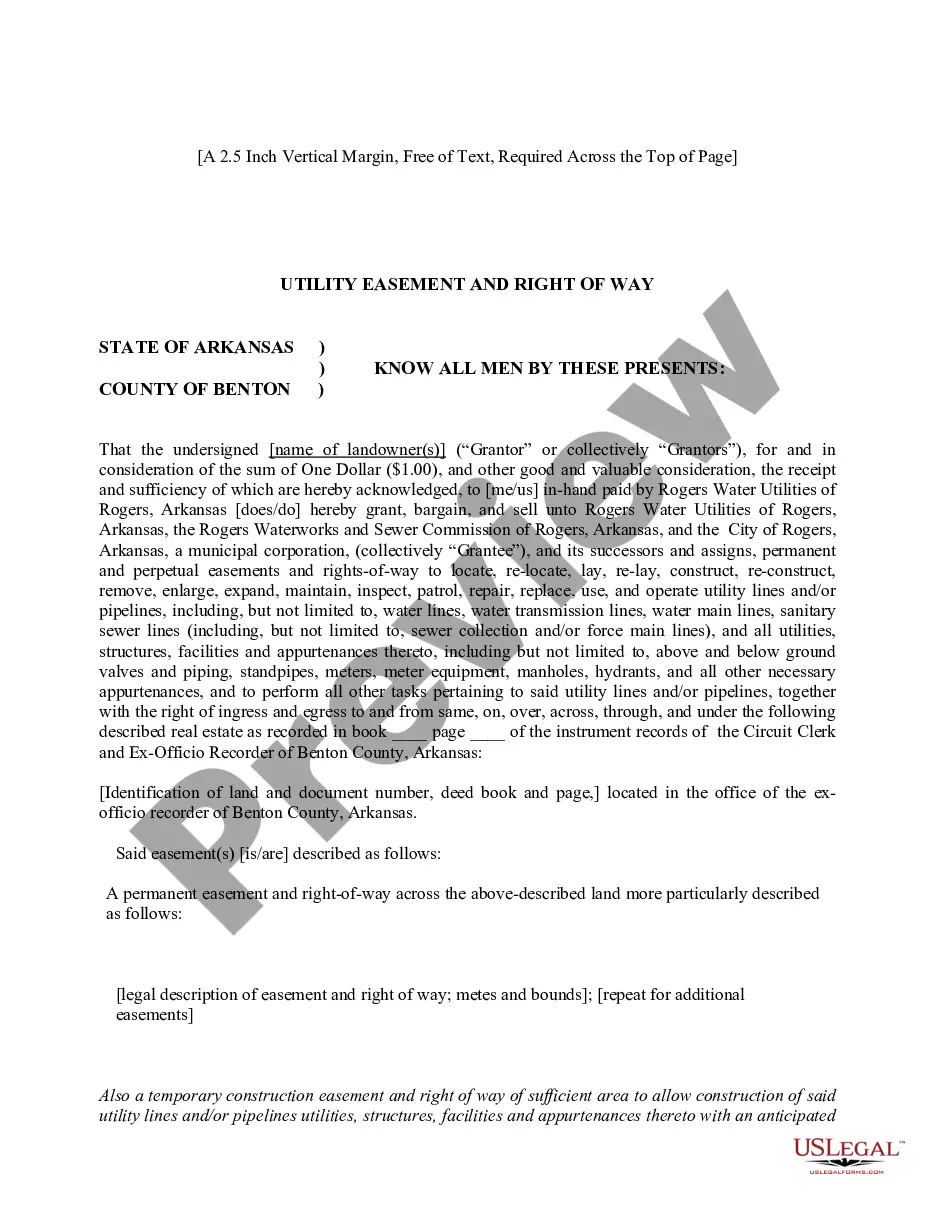

When to use this form
This form should be used when a property owner (grantor) agrees to allow another party (grantee) to use a portion of their land for a specific purpose, such as laying utility lines. It is essential in situations where infrastructure must be installed without transferring ownership rights. Typical scenarios include water or sewage lines, power cables, or other utilities needing a clear legal right to access the property for maintenance and operations.
Who needs this form
- Property owners who need to grant access to utility companies or other organizations.
- Utility companies seeking to install or maintain infrastructure across private land.
- Real estate professionals advising clients on property use and easements.
- Anyone involved in property transactions that require clear rights of access and use for specific purposes.
Instructions for completing this form
- Identify the parties involved: the grantors (landowners) and the grantee.
- Clearly describe the property location and the details of the easement.
- Specify the purpose of the easement and any limitations on its use.
- Ensure both parties sign the document, including any required witness or notary signatures.
- Keep a copy for your records and provide a copy to the grantee for their files.
Notarization requirements for this form
Yes, this form must be notarized to be legally valid. This ensures the authenticity of the signatures and the intentions of the parties involved. US Legal Forms offers integrated online notarization options available 24/7, providing a secure video call service that meets legal standards without the need for travel.
Get your form ready online
Our built-in tools help you complete, sign, share, and store your documents in one place.
Make edits, fill in missing information, and update formatting in US Legal Forms—just like you would in MS Word.
Download a copy, print it, send it by email, or mail it via USPS—whatever works best for your next step.
Sign and collect signatures with our SignNow integration. Send to multiple recipients, set reminders, and more. Go Premium to unlock E-Sign.
If this form requires notarization, complete it online through a secure video call—no need to meet a notary in person or wait for an appointment.
We protect your documents and personal data by following strict security and privacy standards.

Make edits, fill in missing information, and update formatting in US Legal Forms—just like you would in MS Word.

Download a copy, print it, send it by email, or mail it via USPS—whatever works best for your next step.

Sign and collect signatures with our SignNow integration. Send to multiple recipients, set reminders, and more. Go Premium to unlock E-Sign.

If this form requires notarization, complete it online through a secure video call—no need to meet a notary in person or wait for an appointment.

We protect your documents and personal data by following strict security and privacy standards.
Common mistakes
- Failing to provide a precise description of the property or easement area.
- Not including all necessary signatures or notary acknowledgment.
- Omitting details about maintenance responsibilities for the easement.
- Assuming the form is valid without confirming compliance with local laws.
Benefits of using this form online
- Convenient access to professionally drafted legal forms anytime and anywhere.
- Edit and customize the form easily to match specific situations.
- Reliable templates prepared by licensed attorneys to ensure legal compliance.
- Quick download options to receive the form immediately after completion.
Looking for another form?

Form popularity
FAQ
ofway is, in itself, an easement. It's a type of affirmative easement. But while a conventional easement gives the grantee the legal goahead to use the property for an agreedupon purpose, a rightofway only allows the grantee to cross over?or under?another owner's property.
Easements are a pervasive element in Texas property law and are generally defined as a right, privilege, or advantage that exists as a distinct interest from ownership rights in real property. Most commonly, an easement allows a person (or the public) to use the land of another in a certain manner.
If you seek easement by necessity, you must prove That you owned the landlocked property at some time as well as the tract across which you seek access. This is called unity of ownership of the alleged dominant and servient estates prior to severance. The claimed access is necessary, not merely a convenience.
An easement is a legal right to use someone else's land for public or private purposes. While many easement agreements are written into the property records, that is not always the case. Some easements can be obtained through other means.
Easement width shall be 24 feet and the length shall be the full width of adjoining properties fronting the roadway. The Director of Public Works may approve an alternative layout as necessary given the shape of the particular tract.
§ 152.55 UTILITY EASEMENT. (A) In general, alleys will not be required, but utility easements for public utilities shall be dedicated. (B) The easements shall be 7 feet on each side of the rear or side lot lines. Easements shall connect with established easements and adjoining property.
What are Easements and Rights-of-Way? Easements are nonpossessory interests in real property. More simply, an easement is the right to use another's property for a specific purpose. Rights-of-way are easements that specifically grant the holder the right to travel over another's property.
Public Easements In Texas Public easements give the right of enjoyment and use to the public generally or to an entire community. A public easement may be created (a) by a dedication from the owner, (b) by prescription (use by the public for many years), or (c) by condemnation by the government.