Texas Complaint for the Conversion of Property
What is this form?
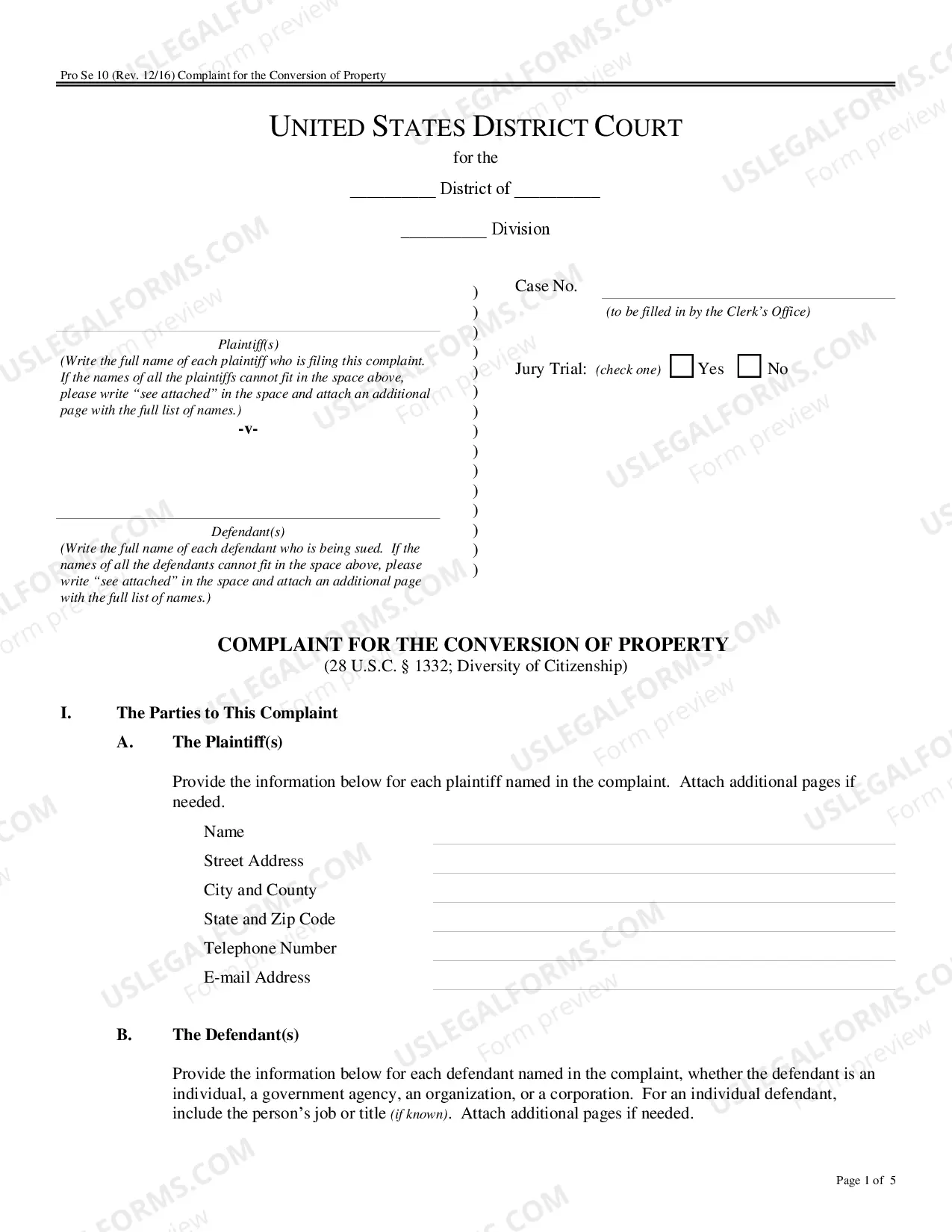
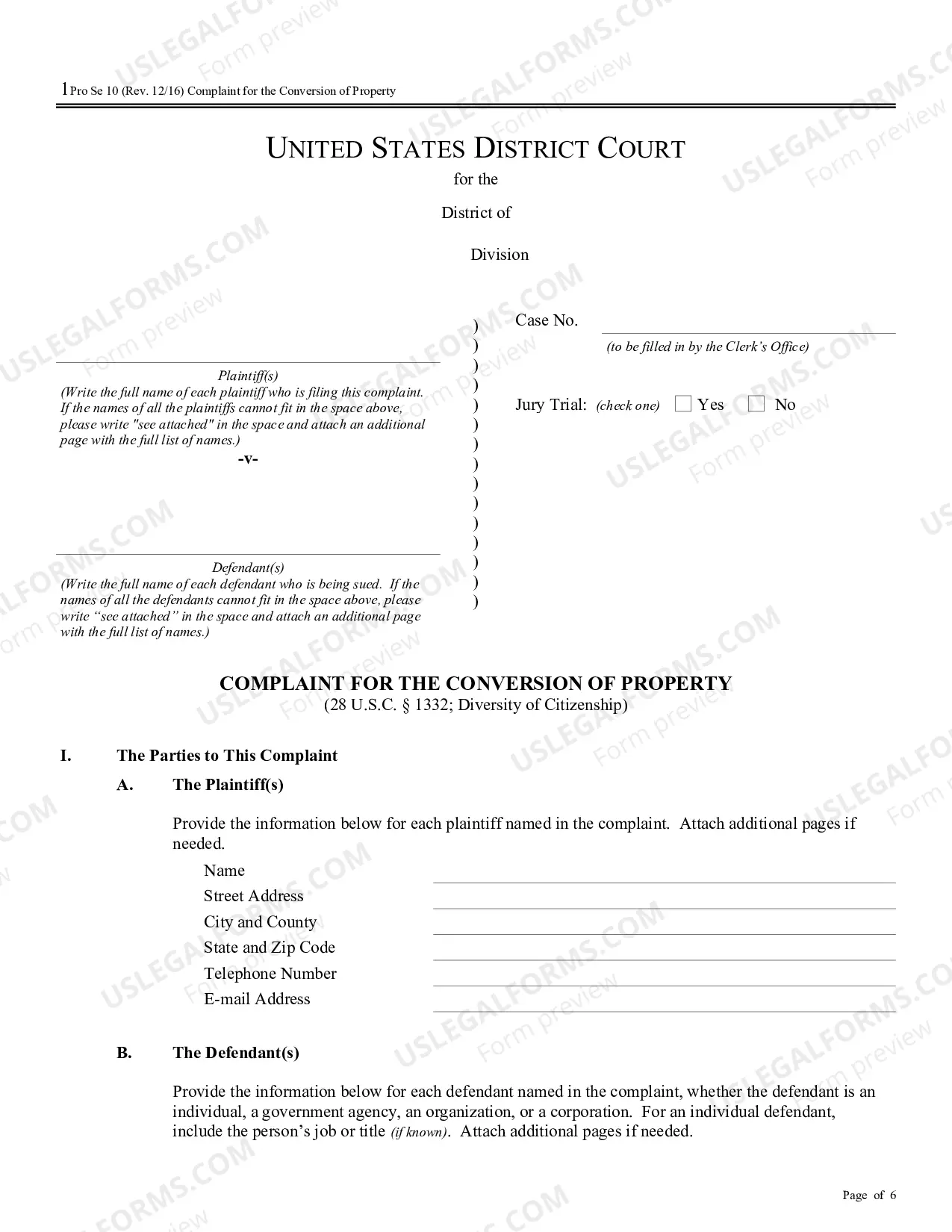
The Complaint for the Conversion of Property is a legal document used to formally accuse another party of unlawfully taking or retaining possession of property that belongs to someone else. This form initiates a lawsuit seeking restitution or damages for the wrongful conversion of property. Unlike other legal complaints, this focuses specifically on property disputes where ownership and wrongful possession are central issues.
Form components explained
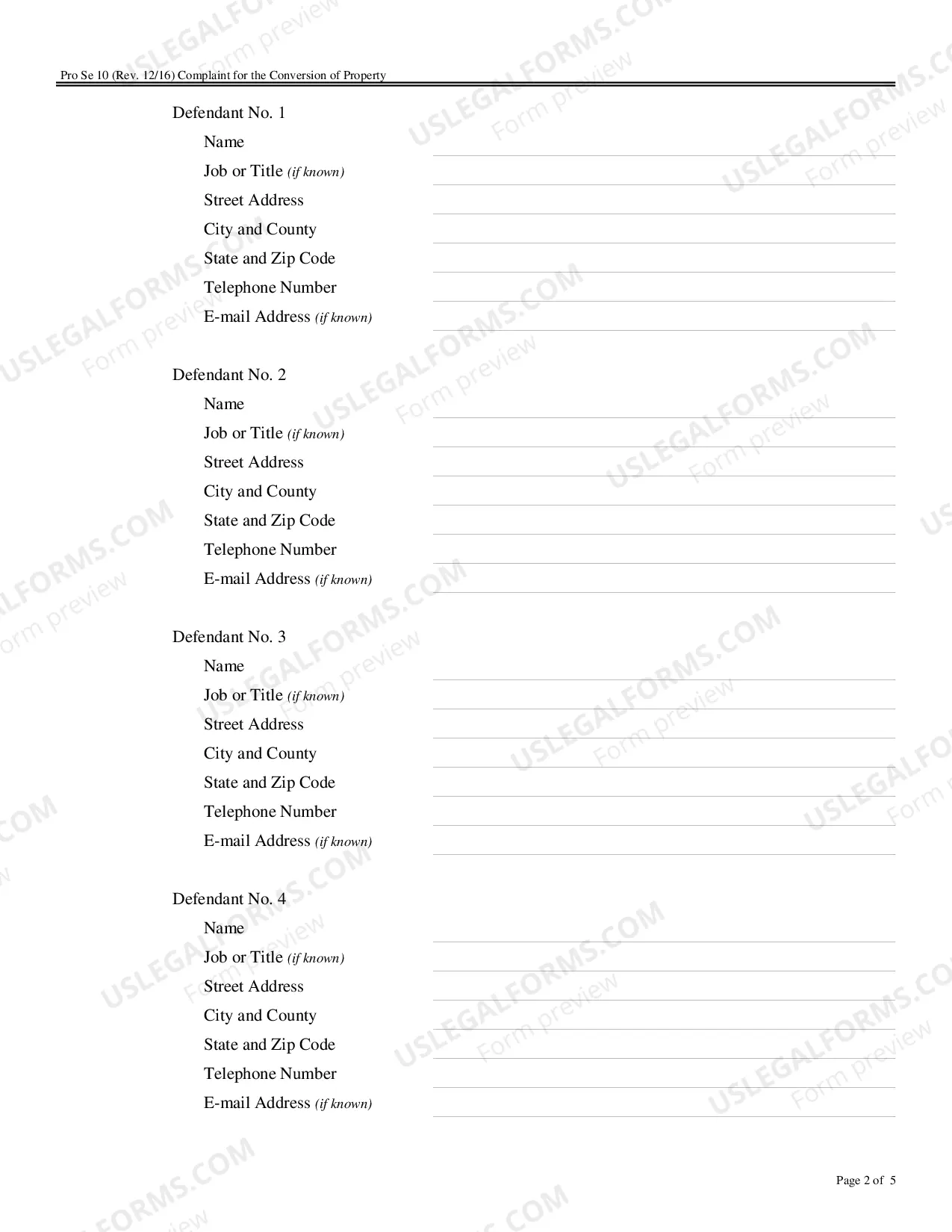
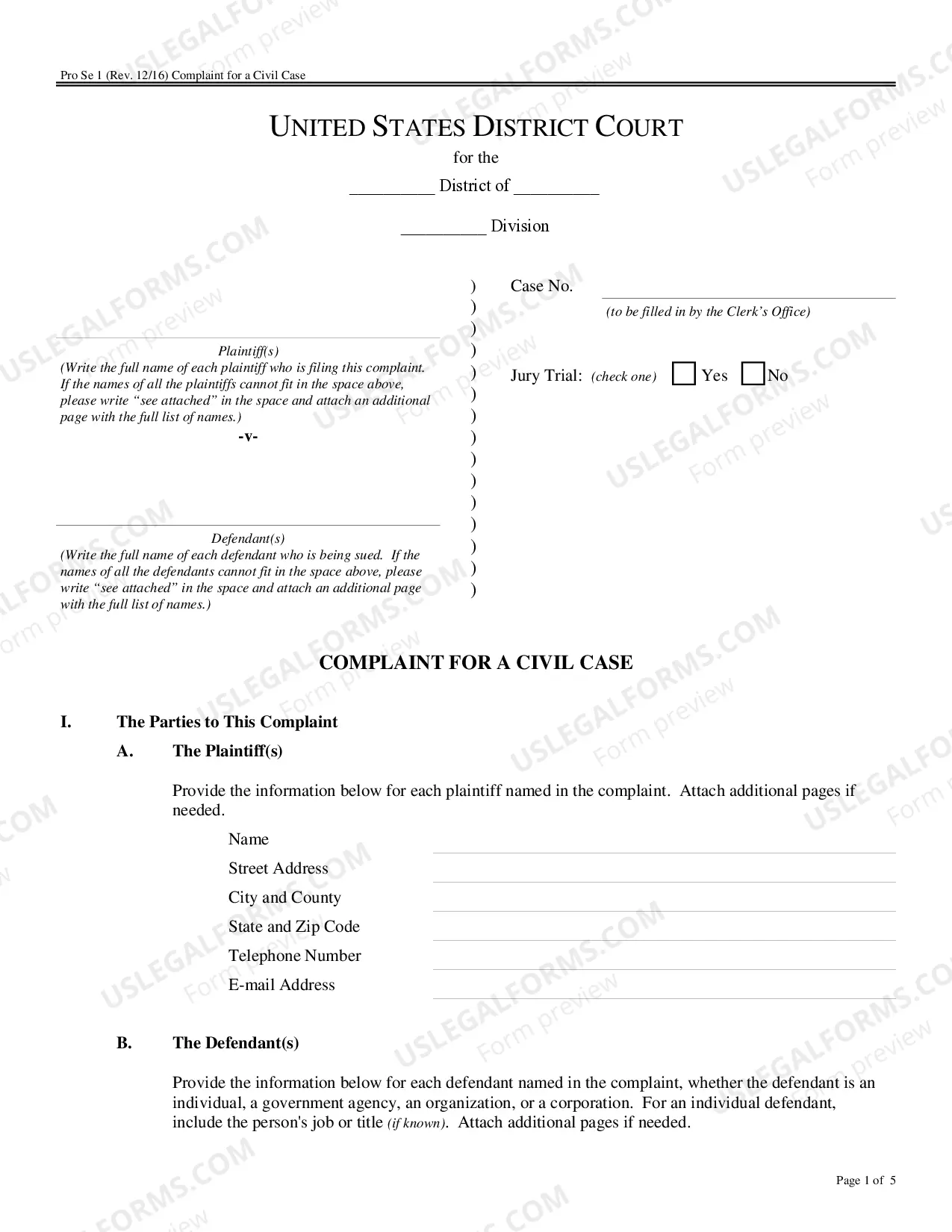
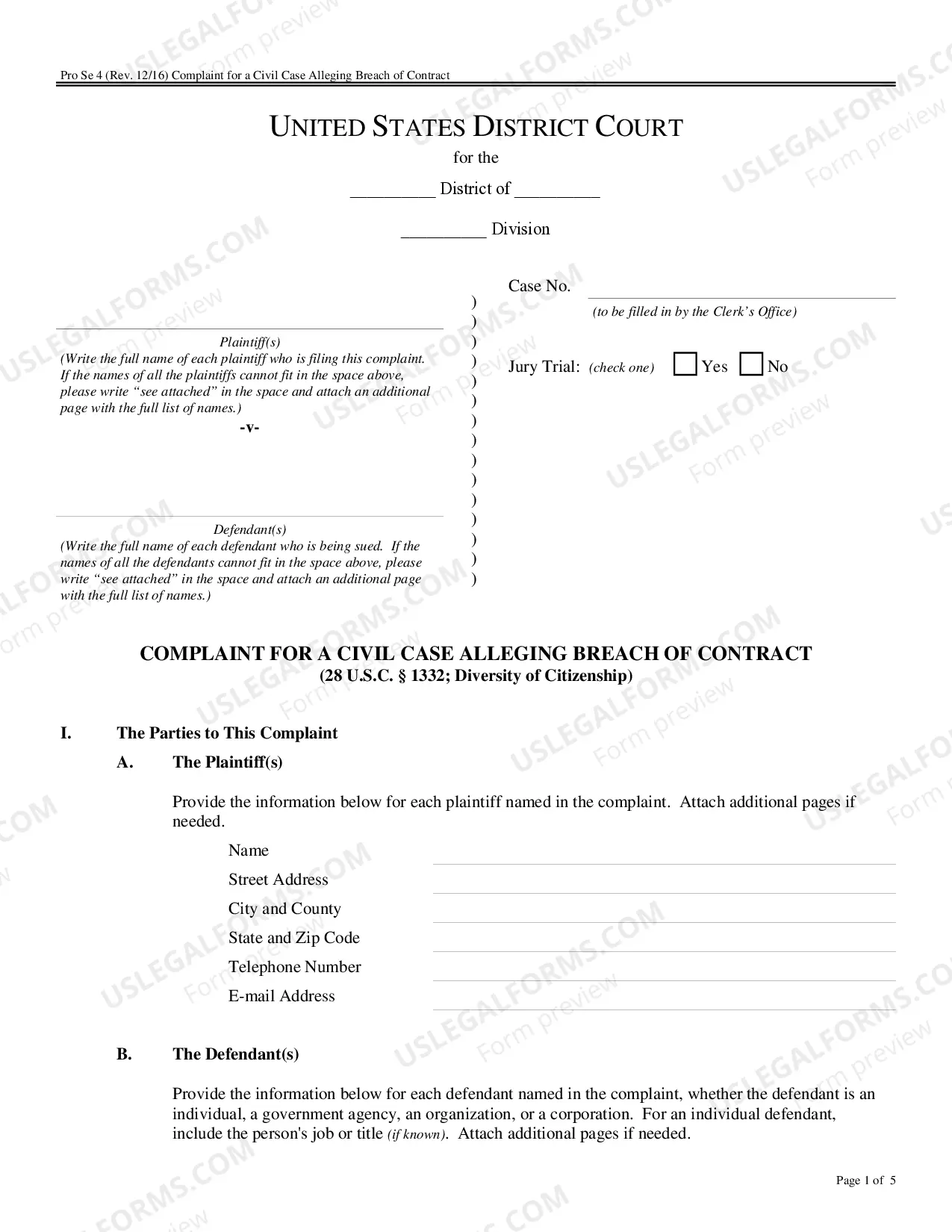
- Parties section: Identifies plaintiffs and defendants involved in the case.
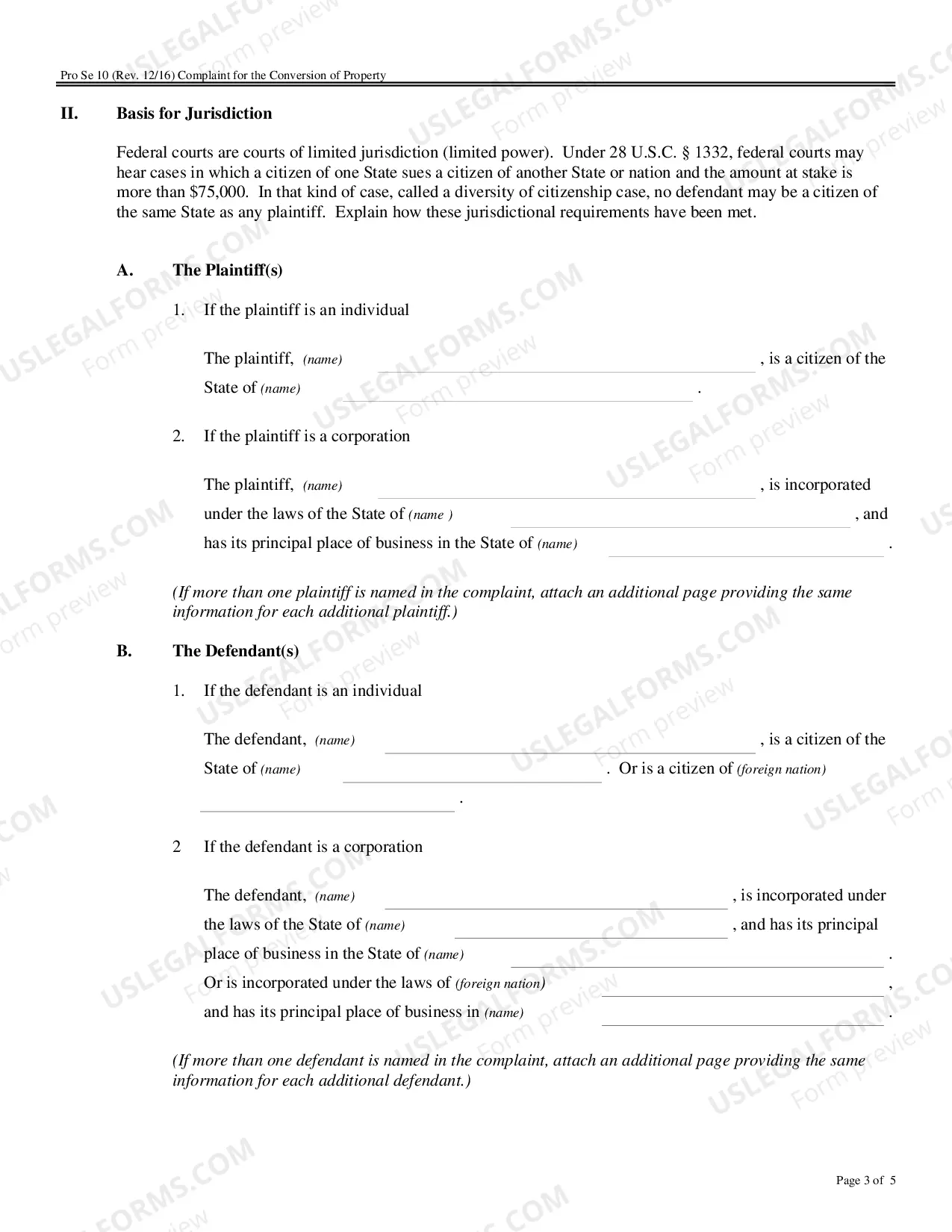
- Jurisdiction basis: Establishes jurisdiction by detailing state citizenship and the amount in controversy.
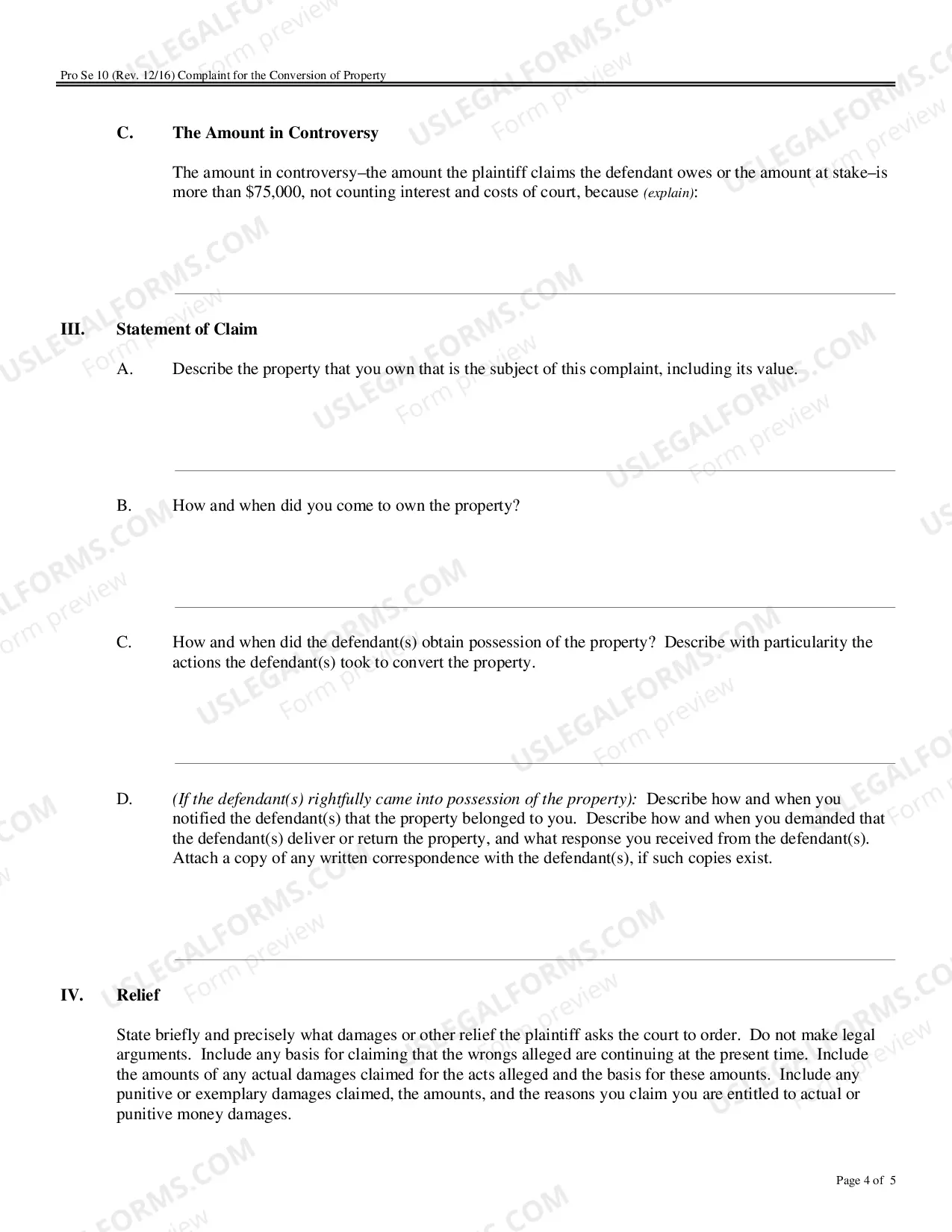
- Statement of Claim: Describes in detail the property in question, its ownership, and how the defendants obtained possession.
- Relief sought: Specifies damages or other relief requested from the court.
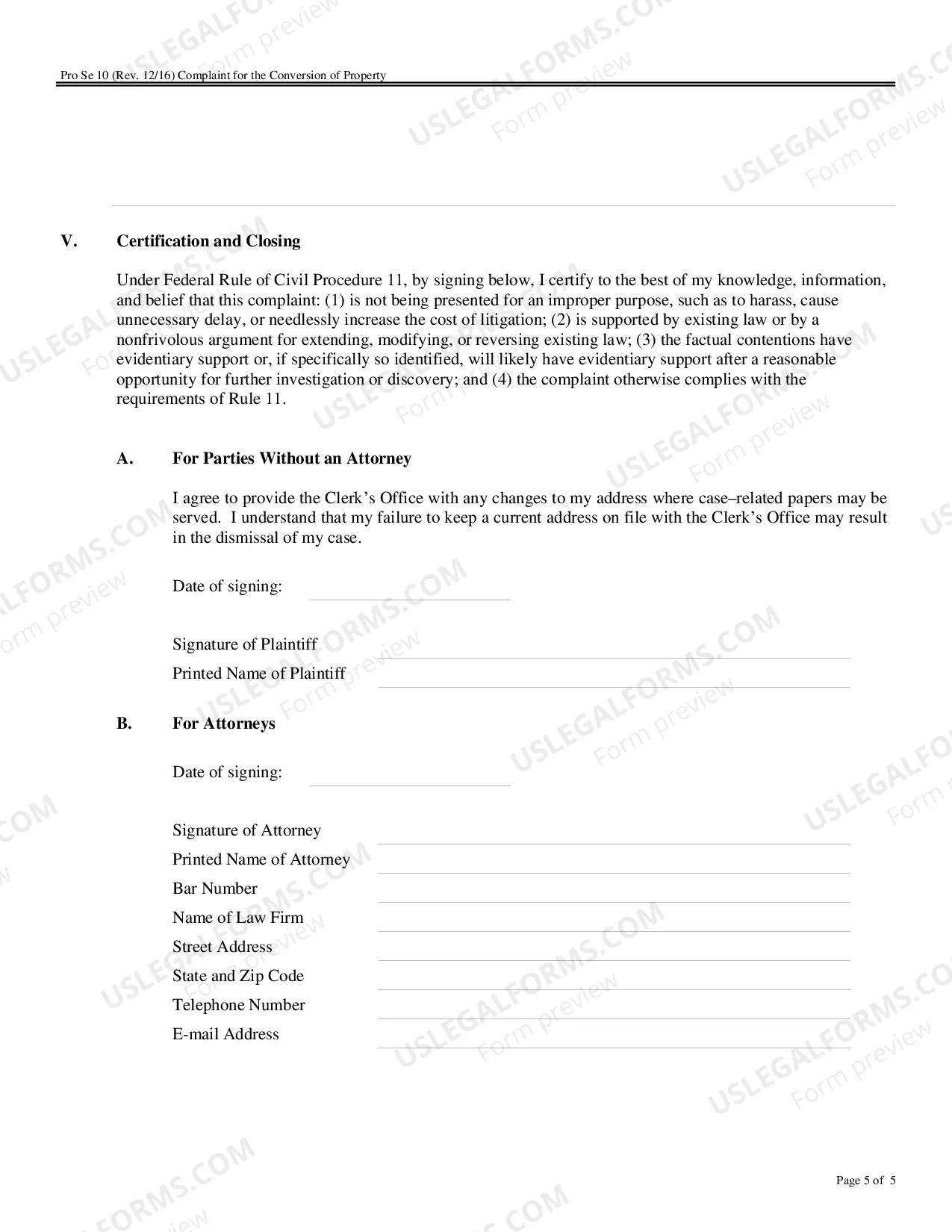
- Certification: Confirms that the complaint complies with legal standards and provides accurate information.

Common use cases
This form should be used when a plaintiff believes that their personal property has been wrongfully taken or held by another party. Common scenarios include disputes over personal belongings, vehicles, or real estate when the rightful owner is seeking legal recourse to reclaim their property or receive compensation for its unlawful conversion.
Who needs this form
- Individuals who believe their property has been wrongfully taken by another party.
- Pro se litigants representing themselves in court without an attorney.
- Those seeking to initiate a legal claim for property conversion against another individual or corporation.
Steps to complete this form
- Identify the parties: Fill in the names and addresses of all plaintiffs and defendants.
- Establish jurisdiction: Provide details confirming that the court has jurisdiction based on citizenship and the amount in controversy.
- Describe the property: Clearly articulate what property is involved, its value, and your ownership of it.
- Explain the conversion: Detail how and when the defendants took possession of the property and any correspondence related to the claim.
- Request relief: Specify the damages you are seeking from the court for the conversion of your property.
Does this form need to be notarized?
This form does not typically require notarization unless specified by local law.
Get your form ready online
Our built-in tools help you complete, sign, share, and store your documents in one place.
Make edits, fill in missing information, and update formatting in US Legal Forms—just like you would in MS Word.
Download a copy, print it, send it by email, or mail it via USPS—whatever works best for your next step.
Sign and collect signatures with our SignNow integration. Send to multiple recipients, set reminders, and more. Go Premium to unlock E-Sign.
If this form requires notarization, complete it online through a secure video call—no need to meet a notary in person or wait for an appointment.
We protect your documents and personal data by following strict security and privacy standards.

Make edits, fill in missing information, and update formatting in US Legal Forms—just like you would in MS Word.

Download a copy, print it, send it by email, or mail it via USPS—whatever works best for your next step.

Sign and collect signatures with our SignNow integration. Send to multiple recipients, set reminders, and more. Go Premium to unlock E-Sign.

If this form requires notarization, complete it online through a secure video call—no need to meet a notary in person or wait for an appointment.

We protect your documents and personal data by following strict security and privacy standards.
Typical mistakes to avoid
- Failing to provide complete information for all parties involved.
- Not including sufficient details about the property and circumstances of conversion.
- Overlooking jurisdictional requirements or miscalculating the amount in controversy.
- Neglecting to sign and date the form before submission.
Why use this form online
- Convenience: Complete the form at your own pace from anywhere with internet access.
- Editability: Easily make changes to the document as needed before finalizing it.
- Reliability: Access professionally drafted legal forms prepared by licensed attorneys.
Legal use & context
- The form serves as a formal complaint for property conversion under federal law.
- It is essential to adhere to procedural rules to ensure the complaint is valid and actionable.
- Understanding jurisdictional requirements is crucial for successful litigation.
Key takeaways
- The Complaint for the Conversion of Property is critical for asserting your rights in federal court.
- Accurate completion of the form can significantly affect the outcome of your case.
- Always review your local rules to ensure compliance before filing.
Looking for another form?
Form popularity
FAQ
Conversion, on the other hand, allows a person to recover the full value of the item. Conversion can lie even where there are only nominal damages to the item.
A conversion of personal property occurs upon the unauthorized and wrongful assumption and exercise of dominion and control over the personal property of another to the exclusion of, or inconsistent with, the owner's rights. Pipes v. Hemingway, 358 S.W. 3d 438, 449-50 (Tex.
Punitive damages are intended to punish the person who committed the conversion and to deter others from committing similar acts. Generally, punitive damages may be awarded in cases where the conversion was committed with malice, fraud, or gross negligence.
A plaintiff is entitled to damages equal to the full value of the chattel at the time and place of conversion. The measure of damages in conversion is the fair market value of the property at the time and place of the conversion.
Tort Conversion Remedies A plaintiff who establishes the tort of conversion is entitled to either (1) damages for the value of the property, or (2) equitable relief providing for the return of the property and any special damages for its loss of use during the time of its detention.
The standard remedy for conversion is a judgment for damages in an amount equal to the fair market value of the property. Punitive damages are also possible, because conversion is an intentional tort. The standard remedy in a detinue action is an order that the property be returned.
In fact, a lawsuit for conversion is not only done with the purpose of returning the property but rather to sue for money damages to compensate the plaintiff for the loss of the personal property or its use for a certain period of time.