Texas Judgment in a Civil Case
Description

How to fill out Texas Judgment In A Civil Case?
If you’re searching for a way to properly prepare the Texas Judgment in a Civil Case without hiring a legal professional, then you’re just in the right spot. US Legal Forms has proven itself as the most extensive and reliable library of formal templates for every personal and business scenario. Every piece of documentation you find on our web service is designed in accordance with nationwide and state regulations, so you can be certain that your documents are in order.
Adhere to these simple guidelines on how to obtain the ready-to-use Texas Judgment in a Civil Case:
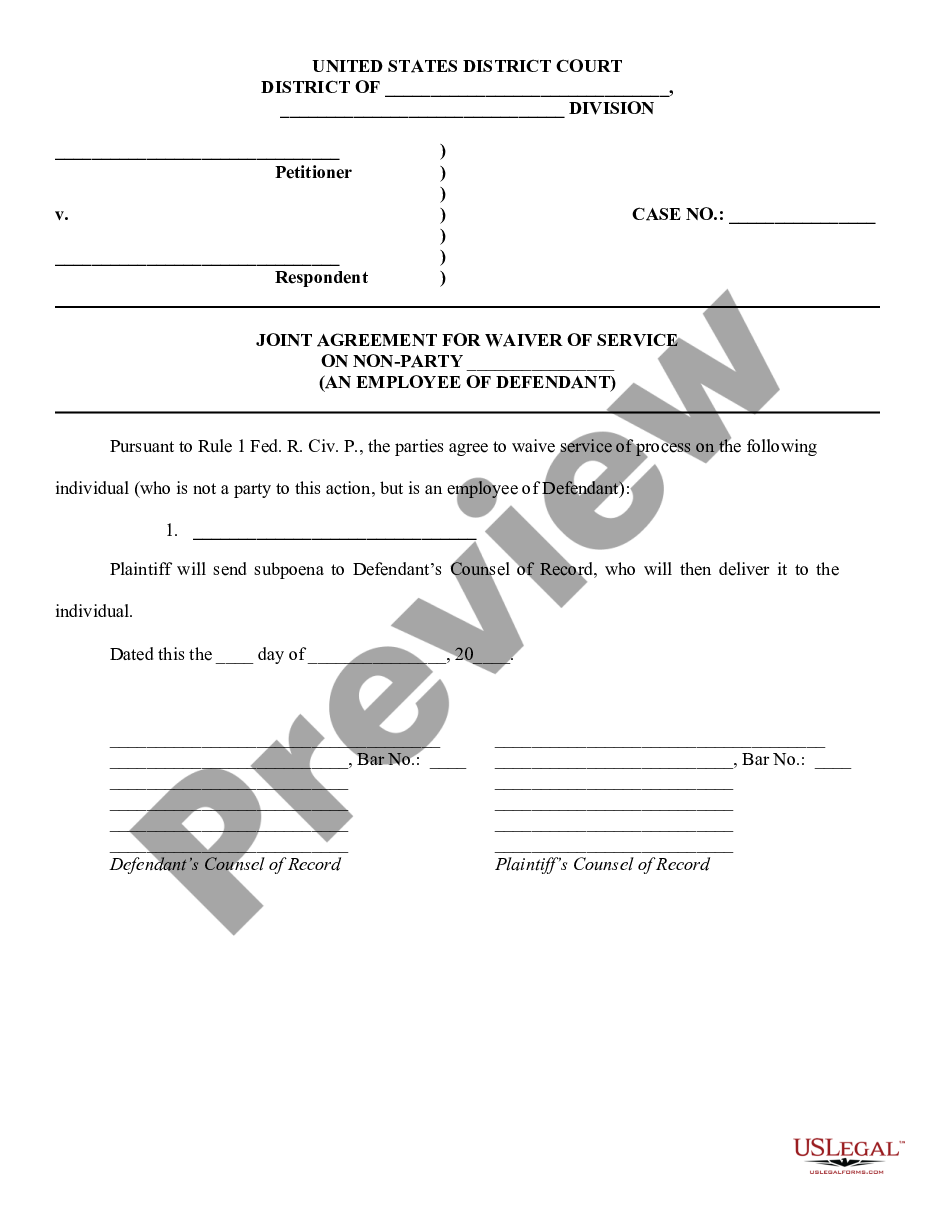
- Make sure the document you see on the page complies with your legal situation and state regulations by checking its text description or looking through the Preview mode.
- Enter the form title in the Search tab on the top of the page and select your state from the dropdown to locate an alternative template if there are any inconsistencies.
- Repeat with the content check and click Buy now when you are confident with the paperwork compliance with all the requirements.
- Log in to your account and click Download. Create an account with the service and choose the subscription plan if you still don’t have one.
- Use your credit card or the PayPal option to pay for your US Legal Forms subscription. The blank will be available to download right after.
- Decide in what format you want to save your Texas Judgment in a Civil Case and download it by clicking the appropriate button.
- Upload your template to an online editor to fill out and sign it rapidly or print it out to prepare your paper copy manually.
Another wonderful thing about US Legal Forms is that you never lose the paperwork you acquired - you can pick any of your downloaded templates in the My Forms tab of your profile any time you need it.
Form popularity
FAQ
Request a Writ of Garnishment A writ of garnishment orders a third party (like a bank) to turn over property to settle a judgment. Courts grant writs of garnishment for bank accounts (this is called a bank levy) and even paychecks. Our judgment collection attorneys can assist you with garnishment procedures.
The statute of limitations on debt in Texas is four years. This section of the law, introduced in 2019, states that a payment on the debt (or any other activity) does not restart the clock on the statute of limitations.
Ways to Collect a Judgment in Texas Writ of Execution. Judgment Lien. Writ of Garnishment. Turnover Order.
If you are sued and can't pay, the creditor can get a judgment in court against you for the money you owe, plus interest. Being ?judgment proof? means that your property and income can't be seized by creditors, because it is ?exempt? by law from the creditor's claims.
Do Judgments Expire in Texas? Judgments awarded in Texas to a non-government creditor are generally valid for ten years but they can be renewed for longer. If a judgment is not renewed, it will become dormant. You can attempt to revive a dormant judgment in order to continue to try and collect the debt.
A Texas judgment is valid for ten years from the date it is signed by the judge. After the expiration of ten years the judgment is dormant for two years. During that two year period of dormancy the judgment cannot be enforced.
A default judgment in Texas occurs where a defendant in a lawsuit fails to respond in a timely manner. If the defendant never responds, the plaintiff can file a motion for a default judgment. Basically, this allows the court to rule in favor of the plaintiff even without the need for a trial.
When a creditor gets a judgment against a debtor, the creditor has to take steps to get the judgment paid. This process is called execution. Execution usually means that an officer of the law comes to the debtor's home or workplace to take things the debtor owns. The items that are taken are sold to pay the judgment.