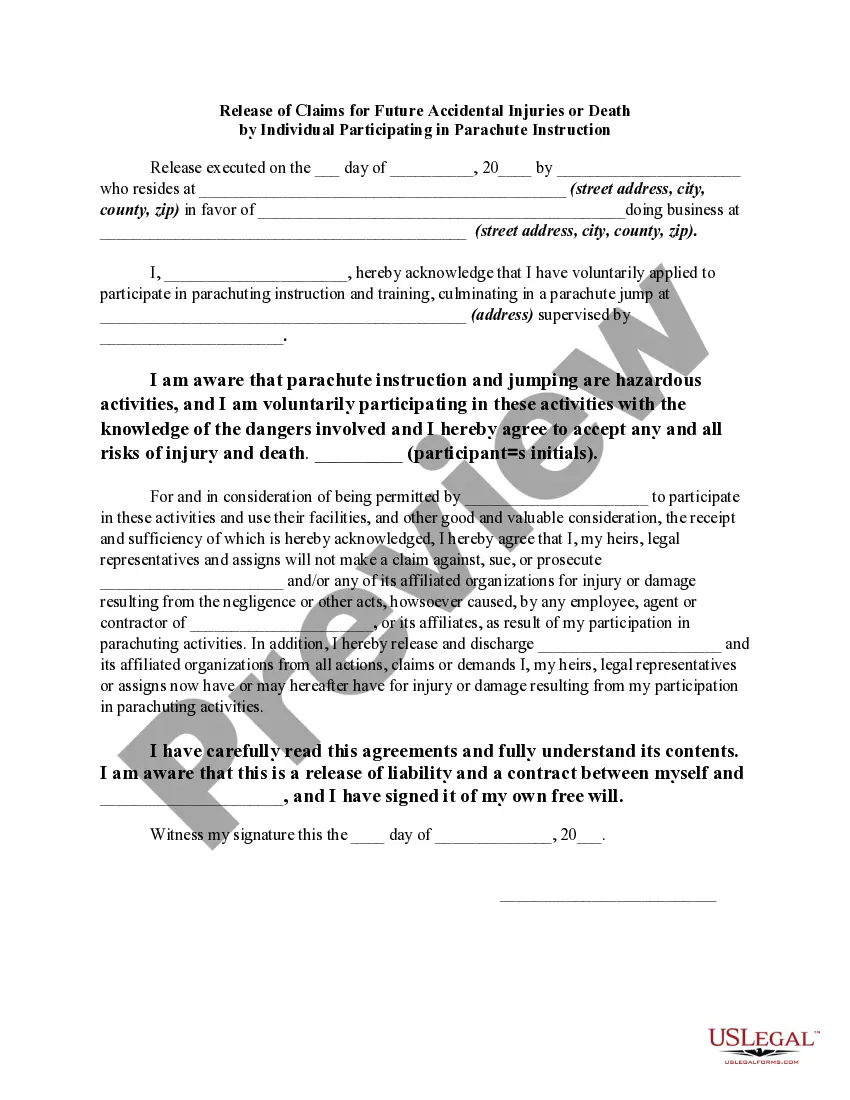
Texas Release of Claims for Future Accidental Personal Injuries or Death by Individual Participating in Parachute Instruction
Description
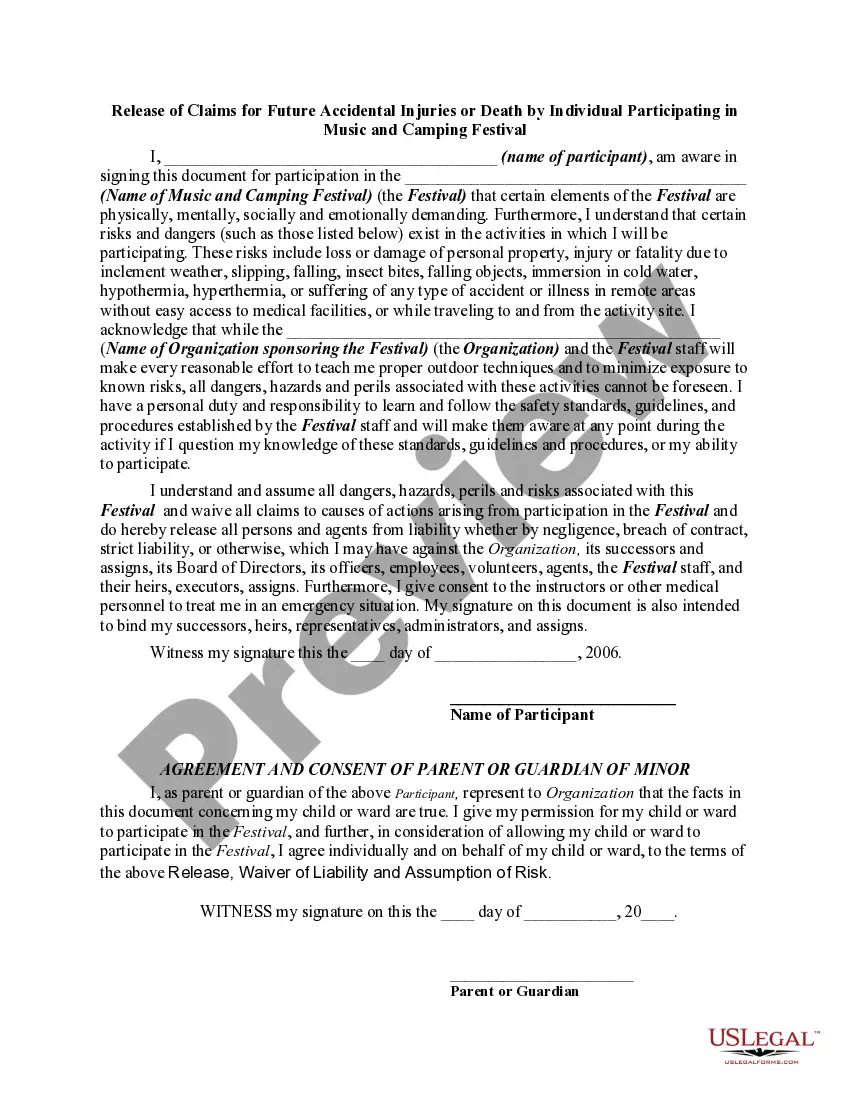
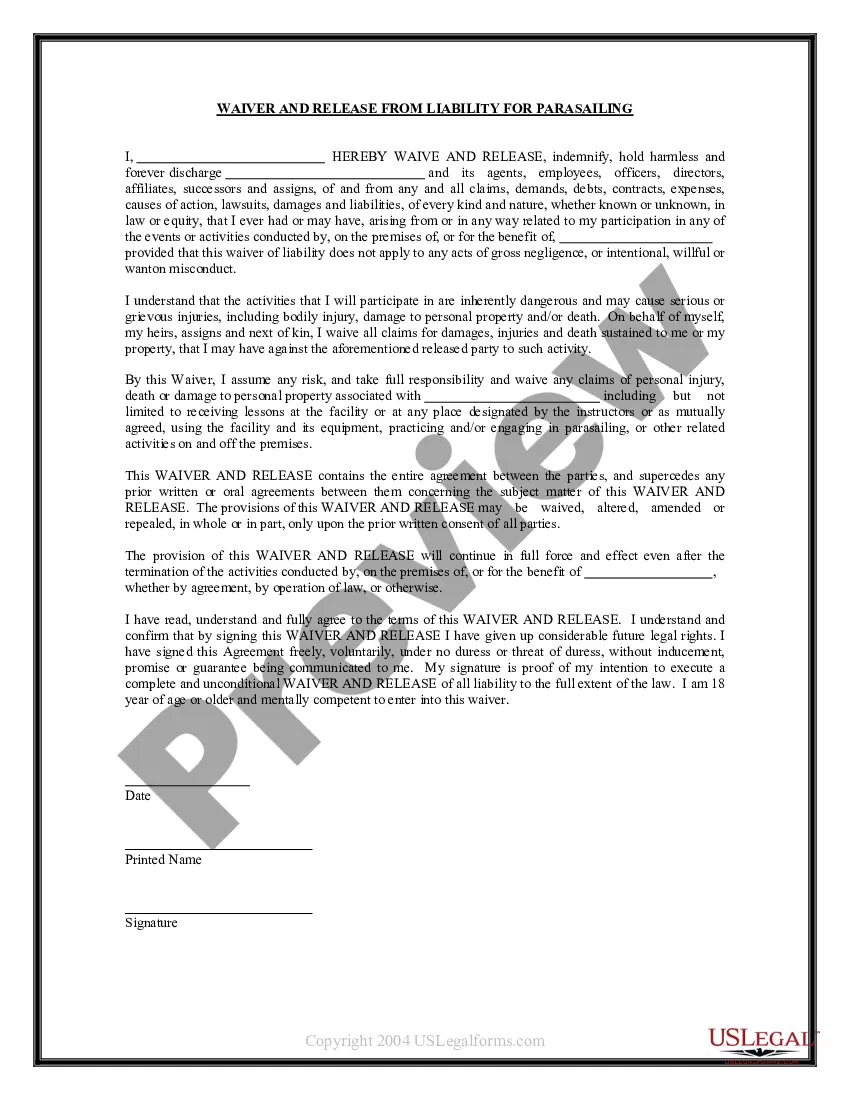
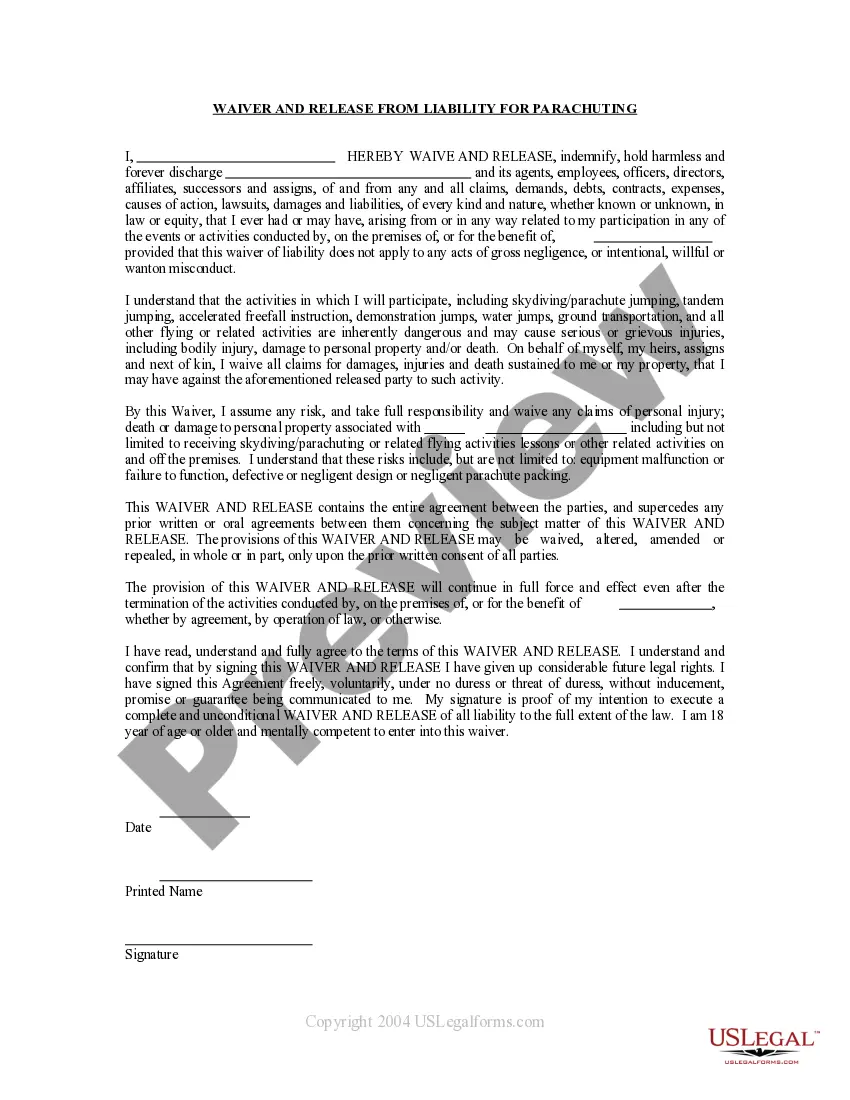




How to fill out Release Of Claims For Future Accidental Personal Injuries Or Death By Individual Participating In Parachute Instruction?
You can spend hours online searching for the legal document template that meets the state and federal requirements you need.
US Legal Forms offers thousands of legal forms that have been reviewed by experts.
You can easily download or print the Texas Release of Claims for Future Accidental Personal Injuries or Death by Individual Participating in Parachute Instruction from our platform.
First, ensure that you have selected the correct document template for your area/city of preference. Review the template description to confirm you have chosen the correct form. If available, use the Review button to look at the document template as well.
- If you already possess a US Legal Forms account, you can Log In and click the Download button.
- Afterward, you can complete, modify, print, or sign the Texas Release of Claims for Future Accidental Personal Injuries or Death by Individual Participating in Parachute Instruction.
- Every legal document template you purchase is yours indefinitely.
- To obtain another copy of the purchased document, go to the My documents tab and click the relevant button.
- If you are accessing the US Legal Forms website for the first time, follow the simple instructions below.
Form popularity
FAQ
Texas does not universally require a release of liability for all activities, but it is highly recommended for high-risk activities like parachuting. Using a Texas Release of Claims for Future Accidental Personal Injuries or Death by Individual Participating in Parachute Instruction can significantly reduce the chance of facing legal action. This release effectively communicates the risks to participants, ensuring that everyone understands their responsibilities and the realities of the sport.
Yes, liability waivers are generally enforceable in Texas, provided they meet certain legal criteria. A Texas Release of Claims for Future Accidental Personal Injuries or Death by Individual Participating in Parachute Instruction can serve as a valid waiver if it clearly outlines the risks involved and is signed voluntarily by the participant. However, courts may scrutinize these waivers for fairness, especially in situations involving gross negligence.
Yes, you can release future claims in Texas, particularly through a Texas Release of Claims for Future Accidental Personal Injuries or Death by Individual Participating in Parachute Instruction. This type of release allows instructors and participants to acknowledge the inherent risks involved in parachuting while protecting both parties from future lawsuits. It serves as a mutual understanding that future accidental injuries or death occurring during instruction are not grounds for litigation.