Texas Competence - Form of Verdict
Description
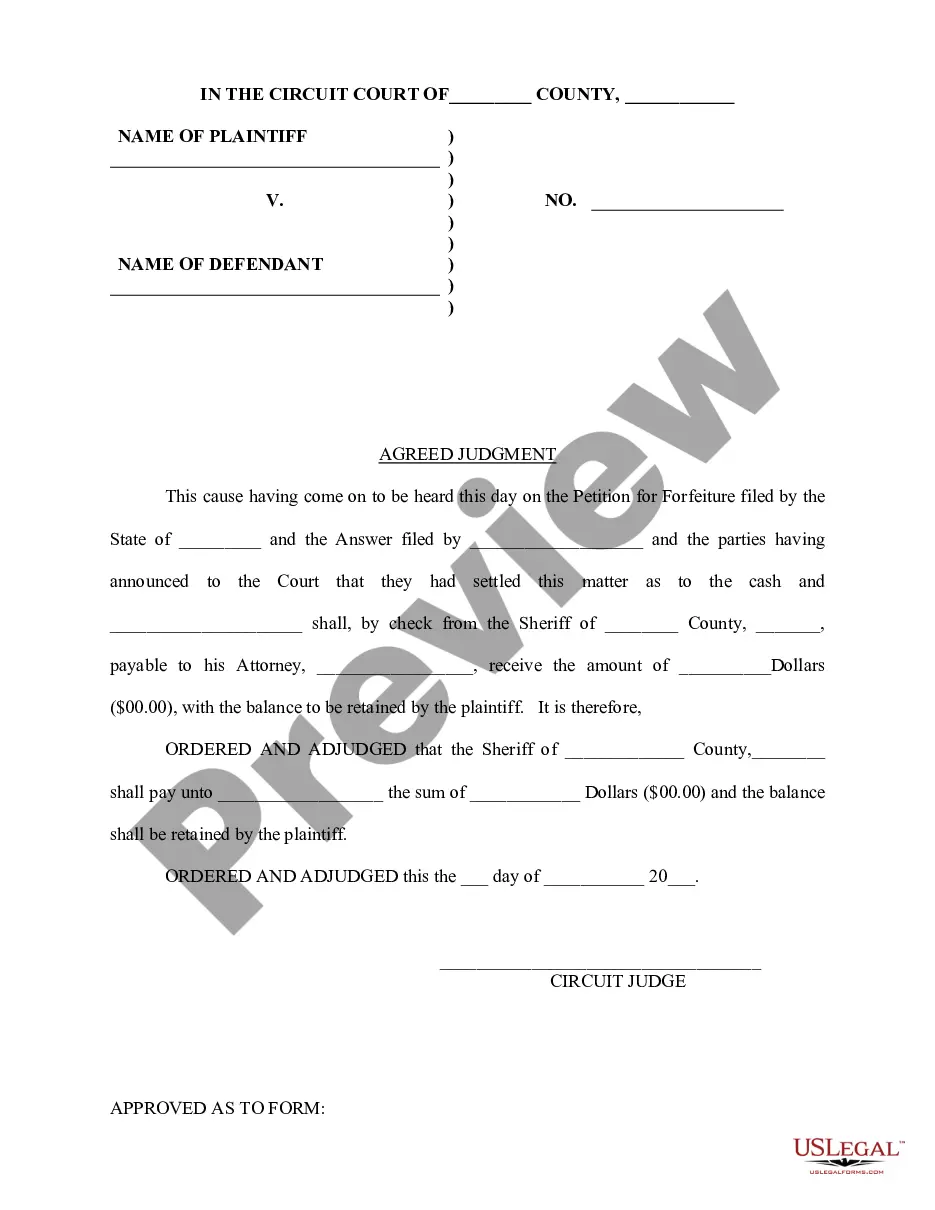
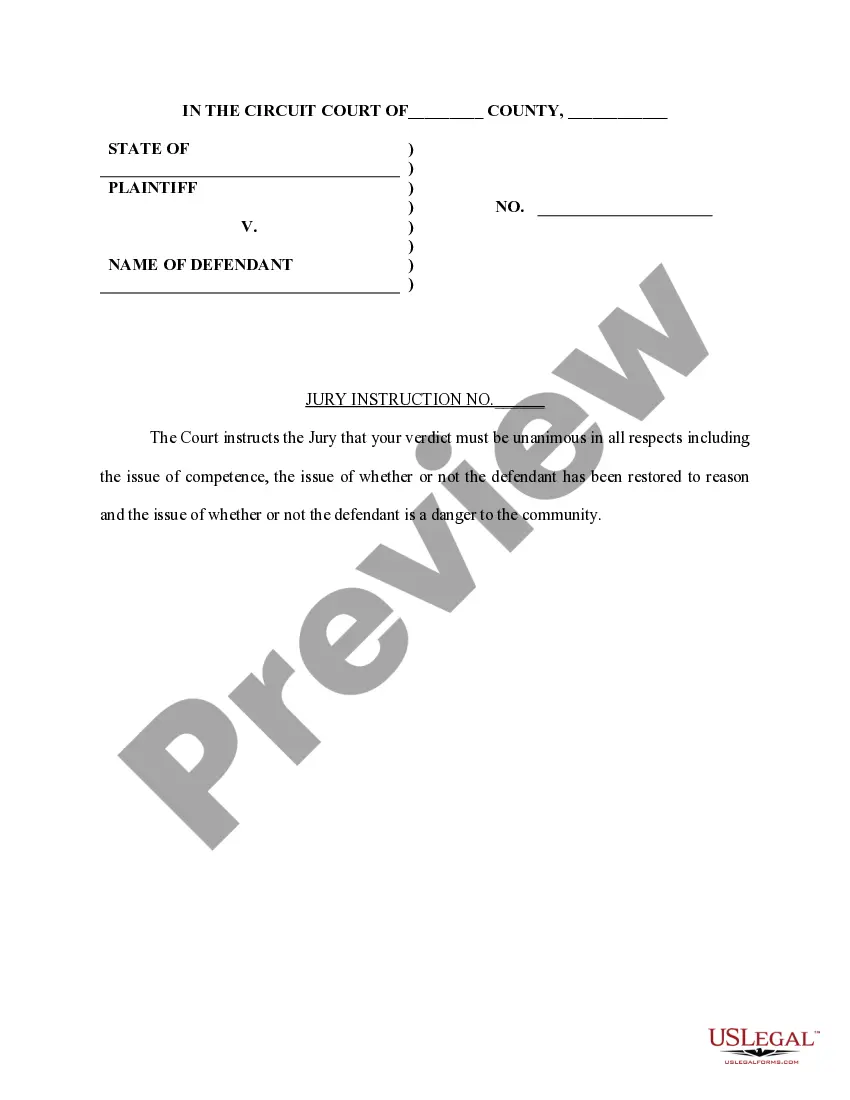
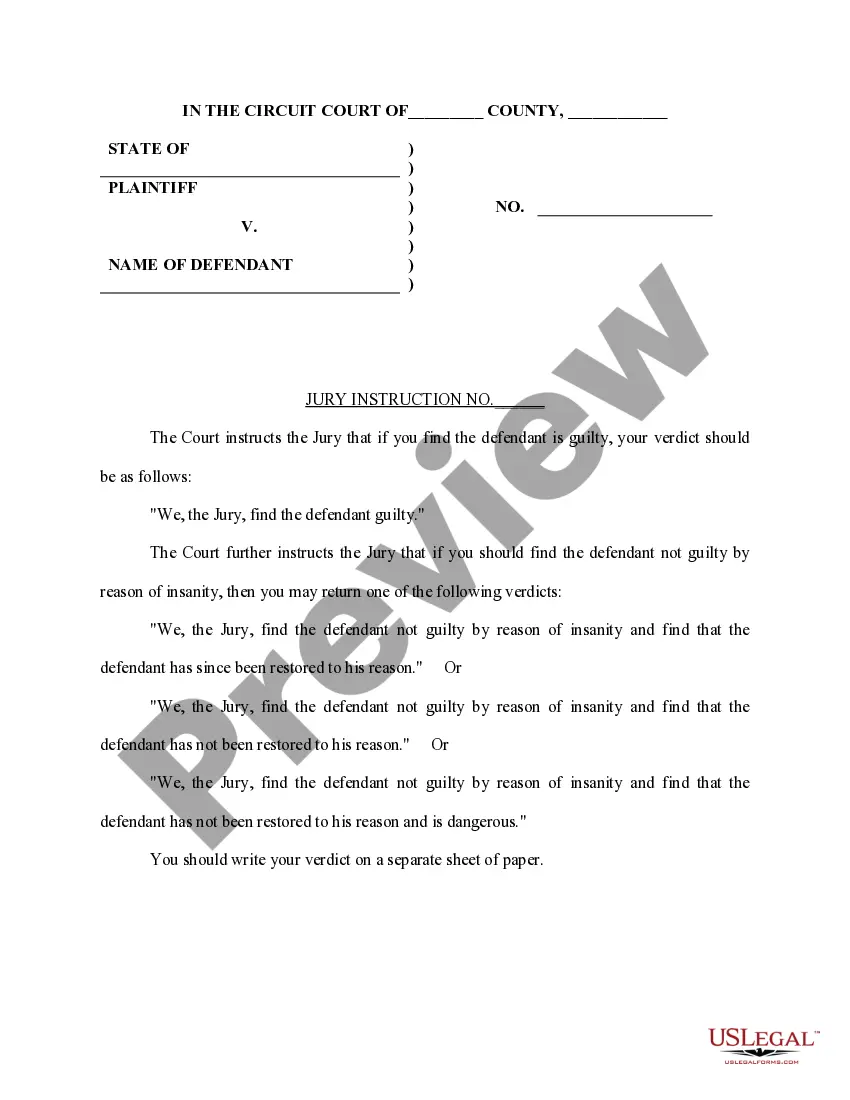
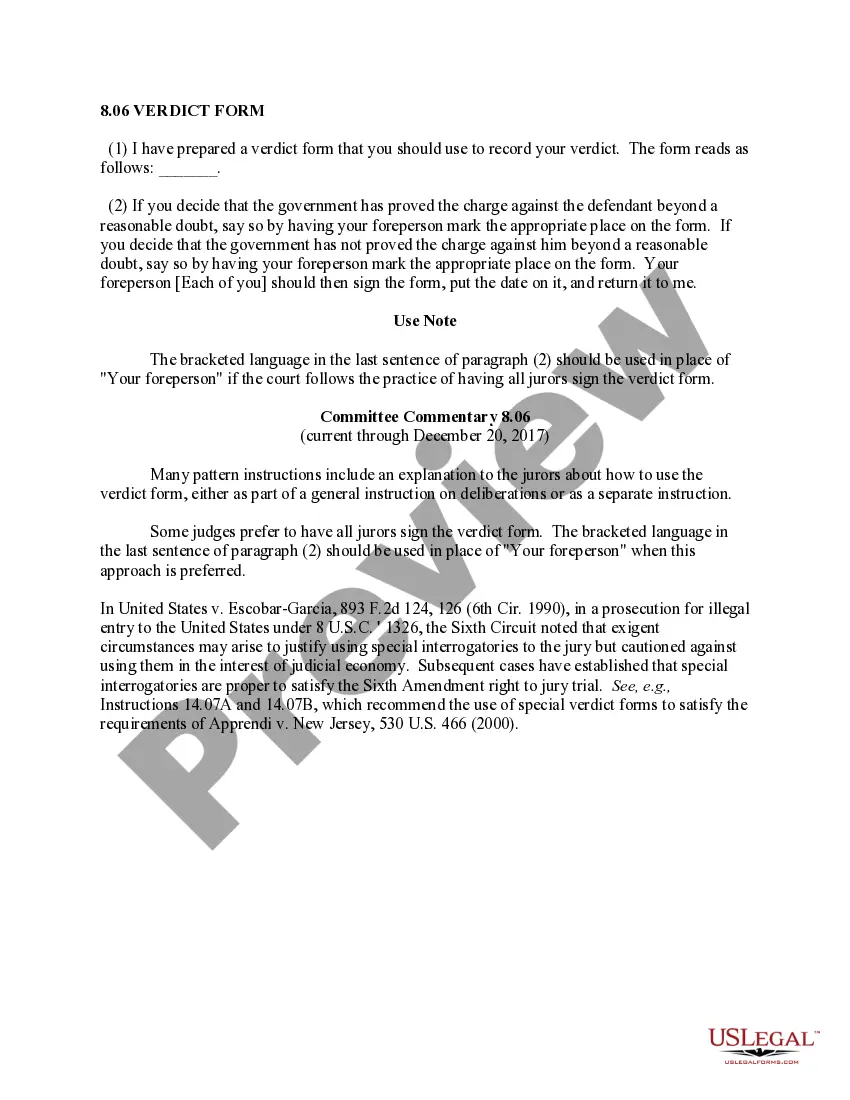
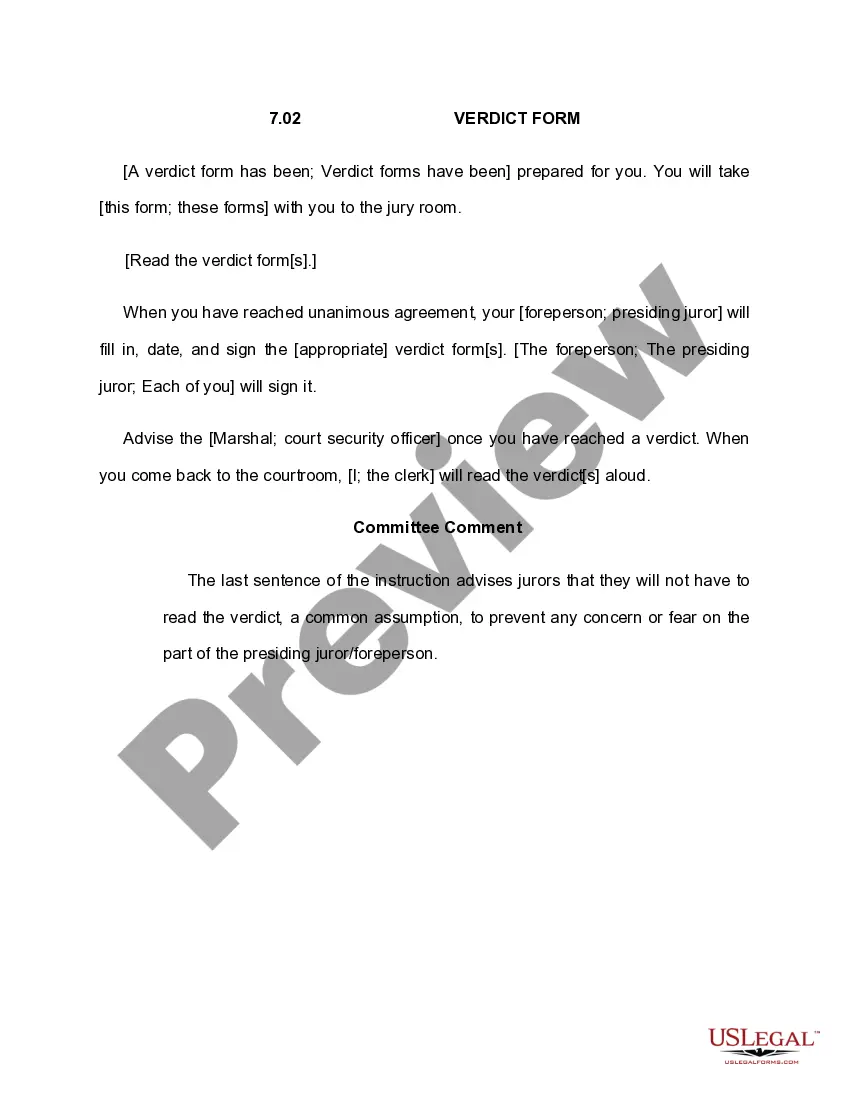
How to fill out Competence - Form Of Verdict?
US Legal Forms - one of the largest collections of legal documents in the United States - offers a variety of legal document templates that you can download or print.
Using the website, you can find thousands of forms for business and personal use, organized by categories, states, or keywords. You can find the latest forms like the Texas Competence - Form of Verdict in seconds.
If you have a subscription, Log In and download Texas Competence - Form of Verdict from the US Legal Forms library. The Download button will appear on every form you view. You have access to all previously downloaded forms in the My documents tab of your account.
Process the transaction. Use your credit card or PayPal account to complete the transaction.
Select the format and download the form to your device. Make edits. Fill out, modify, and print and sign the downloaded Texas Competence - Form of Verdict. Each template you added to your account has no expiration date and is yours permanently. So, if you wish to download or print another copy, just visit the My documents section and click on the form you need. Access the Texas Competence - Form of Verdict with US Legal Forms, the most comprehensive library of legal document templates. Utilize thousands of professional and state-specific templates that meet your business or personal needs.
- If you want to use US Legal Forms for the first time, here are simple instructions to help you get started.
- Ensure you have selected the correct form for your city/state. Click on the Preview button to review the form's content.
- Check the form description to make sure you have chosen the right form.
- If the form does not suit your needs, use the Search field at the top of the screen to find one that does.
- When you are satisfied with the form, confirm your selection by clicking on the Buy now button.
- Then, choose the payment plan you prefer and provide your credentials to sign up for the account.
Form popularity
FAQ
If the issue of competency is raised, the court determines through informal inquiry whether there is evidence from any source (e.g., observations of the defendant's behavior or information from a credible source that the defendant may be incompetent) to support a finding of incompetency.
Under California Penal Code Section 1368 PC, a judge or attorney can question the defendant's competency to stand trial. If the judge questions the competency of the defendant, the defendant's attorney can request time to form his or her own opinion.
Competence is determined by a judge [1][2][3]. This legal determination is never determined by medical providers.
In Texas, competency to be executed is governed by Article 46.05 of the Code of Criminal Procedure. A person is incompetent to be executed if he does not understand 1) that he is to be executed and that the execution is imminent, and 2) the reason he is being executed.
At the competency hearing, the defense has the burden to prove that the accused is incompetent. Defense counsel can try and prove this using: medical reports and psychological evaluations, the defendant's statements, and.
A judge will evaluate competency on a case-by-case basis, usually with the assistance of psychologists. They have the authority to order that a defendant take medication to address a condition if this would make them competent. A judge will need to determine competency early in the process, as soon as it is raised.
In a competency hearing, the case will be sent over to a mental health court for evaluation. Usually, a psychiatrist is appointed to evaluate the defendant to decide whether they are competent to stand trial.
INCOMPETENCY; PRESUMPTIONS. (a) A person is incompetent to stand trial if the person does not have: (1) sufficient present ability to consult with the person's lawyer with a reasonable degree of rational understanding; or (2) a rational as well as factual understanding of the proceedings against the person.