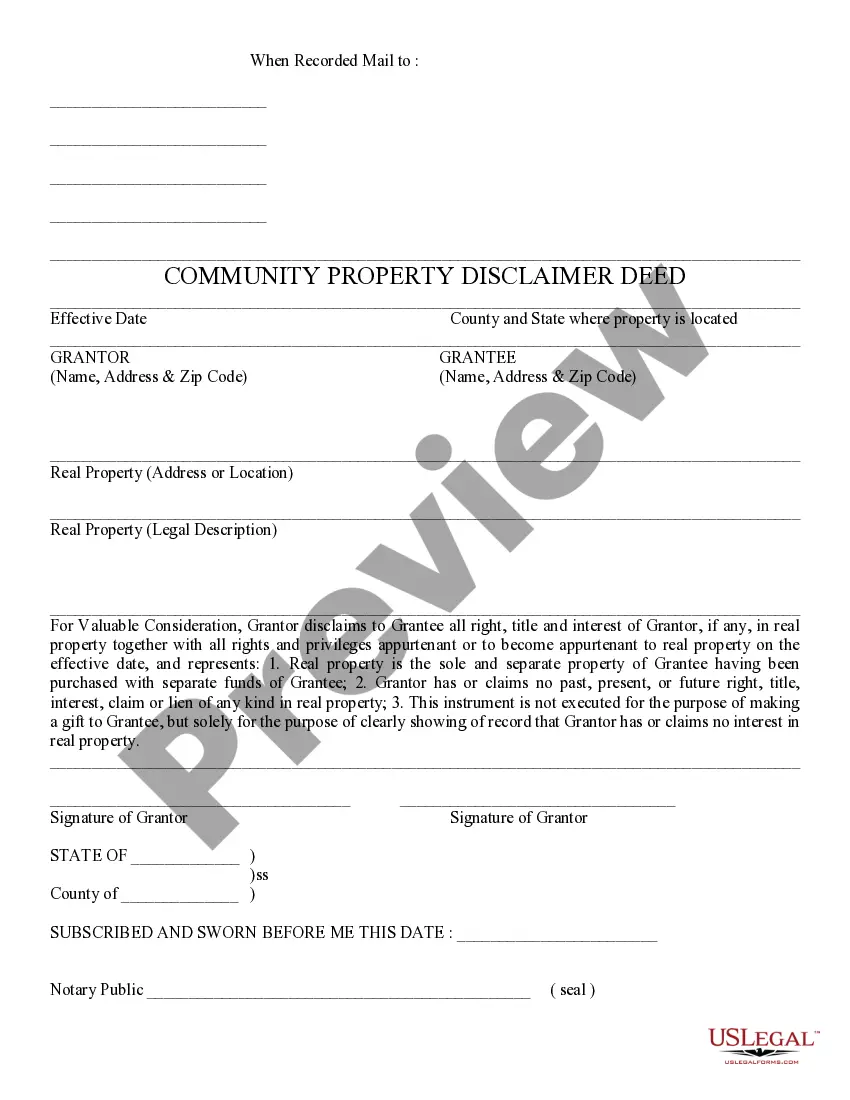
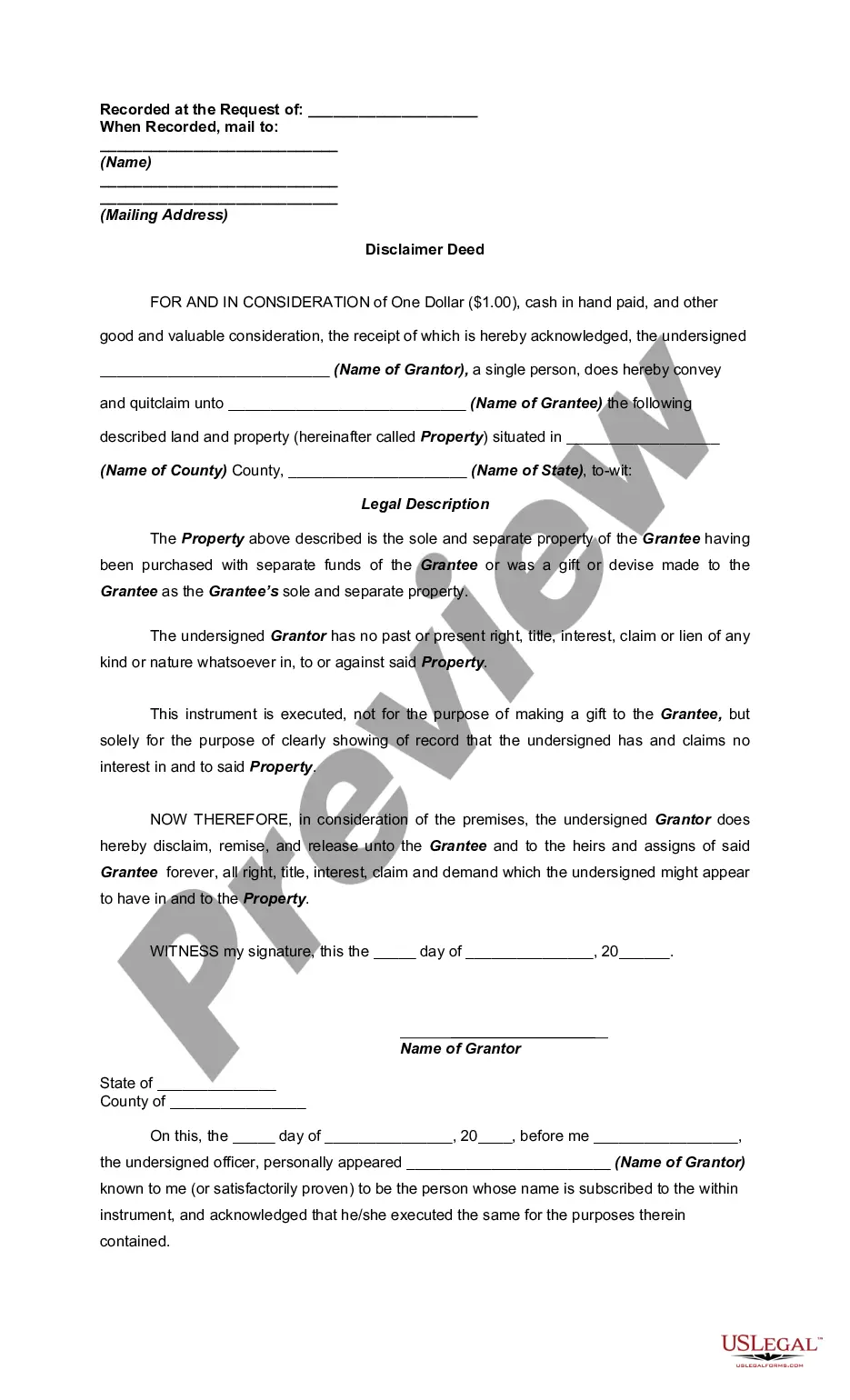
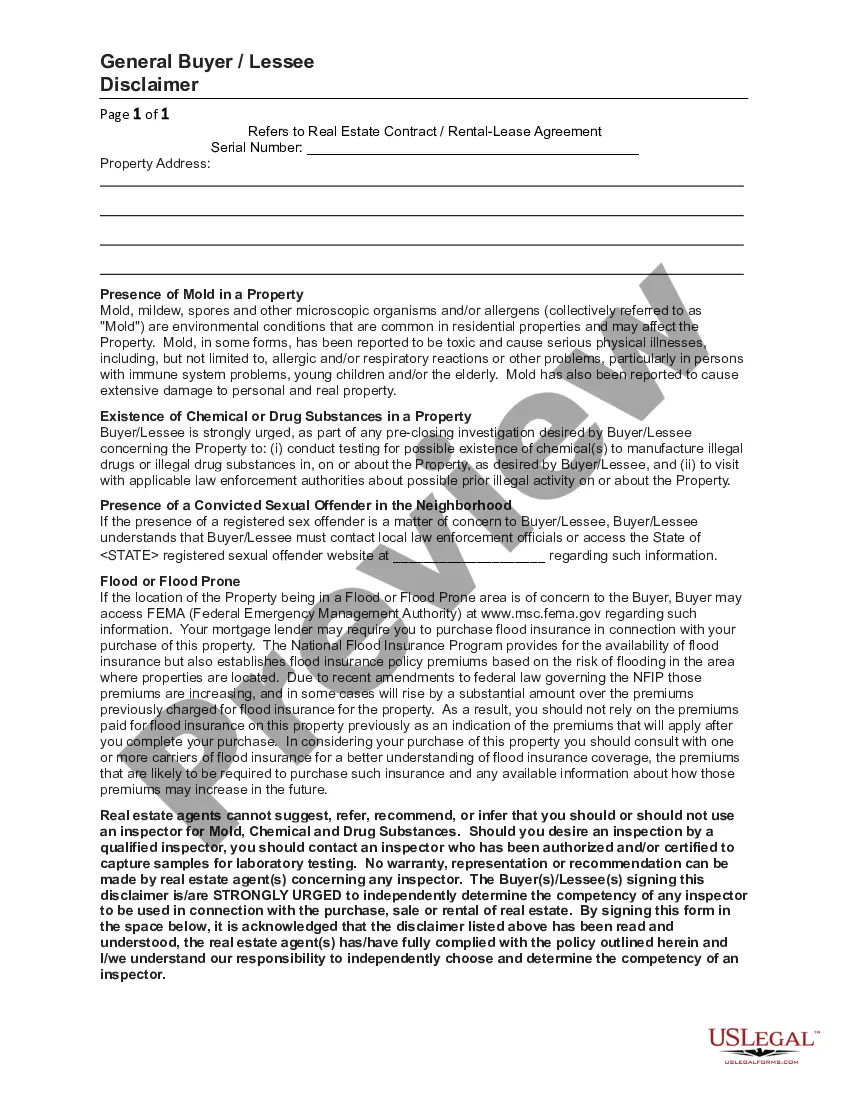
Texas Community Property Disclaimer
Description
Get your form ready online
Our built-in tools help you complete, sign, share, and store your documents in one place.
Make edits, fill in missing information, and update formatting in US Legal Forms—just like you would in MS Word.
Download a copy, print it, send it by email, or mail it via USPS—whatever works best for your next step.
Sign and collect signatures with our SignNow integration. Send to multiple recipients, set reminders, and more. Go Premium to unlock E-Sign.
If this form requires notarization, complete it online through a secure video call—no need to meet a notary in person or wait for an appointment.
We protect your documents and personal data by following strict security and privacy standards.

Make edits, fill in missing information, and update formatting in US Legal Forms—just like you would in MS Word.

Download a copy, print it, send it by email, or mail it via USPS—whatever works best for your next step.

Sign and collect signatures with our SignNow integration. Send to multiple recipients, set reminders, and more. Go Premium to unlock E-Sign.

If this form requires notarization, complete it online through a secure video call—no need to meet a notary in person or wait for an appointment.

We protect your documents and personal data by following strict security and privacy standards.
Looking for another form?
How to fill out Community Property Disclaimer?
If you want to fulfill, download, or create authorized document templates, utilize US Legal Forms, the primary collection of legal forms that are accessible online.
Take advantage of the site's straightforward and user-friendly search feature to find the paperwork you need.
Various templates for business and personal purposes are categorized by groups and states, or keywords.
Step 4. Once you have located the form you need, click the Buy now button. Choose the pricing plan you prefer and provide your details to register for the account.
Step 5. Process the payment. You may use your credit card or PayPal account to complete the transaction.
- Use US Legal Forms to obtain the Texas Community Property Disclaimer in just a few clicks.
- If you are already a US Legal Forms user, sign in to your account and press the Download button to receive the Texas Community Property Disclaimer.
- You can also access forms you have previously purchased in the My documents section of your account.
- If you are using US Legal Forms for the first time, follow the instructions below.
- Step 1. Ensure you have selected the form for the right city/state.
- Step 2. Utilize the Review option to inspect the form's content. Be sure to read the details.
- Step 3. If you are unsatisfied with the form, make use of the Search field at the top of the screen to find other variations of the legal form template.
Form popularity
FAQ
A qualified disclaimer is a formal statement by a beneficiary refusing an inheritance, designed to meet specific legal criteria. This disclaimer can be used strategically to direct property to alternate beneficiaries while protecting the refusing party from financial burdens. In Texas, a properly executed Texas Community Property Disclaimer can significantly ease estate transitions, ensuring assets go where intended. Using platforms like uslegalforms can simplify the legal complexities involved in creating a qualified disclaimer.
A qualified disclaimer enables individuals to refuse property without incurring tax liability. For the disclaimer to qualify, it must be made in writing, within a certain time frame, and the individual cannot accept benefits from the property. This process is vital in the context of a Texas Community Property Disclaimer, as it ensures that property transitions seamlessly to the next beneficiary without affecting the initial recipient's financial standing.
A disclaimer operates as a legal tool allowing beneficiaries to refuse property they inherit from an estate. When a beneficiary disclaims an interest, the property passes directly to the next eligible heir according to Texas law. This process is crucial for managing the complexities of a Texas Community Property Disclaimer, ensuring that the estate is settled according to the decedent’s intentions. It simplifies the distribution and may help avoid disputes among heirs.
A beneficiary may choose to disclaim property to avoid tax implications or to prevent the property from interfering with their financial plans. Disclaiming allows individuals to pass the property to alternate beneficiaries without accepting ownership. This is particularly important when dealing with Texas Community Property Disclaimers, which can help streamline estate distribution. Utilizing a disclaimer can enhance financial clarity and ensure compliance with one's wishes.
To disclaim an inheritance in Texas, you must create a formal written document that states your intention to refuse the asset. It’s crucial to file your Texas Community Property Disclaimer within nine months after the decedent's death. This document should be notarized and submitted to the court or the estate's executor. Engaging with legal professionals can help you navigate this process smoothly and ensure that all legal stipulations are met.
To avoid capital gains tax on inherited property in Texas, individuals can benefit from the stepped-up basis that applies to inherited assets. This means that the property's value is adjusted to its market value at the time of inheritance, reducing potential capital gains when you sell. Utilizing a Texas Community Property Disclaimer can also help you outline your intentions, ensuring that you gain the tax advantages related to your inheritance. Consulting with a financial advisor can offer further strategies tailored to your situation.
To avoid community property in Texas, individuals can consider executing a Texas Community Property Disclaimer to clearly outline their intentions regarding asset ownership. Establishing a prenuptial or postnuptial agreement is another effective way to define separate property and avoid shared ownership. Additionally, keeping income and assets separate during the marriage can minimize community property claims. It’s advisable to consult with a legal expert to navigate these options properly.
The new inheritance law in Texas includes important updates to how community property is treated after one spouse passes away. Under the Texas Community Property Disclaimer, spouses can now choose to disclaim certain properties to avoid automatic transfer of ownership. This allows individuals better flexibility in estate planning and helps prevent unintended inheritance of debts or liabilities associated with community property. Understanding these changes is vital for anyone managing estate matters in Texas.
When a spouse dies, community property is usually divided according to Texas law. Surviving spouses typically retain their half of the community property, while the deceased spouse's share may go to their beneficiaries. A Texas Community Property Disclaimer can play a pivotal role in determining how these assets are managed and distributed, especially during probate proceedings.
In Texas, the time limit for disclaiming inheritance is typically nine months after the decedent's death. This deadline is crucial for ensuring that the claim is valid and binding according to Texas law. By utilizing a Texas Community Property Disclaimer within this timeframe, individuals can make informed decisions regarding their inheritance and financial future.