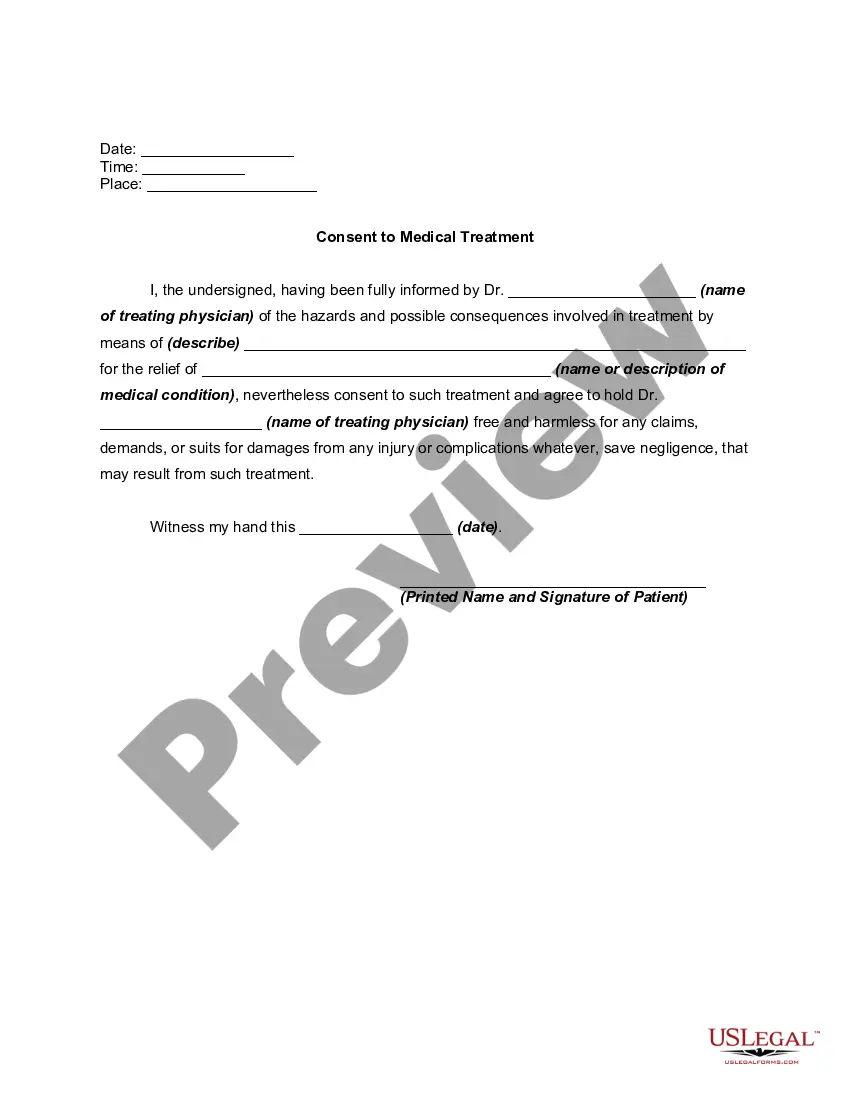
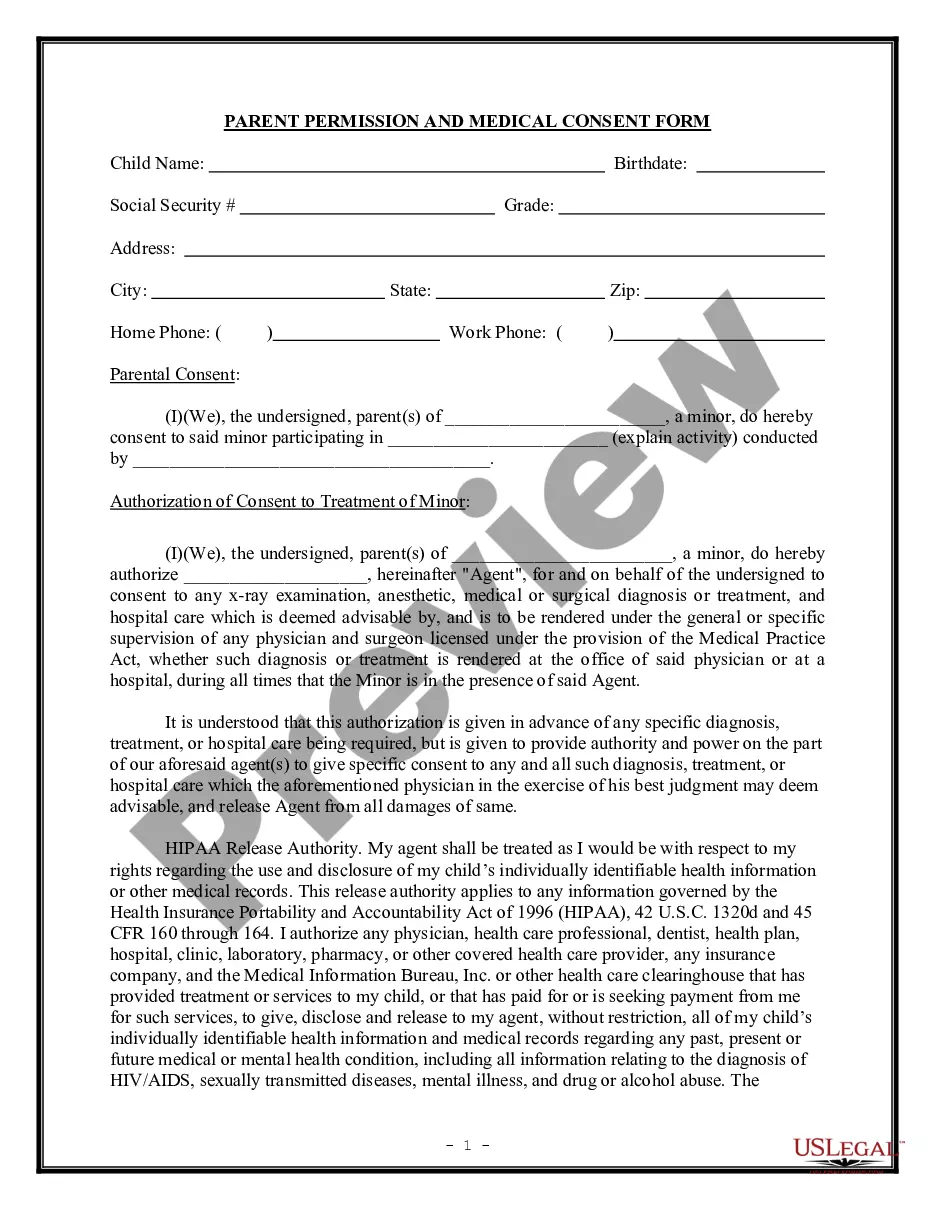
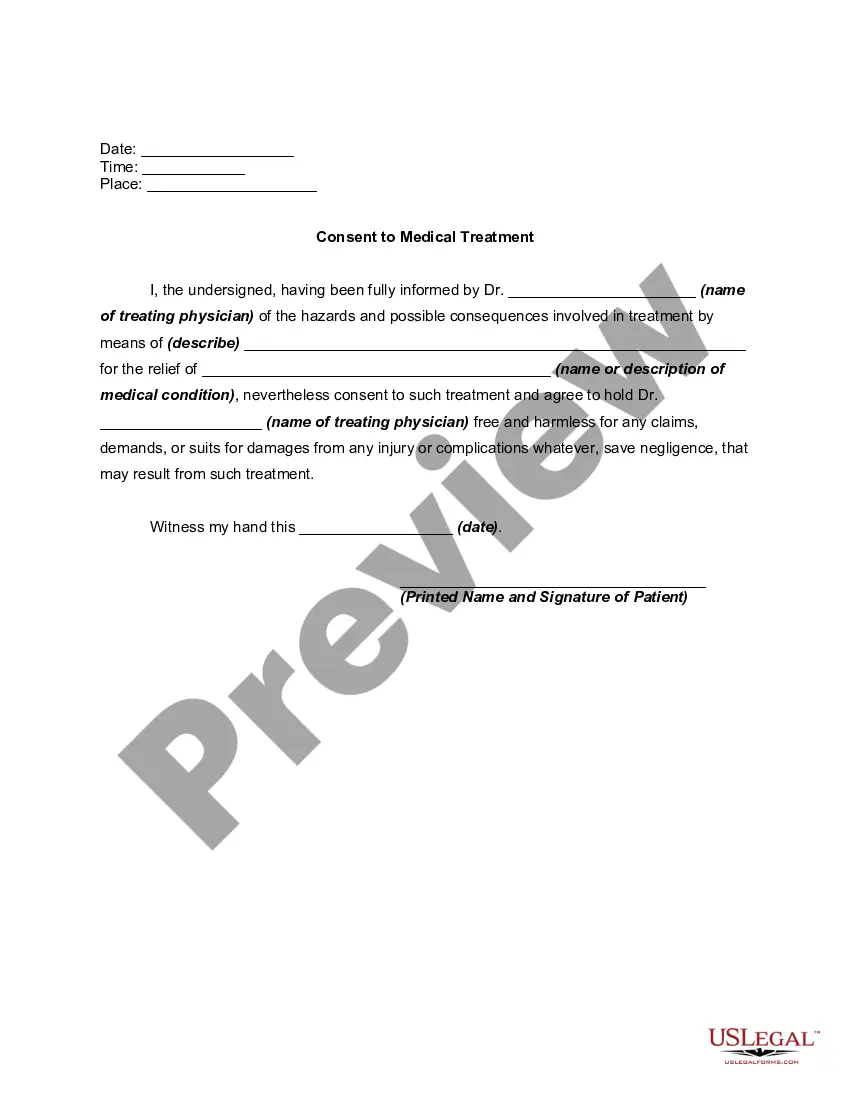
Texas Medical Consent for Treatment
Description
Get your form ready online
Our built-in tools help you complete, sign, share, and store your documents in one place.
Make edits, fill in missing information, and update formatting in US Legal Forms—just like you would in MS Word.
Download a copy, print it, send it by email, or mail it via USPS—whatever works best for your next step.
Sign and collect signatures with our SignNow integration. Send to multiple recipients, set reminders, and more. Go Premium to unlock E-Sign.
If this form requires notarization, complete it online through a secure video call—no need to meet a notary in person or wait for an appointment.
We protect your documents and personal data by following strict security and privacy standards.

Make edits, fill in missing information, and update formatting in US Legal Forms—just like you would in MS Word.

Download a copy, print it, send it by email, or mail it via USPS—whatever works best for your next step.

Sign and collect signatures with our SignNow integration. Send to multiple recipients, set reminders, and more. Go Premium to unlock E-Sign.

If this form requires notarization, complete it online through a secure video call—no need to meet a notary in person or wait for an appointment.

We protect your documents and personal data by following strict security and privacy standards.
Looking for another form?
How to fill out Medical Consent For Treatment?
You might invest hours online attempting to discover the legal form template that aligns with the state and federal guidelines you require.
US Legal Forms offers thousands of legal documents that can be assessed by experts.
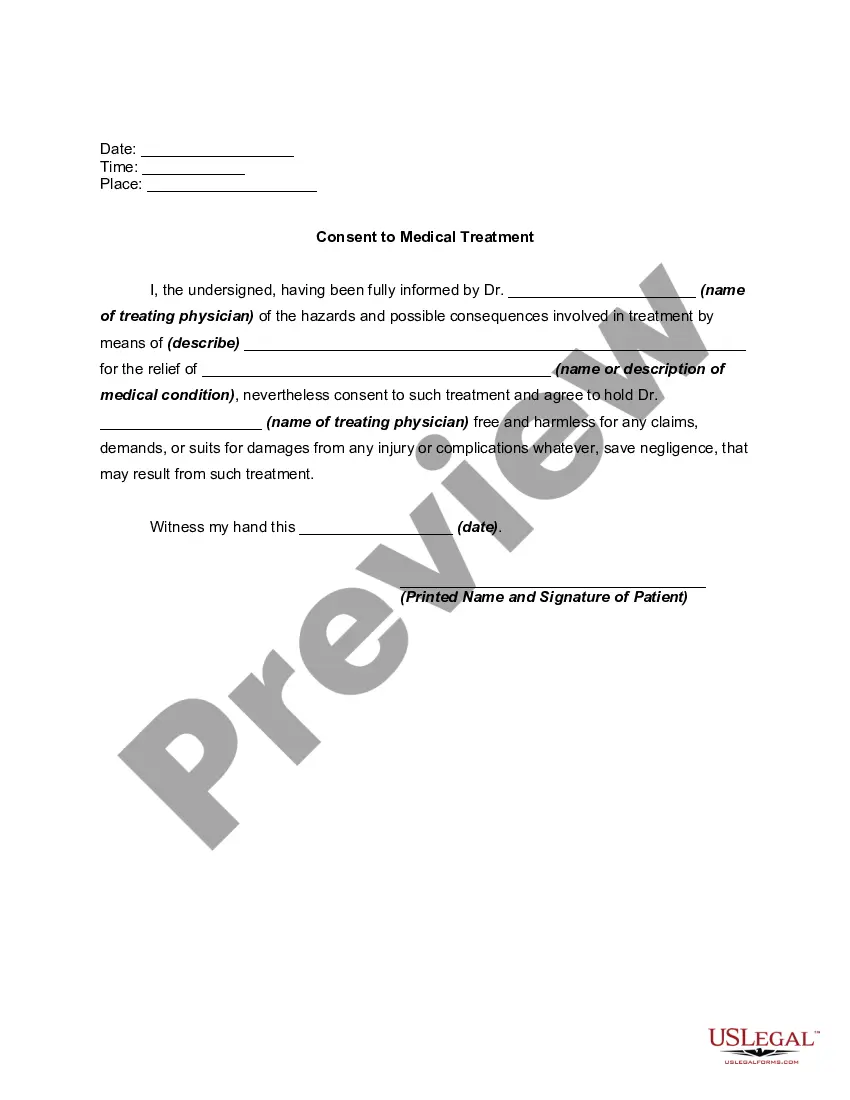
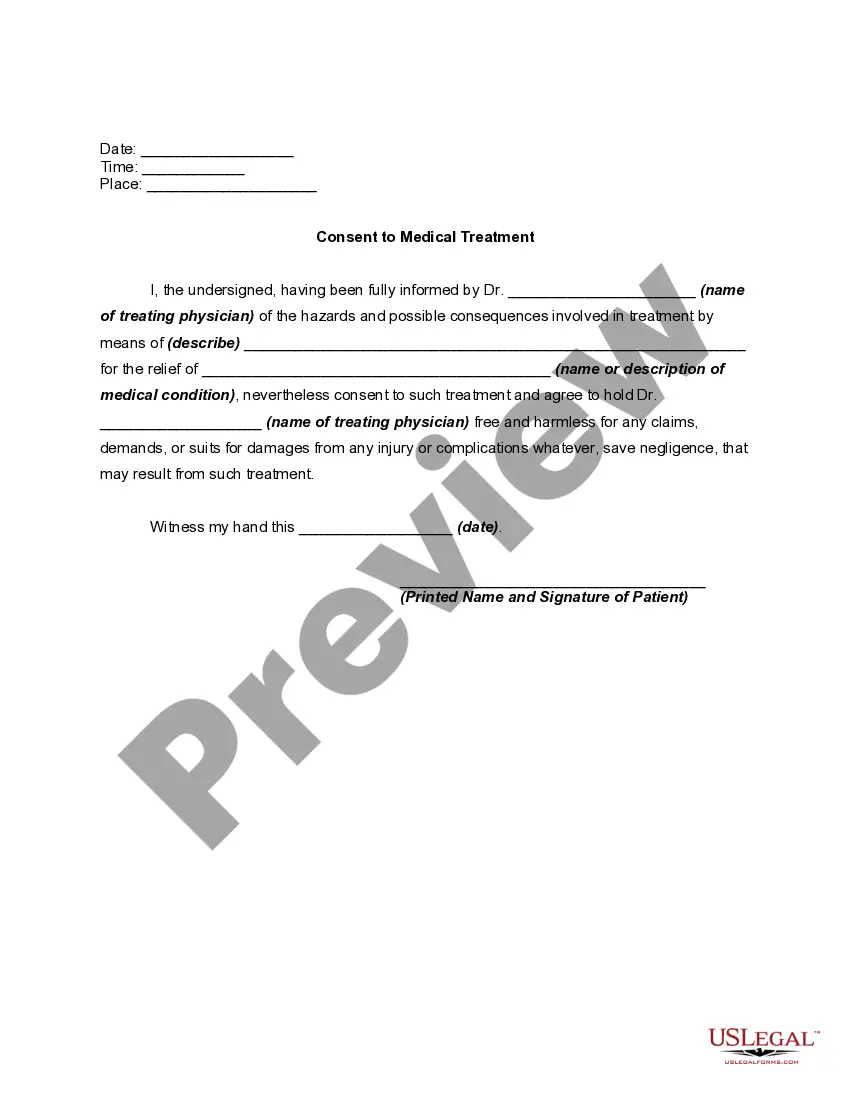
It is easy to download or print the Texas Medical Consent for Treatment from our platform.
If available, make use of the Preview button to review the document format simultaneously.
- If you already have a US Legal Forms account, you can sign in and click the Obtain button.
- Following that, you can complete, modify, print, or sign the Texas Medical Consent for Treatment.
- Every legal document template you acquire is yours permanently.
- To retrieve an additional copy of any purchased document, navigate to the My documents section and click the associated button.
- If you are using the US Legal Forms site for the first time, follow the straightforward instructions provided below.
- First, ensure that you have selected the correct document format for your state/region of choice.
- Review the document summary to confirm you have chosen the appropriate form.
Form popularity
FAQ
To provide permission for medical treatment effectively, you should draft a clear statement expressing your consent. In your statement for Texas Medical Consent for Treatment, include your name, the name of the provider, and a description of the treatment you are authorizing. Be sure to indicate that you understand the risks involved and that you have had the opportunity to ask questions. Platforms like US Legal Forms can offer templates to streamline this process.
When creating a Texas Medical Consent for Treatment form, be sure to include specific details to safeguard the patient’s rights. Essential elements include the treatment description, risks and benefits, alternative options, and the duration of consent. Additionally, provide space for the patient’s questions and clarify the information they need to understand. This approach fosters trust and eases the consent process.
A comprehensive Texas Medical Consent for Treatment form requires five essential pieces of information. These include the patient's name, the medical provider's name, a clear description of the proposed treatment, a list of potential risks and benefits, and the patient’s signature. By ensuring these elements are present, you can protect both the patient and the healthcare provider during medical procedures.
Filling out a Texas Medical Consent for Treatment form involves several straightforward steps. Begin by reading the form thoroughly to ensure you understand the treatment being proposed. Next, fill in your personal details accurately, and provide the necessary information regarding the treatment. After reviewing the form, sign it to indicate your consent, as required by law. If you're unsure, using digital platforms like US Legal Forms can help guide you through the process.
To properly understand Texas Medical Consent for Treatment, it is essential to know its five key elements: capacity, voluntary action, informed decision, understanding, and signature. First, the patient must have the mental ability to make a decision. Second, the consent must be given willingly, without any pressure. Next, the patient should be informed of the treatment's benefits and risks. Moreover, they must fully understand this information. Finally, the consent must be documented with a signature.
Various procedures in the Texas medical field require a consent to treatment form, particularly those that involve significant risk or complexity. This includes surgeries, certain diagnostic tests, and any treatment that may carry substantial risks. Obtaining Texas Medical Consent for Treatment helps safeguard both the patient and the healthcare provider, ensuring transparency and understanding. Utilizing platforms like USLegalForms can simplify the process of obtaining these vital consent forms.
When discussing Texas Medical Consent for Treatment, it is essential to understand the three types of consent: explicit consent, implied consent, and informed consent. Explicit consent occurs when a patient clearly agrees to a treatment verbally or in writing. Implied consent arises from actions or circumstances, such as when a patient shows up for an appointment. Informed consent, however, is critical; it ensures that the patient understands the treatment, its risks, and benefits before agreeing.
The five requirements for informed consent in Texas include: the patient must be competent to make decisions, they must receive adequate information, they must understand the information, they must be allowed to ask questions, and they must voluntarily agree to the treatment. This process emphasizes the importance of Texas Medical Consent for Treatment as it guarantees that patients are involved in their healthcare decisions. Adhering to these requirements protects both patients and medical providers.
In Texas, consenting to medical treatment involves signing a consent form after being informed of the nature of the treatment, potential risks, and expected outcomes. It is important for healthcare providers to communicate effectively and address any patient concerns. Ensuring proper Texas Medical Consent for Treatment not only facilitates smoother healthcare interactions but also supports the patient's autonomy.
To consent to treatment in Texas, patients must receive clear and comprehensive information about their proposed medical care. This includes understanding the risks, benefits, and alternatives. By providing Texas Medical Consent for Treatment, patients ensure that their consent is informed and legally valid, which is essential for protecting their rights during medical procedures.