Texas Co-Branding Agreement
Description
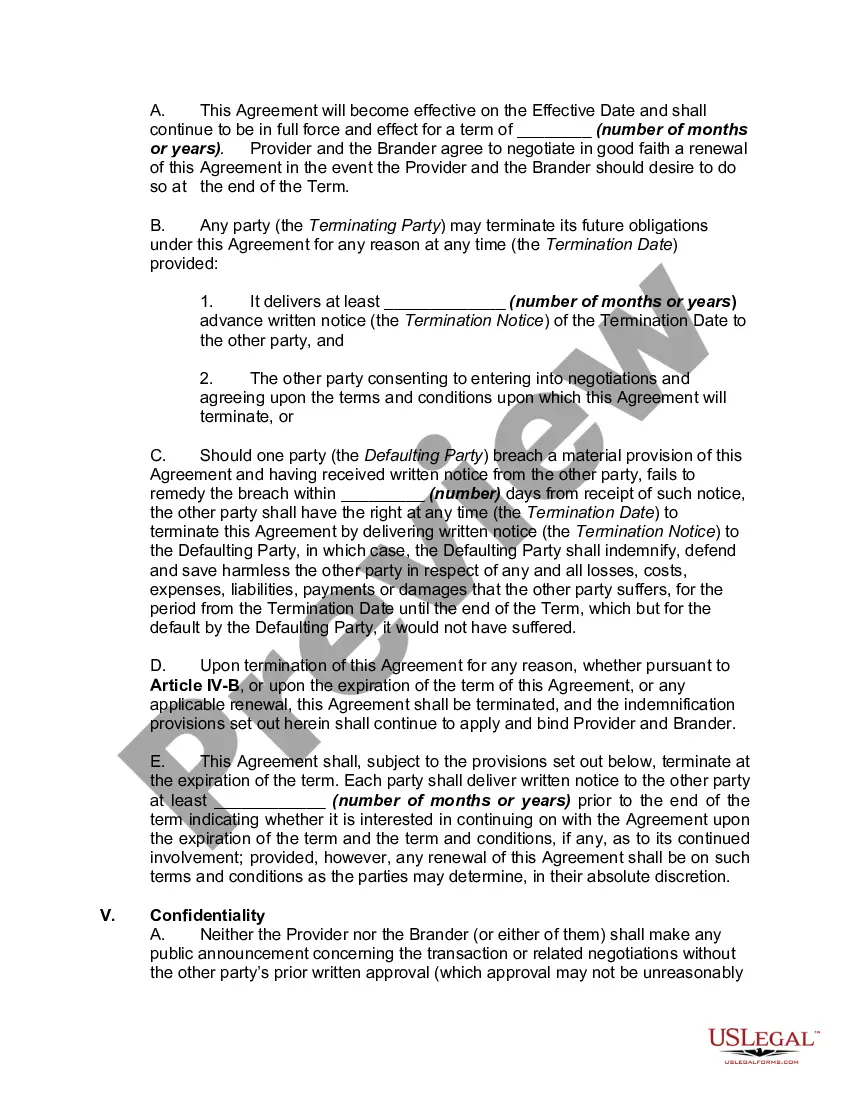
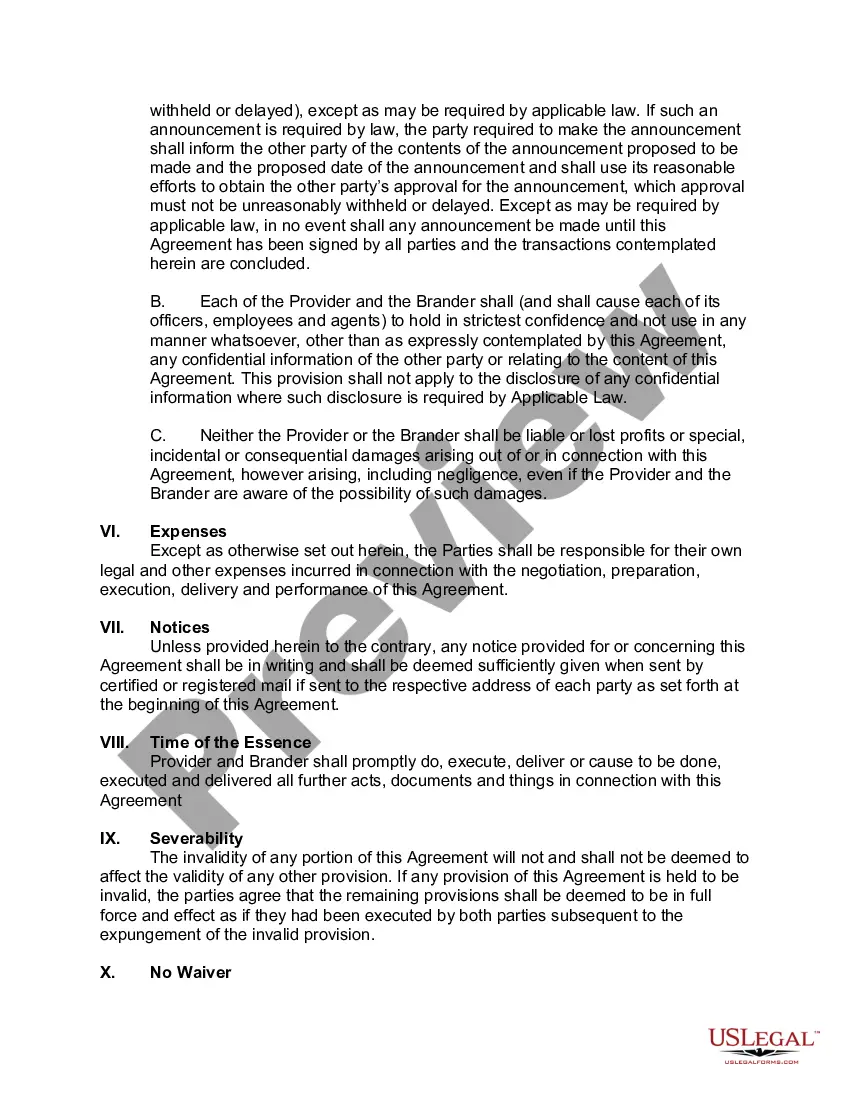
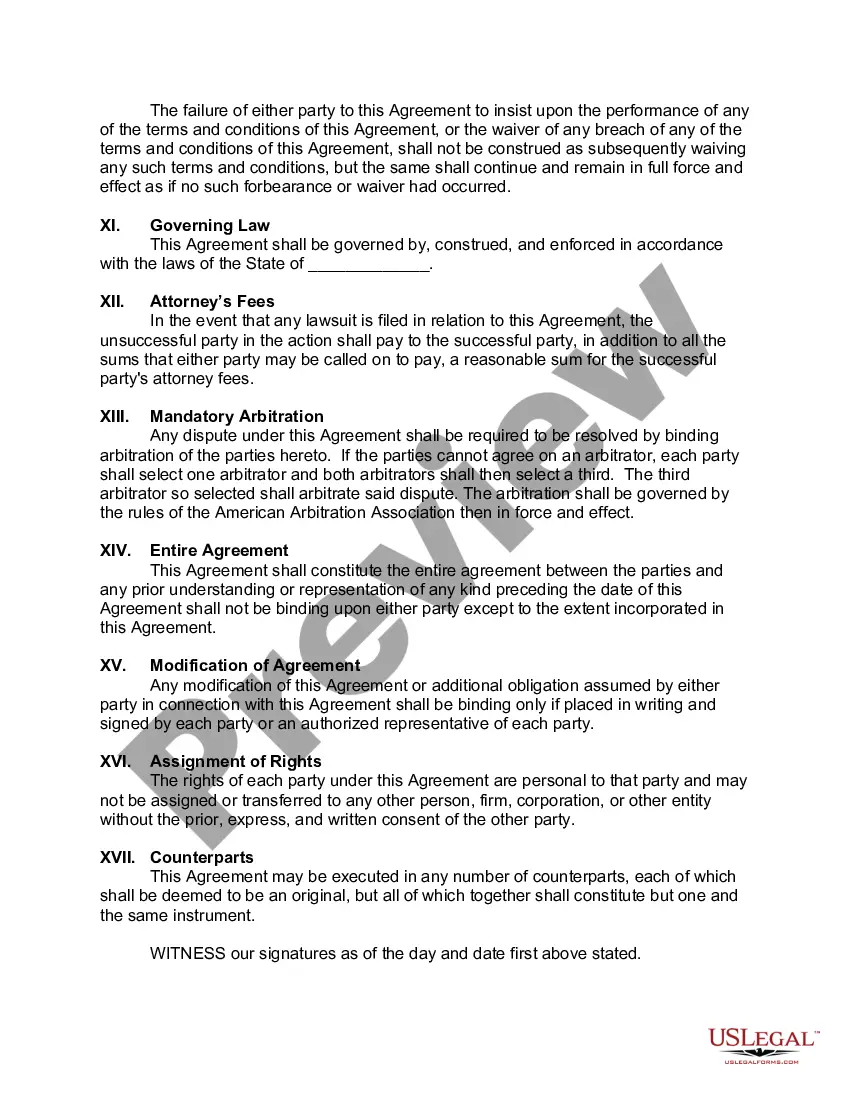
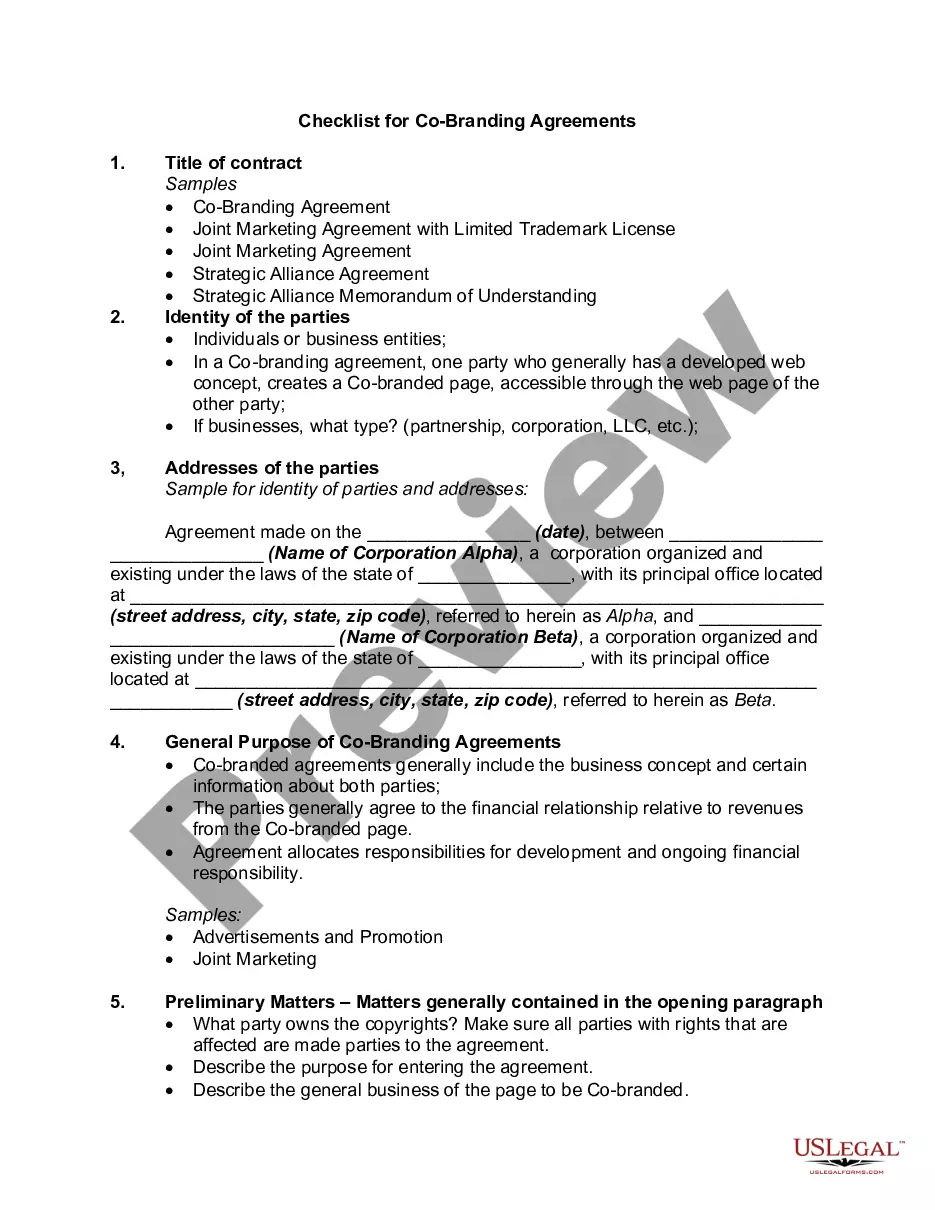
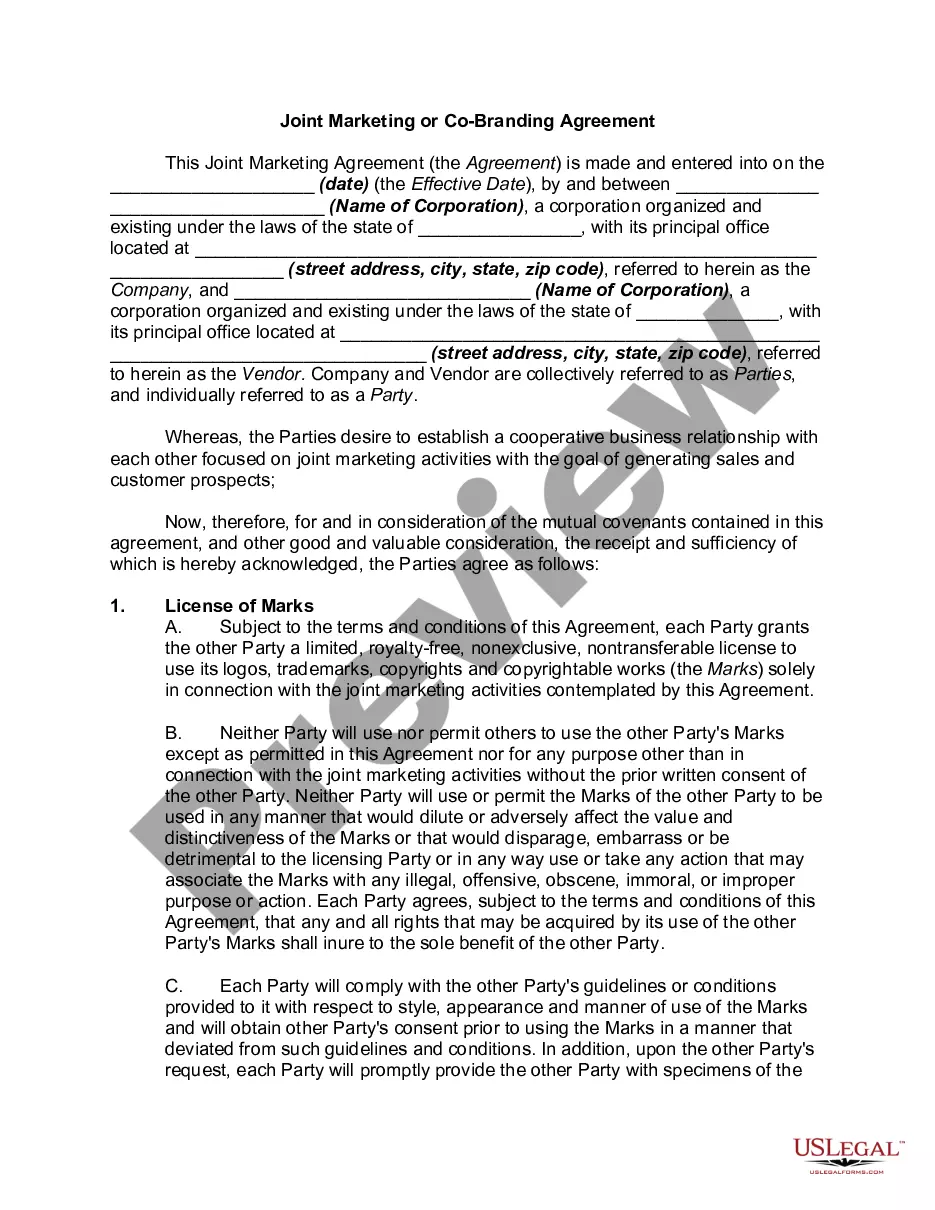

How to fill out Co-Branding Agreement?
Finding the appropriate legal document template can be a challenge. Of course, there are numerous templates available online, but how do you locate the legal form you require? Utilize the US Legal Forms website.
This service provides a vast array of templates, including the Texas Co-Branding Agreement, which can be utilized for both business and personal needs. All forms are reviewed by professionals and meet federal and state standards.
If you are already registered, Log In to your account and click the Download button to obtain the Texas Co-Branding Agreement. Use your account to search for the legal forms you have previously acquired. Navigate to the My documents tab in your account to get another copy of the document you need.
Select the document format and download the legal document template to your device. Complete, modify, print, and sign the acquired Texas Co-Branding Agreement. US Legal Forms is the largest repository of legal forms where you can find various document templates. Utilize the service to download properly constructed paperwork that adheres to state regulations.
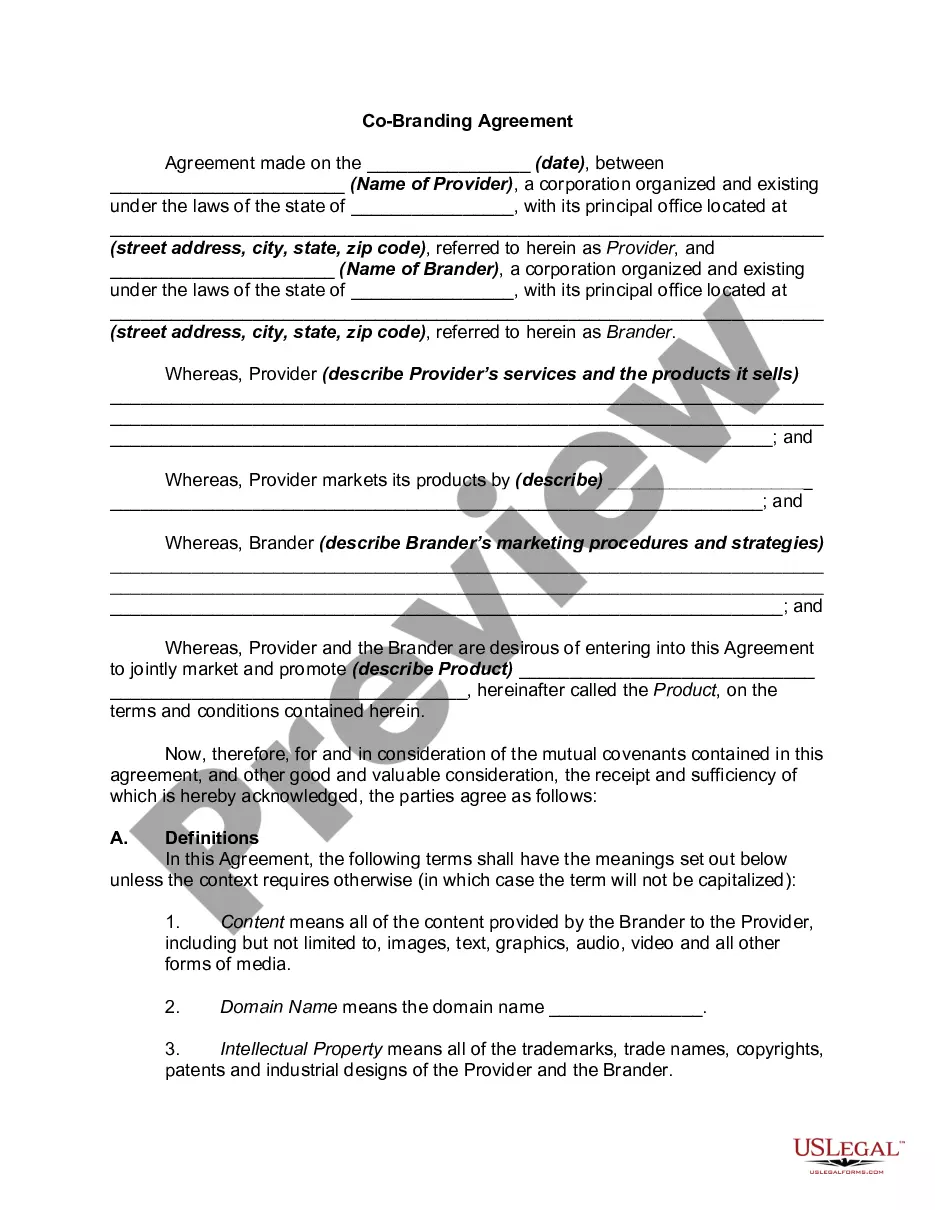
- Firstly, ensure you have selected the correct form for your area/county.
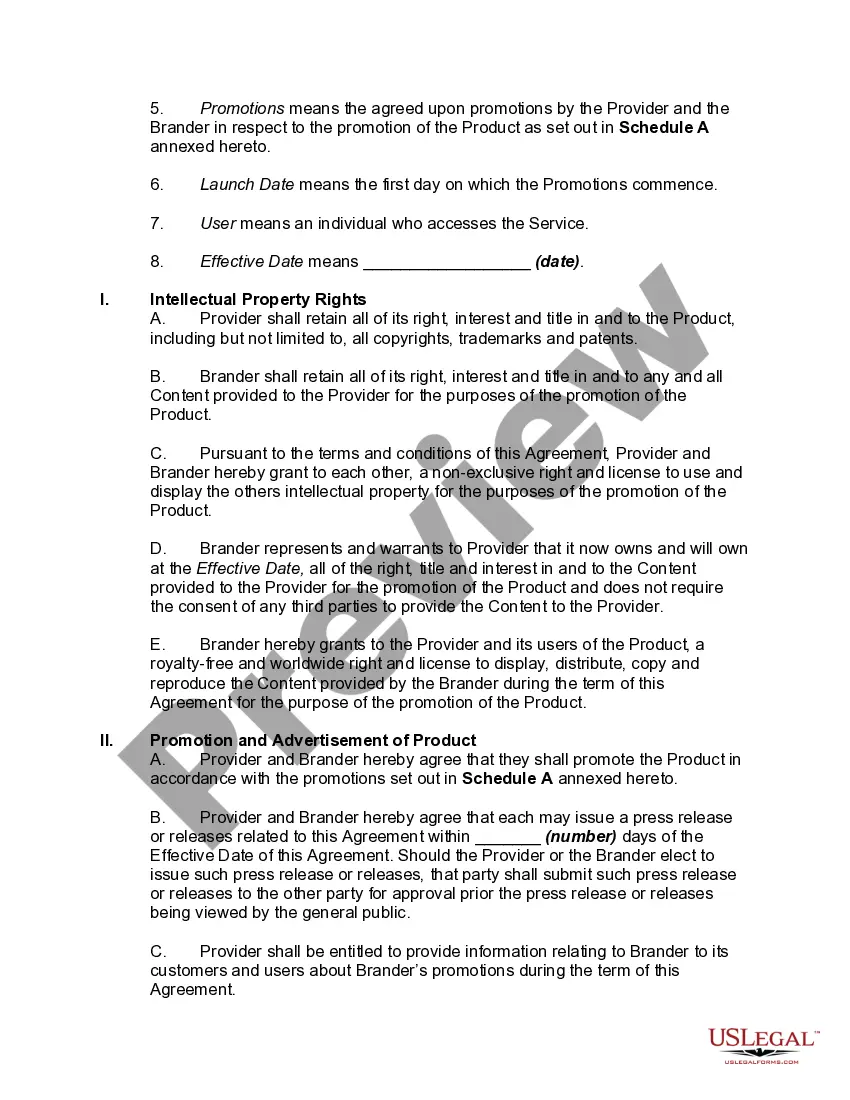
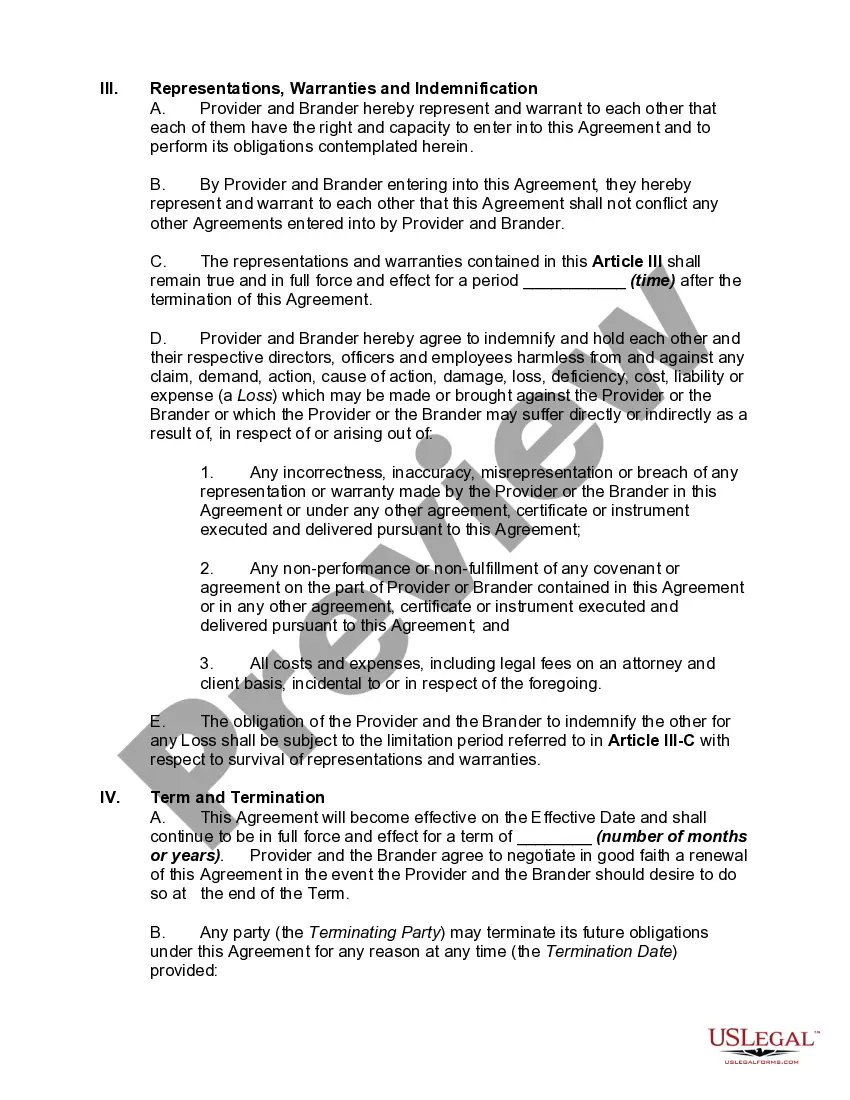
- You can review the document using the Preview feature and examine the form's outline to confirm it is suitable for you.
- If the form does not meet your requirements, utilize the Search field to find the appropriate form.
- Once you are confident that the form works, click the Buy now button to acquire the form.
- Select the pricing plan you wish and input the necessary information.
- Create your account and complete the payment using your PayPal account or Visa or Mastercard.
Form popularity
FAQ
You do not file an LLC operating agreement in Texas, as it is an internal document. However, you should draft it thoroughly and store it with your business records. Using templates from US Legal Forms will help you create an effective operating agreement that aligns with the needs of your Texas Co-Branding Agreement.
An LLC operating agreement and an LLC agreement are often terms used interchangeably, but they can have different nuances. The operating agreement details how your LLC operates, while the LLC agreement can refer to the formation documents themselves. To ensure clarity in your Texas Co-Branding Agreement, consider having a clearly defined operating agreement.
Yes, you can set up an LLC on your own in Texas. By completing the required paperwork and paying the fees, you are able to establish your business independently. However, be aware that using services like US Legal Forms can simplify the process, particularly if you need assistance in creating a Texas Co-Branding Agreement.
In Texas, you do not file an LLC Operating Agreement with the state; instead, keep it on file with your business documents. This internal document outlines your business’s operating procedures and member responsibilities. US Legal Forms provides templates to help you draft a comprehensive LLC Operating Agreement tailored for a Texas Co-Branding Agreement.
To file an LLC in Texas, visit the Texas Secretary of State’s office website. You can complete the application online or download the forms to mail them in. Make sure to check the requirements, including the associated fees, to ensure your Texas Co-Branding Agreement operates under an officially registered LLC.
To file a partnership agreement in Texas, start by drafting your agreement, ensuring it outlines the roles, contributions, and profit-sharing among partners. After you've completed the document, you should retain it for your records, as Texas does not require filing it with a state agency. However, consider using US Legal Forms to find templates that can guide you through creating an effective Texas Co-Branding Agreement.
Co-branding occurs when two brands collaborate to create a product or service that combines their strengths. A classic example is the partnership between Nike and Apple, where Nike integrates its fitness products with Apple technology. This strategy enhances brand visibility while offering consumers additional value. A Texas Co-Branding Agreement can provide a structured framework for navigating such partnerships effectively.
Filling out a partnership agreement requires clear communication between all partners involved. Start by defining the roles and responsibilities of each partner, followed by how profits and losses will be shared. Specify the duration of the agreement and any terms for termination. A Texas Co-Branding Agreement is a great example of how to outline these important details, ensuring everyone is on the same page.
Co-branding can be an excellent strategy if approached thoughtfully. It allows brands to pool resources, enhance credibility, and attract new customers. However, a well-structured Texas Co-Branding Agreement is necessary to mitigate risks and clearly define expectations, ensuring a successful collaboration.
Co-branding and licensing can present several challenges, such as misalignment of brand values and potential customer confusion. If the brands do not have compatible goals or messaging, the partnership might backfire. It is essential to address these risks in a Texas Co-Branding Agreement, ensuring clarity in roles and brand representation.