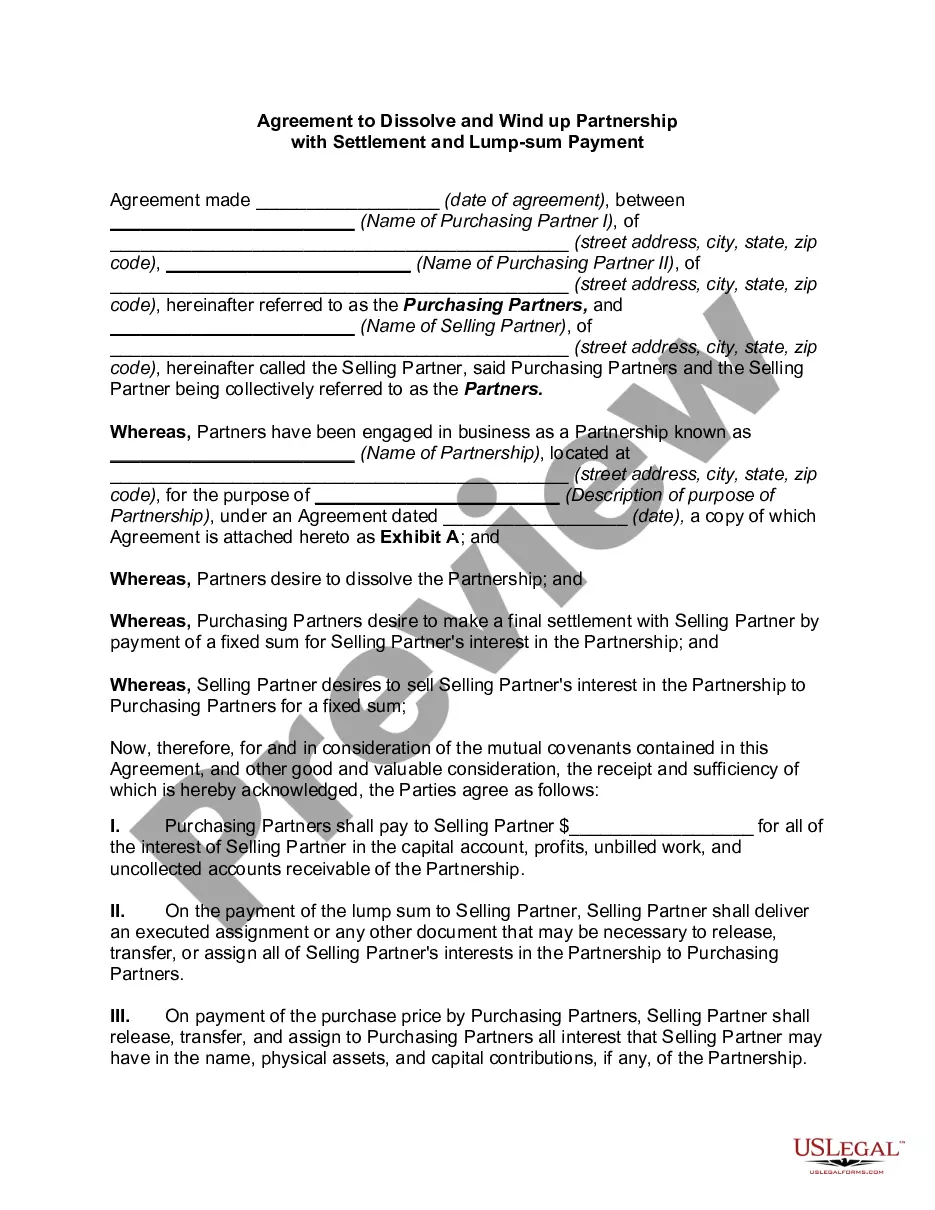
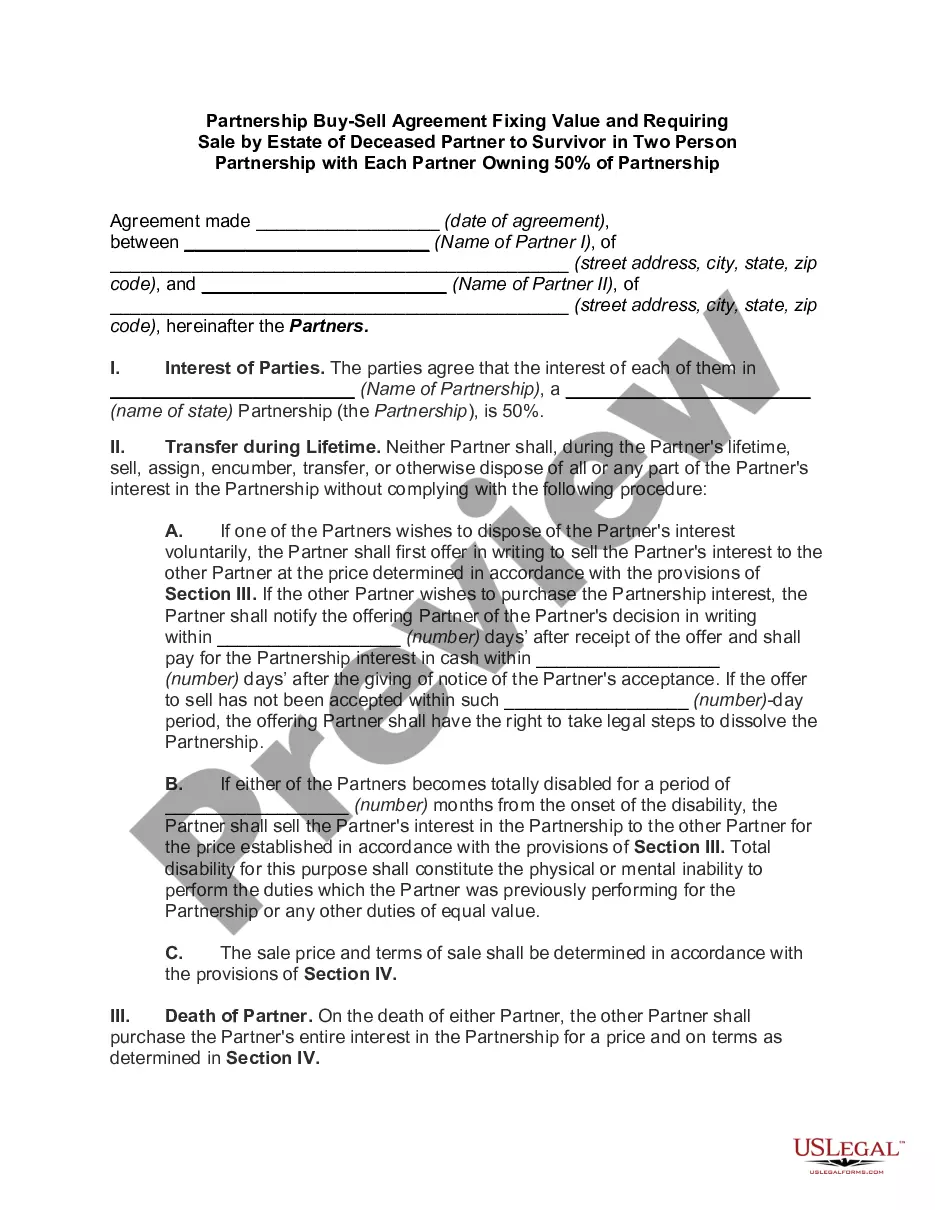
Texas Publisher Oriented Software Royalty and License Agreement
Description
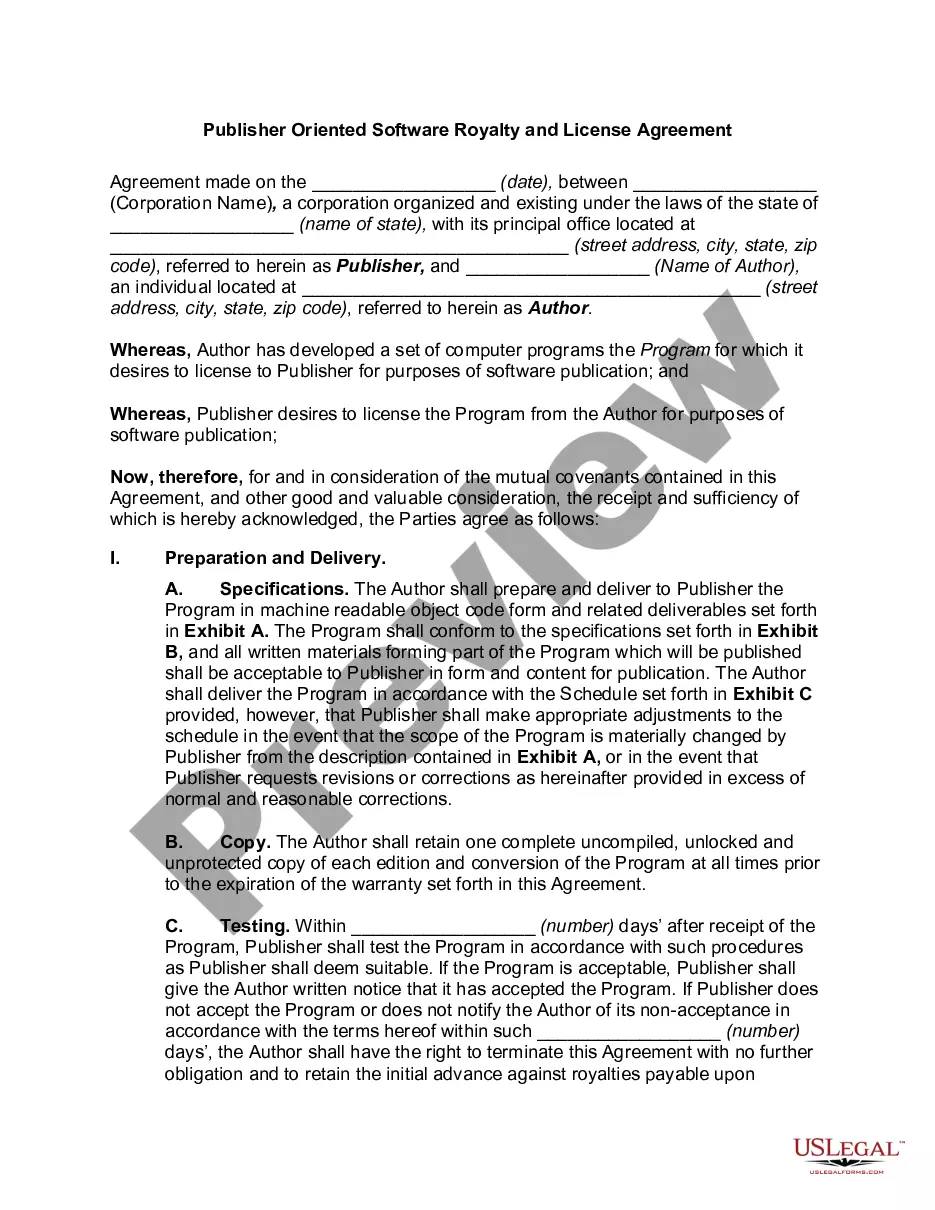
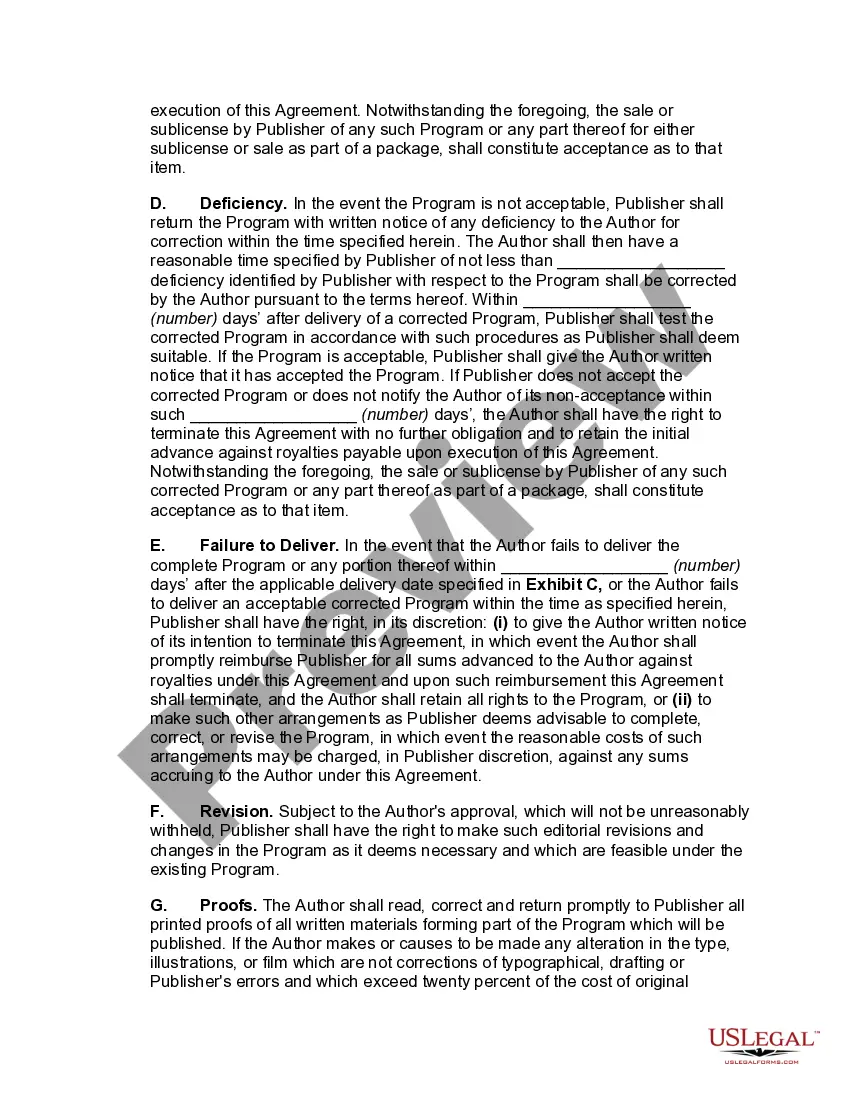
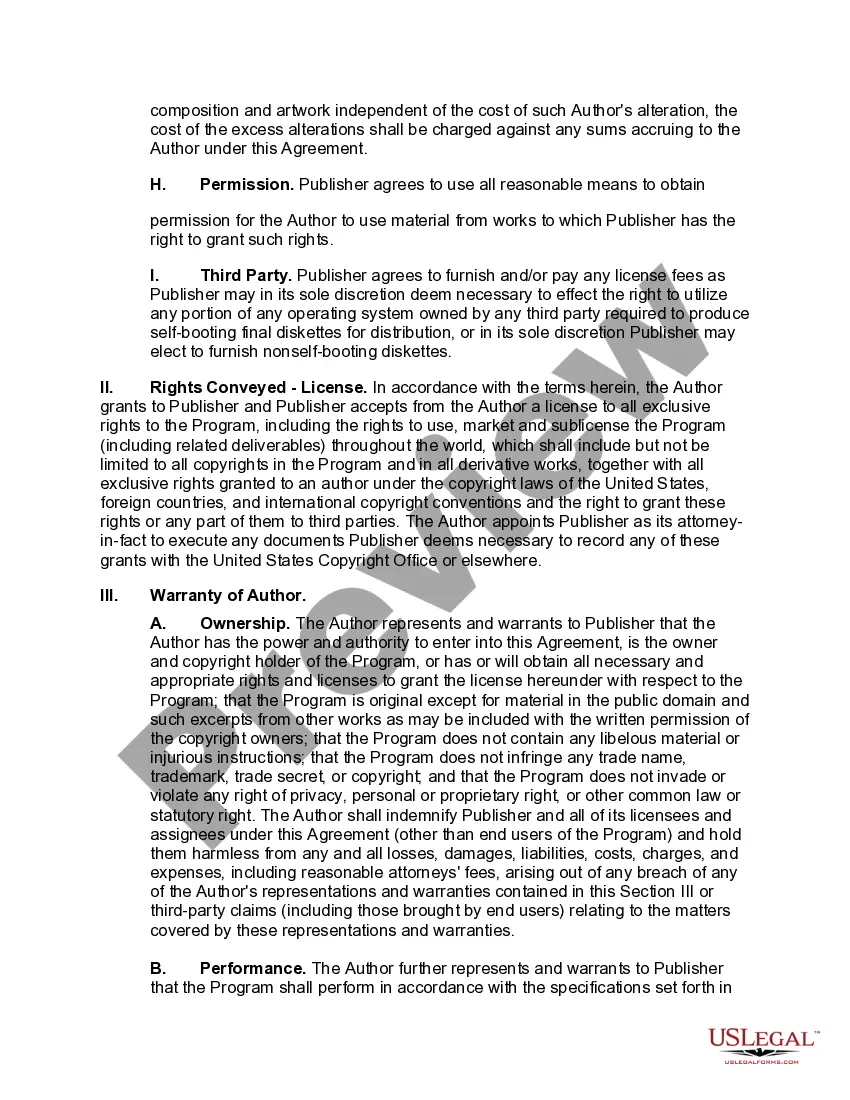
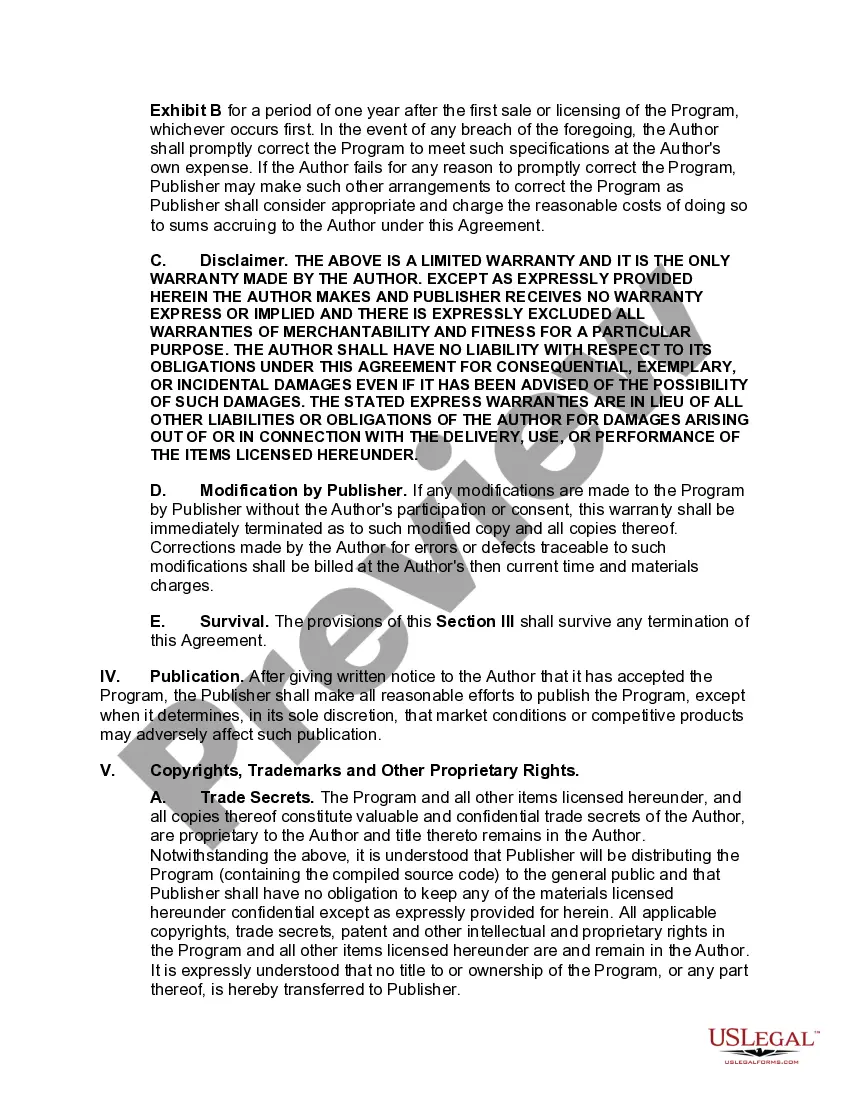
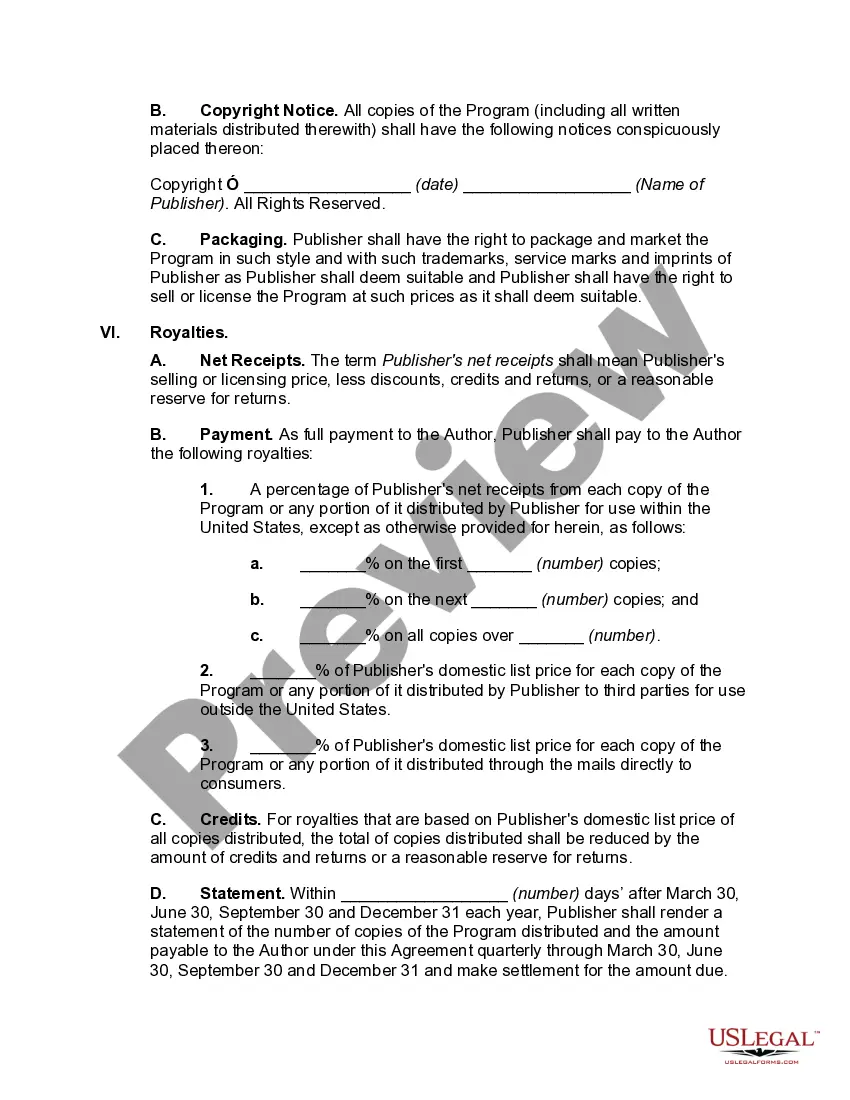
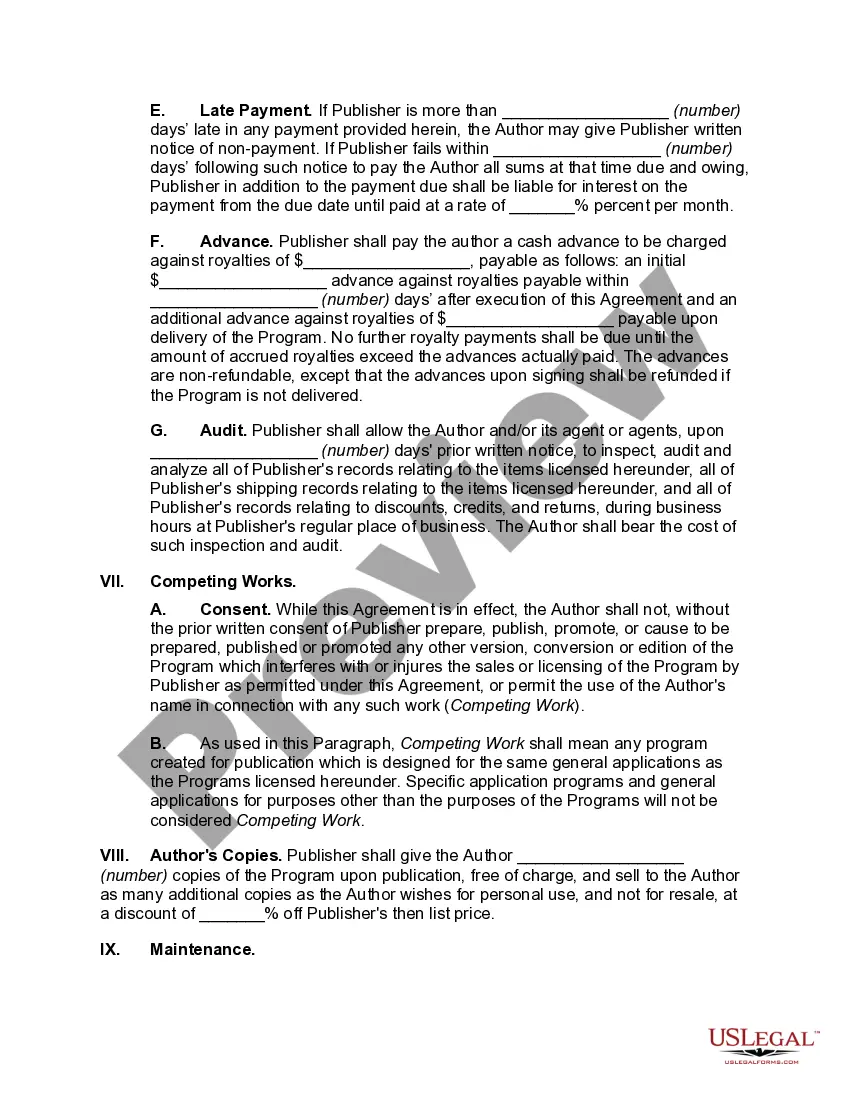
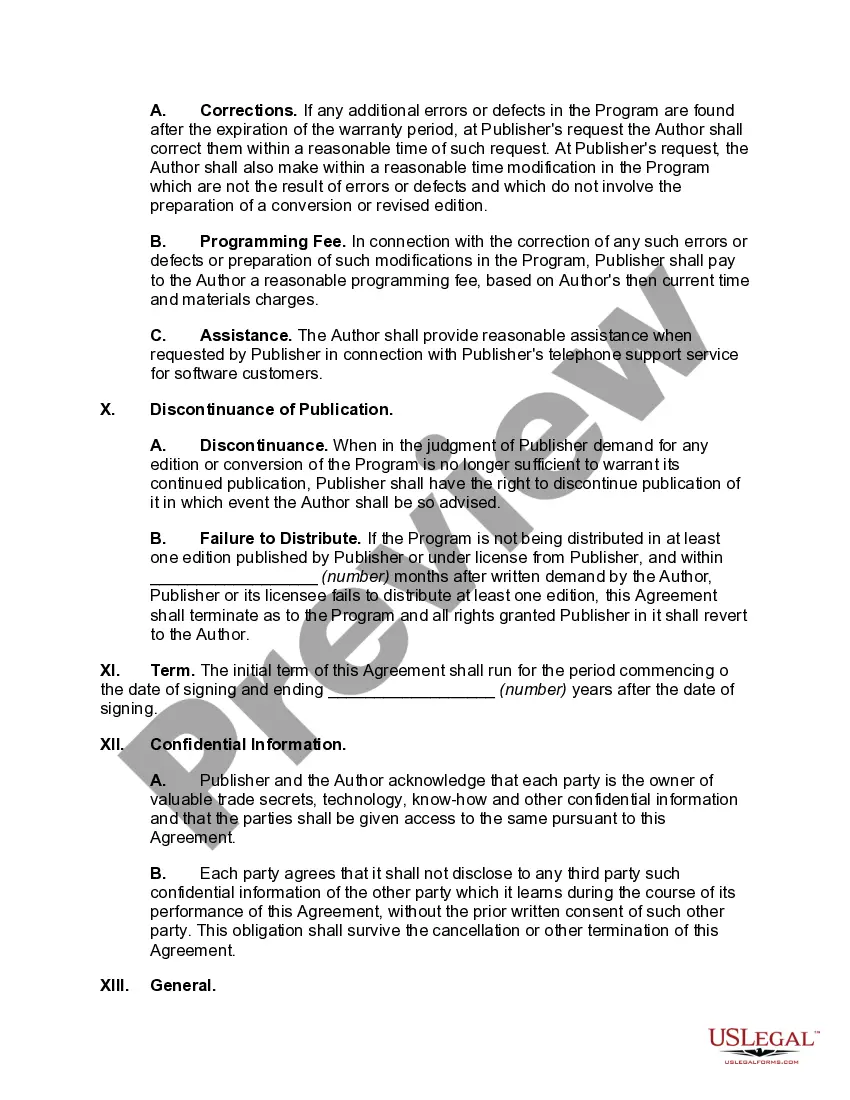
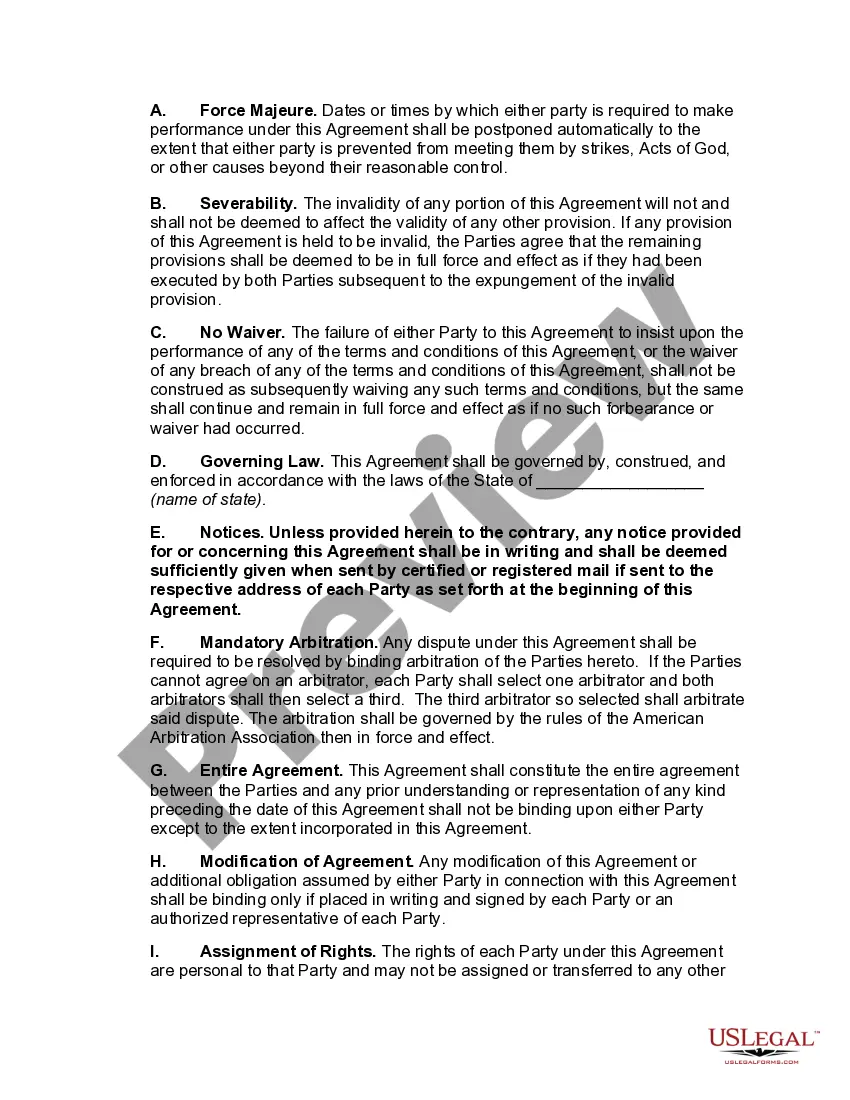
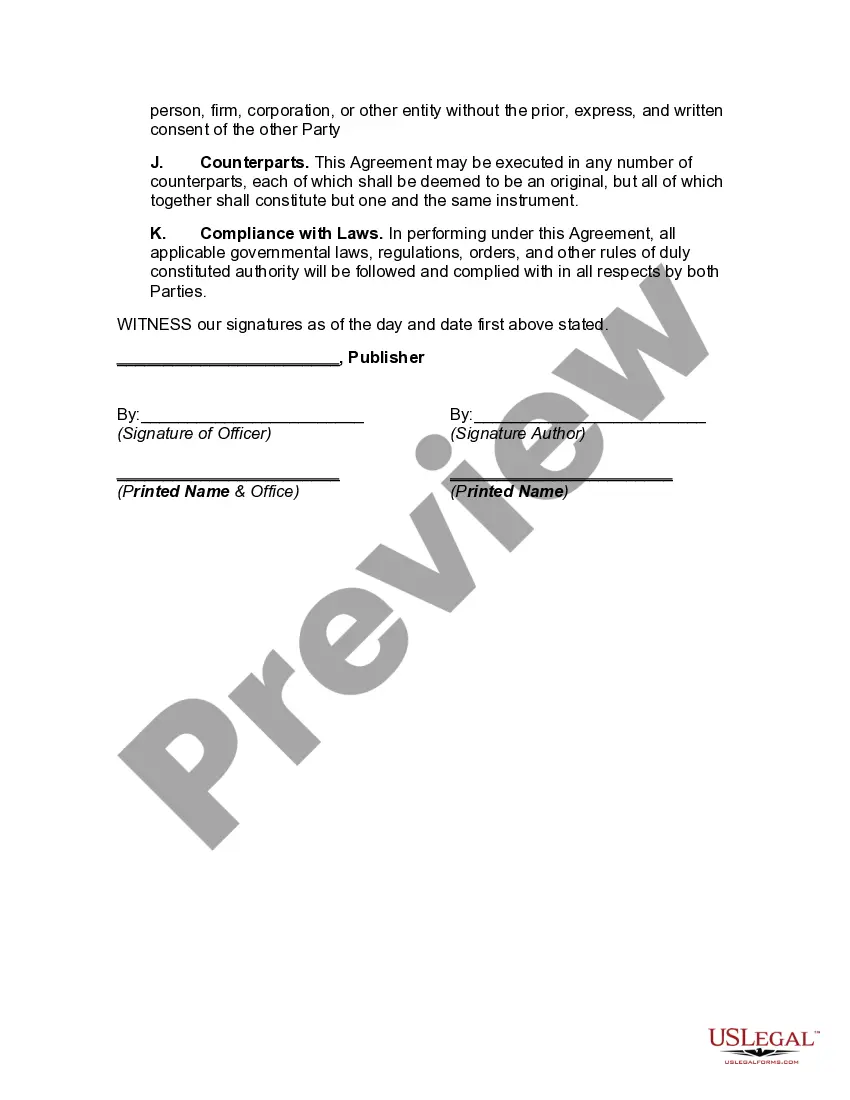
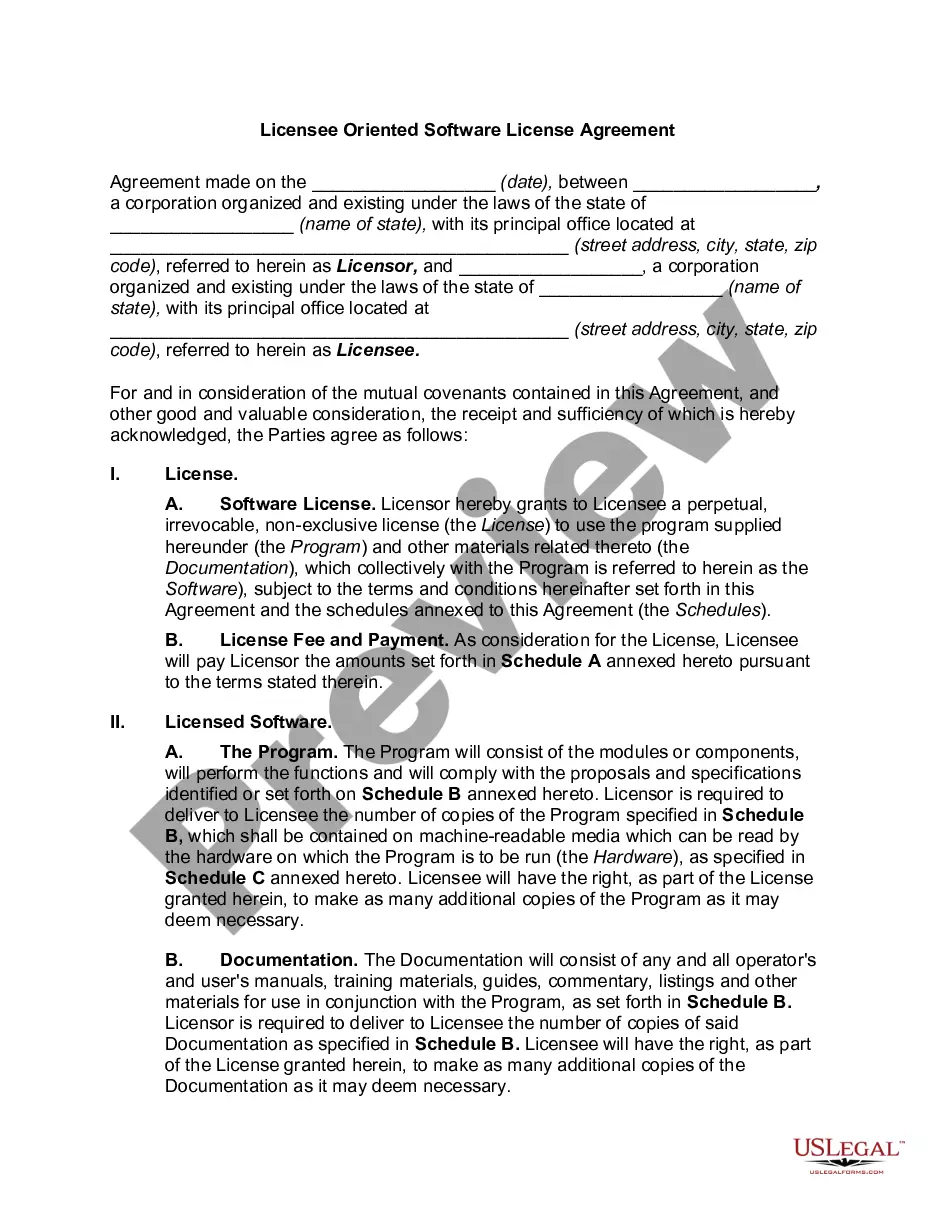
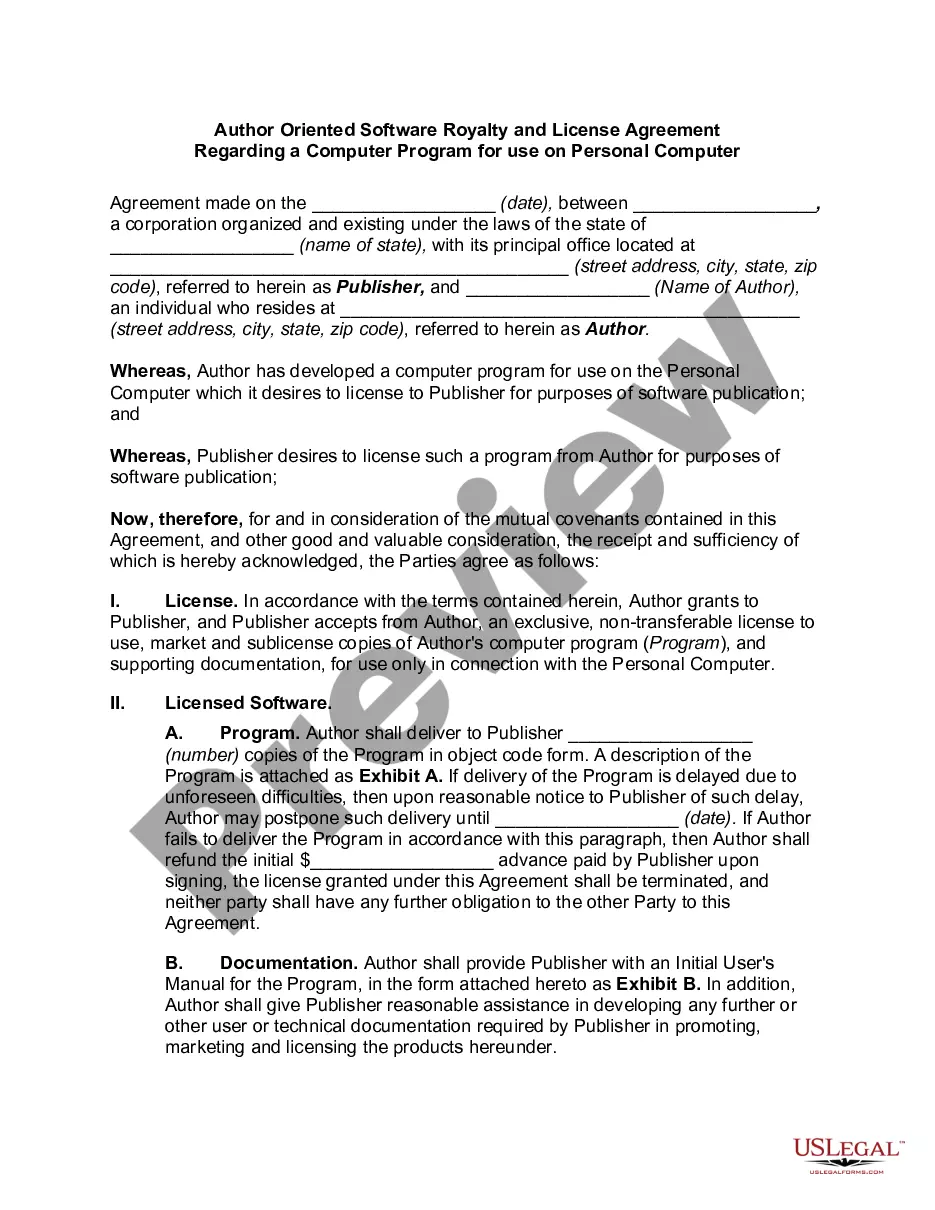
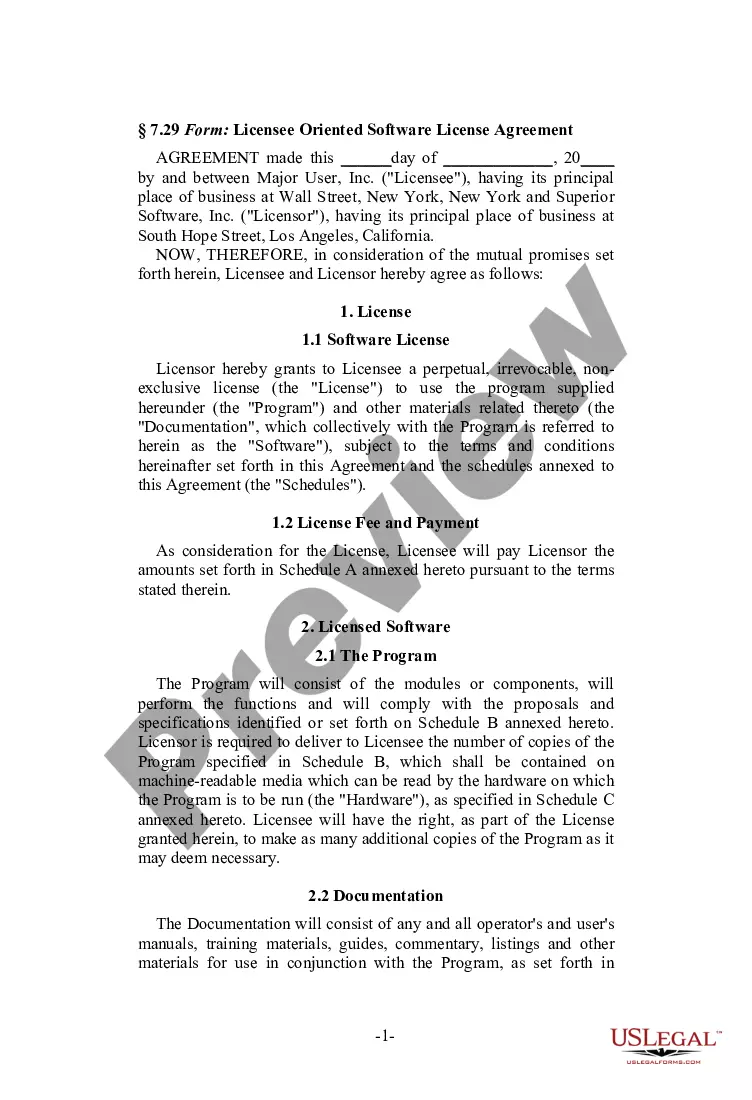
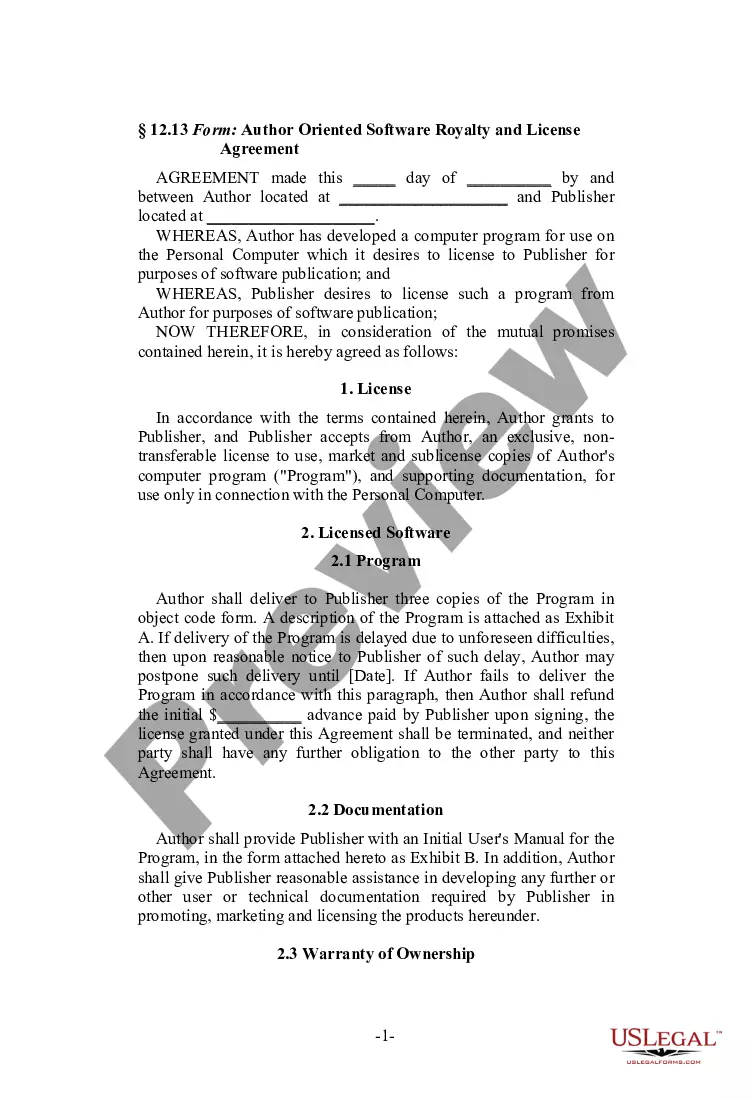
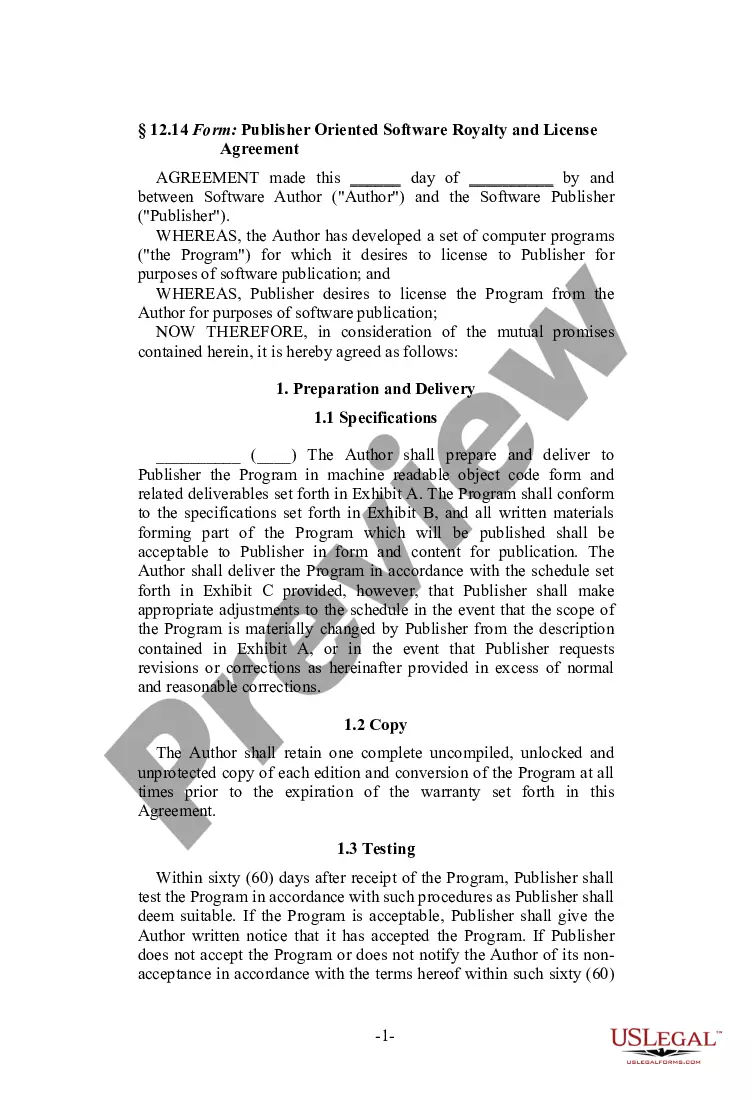

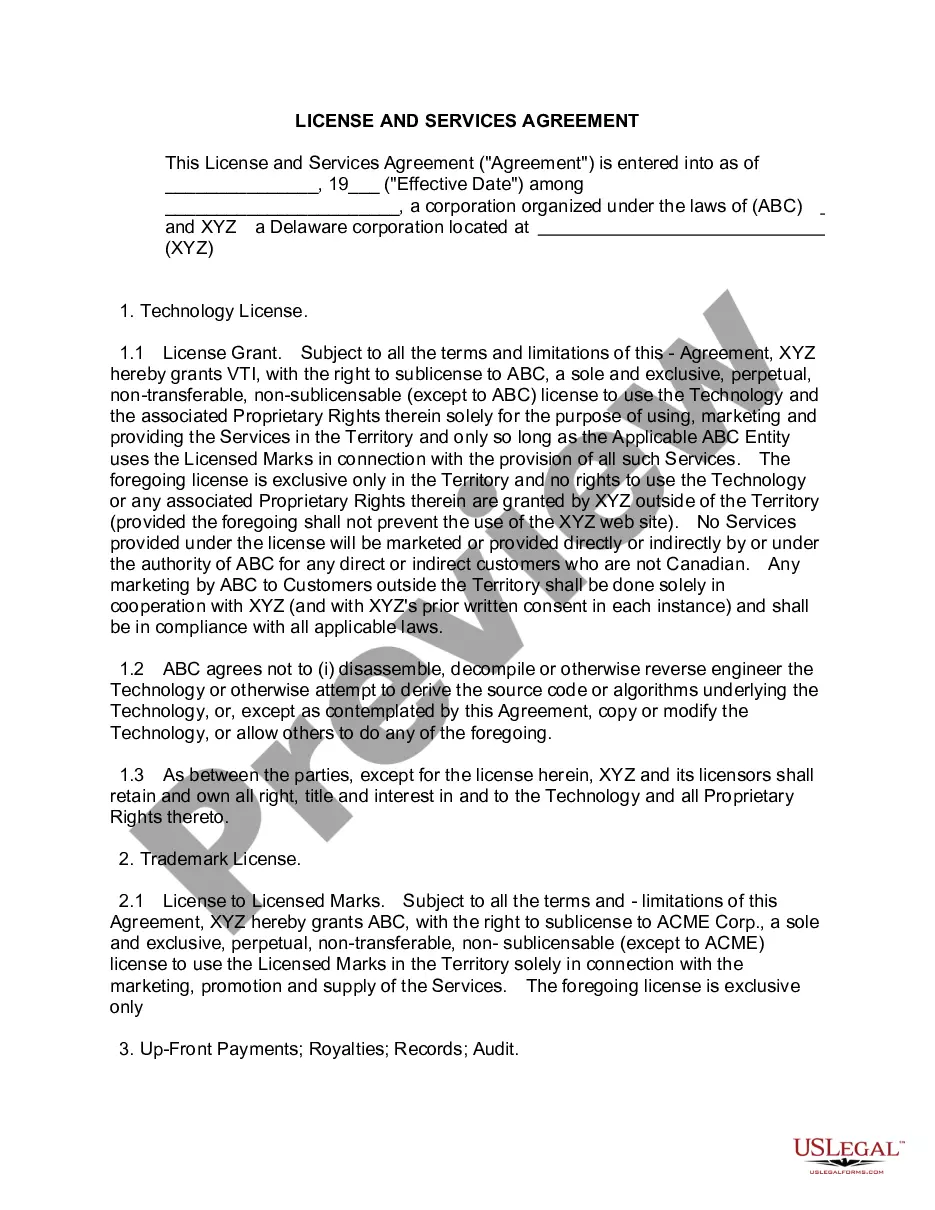
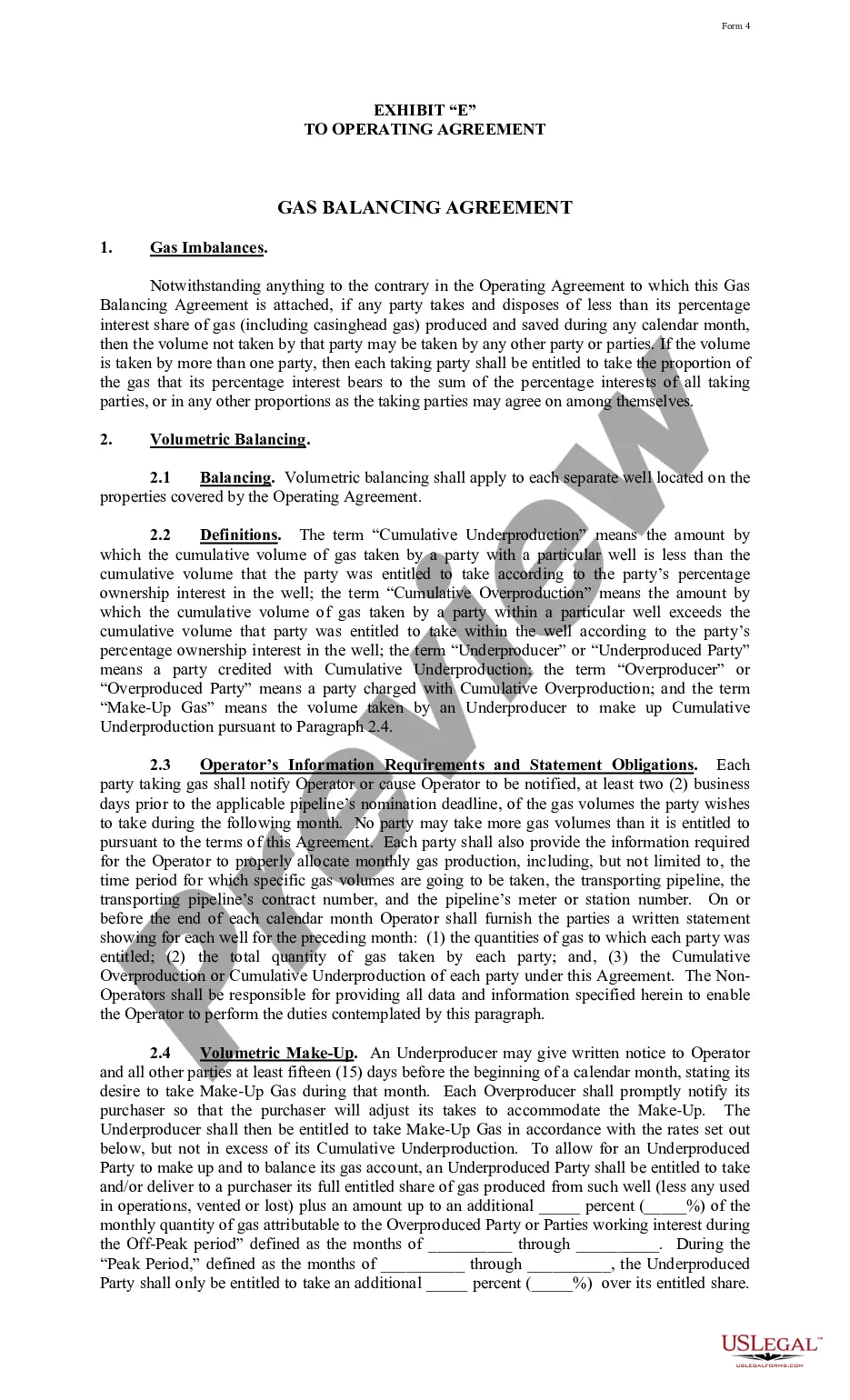

How to fill out Publisher Oriented Software Royalty And License Agreement?
If you require extensive, download, or printing legal document templates, utilize US Legal Forms, the largest repository of legal forms available online.
Take advantage of the site's straightforward and user-friendly search function to find the documents you require. Various templates for business and personal needs are organized by categories and states, or keywords.
Use US Legal Forms to locate the Texas Publisher Oriented Software Royalty and License Agreement in just a few clicks.
Each legal document template you buy is yours permanently. You will have access to every form you saved in your account. Go to the My documents section and choose a form to print or download again.
Stay competitive and download and print the Texas Publisher Oriented Software Royalty and License Agreement with US Legal Forms. There are thousands of professional and state-specific forms you can utilize for your business or personal requirements.
- If you are already a US Legal Forms member, Log In to your account and click the Download button to get the Texas Publisher Oriented Software Royalty and License Agreement.
- You can also access forms you previously saved in the My documents section of your account.
- If you are using US Legal Forms for the first time, follow the steps below.
- Step 1. Ensure you have selected the form for the correct city/state.
- Step 2. Use the Preview option to review the form's content. Don't forget to read the information.
- Step 3. If you are not satisfied with the form, use the Search field at the top of the screen to find other versions in the legal form template.
- Step 4. Once you have found the form you need, click the Purchase Now button. Choose your preferred pricing plan and enter your details to register for an account.
- Step 5. Complete the payment. You can use your credit card or PayPal account to finish the transaction.
- Step 6. Select the format of the legal document and download it to your device.
- Step 7. Fill out, modify, and print or sign the Texas Publisher Oriented Software Royalty and License Agreement.
Form popularity
FAQ
Things that can be licensed include software, patents, and copyrighted works. Other types of fees include those required for certain professions, such as cosmetologists. License fees are generally a fixed amount, while royalties are usage-based payments for using an asset or property.
The difference between an End User License Agreement (EULA) and a Software License Agreement (SLA) depends on intended usage. The EULA generally governs the continuous use of the software by a group of individuals. Meanwhile, an SLA targets a specific entity for a finite period.
Practitioners and licensing executives often refer to three basic types of voluntary licenses: non-exclusive, sole, and exclusive. A non-exclusive licence allows the licensor to retain the right to use the licensed property and the right to grant additional licenses to third parties.
License fees are usually a fixed payment that allows the licensor to use an IP for a set amount of time, while royalties are percentage or usage-based payments due each time a certain piece of intellectual property is used.
Generally speaking, an EULA is a legally binding agreement between the owner of a product (often software) and the end-user more specifically a contract between the licensor of a product and the licensee.
Proprietary software licenses. The hallmark of proprietary software licenses is that the software publisher grants the use of one or more copies of software under the end-user license agreement (EULA), but ownership of those copies remains with the software publisher (hence use of the term "proprietary").
An end-user license agreement (E.U.L.A.) is a legal contract entered into between a software developer or vendor and the user of the software, often where the software has been purchased by the user from an intermediary such as a retailer.
Ultimately, an end-user license agreement protects you, the owner, or licensor of the app from copyright infringement and other misuse of the software, so it's important to include one when you are distributing software to customers.
200cA Software License Agreement is a contract that allows a licensee to use software, but not own it. The software maker keeps some rights that the licensee doesn't get, like continuing to sell the software to others and granting the licensee permission to use the software on a lone computer.
Things that can be licensed include software, patents, and copyrighted works. Other types of fees include those required for certain professions, such as cosmetologists. License fees are generally a fixed amount, while royalties are usage-based payments for using an asset or property.