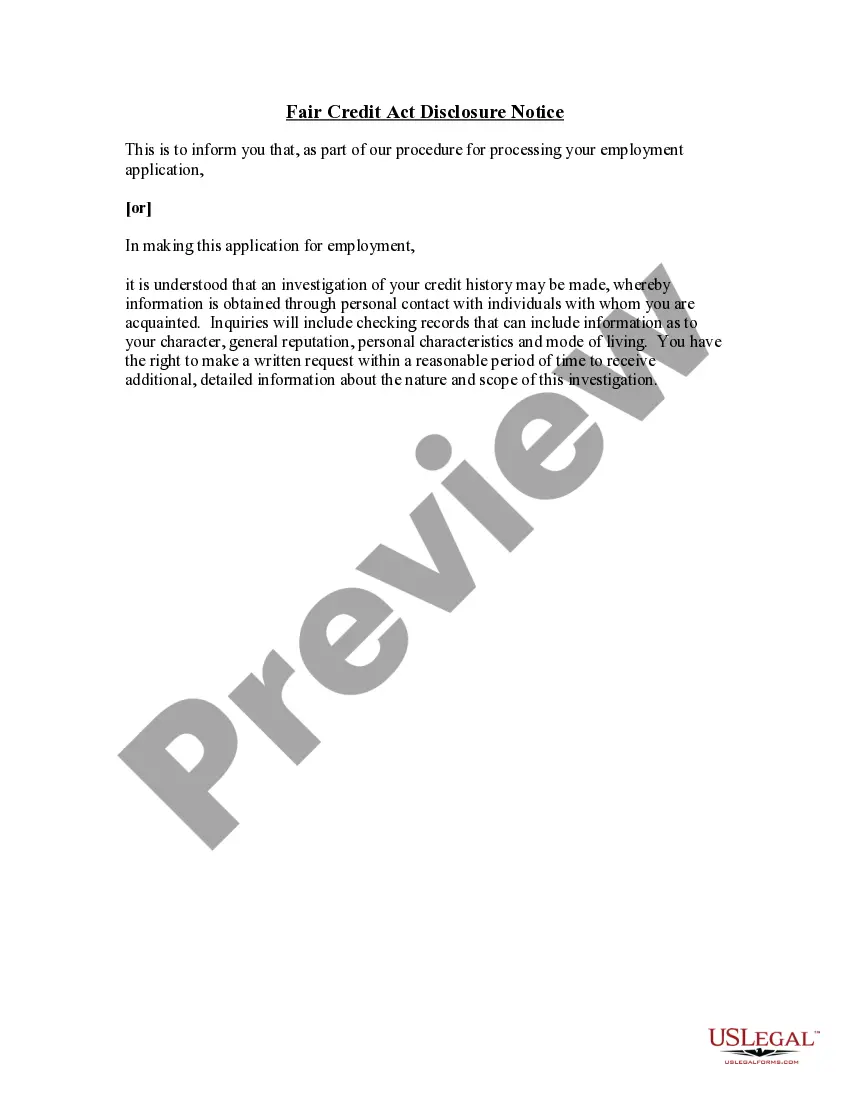
Texas Fair Credit Act Disclosure Notice
Description
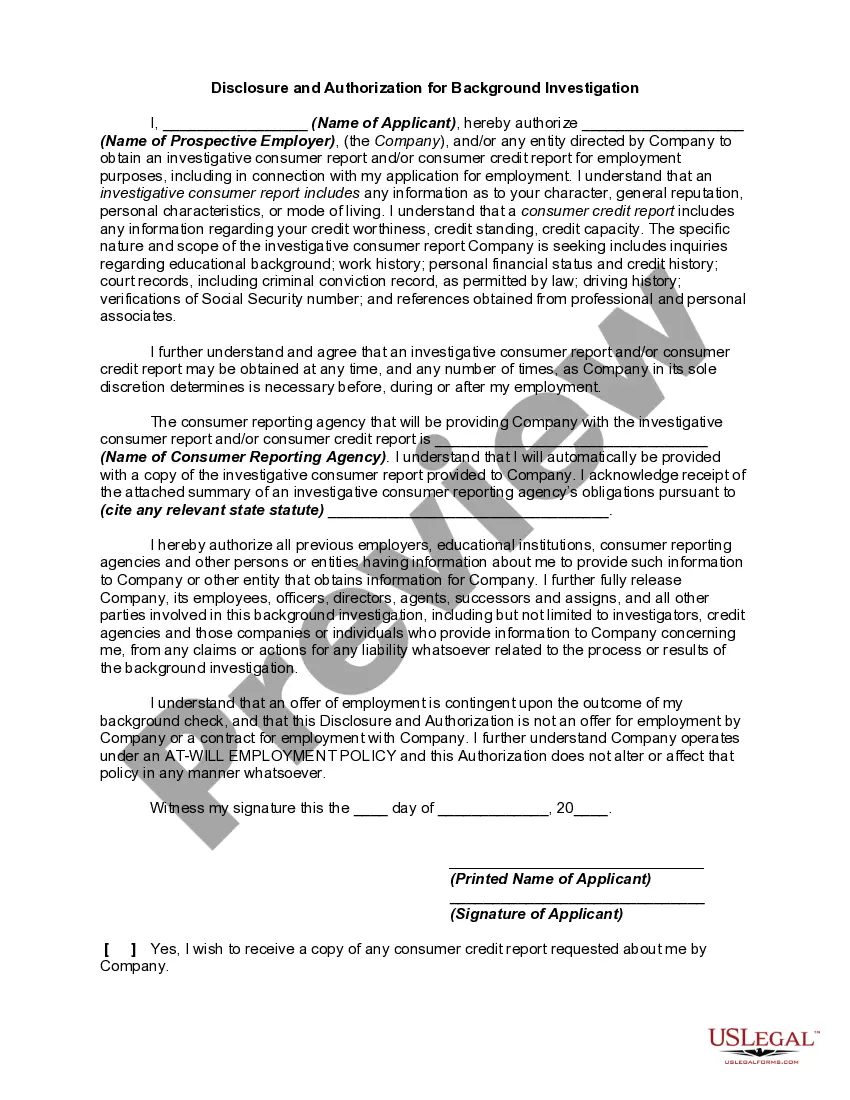
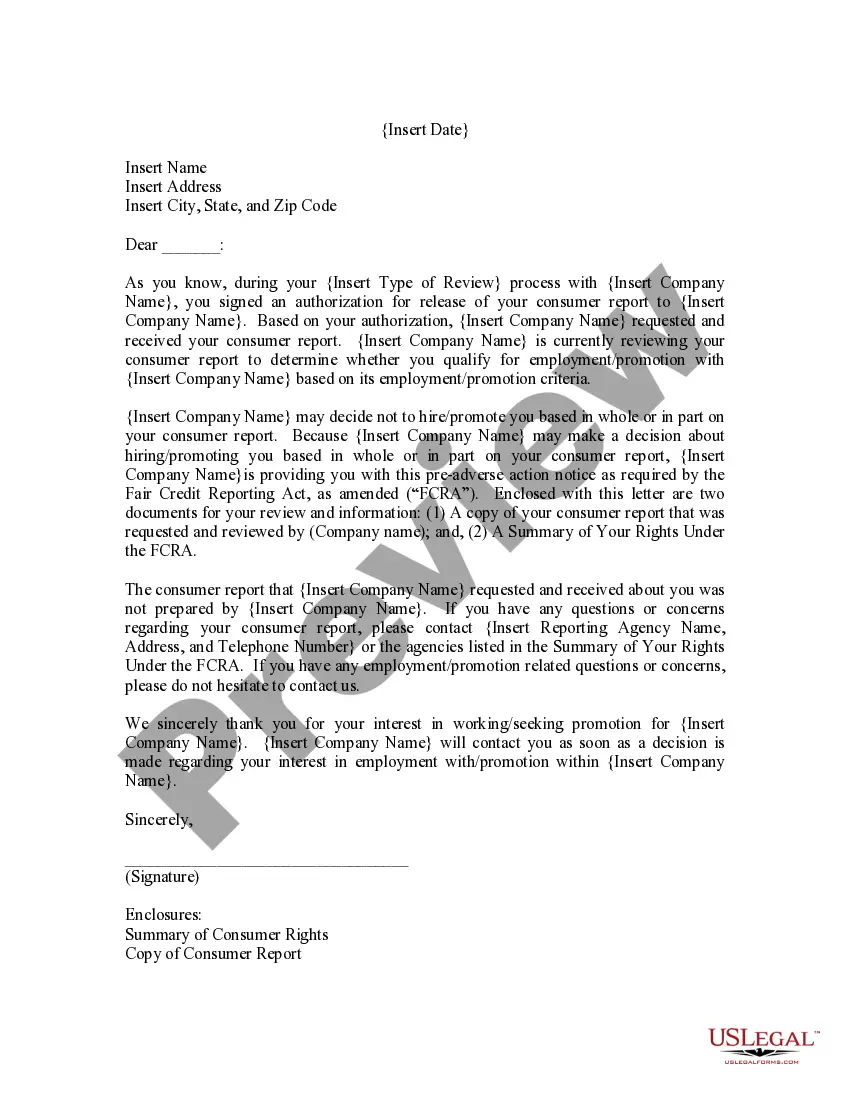
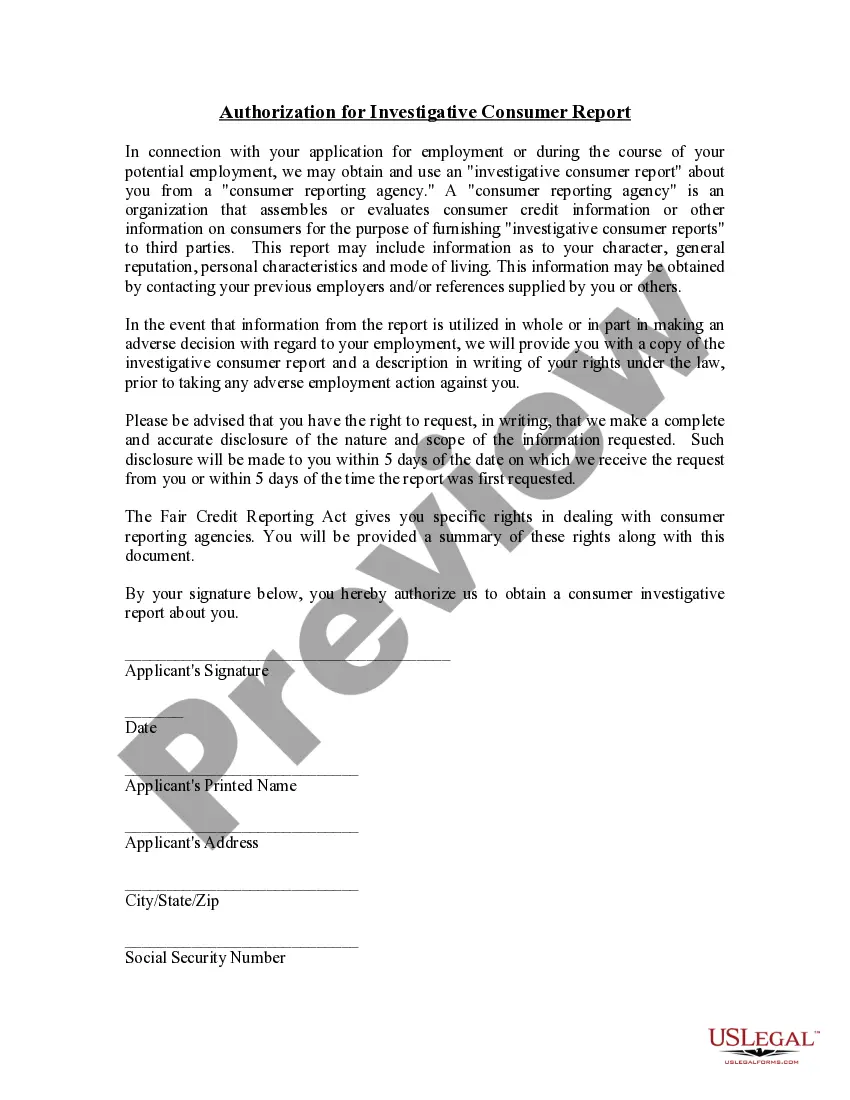
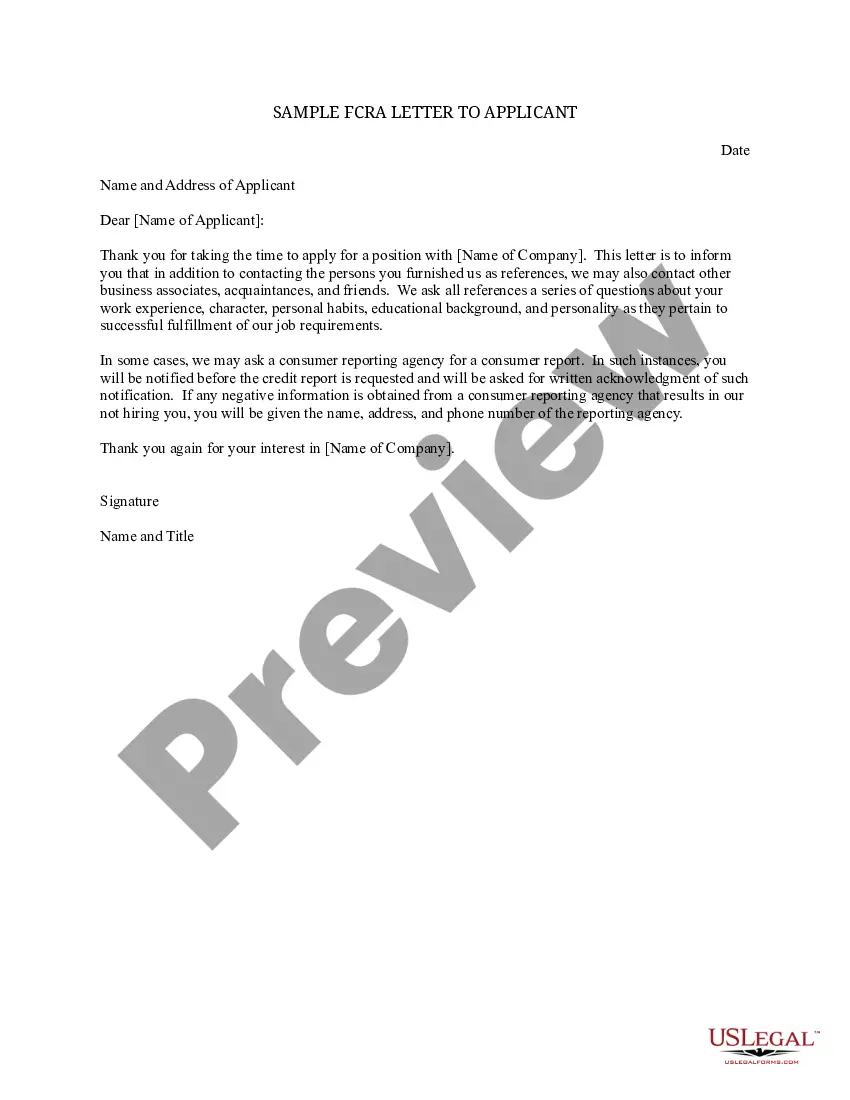
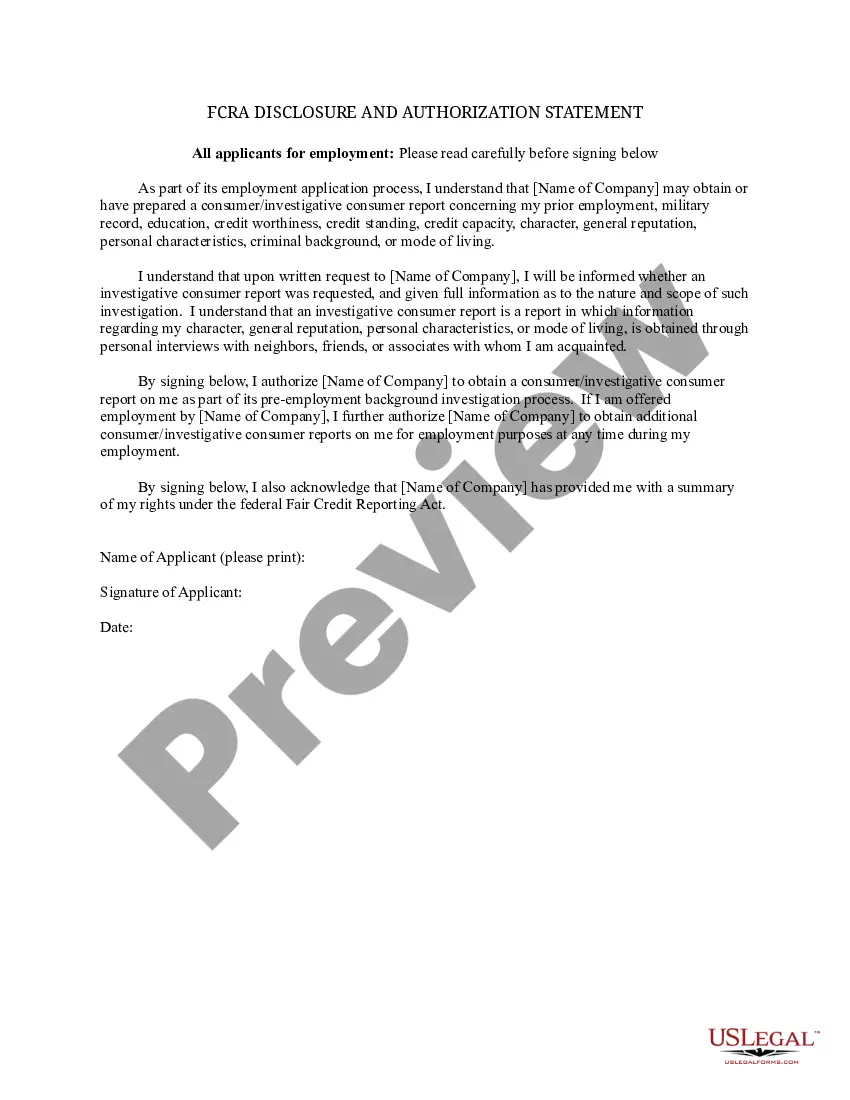

How to fill out Fair Credit Act Disclosure Notice?
Finding the correct legal document format can be challenging. Clearly, there are numerous templates accessible online, but how can you get the legal form you require? Utilize the US Legal Forms website. The service offers thousands of templates, including the Texas Fair Credit Act Disclosure Notice, which you can use for both business and personal needs. All forms are vetted by professionals and comply with state and federal regulations.
If you are already registered, Log In to your account and click on the Download button to retrieve the Texas Fair Credit Act Disclosure Notice. Use your account to browse through the legal forms you have previously obtained. Navigate to the My documents section of your account and download another copy of the document you need.
If you are a new user of US Legal Forms, here are some straightforward steps you can follow: First, ensure you have selected the correct form for your state/region. You can view the form using the Preview button and read the form description to confirm it is the right fit for you. If the form does not meet your requirements, utilize the Search field to find the appropriate document.
Utilize the service to obtain well-crafted files that adhere to state regulations.
- Once you are confident the form is suitable, click the Get now button to acquire the document.
- Select the pricing plan you desire and enter the required information.
- Create your account and complete the payment using your PayPal account or credit card.
- Choose the file format and download the legal document format to your device.
- Complete, modify, print, and sign the received Texas Fair Credit Act Disclosure Notice.
- US Legal Forms is the premier repository of legal documents from which you can find various document templates.
Form popularity
FAQ
Consumer reporting agencies must correct or delete inaccurate, incomplete, or unverifiable information. Inaccurate, incomplete, or unverifiable information must be removed or corrected, usually within 30 days. However, a consumer reporting agency may continue to report information it has verified as accurate.
Under the FCRA, an employer may not run a background check on a prospective employee without first providing "a clear and conspicuous disclosure . . . in a document that consists solely of that disclosure, that a consumer report may be obtained for employment purposes." For efficiency, many employers include all
A Credit Score Disclosure alerts a consumer of their FICO scores, defines what a FICO is, informs how FICO scores affect their access to consumer credit and provides contact information for the bureaus.
The Dodd-Frank Act also amended two provisions of the FCRA to require the disclosure of a credit score and related information when a credit score is used in taking an adverse action or in risk-based pricing. On December 21, 2011, the CFPB restated FCRA regulations under its authority at 12 CFR Part 1022 (76 Fed. Reg.
Under the FCRA, an employer may not run a background check on a prospective employee without first providing "a clear and conspicuous disclosure . . . in a document that consists solely of that disclosure, that a consumer report may be obtained for employment purposes." For efficiency, many employers include all
A creditor must disclose a consumer's credit score and information relating to a credit score on a risk-based pricing notice when the score of the consumer to whom the creditor extends credit or whose extension of credit is under review is used in setting the material terms of credit.
The Act (Title VI of the Consumer Credit Protection Act) protects information collected by consumer reporting agencies such as credit bureaus, medical information companies and tenant screening services. Information in a consumer report cannot be provided to anyone who does not have a purpose specified in the Act.
The FCRA gives you the right to be told if information in your credit file is used against you to deny your application for credit, employment or insurance. The FCRA also gives you the right to request and access all the information a consumer reporting agency has about you (this is called "file disclosure").
A credit file disclosure provides you with all of the information in your credit file maintained by a consumer reporting company that could be provided by the consumer reporting company in a consumer report about you to a third party, such as a lender.
If you deny a consumer credit based on information in a consumer report, you must provide an adverse action notice to the consumer. if you grant credit, but on less favorable terms based on information in a consumer report, you must provide a risk-based pricing notice.