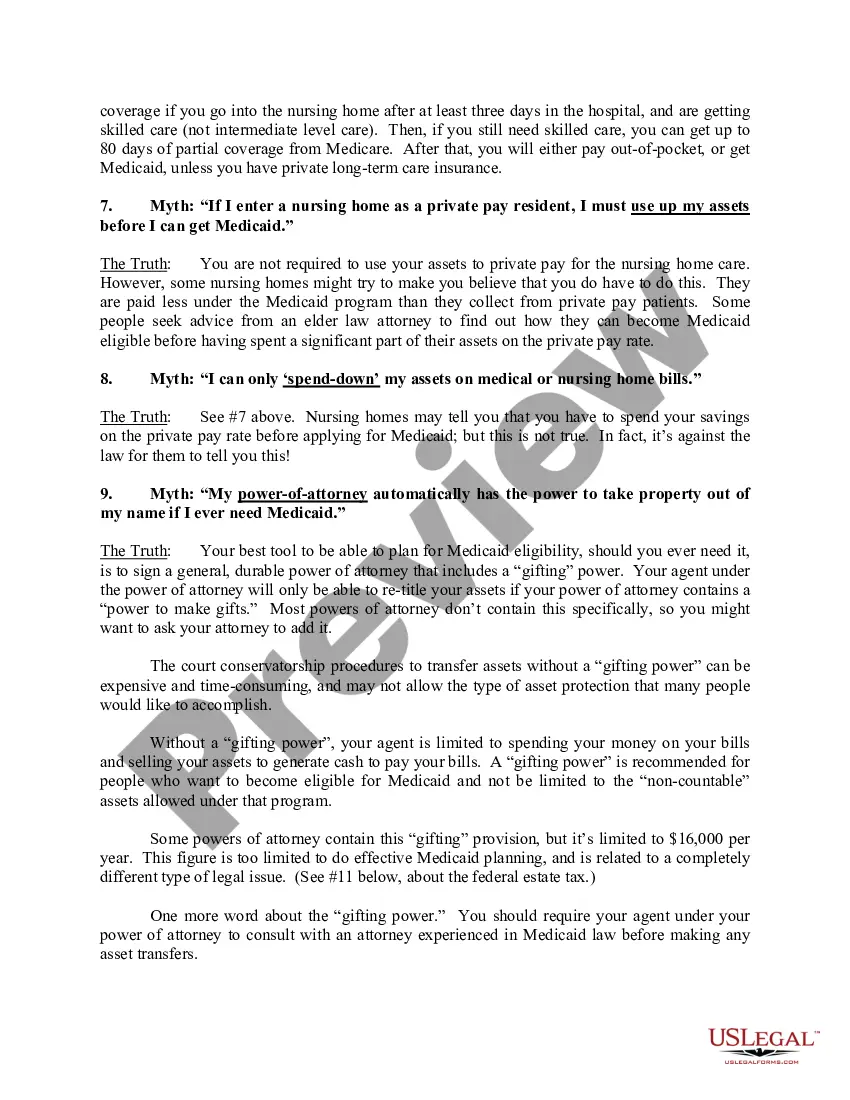
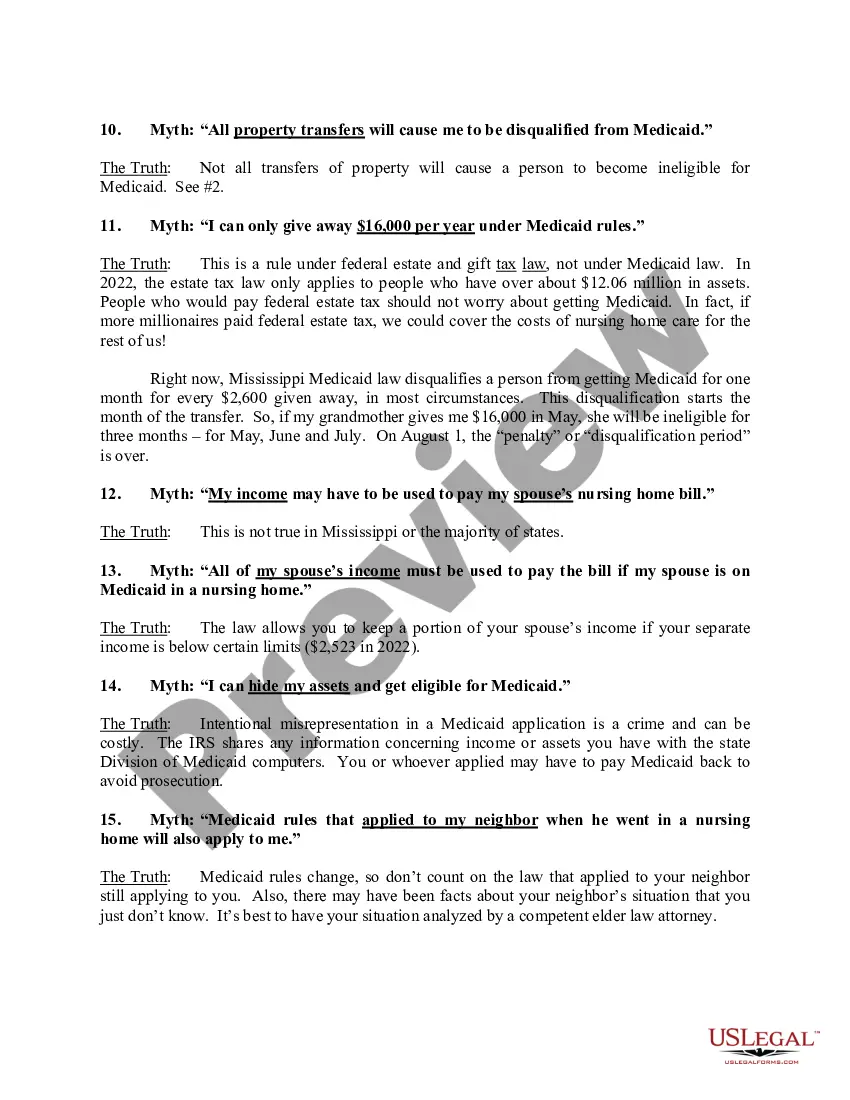
Medicaid Myths are incorrect beliefs or assumptions about the Medicaid program. They can be divided into three categories: eligibility, coverage, and financial issues. Eligibility myths involve false beliefs about who is eligible for Medicaid and the requirements for enrollment. Common examples are that pregnant women, the disabled, and seniors are not eligible for Medicaid, or that you must have a certain amount of income to qualify. Coverage myths involve assumptions about the services that Medicaid covers. Examples include that Medicaid only covers basic medical care, or that it does not cover dental care. Financial myths involve incorrect beliefs about the cost of Medicaid. Examples include that Medicaid is free, or that it costs the same as private health insurance. It is important to be aware of Medicaid Myths in order to make sure that you have accurate information about the program and its eligibility requirements, coverage, and costs.
Medicaid Myths
Description
Key Concepts & Definitions
Medicaid Myths: Common misconceptions about Medicaid, including its eligibility, benefits, and coverage. Elder Care Planning: Strategies to manage the healthcare and financial needs of elderly individuals. Longterm Care Benefits: Services that help meet both the medical and non-medical needs of people with a chronic illness or disability who cannot care for themselves for long periods. Social Security Eligibility: Requirements to receive Social Security benefits, which can impact Medicaid eligibility. Nursing Home Resources: Information and support for choosing and financing nursing home care. Financial Management Tips: Advice on managing finances, especially pertaining to healthcare costs. Senior Healthcare Coverage: Insurance options and plans tailored for seniors, including Medicare and supplemental Medicaid coverage. AARP Membership Benefits: Advantages provided to members of AARP, such as discounts, insurance plans, and more. Elder Care Scams: Common scams targeting the elderly, and how to avoid them. Telehealth for Seniors: Use of telecommunication technology to deliver health-related services and information to seniors. Independent Living Support: Resources and assistance that allow seniors to live independently.
Step-by-Step Guide to Understanding Medicaid Myths
- Identify the Source: Evaluate where your information is coming from to confirm its reliability.
- Consult Professionals: Speak with a financial advisor or attorney specializing in elder care planning for expert advice.
- Review Eligibility Requirements: Understand the specific qualifications for Medicaid and how it might adjust with other benefits like Social Security.
- Explore Coverage Options: Research what Medicaid and other senior healthcare coverage options entail.
- Prepare Financially: Apply the financial management tips to ensure Medicaid eligibility does not jeopardize other financial goals.
- Stay Informed on Scams: Regularly educate oneself about new and ongoing elder care scams to protect personal information and assets.
- Utilize Resources: Use nursing home resources and telehealth services to enhance the care quality.
Risk Analysis of Misinterpreting Medicaid Myths
- Financial Risks: Believing myths about Medicaid could lead to inappropriate financial planning, affecting eligibility and benefits.
- Healthcare Access: Misunderstandings might cause seniors to delay or skip essential healthcare services, impacting their overall health and quality of life.
- Legal Implications: Misinterpretation can lead to legal issues, especially if relying on incorrect information when reporting income or assets.
- Social Security Interaction: Failure to understand how Medicaid works with Social Security might result in lost benefits.
Best Practices for Elder Care Planning
- Early Planning: Start elder care planning early to ensure all options are explored and the best decisions are made.
- Consult With Experts: Regular consultations with elder care and financial experts can prevent common pitfalls.
- Regular Review: Periodically review and adjust eldercare and financial plans to adapt to changing laws and health conditions.
- Education on Benefits: Stay informed about possible benefits including AARP membership benefits and longterm care benefits.
FAQ
- What is Medicaid? Medicaid is a federal and state program that helps with medical costs for some people with limited income and resources.
- How does Medicaid differ from Medicare? Medicare is federally funded and provides health care coverage if you're 65+ regardless of income, while Medicaid covers low-income individuals and families at all ages.
- Can owning a home disqualify you from Medicaid? Homeownership does not necessarily disqualify you; Medicaid mainly considers income and other assets.
How to fill out Medicaid Myths?
Preparing official paperwork can be a real stress unless you have ready-to-use fillable templates. With the US Legal Forms online library of formal documentation, you can be confident in the blanks you find, as all of them correspond with federal and state regulations and are verified by our experts. So if you need to complete Medicaid Myths, our service is the perfect place to download it.
Obtaining your Medicaid Myths from our catalog is as easy as ABC. Previously registered users with a valid subscription need only sign in and click the Download button once they locate the proper template. Afterwards, if they need to, users can use the same blank from the My Forms tab of their profile. However, even if you are new to our service, signing up with a valid subscription will take only a few minutes. Here’s a quick instruction for you:
- Document compliance verification. You should carefully review the content of the form you want and make sure whether it suits your needs and complies with your state law regulations. Previewing your document and looking through its general description will help you do just that.
- Alternative search (optional). Should there be any inconsistencies, browse the library using the Search tab above until you find an appropriate blank, and click Buy Now once you see the one you need.
- Account creation and form purchase. Register for an account with US Legal Forms. After account verification, log in and select your preferred subscription plan. Make a payment to proceed (PayPal and credit card options are available).
- Template download and further usage. Choose the file format for your Medicaid Myths and click Download to save it on your device. Print it to complete your papers manually, or use a multi-featured online editor to prepare an electronic version faster and more effectively.
Haven’t you tried US Legal Forms yet? Sign up for our service now to obtain any formal document quickly and easily every time you need to, and keep your paperwork in order!
Form popularity
FAQ
Federal Poverty Level thresholds to qualify for Medicaid In 2023 these limits are: $14,580 for a single adult person, $30,000 for a family of four and $50,560 for a family of eight. To calculate for larger households, you need to add $5,140 for each additional person in families with nine or more members.
One study found that expansion was associated with an 18% increase in aggregate opioid admissions to specialty treatment facilities, nearly all of which was driven by a 113% increase in admissions from Medicaid beneficiaries.
Cons Members are responsible for copayments and deductibles. May require referrals to see a specialist. The provider network limits the choice of doctors/hospitals and doctors may not accept certain Medicare Advantage plans. Members are required to pay full price for services outside the provider network.
Disadvantages of Medicaid Lower reimbursements and reduced revenue. Every medical practice needs to make a profit to stay in business, but medical practices that have a large Medicaid patient base tend to be less profitable.Administrative overhead.Extensive patient base.Medicaid can help get new practices established.
Liberals view Medicaid as diverting the Nation's attention from the need for national health insurance. They are troubled by the fact that the program covers less than one-half the Nation's poor and that there are substantial variations in State Medicaid programs.
One challenge in aligning these programs is the inconsistent, and sometimes contradictory, payment strategies used in Medicare and Medicaid. State Medicaid programs are federally required to provide a broad range of services, including benefits not covered by Medicare, such as long-term services and supports.