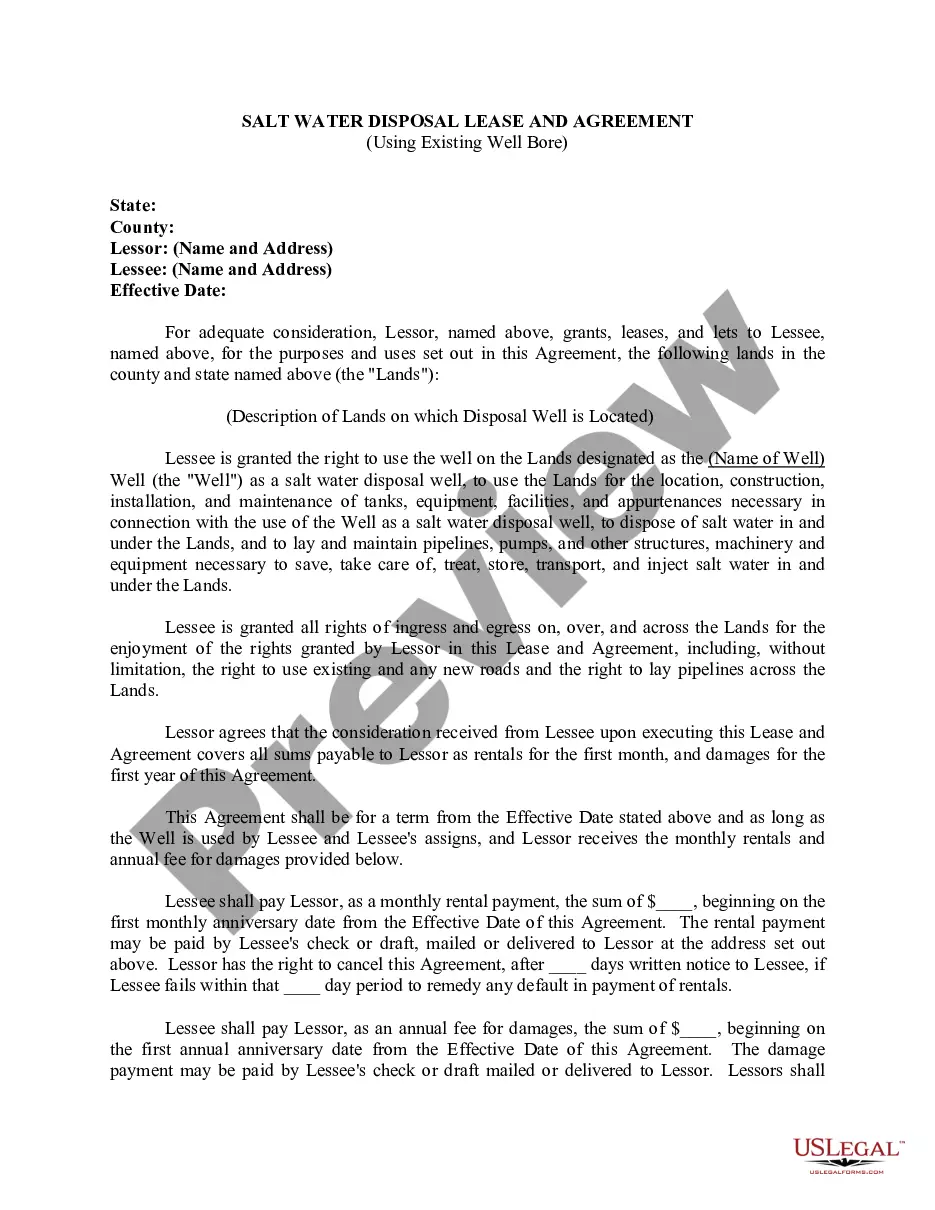
Roommate Agreement for Homeowner
What is this form?
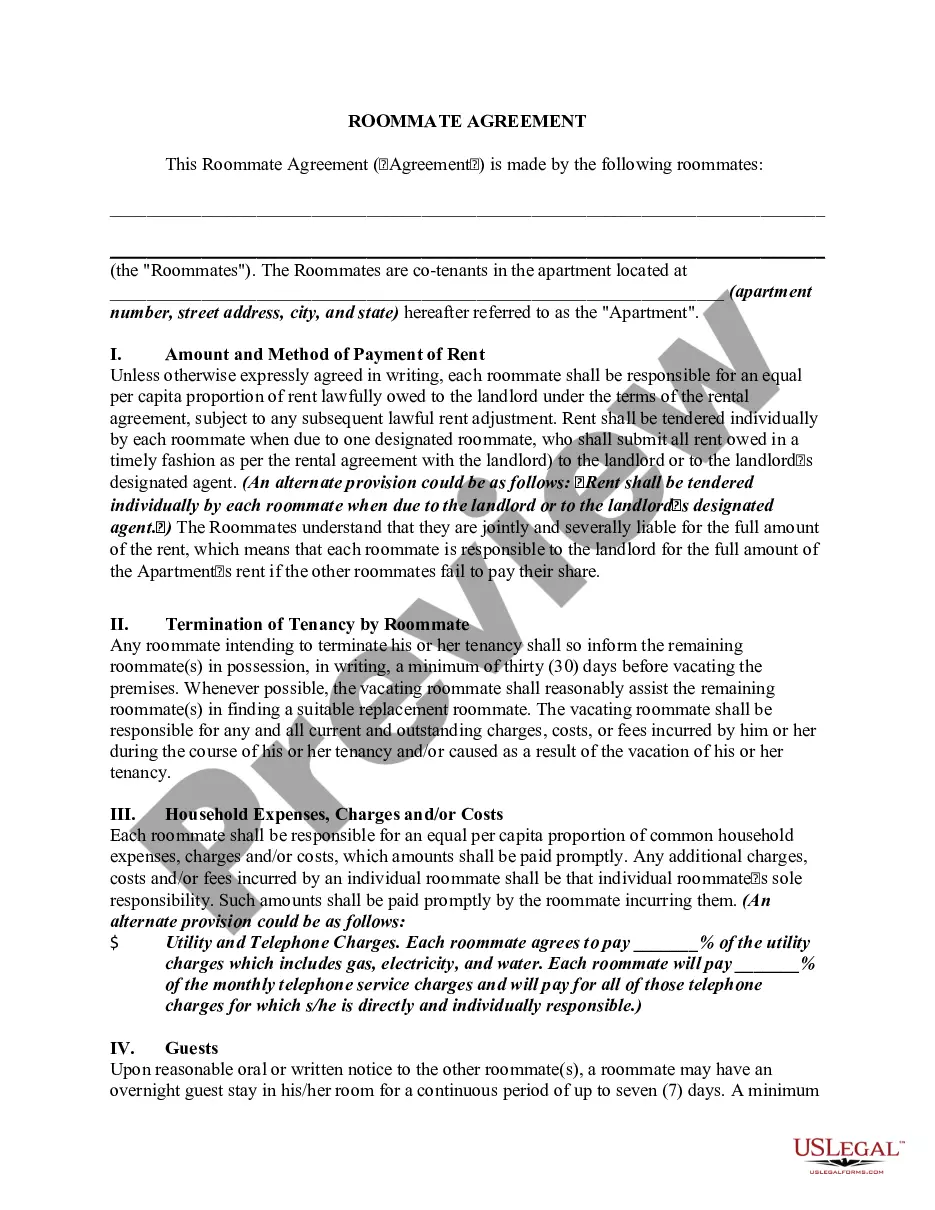
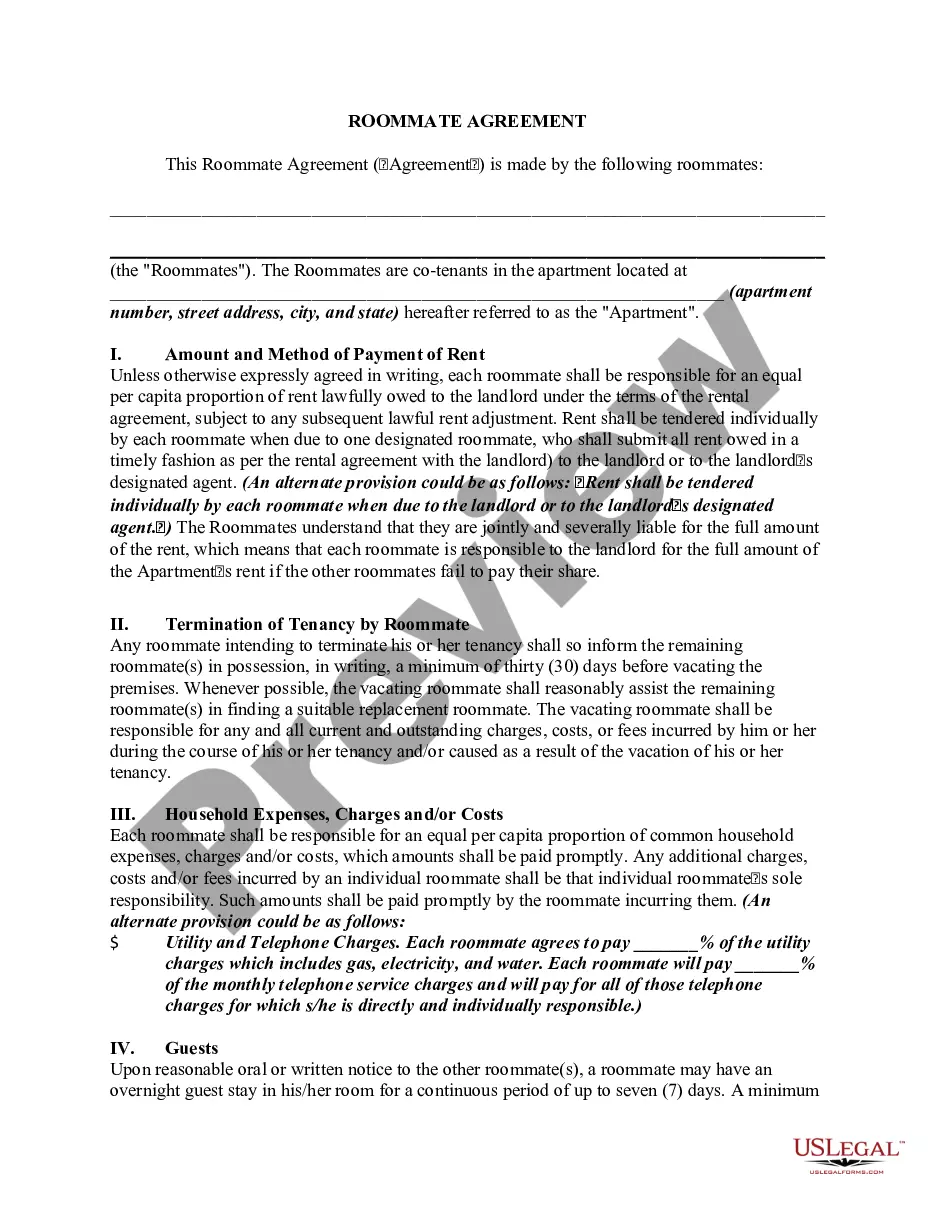
The Roommate Agreement for Homeowner is a legal document designed to outline the responsibilities and rights of individuals sharing a living space. This form specifically addresses important aspects such as payment of rent, household expenses, guest policies, and other shared living arrangements. Unlike general roommate agreements, this version is tailored for homeowners, making it applicable whether for school roommates or those sharing living costs for other reasons.
Form components explained
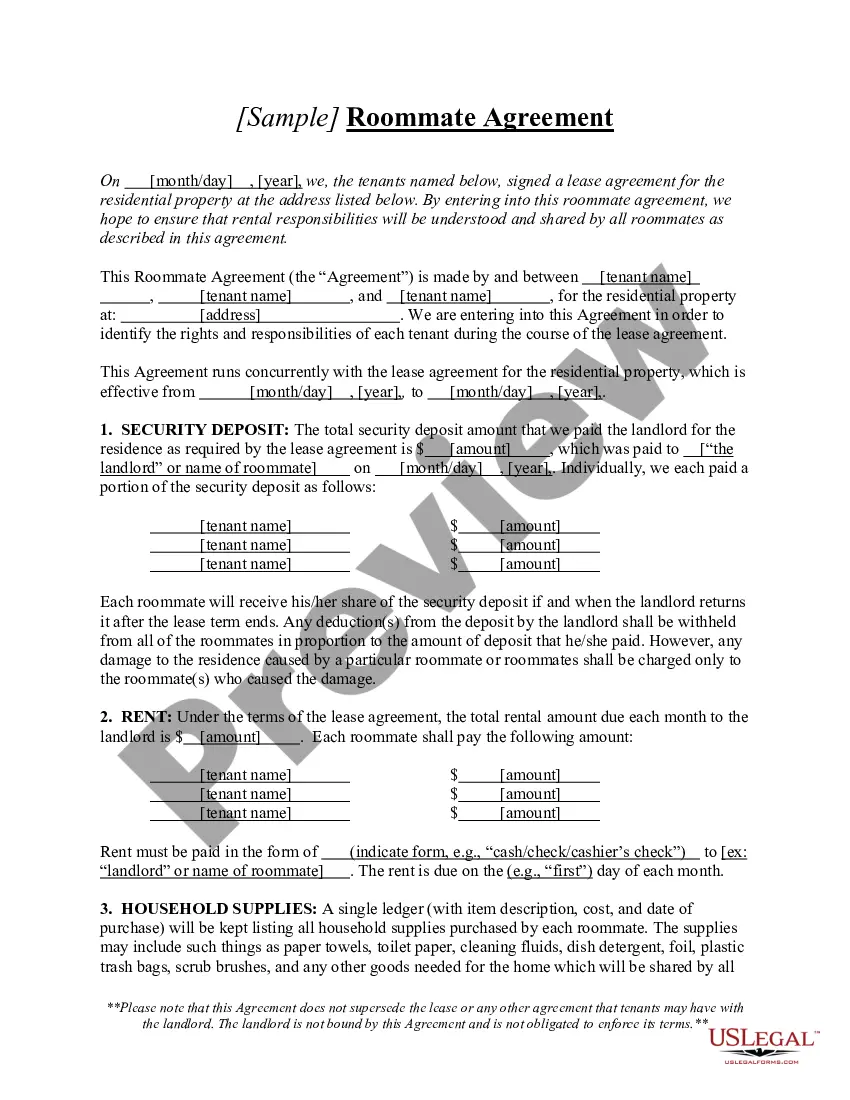
- Amount and method of payment of rent: Details how rent is to be paid and the responsibilities of each roommate.
- Termination of tenancy: Outlines the process a roommate must follow to vacate the premises.
- Household expenses: Specifies how common household costs will be shared among roommates.
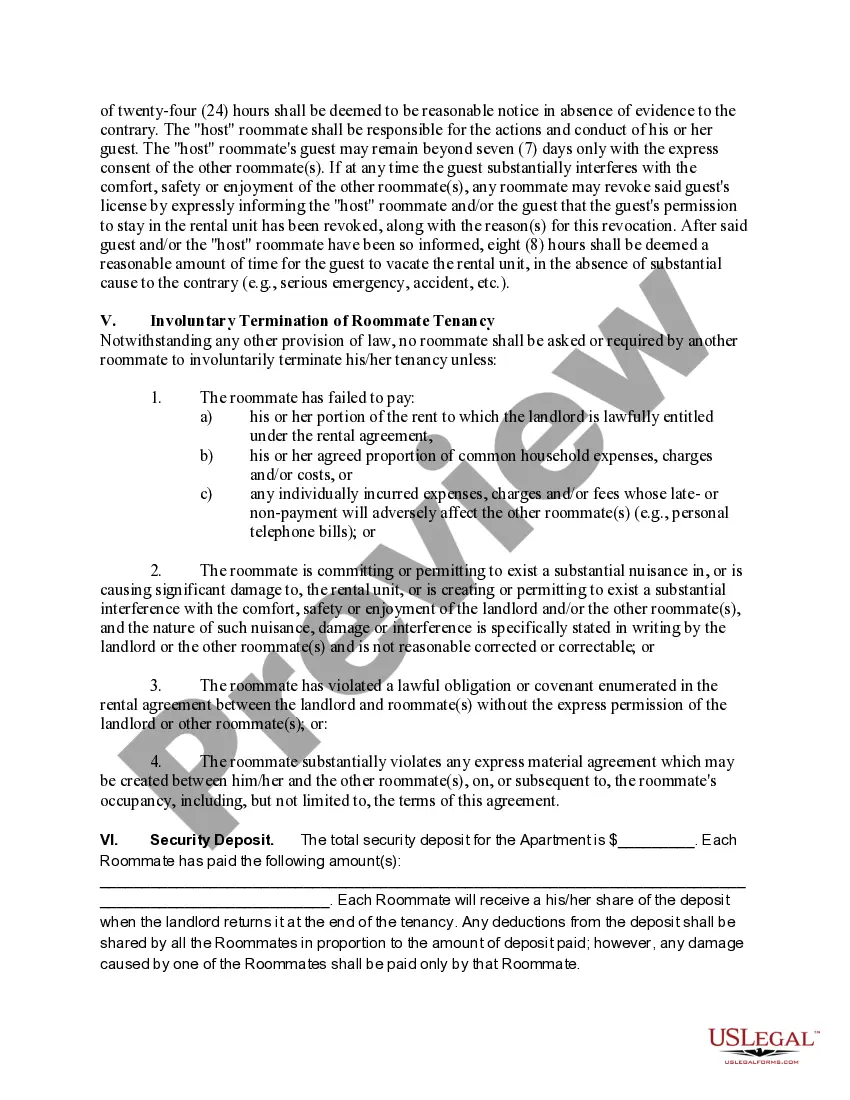
- Guest policies: Establishes rules regarding overnight guests and their duration of stay.
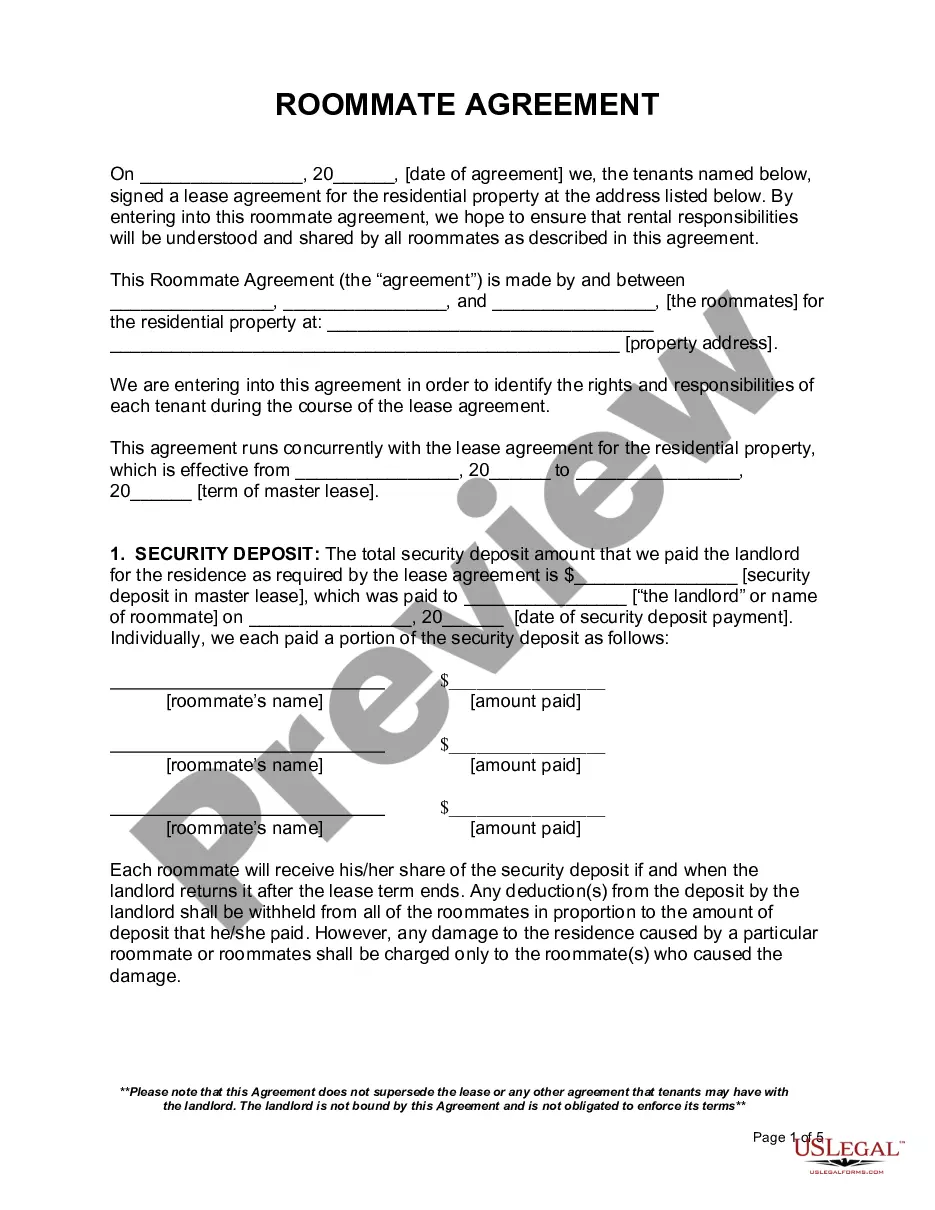
- Security deposit: Describes the management and allocation of the security deposit among roommates.
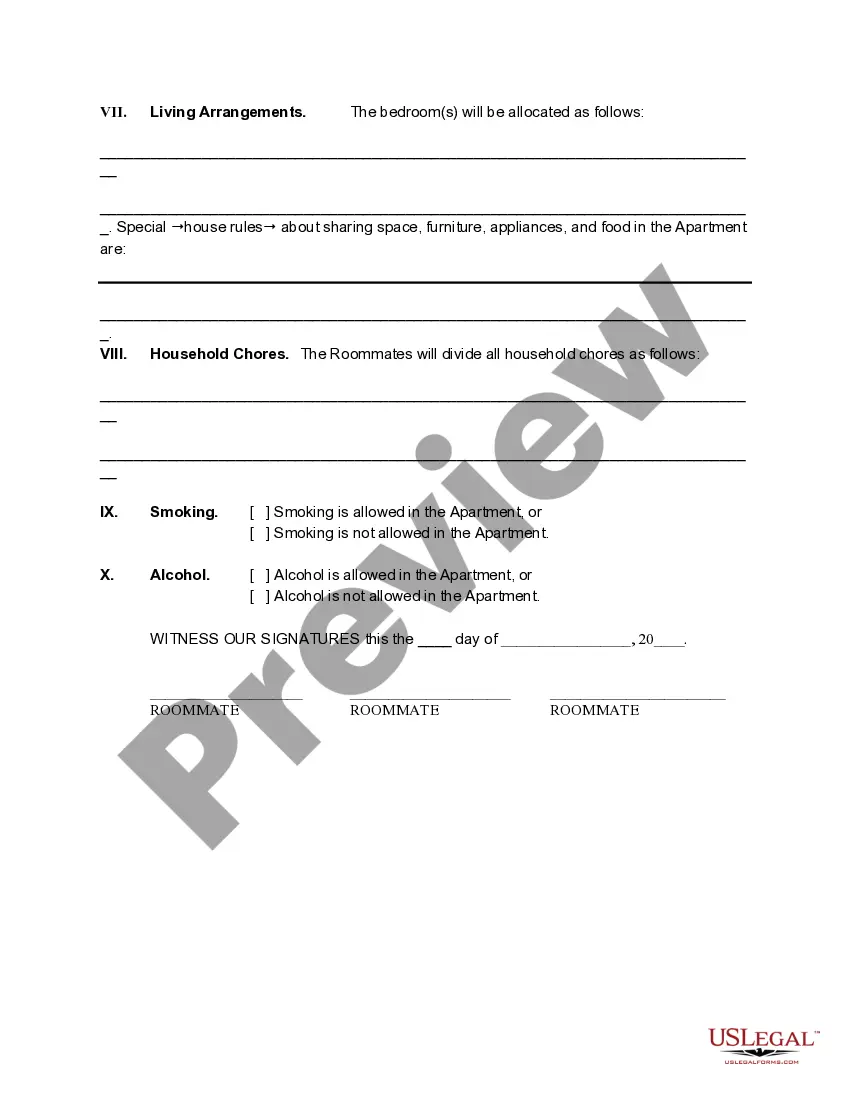
- Living arrangements: Specifies room assignments and additional house rules.

When to use this document
This form should be used when two or more individuals plan to share a home, whether they are students, professionals, or anyone else needing to agree on shared living arrangements. It is especially useful when establishing clear expectations and responsibilities to prevent potential conflicts and misunderstandings regarding rent and household expenses.
Who needs this form
This form is intended for:
- Homeowners who are renting out portions of their home to roommates.
- Individuals planning to live together in a shared apartment or house.
- Students who need to establish agreements with peers about shared living spaces.
- Anyone looking to create a legally binding contract with roommates to clarify household responsibilities.
Instructions for completing this form
- Identify the parties: Fill in the names of all roommates involved in the agreement.
- Specify the property: Enter the address of the shared living space.
- Detail payment responsibilities: Clearly outline how rent and household expenses will be divided and paid.
- Set rules for termination: Include notice periods for any roommate planning to vacate.
- Agree on guest policies: Define how many guests can stay and for how long, along with notification procedures.
- Signature: Ensure all roommates sign and date the agreement to make it legally binding.
Does this form need to be notarized?
This form does not typically require notarization unless specified by local law.
Get your form ready online
Our built-in tools help you complete, sign, share, and store your documents in one place.
Make edits, fill in missing information, and update formatting in US Legal Forms—just like you would in MS Word.
Download a copy, print it, send it by email, or mail it via USPS—whatever works best for your next step.
Sign and collect signatures with our SignNow integration. Send to multiple recipients, set reminders, and more. Go Premium to unlock E-Sign.
If this form requires notarization, complete it online through a secure video call—no need to meet a notary in person or wait for an appointment.
We protect your documents and personal data by following strict security and privacy standards.

Make edits, fill in missing information, and update formatting in US Legal Forms—just like you would in MS Word.

Download a copy, print it, send it by email, or mail it via USPS—whatever works best for your next step.

Sign and collect signatures with our SignNow integration. Send to multiple recipients, set reminders, and more. Go Premium to unlock E-Sign.

If this form requires notarization, complete it online through a secure video call—no need to meet a notary in person or wait for an appointment.

We protect your documents and personal data by following strict security and privacy standards.
Common mistakes
- Failing to specify payment details clearly, leading to misunderstandings.
- Not including provisions for guest policies or household chores.
- Neglecting to have all parties sign the agreement.
- Overlooking the need for updates if living arrangements change.
Advantages of online completion
- Convenience: Download and fill out the form at your convenience.
- Editability: Tailor the agreement to fit your specific needs and living situation.
- Accessibility: Available anytime, allowing roommates to review and sign at their leisure.
- Reliable support: Comes with guidance on how to complete the form correctly.
Looking for another form?
Form popularity
FAQ
If you and your roommate are both named on the lease, you are considered co-tenants and both pay rent to the landlord. You cannot evict a co-tenant.If your roommate is not paying rent, doing something illegal in the unit, or damaging the apartment, your landlord may step in to evict them for you.
A regular tenant has a lease and has rights and protections provided by the lease. a roomate in many states is considered a "licensee" of the premises and has no lease protection. he can be asked to leave at anytime and if the regular tenant leaves so must the roomate.
A roommate agreement is a legally binding document that you and whomever you share your living space with will sign.A rental agreement between roommates is separate from the lease agreement and doesn't include the landlord.
Assuming that your roommate agreement otherwise is legally sufficient, it does not need to be notarized to be legally binding.
Start the agreement by writing the names of both roommates and the complete address of the residence, including the unit number of the apartment if you are living in an apartment building. Agree on the division of the rent payment. Specify the exact amount of rent each roommate will pay each month.
Start the agreement by writing the names of both roommates and the complete address of the residence, including the unit number of the apartment if you are living in an apartment building. Agree on the division of the rent payment. Specify the exact amount of rent each roommate will pay each month.
Yes, someone can live with the tenant without being on the lease. However, it is important to distinguish the difference between a guest and a long-term guest.
If you're a month-to-month tenant, give the required amount of written notice (usually 30 days) immediately. If you have a lease, let the landlord know in writing that you plan to move because you cannot afford the rent without your cotenant.