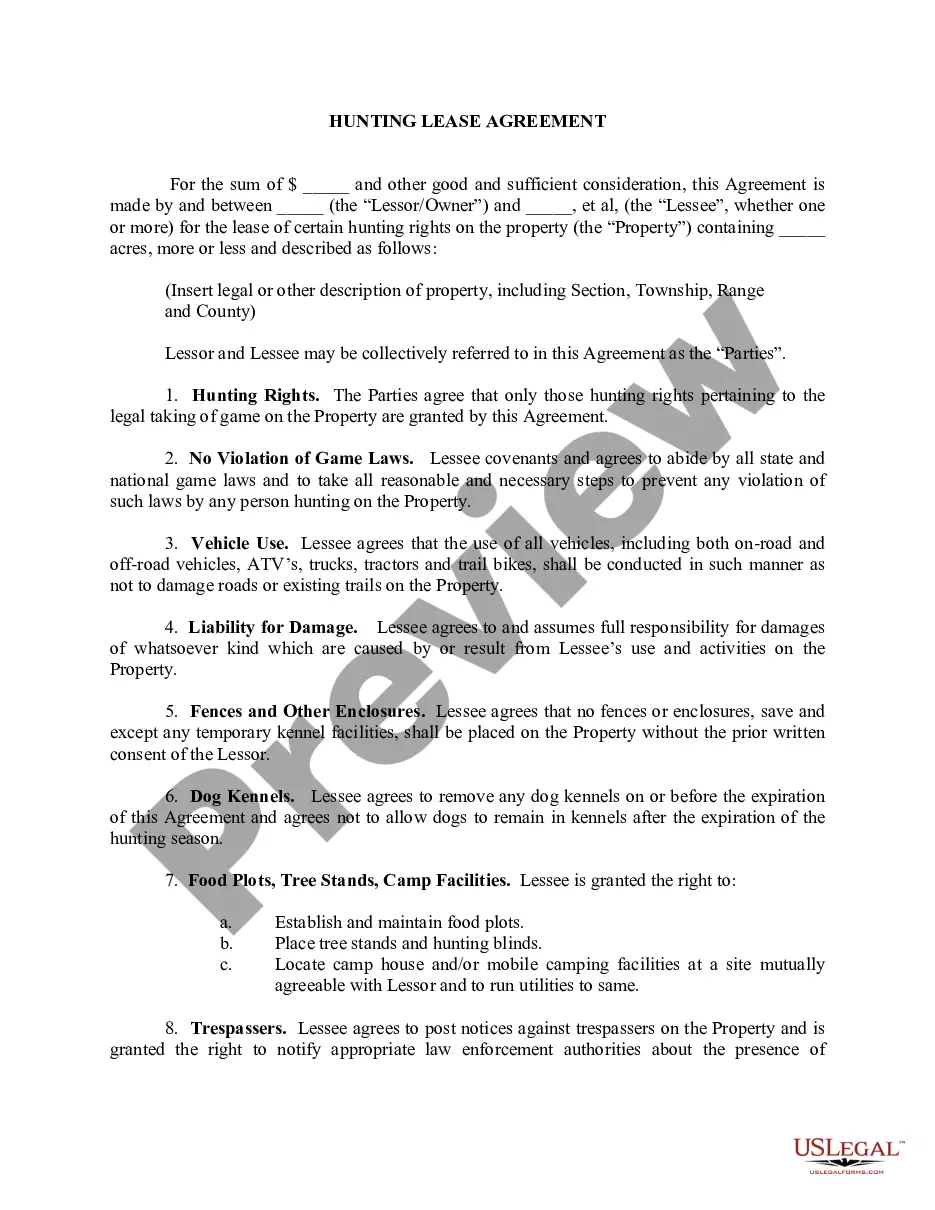
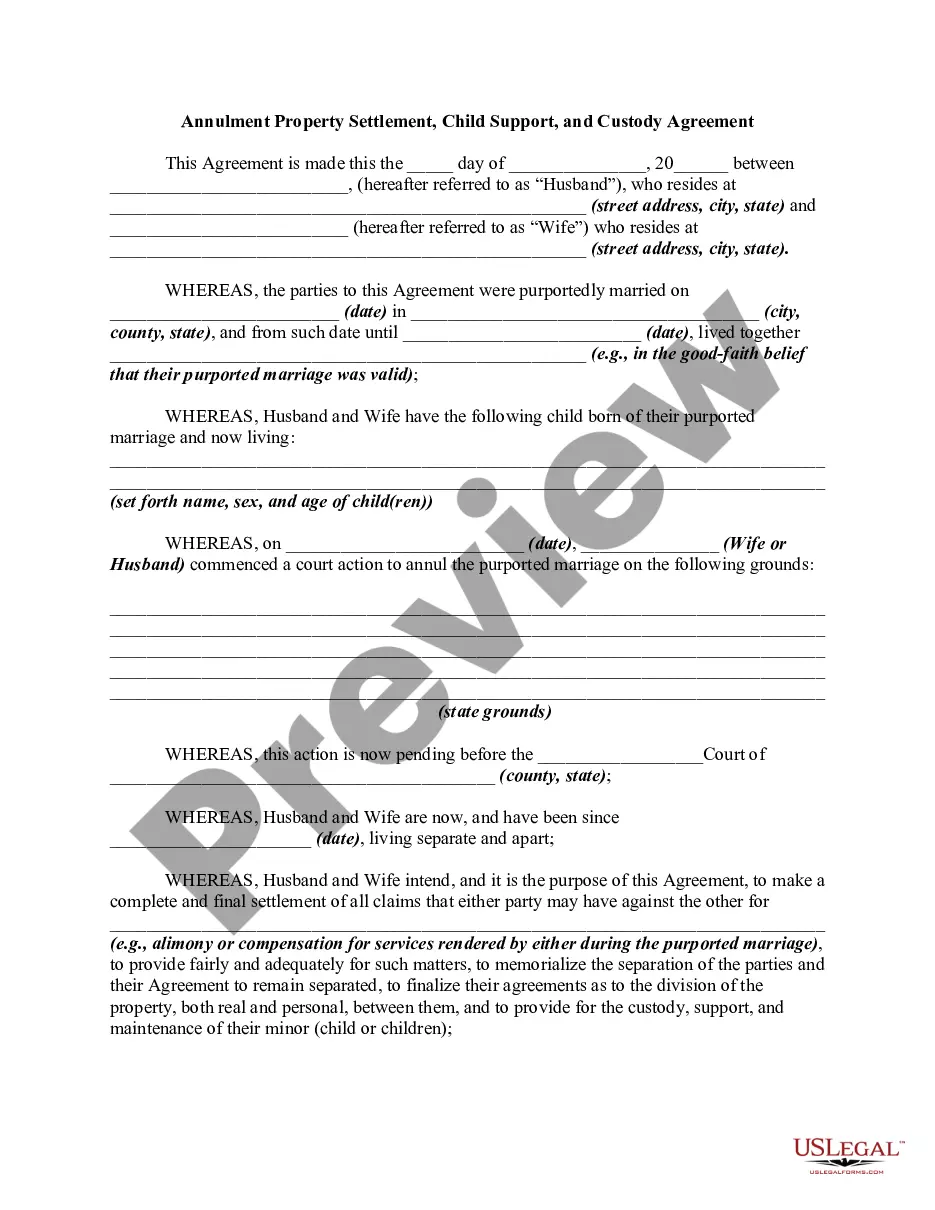
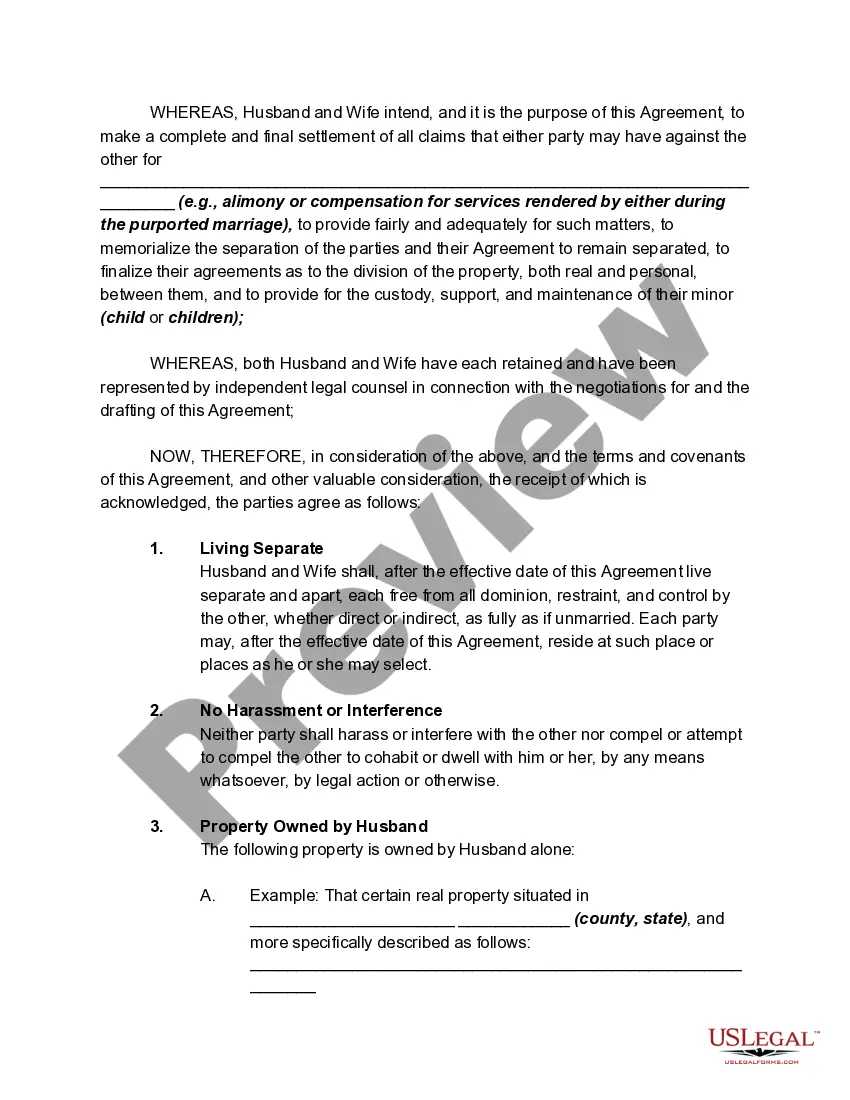
Annulment Property Settlement, Child Support, and Custody Agreement
Understanding this form
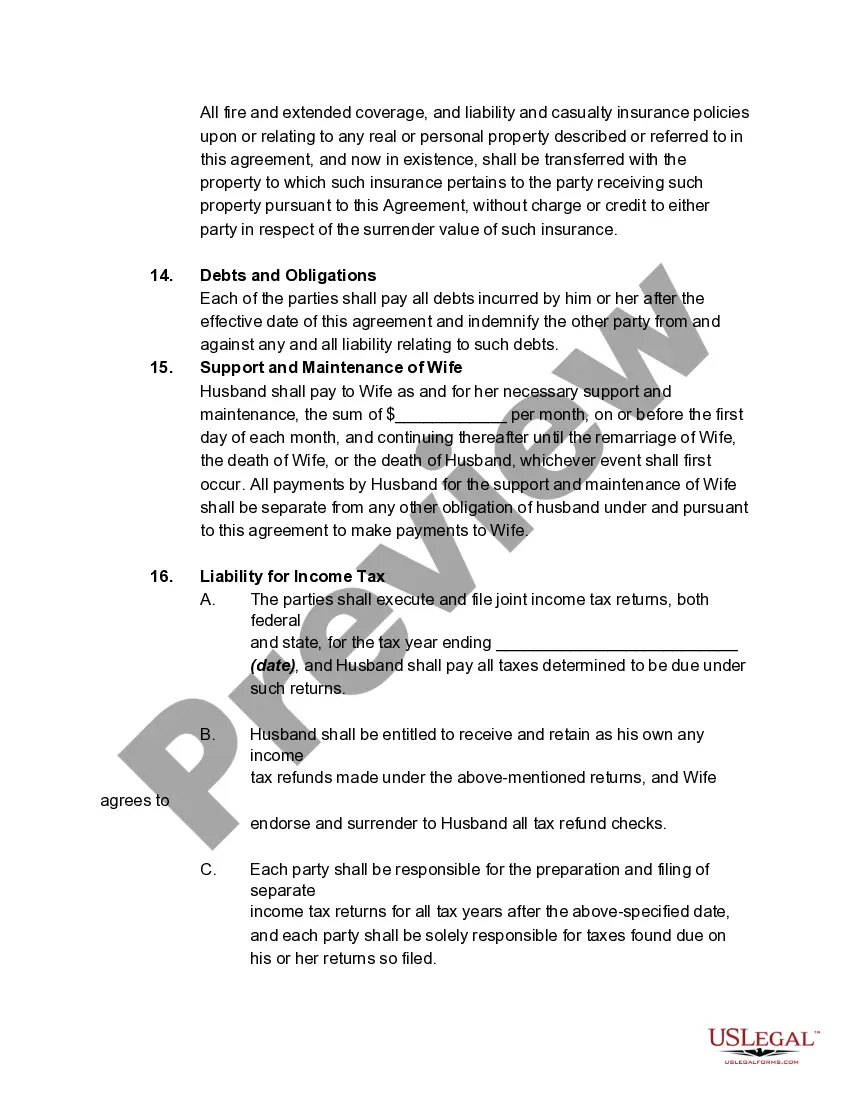
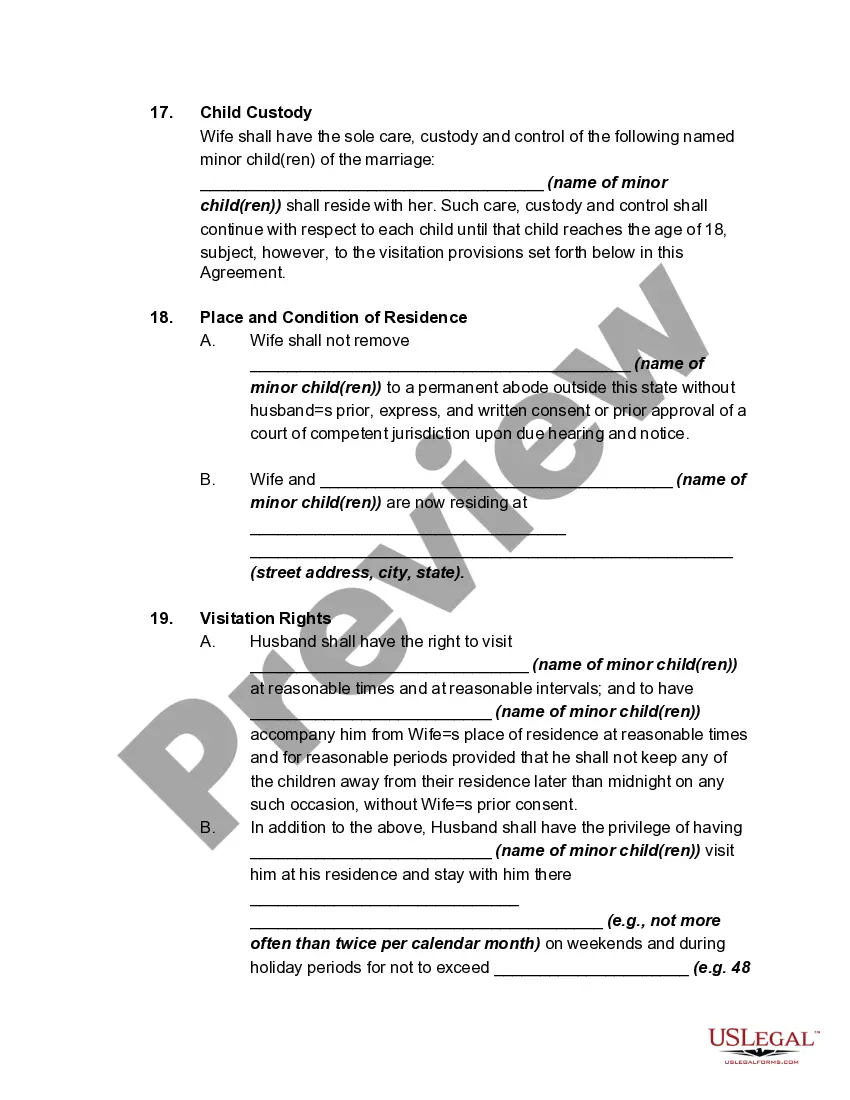
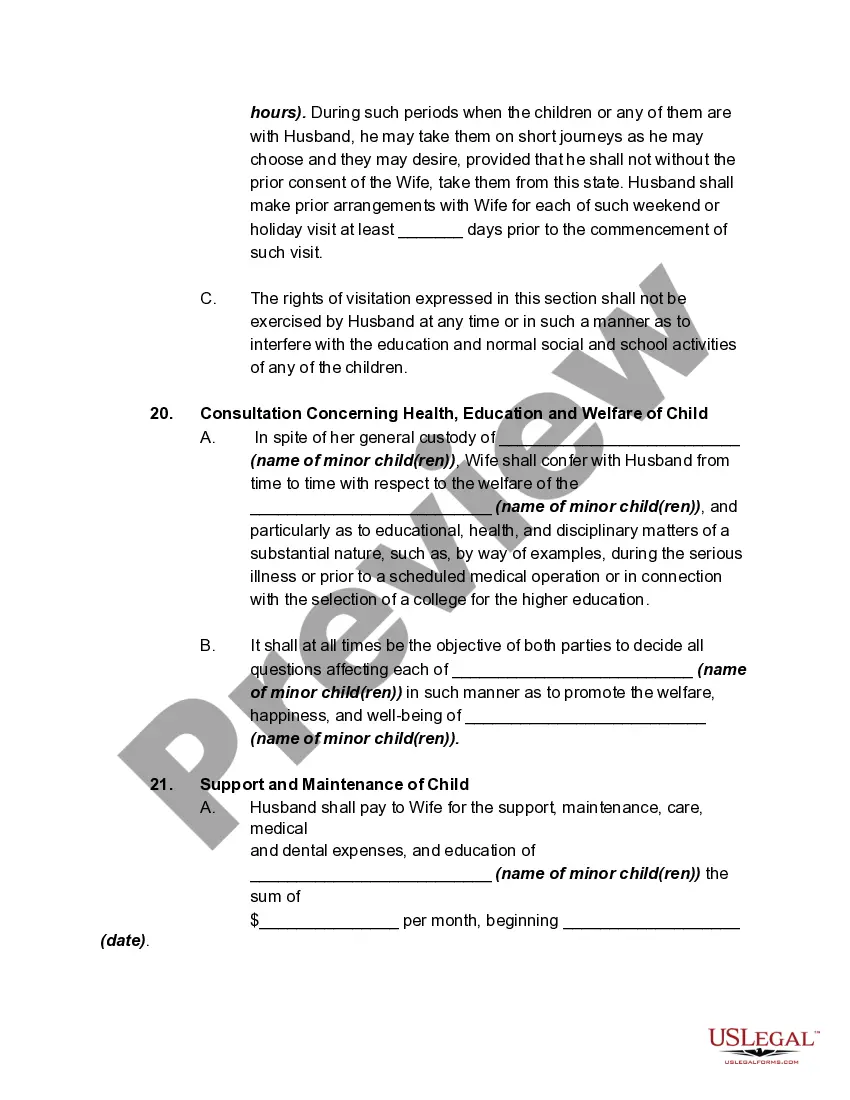
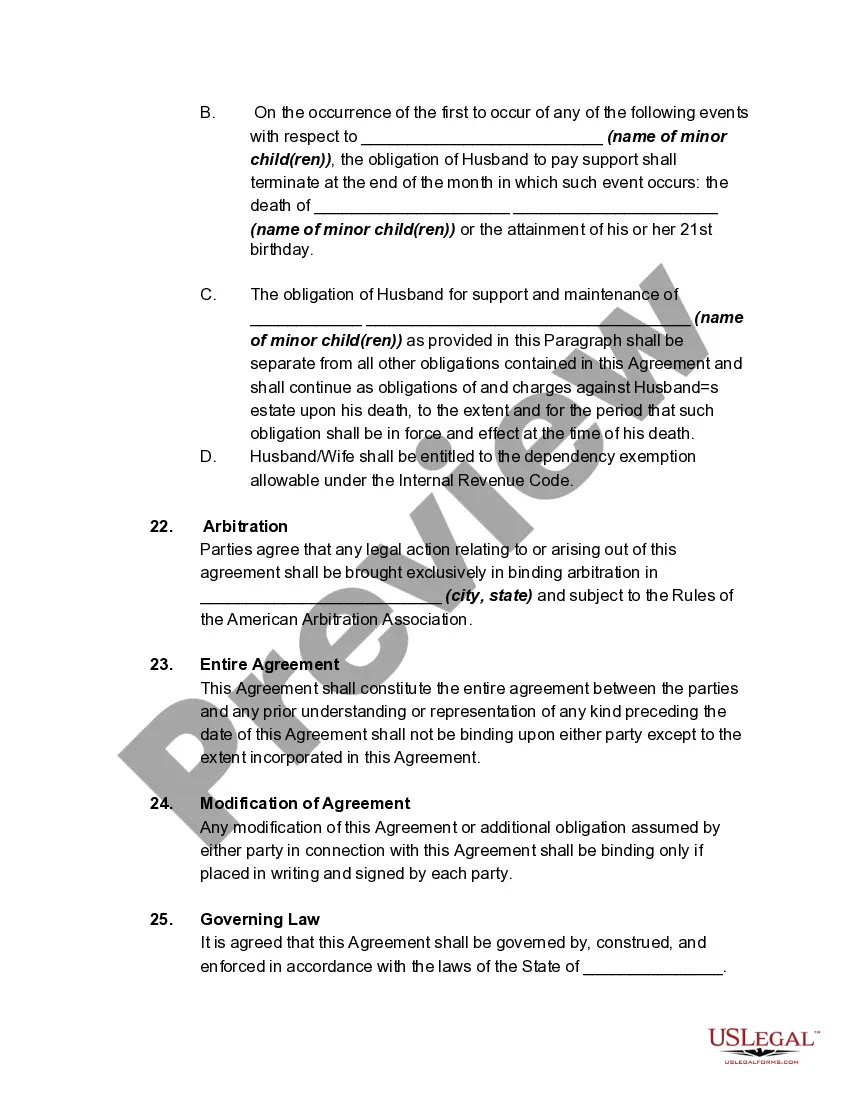
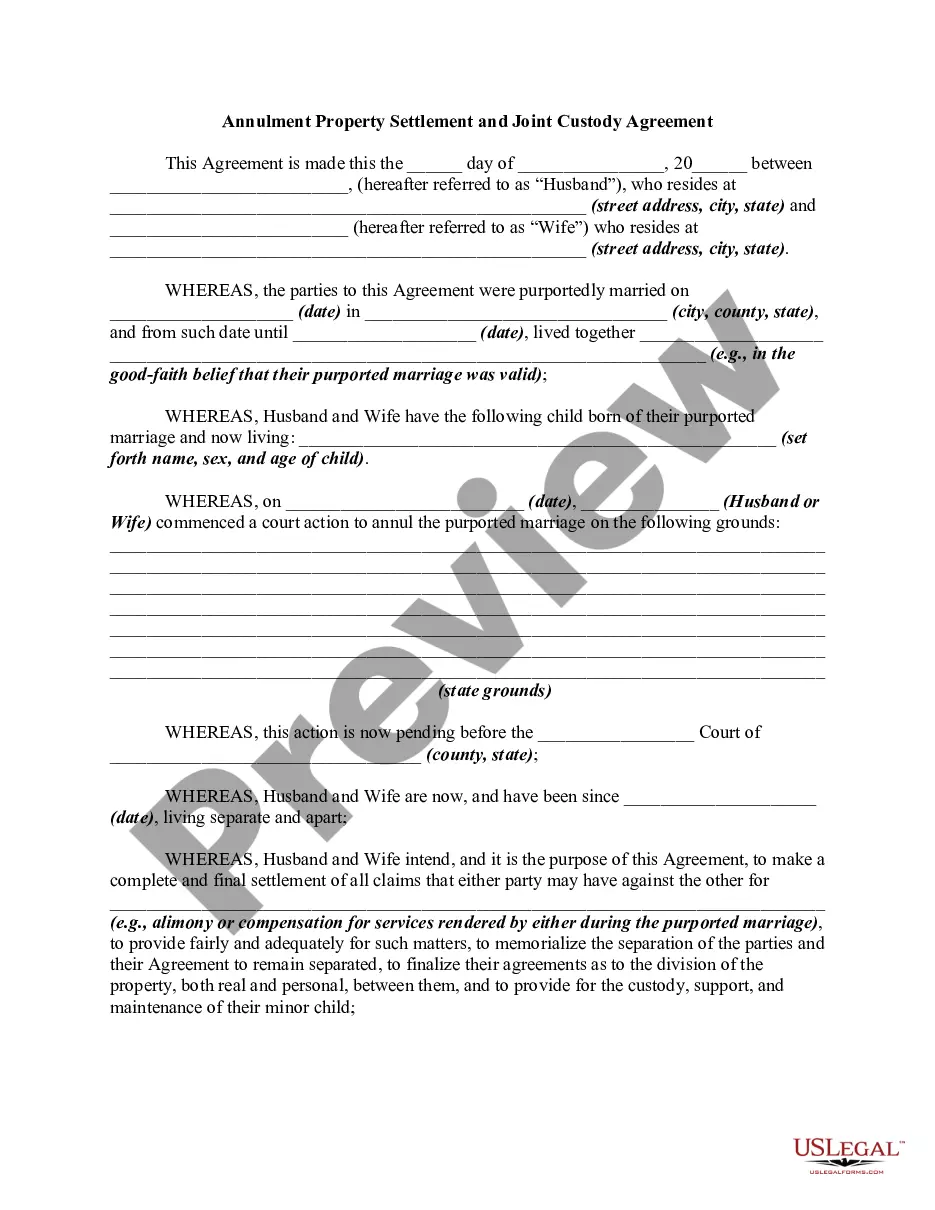
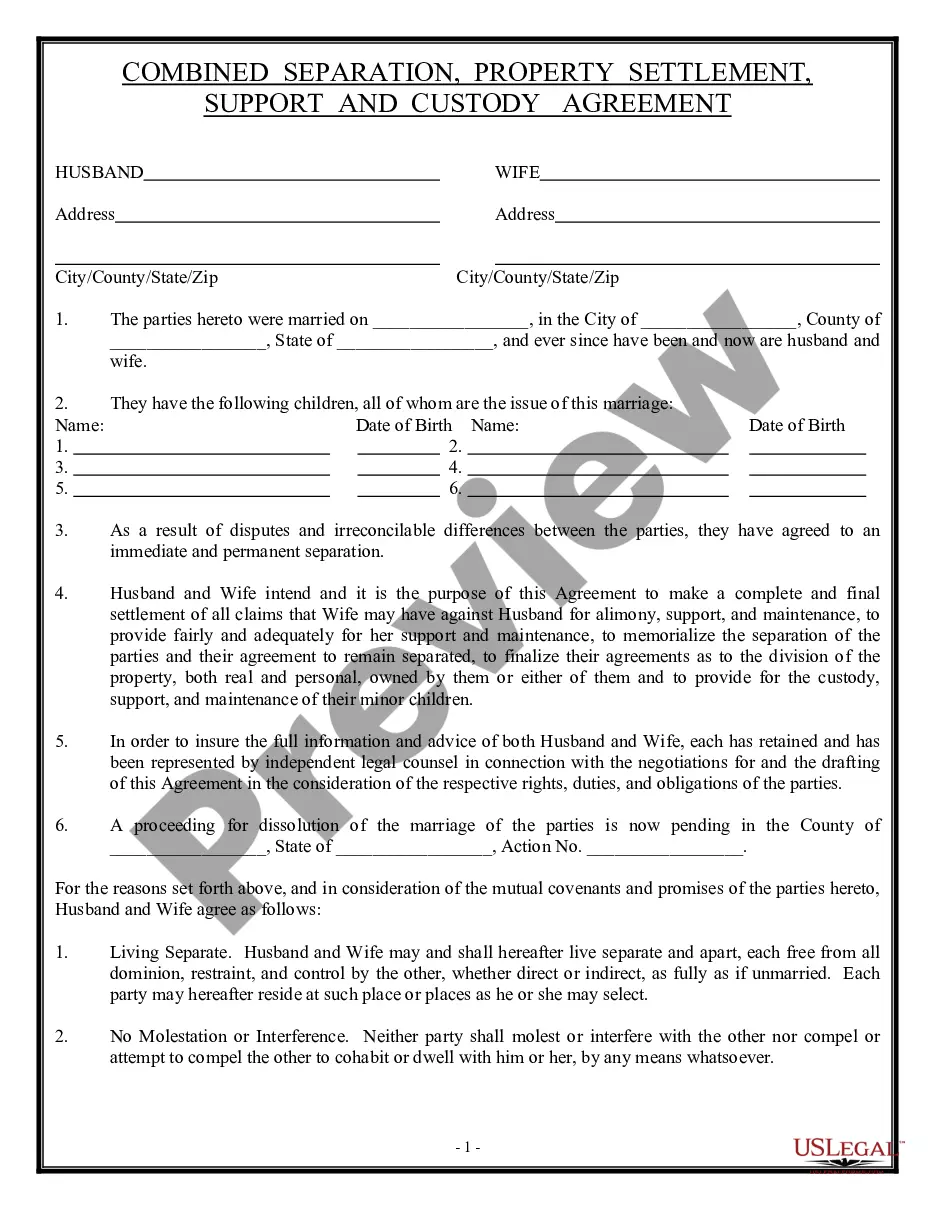
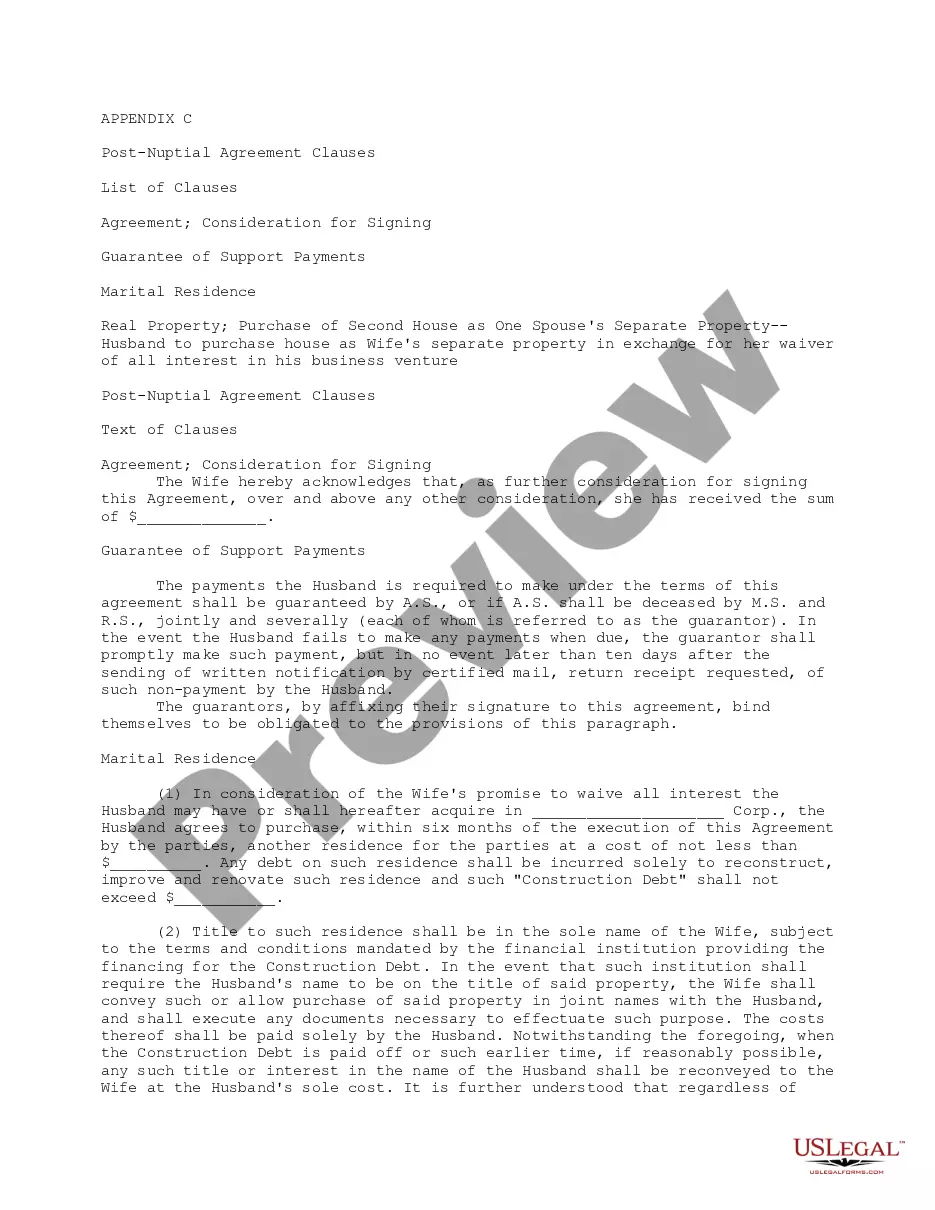
The Annulment Property Settlement, Child Support, and Custody Agreement is a legal document used to outline the terms of property division, child custody, and financial support in the context of an annulment. Unlike standard divorce agreements, this form addresses the unique circumstances surrounding annulments, where a marriage is declared invalid. This agreement aims to provide a comprehensive settlement for both parties, ensuring clarity on property rights and child welfare after the annulment process.

When to use this form
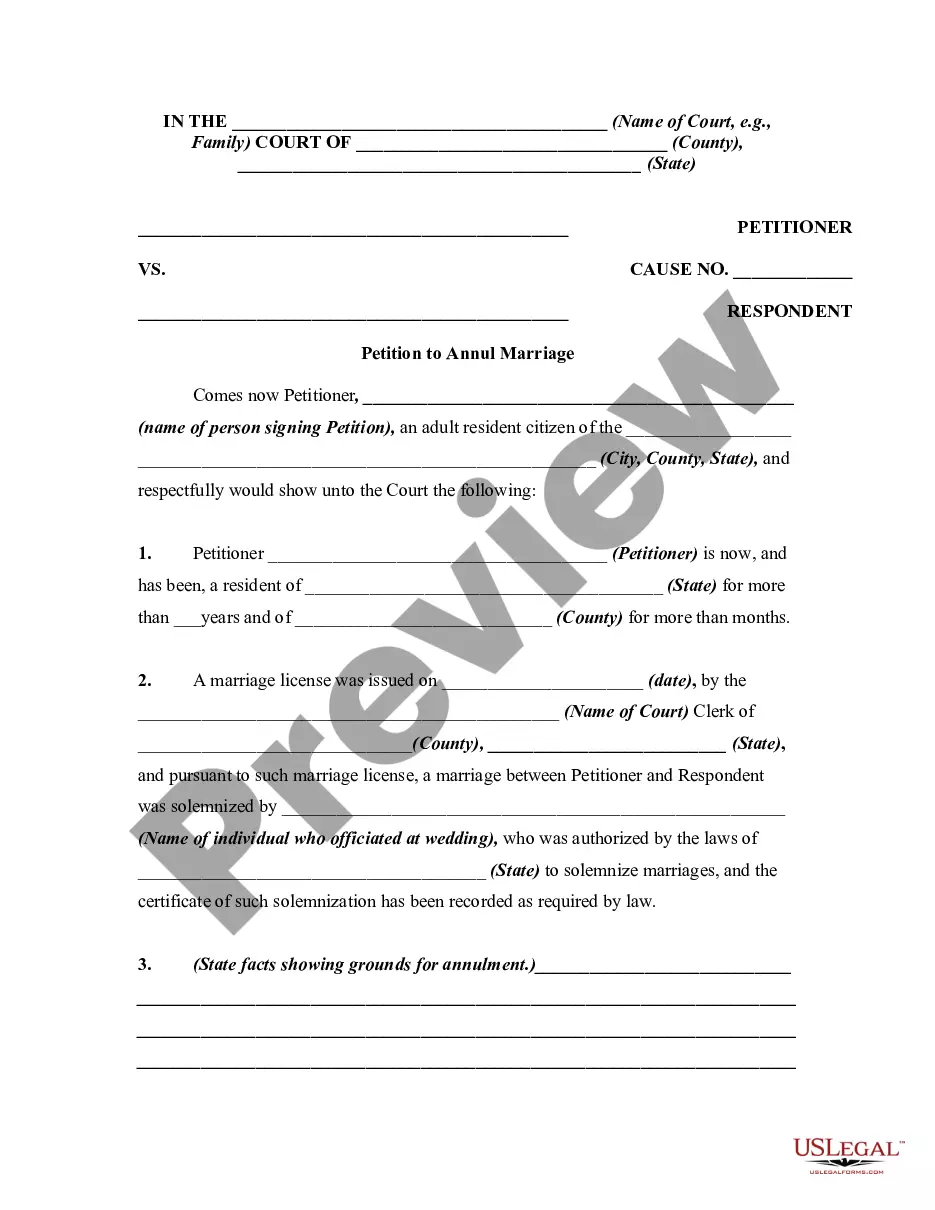
This form is particularly relevant when two parties have been in a purported marriage that they now intend to annul. It is used when there are shared children and/or jointly owned assets that require formal division. Situations could include instances where the marriage was based on false assumptions or other grounds warranting annulment, and both parties want to formalize custody arrangements and financial obligations as part of the annulment process.
Who this form is for
- Individuals involved in an annulment who have shared property or children.
- Married couples seeking to clarify their rights and responsibilities post-annulment.
- Parties that wish to reach a mutual agreement on child custody, support, and asset division prior to finalizing an annulment.
How to complete this form
- Identify the parties by filling in their legal names and addresses.
- Enter the dates and location of the purported marriage.
- Specify the custody arrangements for any children involved.
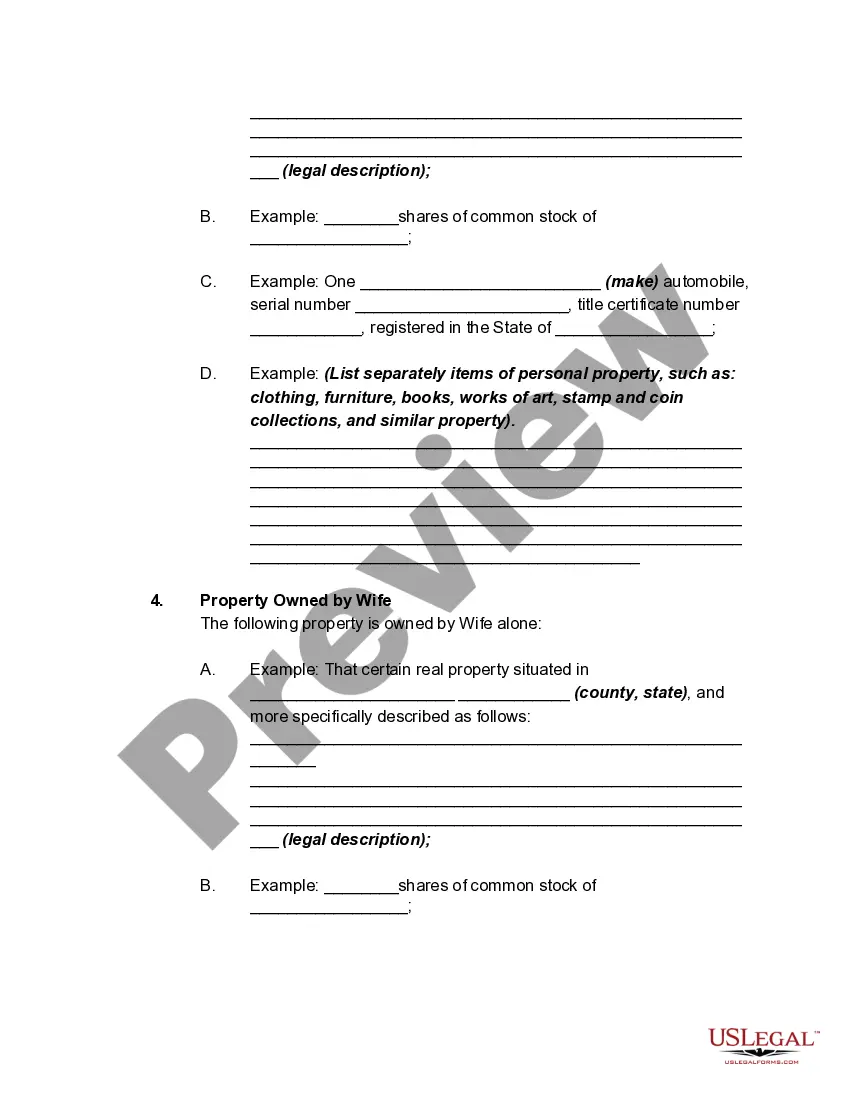
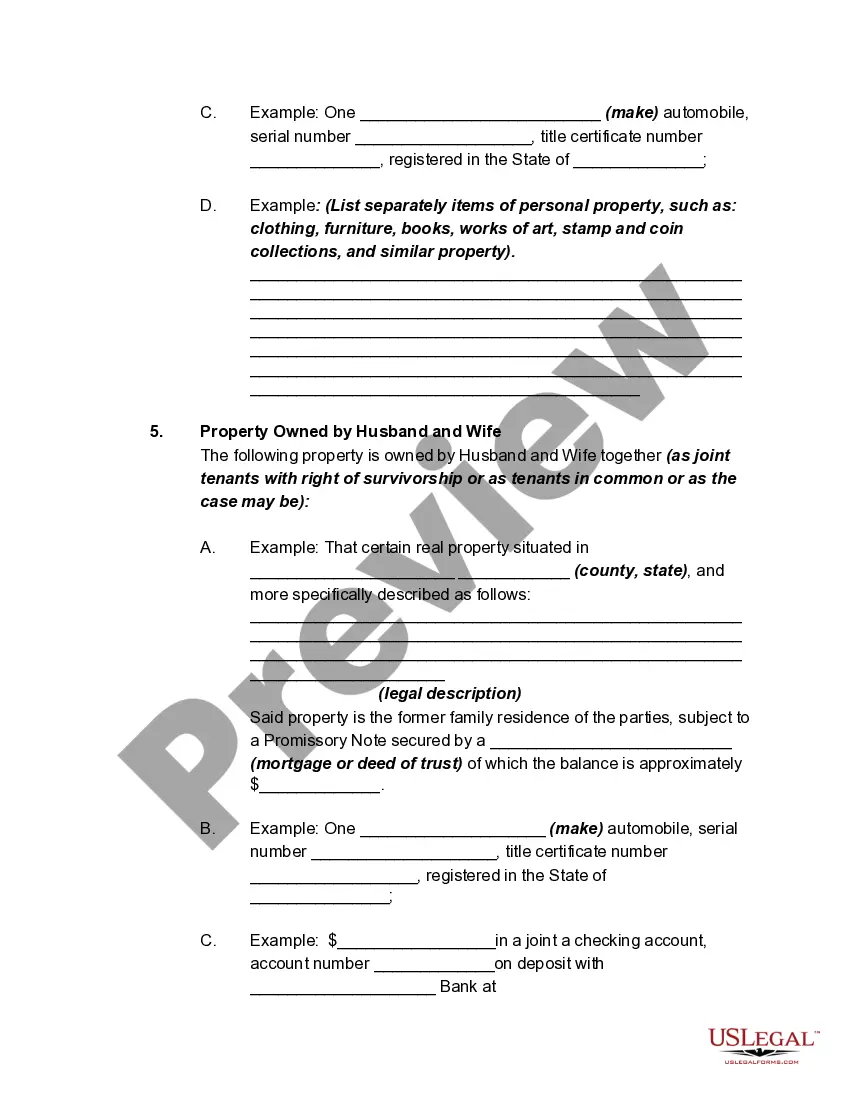
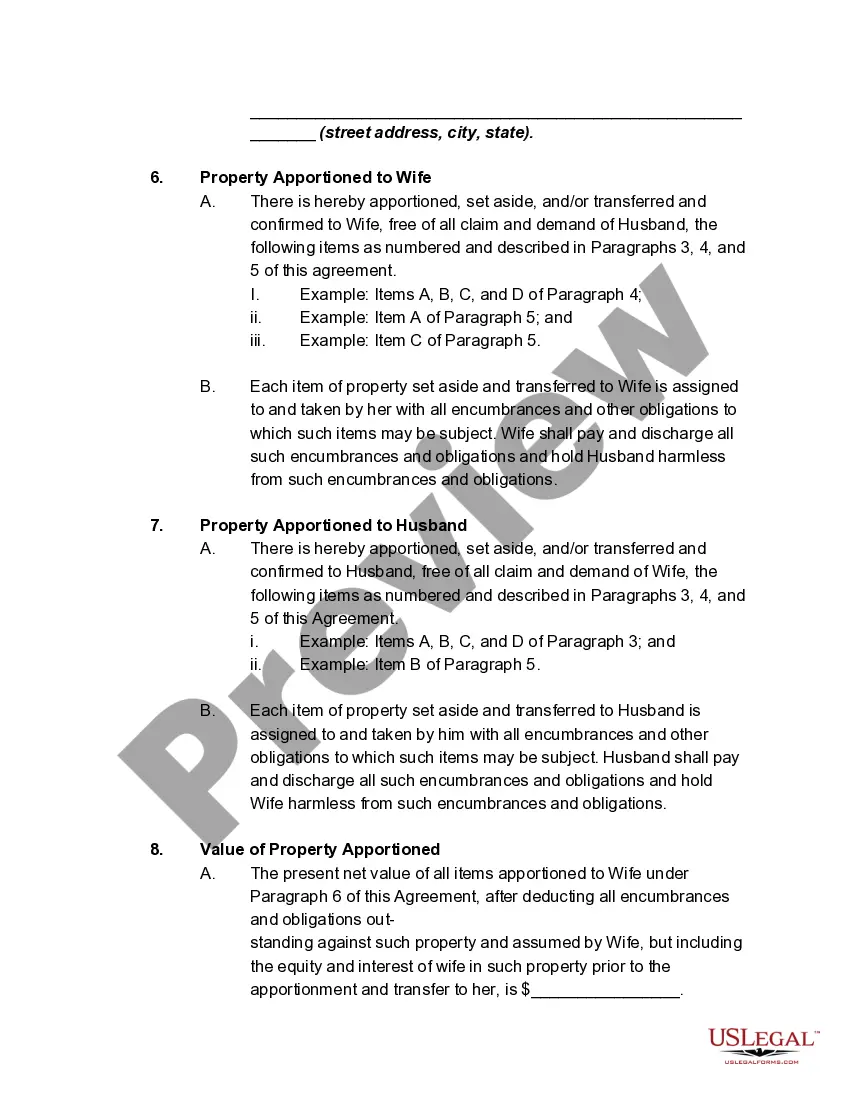
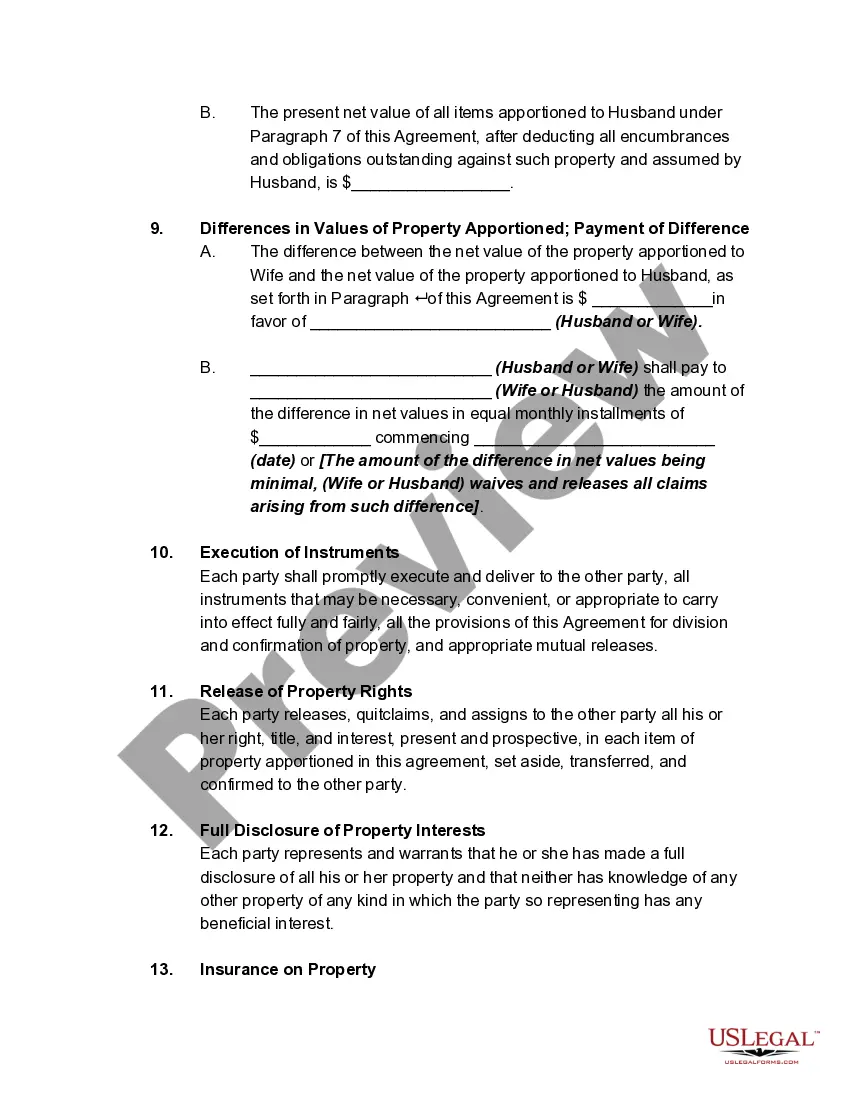
- Detail property ownership for assets held individually and jointly.
- Fill in the agreed monthly support amounts and relevant conditions.
- Ensure both parties review and sign the agreement for validity.
Notarization guidance
This form usually doesn’t need to be notarized. However, local laws or specific transactions may require it. Our online notarization service, powered by Notarize, lets you complete it remotely through a secure video session, available 24/7.
Get your form ready online
Our built-in tools help you complete, sign, share, and store your documents in one place.
Make edits, fill in missing information, and update formatting in US Legal Forms—just like you would in MS Word.
Download a copy, print it, send it by email, or mail it via USPS—whatever works best for your next step.
Sign and collect signatures with our SignNow integration. Send to multiple recipients, set reminders, and more. Go Premium to unlock E-Sign.
If this form requires notarization, complete it online through a secure video call—no need to meet a notary in person or wait for an appointment.
We protect your documents and personal data by following strict security and privacy standards.
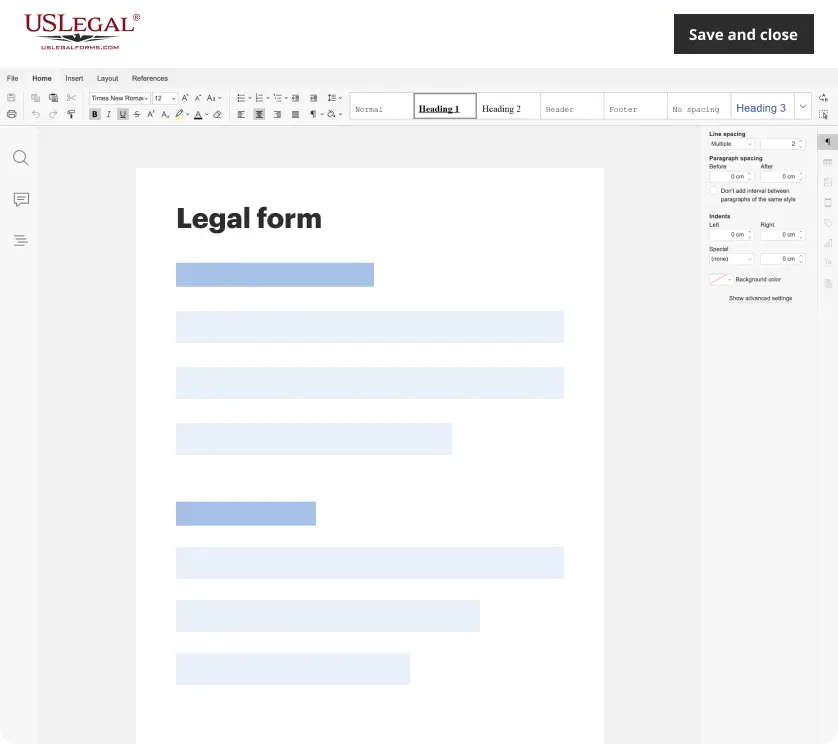
Make edits, fill in missing information, and update formatting in US Legal Forms—just like you would in MS Word.
Download a copy, print it, send it by email, or mail it via USPS—whatever works best for your next step.
Sign and collect signatures with our SignNow integration. Send to multiple recipients, set reminders, and more. Go Premium to unlock E-Sign.

If this form requires notarization, complete it online through a secure video call—no need to meet a notary in person or wait for an appointment.
We protect your documents and personal data by following strict security and privacy standards.
Typical mistakes to avoid
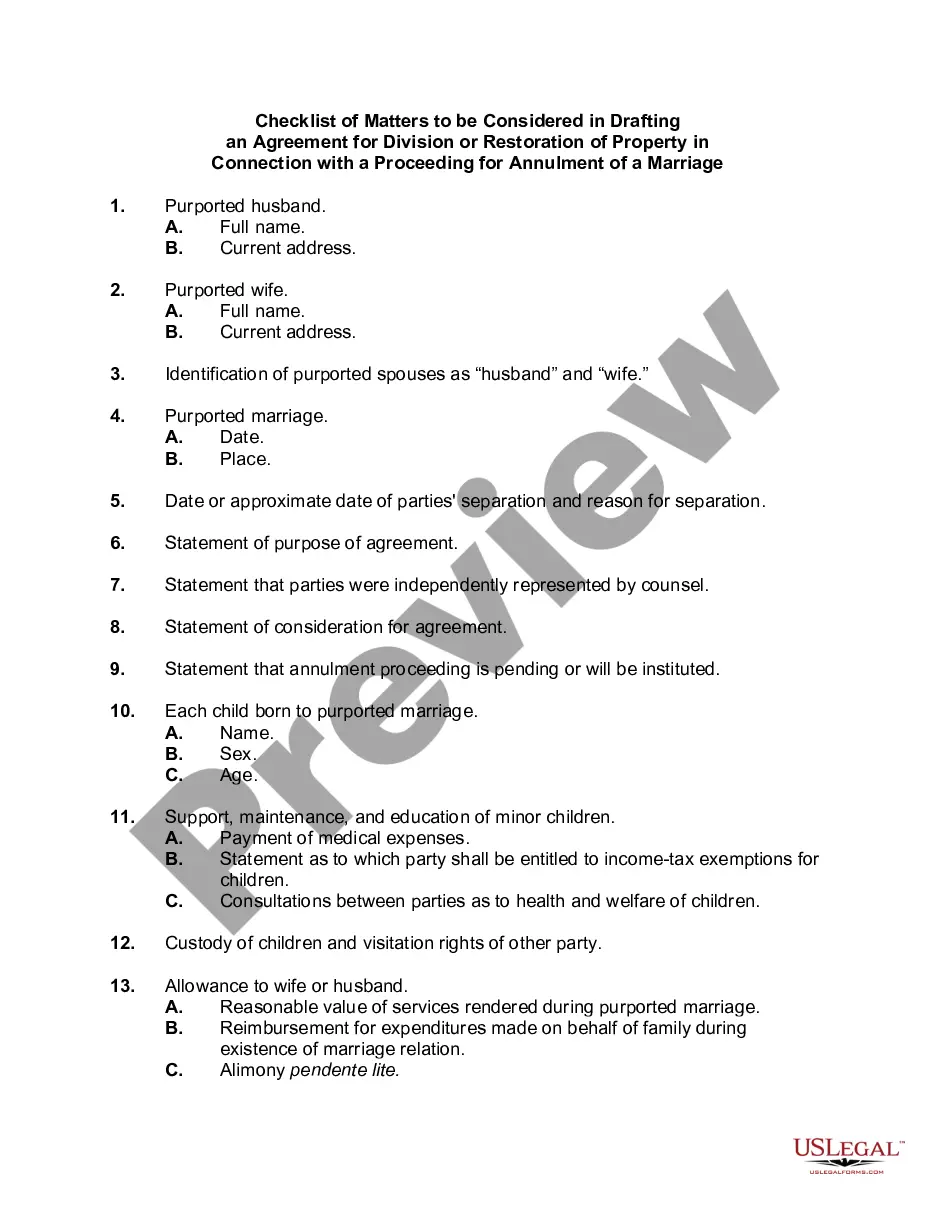
- Failing to include all relevant details regarding property ownership.
- Not specifying clear visitation rights and schedules for the child.
- Leaving out signatures or dates, which can invalidate the agreement.
- Overlooking state-specific requirements that may affect enforceability.
Why use this form online
- Convenience of downloading and filling out the form at your own pace.
- Editability to customize the agreement per your specific situation.
- Access to professionally drafted templates reviewed by licensed attorneys.
- Easy organization and storage of your legal documents in digital form.
Looking for another form?
Form popularity
FAQ
3 attorney answers The subsequent marriage would void the previous court's order. You will have to file for a divorce & request temporary orders for custody.
A court will modify custody following a parent's remarriage if the proposed change serves a child's best interests. A second marriage doesn't automatically warrant a new custody arrangement.However, not all custody situations turn out perfectly after a parent remarries.
If you have sole physical custody, it is not legal for the other parent to take your child from you. Sometimes taking your child from you is a crime, like "parental kidnapping." But if you are married, and there is no court order of custody, it is legal for the other parent to take your child.
Make sure you have all of the basic information and divorce forms you need according to the divorce laws in your state. Make sure you have all of the personal information you need. Include a statement that you and the other party are in agreement with the contents of the document.
Ongoing drug or alcohol abuse. Child abuse or neglect. Domestic violence. Mental health issues. Jail time. Relocation.
Some people wonder if they can save even more by money by writing their own settlement agreement and not seeking the help of a divorce attorney at all. While there is no legal requirement that you have a lawyer draft your settlement agreement, it is certainly a good idea to do so.
Figure out what guideline child support amount is. Agree on an amount and other issues. Write up your agreement. Sign your Stipulation (agreement) Turn in your Stipulation to the court for the judge to sign. File your Stipulation after the judge signs it.
At its heart, the law directs that the child's birth parents are responsible for the child's support and no one else. Therefore, in most states, the courts will not reduce a non-custodial parent or obligor's child support payments due to a custodial parent's decision to remarry.
As mentioned above, an annulment does not reverse the obligation of child support. Any child conceived by the parties is still entitled to support.