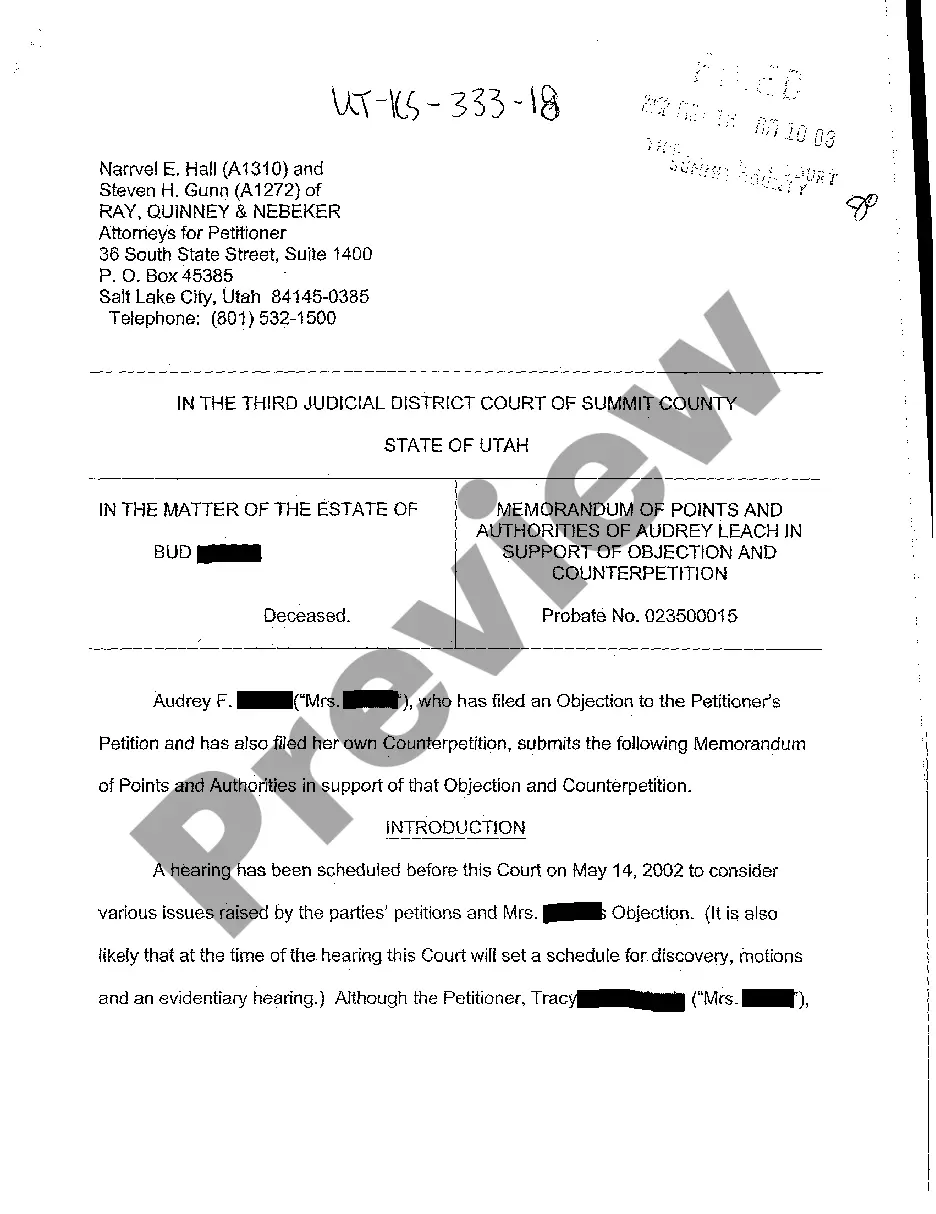
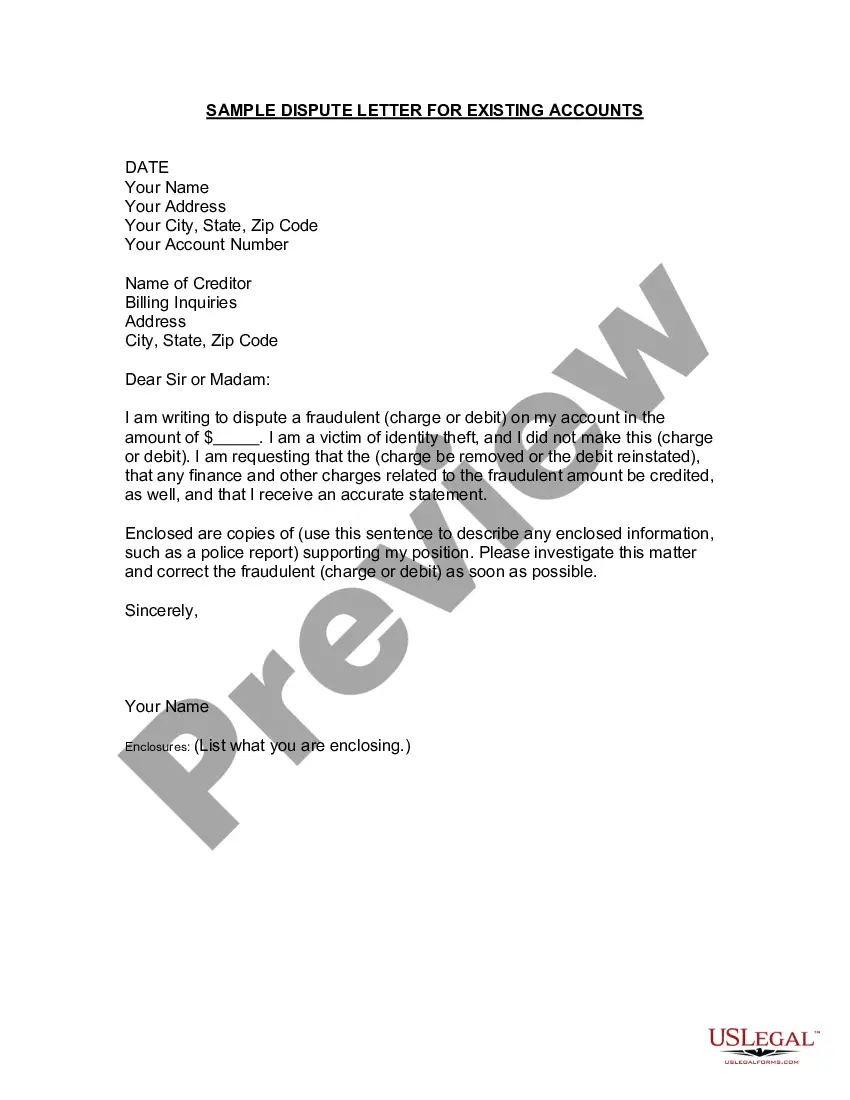
Letter to Creditors notifying them of Identity Theft
About this form
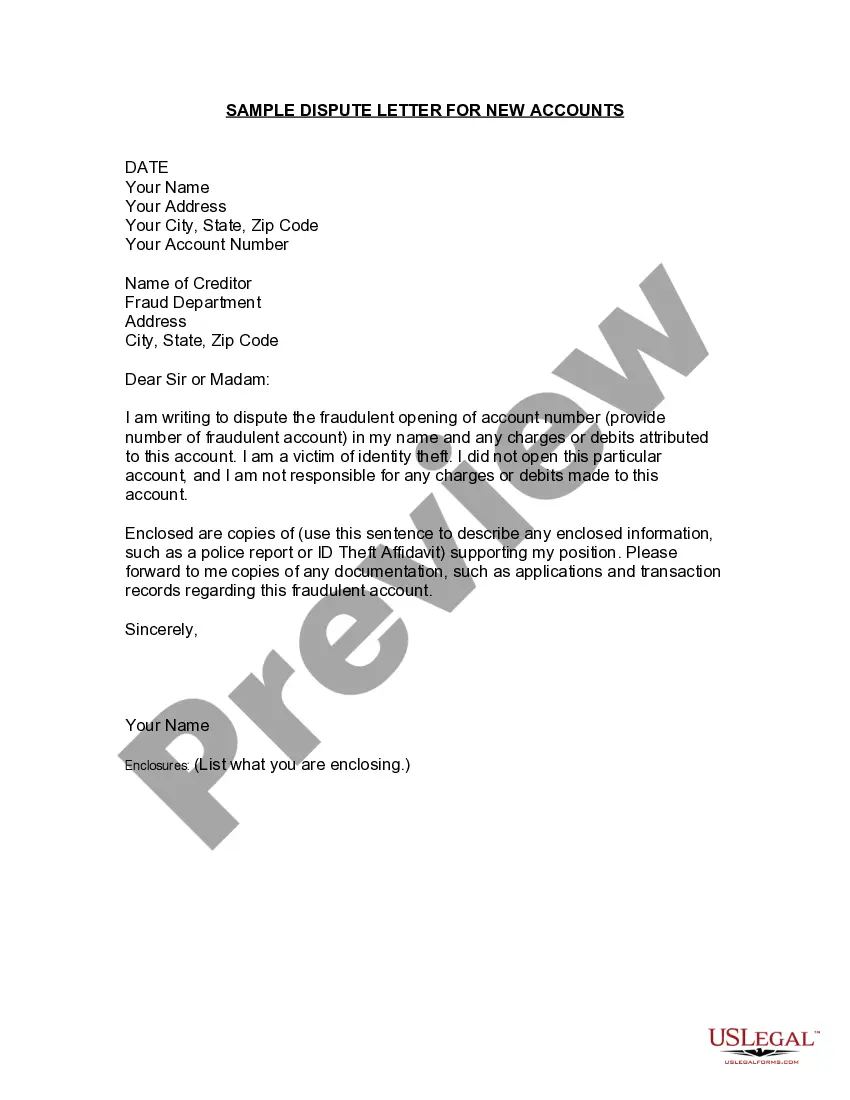
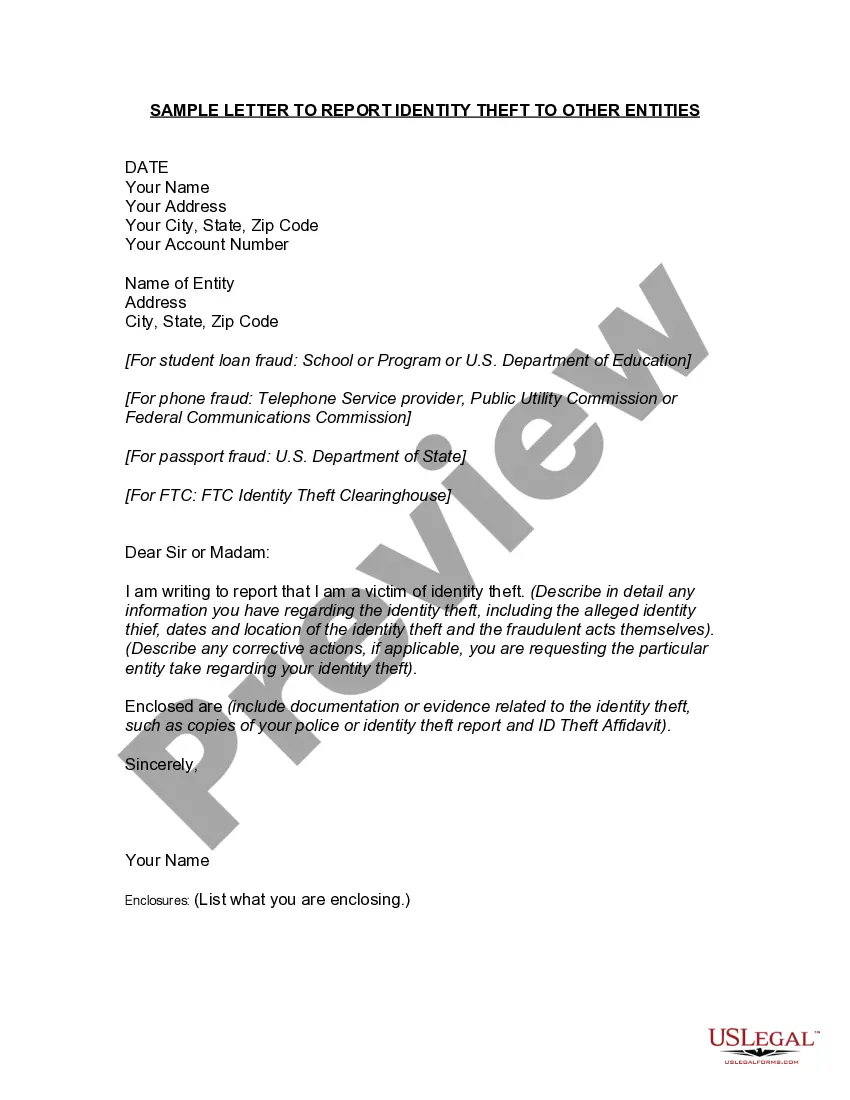
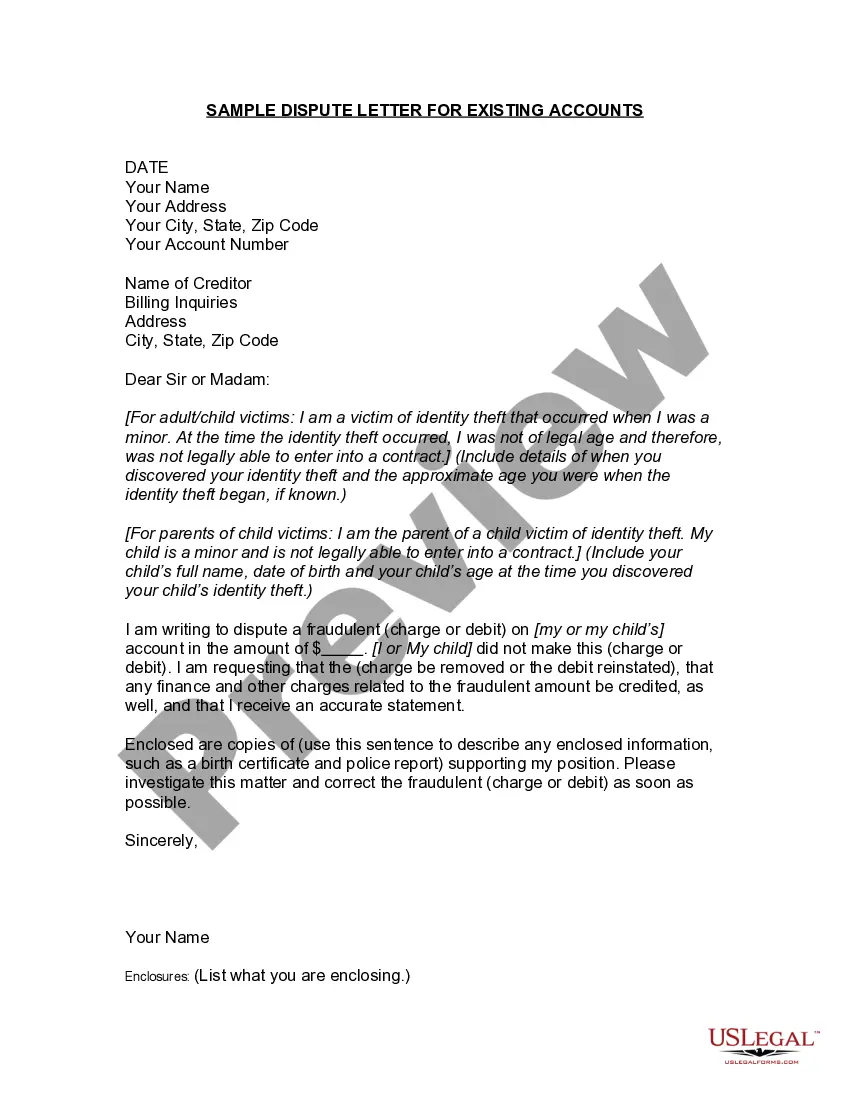
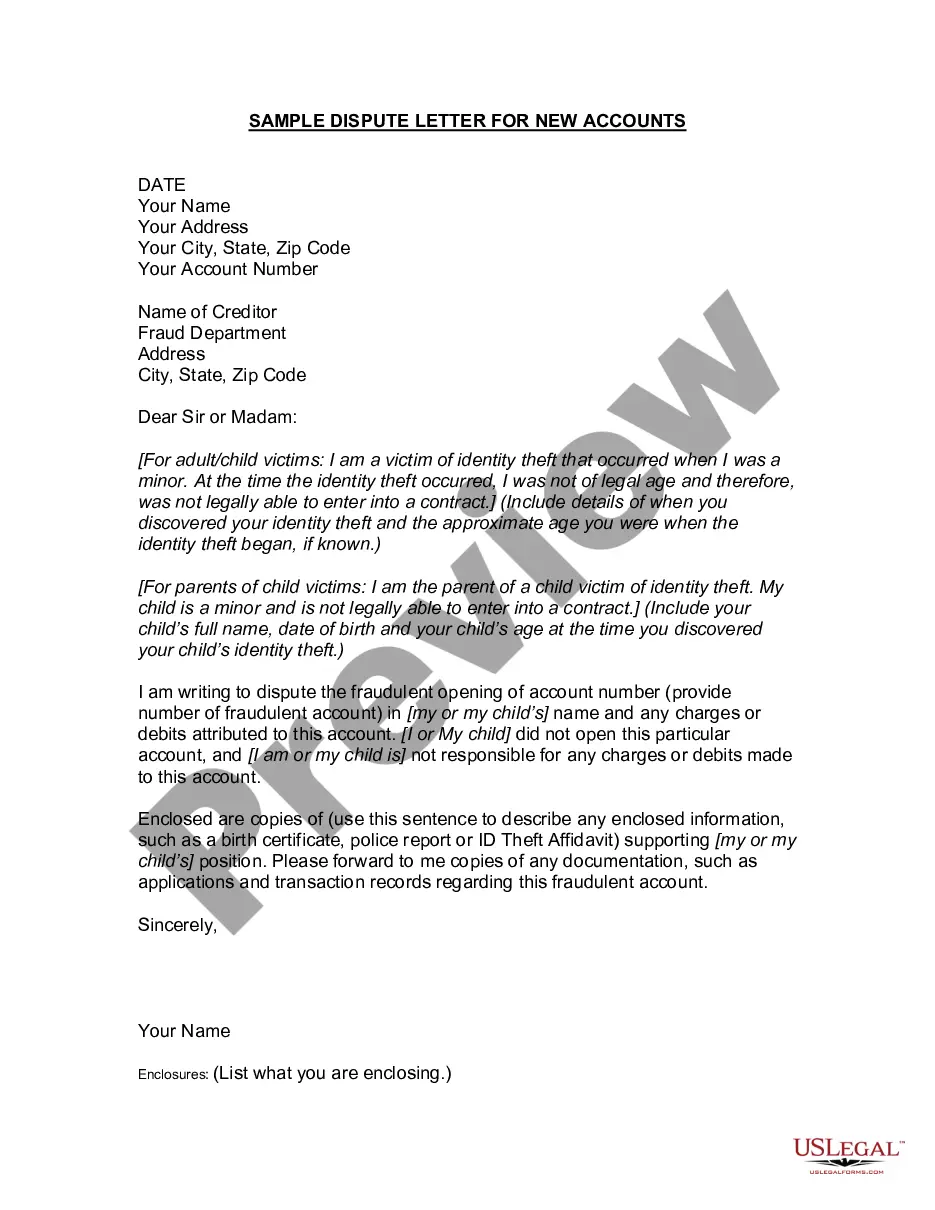
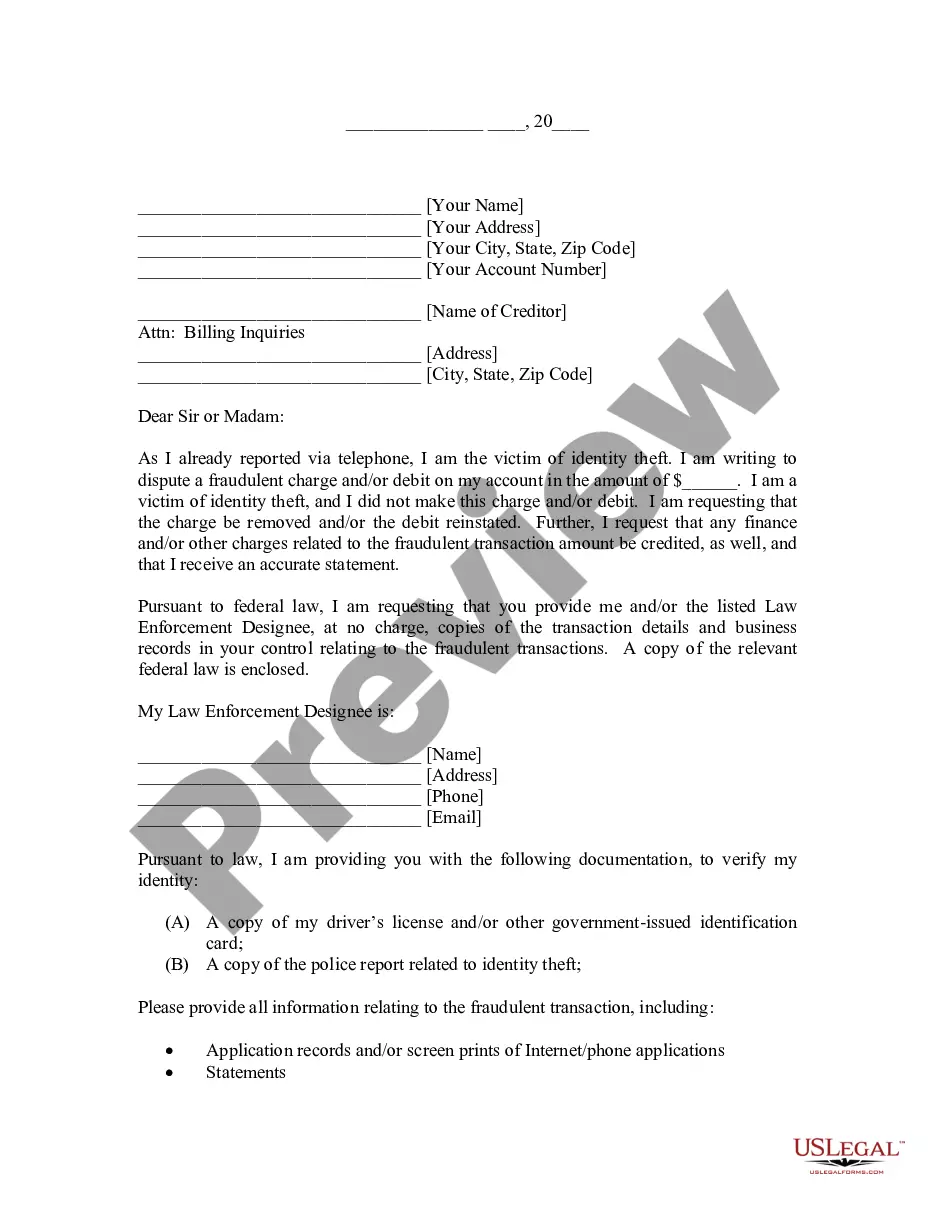
A letter to creditors notifying them of identity theft is a formal document used to inform creditors that your personal information has been compromised and that fraudulent activity has occurred in your name. This form is essential for protecting your credit and addressing unauthorized charges, distinguishing it from a general dispute letter or identity theft report. It ensures creditors are aware of the situation and can take appropriate action to rectify any issues on your account.
Key components of this form
- Date: The date you are sending the letter.
- Your name and address: Personal details to identify you as the account holder.
- Account number: Specific reference to the account involved in the identity theft.
- Name and address of the creditor: Information for the institution you are notifying.
- Description of enclosed information: Details on any additional documents you are providing to support your claim.
- Request for investigation: A clear demand for the creditor to investigate the fraudulent charges and correct any discrepancies.
When this form is needed
This form should be used as soon as you suspect or discover identity theft involving your accounts. It is particularly important to send this letter if you notice unauthorized charges, receive bills for services you did not purchase, or if a creditor contacts you regarding unfamiliar accounts. Prompt action can help mitigate damages to your credit score and prevent further fraudulent activity.
Who this form is for
- Individuals who have experienced identity theft.
- Account holders receiving unauthorized charges on their accounts.
- People looking to formally notify creditors about the fraudulent use of their personal information.
- Anyone needing to protect their credit by addressing fraudulent account activity.
How to prepare this document
- Enter the date at the top of the document.
- Provide your personal information, including name, address, and account number.
- Include the name and address of the creditor you are contacting.
- Describe any enclosed documents, such as a police report, that support your claim.
- Clearly state your request for the creditor to investigate and correct fraudulent charges.
- Sign the letter and list any additional enclosures.
Does this form need to be notarized?
This form does not typically require notarization unless specified by local law. Always check local regulations to ensure compliance.
Get your form ready online
Our built-in tools help you complete, sign, share, and store your documents in one place.
Make edits, fill in missing information, and update formatting in US Legal Forms—just like you would in MS Word.
Download a copy, print it, send it by email, or mail it via USPS—whatever works best for your next step.
Sign and collect signatures with our SignNow integration. Send to multiple recipients, set reminders, and more. Go Premium to unlock E-Sign.
If this form requires notarization, complete it online through a secure video call—no need to meet a notary in person or wait for an appointment.
We protect your documents and personal data by following strict security and privacy standards.

Make edits, fill in missing information, and update formatting in US Legal Forms—just like you would in MS Word.

Download a copy, print it, send it by email, or mail it via USPS—whatever works best for your next step.

Sign and collect signatures with our SignNow integration. Send to multiple recipients, set reminders, and more. Go Premium to unlock E-Sign.

If this form requires notarization, complete it online through a secure video call—no need to meet a notary in person or wait for an appointment.

We protect your documents and personal data by following strict security and privacy standards.
Common mistakes to avoid
- Failing to include all necessary personal information.
- Not attaching supporting documents to substantiate your claim.
- Being vague about the fraudulent charges in your letter.
- Neglecting to keep a copy of the letter for your records.
- Sending the letter without confirming the creditor's correct mailing address.
Advantages of online completion
- Convenience of downloading and completing the form at your own pace.
- Editability allows you to customize the letter to your specific situation.
- Access to professionally drafted templates ensures legal adequacy.
- Long-term availability for those who may need to revisit the document.
Quick recap
- This letter is an essential tool for addressing identity theft with creditors.
- Include supporting documents to strengthen your request for investigations.
- Ensure all personal and creditor details are accurate to avoid delays.
Looking for another form?
Form popularity
FAQ
Step 1: Call the companies where you know fraud occurred. Ask them to close or freeze the accounts. Then, no one can add new charges unless you agree. Change logins, passwords and PINS for your accounts. You might have to contact these companies again after you have an FTC Identity Theft Report.
Equifax. Equifax.com/personal/credit-report-services. 800-685-1111. Experian. Experian.com/help. 888-EXPERIAN (888-397-3742) Transunion. TransUnion.com/credit-help. 888-909-8872.
Sign up for a credit monitoring service, if offered. Tighten security on your accounts. Review your credit reports for mystery accounts. Scan credit card and bank statements for unauthorized charges.
Contact one of the credit reporting agencies' fraud alert departments and place a fraud alert on your credit report. Tell the agency you think your identity has been stolen. One call does it all. Call 1-800-525-6285. Visit www.equifax.com. Call 1-888-397-3742.
Option 1: Online. You can upload the documentation verifying your identity online along with your request to have the alert removed. Option 2: Mail. You can mail your request to Experian along with copies of documentation verifying your identity.
You can create a myEquifax2122 account online to place a fraud alert on your Equifax credit report. You can also download this form for instructions on mailing your request or call Equifax at (888) 836-6351.
Report Identity Theft. Report identity (ID) theft to the Federal Trade Commission (FTC) online at IdentityTheft.gov or by phone at 1-877-438-4338.
U.S.A. (888) 202-4025. Canada. (800) 278-0278. U.S.A. (800) 831-5614 (Consumer Credit Reporting) U.S.A. (800) 478-0650 (Commercial Credit Reporting) U.S.A. (866) 922-2100. Canada. (800) 565-2280. U.S.A. (614) 538-2123. U.S.A. (512) 794-7520 (Commercial Credit Reporting)
You have limited liability for fraudulent debts caused by identity theft. Under most state laws, you're not responsible for any debt incurred on fraudulent new accounts opened in your name without your permission. Under federal law, the amount you have to pay for unauthorized use of your credit card is limited to $50.