Motion to Bar Use of Certain Aggravating Circumstances
What is this form?
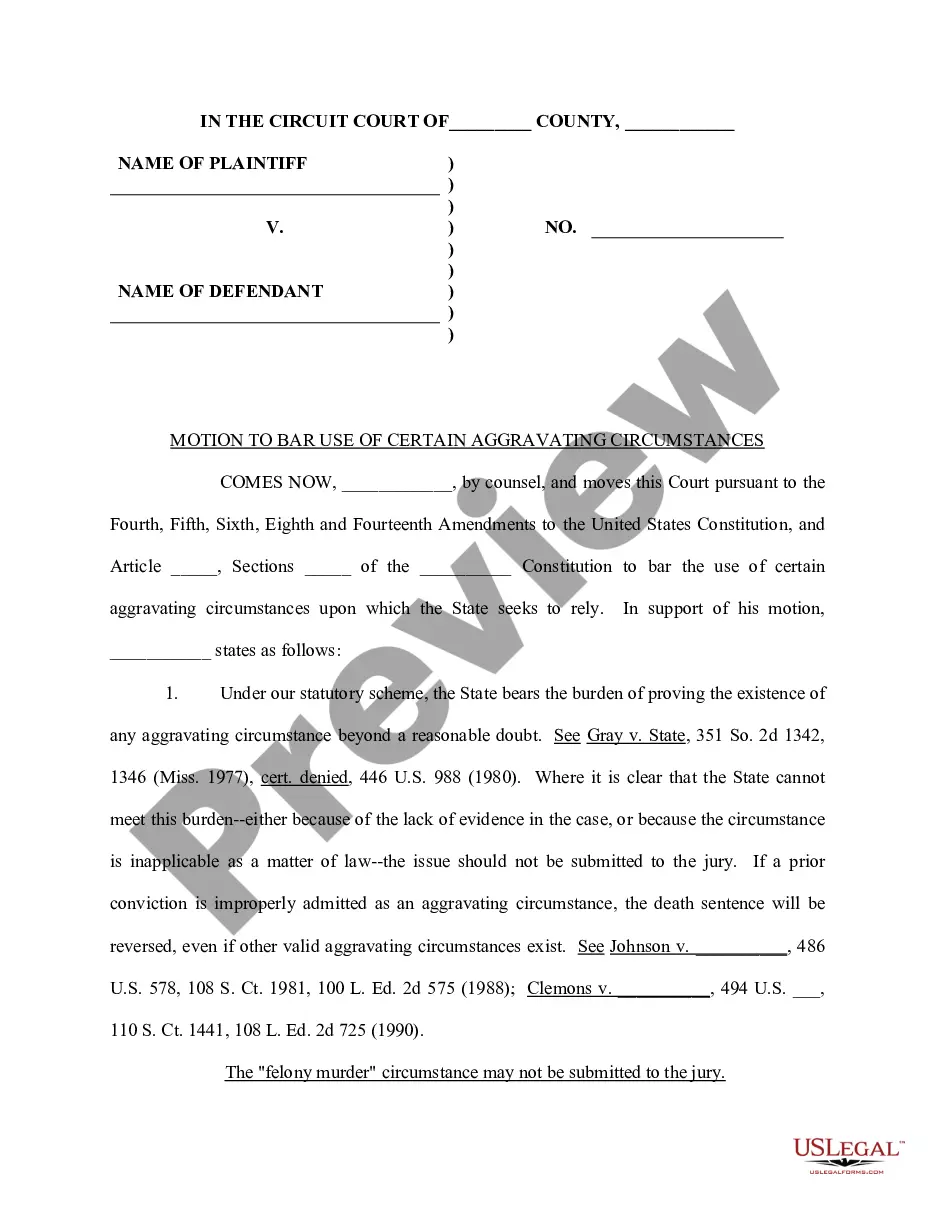
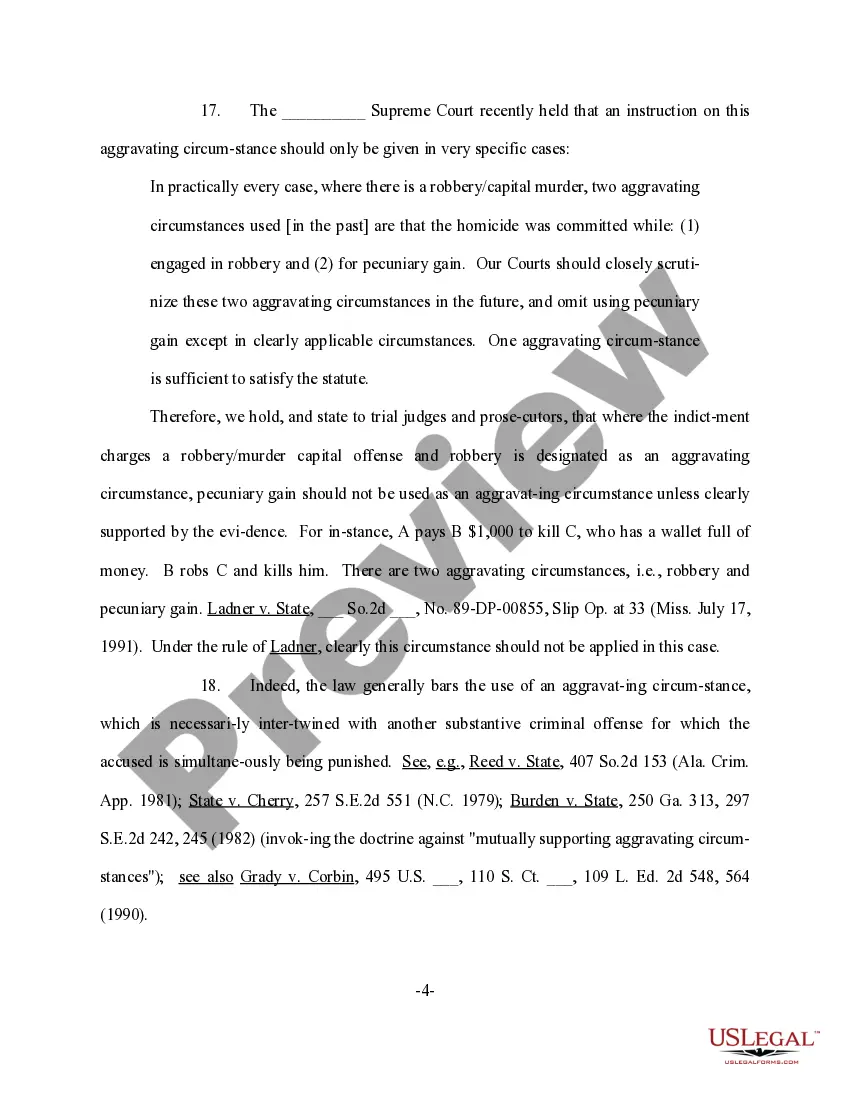
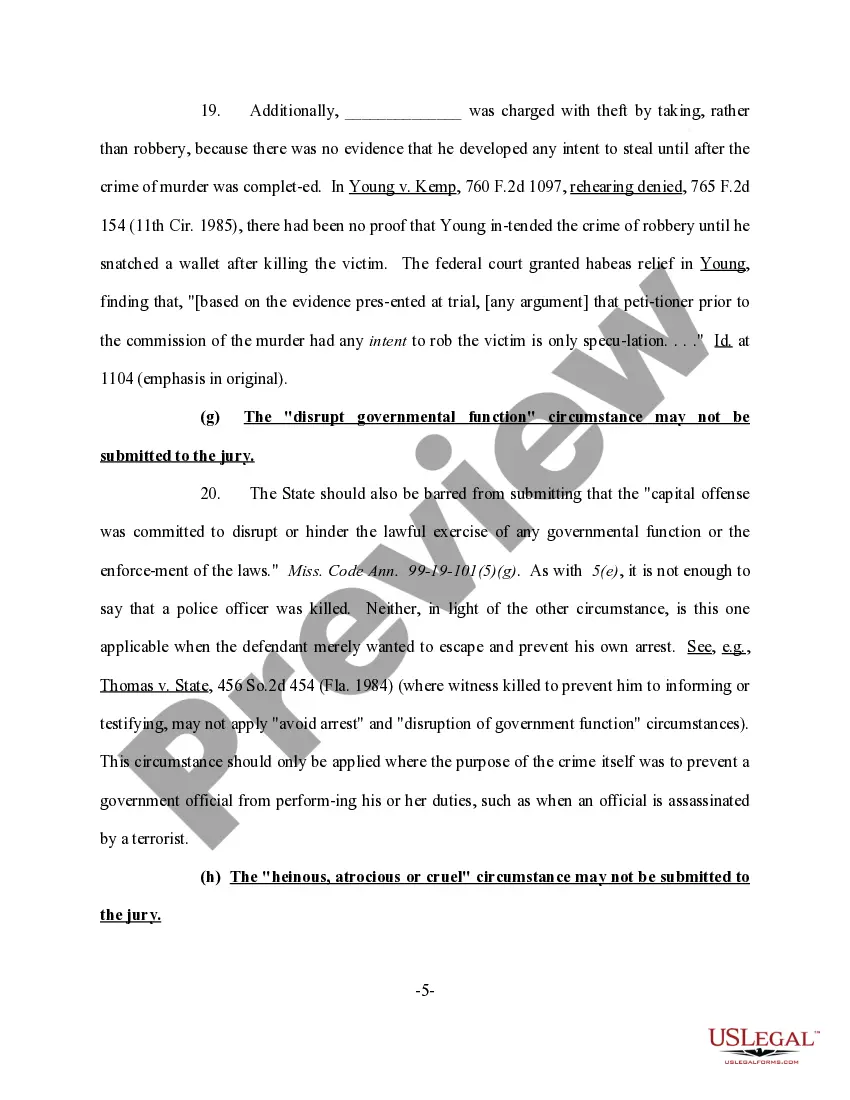
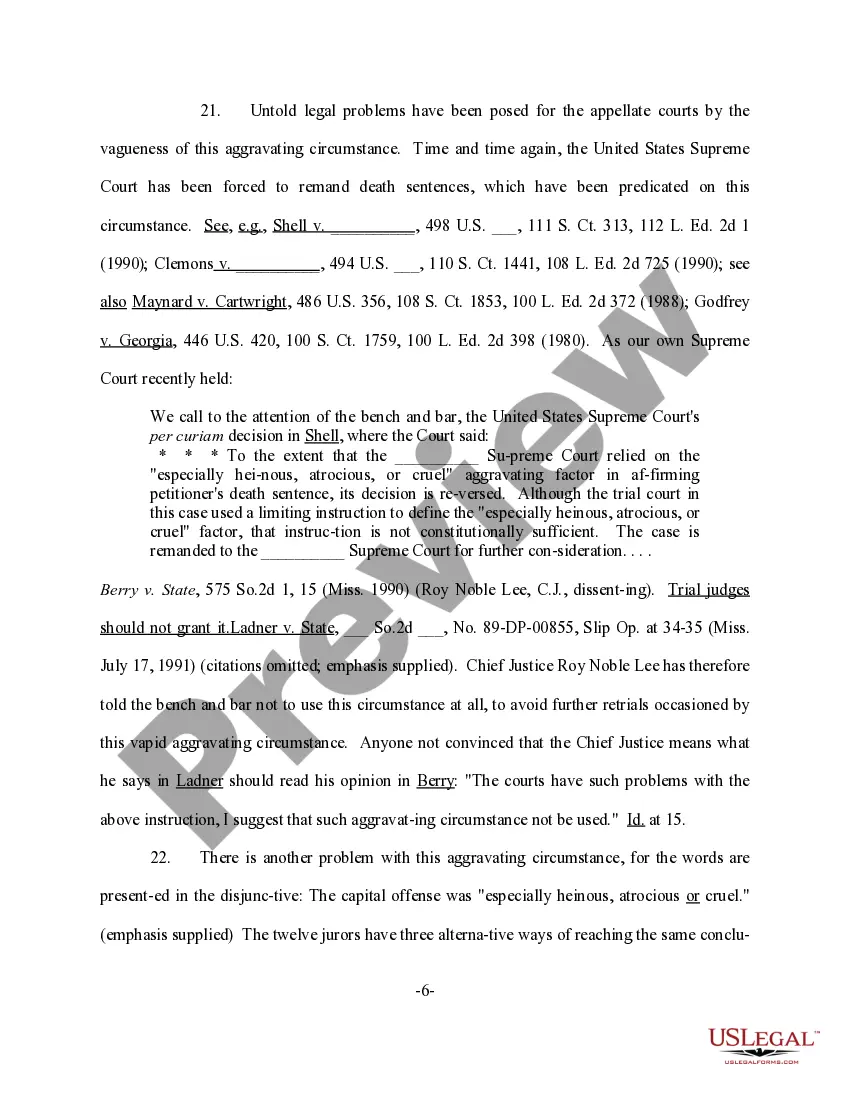
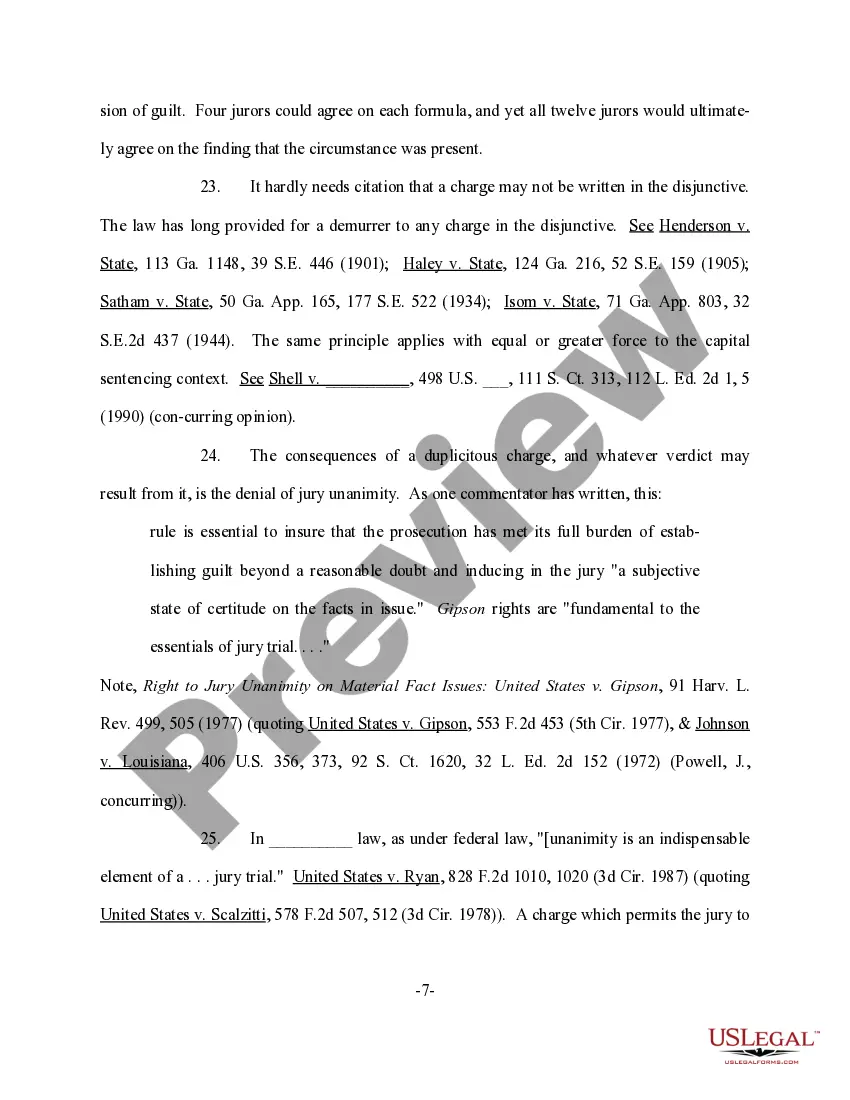
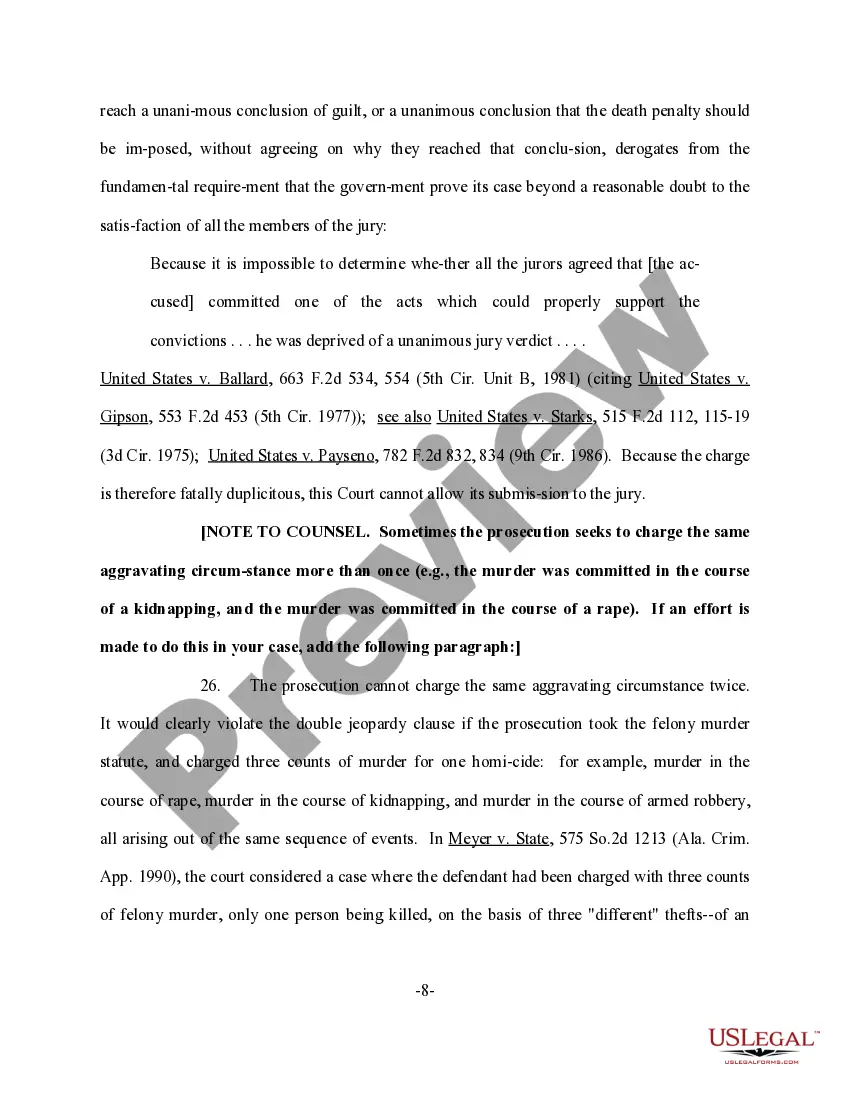
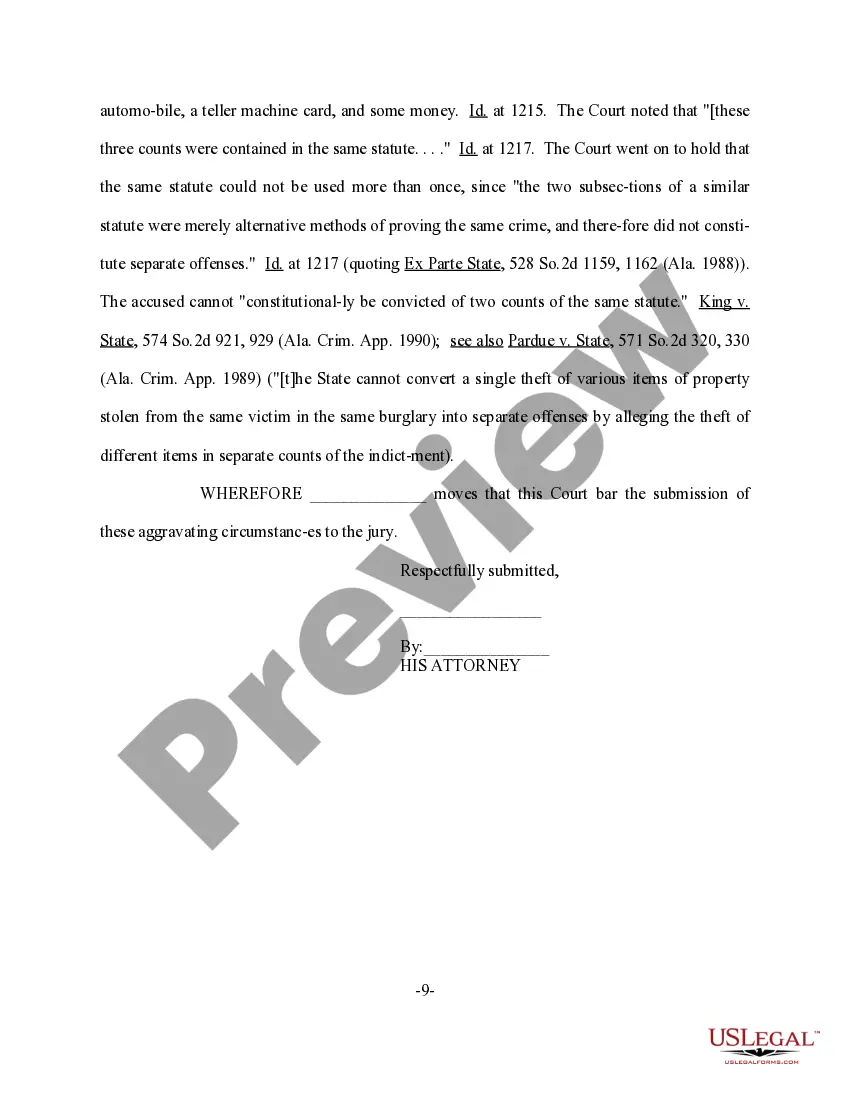
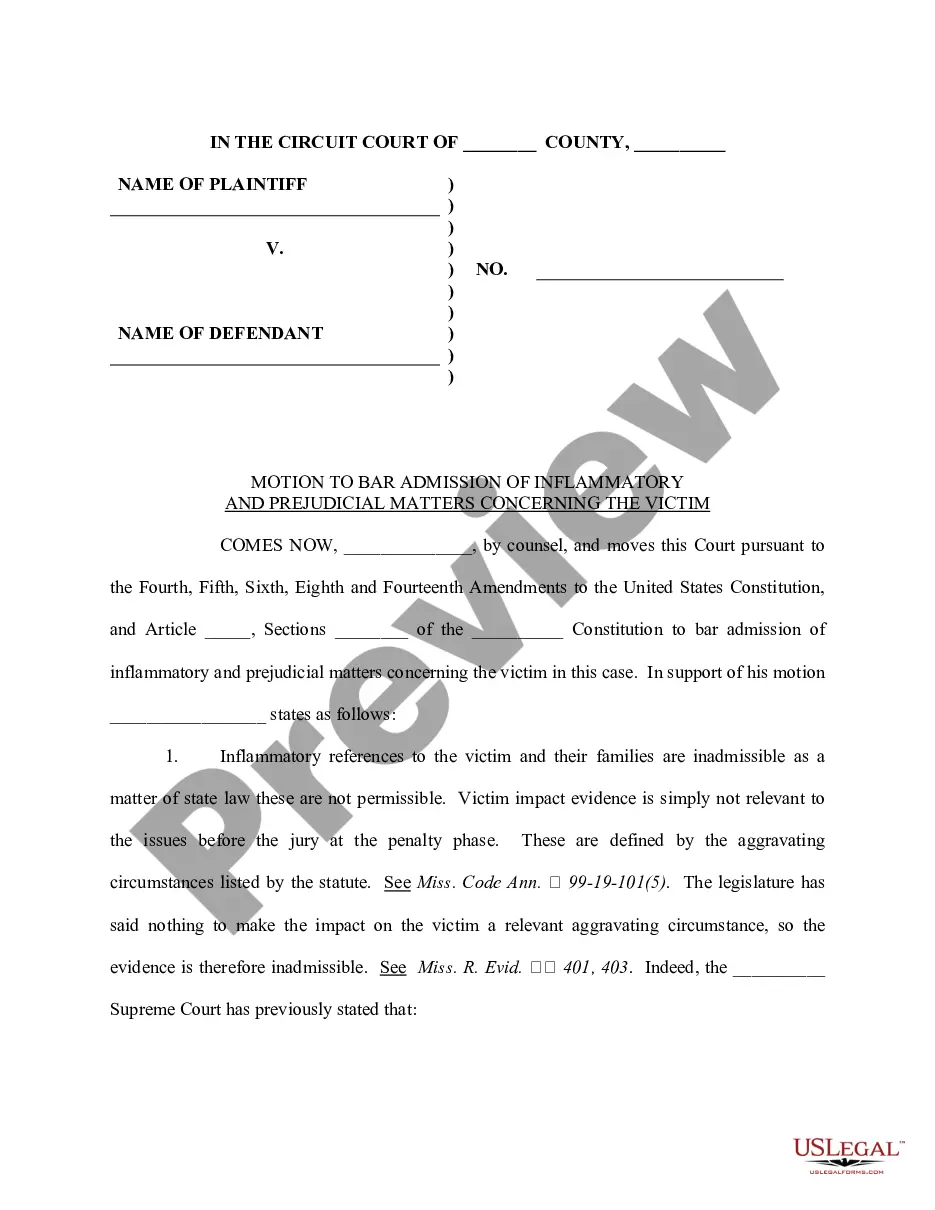
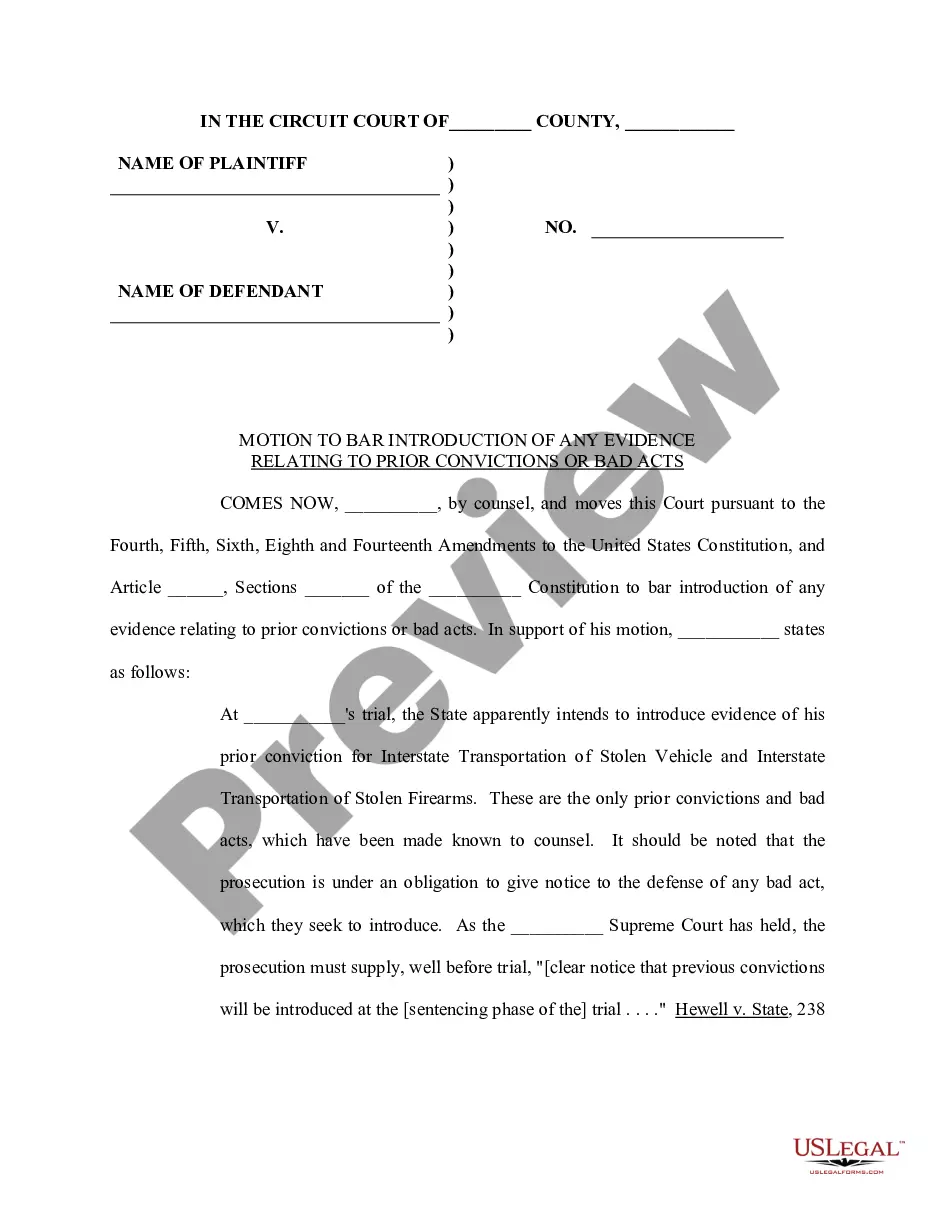
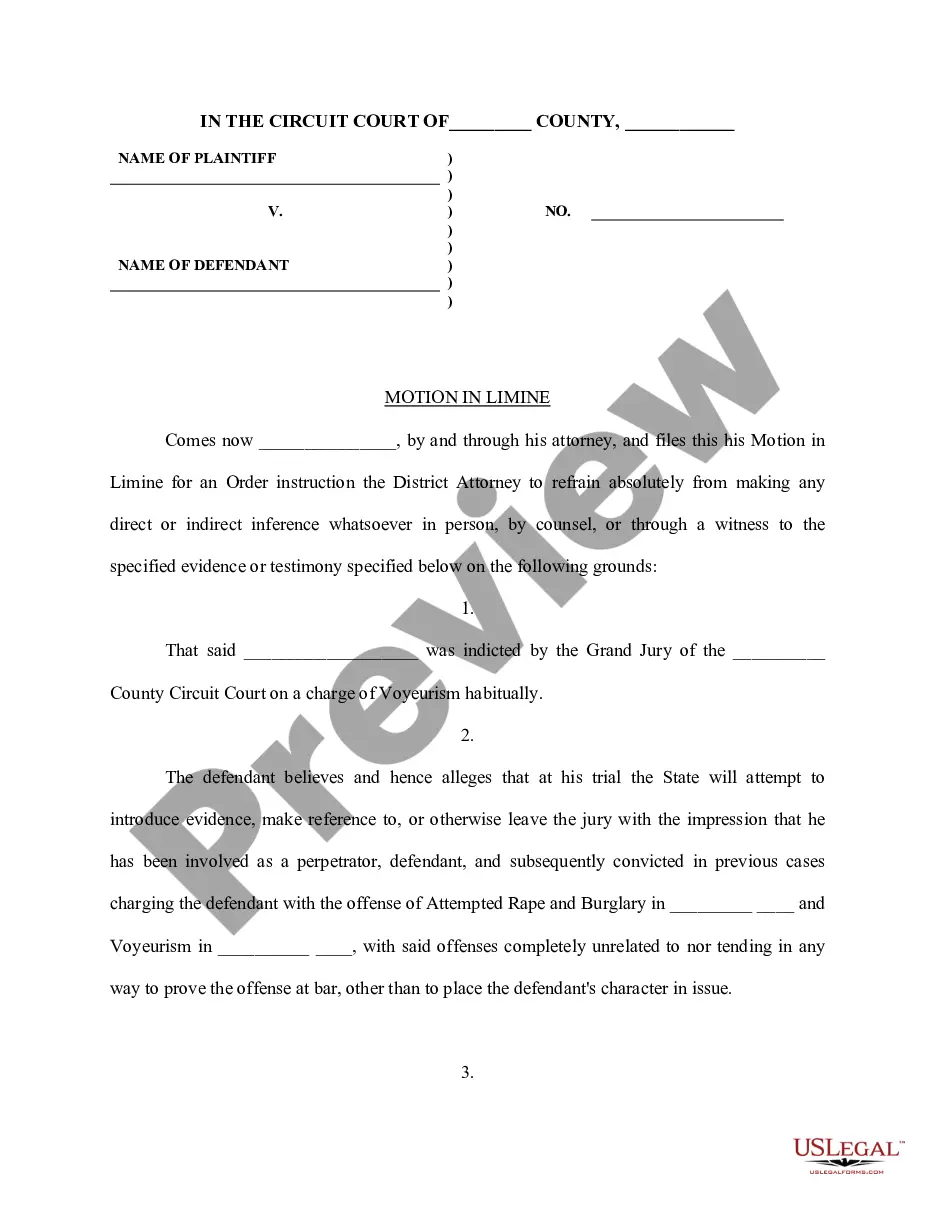
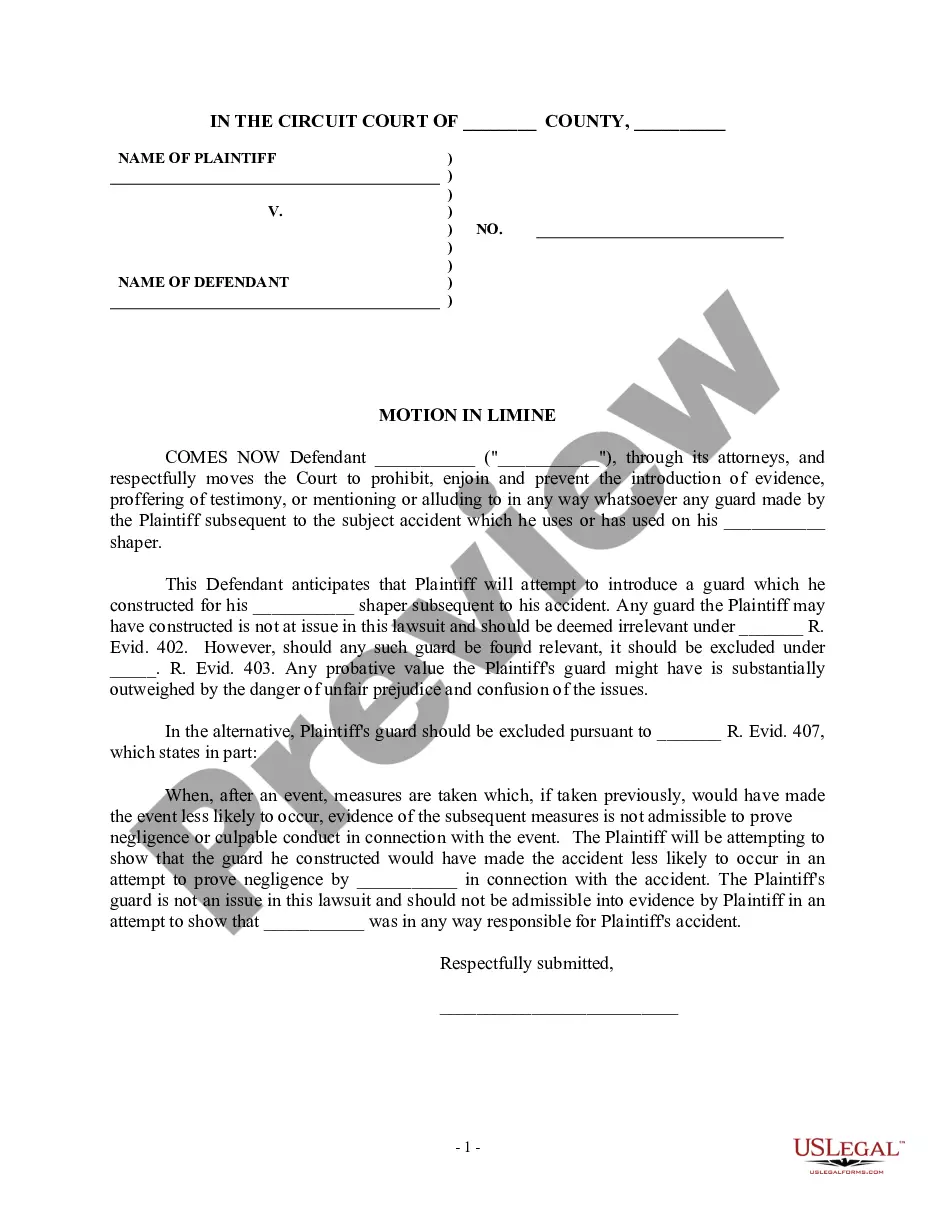
The Motion to Bar Use of Certain Aggravating Circumstances is a legal document filed by a defendant during trial proceedings. Its purpose is to prevent the jury from considering specific aggravating circumstances that may be prejudicial and lack adequate evidence. This motion is applicable across various states and is crucial in ensuring a fair trial by limiting the information presented that could improperly influence jury decisions.
What’s included in this form
- Statement of relevant statutes supporting the motion.
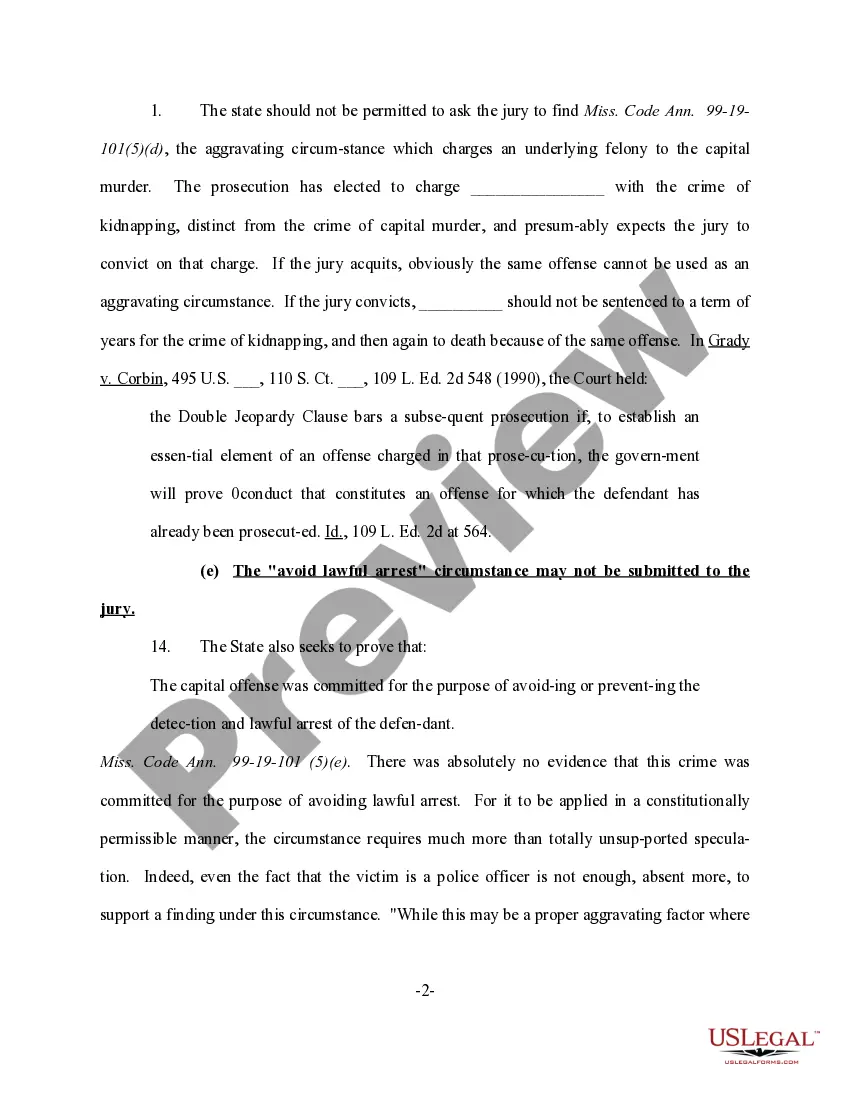
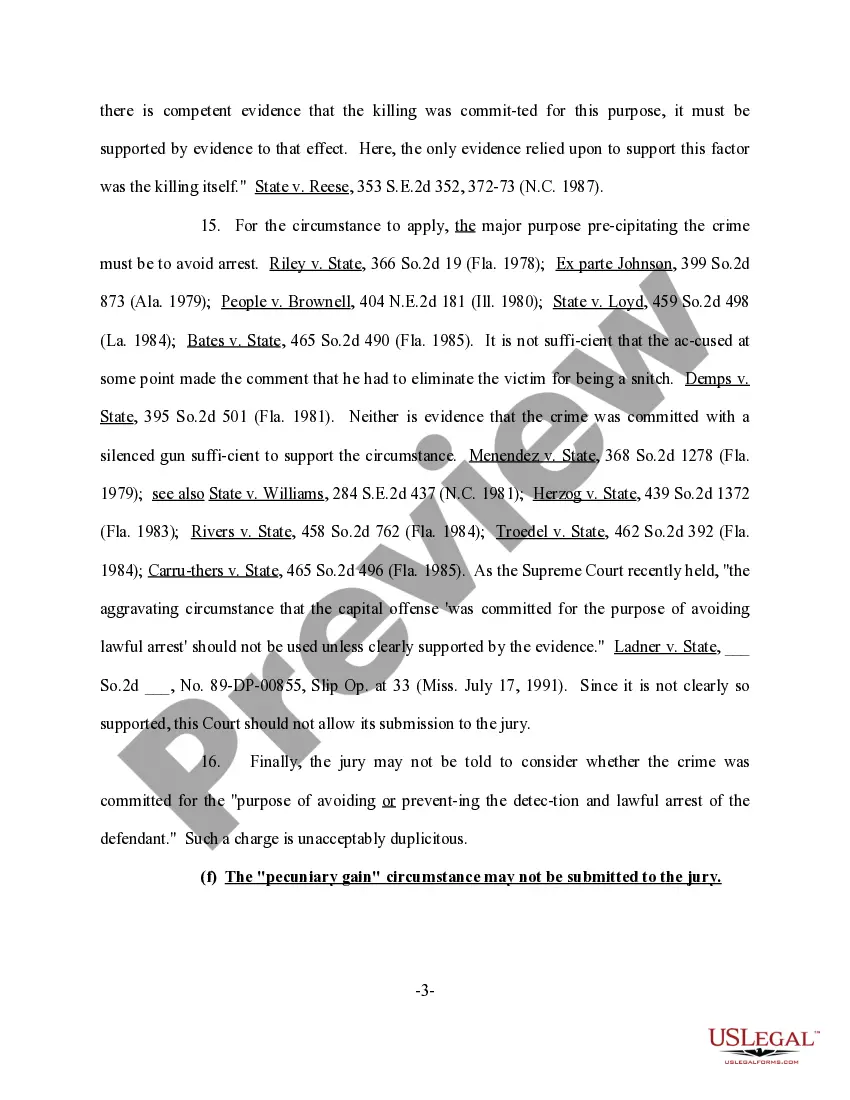
- Specific aggravating circumstances being challenged.
- Arguments as to why these circumstances should not be submitted to the jury.
- Reference to case law that shapes the application of these aggravating factors.
- Signature line for the defendant's attorney.
When to use this document
This form is utilized when a defendant seeks to challenge the inclusion of certain aggravating circumstances in a criminal trial. It is necessary when the prosecution presents evidence that may be prejudicial or when the legal basis for those circumstances is unclear or unsupported by facts. Using this motion can help preserve the fairness of the trial and protect the defendant's rights.
Who this form is for
This form is intended for:
- Defendants facing capital or serious criminal charges.
- Defense attorneys seeking to limit the jury's consideration of certain aggravating circumstances.
- Legal representatives aiming to ensure a fair trial outcome by challenging prejudicial evidence.
Completing this form step by step
- Identify the specific aggravating circumstances you wish to challenge.
- Research and reference relevant case law that supports your argument.
- Clearly state the reasons why these circumstances should not be considered by the jury.
- Have your legal representative sign the motion as required.
- File the motion with the appropriate court before the trial begins.
Notarization requirements for this form
In most cases, this form does not require notarization. However, some jurisdictions or signing circumstances might. US Legal Forms offers online notarization powered by Notarize, accessible 24/7 for a quick, remote process.
Get your form ready online
Our built-in tools help you complete, sign, share, and store your documents in one place.
Make edits, fill in missing information, and update formatting in US Legal Forms—just like you would in MS Word.
Download a copy, print it, send it by email, or mail it via USPS—whatever works best for your next step.
Sign and collect signatures with our SignNow integration. Send to multiple recipients, set reminders, and more. Go Premium to unlock E-Sign.
If this form requires notarization, complete it online through a secure video call—no need to meet a notary in person or wait for an appointment.
We protect your documents and personal data by following strict security and privacy standards.

Make edits, fill in missing information, and update formatting in US Legal Forms—just like you would in MS Word.

Download a copy, print it, send it by email, or mail it via USPS—whatever works best for your next step.

Sign and collect signatures with our SignNow integration. Send to multiple recipients, set reminders, and more. Go Premium to unlock E-Sign.

If this form requires notarization, complete it online through a secure video call—no need to meet a notary in person or wait for an appointment.

We protect your documents and personal data by following strict security and privacy standards.
Typical mistakes to avoid
- Failing to provide sufficient legal grounds for the motion.
- Not citing applicable case law to support the argument.
- Missing signature from the defendant or their attorney.
- Submitting the motion after the court deadline.
Benefits of using this form online
- Convenience of completing and downloading the form from anywhere.
- Ability to edit and customize the motion to fit specific legal arguments.
- Access to professionally drafted templates ensuring legal compliance.
Legal use & context
- This motion is utilized in criminal cases, especially in capital trials.
- Aggravating circumstances are factors that may increase the severity of a sentence.
- Using this form properly can significantly impact the outcome of a trial.
What to keep in mind
- The Motion to Bar Use of Certain Aggravating Circumstances is essential for protecting defendant rights.
- This motion requires a solid legal basis and knowledge of relevant case law.
- Understanding your state's rules is crucial for effective use of this form.
Looking for another form?
Form popularity
FAQ
Aggravating factors are the reasons judges use when choosing a sentence that is higher than the average term. They include the severity of the crime, the vulnerability of the victim, and the history of the defendant.
When a crime is committed by an offender who is under the influence of dangerous drugs, such state shall be considered as a qualifying aggravating circumstance in the definition of a crime and the application of the penalty provided in the Revised Penal Code. (
Overview. Aggravating circumstances refers to factors that increases the severity or culpability of a criminal act.A mitigating factor is the opposite of an aggravating circumstance, as a mitigating factor provides reasons as to why punishment for a criminal act's ought to be lessened.
Aggravating factors include recidivism, lack of remorse, amount of harm to the victim, or committing the crime in front of a child, among many others.
Lack of a prior criminal record. Minor role in the offense; Culpability of the victim; Past circumstances, such as abuse that resulted in criminal activity; Circumstances at the time of the offense, such as provocation, stress, or emotional problems that might not excuse the crime but might offer an explanation;
Examples of mitigating circumstances in capital cases include the defendant's: lack of a prior criminal record. extreme mental or emotional disturbance at the time of the crime. belief that the crime was justified. role as a minor participant in the crime.
Legal Definition of aggravating circumstance : a circumstance relating to the commission of an act that increases the degree of liability or culpability punitive damages are recoverable in a conversion case when the evidence shows legal malice, willfulness, insult, or other aggravating circumstances Schwertfeger v.
Any fact or circumstance that increases the severity or culpability of a criminal act. Aggravating factors include recidivism, lack of remorse, amount of harm to the victim, or committing the crime in front of a child, among many others.