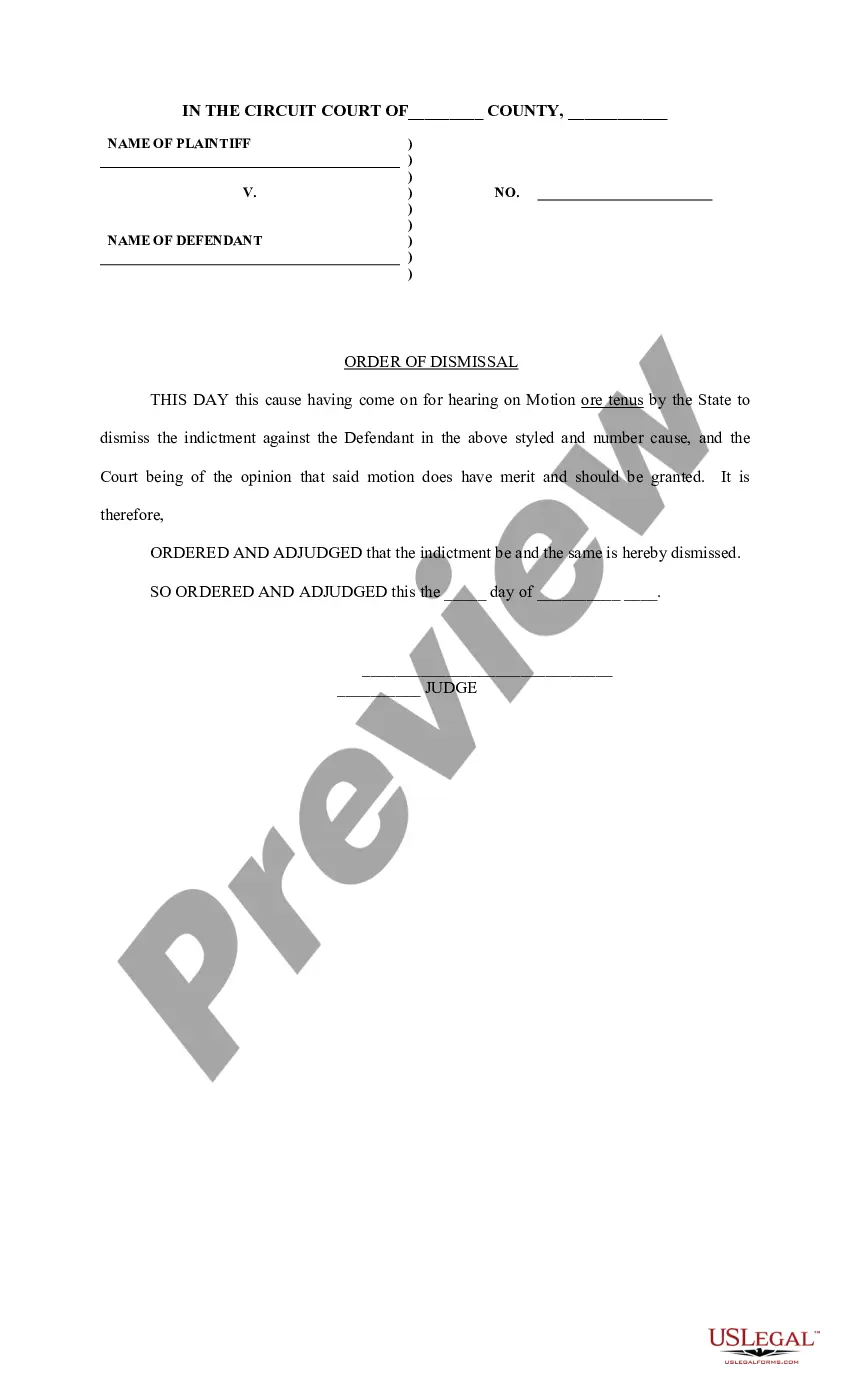
Order of Dismissal
What is this form?
The Order of Dismissal is a legal document issued by the court that formally terminates the criminal charges against a defendant. This order is granted when the state files a Motion to Dismiss, and the court agrees that the motion has merit. Unlike other legal forms for criminal defense, this particular order signifies the successful dismissal of charges and is applicable in all states, providing a crucial resolution for defendants.
Key parts of this document
- Introduction clause stating the order of dismissal.
- Specification that the indictment is dismissed.
- Date line for when the order is signed.
- Signature line for the judge.
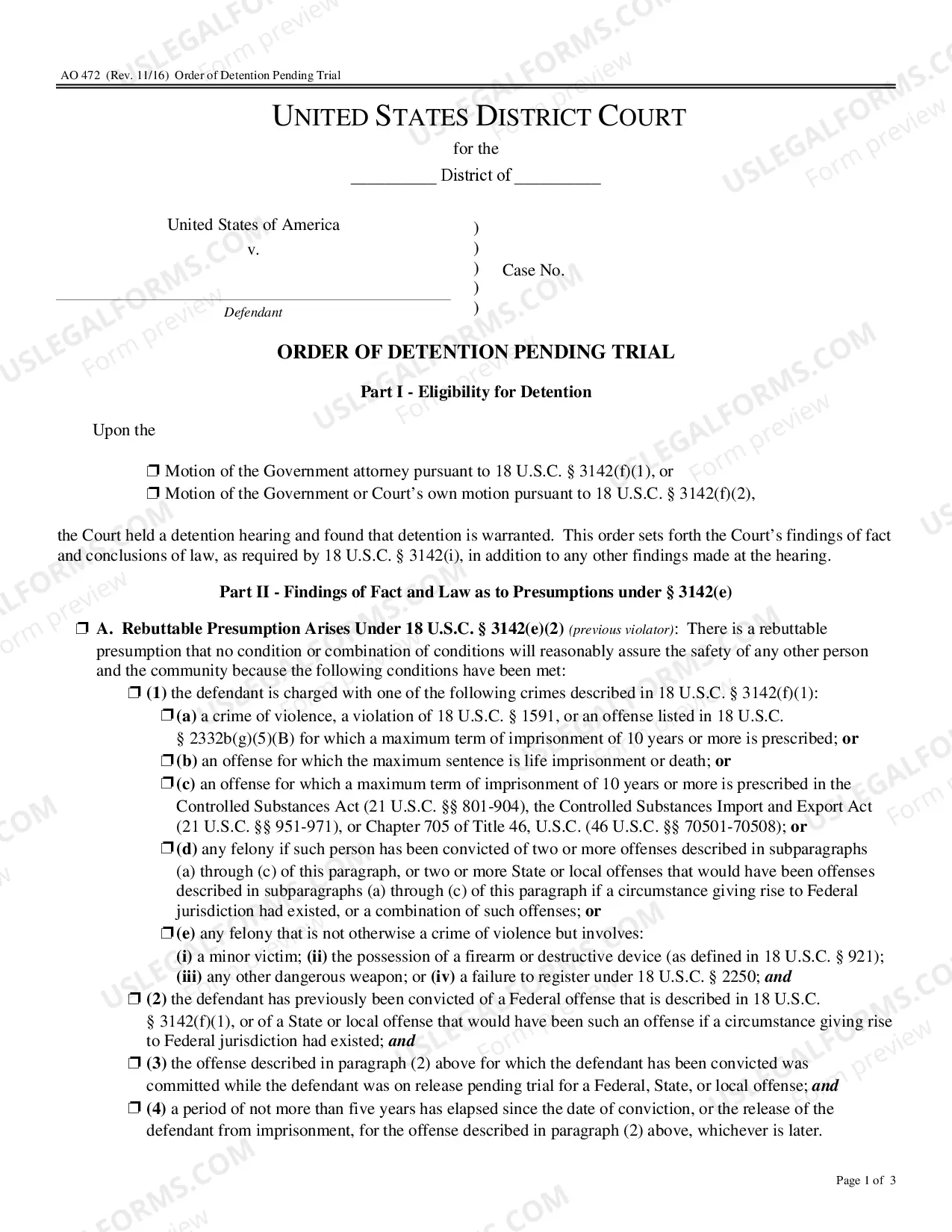
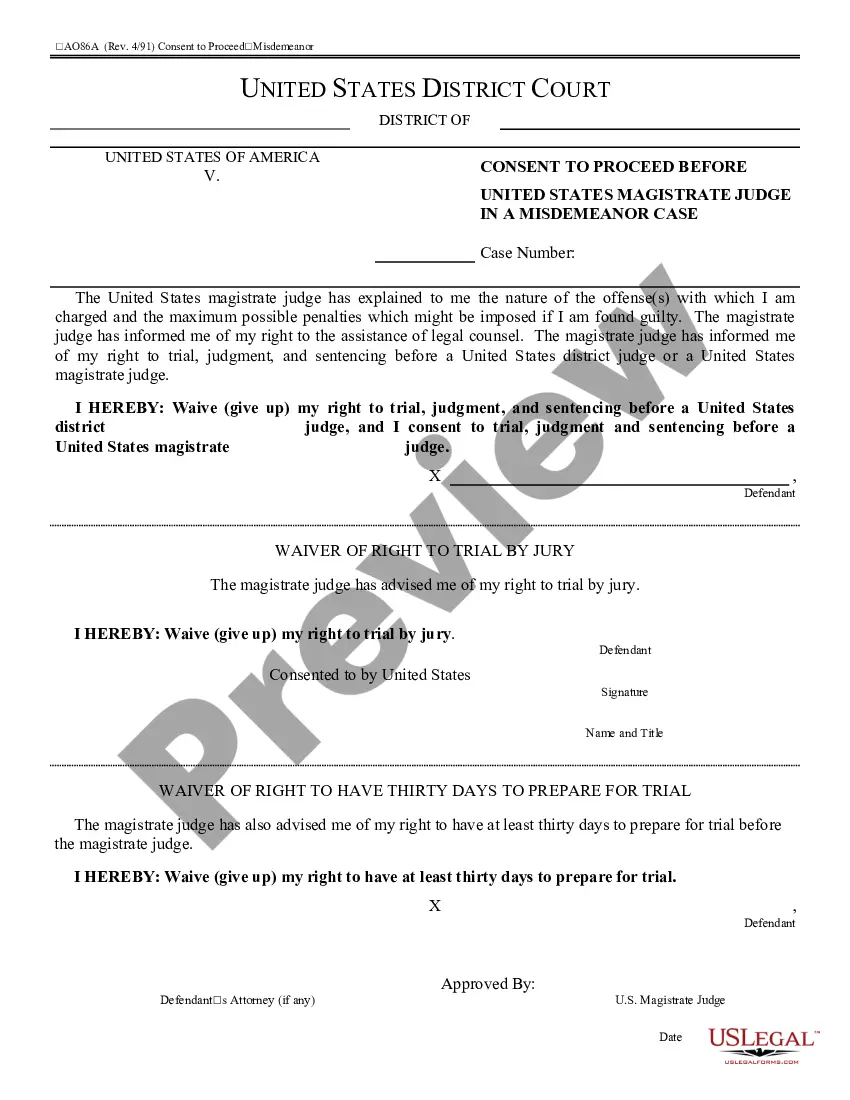
When this form is needed
This form should be used when the prosecution seeks to dismiss pending criminal charges against a defendant. It may occur in various situations, such as insufficient evidence, new evidence exonerating the defendant, or a plea agreement that includes dropping the charges. Using this form formalizes the dismissal process in court and provides closure for the defendant.
Who should use this form
- Defendants facing criminal charges who seek dismissal.
- Prosecutors who wish to discontinue legal proceedings against a defendant.
- Attorneys representing defendants or the state in criminal cases.
How to prepare this document
- Fill in the date on which the order is issued.
- Ensure that all relevant case details are accurate in the order.
- Sign the document where indicated to finalize the order.
- Submit the completed form to the appropriate court for processing.
- Keep a copy of the order for your records.
Notarization requirements for this form
In most cases, this form does not require notarization. However, some jurisdictions or signing circumstances might. US Legal Forms offers online notarization powered by Notarize, accessible 24/7 for a quick, remote process.
Get your form ready online
Our built-in tools help you complete, sign, share, and store your documents in one place.
Make edits, fill in missing information, and update formatting in US Legal Forms—just like you would in MS Word.
Download a copy, print it, send it by email, or mail it via USPS—whatever works best for your next step.
Sign and collect signatures with our SignNow integration. Send to multiple recipients, set reminders, and more. Go Premium to unlock E-Sign.
If this form requires notarization, complete it online through a secure video call—no need to meet a notary in person or wait for an appointment.
We protect your documents and personal data by following strict security and privacy standards.

Make edits, fill in missing information, and update formatting in US Legal Forms—just like you would in MS Word.

Download a copy, print it, send it by email, or mail it via USPS—whatever works best for your next step.

Sign and collect signatures with our SignNow integration. Send to multiple recipients, set reminders, and more. Go Premium to unlock E-Sign.

If this form requires notarization, complete it online through a secure video call—no need to meet a notary in person or wait for an appointment.

We protect your documents and personal data by following strict security and privacy standards.
Common mistakes
- Forgetting to include the date on the order.
- Not obtaining the necessary signature from the judge.
- Submitting the form to the wrong court or jurisdiction.
- Leaving out important case information.
Why use this form online
- Convenient access to the form anytime and from anywhere.
- Editable format allows for easy customization to meet specific requirements.
- Drafted by licensed attorneys, ensuring legal accuracy and reliability.
Looking for another form?
Form popularity
FAQ
An Order of Dismissal is a court-issued document that formally terminates criminal charges against a defendant. It is granted after the state files a Motion to Dismiss and the court finds merit. The order finalizes the resolution in all states, and typically includes an introduction stating the dismissal, a finding that the indictment is dismissed, a date, and a judge's signature.
No. Dismissal terminates the charges without a conviction, meaning the case does not proceed on those charges. The form is used when the prosecutor moves to drop the charges—often due to insufficient evidence, new exonerating information, or a plea agreement that includes dismissal. For tailored guidance, consult a licensed attorney.
The court issues the Order of Dismissal after it grants the state's Motion to Dismiss. The document includes an introduction stating the order of dismissal, states that the indictment is dismissed, provides the signing date, and includes a signature line for the judge.
This form is intended for defendants facing criminal charges who seek dismissal, prosecutors who wish to discontinue proceedings, and attorneys representing either side in criminal cases. In practice, defense counsel may file or advocate for the order, while prosecutors may support dismissal when the investigation shows insufficient evidence or a viable plea agreement.
Use this Order of Dismissal when the prosecution moves to dismiss the pending charges, and the court grants the motion. It may arise from insufficient evidence, new exculpating information, or a plea agreement that includes dropping the charges. The form then formalizes the dismissal in court and provides closure for the defendant.
The Order of Dismissal is the court's final, formal document terminating charges; it includes an introduction, a finding that the indictment is dismissed, a date, and a judge's signature. A Motion to Dismiss is a separate filing by the state requesting dismissal, which, if granted, leads to the issuing of the order.