Petition by Surviving Spouse to Change Place of Interment From Mausoleum to Family Plot in Same Cemetery
About this form
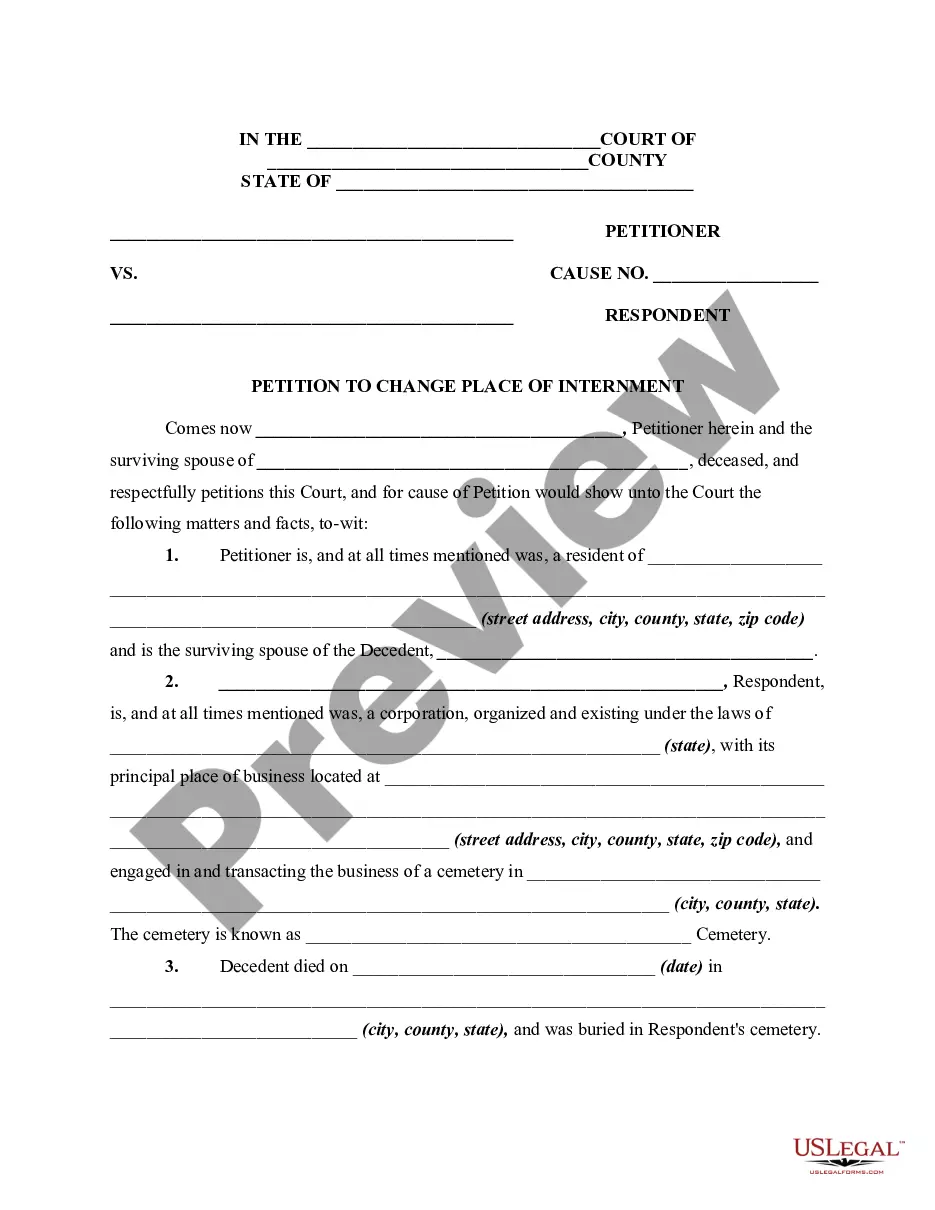
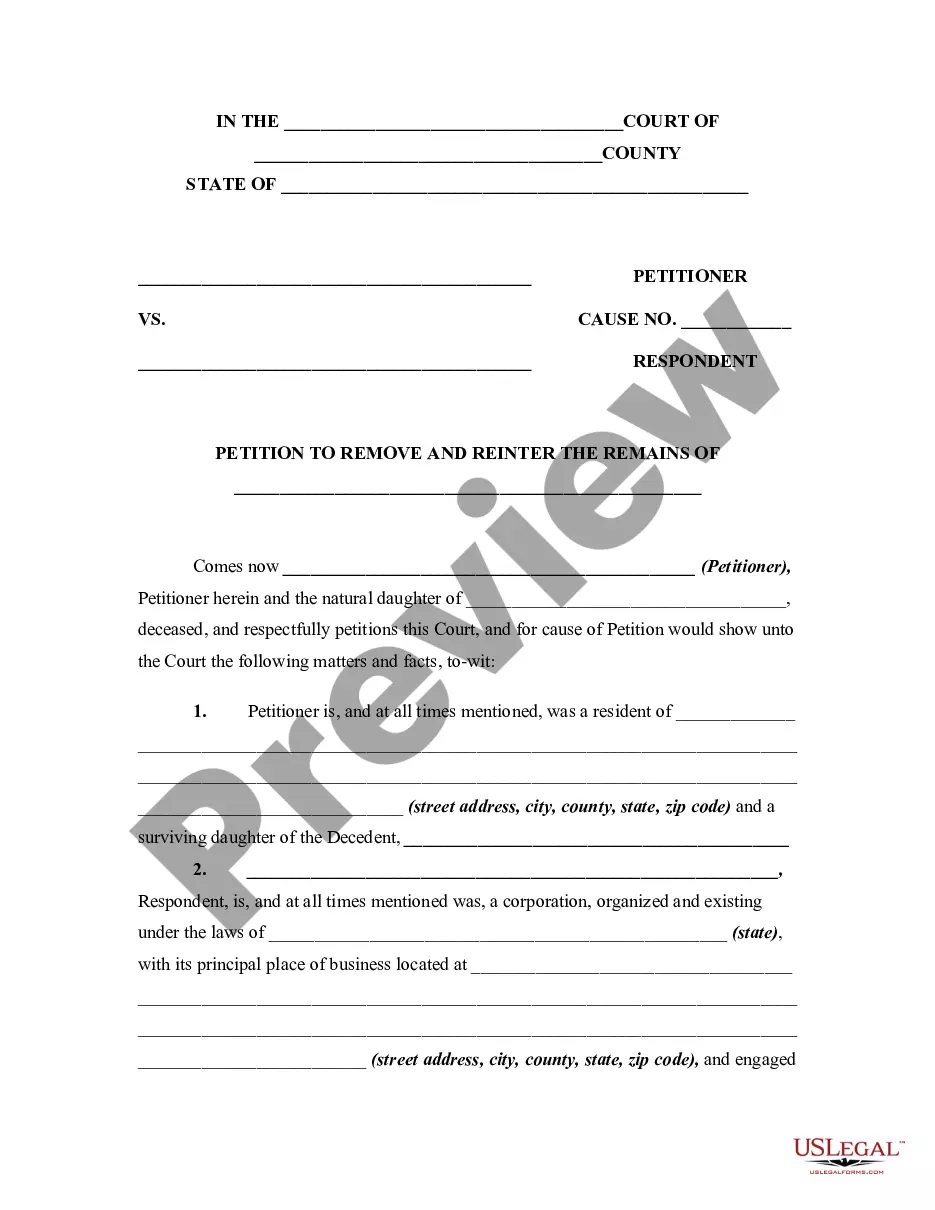
The Petition by Surviving Spouse to Change Place of Interment From Mausoleum to Family Plot in Same Cemetery is a legal document used by a surviving spouse to request the court's permission to relocate a deceased spouse's remains. This form is essential for those who wish to move a body from a mausoleum to a family plot within the same cemetery when consent from other stakeholders cannot be obtained. Unlike standard burial forms, this petition specifically addresses disinterment and reinterment issues, which are often sensitive and require careful handling of local laws and permissions.
Key components of this form
- Petitioner's details, including the relationship to the deceased
- Respondent's information, typically the cemetery corporation
- Details about the decedent, including date of death and burial location
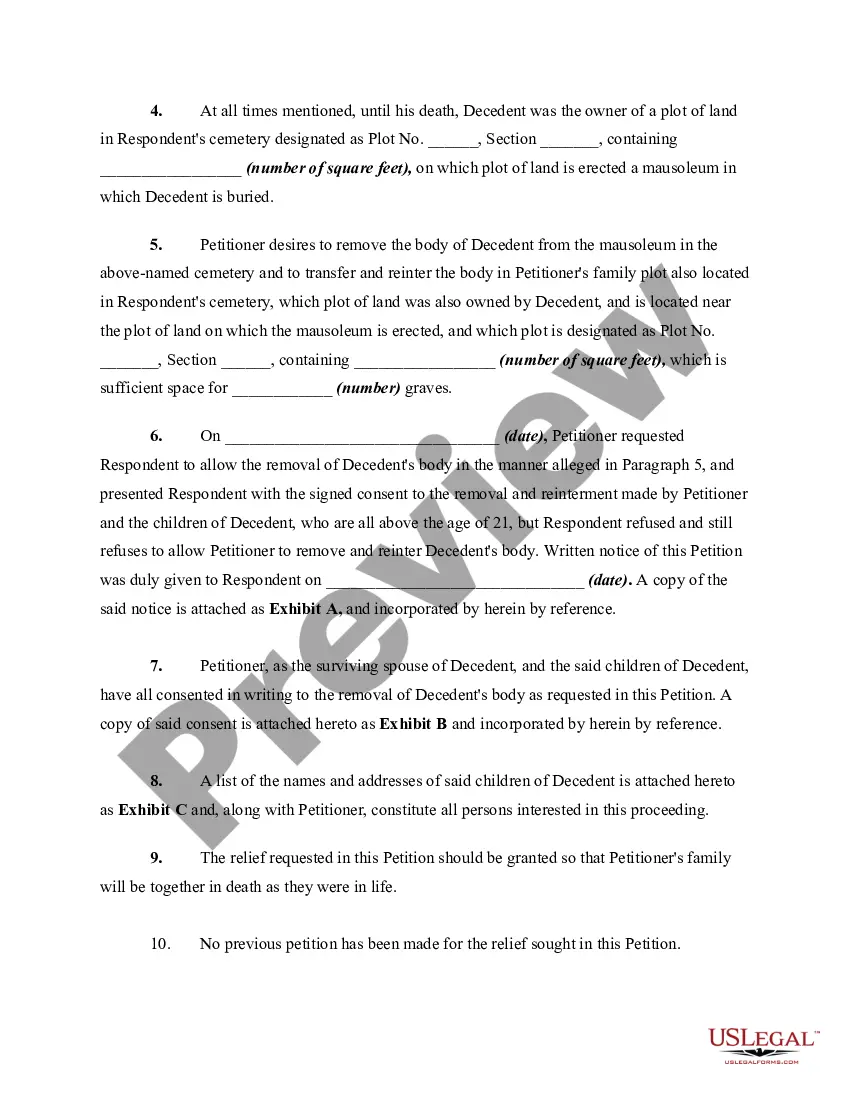
- Request for disinterment and the new burial location
- Consent details from the petitioner and other relevant family members
- Exhibits attached to support the request


When to use this form
This form should be used when a surviving spouse wants to relocate their deceased partner's remains from a mausoleum to a family plot but faces refusal from the cemetery. It is particularly relevant in situations where family dynamics necessitate a change in the burial plan, especially if there is a desire to keep the family members together in death as they were in life. Given the potential for legal complexities, utilizing this petition helps ensure the matter is handled with the necessary legal authority.
Who can use this document
This form is intended for:
- Surviving spouses seeking to relocate their deceased partner's remains
- Family members involved in the decision-making process regarding disinterment
- Individuals dealing with disputes related to burial rights in a cemetery
Steps to complete this form
- Identify the petitioner and ensure accurate details regarding the relationship to the deceased are included.
- Fill in the respondent's information as the cemetery corporation or entity.
- Provide details about the decedent, including the date of death and the initial burial plot location.
- Specify the desired new burial location in the family plot and confirm it has adequate space.
- List all relevant consents obtained from family members who agree with the relocation.
- Attach required exhibits, such as proof of consent and notifications given to the respondents.
Does this document require notarization?
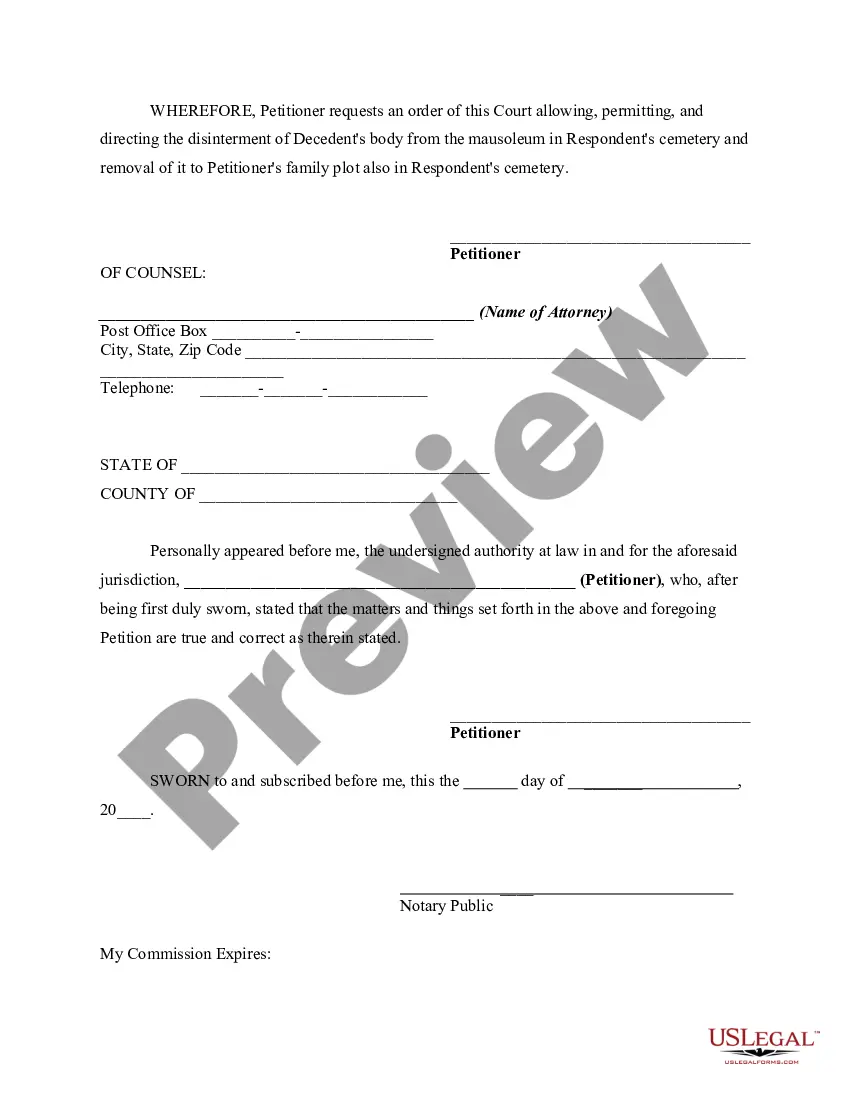
This form must be notarized to be legally valid. US Legal Forms provides secure online notarization powered by Notarize, allowing you to complete the process through a verified video call.
Avoid these common issues
- Failing to include complete information about the decedent or the burial locations.
- Not obtaining consent from all required family members, which could delay the process.
- Overlooking local laws governing disinterment procedures.
- Improperly completing the form, leading to potential rejection by the court.
Why complete this form online
- Convenient access to legal documents that can be downloaded and filled out at home.
- Editable forms allow users to customize their petitions according to specific needs.
- Reliability stemming from templates crafted by licensed attorneys, ensuring compliance with legal standards.
Legal use & context
- This petition must be filed in the appropriate probate or civil court that has jurisdiction over burial disputes.
- Approval from the court does not guarantee disinterment, as local laws regarding cemetery permissions still apply.
- Success often depends on showing reasonable justification for the relocation and obtaining proper consents.
What to keep in mind
- This form allows a surviving spouse to legally request the relocation of a deceased's remains.
- Ensure to gather all necessary consents and adhere to local laws for disinterment.
- The process can be sensitive and may require careful navigation of cemetery policies and court permissions.



Form popularity
FAQ
There may be paperwork you must fill out to obtain permission to exhume the body. Be aware that exhumation of a body is quite expensive.An embalmed body can be cremated. My mother wanted my father to be visible at his visitation, so at her wishes he was embalmed and shown at the funeral home.
When the lease is due to expire, the grave owner will be sent a letter, inviting them to renew for further periods. The owner can then opt to renew the exclusive rights of burial for a further term.Existing burials in the plot are not removed or disturbed, but remaining space in the plot may be resold.
What happens when the lease expires, on a new grave for 50 or 75 years? When you buy a grave you purchase the rights of burial in that grave for a set period of time. If the lease is not renewed, the burial rights will run out. No further internments may then be allowed in the grave.
If you want to exhume cremated remains from consecrated ground, you will need to get a Faculty (permission) from the Chancellor of the Diocese (the legal part of the church in that area).Therefore you will need to go to a Sheriff's court to have an exhumation granted, this can be expensive.
The exhumation order is issued by the Sheriff on petition of the Procurator Fiscal (Chapter 4) if crime is sus- pected. Private exhumations, for example for re-interment, are authorized by the Sheriff or Court of Session upon the applica- tion of a near relative.
The costs for exhuming the grave may cost $3,000-$5,000 for the exhumation itself as well as the presence of a funeral director at the exhumation, which can cost $1,000 or more. You may need a state permit for the exhumation, the cost of which varies from state to state.
Exhume means to dig up a dead body for medical investigation or other purposes. A person seeking to exhume a body must usually petition to have the body exhumed. Because of the general disinclination to disturb remains, a valid reason is required before exhumation will be allowed.
Exhumation licences. You need a licence to exhume both buried and cremated remains. In certain circumstances an environmental health officer may also be required at the site of exhumation. They will supervise the event and ensure that respect for the deceased person is maintained and that public health is protected.
You will need to contact the current cemetery and the new cemetery to coordinate plans for the transfer of the body. When having a body disinterred and moved, you may need to purchase a new casket for the transportation and reburial.