Affidavit by Adverse Possessor That Property Held Adversely and Claim of Title is Based on Grant of Ownership From Previous Owner - Squatters Rights
What is this form?
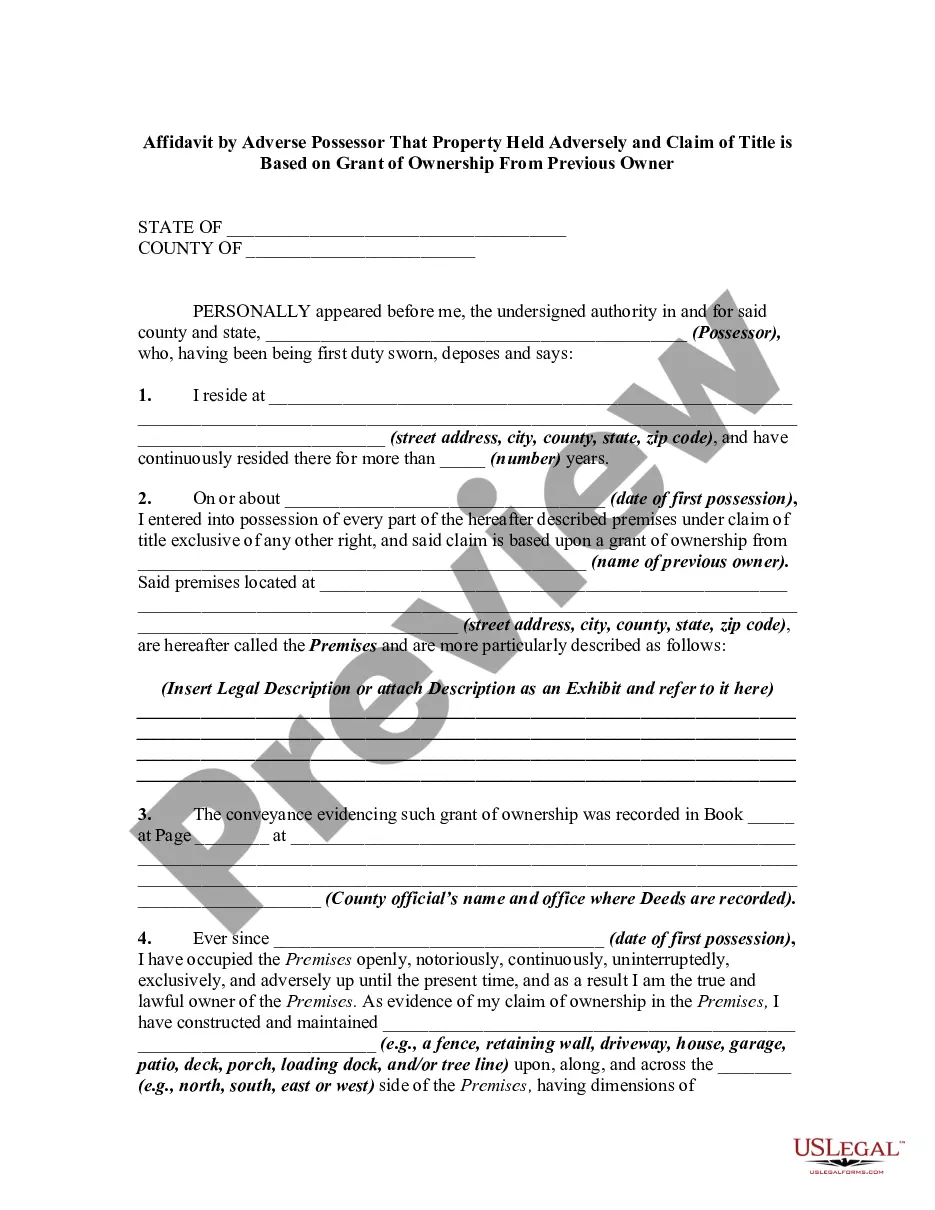
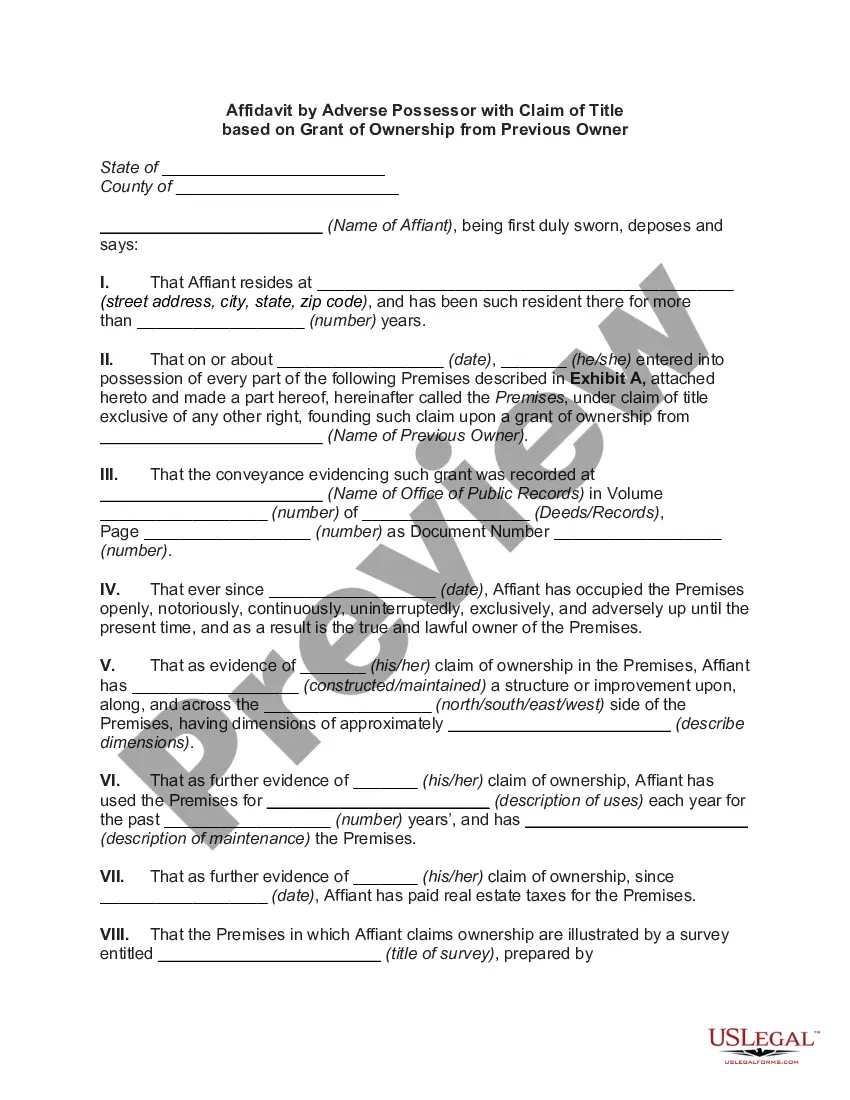
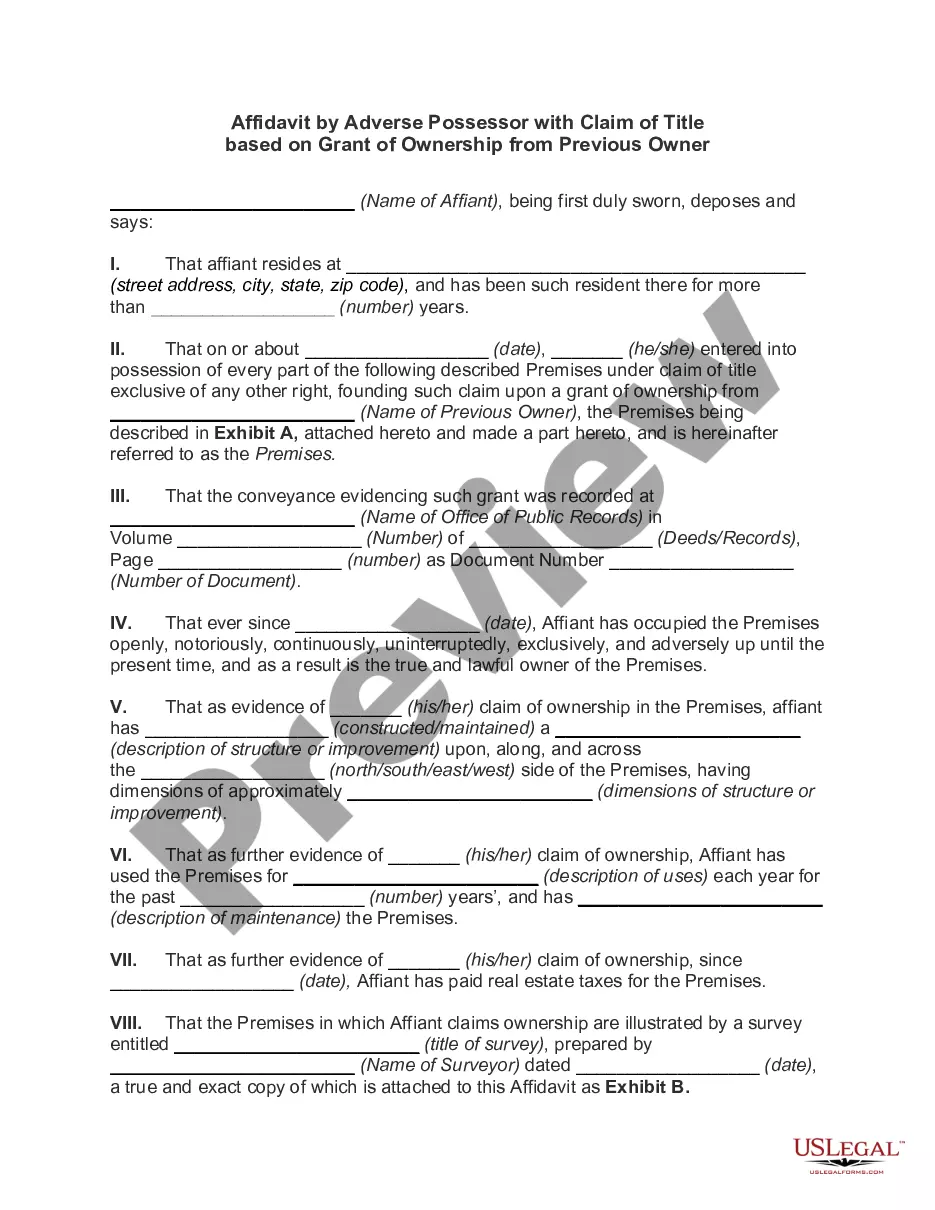
The Affidavit by Adverse Possessor That Property Held Adversely and Claim of Title is Based on Grant of Ownership From Previous Owner is a legal document that supports a claim of ownership over a property based on adverse possession. This form is used to assert that a person has lawfully taken control of the property, thus refuting any counterclaims by the original owner. Unlike other property claim forms, this affidavit specifically includes a declaration of the grant of ownership from a previous owner, substantiating the possessor's right to claim the property legally.
Key components of this form
- Personal details of the possessor, including residency information.
- Date of first possession and basis for the claim of ownership.
- Description of the property being claimed, including legal description.
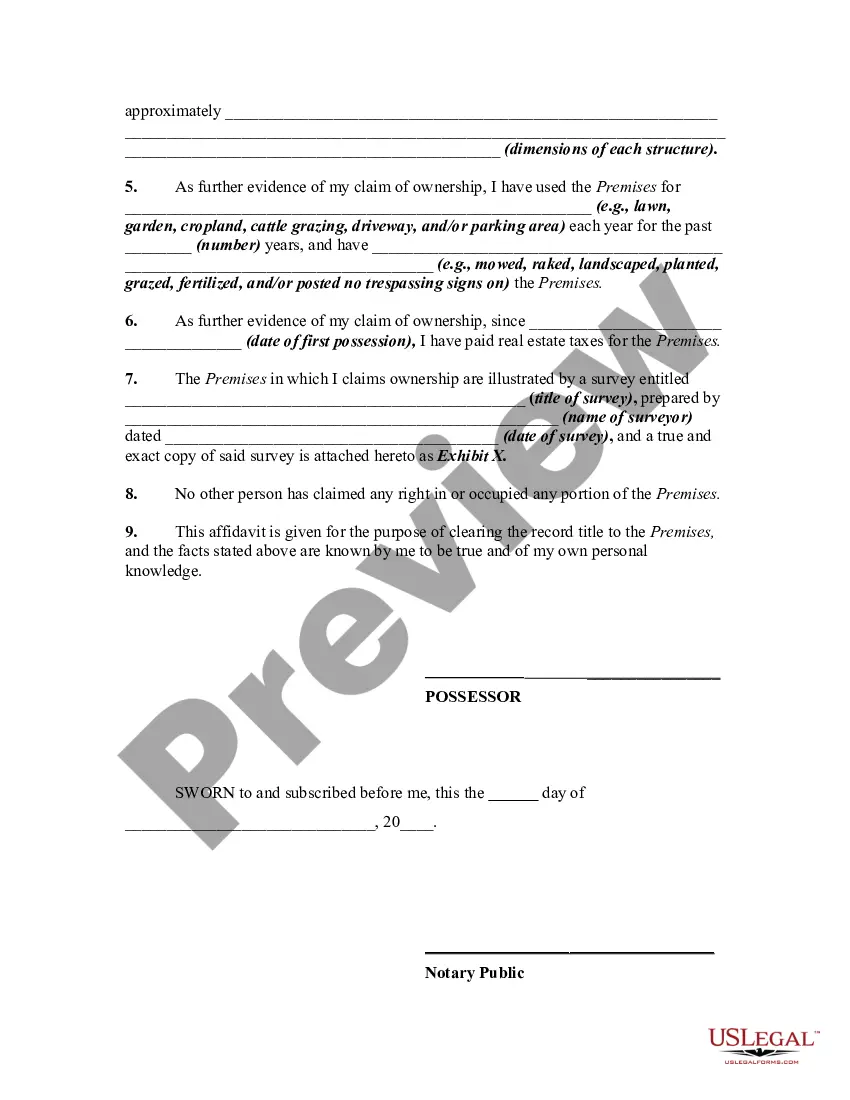
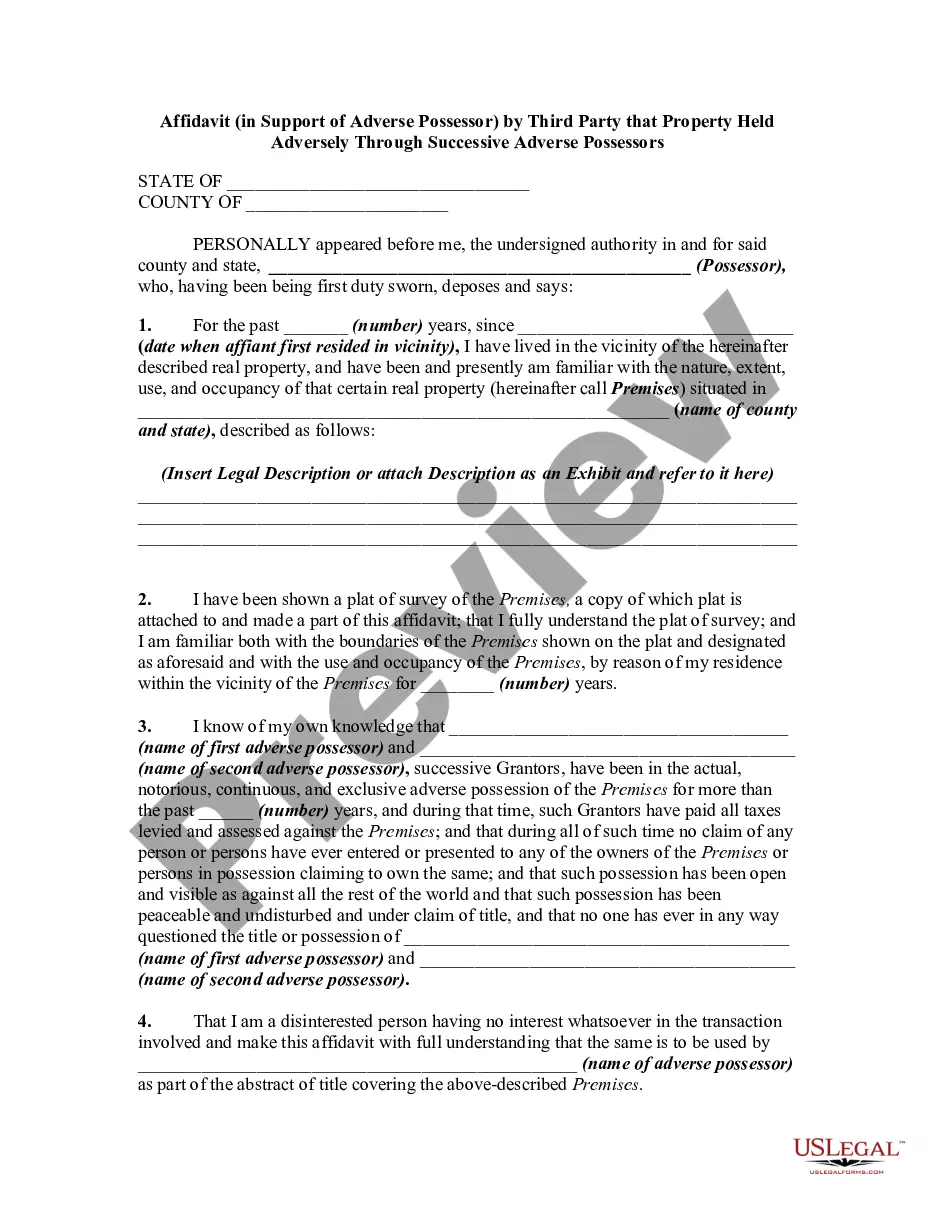
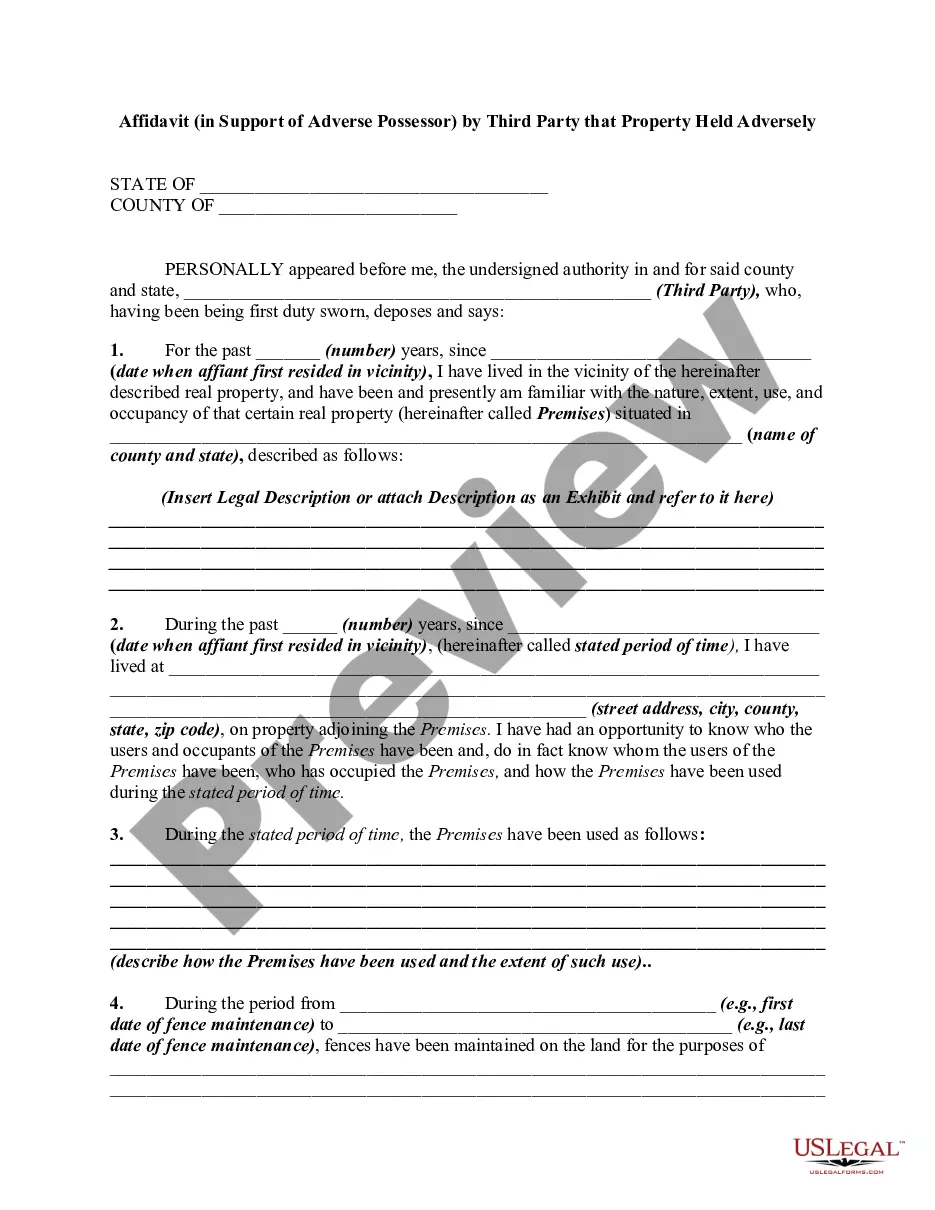
- Evidence of continuous and exclusive possession of the premises.
- Records of real estate tax payments and property usage.
- Notarization section for legal validation of the affidavit.

When to use this form
This form should be used when a person has occupied a property for a specified period as defined by state law and wishes to establish ownership through adverse possession. It is particularly relevant in situations where the original owner may dispute the possession or when legal clarity regarding ownership is needed to prevent future claims.
Intended users of this form
- Individuals claiming ownership of a property through adverse possession.
- Property occupants who have maintained exclusive possession for the required timeframe.
- Those who have documented evidence proving their claim, such as tax payments or property improvements.
Instructions for completing this form
- Enter your personal information and address in the designated fields.
- Specify the date you began possession of the property.
- Provide a detailed description of the property, including its legal description.
- List any physical improvements made to the property to support your claim.
- Document your use of the property over the years, including any tax payments.
- Sign the affidavit in the presence of a notary public for validation.
Notarization guidance
This form needs to be notarized to ensure legal validity. US Legal Forms provides secure online notarization powered by Notarize, allowing you to complete the process through a verified video call, available anytime.
Get your form ready online
Our built-in tools help you complete, sign, share, and store your documents in one place.
Make edits, fill in missing information, and update formatting in US Legal Forms—just like you would in MS Word.
Download a copy, print it, send it by email, or mail it via USPS—whatever works best for your next step.
Sign and collect signatures with our SignNow integration. Send to multiple recipients, set reminders, and more. Go Premium to unlock E-Sign.
If this form requires notarization, complete it online through a secure video call—no need to meet a notary in person or wait for an appointment.
We protect your documents and personal data by following strict security and privacy standards.
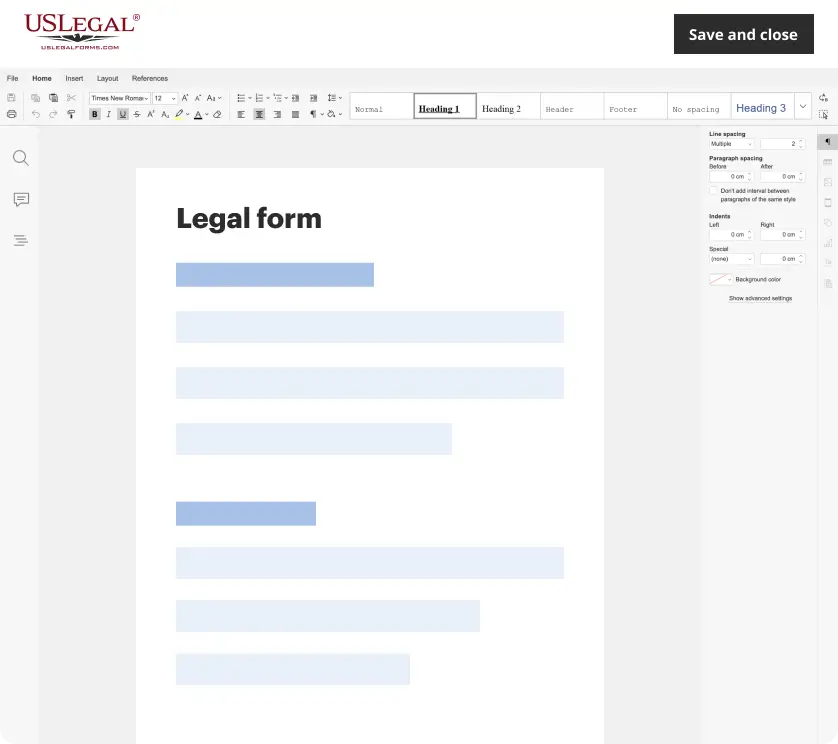
Make edits, fill in missing information, and update formatting in US Legal Forms—just like you would in MS Word.
Download a copy, print it, send it by email, or mail it via USPS—whatever works best for your next step.
Sign and collect signatures with our SignNow integration. Send to multiple recipients, set reminders, and more. Go Premium to unlock E-Sign.

If this form requires notarization, complete it online through a secure video call—no need to meet a notary in person or wait for an appointment.
We protect your documents and personal data by following strict security and privacy standards.
Avoid these common issues
- Failing to provide complete and accurate property descriptions.
- Not documenting continuous use or possession adequately.
- Neglecting to notarize the affidavit, which may render it invalid.
- Overlooking specific state requirements for adverse possession.
Why use this form online
- Convenient access to legal templates at any time.
- Customizable fields to suit individual circumstances.
- Secure storage and easy downloading of completed forms.
Looking for another form?
Form popularity
FAQ
In order to acquire title to property by adverse possession, a party must prove six elements by preponderance of the evidence: (1) visible appropriation and possession of the property; (2) that is open and notorious; (3) that is peaceable; (4) under a claim of right; (5) that is adverse and hostile to the claim of the
Open and Notorious. The person seeking adverse possession must occupy a parcel of land in a manner that is open and obvious. Exclusive. Hostile. Statutory Period. Continuous and Uninterrupted.
In order to establish a claim for adverse possession, a claimant must prove: (1) actual possession of the disputed property, (2) that is open and notorious, (3) peaceable, (4) under a claim of right; (5) that is consistently and continuously adverse or hostile to the claim of another person for the duration of the
In order to claim adverse possession, there are basic tests you have to meet. You have to prove that your use was open, notorious, hostile, actual, exclusive and continuous.Proving adverse possession is not easy, and you have to go to court to get a judge to rule.
Property held by the federal government, a state, or a MUNICIPAL CORPORATION cannot be taken by adverse possession. As long as the property has a public use, as with a highway or school property, its ownership cannot be lost through adverse possession.
Hire a lawyer. You might need to file a lawsuit to eject the trespasser from the landlord. Or you might want a court to order a structure removed from your property. You must act before the trespasser has been on your land long enough, under your state's law, to make a successful adverse possession claim.
Have been in factual possession of the land for the requisite limitation period (see below);have the necessary intention to possess and;been in possession without the paper title owner's consent (and been so for the requisite limitation period)
Open and Notorious. The person seeking adverse possession must occupy a parcel of land in a manner that is open and obvious.Exclusive.Hostile.Statutory Period.Continuous and Uninterrupted.