Agreement to Secure Employee for Information Technology Position
Overview of this form
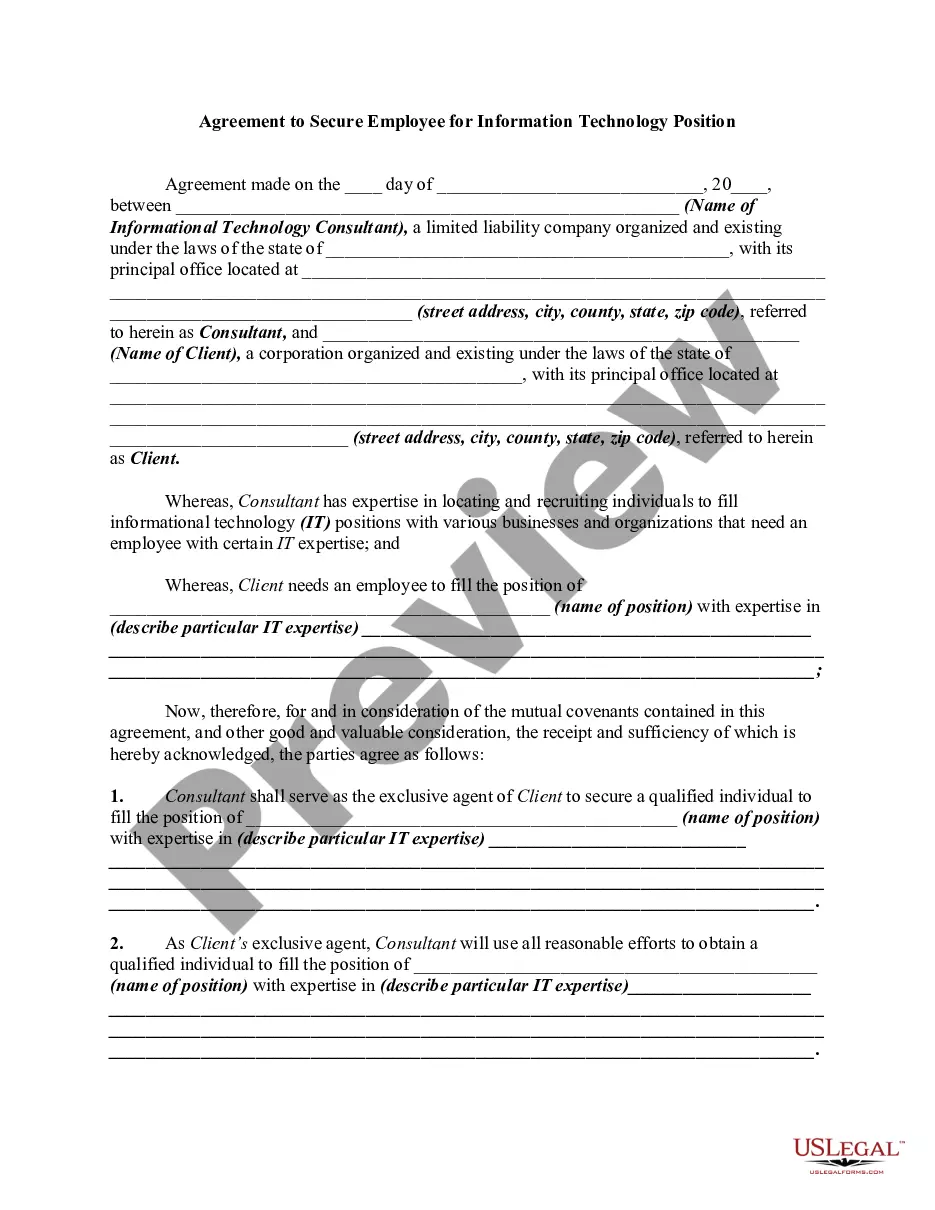
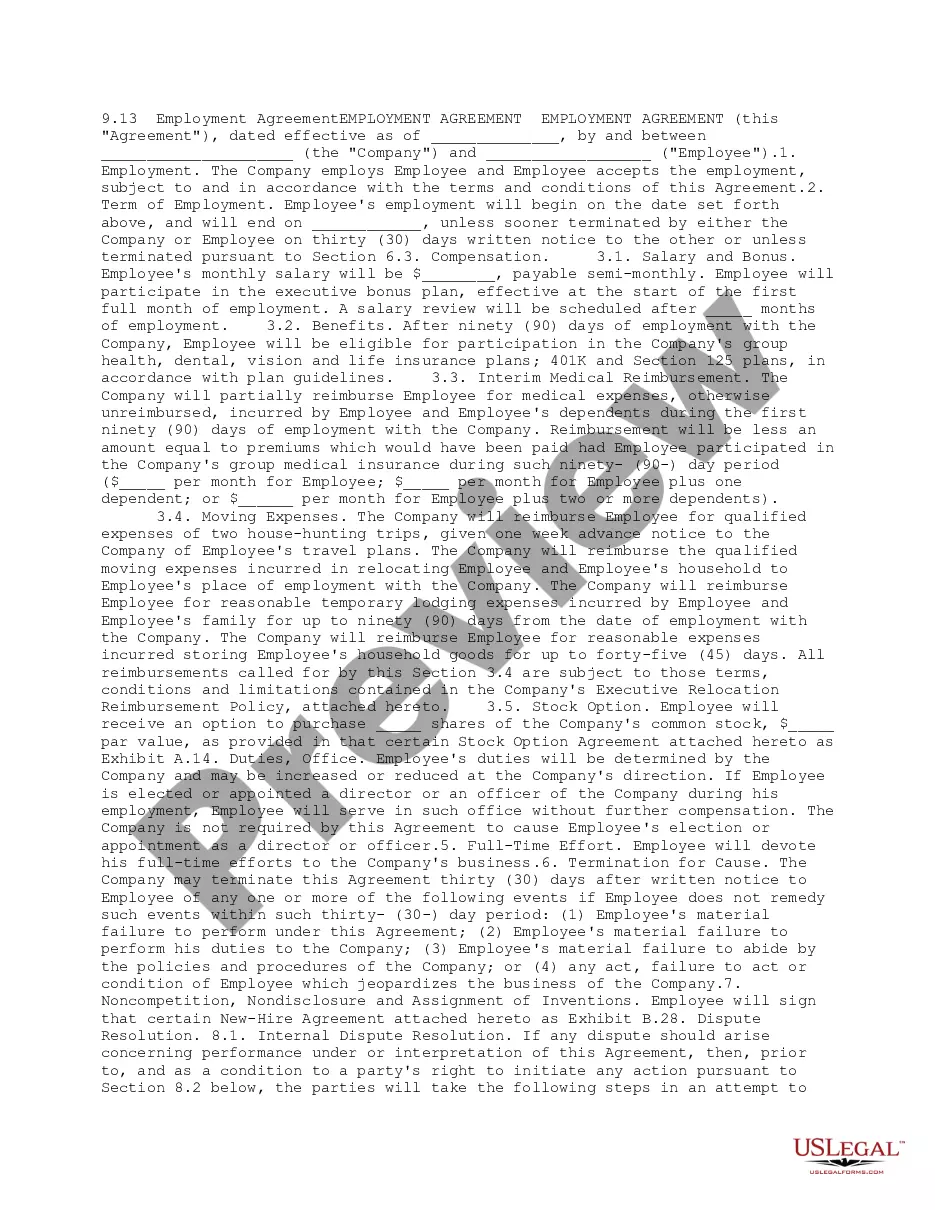
The Agreement to Secure Employee for Information Technology Position is a legal document that formalizes the relationship between a client and an IT recruitment consultant. This agreement ensures that the consultant acts as the exclusive agent for the client in finding a qualified candidate for an IT position. It differs from other hiring agreements by specifically focusing on information technology roles and the expertise required in this field.
Main sections of this form
- Identification of the parties involved: The consultant and the client.
- Description of the IT position to be filled and the required expertise.
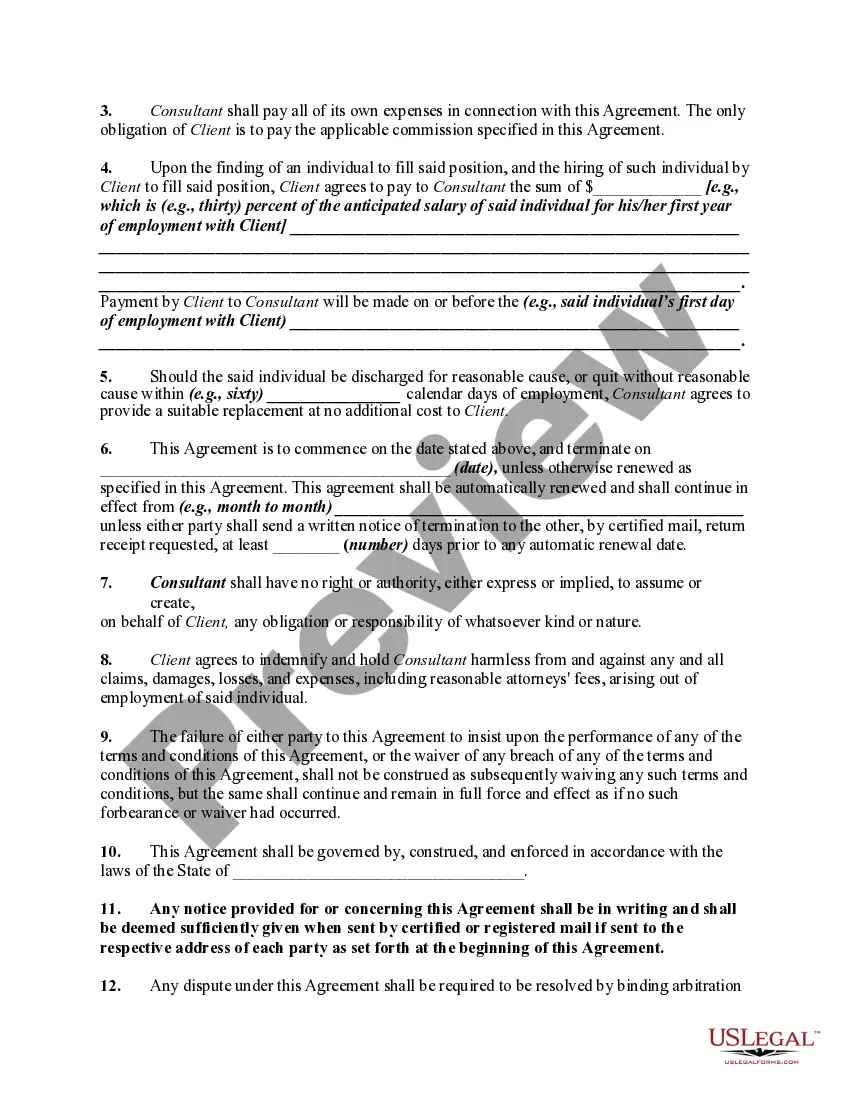
- Commission structure: Details of the payment due to the consultant upon hiring.
- Replacement policy in case of early termination of employment.
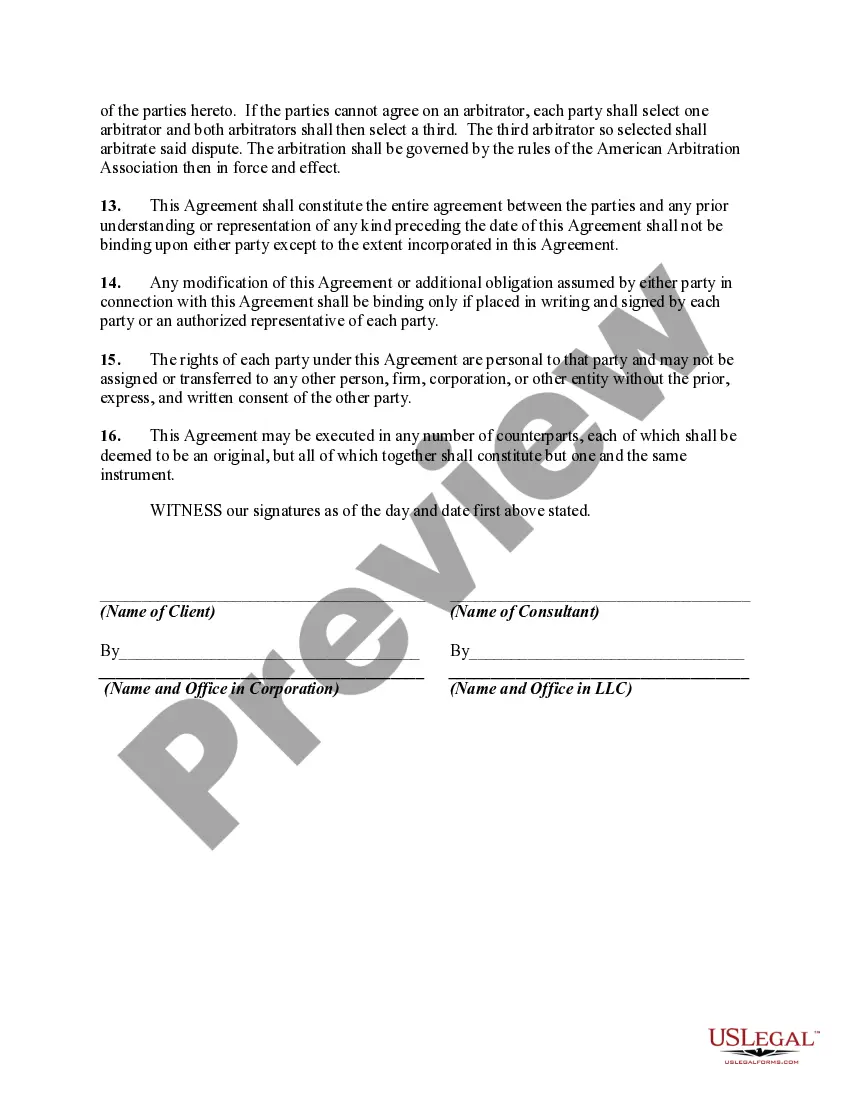
- Governing laws and arbitration procedures for resolving disputes.
When to use this document
This form is ideal for businesses seeking to hire an information technology professional but lacking the internal resources or expertise to conduct the recruitment process. It is also suitable for recruitment consultants tasked with securing qualified candidates for specialized IT roles.
Who this form is for
This agreement is suitable for:
- Companies or organizations looking to fill IT positions.
- Executive search firms specializing in information technology recruitment.
- HR professionals or hiring managers responsible for recruitment.
- Independent consultants assisting clients with tech recruitment.
Steps to complete this form
- Enter the date the agreement is made.
- Identify the information technology consultant and the client, including their legal names and addresses.
- Specify the IT position to be filled along with detailed required expertise.
- Outline the commission rate based on the candidate's expected salary.
- Include termination and replacement policies as well as the effective date of the agreement.
Notarization guidance
This form usually doesn’t need to be notarized. However, local laws or specific transactions may require it. Our online notarization service, powered by Notarize, lets you complete it remotely through a secure video session, available 24/7.
Get your form ready online
Our built-in tools help you complete, sign, share, and store your documents in one place.
Make edits, fill in missing information, and update formatting in US Legal Forms—just like you would in MS Word.
Download a copy, print it, send it by email, or mail it via USPS—whatever works best for your next step.
Sign and collect signatures with our SignNow integration. Send to multiple recipients, set reminders, and more. Go Premium to unlock E-Sign.
If this form requires notarization, complete it online through a secure video call—no need to meet a notary in person or wait for an appointment.
We protect your documents and personal data by following strict security and privacy standards.

Make edits, fill in missing information, and update formatting in US Legal Forms—just like you would in MS Word.

Download a copy, print it, send it by email, or mail it via USPS—whatever works best for your next step.

Sign and collect signatures with our SignNow integration. Send to multiple recipients, set reminders, and more. Go Premium to unlock E-Sign.

If this form requires notarization, complete it online through a secure video call—no need to meet a notary in person or wait for an appointment.

We protect your documents and personal data by following strict security and privacy standards.
Mistakes to watch out for
- Failing to clearly define the IT position and required qualifications.
- Not specifying the commission structure or payment terms sufficiently.
- Omitting the replacement policy for early terminations.
- Neglecting to include dates or signature lines for both parties.
Why complete this form online
- Convenience of downloading and printing the form at your own pace.
- Easy customization to fit specific needs and state requirements.
- Access to legally reviewed templates drafted by licensed attorneys.
- Time-saving, as the form is readily available without the need for legal consultations.
Legal use & context
- This form serves as a binding agreement once signed by both parties.
- It outlines obligations and protects both parties in the recruitment process.
- Enforceability of the terms may vary based on state law and jurisdictional nuances.
Main things to remember
- This agreement formalizes the recruitment relationship for IT positions.
- Clear definitions and payment terms are crucial for effectiveness.
- Consultants are responsible for their expenses, with clients only paying the agreed commission.
- Replacement in case of early termination is included as a protective measure for the client.
Looking for another form?
Form popularity
FAQ
Write the Title. When you proceed to type out your employment agreement, you should title your draft. State the Parties. Every employment agreement needs to clearly identify and state the parties. List Terms and Conditions. Outline Position Duties. Be Clear on Compensation. Add Other Clauses. Use These Contract Terms.
The purpose of a confidentiality agreement, which is also referred to as a nondisclosure agreement or NDA, is to protect information exchanged between two or more parties. Anyone who signs a confidentiality agreement is promising to keep the relevant information secret.
If an NDA lists extreme punishments for breaking the confidentiality agreement, you shouldn't sign it. A common consequence for breach of contract under an NDA is termination of employment. Be aware of what is considered a breach of contract.
In most cases, confidentiality agreements are signed when an individual is first hired and are valid through the termination of their employment or, in some cases, a period of time after employment ends. However, in some cases, you may be required to sign a confidentiality agreement prior to an interview.
To prevent employees from revealing sensitive information that could jeopardize your business, you might have them sign an employee confidentiality agreement. Businesses use employee confidentiality agreements to protect their innovative ideas, effective processes, unique products, or customer information.
Job information. Compensation and benefits. Time off, sick days, and vacation policy. Employee classification. The schedule and employment period. Confidentiality agreement. A technology privacy policy. Termination terms and conditions.
A confidentiality agreement is a written legal contract between an employer and an employee. The confidentiality agreement lays out binding terms and conditions that prohibit the employee from disclosing company confidential and proprietary information.
An employer will often require an employee to sign an NDA because it allows their company to operate at a higher level, with less risk.Understand, your employer is not asking you to sign an NDA out of mistrust, they are asking you to sign one because it is essential to conducting business smoothly and efficiently.