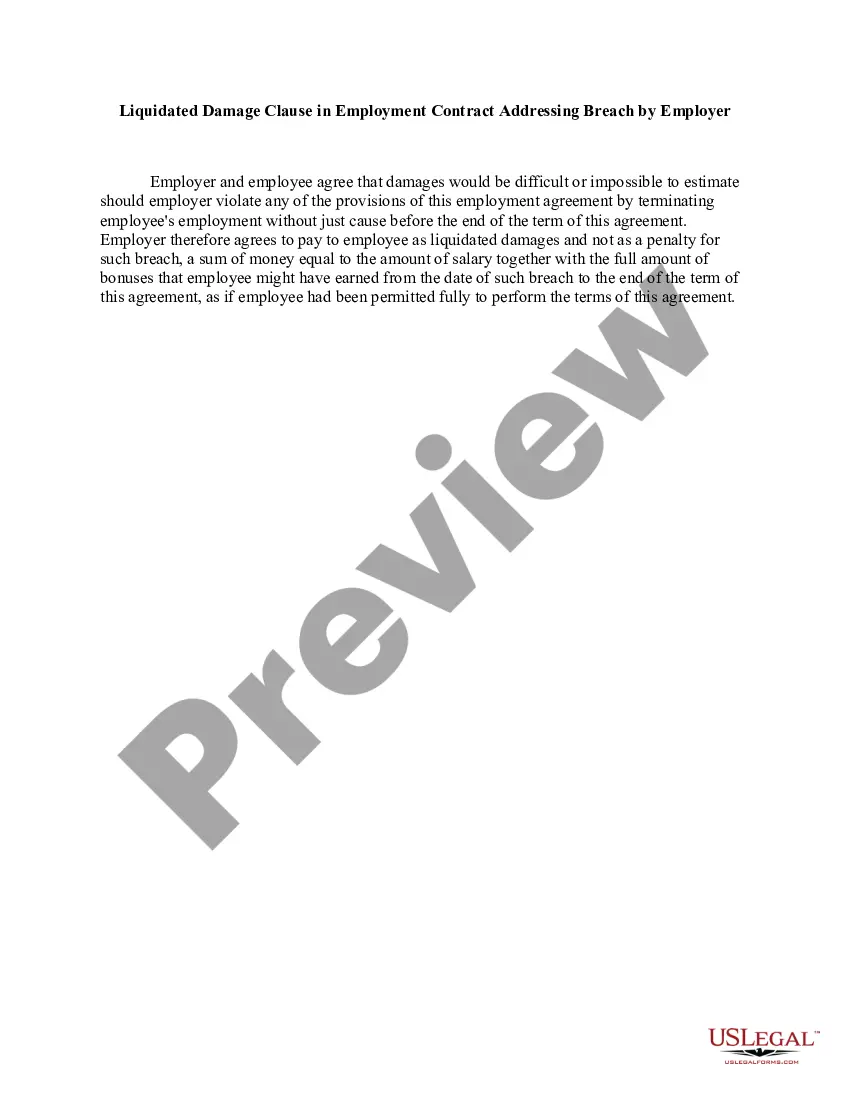
Liquidated Damage Clause in Employment Contract Addressing Breach by Employer
Understanding this form
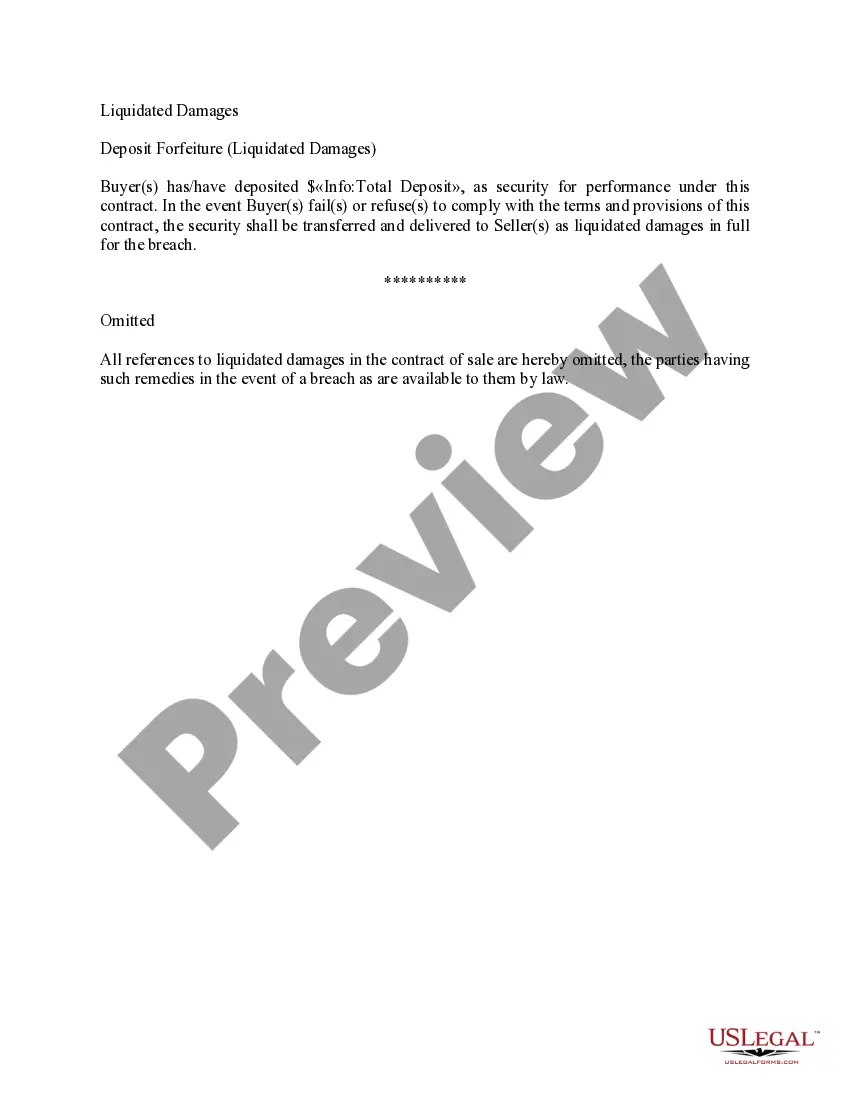
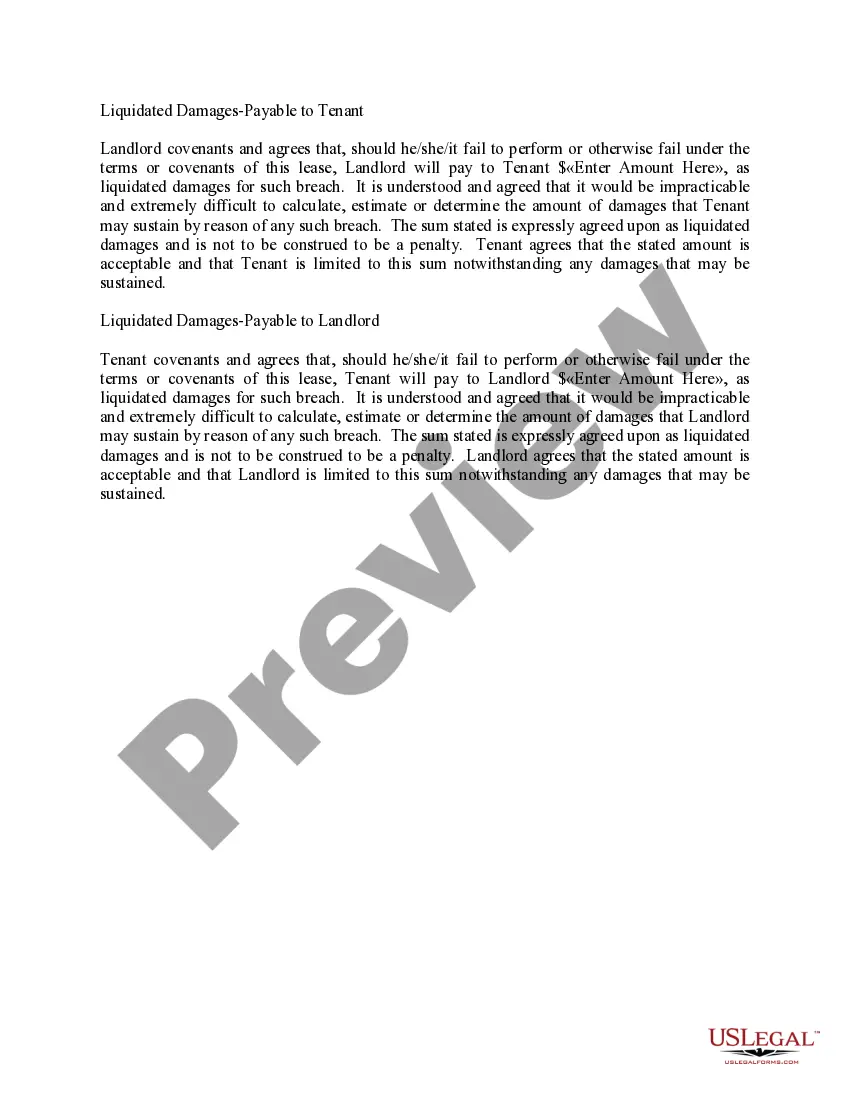
This form is a Liquidated Damage Clause in an employment contract specifically designed to address breaches by the employer. It outlines the agreed-upon amount of damages an employer will pay if they terminate an employee's employment without just cause. Unlike standard contractual agreements, which may require proof of actual damages, this clause allows for predetermined compensation, ensuring clarity and reducing disputes following a breach.
What’s included in this form
- Identification of the employer and employee
- Specific terms of the employment agreement and duration
- Conditions under which the liquidated damages are applicable
- Liquidated damage amount specified as a sum of salary and bonuses
- Section clarifying the non-penalty nature of the liquidated damages
Situations where this form applies
This form should be used when an employer wants to clearly state the consequences of terminating an employee's contract prematurely without just cause. It is particularly useful in situations where estimating actual damages may be difficult, ensuring that both parties have clarity on the potential financial repercussions of a breach.
Who should use this form
This form is designed for:
- Employers looking to protect their interests in employment agreements
- Employees wanting assurance regarding compensation if terminated unjustly
- Legal professionals drafting or reviewing employment contracts
How to complete this form
- Identify the parties involved by entering the names of the employer and employee.
- Detail the employment agreement terms, including start date and duration.
- Specify the conditions under which the liquidated damages will apply.
- Enter the agreed-upon amount for liquidated damages.
- Include signatures of both parties for validation.
Does this document require notarization?
This form does not typically require notarization unless specified by local law. It is important to check the requirements in your jurisdiction to ensure that the document is valid and enforceable.
Get your form ready online
Our built-in tools help you complete, sign, share, and store your documents in one place.
Make edits, fill in missing information, and update formatting in US Legal Forms—just like you would in MS Word.
Download a copy, print it, send it by email, or mail it via USPS—whatever works best for your next step.
Sign and collect signatures with our SignNow integration. Send to multiple recipients, set reminders, and more. Go Premium to unlock E-Sign.
If this form requires notarization, complete it online through a secure video call—no need to meet a notary in person or wait for an appointment.
We protect your documents and personal data by following strict security and privacy standards.

Make edits, fill in missing information, and update formatting in US Legal Forms—just like you would in MS Word.

Download a copy, print it, send it by email, or mail it via USPS—whatever works best for your next step.

Sign and collect signatures with our SignNow integration. Send to multiple recipients, set reminders, and more. Go Premium to unlock E-Sign.

If this form requires notarization, complete it online through a secure video call—no need to meet a notary in person or wait for an appointment.

We protect your documents and personal data by following strict security and privacy standards.
Mistakes to watch out for
- Failing to clearly define the terms of "just cause" for termination.
- Setting a liquidated damages amount that is excessively high, which may render the clause void.
- Not having both parties sign the agreement, leading to possible disputes about enforceability.
Benefits of using this form online
- Convenience of downloading and filling out the form at your own pace.
- Editability allows users to customize terms to fit specific employment situations.
- Reliability of a legally vetted template drafted by licensed attorneys.
Legal use & context
- The liquidated damage clause helps minimize disputes over damages in court.
- Courts may strike down unreasonable amounts as penalties, so it's essential to keep the amount reasonable.
- Documenting terms properly strengthens enforceability and accountability for both parties.
- The Liquidated Damage Clause provides a predetermined compensation framework for breaches of the employment contract.
- It simplifies legal processes by offering clarity on damages without needing extensive proof.
- Careful drafting and understanding of local laws can prevent disputes about the clauseâs enforceability.
Looking for another form?


Form popularity
FAQ
If your employer broke your employment contract, you may have the right to collect "damages" (the legal term for money). Damages are intended to compensate you for the financial losses caused by the contract breach.
Is Your Liquidated Damages Clause Lawful in California? In California, it is possible to enforce a liquidated damages clause. The amount agreed to at the time that you and the other party sign the contract must be a reasonable estimate of losses that may be suffered should they fail to perform.
Liquidated damages are a means of compensation for the breach of a contract.However, the purpose of a liquidated damages clause is not to punish the person that breaches the contract. Example: Gerald has agreed to purchase Reta's home for $50,000. As part of the agreement, he must put down a deposit of $5,000.
Under the law, once a contract is breached, the guilty party must remedy the breach. The primary solutions are damages, specific performance, or contract cancellation and restitution. Compensatory damages: The goal with compensatory damages is to make the non-breaching party whole as if the breach never happened.
If a breach involves failure to pay wages, remedies may include a monetary damages award paid by the employer to the employee in order to reimburse them for the missing wages. In general, most contract damages are limited to expectation damages, which are the terms of compensation detailed in the employment agreement.
You can take your employer to court for breach of contract, but legal fees can be expensive and you can only claim for any financial loss you have suffered. If the breach has just hurt your feelings, it may not be worth taking any further action. Your employer may try to change your contract without your agreement.
Further liquidated damages are only recoverable for a period when the Contractor is in a position to complete the work. Therefore, after termination, only general damages will be recoverable.
When a breach of contract occurs or is alleged, one or both of the parties may wish to have the contract enforced on its terms, or may try to recover for any financial harm caused by the alleged breach. If a dispute over a contract arises and informal attempts at resolution fail, the most common next step is a lawsuit.
Can an employer sue an employee for breach of contract? The short answer is yes.So for example, if an employee quits their job without working their notice period and it leads to financial losses, you can sue for the losses.