Petition by Adjoining Property Owner to Enjoin Violation of Zoning Ordinance
What this document covers
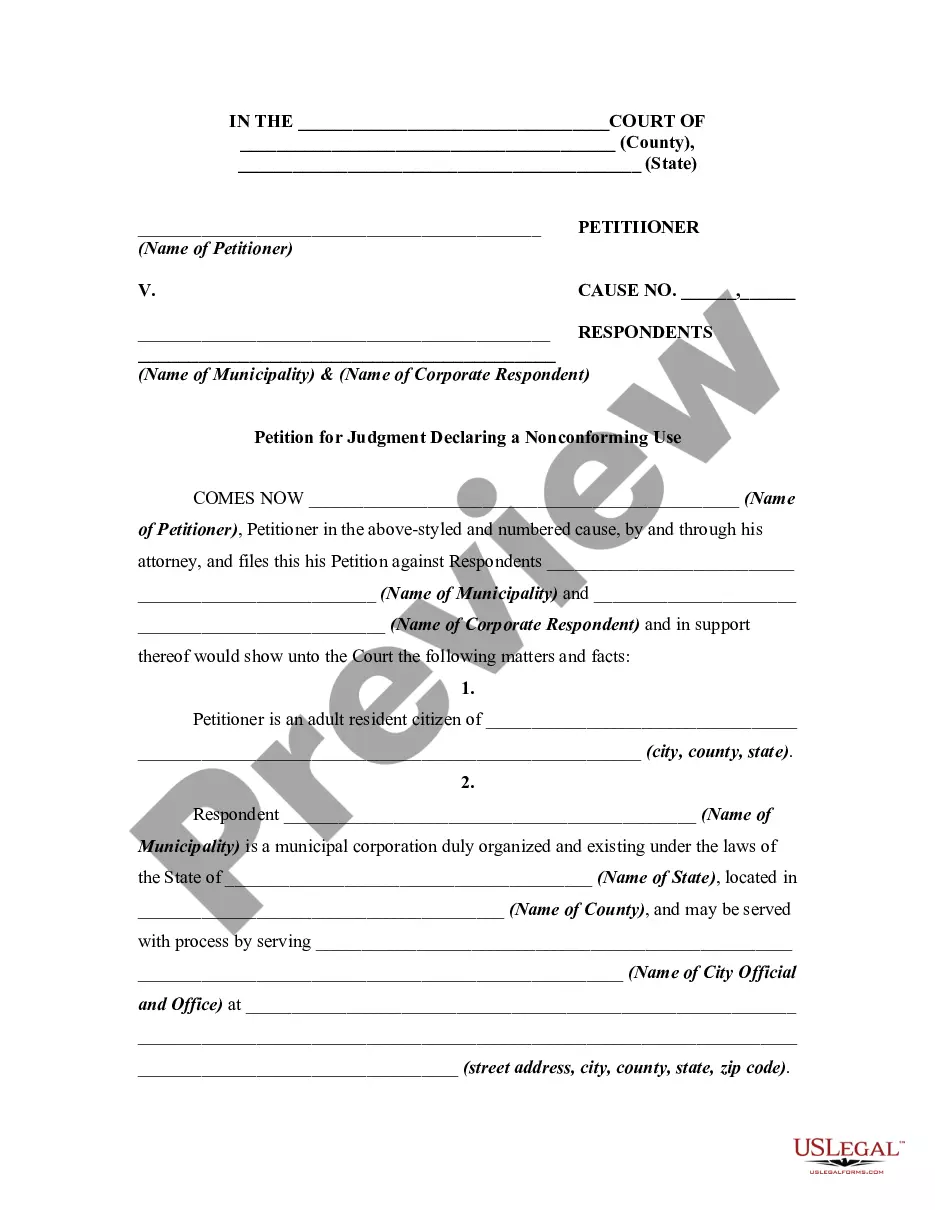
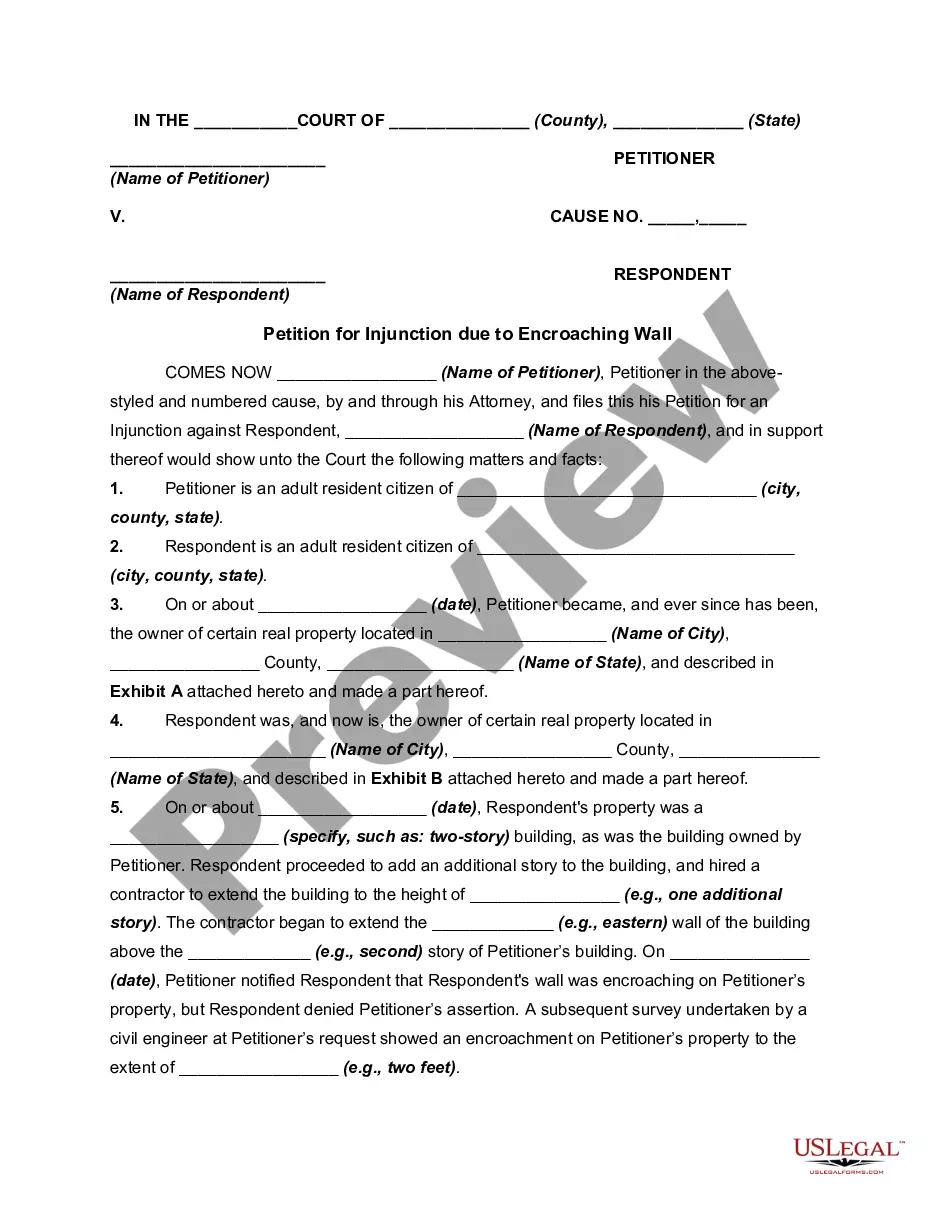
The Petition by Adjoining Property Owner to Enjoin Violation of Zoning Ordinance is a legal document used by property owners to request a court order that prevents a neighboring property owner from violating local zoning laws. This form, designed in accordance with the "notice pleadings" format, is crucial for protecting the legal rights of property owners affected by such violations. Unlike other legal petitions, this form specifically addresses zoning issues and the consequences of noncompliance in the relevant jurisdiction.
What’s included in this form
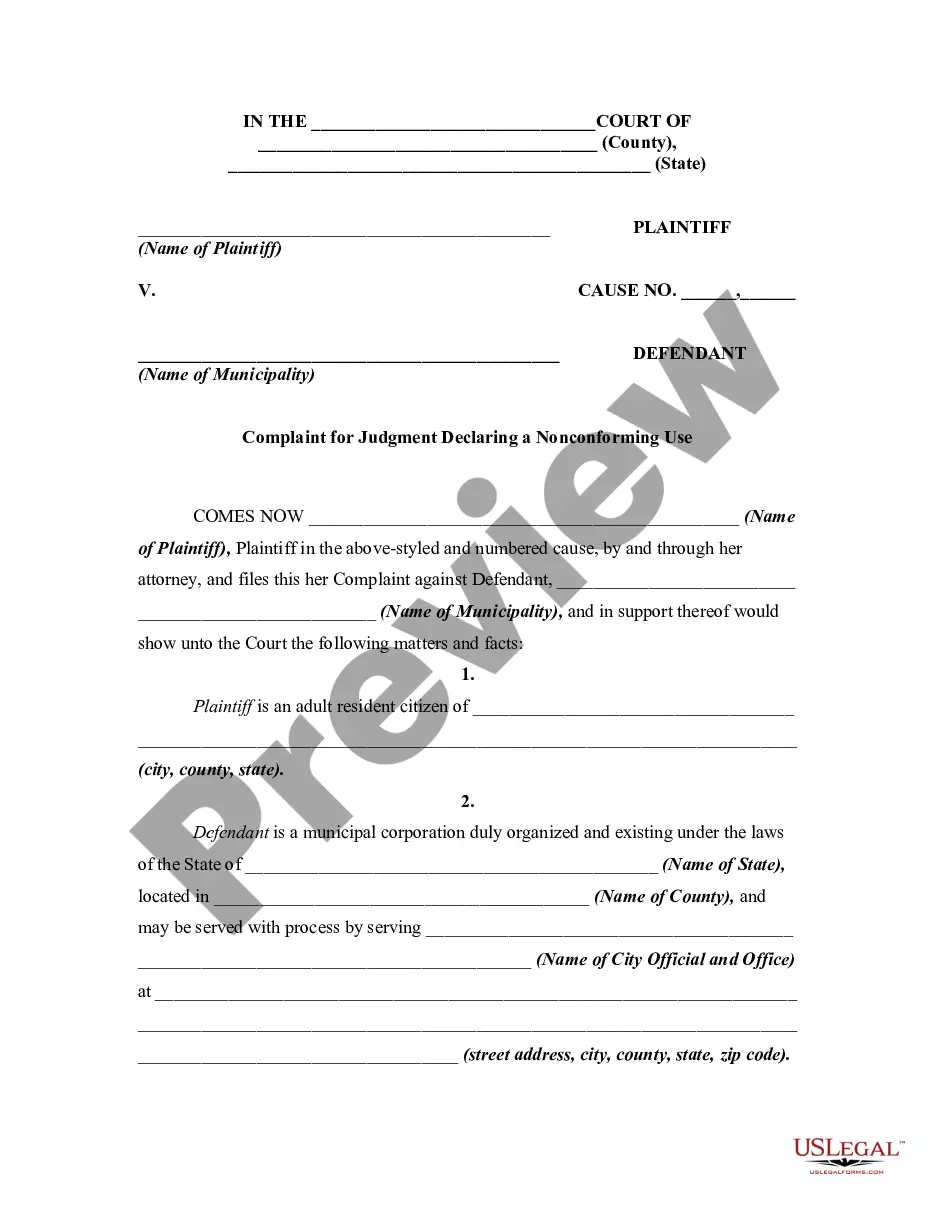
- Identification of the petitioner and respondents, including municipalities and corporate entities.
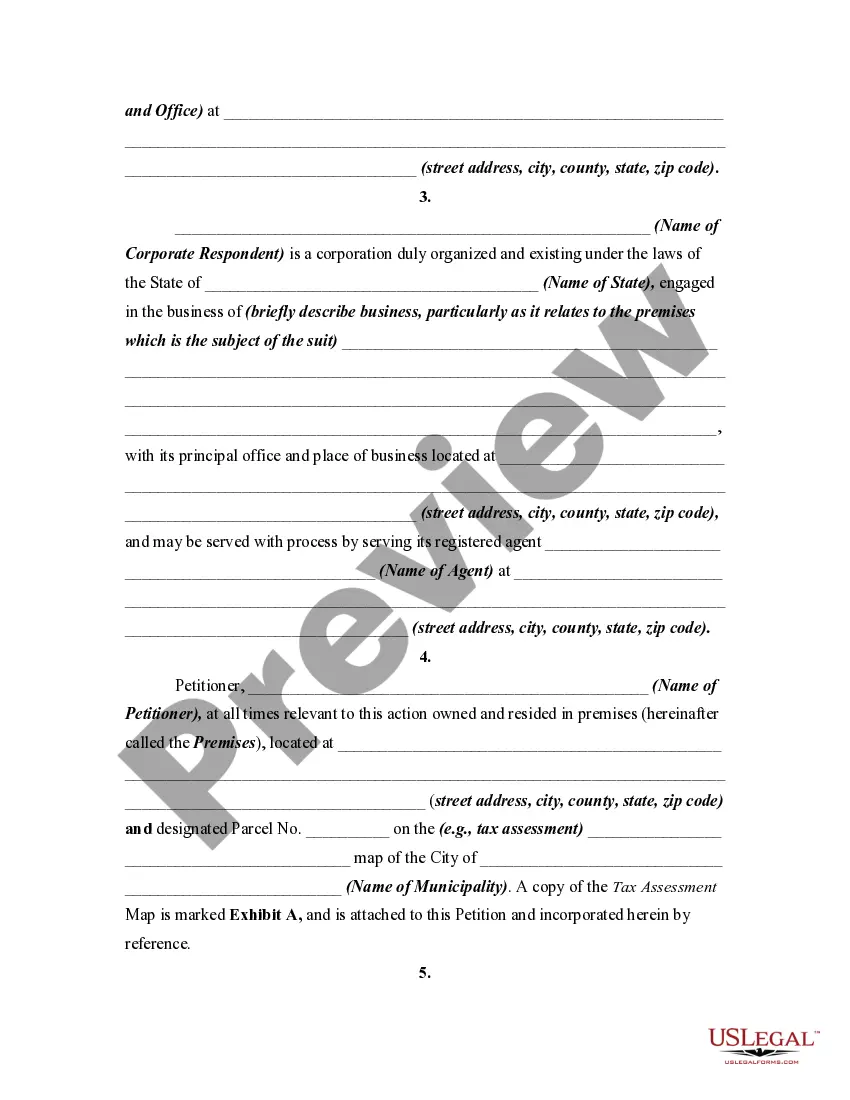
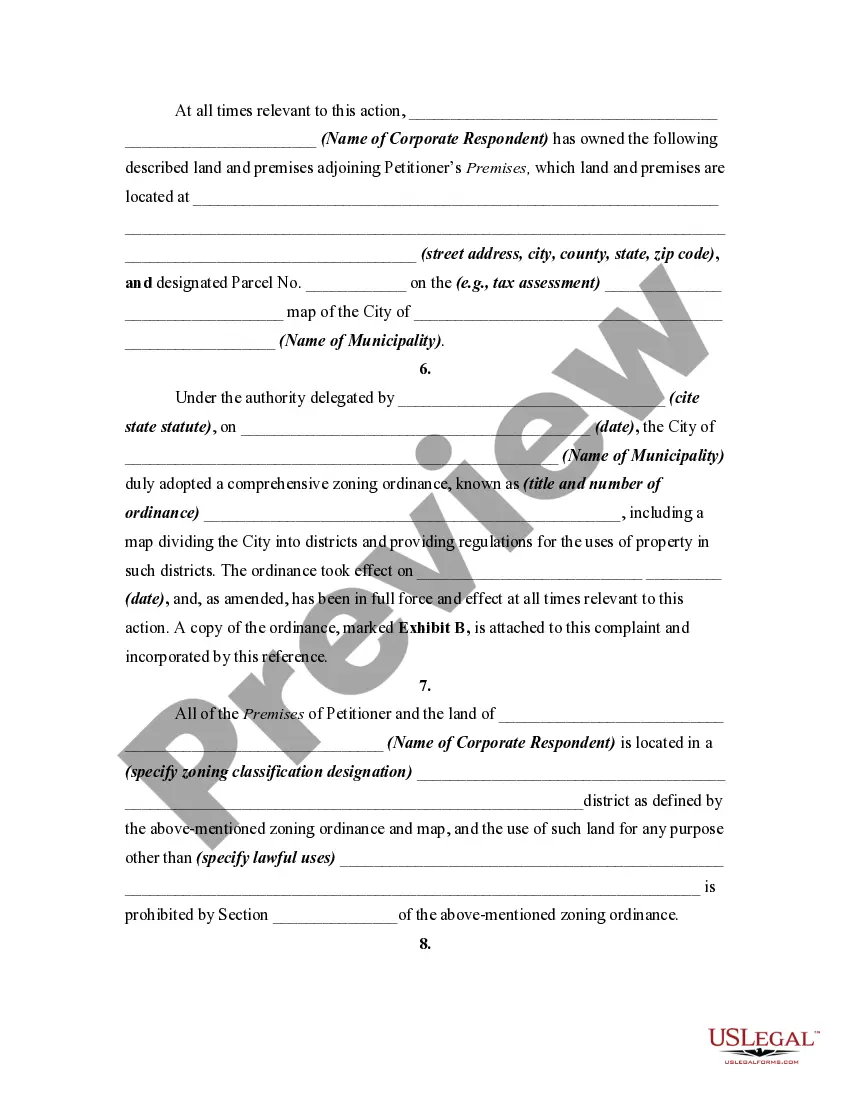
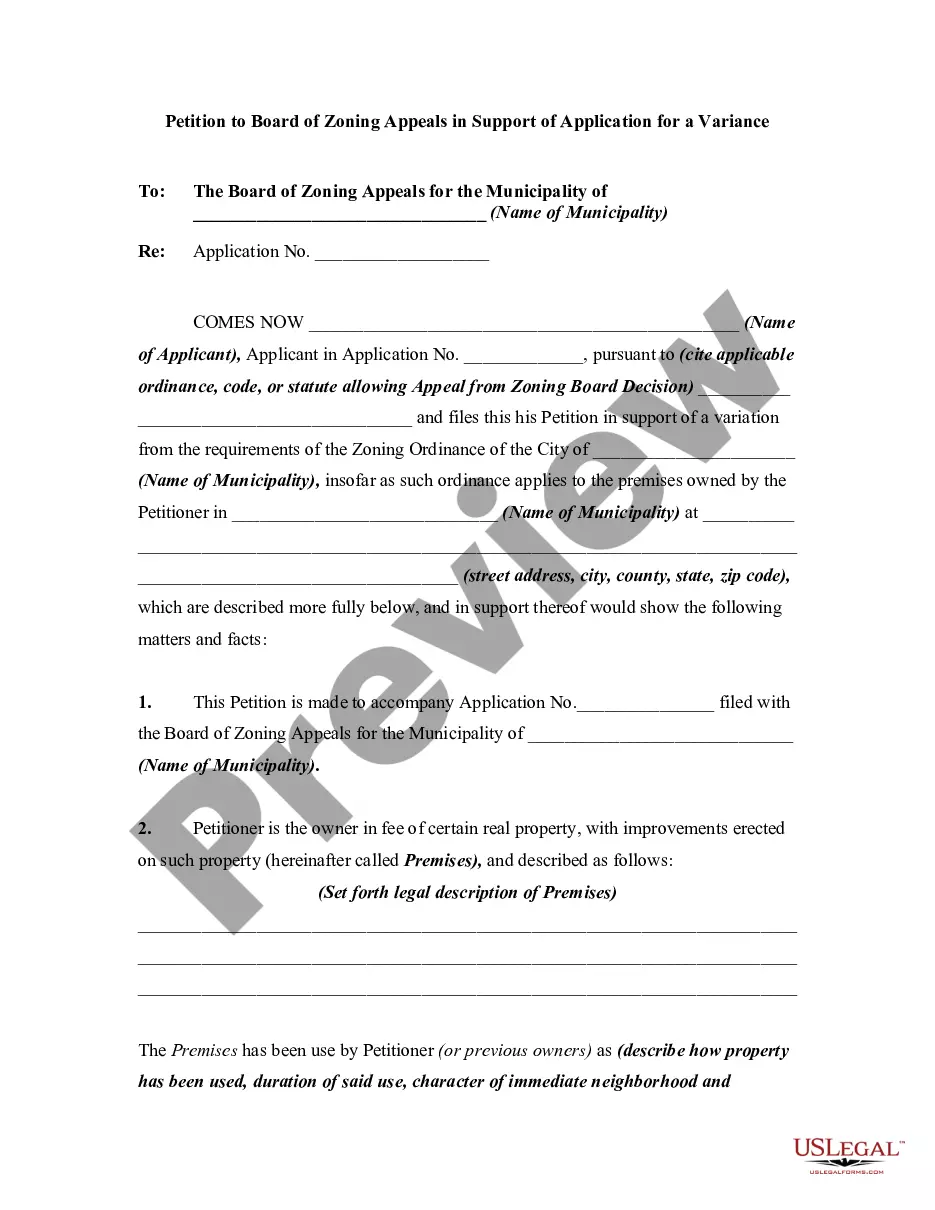
- Details regarding the zoning ordinance and its provisions relevant to the case.
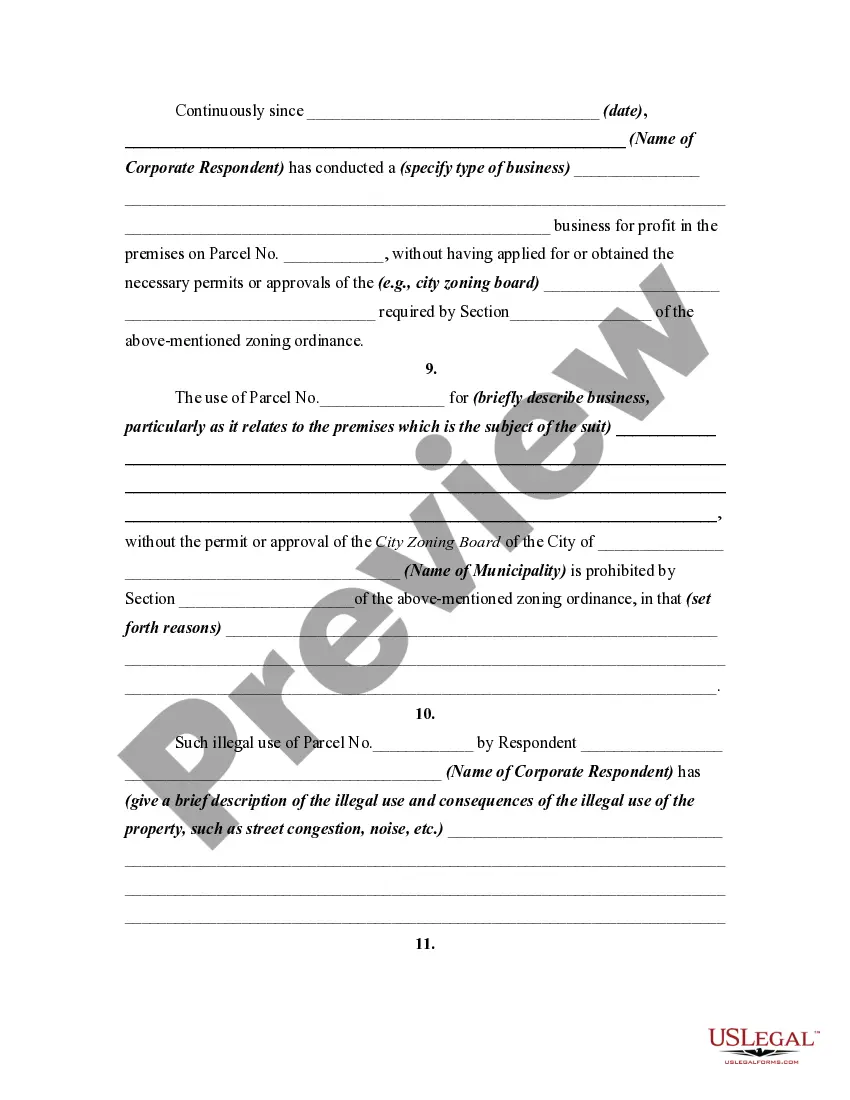
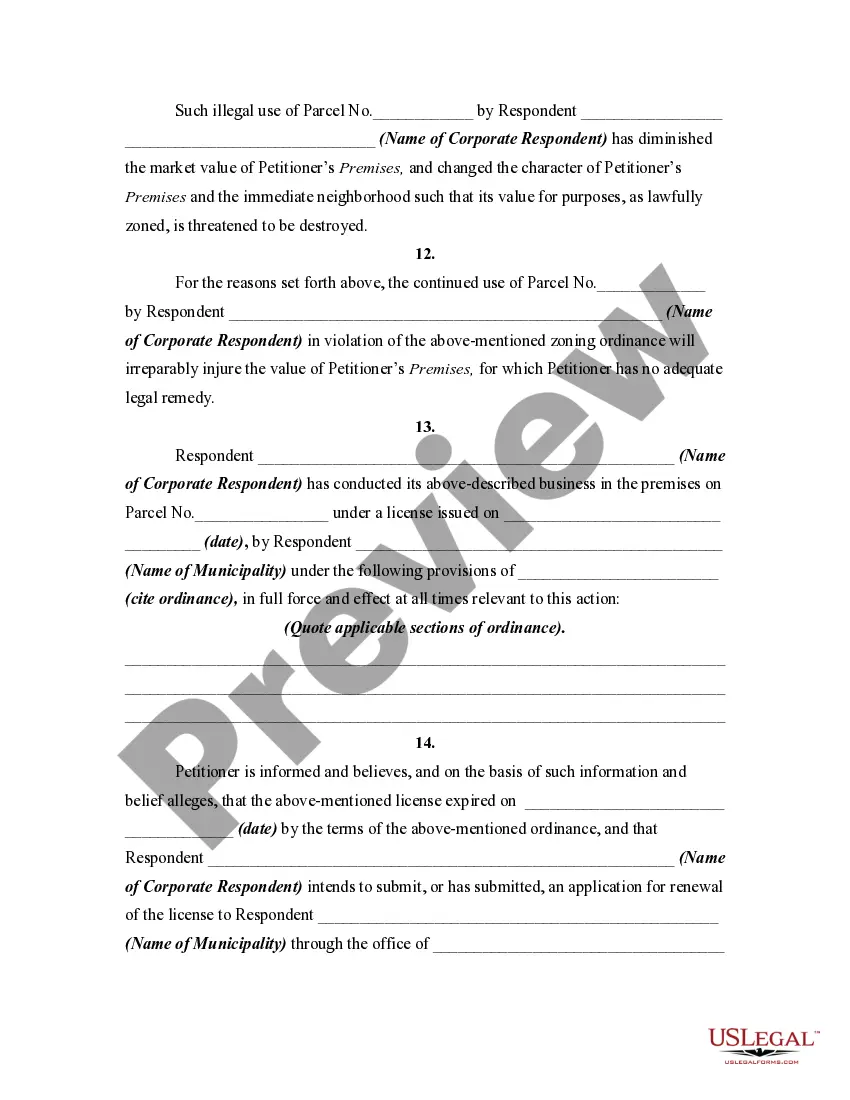
- Specific allegations of illegal use of property contrary to zoning regulations.
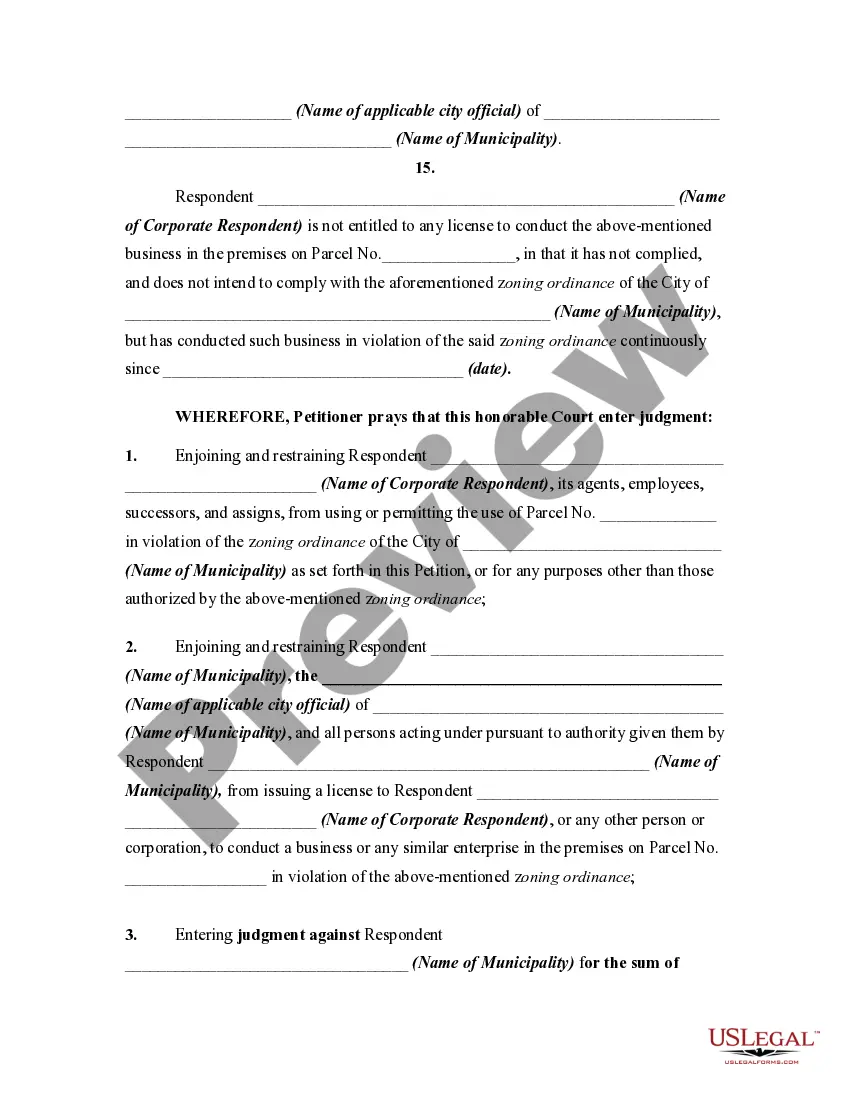
- Request for injunctive relief to stop the unlawful property use.
- Assertions of how the violation impacts property value and neighborhood character.
Common use cases
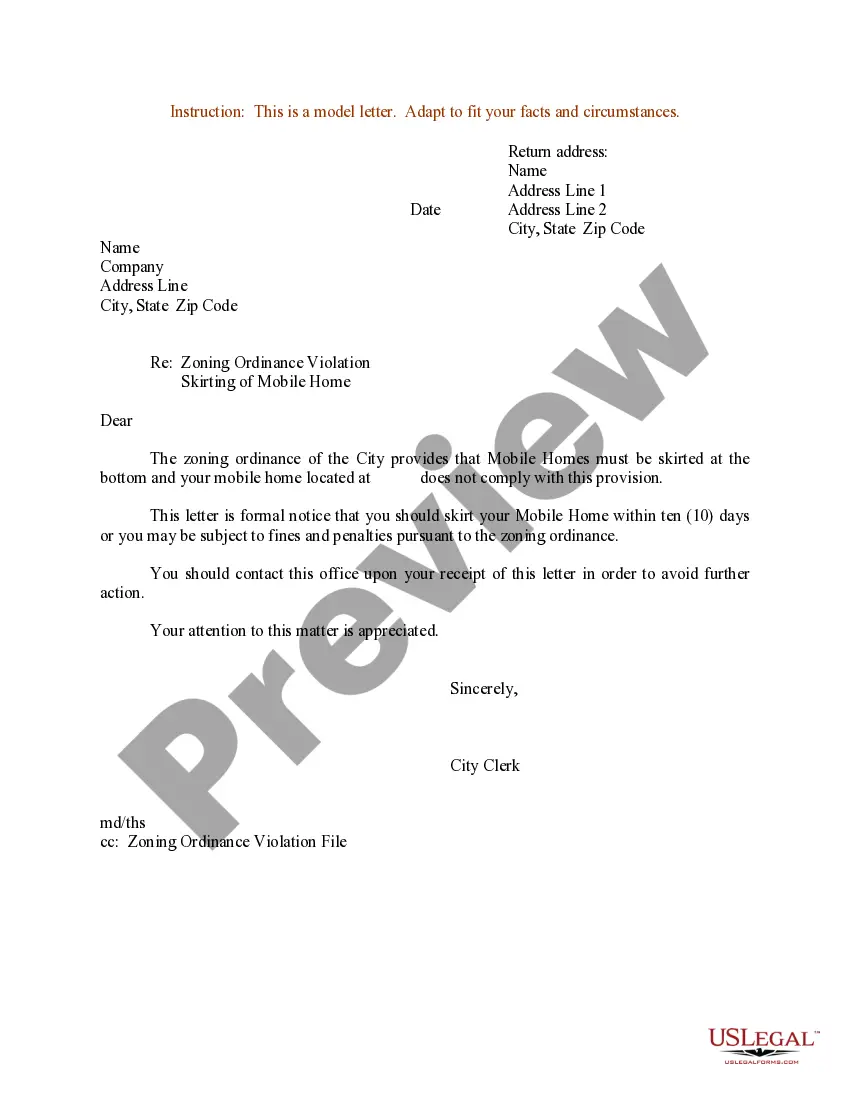
This form should be utilized when a property owner discovers that a neighboring land use is violating local zoning laws. Common scenarios include disputes involving businesses operating without proper permits, construction activities that breach zoning classifications, or any unauthorized land use that negatively impacts the petitioner's property. The form serves as a prerequisite for addressing these zoning conflicts through judicial intervention.
Who can use this document
- Property owners or residents who are directly affected by zoning violations.
- Individuals seeking to protect their property values and community standards.
- Local business owners impacted by unlawful neighboring businesses.
Instructions for completing this form
- Identify and include the names of the petitioner and respondents, including the municipality and any involved corporate entities.
- Provide detailed information about the property involved, including addresses and parcel numbers as indicated.
- Specify the zoning ordinances that are allegedly being violated, including any relevant citations.
- Clearly state the nature of the violation and its impact on the petitionerâs property.
- Conclude the petition with a request for specific judicial relief, detailing how the court should act to remedy the situation.
Notarization guidance
This form does not typically require notarization unless specified by local law. Always check your jurisdiction's requirements to ensure compliance.
Get your form ready online
Our built-in tools help you complete, sign, share, and store your documents in one place.
Make edits, fill in missing information, and update formatting in US Legal Forms—just like you would in MS Word.
Download a copy, print it, send it by email, or mail it via USPS—whatever works best for your next step.
Sign and collect signatures with our SignNow integration. Send to multiple recipients, set reminders, and more. Go Premium to unlock E-Sign.
If this form requires notarization, complete it online through a secure video call—no need to meet a notary in person or wait for an appointment.
We protect your documents and personal data by following strict security and privacy standards.

Make edits, fill in missing information, and update formatting in US Legal Forms—just like you would in MS Word.

Download a copy, print it, send it by email, or mail it via USPS—whatever works best for your next step.

Sign and collect signatures with our SignNow integration. Send to multiple recipients, set reminders, and more. Go Premium to unlock E-Sign.

If this form requires notarization, complete it online through a secure video call—no need to meet a notary in person or wait for an appointment.

We protect your documents and personal data by following strict security and privacy standards.
Mistakes to watch out for
- Failing to accurately identify all relevant parties, including corporate respondents.
- Omitting essential details about the property and the zoning violations.
- Not including citations for relevant zoning ordinances.
- Neglecting to properly sign and date the petition.
Benefits of completing this form online
- Convenient access to downloadable templates that save time compared to drafting from scratch.
- Edit and customize forms easily to meet specific legal requirements.
- Reliability of attorney-drafted content ensures adherence to legal standards.
Legal use & context
- Allows a property owner to seek judicial intervention against zoning violations.
- Helps preserve property values and neighborhood integrity.
- Must be filed within the required time frame after the violation is known.
Summary of main points
- This form enables property owners to challenge illegal uses of nearby properties.
- Filing this petition can help preserve community standards and property values.
- Proper completion and adherence to local laws enhance the petition's effectiveness.
Looking for another form?
Form popularity
FAQ
Zoning requires that all involved property owners relinquish some of their individual property freedoms for the common good. Zoning can discourage some development in some locations. Zoning can increase the cost of building new structures. Zoning can work against historic mixed use neighborhoods in older communities.
Functional zoning. The most prevalent form of zoning where land use zones are defined according to their function, such as commercial, residential, or industrial. Form-based zoning. Intensity zoning. Incentive zoning.
Zoning allows you to raise or lower the temperature in different areas in your home (zones). When a zone isn't being put to use, the temperature in that zone can be lowered which saves on energy consumption.
Because of the zoning, the value of the property is diminished as the number of buyers that would have a use for the building has now been greatly reduced which, based on supply and demand , would lessen the value of the building. Another example might be the density requirement of zoning.
Zoning laws help to ensure that a community is laid out in the most convenient and efficient manner and that areas reserved for related and complimentary uses are located in close proximity. For example, ideally, you would want to locate schools in close proximity to the residential neighborhoods they serve.
Land use zones are the codes that the government uses to classify parcels of land. Zoning regulations can be used to separate business from farming or residential areas, protect natural resources and wildlife, designate lot sizes or regulate the types of animals owned by landowners.
The purpose of land use zoning is to indicate the planning control objectives of the Council for all lands in its administrative area. Thirteen such zones are indicated in this Plan. They are identified by letter on the zoning matrix and by letter and colour on the Development Plan Maps.
1.1 C entral Business District (CBD) The Central Business District is the heart of any city and its function is commercial. 1.4 Medium-status housing zone. 1.5 High-status housing zone. 1.6 Large industries. 1.7 Rural-urban seam.
In addition to the three main categories (residential, commercial, manufacturing), the zoning toolkit includes complementary rules that address specific types of development, as well as the design and quality of public spaces.
Functional zoning. The most prevalent form of zoning where land use zones are defined according to their function, such as commercial, residential, or industrial. Form-based zoning. Intensity zoning. Incentive zoning.