College Education Trust Agreement
About this form
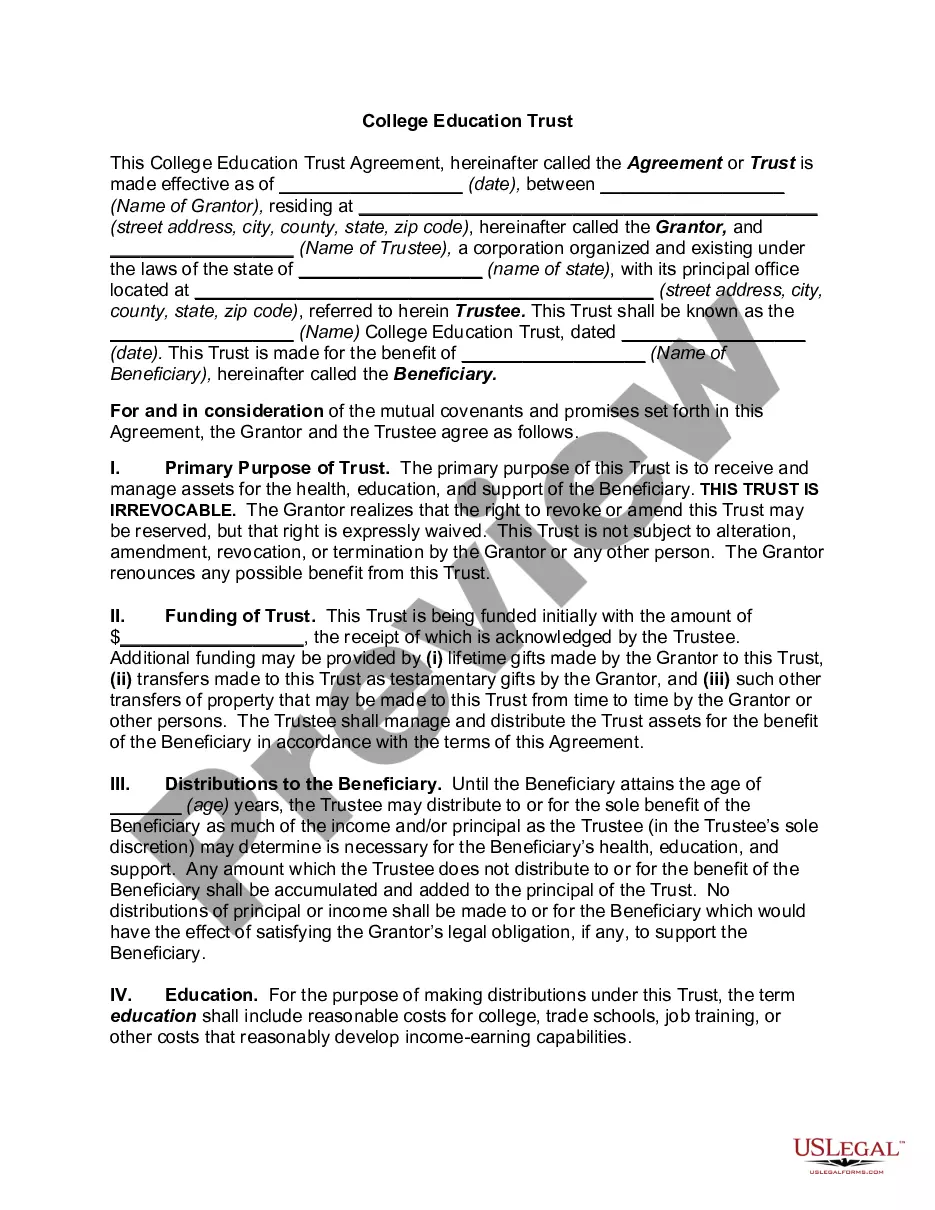
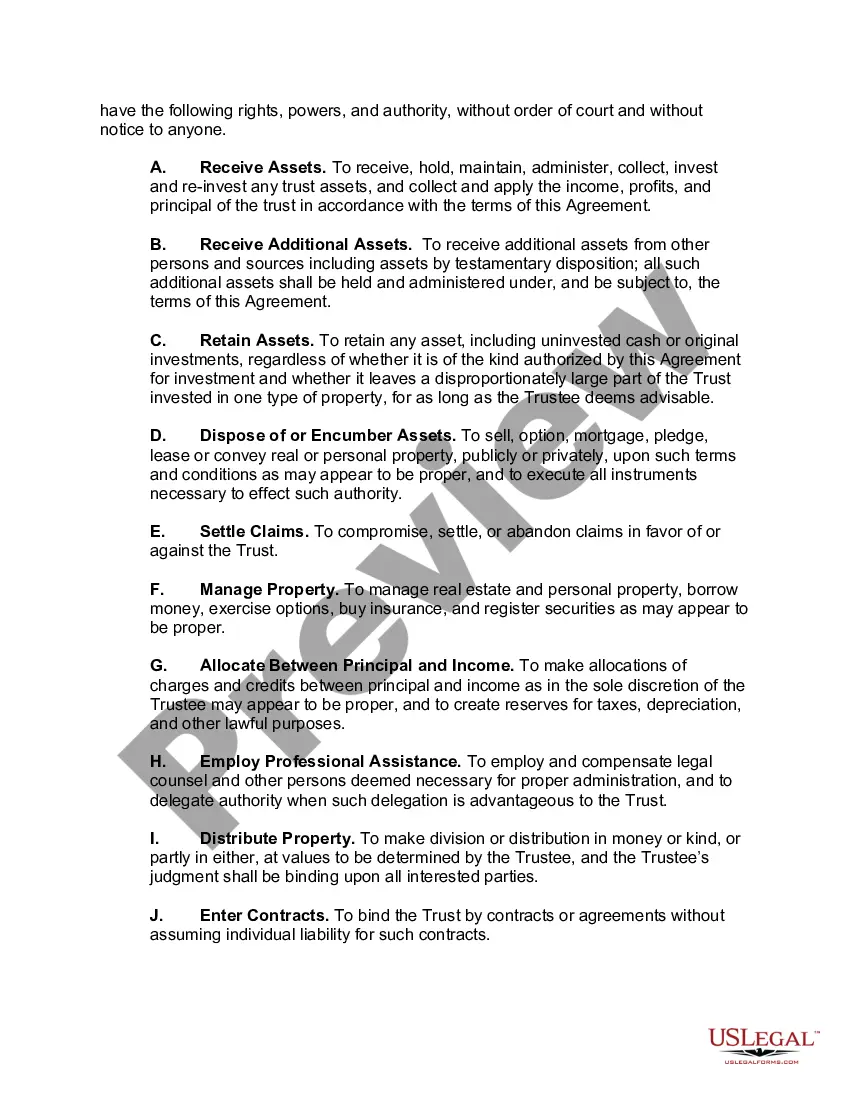
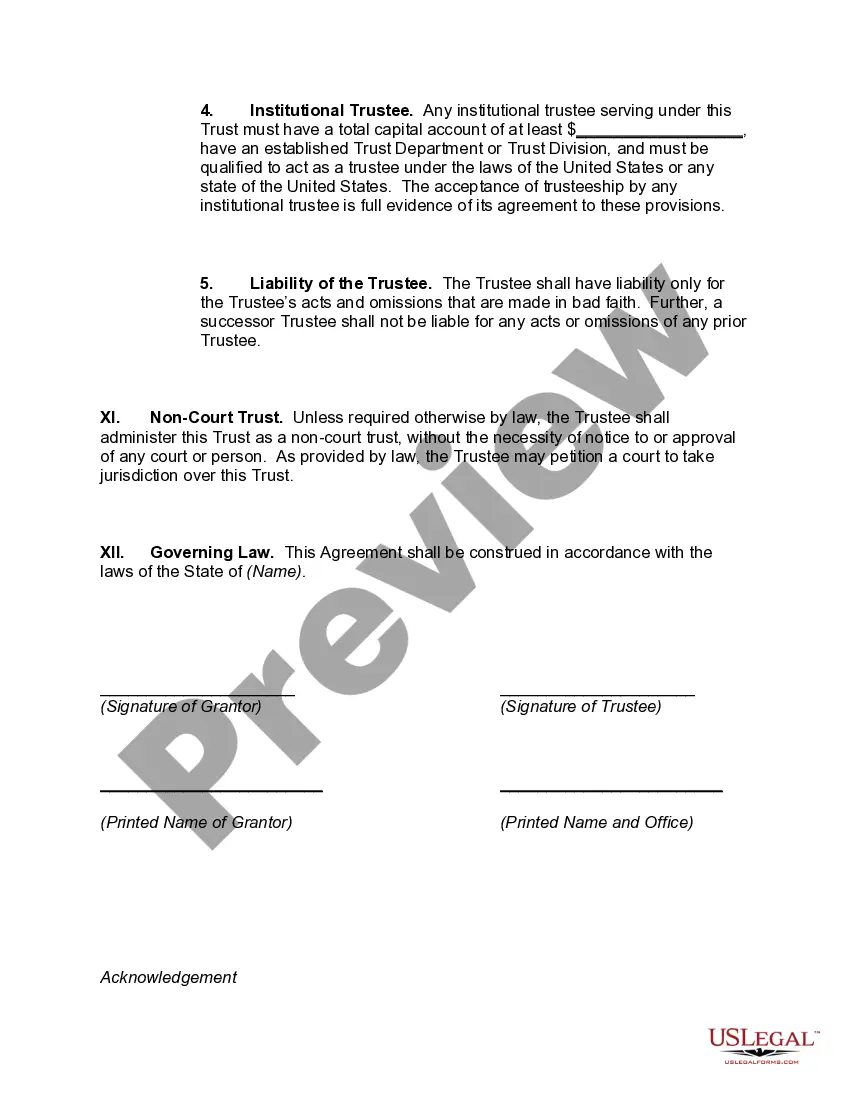
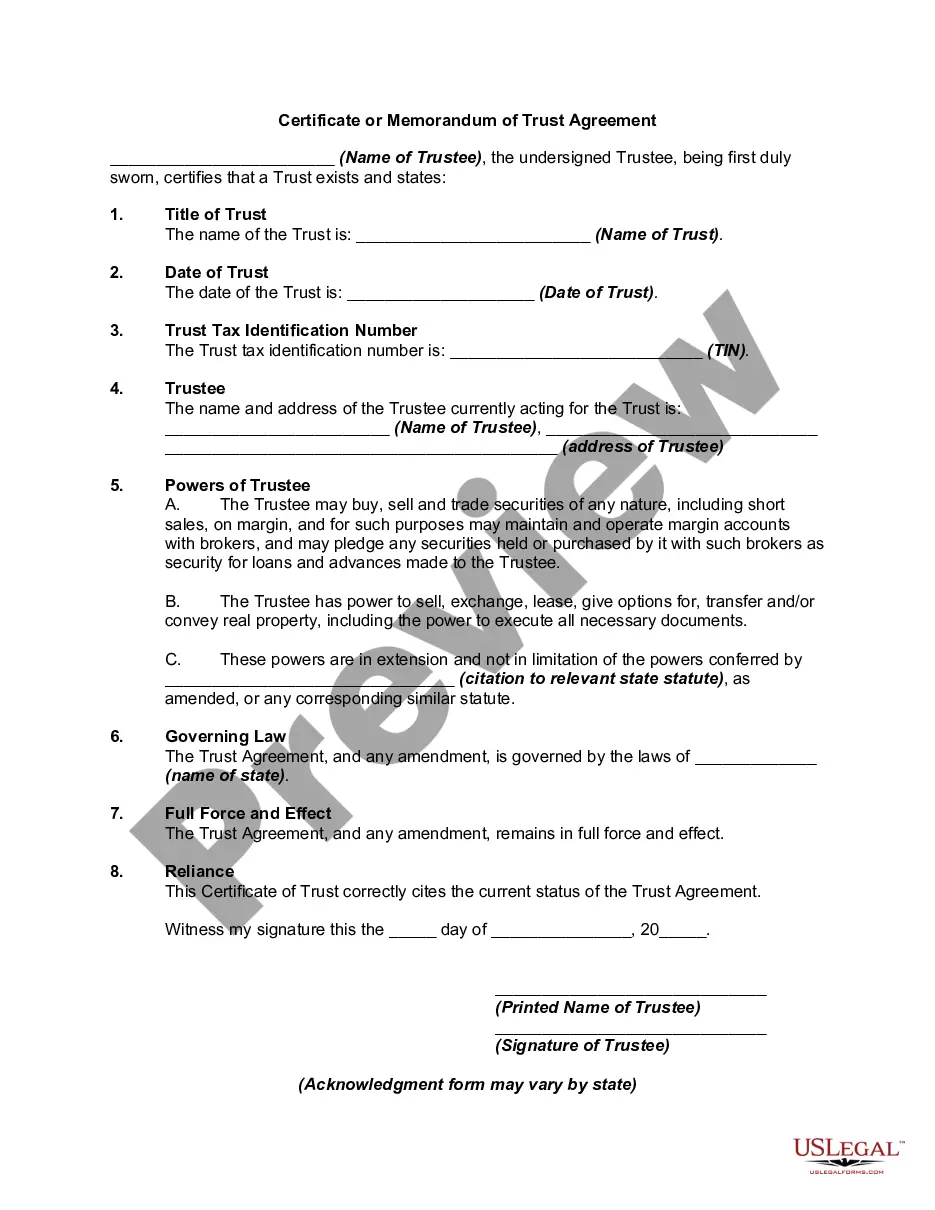
The College Education Trust Agreement is a legal document that establishes a trust specifically for funding educational expenses. This trust allows the grantor to designate a trustee to manage the trust assets for the benefit of a designated beneficiary, typically a child or dependent, ensuring that funds are used solely for their education. Unlike other trusts, this agreement is irrevocable, meaning the grantor cannot amend or terminate it once established.
Form components explained
- Identification of the grantor, trustee, and beneficiary.
- Purpose of the trust for education-related expenses.
- Instructions for funding the trust and conditions for distributions.
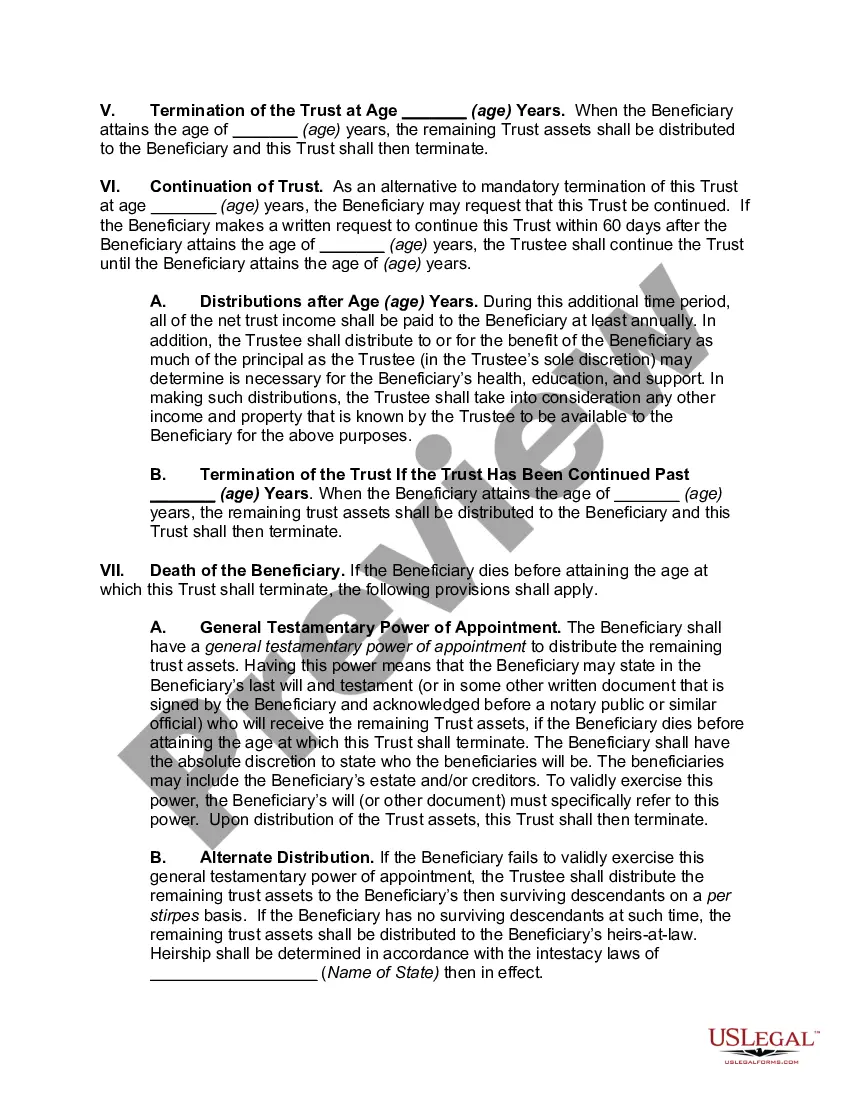
- Terms regarding the termination of the trust upon the beneficiary reaching a specified age.
- Provisions addressing the death of the beneficiary and handling remaining assets.
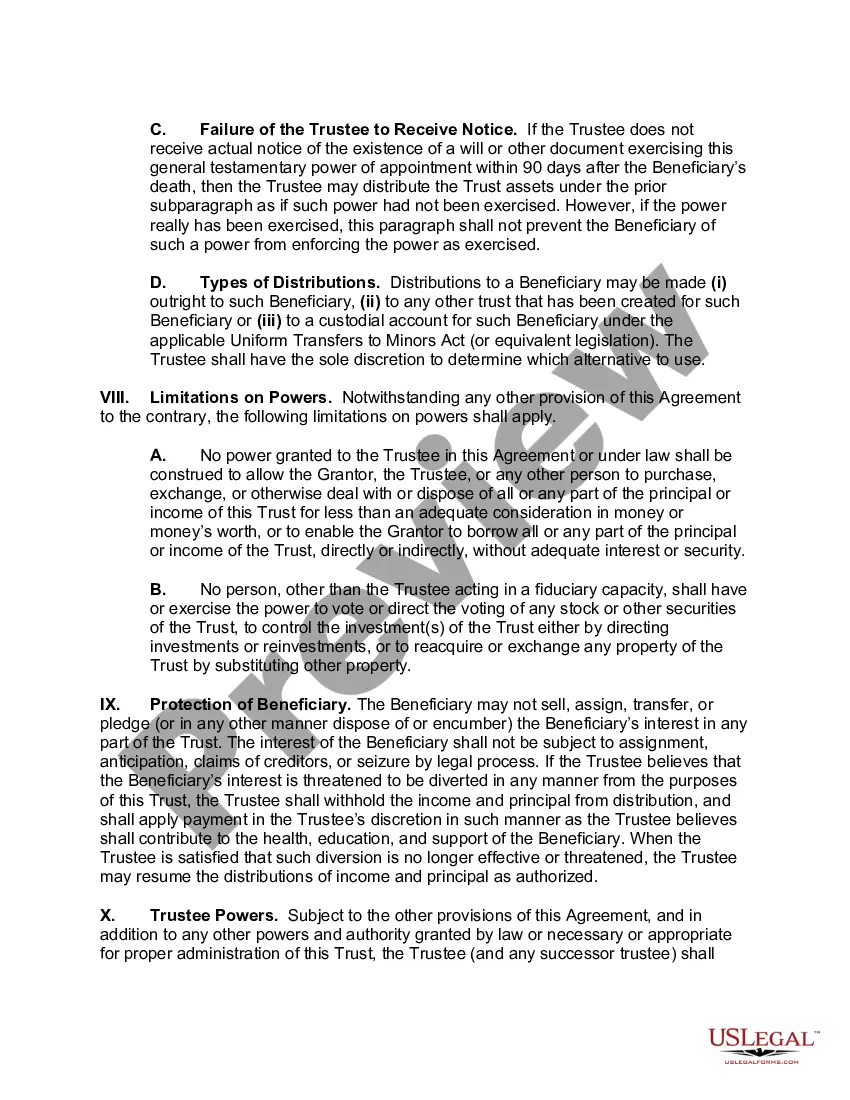
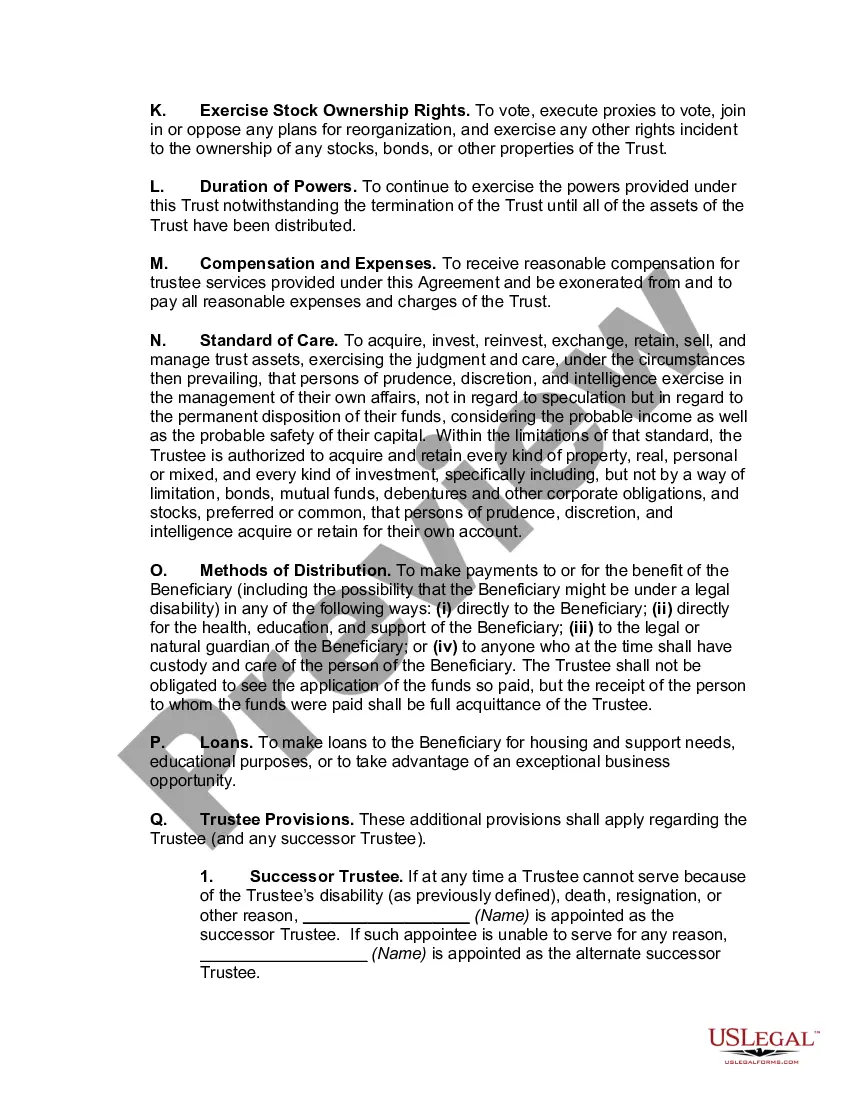
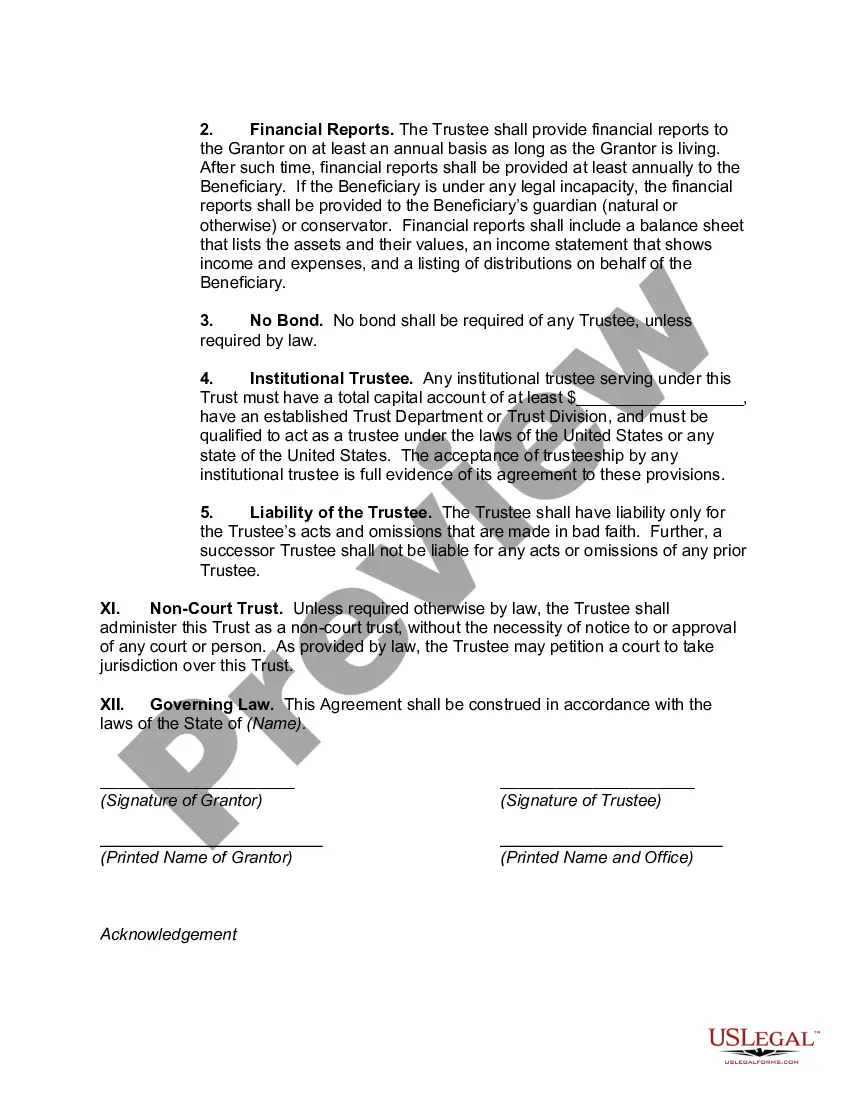
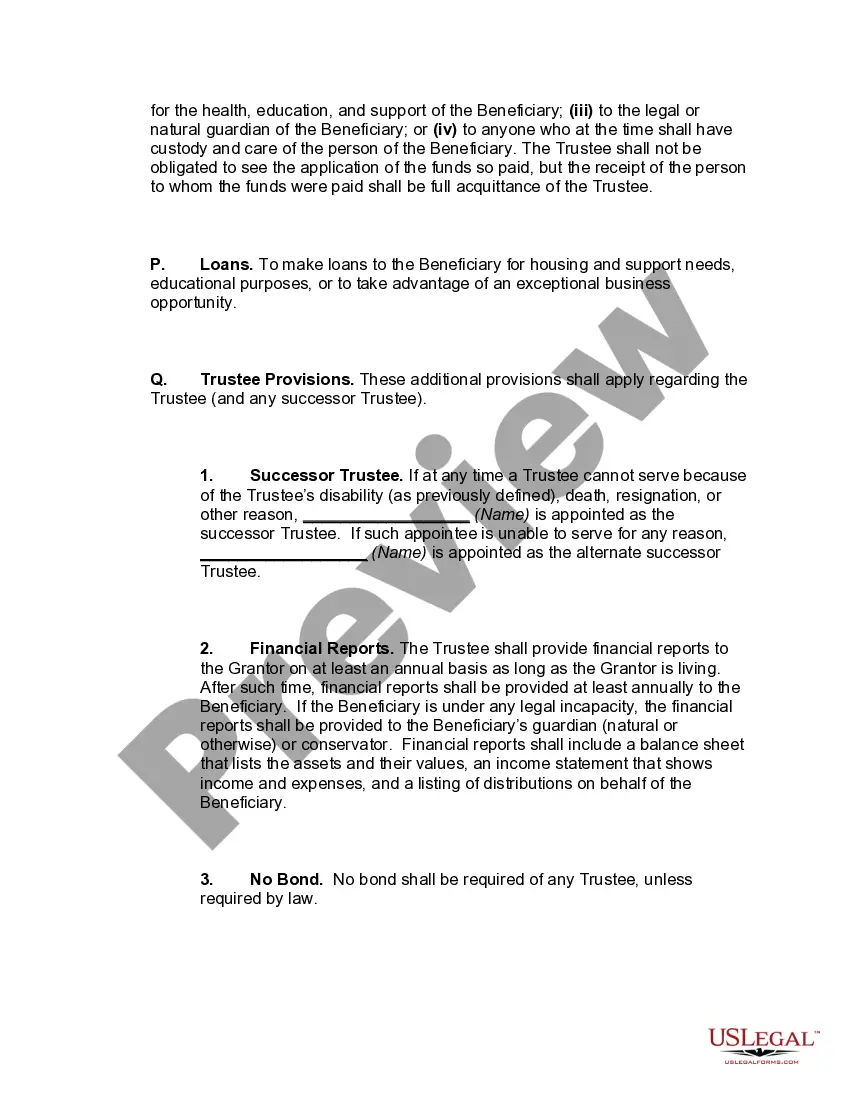
- Trustee powers and duties in managing trust assets.


When to use this form
This form is essential when a grantor wishes to set aside funds specifically for a beneficiary's education. It is appropriate for families planning for college or vocational training costs. Additionally, it can help ensure that the designated funds are used solely for educational purposes, protecting them from other legal claims or mismanagement.
Who this form is for
- Parents or guardians looking to fund their child's education.
- Grandparents wishing to contribute to grandchildren's educational expenses.
- Individuals wanting to ensure a dependent has financial support for education.
- Anyone interested in establishing a legally binding agreement for educational funding.
How to prepare this document
- Identify and enter the date the agreement becomes effective.
- Provide the names and addresses of the grantor and trustee.
- Name the trust and specify the beneficiary.
- Detail the initial funding amount for the trust.
- Define the age at which the trust will terminate and any conditions for continuation.
- Ensure all parties sign and date the agreement appropriately.
Is notarization required?
This form does not typically require notarization to be legally valid. However, some jurisdictions or document types may still require it. US Legal Forms provides secure online notarization powered by Notarize, available 24/7 for added convenience.
Get your form ready online
Our built-in tools help you complete, sign, share, and store your documents in one place.
Make edits, fill in missing information, and update formatting in US Legal Forms—just like you would in MS Word.
Download a copy, print it, send it by email, or mail it via USPS—whatever works best for your next step.
Sign and collect signatures with our SignNow integration. Send to multiple recipients, set reminders, and more. Go Premium to unlock E-Sign.
If this form requires notarization, complete it online through a secure video call—no need to meet a notary in person or wait for an appointment.
We protect your documents and personal data by following strict security and privacy standards.

Make edits, fill in missing information, and update formatting in US Legal Forms—just like you would in MS Word.

Download a copy, print it, send it by email, or mail it via USPS—whatever works best for your next step.

Sign and collect signatures with our SignNow integration. Send to multiple recipients, set reminders, and more. Go Premium to unlock E-Sign.

If this form requires notarization, complete it online through a secure video call—no need to meet a notary in person or wait for an appointment.

We protect your documents and personal data by following strict security and privacy standards.
Common mistakes
- Not accurately identifying all parties involved in the trust.
- Failing to specify the educational expenses covered by the trust.
- Neglecting to appoint a successor trustee in case the primary trustee cannot serve.
- Inaccurately stating the terms for termination or continuation of the trust.
Why use this form online
- Convenient access to downloadable and customizable legal form templates.
- Reduced time and effort compared to drafting a trust document from scratch.
- Forms drafted by licensed attorneys, ensuring legal compliance and reliability.
- Ability to edit and save the document for your specific needs.
Summary of main points
- The College Education Trust Agreement ensures funds are allocated solely for educational use.
- This agreement is irrevocable once established.
- Consult with legal professionals for specific state requirements regarding trusts.
Looking for another form?

Form popularity
FAQ
When signing anything on behalf of the trust, always sign as John Smith, Trustee. By signing as Trustee, you will not be personally liable for that action as long as that action is within the scope of your authority under the trust.
Trust is confidence in the honesty or integrity of a person or thing. An example of trust is the belief that someone is being truthful. An example of trust is the hope a parent has when they let their teenager borrow a car.
Trust funds must be reported as the beneficiary's asset on the Free Application for Federal Student Aid (FAFSA), even if access to the trust is restricted.Any payments received during the base year (the prior-prior year) must be reported as income on the FAFSA.
Reference the name of the irrevocable trust, and the trust account number if applicable. Write a salutation followed by a colon. Identify yourself as a beneficiary of the irrevocable trust in the body of the letter. State that you are requesting money from the trust, and the reason for the request.
Educational trusts are the holdings of the Trust under which the reserves can only be used for educational purposes.In the cases where the Trust becomes operational, the trustees should control the assets of the Trust. Even, according to the terms/articles of the Trust, he must pay for the beneficiary's education.
Plan early. Research 529 plans. Consider taxable accounts. Evaluate UGMAs and UTMAs if you are considering securities or real estate. Research Coverdell Education Savings Accounts. Consult a financial adviser. Calculate how different college trust funds will affect your child's ability to receive financial aid.
An educational trust specifies that trust funds are to be used for education. In the trust document, the grantor names a trustee and beneficiaries, and also states how trust money is to be used.If the trust becomes operational upon the grantor's death, then the trust is funded when the grantor dies.
The irrevocable trust can continue to be funded with annual exclusion gifts while tuition can, in addition, be paid directly to the educational institution by the parent or grandparent because it does not count as a gift.
Trusts are a regular part of estate and education funding planning. Trusts typically can own 529 plan accounts; the benefit of doing so is to avoid the onerous income taxes normally imposed on trust income.