Complaint - Lessor Failure to Return Security Deposit
About this form
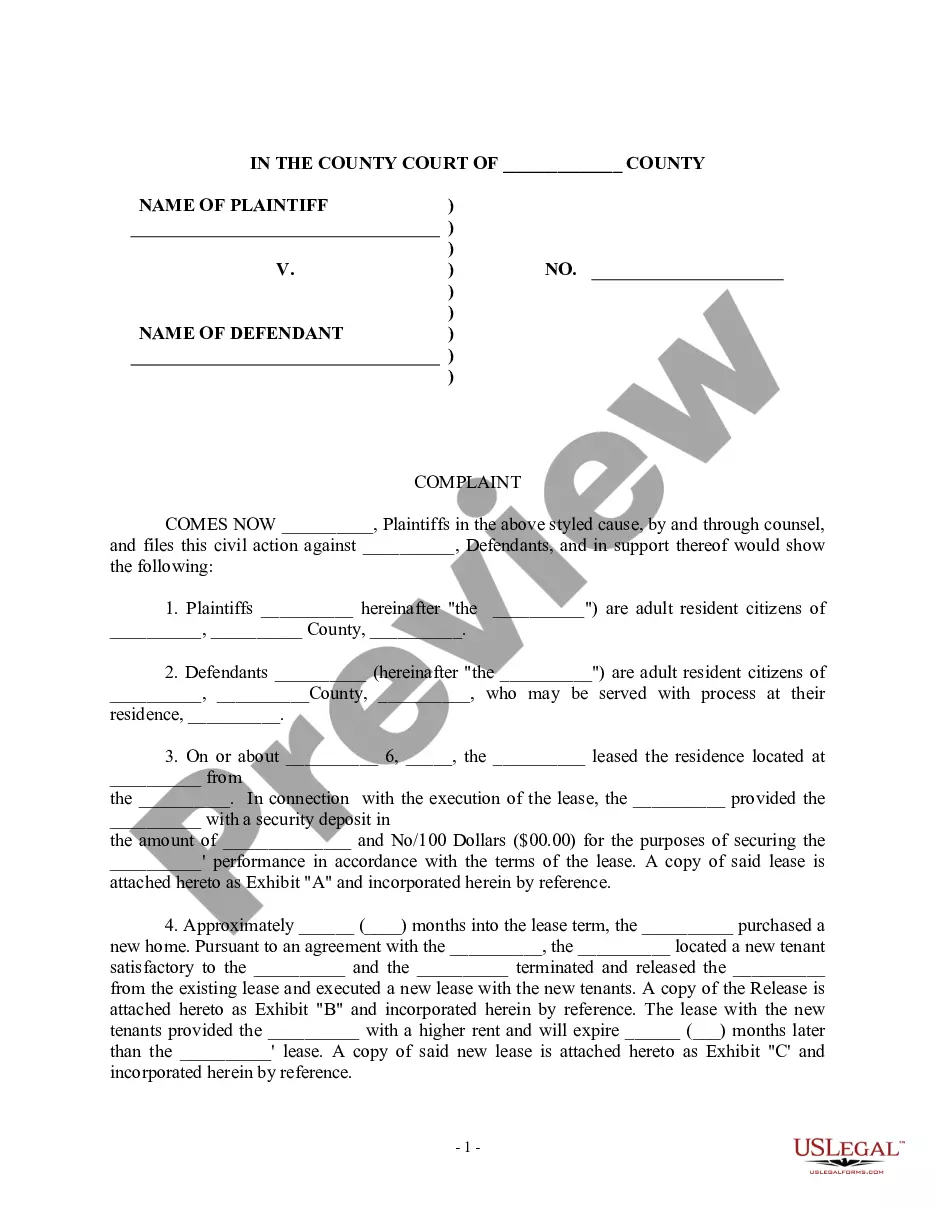
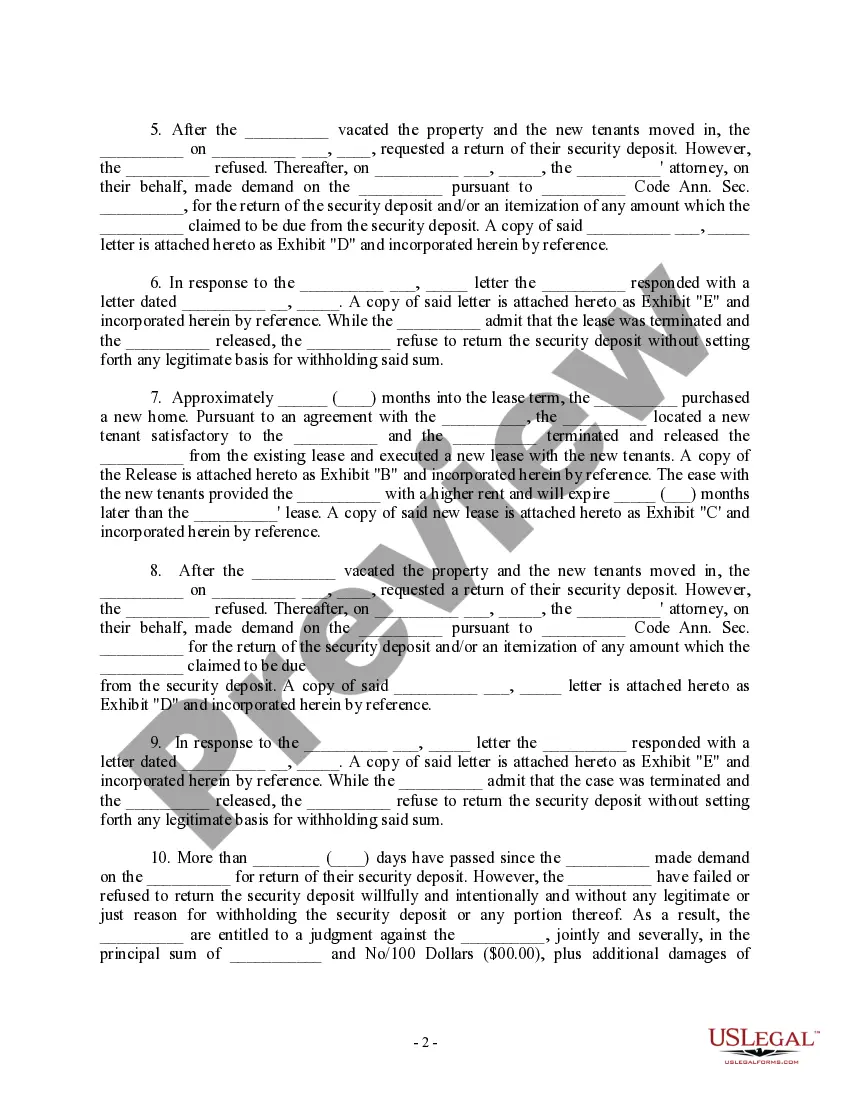
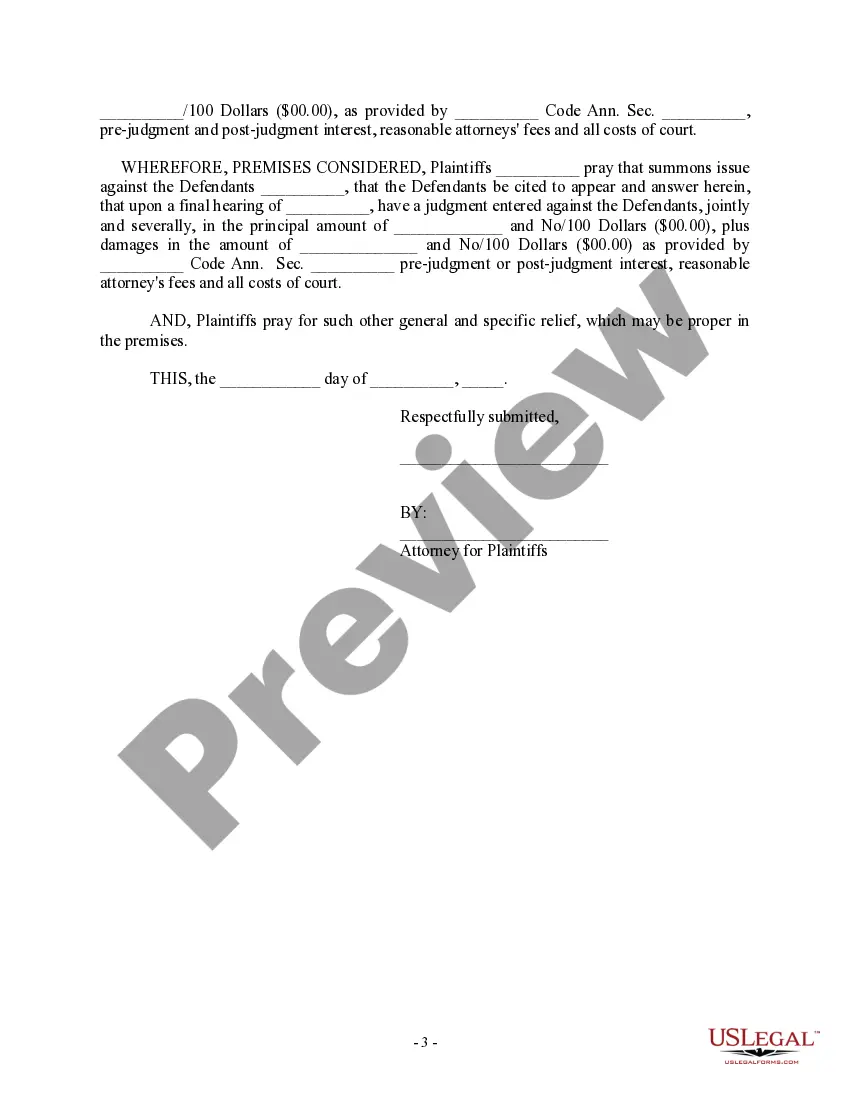
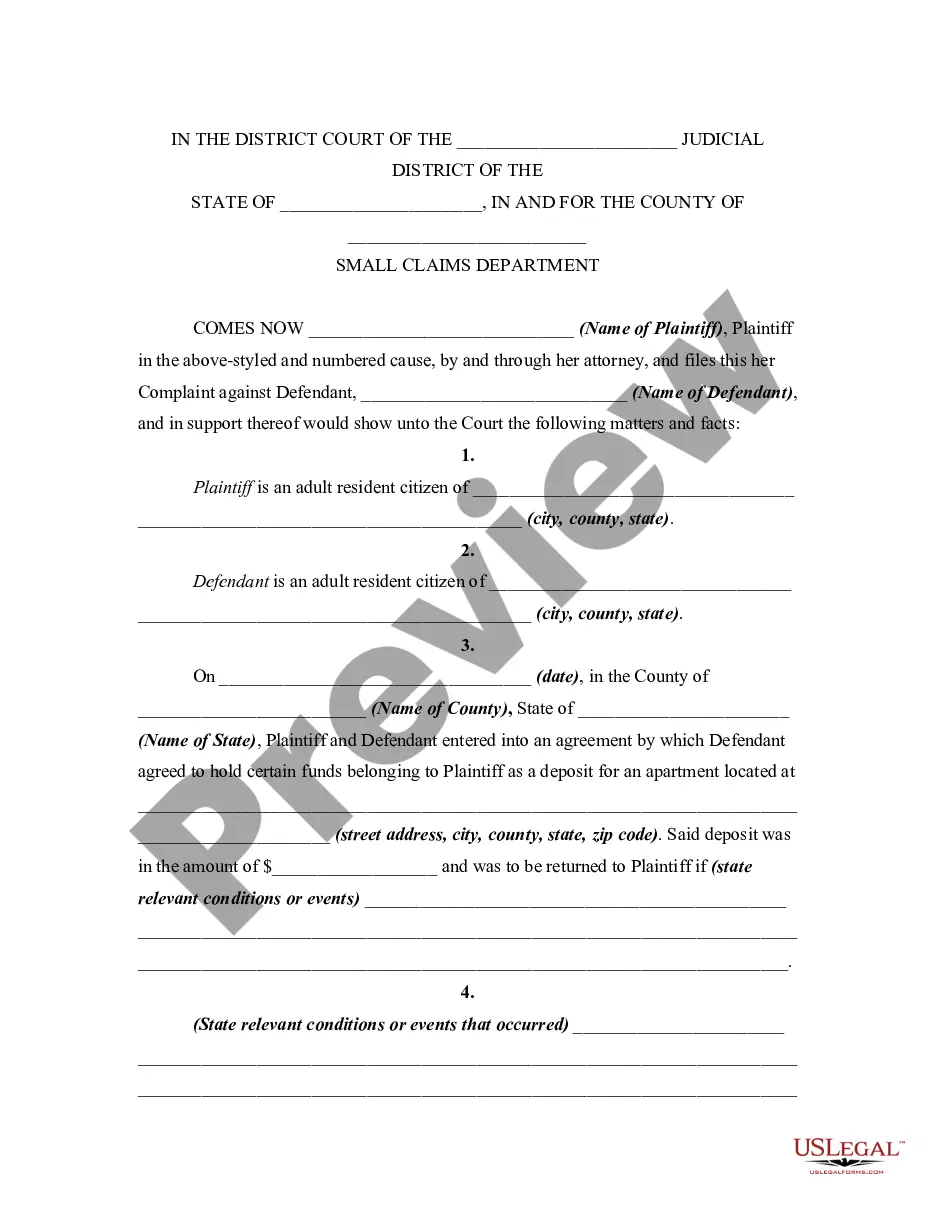
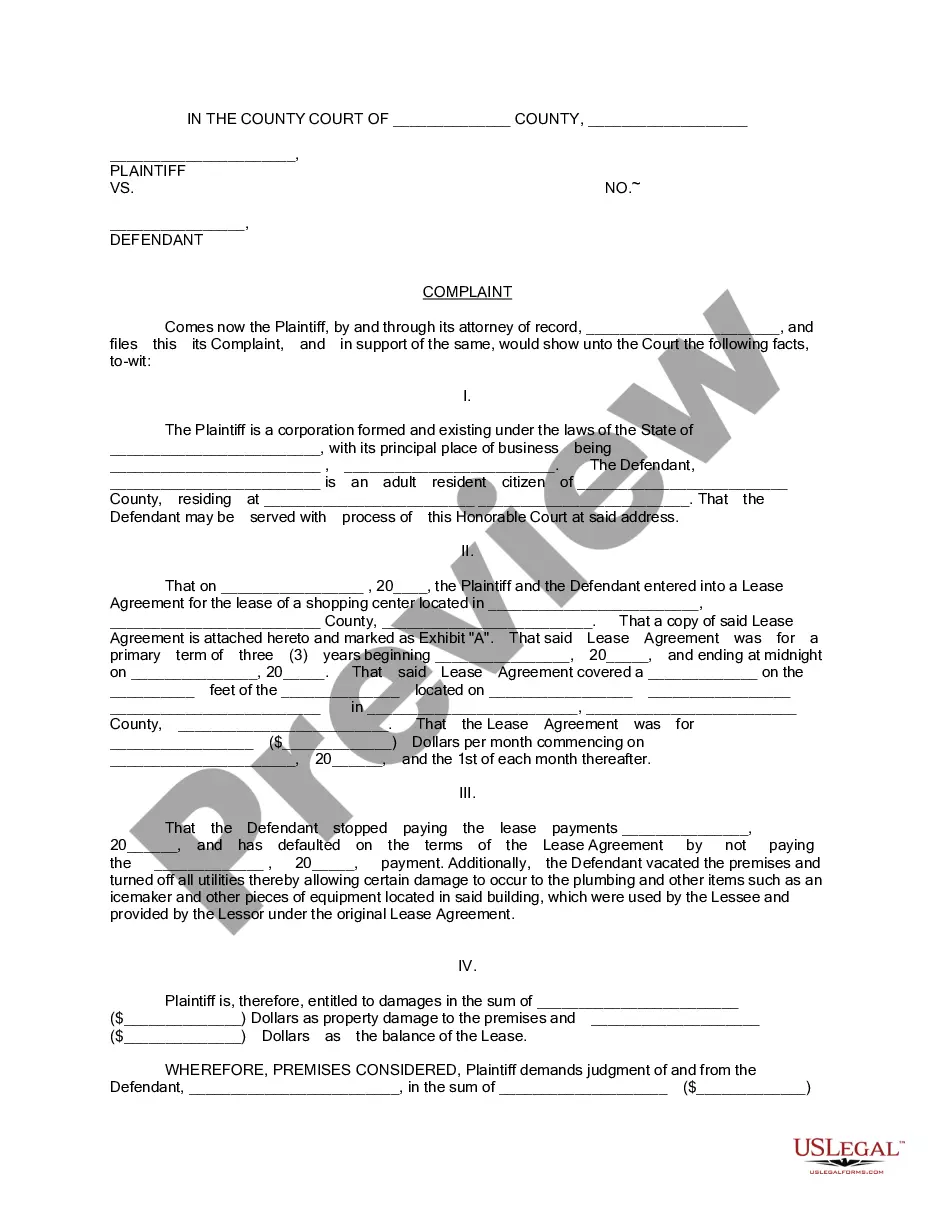
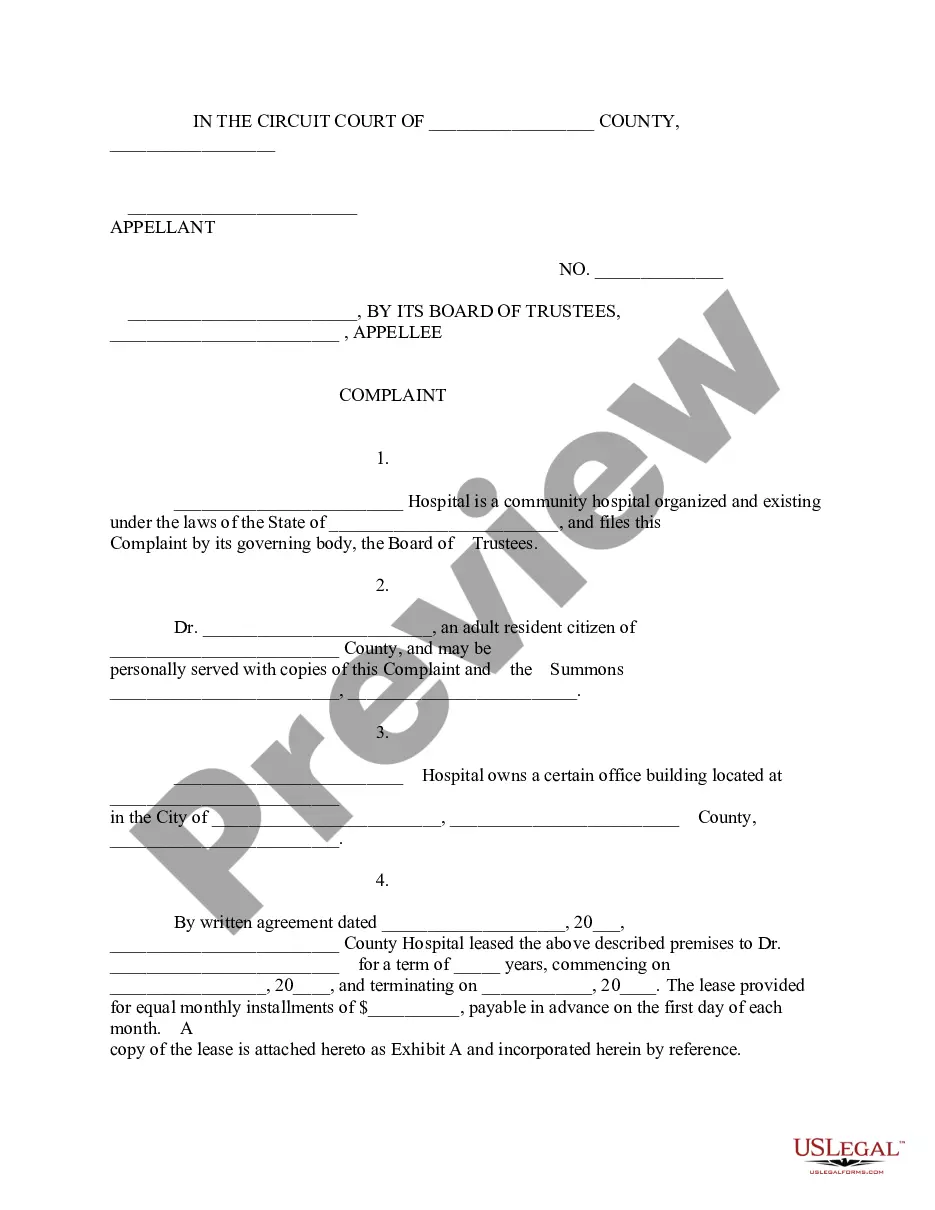
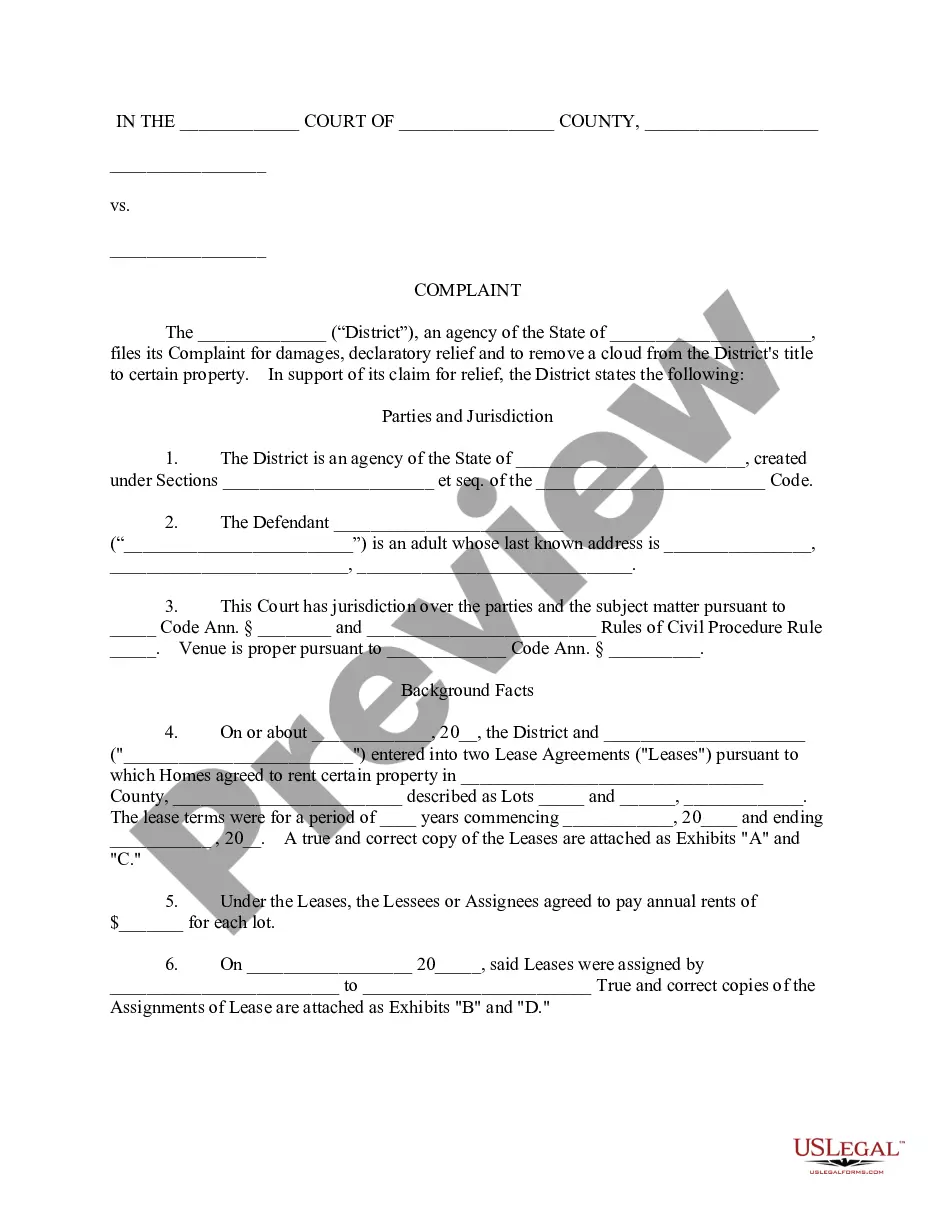
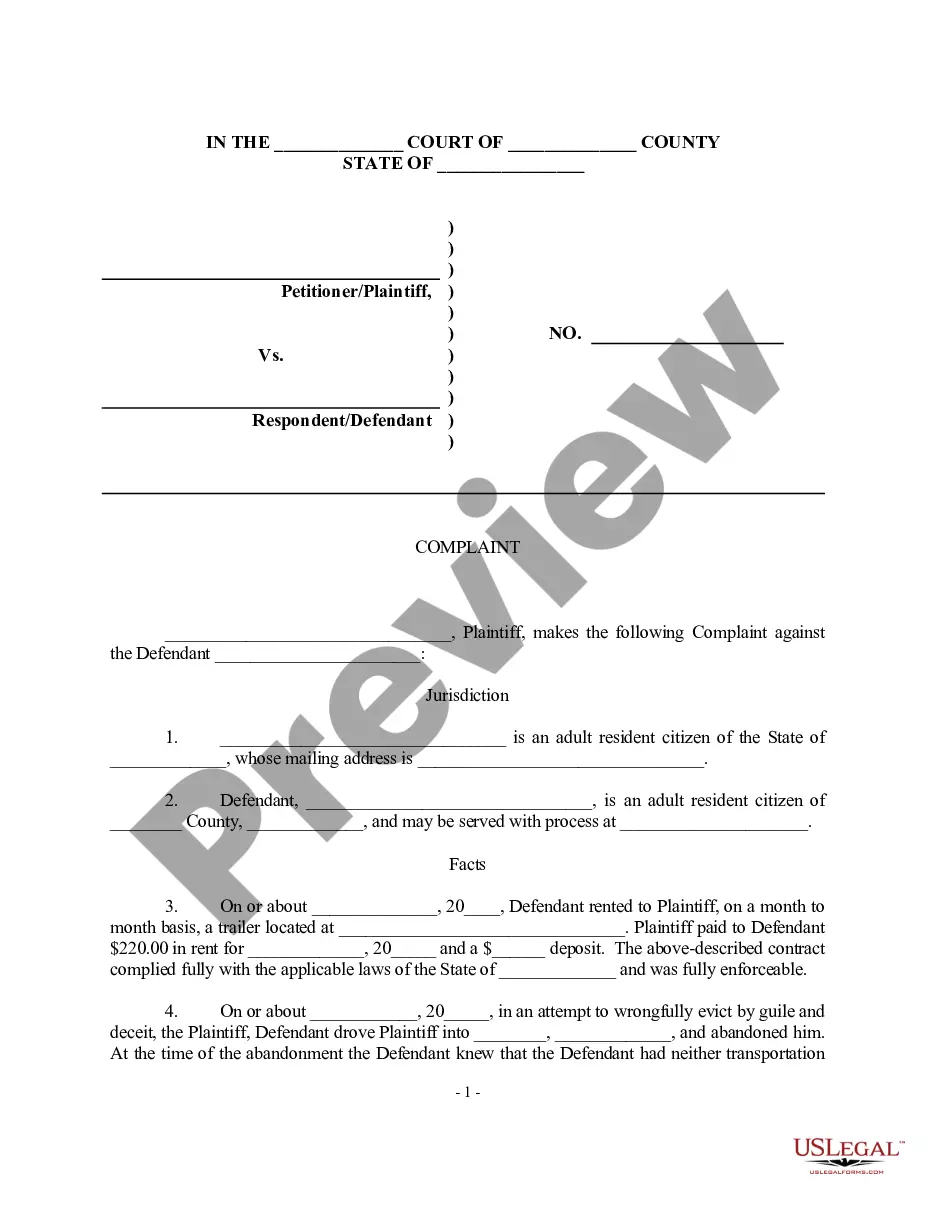
The Complaint - Lessor Failure to Return Security Deposit is a legal document used to initiate a civil lawsuit against a landlord who fails to return a tenant's security deposit after the lease has ended. This form outlines the legal basis for the claim, the relevant facts, and the damages sought. It differs from other rental-related forms by focusing specifically on the recovery of a security deposit, making it essential for tenants seeking resolution for this specific issue.
Form components explained
- Identification of plaintiffs and defendants, including their addresses.
- Details of the lease, including the security deposit amount and property location.
- Chronology of events relating to the lease termination and security deposit demand.
- Statement of the landlord's refusal to return the deposit and grounds for the refusal.
- Demand for judgment, including the exact amount sought and any additional damages.
When this form is needed
This form should be used when a tenant has vacated a rental property and has requested the return of their security deposit, but the landlord has failed or refused to return it within the timeframe required by state law. It is appropriate in cases where there are no valid deductions or disputes regarding the condition of the property that justifies withholding the deposit.
Who can use this document
- Tenants who have recently vacated a rental property.
- Individuals seeking to recover their security deposit from a landlord.
- Those who have previously communicated with the landlord regarding the return of their deposit and received no satisfactory response.
Instructions for completing this form
- Identify the plaintiffs and defendants, ensuring the correct legal names and addresses are listed.
- Enter details about the lease and security deposit, including amounts and property addresses.
- Outline the timeline of events from lease signing to the demand for the return of the deposit.
- Clearly state the landlord's failure to return the deposit and any communication regarding the matter.
- Specify the damages sought in the lawsuit, including the principal sum and any additional costs.
Does this form need to be notarized?
This form usually doesn’t need to be notarized. However, local laws or specific transactions may require it. Our online notarization service, powered by Notarize, lets you complete it remotely through a secure video session, available 24/7.
Get your form ready online
Our built-in tools help you complete, sign, share, and store your documents in one place.
Make edits, fill in missing information, and update formatting in US Legal Forms—just like you would in MS Word.
Download a copy, print it, send it by email, or mail it via USPS—whatever works best for your next step.
Sign and collect signatures with our SignNow integration. Send to multiple recipients, set reminders, and more. Go Premium to unlock E-Sign.
If this form requires notarization, complete it online through a secure video call—no need to meet a notary in person or wait for an appointment.
We protect your documents and personal data by following strict security and privacy standards.

Make edits, fill in missing information, and update formatting in US Legal Forms—just like you would in MS Word.

Download a copy, print it, send it by email, or mail it via USPS—whatever works best for your next step.

Sign and collect signatures with our SignNow integration. Send to multiple recipients, set reminders, and more. Go Premium to unlock E-Sign.

If this form requires notarization, complete it online through a secure video call—no need to meet a notary in person or wait for an appointment.

We protect your documents and personal data by following strict security and privacy standards.
Typical mistakes to avoid
- Using incorrect names or addresses for plaintiffs and defendants.
- Failing to attach essential documents such as the original lease or correspondence.
- Not adhering to local laws regarding the timing and grounds for the return of security deposits.
Benefits of using this form online
- Convenience: Download and complete the form from anywhere at any time.
- Editability: Customize the form to fit individual circumstances easily.
- Reliability: Access to professionally drafted templates ensures compliance with legal standards.
Main things to remember
- Utilize this form when a landlord fails to return a tenant's security deposit after lease termination.
- Ensure all relevant facts and communications are documented and attached.
- Adapt the form to reflect your state's specific legal context and requirements.
Looking for another form?
Form popularity
FAQ
Alerting state or local health and building inspectors. Suing your landlord in small claims court.
If your deposit didn't need to be protected and your landlord refuses to give it back, you might have to take them to court. Going to court can be expensive and stressful. You'll have to pay court costs upfront but you might get them back if you win your case.
If your deposit didn't need to be protected and your landlord refuses to give it back, you might have to take them to court. Going to court can be expensive and stressful. You'll have to pay court costs upfront but you might get them back if you win your case.
Your Landlord is legally obligated to return your deposit within 10 days of you both agreeing how much you'll get back (after the tenancy has ended, of course).
Hi, (1) Issue a legal notice ask him to pay the security deposit amount of Rupees 80,000/- plus interest from the date of the demand till realization and if he did not paid the amount then you have to file a suit for recovery of money. (2) you must also lodge a police complaint so he may come to the settlement.
It's illegal for your landlord to force you to pay a deposit of more than 5 weeks' rent (or 6 weeks' rent if your annual rent is more than £50,000). If you have an assured shorthold tenancy, your deposit must be 'protected' in a tenancy deposit scheme (TDP) until you move out of the property.
If your landlord doesn't refund the deposit after the seven-day notice, you can sue him in small claims court. If your landlord sends a letter on time saying he is withholding some or all of your deposit, but you think the amount is too high, you can still sue him in small claims court.
If the court finds your landlord has not protected your deposit, it can order them to either: repay it to you. pay it into a TDP scheme's bank account within 14 days.
If a landlord does not return the entire amount of the tenant's security deposit within the 21 days required by law, and the tenant disputes the deductions from the deposit: The tenant can write a letter to the landlord explaining why he or she believes he or she is entitled to a larger refund.