Petition or Complaint to Enjoin Nonjudicial Foreclosure Sale and for Declaratory Relief
Overview of this form
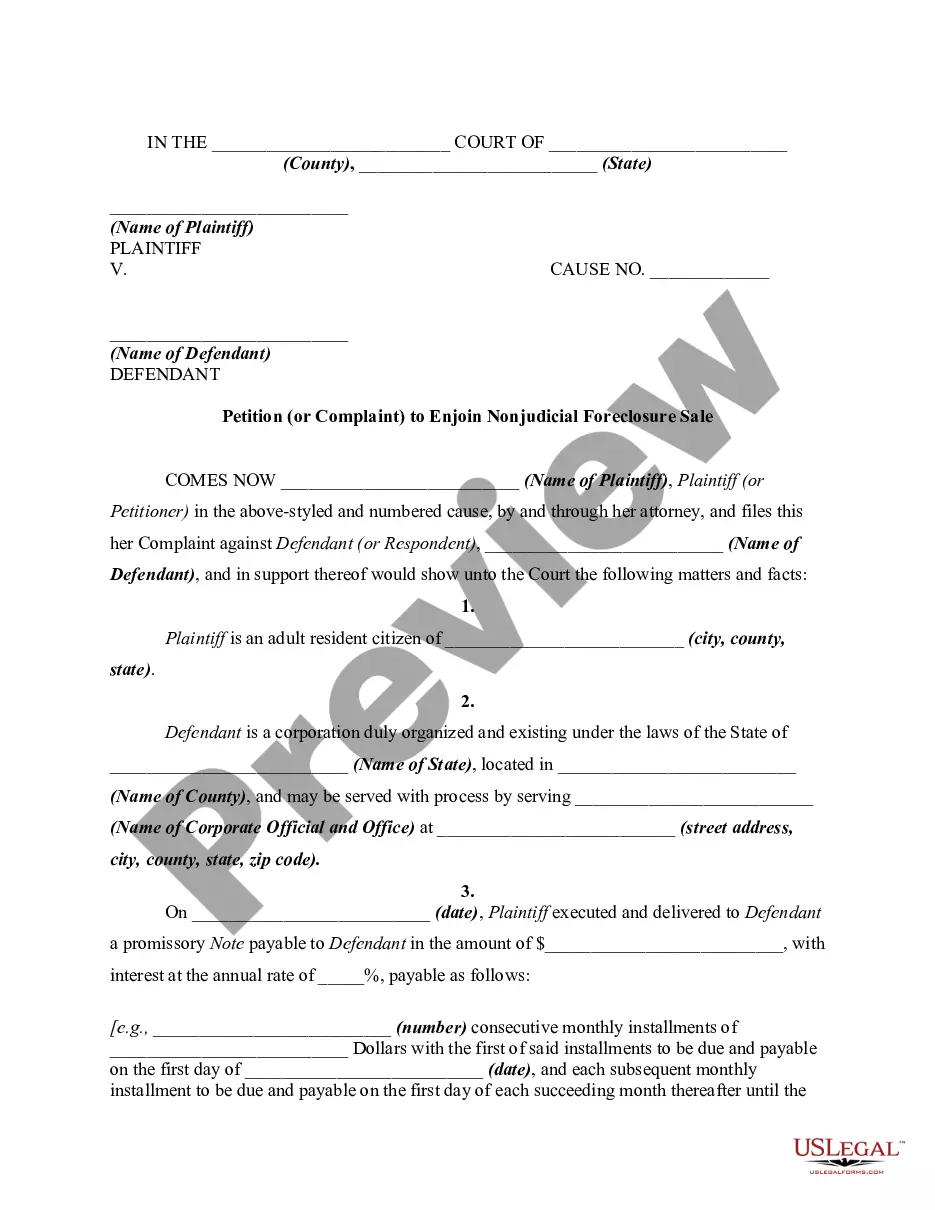
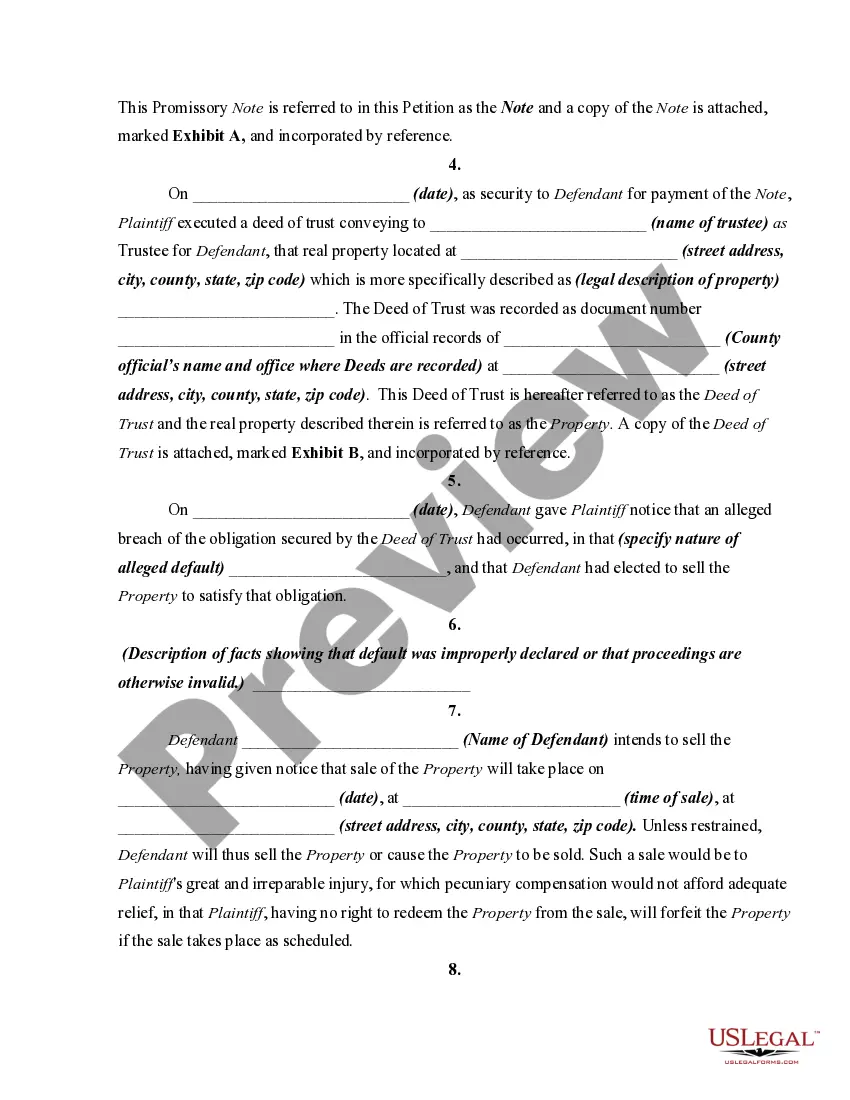
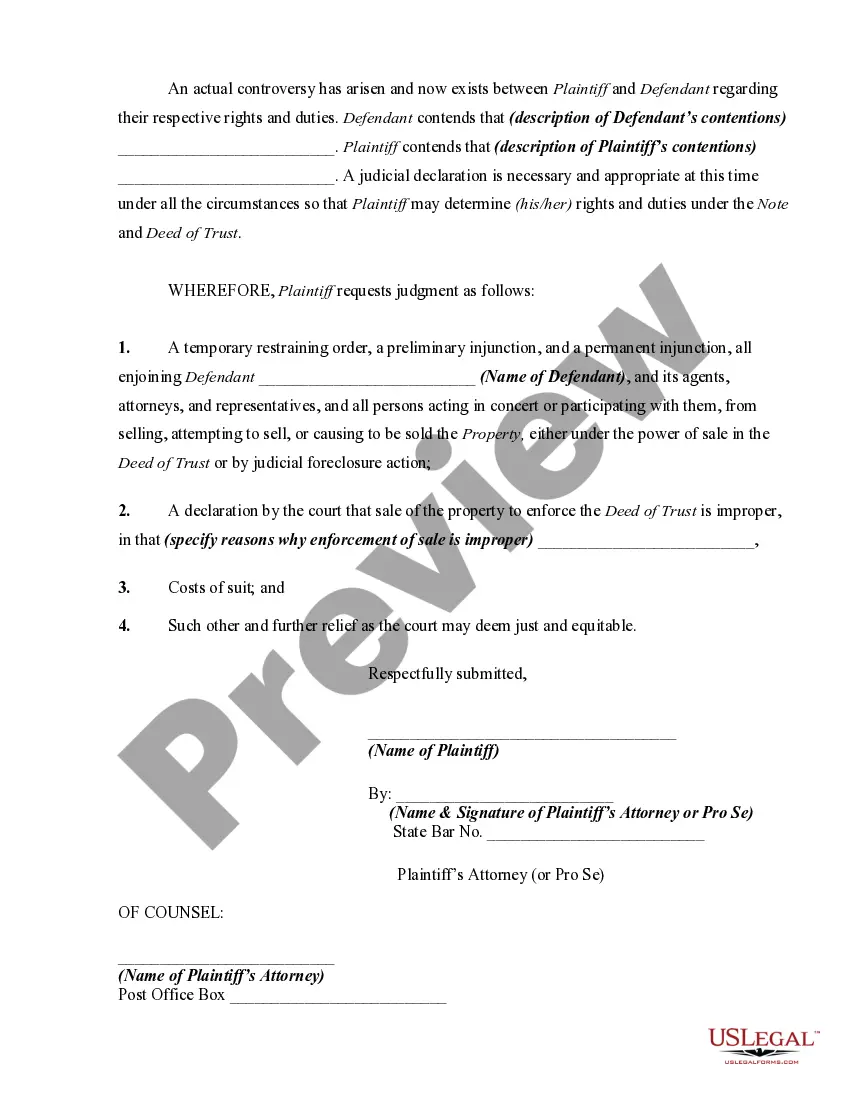
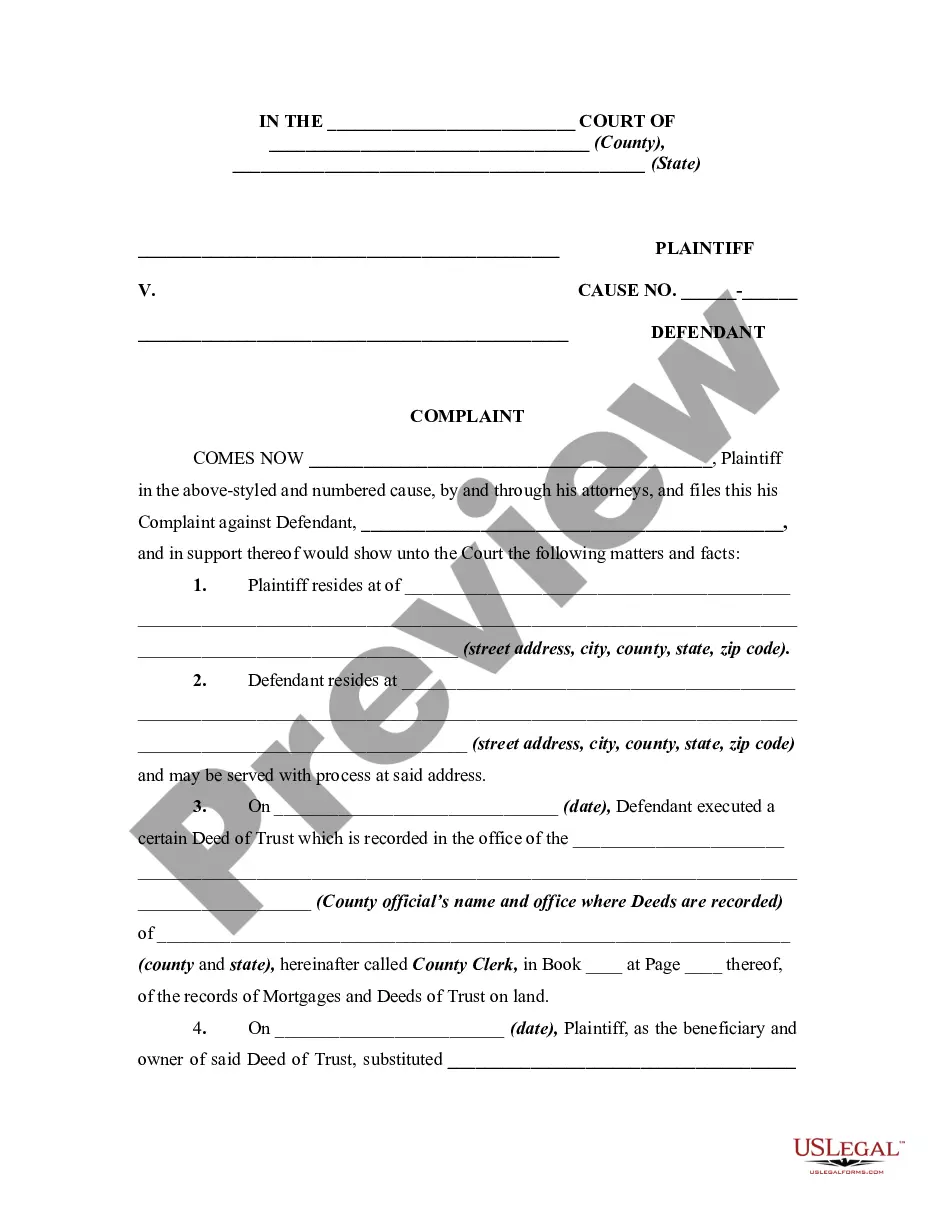
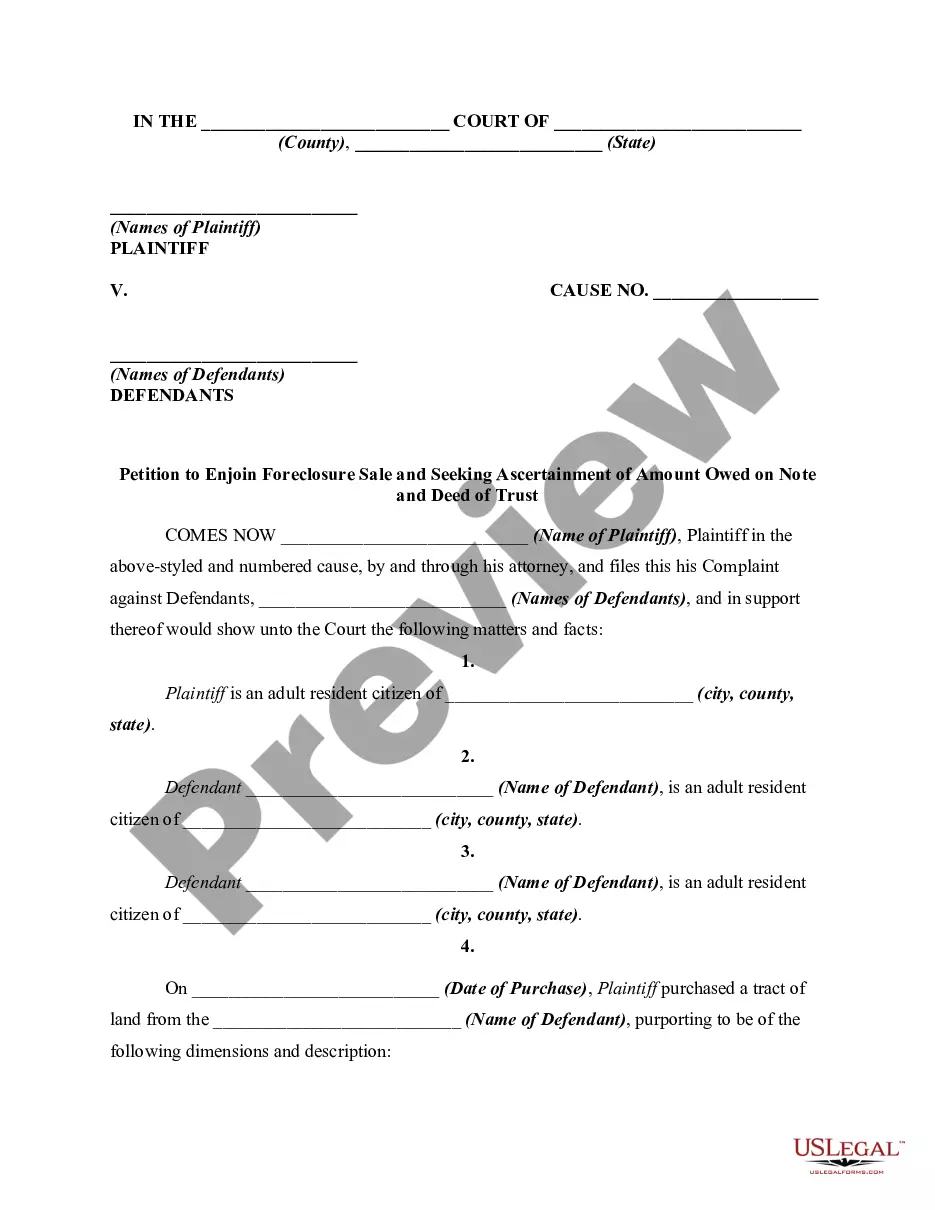
This Petition or Complaint to Enjoin Nonjudicial Foreclosure Sale and for Declaratory Relief is a legal document used to request a court to stop the sale of a property under foreclosure proceedings. This form is important for individuals facing nonjudicial foreclosure sales, as it allows them to challenge the legality of such sales based on specific circumstances, aiming to prevent irreparable harm while providing a judicial determination of their rights concerning the mortgage obligations.
Form components explained
- Title and court information: Identifies the court where the petition is filed and the parties involved.
- Statement of Plaintiff and Defendant: Provides names and relevant contact details.
- Description of the loan agreement: Includes details about the promissory note and deed of trust.
- Allegations of breach: Outlines the specifics of the defendant's claims and the plaintiff's counterclaims.
- Legal requests: Lists specific remedies sought from the court, including injunctions and declaratory relief.

When to use this document
This form is used when a property owner faces a nonjudicial foreclosure sale and believes that the sale is improper or that their rights under a mortgage are being violated. Situations might include disputing claims of loan default or asserting that the foreclosure process did not follow the required legal procedures. This petition seeks to pause any impending sale, providing time for legal resolution.
Intended users of this form
- Property owners currently facing nonjudicial foreclosure sales.
- Individuals who believe their lender has incorrectly declared them in default.
- Borrowers seeking to assert their rights regarding a mortgage or another secured loan.
- Those experiencing potential loss of property and requiring immediate legal protection.
Instructions for completing this form
- Identify the parties involved: Enter the names of the plaintiff and defendant.
- Specify the property: Detail the address and legal description of the property in question.
- Provide loan agreement details: Include information about the promissory note and deed of trust.
- State facts supporting your claims: Describe why the foreclosure is improper or illegal.
- Enter dates and signatures: Ensure all parties sign and date the document where required for validity.
Notarization guidance
This form does not typically require notarization unless specified by local law. However, it is advisable to check with local regulations or legal advice to confirm any requirements regarding notarization for legal documents in your jurisdiction.
Get your form ready online
Our built-in tools help you complete, sign, share, and store your documents in one place.
Make edits, fill in missing information, and update formatting in US Legal Forms—just like you would in MS Word.
Download a copy, print it, send it by email, or mail it via USPS—whatever works best for your next step.
Sign and collect signatures with our SignNow integration. Send to multiple recipients, set reminders, and more. Go Premium to unlock E-Sign.
If this form requires notarization, complete it online through a secure video call—no need to meet a notary in person or wait for an appointment.
We protect your documents and personal data by following strict security and privacy standards.

Make edits, fill in missing information, and update formatting in US Legal Forms—just like you would in MS Word.

Download a copy, print it, send it by email, or mail it via USPS—whatever works best for your next step.

Sign and collect signatures with our SignNow integration. Send to multiple recipients, set reminders, and more. Go Premium to unlock E-Sign.

If this form requires notarization, complete it online through a secure video call—no need to meet a notary in person or wait for an appointment.

We protect your documents and personal data by following strict security and privacy standards.
Common mistakes to avoid
- Failing to provide accurate property descriptions.
- Not including sufficient details regarding the alleged breach of contract.
- Omitting necessary signatures or dates, which can invalidate the petition.
- Neglecting to attach related documents such as the original notes or deeds of trust.
Benefits of using this form online
- Convenience of accessing and completing the form from anywhere with internet access.
- Editability allows users to fill in information at their own pace.
- Reliability of having a form drafted by licensed attorneys ensures legal accuracy and comprehensiveness.
Legal use & context
- This petition is a formal request to prevent a foreclosure sale based on specific legal grounds.
- The court will consider various factors, including the likelihood of success on the merits of the case before granting an injunction.
- Failing to demonstrate a probable right of recovery may result in denial of the injunction request.
Main things to remember
- The petition plays a vital role for homeowners wishing to contest a nonjudicial foreclosure sale.
- Understanding and correctly filling out the form is crucial for effectively protecting your rights.
- Legal counsel can provide assistance in navigating the complexities of foreclosure procedures.
Looking for another form?
Form popularity
FAQ
To contest a judicial foreclosure, you have to file a written answer to the complaint (the lawsuit). You'll need to present your defenses and explain the reasons why the lender shouldn't be able to foreclose. You might need to defend yourself against a motion for summary judgment and at trial.
A lender can rescind a foreclosure sale if a borrower requests to reinstate the loan agreements and then makes payment to bring the loan balance current, provided this is done more than five days before the scheduled sale date.
Proving Wrongful Foreclosure If you wish to sue the bank for wrongful foreclosure, you must prove the following: The lender owed you, the borrower, a legal duty. The lender breached that duty. The breach of duty caused your injury or loss (damages)
Repayment Plan: Getting Current on the Loan. Mortgage Modification: Adjusting Your Loan Agreement. Short Sale: Selling the Property for Less Than You Owe. Deed in Lieu of Foreclosure: Give the Property to the Lender.
Reinstatement. Ask the lender to reinstate the loan. Forbearance Agreement. Ask the lender to forgive the debt. Refinance. Sell your home. Short Sale. LLoan modification. Deed in Lieu of Foreclosure. Rescission of loan.
In situations where a foreclosure has already occurred, the California Supreme Court held that a borrower has standing to sue for wrongful foreclosure based on an allegedly void assignment of his or her mortgage.
Negotiate With Your Lender. If you are having financial difficulties, the worst thing that you can do is bury your head in the sand. Request a Forbearance. Modify Your Loan. Make a Claim. Get a Housing Counselor. Declare Bankruptcy. Use A Foreclosure Defense Strategy. Make Them Produce The Not.