Hold Harmless Agreement for Towing Company
What is this form?
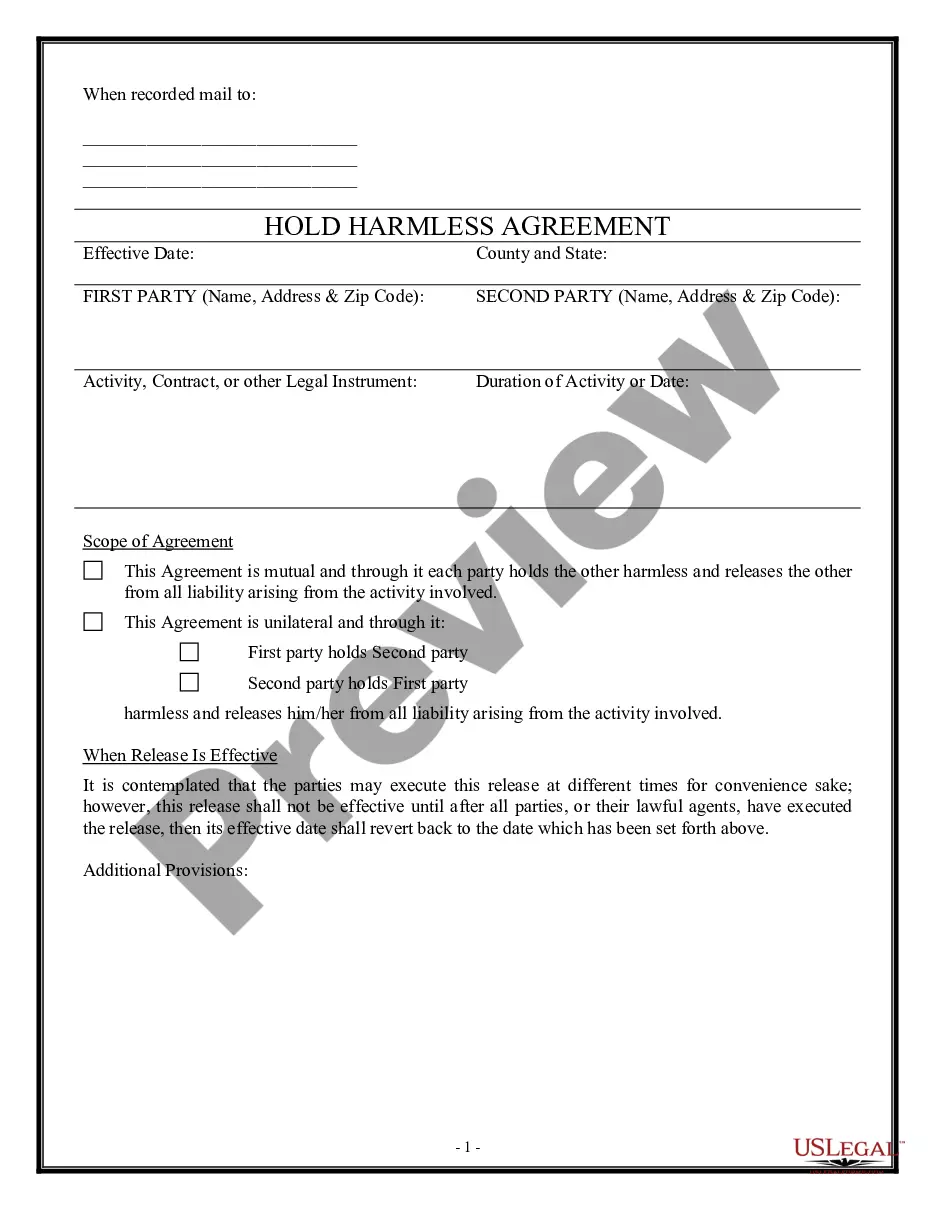
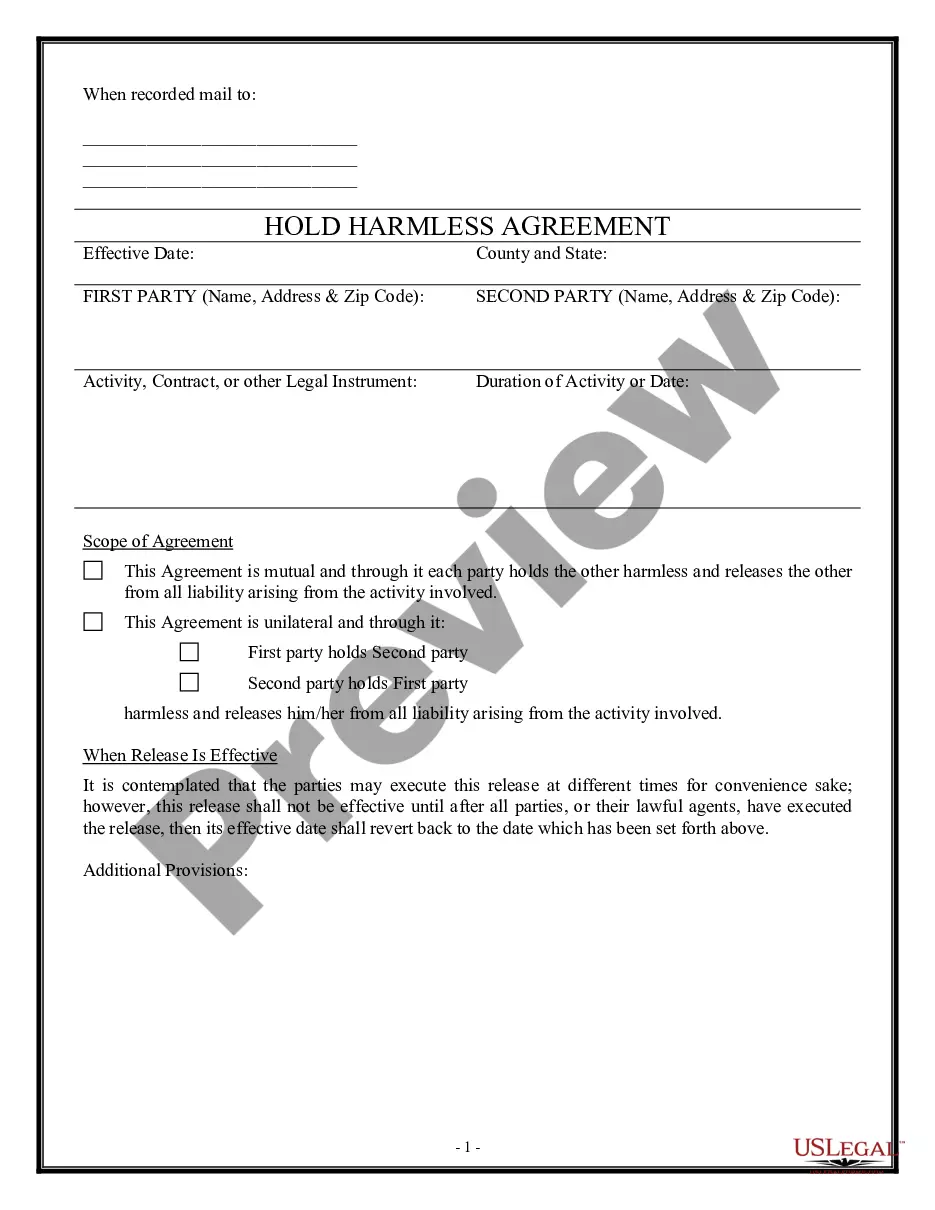
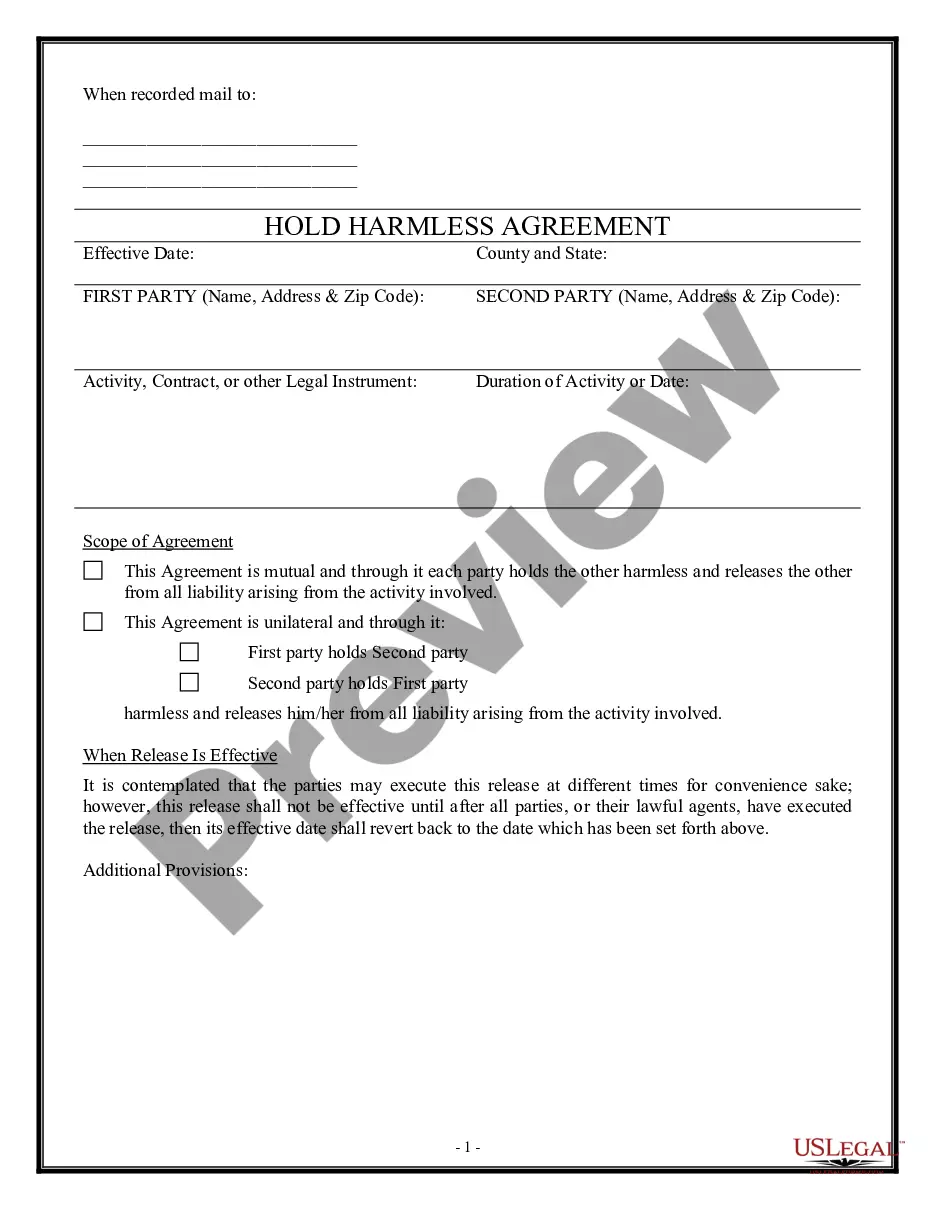
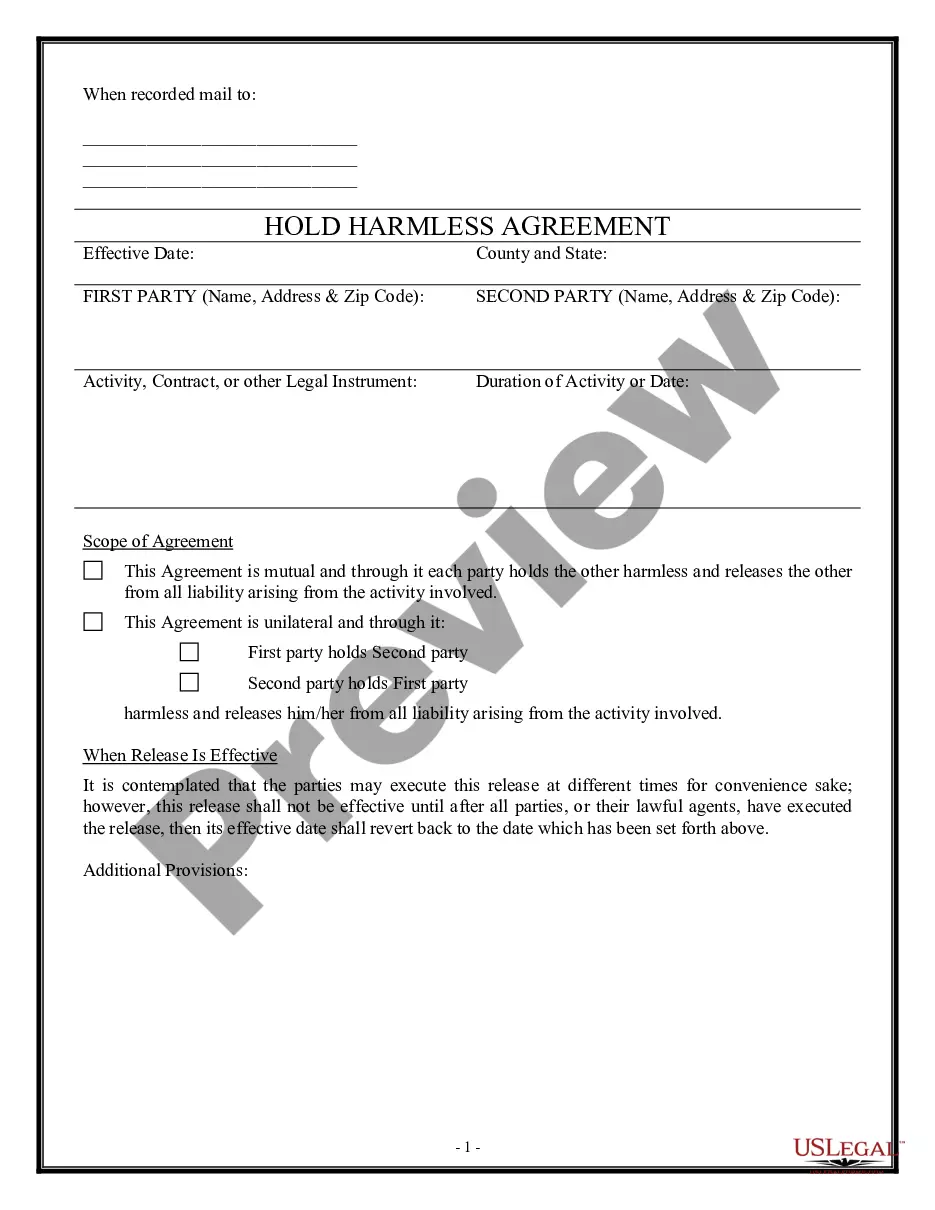
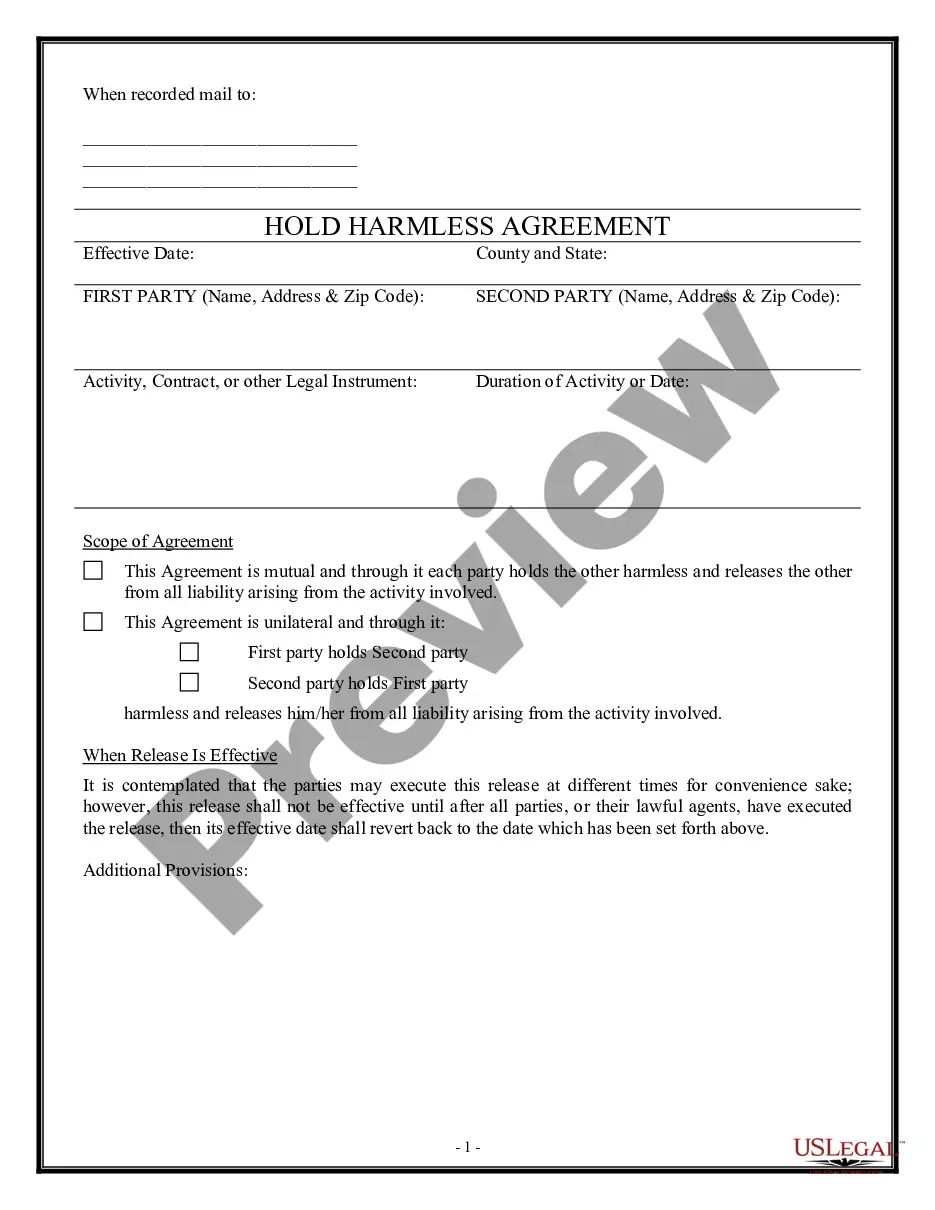
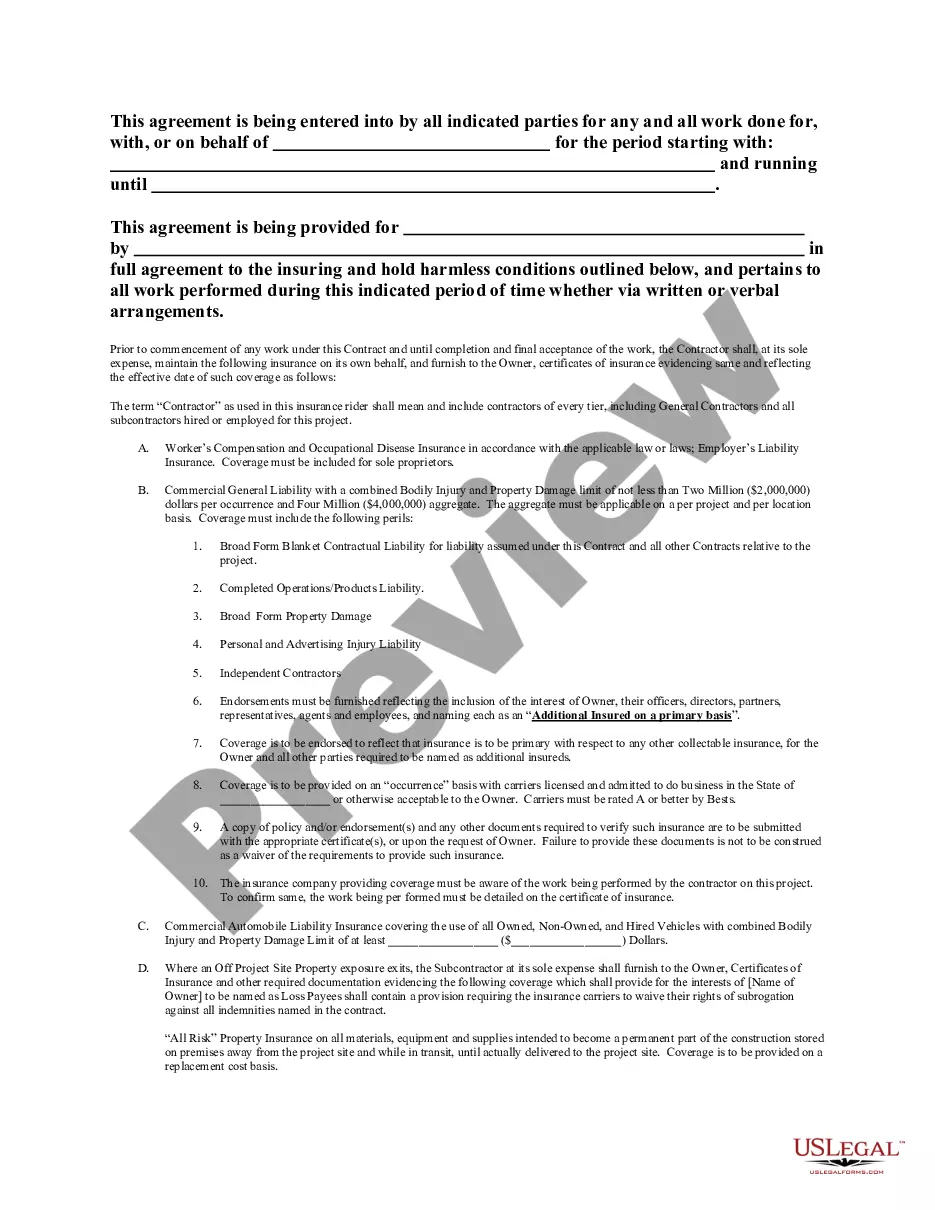
The Hold Harmless Agreement for Towing Company is a legal document that outlines the mutual agreement between two parties to release each other from liability associated with specific activities. This form is essential for a towing company and its clients, distinguishing it from other liability waivers by its mutual and unconditional nature, which provides a clear framework of liability reduction during towing operations.
What’s included in this form
- Parties involved: Identification of the first and second parties entering the agreement.
- Mutual release: Clauses that detail how each party agrees to hold the other harmless.
- Effective date: Specifies when the release of liability becomes effective.
- Notary acknowledgment: Space for a notary public to validate the agreement.

Common use cases
This form is commonly used when a towing company provides services to a vehicle owner. It is essential when the company wishes to protect itself from claims arising from accidents or damages occurring during the towing process. Use this agreement to clarify the responsibilities and liabilities of each party involved in the towing activity.
Who can use this document
- Towing companies looking to mitigate liability risks.
- Vehicle owners who want to ensure clarity in liability understanding before services are rendered.
- Legal representatives involved in drafting agreements for towing services.
Instructions for completing this form
- Identify the parties: Clearly enter the names of the first and second parties.
- Review the liability clauses: Ensure both parties understand the terms of the hold harmless agreement.
- Specify the effective date: Enter the date on which the agreement goes into effect.
- Sign the agreement: Each party should sign and date the form to acknowledge acceptance.
- Notarization: Have the agreement notarized if required, to enhance its legal validity.
Does this form need to be notarized?
This form does not typically require notarization unless specified by local law. Notarization can help strengthen the enforceability of the agreement and ensure both parties have acknowledged its terms in a formal setting.
Get your form ready online
Our built-in tools help you complete, sign, share, and store your documents in one place.
Make edits, fill in missing information, and update formatting in US Legal Forms—just like you would in MS Word.
Download a copy, print it, send it by email, or mail it via USPS—whatever works best for your next step.
Sign and collect signatures with our SignNow integration. Send to multiple recipients, set reminders, and more. Go Premium to unlock E-Sign.
If this form requires notarization, complete it online through a secure video call—no need to meet a notary in person or wait for an appointment.
We protect your documents and personal data by following strict security and privacy standards.

Make edits, fill in missing information, and update formatting in US Legal Forms—just like you would in MS Word.

Download a copy, print it, send it by email, or mail it via USPS—whatever works best for your next step.

Sign and collect signatures with our SignNow integration. Send to multiple recipients, set reminders, and more. Go Premium to unlock E-Sign.

If this form requires notarization, complete it online through a secure video call—no need to meet a notary in person or wait for an appointment.

We protect your documents and personal data by following strict security and privacy standards.
Common mistakes to avoid
- Failing to clearly identify all parties involved in the agreement.
- Not specifying an effective date for the release of liability.
- Omitting signatures from one or both parties, rendering the agreement invalid.
- Neglecting to seek notarization if it is required in certain jurisdictions.
Why use this form online
- Convenience: Download and complete the form from any location.
- Editability: Customize the document as needed before finalizing it.
- Reliability: Forms are legally compliant and crafted by licensed attorneys.
Looking for another form?
Form popularity
FAQ
When Is a Hold Harmless Agreement a Good Idea? A hold harmless agreement (also known as an indemnity agreement or waiver of liability) is a good idea any time you want to shift risk from one party to another. You can protect other people from being sued by taking on the liability yourself as well.
You can negotiate a towing with a company according to the laws of your state.If the auction value does not cover for the cost, you legally owe the tow yard. And the company will sue you for failure to pay up.
By signing a broad form hold harmless agreement you are possibly exposing your company to uninsurable risk. Contractual Liability Coverage for sole or gross negligent acts of your client is excluded is y most liability policies.As with all contracts, it is best to have legal counsel review prior to signing.
A hold harmless clause is used to protect a party in a contract from liability for damages or losses. In signing such a clause, the other party accepts responsibility for certain risks involved in contracting for the service.
It's still your business decision whether you sign them or not, but you should do so only where it is a critical contract that you have no way of modifying or negotiating changes. In contrast, the best kind of Indemnity Agreement is commonly called a Mutual Indemnity Agreement or a Mutual Hold Harmless Provision.
A Hold Harmless (Indemnity) Agreement is used between two parties (such as an employer and employee) to establish protection from liabilities, losses, claims, or damages for one of the parties during their involvement in an activity.
A Hold Harmless Agreement is a legal agreement that states that one party will not hold another party liable for risk, often physical risk or damage. The Hold Harmless Clause can be one-way (unilateral) or two-way (reciprocal) agreements and can be signed before or after an activity takes place.
An indemnification or hold harmless clause may be included so the other party to the contract is reimbursed against loss or damage should a legal dispute ensue with respect to the contract or agreement.A hold harmless agreement is also called a save harmless agreement.