Release of Liability Form for Personal Trainers
What this document covers
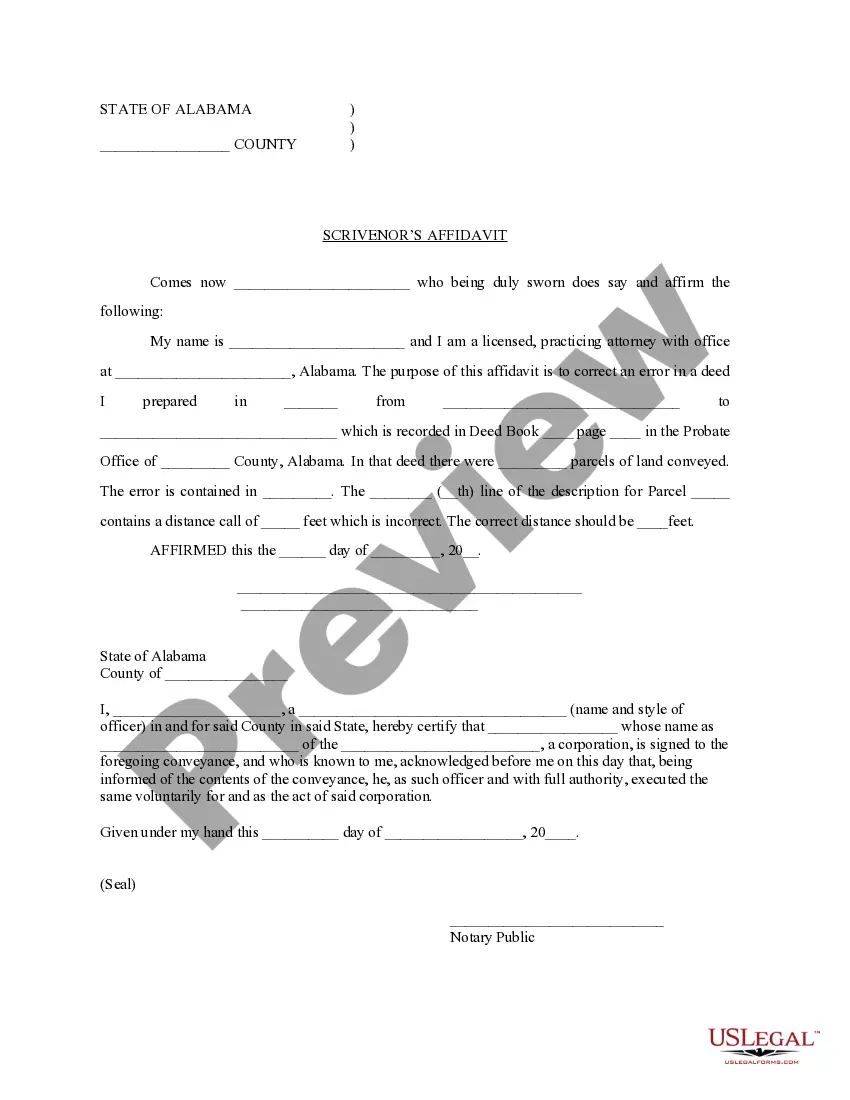
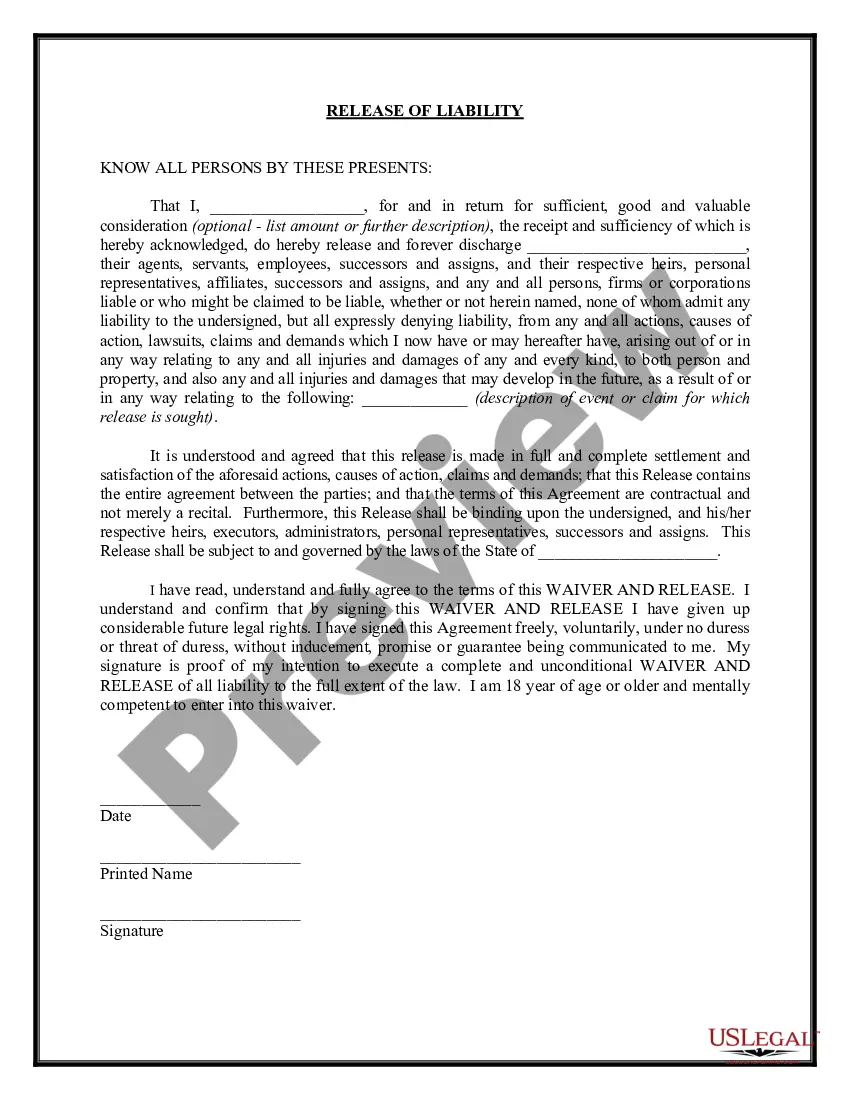
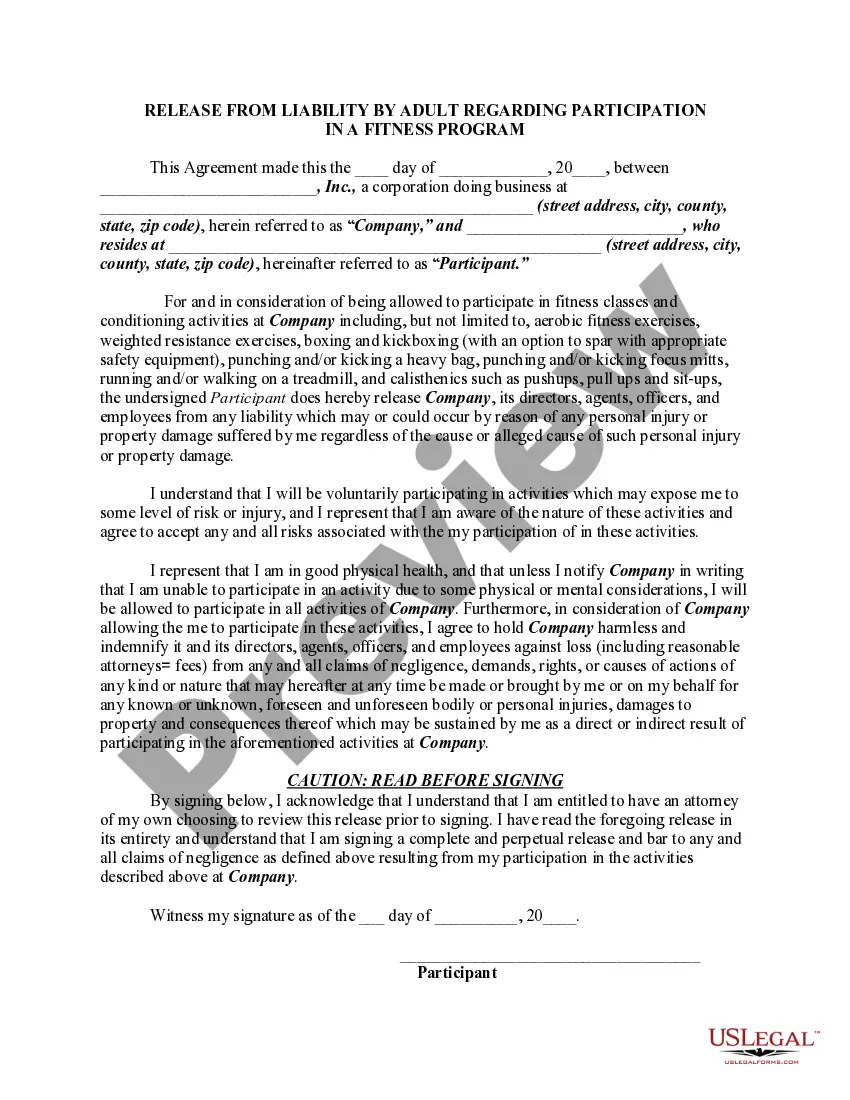
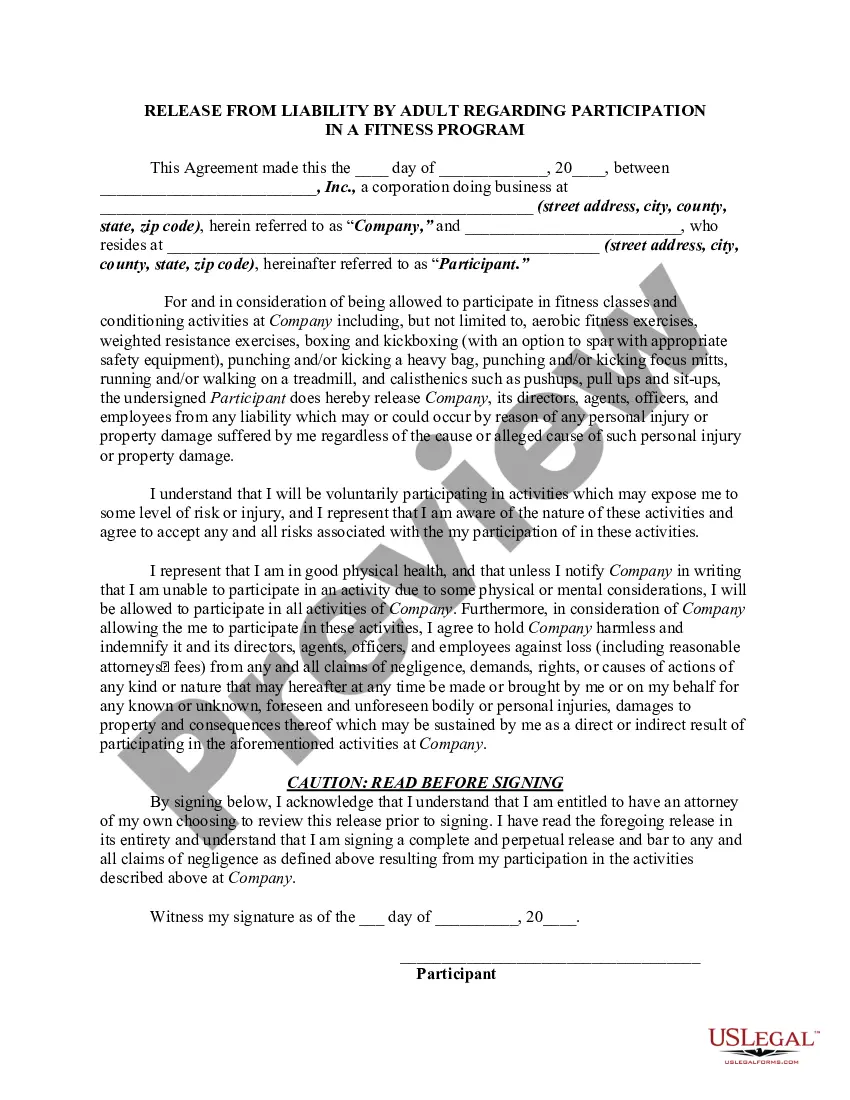
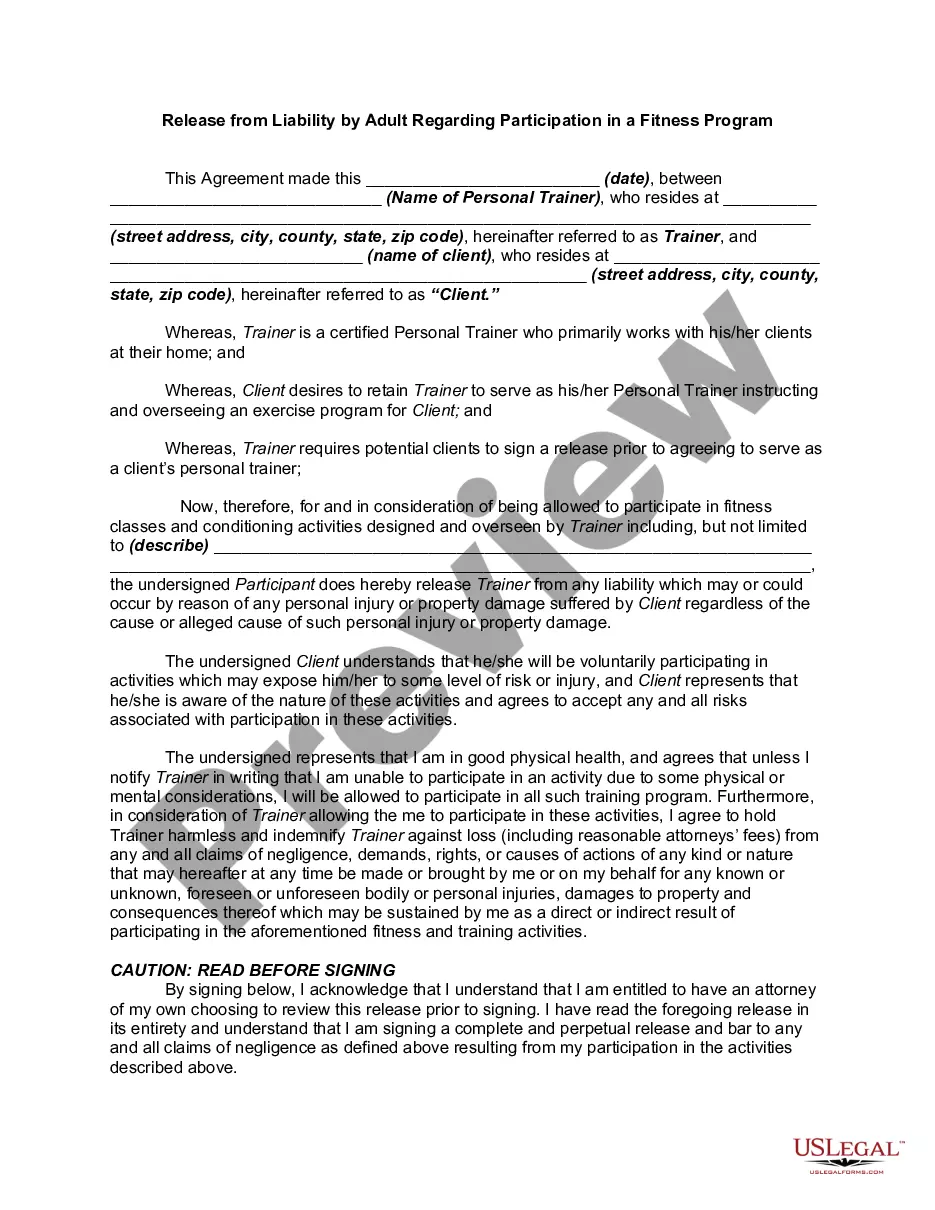
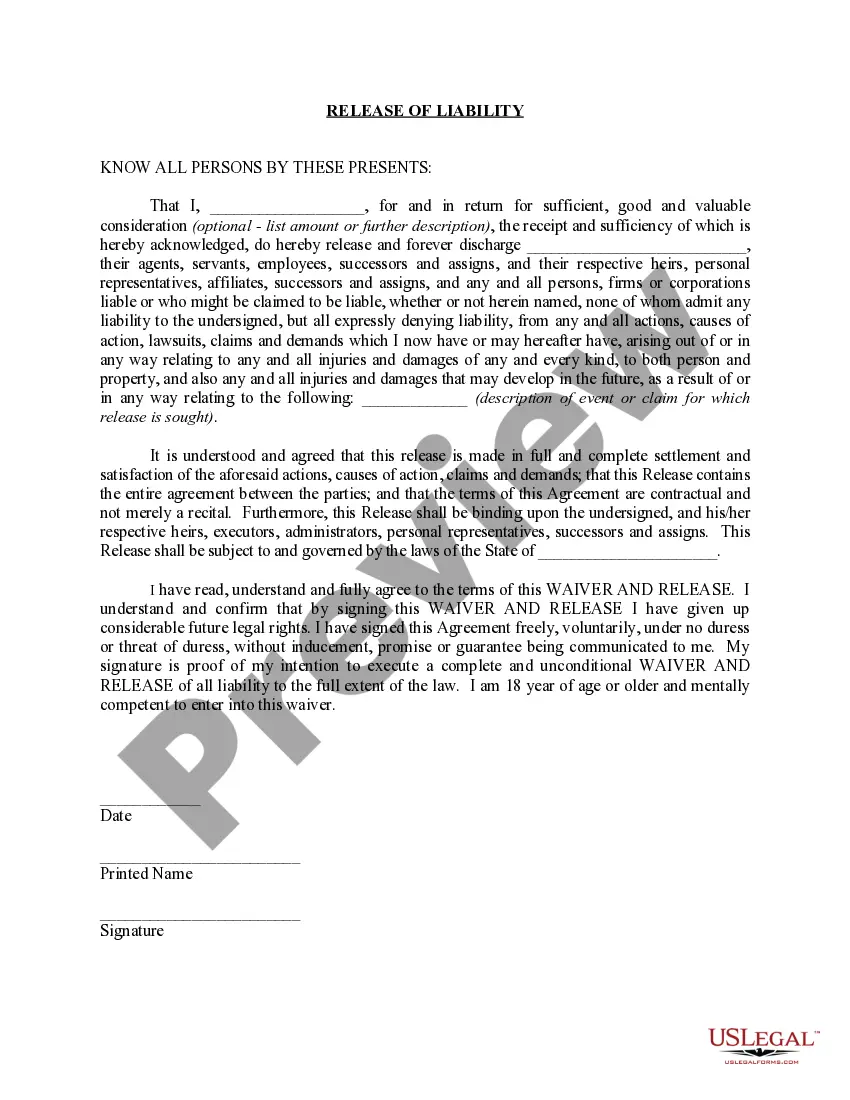
The Release of Liability Form for Personal Trainers is a legal document that provides a mechanism for individuals to release trainers from liability for injuries or damages that may occur during physical training sessions or related activities. This form is essential for protecting personal trainers from legal claims related to unforeseen incidents that could lead to injury. Unlike waivers that only acknowledge risk, this release explicitly discharges the trainer from all potential liability arising from the designated activities.
What’s included in this form
- Identification of the releasor (person releasing liability) and releasee (personal trainer).
- Description of the event or claimed activities leading to the release of liability.
- Statement of understanding regarding the relinquishment of future legal claims.
- A declaration confirming that the releasor is of legal age and capable of signing the document.
- Signature and date fields to finalize the agreement.
Situations where this form applies
This form is typically used prior to engaging in any fitness or training activities where there may be an inherent risk of injury. If you are a personal trainer or a client, you should use this release when scheduling personal training sessions, group classes, or any physical activities that could pose risk. It is an important precaution to protect against legal claims from injuries sustained during these activities.
Intended users of this form
- Personal trainers who conduct fitness sessions with clients.
- Clients participating in personal training to acknowledge the risks involved.
- Gyms or fitness centers that require clients to sign liability waivers before using their services.
How to complete this form
- Identify the parties involved by filling in the names of the releasor (client) and releasee (trainer).
- Clearly describe the activities or event from which the liability is being released.
- Specify any financial or other consideration exchanged for the waiver, if applicable.
- Ensure understanding and agreement of all terms by reading the entire document.
- Obtain signatures from the releasor and ensure the date is filled in properly.
Does this form need to be notarized?
This form does not typically require notarization unless specified by local law. Always check specific case requirements in your state or consult with a legal professional as necessary.
Get your form ready online
Our built-in tools help you complete, sign, share, and store your documents in one place.
Make edits, fill in missing information, and update formatting in US Legal Forms—just like you would in MS Word.
Download a copy, print it, send it by email, or mail it via USPS—whatever works best for your next step.
Sign and collect signatures with our SignNow integration. Send to multiple recipients, set reminders, and more. Go Premium to unlock E-Sign.
If this form requires notarization, complete it online through a secure video call—no need to meet a notary in person or wait for an appointment.
We protect your documents and personal data by following strict security and privacy standards.

Make edits, fill in missing information, and update formatting in US Legal Forms—just like you would in MS Word.

Download a copy, print it, send it by email, or mail it via USPS—whatever works best for your next step.

Sign and collect signatures with our SignNow integration. Send to multiple recipients, set reminders, and more. Go Premium to unlock E-Sign.

If this form requires notarization, complete it online through a secure video call—no need to meet a notary in person or wait for an appointment.

We protect your documents and personal data by following strict security and privacy standards.
Common mistakes to avoid
- Not completing all required fields, such as names and events.
- Failing to read the document thoroughly before signing.
- Using the form without understanding its legal implications.
- Not keeping a copy of the signed release for personal records.
Benefits of using this form online
- Convenient access to legally drafted templates that save time.
- Editable format allows for customization to suit specific needs.
- Immediate downloads ensure you can use the form without delays.
- Reliability from licensed attorneys creating these templates, ensuring legal validity.
Legal use & context
- This release form can help protect personal trainers and associated businesses from liability claims.
- It is legally binding as long as both parties understand and agree to the terms.
- Enforceability may vary by state, so consult local legal guidelines for proper use.
What to keep in mind
- A Release of Liability Form for Personal Trainers protects against legal claims.
- Understanding the risks and implications of signing is essential for both parties.
- Proper completion of the form ensures its validity and enforceability.
Looking for another form?

Form popularity
FAQ
Becoming a personal trainer is the easy part for most newly certified personal trainers, making a living can be much more difficult.Becoming a Certified Personal Trainer is the easy part for most newly Certified Personal Trainers, making a living as a trainer can be much more difficult.
There is a lot to unpack and that's going unsaid with this question but the definitive answer is YES, personal fitness trainers do sleep with their clients more often than is being mentioned.Because it's easy to see that contact proximity makes personal training an easy target for intimate interactions to occur.
Liability Waiver. A personal trainer liability waiver is an essential piece of paperwork for your business. Certificate of Insurance. Goal Setting Forms. Personal Training Contract. PAR-Q Form for Personal Trainers. Fitness Assessment Form. Consent and Disclaimer. Conclusion.
Awarding bodies such as the Active IQ, CYQ (Central YMCA), City and Guilds and OCR are responsible for governing the training that is being delivered by training organizations; they also issue the certifications in personal training, therefore the course that you choose must also be recognised by this governing body.
Put yourself out there. Brand yourself professionally. Stay flexible. Log client results for others to see. Find a niche. Invest in education. Give your business the edge with technology. Above all put your clients health and wellbeing as a priority.
Signs That You Might Need to Fire Your Trainer. Let's agree that the trainer-client relationship is not always purely business. Don't Be a Pushover: State Your Needs. Be Honest and Give Them Some Tough Love. Don't Let Them Lure You Back With Empty Promises. Ask the Gym's Manager to Do It For You. Deal With the Fallout.
How Much Is Personal Trainer Insurance? A basic general and professional liability insurance policy starts at $129 per year, or $12.50 per month.
So, what type of insurance do personal trainers need? They should have both general and professional liability coverage. A comprehensive policy should cover the business owner as well as any employees or contract workers. Having the right coverage will protect your business if you are ever sued.
1) Write for Industry Blogs to Increase Authority. 2) Build an Email List. 3) Send Frequent Emails. 4) Engage with Clients on Social Media. 5) Ask for Referrals the Right Way. 6) Utilize Cross-Referrals.