Release of Liability - General
What is this form?
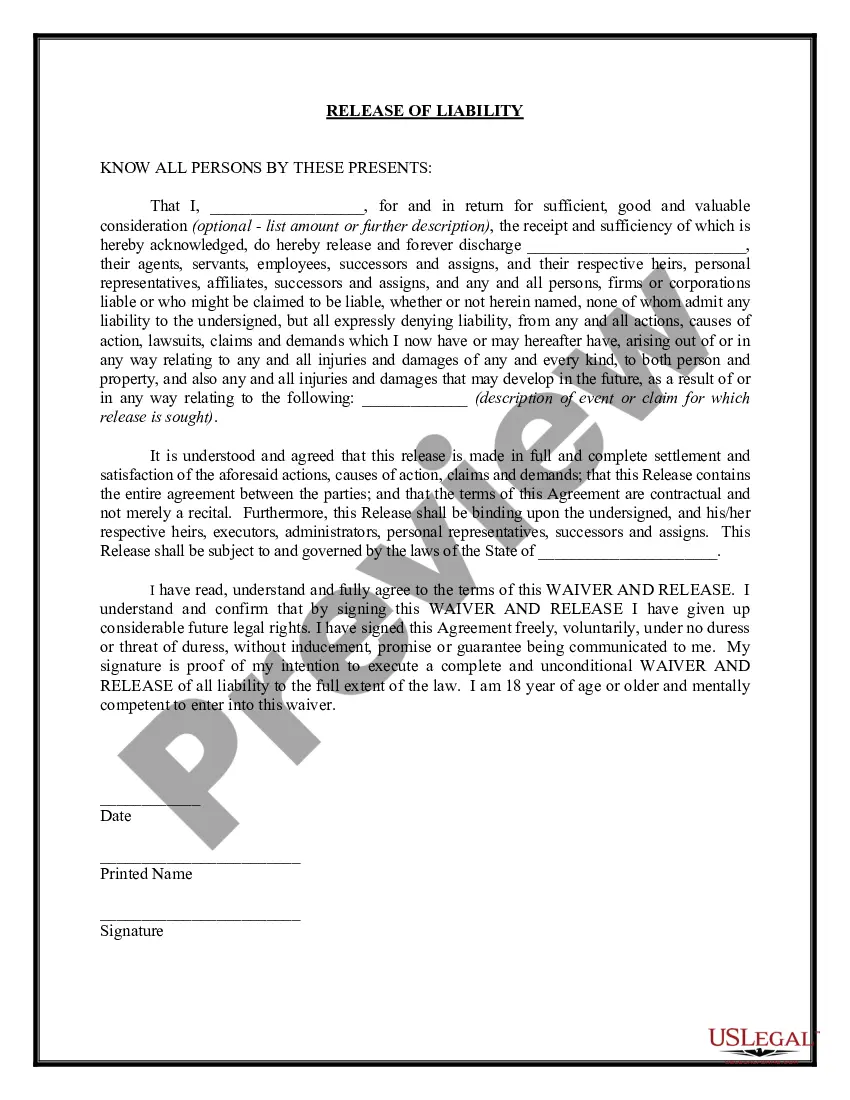
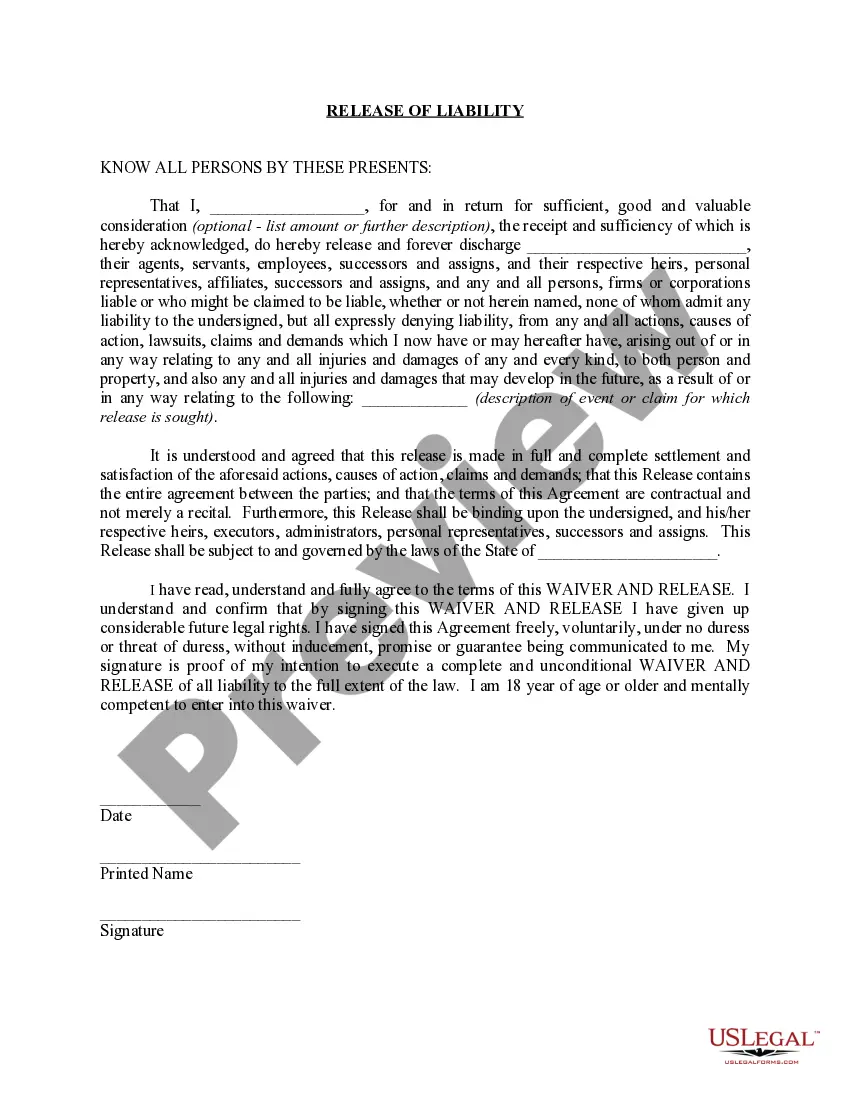
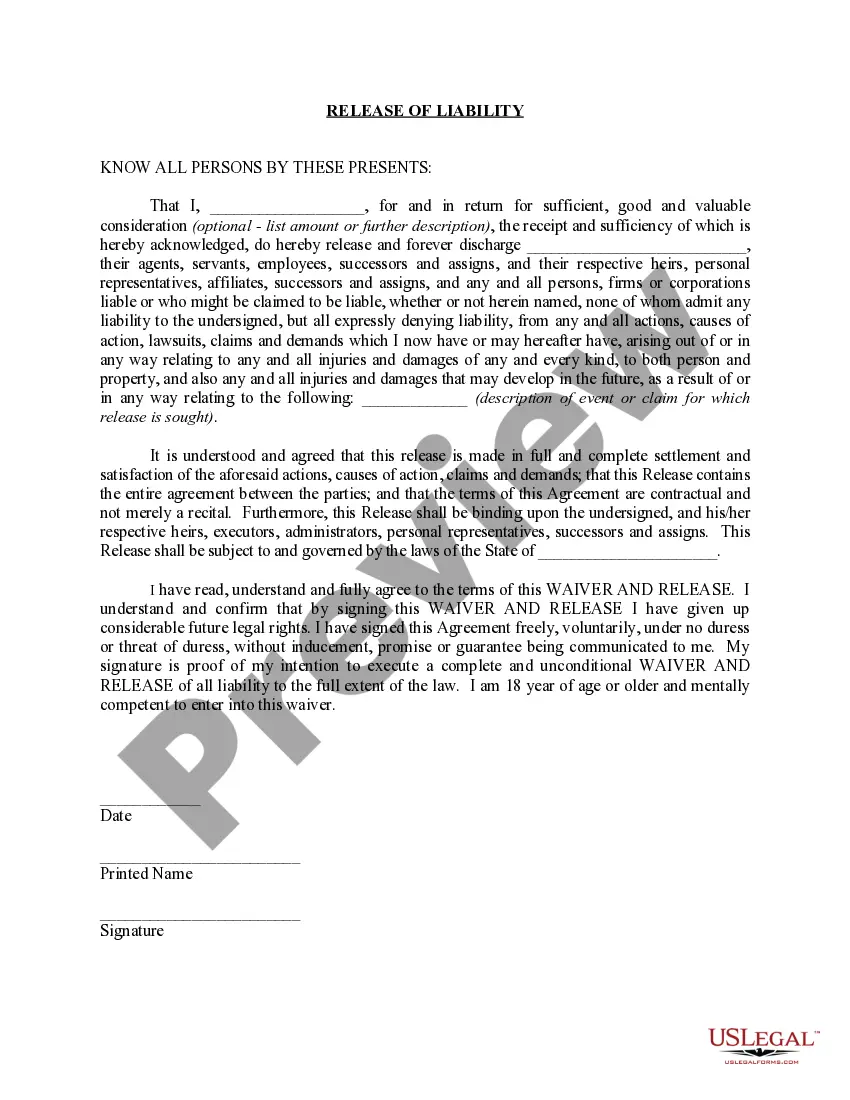
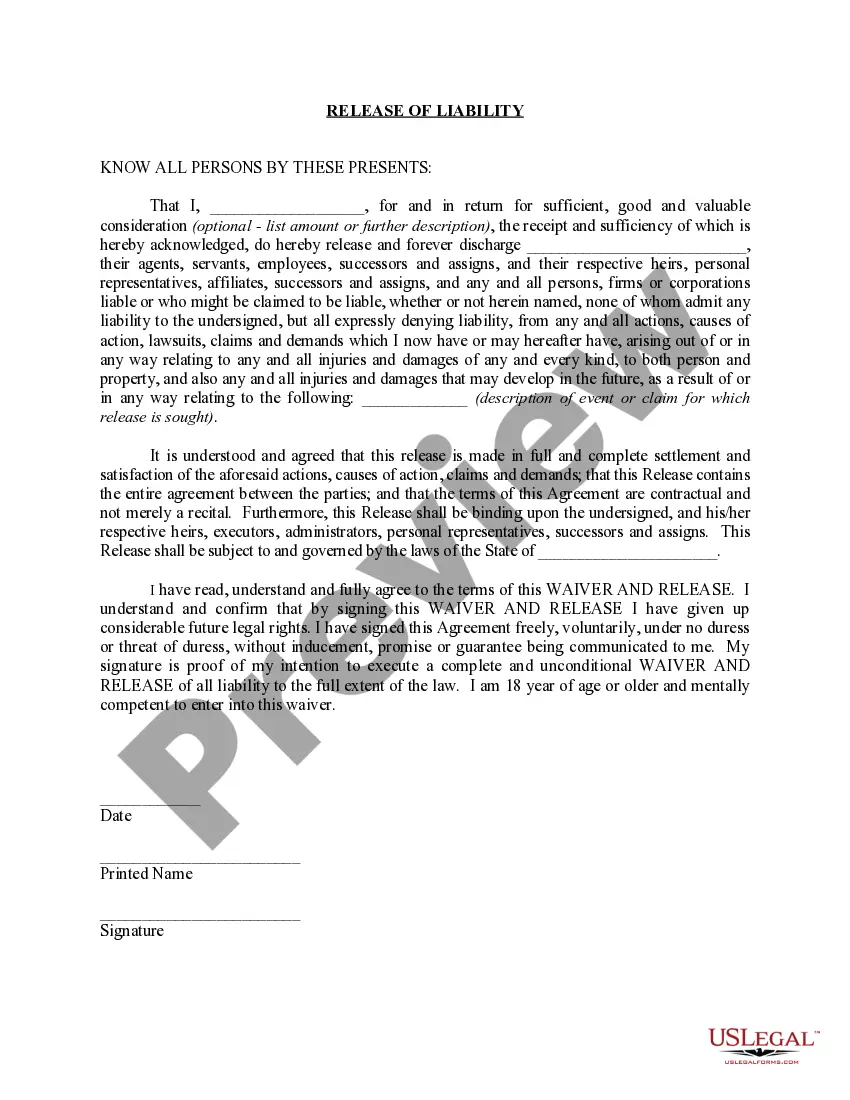
The Release of Liability - General is a legal document that allows one party, known as the releasor, to discharge another party, the releasee, from any future claims or liabilities. This form is essential for protecting releasees from lawsuits related to specific events or activities. Unlike similar agreements, this release establishes a complete waiver of all potential claims linked to the identified incident, ensuring a clear understanding between the involved parties.
Key components of this form
- Identification of the releasor and releasee, including their respective details.
- A clear description of the event or activity for which liability is being released.
- A clause affirming that all claims arising from the event are permanently waived.
- Legal acknowledgment confirming the understanding and voluntary signing of the release.
- Space for signatures and dates to validate the agreement.
When to use this form
This release of liability form is typically used in situations where one party wants to participate in an event or activity but is concerned about possible injuries or damages. Common scenarios for use include sports events, recreational activities, volunteer services, and any situation where participants could incur risks. It is crucial to use this form to clarify liability issues before engaging in such activities.
Who this form is for
- Individuals participating in sports or recreational events who want to waive their right to sue for injuries.
- Event organizers who need protection against legal claims related to their events.
- Businesses hosting activities that involve risk, such as adventure sports operators or community programs.
- Anyone involved in activities where there is a potential for injury or property damage.
Instructions for completing this form
- Identify the parties involved by filling in the names of the releasor and releasee.
- Provide a description of the event or activity for which the release is being used.
- Include the consideration amount, if applicable, to show the exchange of value.
- Ensure all parties read the waiver carefully before signing to acknowledge understanding.
- Sign and date the release to finalize the agreement legally.
Does this document require notarization?
This form usually doesn’t need to be notarized. However, local laws or specific transactions may require it. Our online notarization service, powered by Notarize, lets you complete it remotely through a secure video session, available 24/7.
Get your form ready online
Our built-in tools help you complete, sign, share, and store your documents in one place.
Make edits, fill in missing information, and update formatting in US Legal Forms—just like you would in MS Word.
Download a copy, print it, send it by email, or mail it via USPS—whatever works best for your next step.
Sign and collect signatures with our SignNow integration. Send to multiple recipients, set reminders, and more. Go Premium to unlock E-Sign.
If this form requires notarization, complete it online through a secure video call—no need to meet a notary in person or wait for an appointment.
We protect your documents and personal data by following strict security and privacy standards.

Make edits, fill in missing information, and update formatting in US Legal Forms—just like you would in MS Word.

Download a copy, print it, send it by email, or mail it via USPS—whatever works best for your next step.

Sign and collect signatures with our SignNow integration. Send to multiple recipients, set reminders, and more. Go Premium to unlock E-Sign.

If this form requires notarization, complete it online through a secure video call—no need to meet a notary in person or wait for an appointment.

We protect your documents and personal data by following strict security and privacy standards.
Avoid these common issues
- Failing to clearly describe the event or activity, which can lead to misunderstandings.
- Leaving sections incomplete, especially regarding names and signatures.
- Not reviewing state-specific regulations that might affect the release's validity.
- Assuming verbal agreements about the release are sufficient; written signatures are necessary.
- Overlooking the necessity for witnesses or notarization in certain jurisdictions.
Why complete this form online
- Instant access to professional legal templates drafted by licensed attorneys.
- Convenience of downloading and filling the form at any time without needing to visit a lawyer.
- Editability to tailor the form to specific circumstances or events.
- Reliable documents that adhere to legal standards, providing peace of mind.
Legal use & context
- This release is a binding legal document that can help protect the releasee from future claims.
- The enforceability may depend on the clarity and specificity of the form's details.
- Courts generally uphold such agreements unless they are found to be unconscionable or improperly executed.
Main things to remember
- The Release of Liability - General is essential for participating in activities with inherent risks.
- Clear identification and description of the event are crucial for the document's effectiveness.
- Always consider local laws regarding liability releases to ensure legality.
- Completing this form provides legal protection against potential claims for injuries.
Looking for another form?

Form popularity
FAQ
3. How long do I keep signed waivers? The sponsoring unit is required to retain the waiver for six (6) years after the end of the event or activity for which the waiver was signed.
The Waiver must be clearly worded and unambiguous in its intent to relieve any and all legal liability, even liability for negligence. The Waiver should be prominent and not hidden in the fine print of a long contract. The Waiver must be signed by the person who it is being used against.
In California, a liability waiver must be clear, unambiguous, and explicit. In other words, waivers cannot be printed in faded ink, in small font, on the back of a paper, or in an otherwise ambiguous form. If the waiver that you sign is not represented clearly, it may not hold up in the event of a lawsuit.
The waiver/release is properly drafted or worded according to the law in the state of the sports organization. It does not violate any state laws or public policy.
In California, a liability waiver must be clear, unambiguous, and explicit. In other words, waivers cannot be printed in faded ink, in small font, on the back of a paper, or in an otherwise ambiguous form. If the waiver that you sign is not represented clearly, it may not hold up in the event of a lawsuit.
A US Entry Waiver can be good for six months to five years. You might see references to permanent waivers online; however, those references are out of date.
A Release of Liability, or 'Hold Harmless Agreement', is a legal document that indemnifies an individual or business entity from legal and/or financial responsibility.If the release is being signed after the event took place, such as a car accident, the releasor may be paid money to sign such an agreement.
In many cases, the waiver is not enforceable.If you've been injured due to negligent actions, you can sue even if you signed a waiver. Winning a lawsuit concerning negligence is not uncommon. Many celebrities have sued for negligence even though they signed documents stating they understood the risks.
In many cases, the waiver is not enforceable.If you've been injured due to negligent actions, you can sue even if you signed a waiver. Winning a lawsuit concerning negligence is not uncommon. Many celebrities have sued for negligence even though they signed documents stating they understood the risks.