Proof of Residency for DMV
Understanding this form
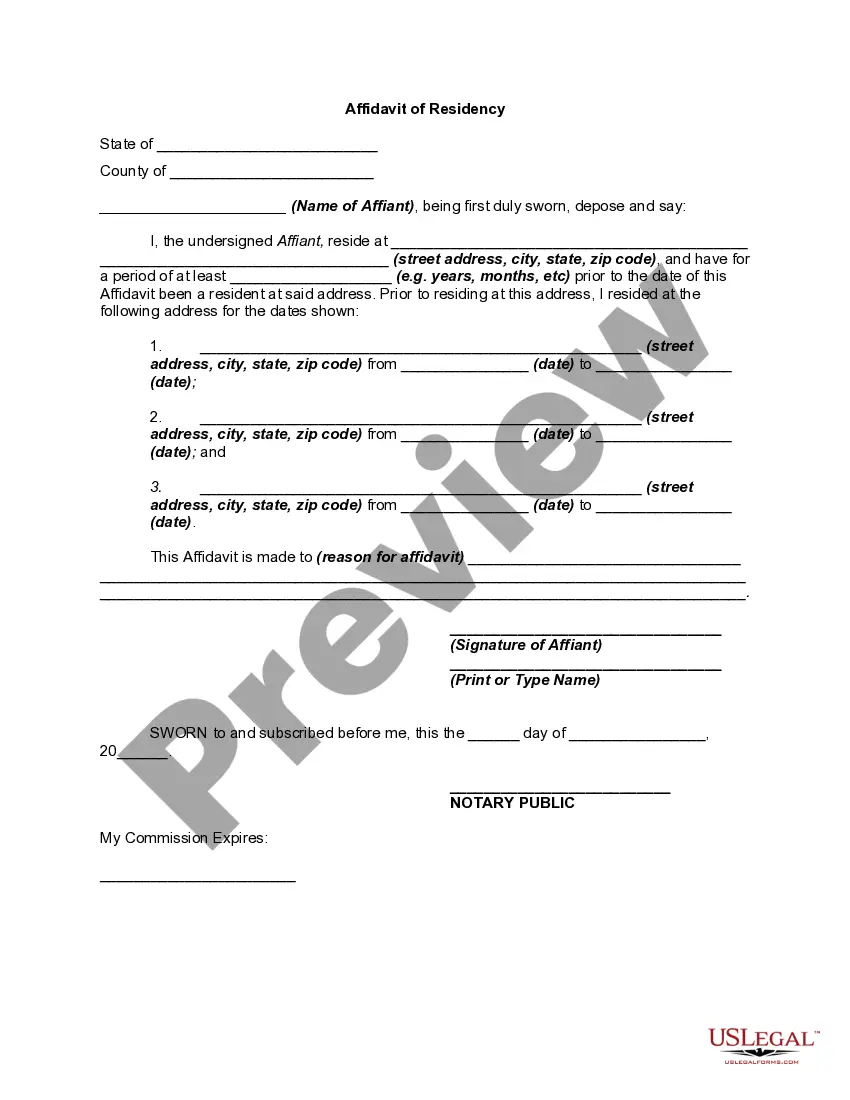
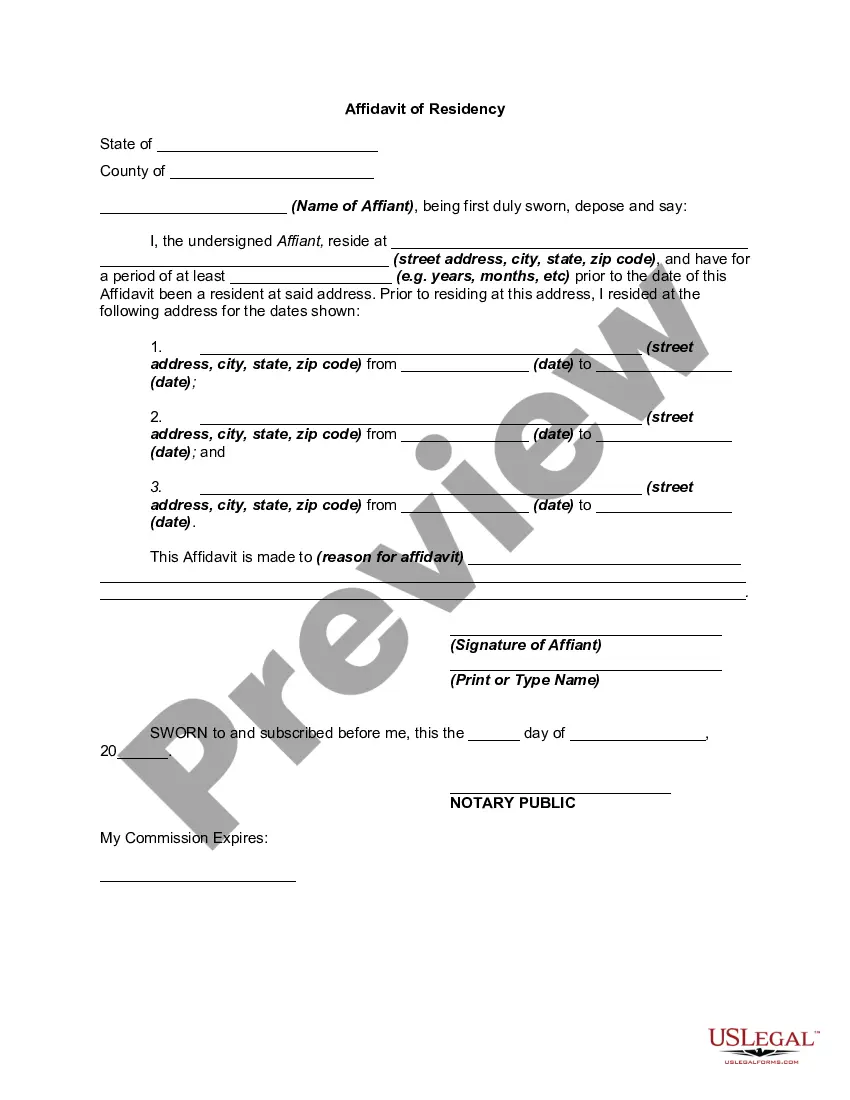
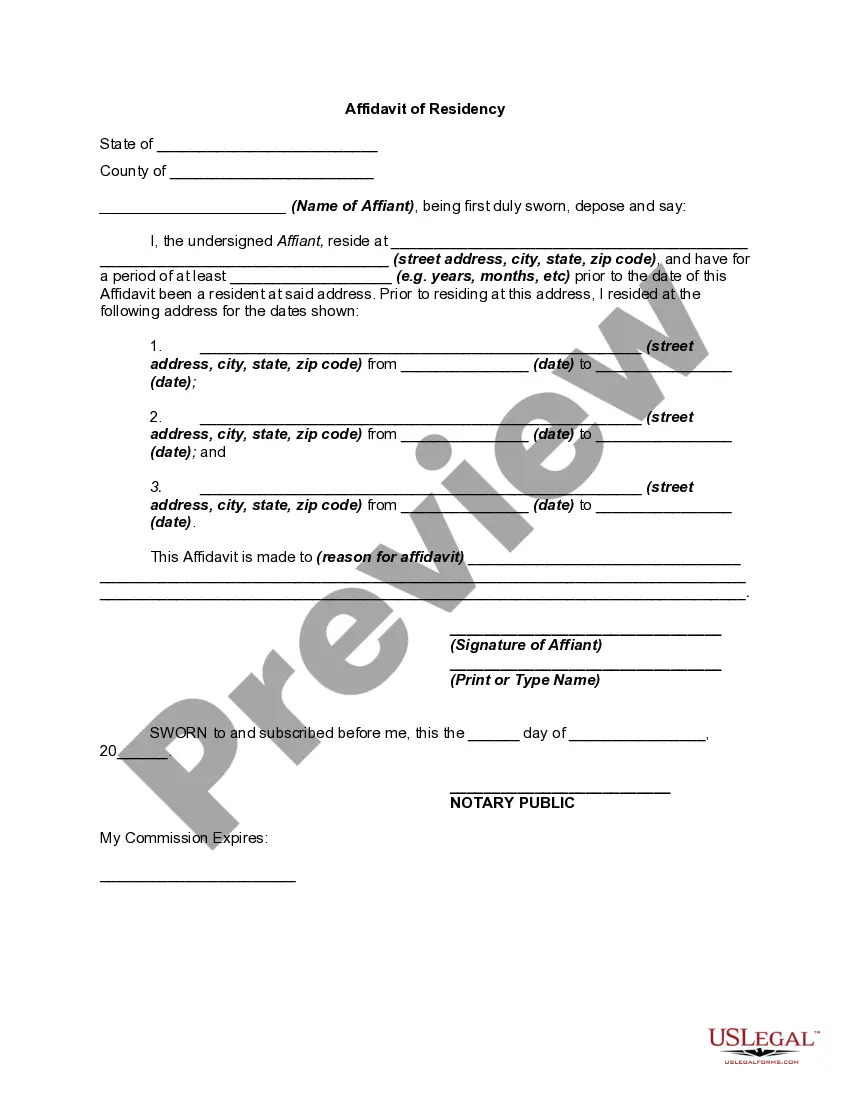
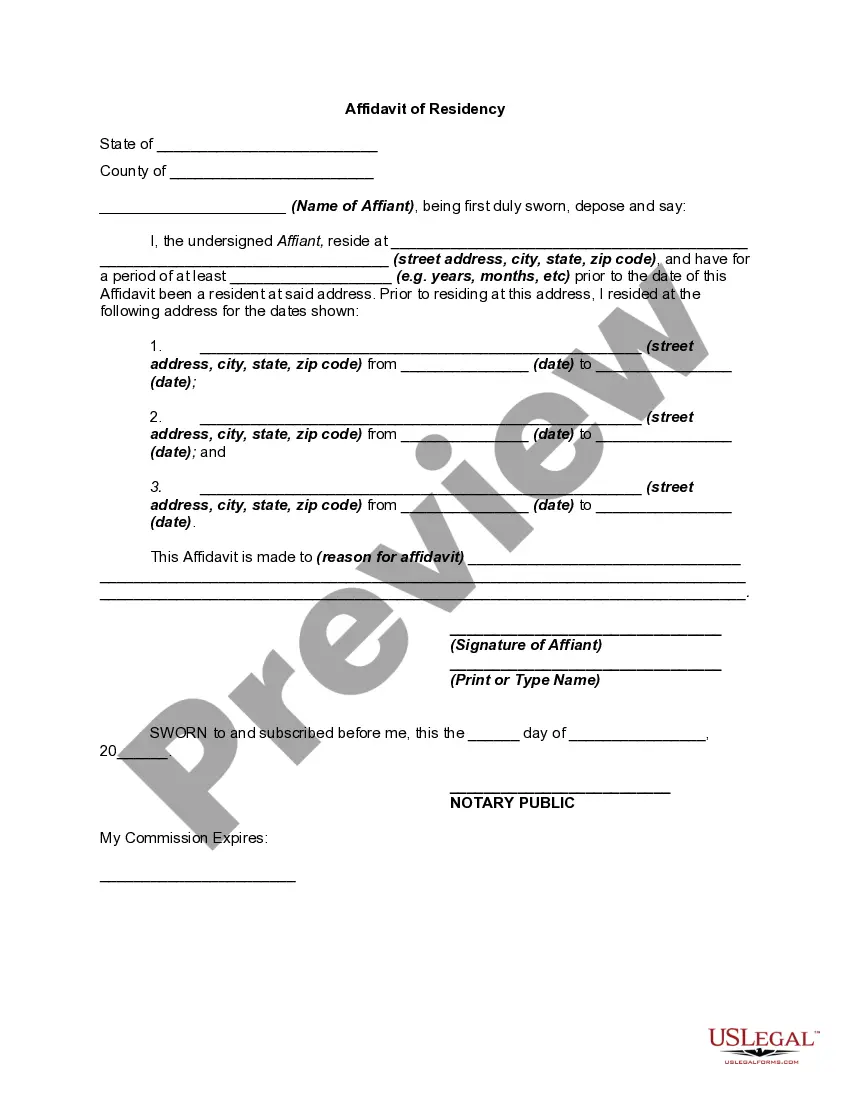
The Proof of Residency for DMV is a legal affidavit that confirms an individual's residence at a specific address. This form is often required when applying for or renewing a driver's license or state ID. Unlike other residency verification forms, this affidavit includes a sworn statement by the affiant, making it a legally binding document that verifies your address for official purposes.
Key parts of this document
- Affiant's name and signature, affirming the truthfulness of the statement.
- Current address of the affiant, along with the duration of residency.
- Previous addresses, including dates of residency at each location.
- A specific statement of purpose for the affidavit, detailing why it is being submitted.
- Notary public section for official witnessing and validation of the affidavit.
When to use this document
You should use the Proof of Residency for DMV when you need to verify your current address for various state administrative matters. Common situations include applying for a new driver's license, renewing your state ID, or establishing residency for voting or educational purposes. This form provides the necessary documentation to meet the requirements set forth by the Department of Motor Vehicles.
Who this form is for
This form is intended for:
- Individuals applying for or renewing a driver's license or state ID.
- Residents who need to confirm their address for legal or administrative purposes.
- Any person who has recently changed their place of residence and needs to provide proof of their current address.
How to complete this form
- Begin by entering your name as the affiant at the top of the form.
- Provide your current residential address, ensuring accuracy in the details.
- State how long you have lived at your current address.
- List your previous addresses with the corresponding dates you resided there.
- Specify the purpose for which the affidavit is being made.
- Sign the affidavit in the presence of a notary public for verification.
Does this document require notarization?
Yes, this form must be notarized to be legally valid. Notarization ensures that the affiant's signature is authentic and that they understand the contents of the affidavit. US Legal Forms offers integrated online notarization services that can be completed securely via a video call at any time, eliminating the need for in-person visits.
Get your form ready online
Our built-in tools help you complete, sign, share, and store your documents in one place.
Make edits, fill in missing information, and update formatting in US Legal Forms—just like you would in MS Word.
Download a copy, print it, send it by email, or mail it via USPS—whatever works best for your next step.
Sign and collect signatures with our SignNow integration. Send to multiple recipients, set reminders, and more. Go Premium to unlock E-Sign.
If this form requires notarization, complete it online through a secure video call—no need to meet a notary in person or wait for an appointment.
We protect your documents and personal data by following strict security and privacy standards.

Make edits, fill in missing information, and update formatting in US Legal Forms—just like you would in MS Word.

Download a copy, print it, send it by email, or mail it via USPS—whatever works best for your next step.

Sign and collect signatures with our SignNow integration. Send to multiple recipients, set reminders, and more. Go Premium to unlock E-Sign.

If this form requires notarization, complete it online through a secure video call—no need to meet a notary in person or wait for an appointment.

We protect your documents and personal data by following strict security and privacy standards.
Common mistakes to avoid
- Failing to provide complete and accurate addresses for previous residences.
- Not having the affidavit signed in front of a licensed notary.
- Leaving the purpose section blank or unclear.
- Not updating the affidavit if you change address after signing.
Summary of main points
- The Proof of Residency for DMV is a necessary document for verifying your current address.
- Ensure thorough and accurate information in both current and previous addresses.
- Notarization is required for validity, so plan to have the document notarized before submission.
- Consult your local DMV for any specific provisions related to residency affidavits in your state.
Looking for another form?
Form popularity
FAQ
Bank Statements. Document description: Preprinted account statements from your bank. Court Letters. Government Documents. Income Tax Statements. Lease Agreements. Notarized Affidavit of Residency. School Records. Vehicle Registration.
Government-issued photo ID. Residential lease/property deed. Utility bill. Letter from the government/court (marriage license, divorce, government aid) Bank statement. Driver's license/learner's permit. Car registration. Notarized affidavit of residency.
How do I show Proof of Residency? Obtain a utility bill from the address you currently reside, along with a letter from the person you are living with stating that you and your child(ren) are living with them, and explain that you have no mail and/or bills in your name.
If you don't have any utility bills, you can still prove your residency through other means. You can use a combination of your license, tax documents, bank statements, lease agreements, and other official paperwork. The essential factor is that the form of proof shows your address and name.
Visit your bank or credit union and ask for a copy of your most recent account statement that includes your name and address. In some cases, any piece of mail specifically addressed to your name rather than occupant or resident can be accepted as proof of residency.
If you don't have sufficient original documents to prove your address, some financial institutions and government agencies will accept an affidavit filled out by someone you live with. Check with the financial institution or government agency to find out if they have a specific form that you should use.
A proof of residence is a document confirming where you live, and must have both your full name and your address printed on it.